Manoah

  • Origin: Biblical Hebrew מָנ֫וֹחַ
  • Meaning: “rest.”
  • Gender: Male

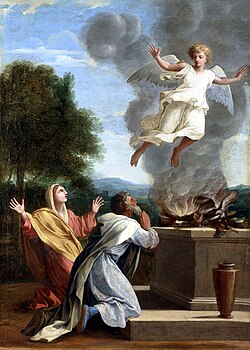
Manoah appears in Judges 13, described as a man from Zorah of the tribe of Dan. His wife is unnamed, but together they become the parents of Samson after an angelic visitation.

The name itself is derived from the Hebrew root נוּחַ (nuach) meaning “to rest, to settle, to repose, to be at ease.”

Between the 18th-century to early 20th-century, Manoah experienced some use in the U.S. and England. Common short forms were Manny, Menno and Noah.

In 2023, it appeared in the Netherlands charts for the most popular male names, though it did not rank in very high, coming in at #422.

International Variations

  • Manué (French)
  • Manoach (German)
  • Manoa (Spanish)

Sources

Meinolf

  • Origin: German
  • Meaning: “powerful wolf.”
  • Gender: Male
  • (MY-nulf)

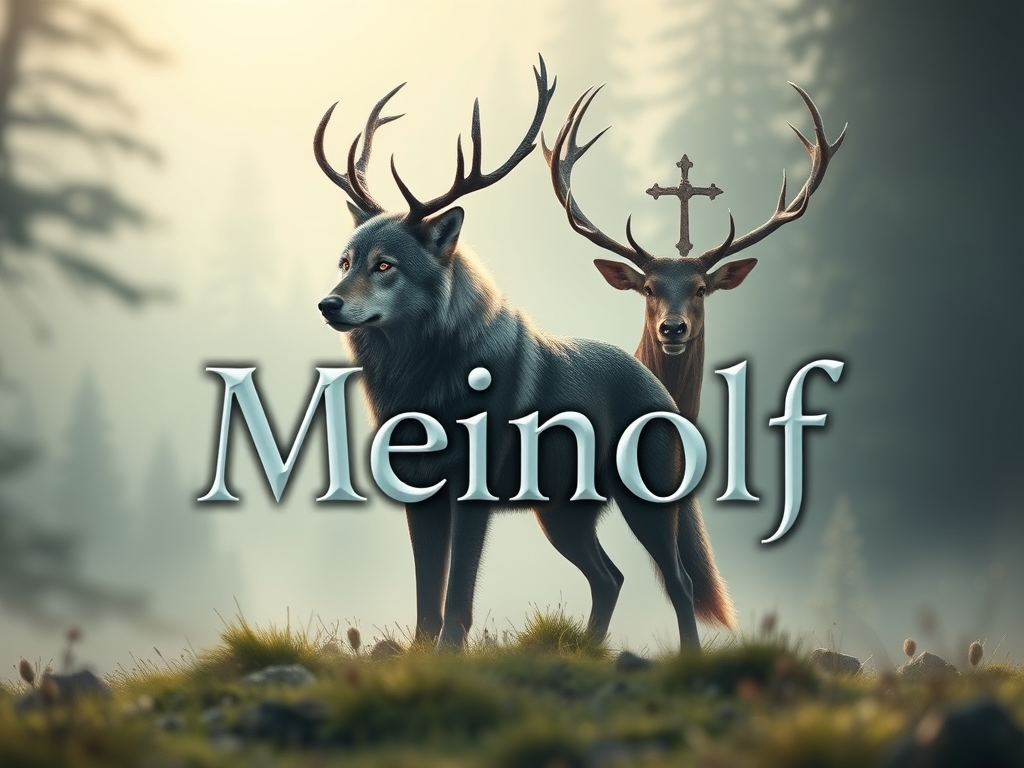
The name is from the Old German, magin, magen (powerful) and wulf (wolf).

The name was borne by a 9th-century saint, a godson of Charlemagne, who according to legend found his monastery on the spot where he saw a stag appear with a cross between its antlers.

It is also a German surname, in which case, it is a patronymic derived from the given-name.

The designated name-day is October 5th.

Usage

The name is used in Dutch-speaking countries, German-speaking countries and Nordic countries, though nowadays, it is rather old fashioned.

German Diminutives

  • Meino

International Variations

  • Melf (Frisian)
  • Meinolph (German, alternate spelling)
  • Meinolphus (Latin)
  • Maganulf, Maginulf, Meginulf (Old German)
  • Magnulf (Old Norse)

Sources

Faolán, Phelan, Fillin

  • Origin: Gaelic
  • Meaning: “little wolf.”
  • Gender: masculine
  • Gaelic (FWAY-lahn); Eng (FAY-len; FIL-lin)

The name is derived from the Gaelic, faol, meaning “wolf” and the diminutive suffix –án. It is borne by 3 Medieval Saints from Ireland, 2 who settled in Scotland and another that did missionary work in Frankish Brabant.

There is a Cathedral dedicated to St. Foillan of Brabant in Aachen, Germany.

It is the ancestor of several Irish and Scottish surnames, such as Fylan, Hyland, MacClellan, MacClelland, Mac Giolla Fhaoláin, McClellan, McClelland, Ó Faoláin, Phelan, Whalen & Whelan.

Fillan is also the name of a place in Norway, but the name is probably of a separate etymology.

Other forms include:

  • Foillan (Dutch, French, German)
  • Phillan (English)
  • Feuillien (French)
  • Folien (French)
  • Foilan (French)
  • Pholien (French)
  • Foillano (Italian)
  • Fillano (Italian)
  • Foilanus/Foillanus (Late Latin)
  • Fáelán (Old Irish)
  • Felano (Spanish)

Sources

Eliel

  • Origin: Hebrew
  • Meaning: “my God is God.”
  • Gender: Masculine
  • Pronunciation: Eng (EL-ee-yel; ee-LYE-yel)

The name is composed of the same Hebrew word אל (‘el) meaning “God,” hence, some translate it to mean “my God is God.” The name is borne by several minor characters in the Old Testament.

A notable bearer was Finnish Architect, Eliel Saarinen (1873-1950).

Though an obscure Jewish name, it experienced a peak in popularity in Finland and other Scandinavian countries at the end of the 19th-century.

Eliel recently entered the U.S. Top 1000 Most Popular Male Names in 2019, currently ranking in at #664.

The designated name day in Finland is April 9th

A Dutch form is Eliël.

Sources

Anna, Anne

Gender: Feminine
Origin: Biblical Hebrew
Meaning: “grace.”
(ANN; AHN). (ANN-uh; AHN-nah). (HANN-uh; HAHN-nah)

Anne is possibly one of the quintessential classic English and French female names. Prior to the 18th-century, it seems that every other girl born in England was either named Anne, Jane or Mary. There were several British and French queens who bore this simplistic moniker, including the ill fated Anne Boleyn, the mother of Elizabeth I. The history of Anne is rather long and complicated.

It was foremost popularized through the cult of St. Anne, a legendary figure who was said to be the mother of the Virgin Mary and the grandmother of Christ.

In Brittany, the name became especially popular because it happened to coincide with the name of an ancient Celtic goddess, her cult being replaced by St. Anne’s. In fact, it was borne by one Breton Princess, Anne of Brittany.

The name was introduced into Britain by the French-Normans after the invasion in 1066. Previously, there had been a minor Saxon king named Anna, but in this case the name is related to the Saxon arn (eagle). Anna and Anne are still occasionally used as male given names in Friesland.

Other than the apocryphal saint, the name Anne can be traced directly back to the Bible. In the New Testament, it is the name of a prophetess who predicts the Crucifixion of Christ.

Anna (Αννα), is the Greek translation of the early Hebrew Channah חַנָּה, usually transliterated as Hannah, meaning “grace.”

Hannah is borne in the Old Testament by the faithful mother of the prophet, Samuel.

Hannah has always been popular among Jewish families, but was virtually unheard of among non-Jews before the Reformation, except in some cases where it may have been used as a diminutive form of Johanna, spelled Hanna.

It was the Byzantines who had introduced the Anna form to the world, making it popular throughout Eastern and Southern Europe. It was a very popular name among the Byzantine royal family and it was borne by the majestic Anna of Byzantium.

Anna may be the more melodic form of the bunch, but Anne’s minimalistic qualities are charming. Short, to the point, no frills. It’s not a bad name, though it does lack some spice, which is why parents are probably more attracted to its more exotic alternatives. In fact, Anne only comes in at # 608 in the top 1000 female names of the United States. It is safe to say, however, that she is very much loved in the middle name spot.

Anna is currently one of the most popular female names in Europe and abroad. Her rankings are as follows:

  • # 1 (Austria, 2010)
  • # 1 (Estonia, 2011)
  • # 2 (Hungary, 2010)
  • # 3 (Ana, Georgia, 2010)
  • # 3 (Iceland, 2010)
  • # 4 (Ana, Croatia, 2010)
  • # 4 (Czech Republic, 2010)
  • # 4 (Germany, 2011)
  • # 4 (Ukraine, 2010)
  • # 5 (Faroe Islands, 2010)
  • # 5 (Ana, Portugal, 2010)
  • # 6 (Armenia, 2010)
  • # 6 (Ane, Greenland, 2002-2003)
  • # 6 (Ana, Romania, 2009)
  • # 6 (Ana, Serbia, 2010)
  • # 7 (Latvia, 2011)
  • # 7 (Russia, 2011)
  • # 8 (German-speaking Switzerland, 2010)
  • # 9 (Denmark, 2011)
  • # 10 (Netherlands, 2010)
  • # 10 (Northern Ireland, 2010)
  • # 10 (Norway, 2010)
  • # 11 (Italy, 2010)
  • # 12 (Ireland, 2010)
  • # 14 (Poland, 2010)
  • # 16 (Catalonia, 2010)
  • # 26 (Canada, B.C., 2010)
  • # 28 (Italian-speaking Switzerland, 2010)
  • # 28 (United States, 2010)
  • # 29 (Scotland, 2010)
  • # 40 (France, 2009)
  • # 46 (French-speaking Switzerland, 2010)
  • # 53 (Belgium, 2009)
  • # 63 (England/Wales, 2010)
  • # 71 (Australia, 2010)
  • # 81 (Sweden, 2010)
  • # 83 (Spain, 2010)
Other forms of the name include:
  • Anneen (Afrikaans/Low German)
  • Anna Анна (Afrikaans/Albanian/Armenian/Breton/Bulgarian/Catalan/Corsican/Czech/Dutch/English/Estonian/Faroese/Finnish/French/Frisian/German/Greek/Hungarian/Icelandic/Italian/Latvian/Limburgish/Maltese/Polish/Russian/Ukrainian/Scandinavian/Slovak)
  • Anne (Basque/Dutch/English/French/Scandinavian)
  • Gánna Га́нна (Belarusian)
  • Annaig (Breton)
  • Annick (Breton)
  • Maina (Breton)
  • Mannaig (Breton)
  • Mannick (Breton)
  • Naig (Breton)
  • Ana Ана ანა (Bulgarian/Croatian/Galician/Georgian/Lombard/Macedonian/Portuguese/Romanian/Samogaitian/Serbian/Slovene/Spanish/Venetian)
  • Jana (Croatian/Ladino)
  • Aneta (Czech/Polish/Samogaitian/Slovak)
  • Aina (Catalan)
  • Anica (Croatian/Serbian/Slovene)
  • Ane (Danish)
  • Anika (Danish)
  • Anneke (Dutch)
  • Anneken (Dutch)
  • Annika (Dutch/Finnish/German/Latvian/Scandinavian)
  • Anka (Dutch/Frisian/German)
  • An(n)ke (Dutch/Frisian)
  • Anouk (Dutch/French)
  • Ans (Dutch)
  • Enneke (Dutch)
  • Enneken (Dutch)
  • Anita (English/German/Polish/Spanish)
  • Annette (English/French/German)
  • Anissa (English)
  • Annelle/Annella (Estonian)
  • Anete (Estonian/Latvian)
  • Anett (Estonian)
  • Anu (Estonian)
  • Anni (Finnish)
  • Annikki (Finnish)
  • Anniina (Finnish)
  • Annukka (Finnish)
  • Niina (Finnish)
  • Anaïs (French/Provençal)
  • Annouche (French)
  • Ninette (French)
  • Ninon (French)
  • Ninouk (French)
  • Anje (Frisian)
  • Ankea (Frisian)
  • Antje (Frisian)
  • Antjen (Frisian)
  • Anute (Fruilian)
  • Anano (Georgian)
  • Annchen (German)
  • Annel (German)
  • Annele (German/Latvian)
  • Anneli(e) (German/Finnish/Swedish)
  • Annet (German)
  • Anina (German)
  • Anja (German/Slovene)
  • Anouschka (German/Italian/Russian)
  • Annaki (Greek)
  • Annoula (Greek)
  • Noula (Greek)
  • Anikó (Hungarian)
  • Annuska (Hungarian)
  • Panni (Hungarian)
  • Áine (Irish)
  • Ánna (Irish)
  • Annarella (Italian)
  • Annella (Italian)
  • Annetta (Italian)
  • Annettina (Italian)
  • Nona (Italian/Romansch)
  • Ance (Latvian)
  • Annija (Latvian)
  • Anninya (Latvian)
  • Ona (Lithuanian)
  • Annamma (Malayalam)
  • Annam (Malayalam)
  • Onnee (Manx)
  • Âone (Norman)
  • Aenna/Aenne (Old High German)
  • Annehe (Old High German)
  • Änna/Änne (Old High German)
  • Neta (Piedmontese)
  • Noto (Piedmontese)
  • Anke (Plattdeutsch)
  • Anneke(n) (Plattdeutsch)
  • Analia (Romansch/Spanish)
  • Annina (Romansch)
  • Annotta (Romansch)
  • Anca (Romanian)
  • Anicuta (Romanian)
  • Anėta (Samogaitian)
  • Anėkė (Samogaitian)
  • Annag (Scottish)
  • Ghianna (Sicilian)
  • Janna (Sicilian)
  • Nanna (Sicilian)
  • Anniken (Swedish)
  • Ann (Welsh)
  • Nan (Welsh)
  • Nanno (Welsh)
  • Nanw (Welsh)
  • Aana (Wolof)
As for the Hannah forms

Hanna without an H is the prefered form on Continental Europe, usually pronounced (HAHN-nah) and in French like Anna. Hanna and Hanne (HAHN-neh) are also used as diminutive forms of Johanna/Johanne in the Netherlands, Sweden, Norway, Denmark and Germany. There is the Hungarian Hajna pronounced (HOY-no). The Czech/Slovak form of Hana nickname Hanka. There are the Yiddish forms of Heyna, Hayna, Hejna (all pronounced like HAY-nah) including the diminutive forms of HenaHende, Hendel and Henye.  The Polish diminutive form of Hania, which might make an interesting alternative to Anya or Hannah. Hannah, Hanna and Henna are all used in the Middle East.

Of course, how could we ever forget the popular diminutive forms of Annie and Nan.
Adrian

Gender: Masculine
Origin: Latin
Meaning: “from Hadria”

The name is derived from the Latin Hadrianus, a Roman cognomen meaning, “from Hadria.” Hadria was a small town in the North of Italy. It gave its name to the Adriatic Sea.
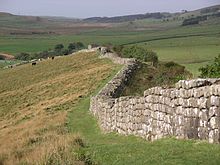
The name was borne by Publius Aelius Hadrianus (76-138 CE), known in the modern world as Emperor Hadrian, he is most famous for the wall he built across Great Britain, known as Hadrian’s Wall.
The name remained common throughout Europe, and is fairly popular across the Western World till this day. It was borne by several saints and popes, including the first and only English pope, Adrian IV, as well as the only Dutch pope, Adrian VI.
Currently, Adrian is the 6th most popular male name in Spain, (2010) and the 7th most popular in Norway, (2010). His rankings in other countries are as follows:
  • # 29 (Catalonia, 2009)
  • # 33 (Poland, 2010)
  • # 43 (Germany, 2011)
  • # 48 (Austria, 2010)
  • # 49 (Croatia, 2010)
  • # 51 (France, Adrien, 2010)
  • # 56 (United States, 2010)
  • # 60 (Sweden, 2010)
  • # 63 (Hungary, 2010)
  • # 81 (Belgium, Adrien, 2009)
  • # 455 (France, Adrian, 2009)

Other forms of the name include:

  • Ad (Afrikaans/Limbergish)
  • Adriaan (Afrikaans/Dutch)
  • Adrianus (Afrikaans/Latin)
  • Arrie (Afrikaans)
  • At (Afrikaans)
  • Daan (Afrikaans)
  • Jaans (Afrikaans)
  • Adrian Адриан (Albanian/Bulgarian/Croatian/Dutch/English/Finnish/Polish/Romanian/Russian/Scandinavian/Ukrainian)
  • Ardian (Albanian)
  • Adrianu (Asturian/Corsican/Sicilian)
  • Adiran (Basque)
  • Adrijan (Bosnian/Croatian/Serbian/Slovene)
  • Hadrijan (Bosnian)
  • Adrià (Catalan)
  • Jadran(ko) (Croatian)
  • Adrián (Czech/Hungarian/Slovak/Spanish)
  • Arie (Dutch)
  • Arjan (Dutch)
  • Hadrian(us) (Dutch/German/Latin)
  • Adrien (French)
  • Hadrien (French)
  • Aidrean (Gaelic)
  • Adrán (Galician)
  • Adrao (Galician)
  • Hadrán (Galician)
  • Hadrao (Galician)
  • Hádrian (Galician)
  • Adrianos Αδριανός (Greek)
  • Adorján (Hungarian)
  • Adrían (Icelandic)
  • Adriano (Italian/Portuguese)
  • Adrio (Italian)
  • Adriāns (Latvian)
  • Adrianas (Lithuanian)
  • Adrijonas (Lithuanian)
  • Adrião (Portuguese)
  • Adriànu (Sardinian)

Feminine forms include:

  • Adriana  (Albanian/Bulgarian/Catalan/Czech/Galician/German/Greek/Italian/Latin/Lithuanian/Polish/Romanian/Russian/Slovak/Spanish)
  • Adrijana (Bosnian/Croatian/Serbian)
  • Hadrijana (Bosnian/Croatian/Serbian)
  • Jadranka (Croatian)
  • Adriána (Czech/Hungarian/Slovak)
  • Ariane (Dutch)
  • Hadriana (Galician/Latin)
  • Adria (German/Italian)
  • Adriane (German)
  • Adrienne (French)
  • Adrienn (Hungarian)
  • Adrianna (Polish)
  • Drina (Spanish)

Polish feminine diminutives are Ada and Adi.

Cornelia, Cornelius

Origin: Latin
Meaning: “horn.”
Eng (kore-NEE-lee-ah); (kore-NEE-lee-us).

The names are ultimately derived from a Roman clan name, known as the Cornelii, they were one of the most distinguished and influential clans in both the Roman Republic and Empire. Infact, it is believed that over %30 percent of all consulships were held by members of the Cornelii.

The name is believed to be derived from the Latin word cornu meaning “horn.”

The name is found in the New Testament, in the Acts, as the name of the first gentile convert to Christianity. The female counterpart was borne in history by Cornelia Africana, (2nd century B.C.E), the mother of the reformers known as the Gracchi brothers.

Other forms of the names include:

  • Kerneels (Afrikaans)
  • Kornel (Czech/Polish/Slovak)
  • Cornelis/Kornelis (Dutch)
  • Corneel/Korneel (Dutch)
  • Cees/Cor/Corné/Kees/Neel/Nelis (Dutch: diminutive forms that are sometimes used as independent given names)
  • Cornel/Cornelius (English)
  • Corneille (French: more common form)
  • Cornélius (French)
  • Cornelius/Kornelius (German: diminutives include, Corni, Corny, Neli and Nelli).
  • Niels (German/Dutch: originally a diminutive form, now used exclusively as an independent given name)
  • Kornél (Hungarian: 59th most popular male name of 2005 in Hungary)
  • Cornelio (Italian: diminutive form is Nello)
  • Korneli/Korneliusz (Polish: diminutive is Kornelek)
  • Cornélio (Portuguese)
  • Cornel/Corneliu (Romanian)
  • Cornel (Romansch)
  • Cornelio (Spanish)

Feminine forms include:

  • Kornelia (Czech/German/Polish: Polish diminutive form is Kornelka)
  • Cornelia (Dutch/English/German/Italian/Romanian/Spanish/Swedish: Dutch diminutive forms are Cokkie. In 2007, Cornelia was the 61st most popular female name in Sweden)
  • Neele (Dutch: originally a diminutive form, used as an independent given name)
  • Cornélie (French)
  • Nele (German: initially a diminutive form, now used as an independent given name, and currently very trendy in German speaking countries NEL-e)
  • Kornélia (Hungarian/Slovakian)

English diminutive forms for males are Corey and Neil, and for females they are usually Corey, Nell or Nellie.

Name-days are September 16/November 16 (Austria/Germany), December 17 (Slovakia)

Renata, Renatus, René, Renée

Origin: Latin
Meaning: “rebirth.”

The origins of René and Renée can be traced back to the Late Latin male name Renatus, meaning “rebirth; born again.” The name is borne by several saints in both its Latin masculine form and feminine Latin form. The French forms have experienced usage in the Netherlands, Slovenia, Slovakia, the Czech Republic as well as Anglo-phone countries.

Renée enjoyed a short spout of popularity in the United States during the late 60s and early 70s, the highest it peaked was in 1967 coming in at # 62. As of 2008, she came in at # 734. Surprisingly, its masculine version ranked in higher in the top 1000, coming in as the 561st most popular male name in 2008. René is still somewhat prevalent among the Cajun and Creole communities of Louisiana.

In 2005, he was the 57th most popular male name in Slovenia.

Renata has experienced usage from South America to Eastern Europe, she is a common choice in Poland, Germany, Italy and Brazil. In 2006, she was the 34th most popular female name in Chile and the 68th most popular female name in Hungary.

Other forms of the name include:

  • Renata (Czech, Croatian, German, Italian, Lithuanian, Polish, Portuguese, Spanish. Polish diminutive forms are: Rena, Renatka and Renia. Spanish diminutive form is Renita, often used as an independent given name)
  • Renate (Dutch/German)
  • Renáta (Hungarian/Czech/Slovak)

Masculine forms include:

  • René (French, Czech, Dutch, German, Hungarian, Slovakian, Slovenian)
  • Renát (Hungarian/Slovakian)
  • Röné (Hungarian)
  • Renato (Italian/Spanish)
  • Renatus (Late Latin)
  • Renáto (Slovakian)
  • Renátus (Slovakian)

The designated name-day is November 6 in Slovakia, October 19 in France, November 12 in Poland and Lithuania, November 28 in the Czech Republic (Renata is October 13); October 6 in Hungary and January 23 in Estonia.

The name is borne by French mathematician and philosopher René Descartes and French painter René Magritte and American actress Renée Zellweger.

Ursula

ursulaBritishMuseumGender: Feminine
Origin: Latin
Meaning: “little she-bear; she-cub; little female bear.”
Eng (ERS-uh-LAH)

The name is of Latin origin but is suggested that is may be a latinization of the old Germanic female name Yrsa meaning “bear” and was popularized by a medieval Christian saint said to be martyred in Cologne. Not much is known about the saint, other that she was martyred under Huns along with 11,000 other virgins, which is now believed to be a misprint from the written source of the legend. What is known for sure is that there was a basilica built in honour of a virgin Christian martyr in Cologne and from this arose several different legends referring to a St. Ursula and St. Cordula. According to the legend, St. Ursula was a British princess who was sent by her father to Germany to marry a prince, along with her, were sent 11,000 maidens, however,  her ship was taken off course due to a storm and instead ended up in France where she then decided to do a pan-European Christian pilgramage before meeting her future husband. She made a pilgramage to Rome where she tried to pursuade the pope to do a pilgramage with her and her 11,ooo companions. When she reached cologne she and her companions were massacred by the Huns.

The legend is based off of a 4th century inscription written in the Basilica which was built in the saint’s honour. It is believed that the 11,ooo handmaidens was confused with a female martyr named Undecimilia, Undecimila or Xemilia and that the abbreviation XI.M.V was misread as a number. The same saint has also been referred to under the names Pinnosa or Vinnosa. The name was quite prevalent in Great Britain before the Reformation and went out of usage afterwards. The name is also borne by Swiss actress Ursula Andress (b. 1936). It has also appeared in popular culture as the name of the evil sea-witch in Disney’s the Little Mermaid and as the name of the wife of Nigellus Phineas Black in the Harry Potter Series.

In Poland, the name is associated with a great piece of Polish Literature written by Jan Kochanowski. Known as Laments (Treny) 1580, they are a series of 19 elegies which talk about the author’s grief after the death of his two and half year old daughter Orszola (Urzula) which he refers to as the Slavic Sappho.

Other forms of the name are (divided alphabetically by nationality):

  • Orsula (Corsican)
  • Uršula (Croatian/Czech/Slovakian/Slovenian)
  • Yrsa (Danish/Faroese/Icelandic/Norwegian/Swedish)
  • Orsel (Dutch)
  • Ursule/Ursuline (French)
  • Ursula/Ursel (German/Dutch/Estonian/Finnish/Spanish: German diminutive forms are Ulla, Uli and Uschi)
  • Orsolya (Hungarian: or-SHOH-lah was the 56th most popular female name in Hungary in 2006)
  • Úrsúla (Icelandic)
  • Orsina/Orsola/Orsolina (Italian)
  • Ursa (Latin)
  • Urzula (Latvian)
  • Uršulė (Lithuanian)
  • Urszula/Orszola/Warszula (Polish: Latter two forms are older forms and are rarely used. Diminutive form is Ula and Urszulka. Older diminutive forms are Ulicha and Ulita)
  • Úrsula (Portuguese)
  • Ursetta/Ursina/Urschla (Romansch)
  • Urška (Slovenian: originally a diminutive now used as an independent given name, it was the 51st most popular female name in Slovenia in 2005)
  • Orscheli (Swiss-German: ORSH-lee)

There are a few male equivalents which include:

  • Orso/Orsino/Ursio/Ursino (Italian)
  • Urs (German)
  • Ursinus/Ursus (Latin)
  • Ursyn/Ursycjusz (Polish: very rare)
  • Ursin/Urosin (Romansch)

Wendel, Wendelin

401px-Pfärrenbach_Wandmalerei_Hl_WendelinGender: Masculine
Origin: German/Dutch
Meaning: “vandal.”
Eng (WEN-dle); Germ (VEHN-del)
Eng (WEN-deh-LIN); Germ (VEHN-deh-LEEN)

Wendel is derived from an Old Germanic element wendal meaning “a Vandal” someone who is a member of a Germanic tribe of the same name. It is the name of a municipality in northeastern Saarland Germany, which was named for St. Wendelin of Trier. St. Wendelin of Trier (577-617) was a German hermit and abbot known for his piety. He is a popular saint among German-speaking Catholics and is regarded as the patron saint of herdsmen and country people. The designated name-day is October 20 and October 22, depending on the country. Wendelin was originally a diminutive form of Wendel. Other forms of the name include:

  • Vendelin (Croatian)
  • Vendelín (Czech/Slovak)
  • Wendell (English)
  • Vendel (Danish/Hungarian/Norwegian/Swedish)
  • Vandalius (Lithuanian)
  • Wandal/Wandalin (Old High German)

Feminine forms are:

  • Vendelina (Croatian)
  • Vendelína (Czech/Slovak)
  • Vendele (Danish)
  • Wendy (English)
  • Wendela/Wendeltsje/Wendeline (Dutch)
  • Wendelina (German)
  • Venla (Finnish)
  • Vendella (Latvian)
  • Vendela (Swedish: was the 93rd most popular female name in Sweden in 2006)