Phoebe

Gender: Feminine
Origin: Greek
Meaning: bright; light
(FEE-bee).

To many Americans, Phoebe brings to mind the wacky yet lovable character of Phoebe Buffay on the popular SitCom, Friends. To the British, she is of an upper crust trendy sort, to Christians, she is an admirable woman in the New Testament, and to the Greeks, she is a classic, featured in both the Greek Orthodox calendar of saints as well as in Greek myth.

The name is derived from the Greek, Phoibus, which means “bright, light.”

In Greek Mythology, Phoebe was a pre-Olympic goddess, a Titan. She was the goddess of the moon and the consort of her own brother Coeus, from him, she mothered Asteria and Leto and was believed to be the grandmother of Artemis and Apollo.

The Greeks later associated her with the goddess Artemis. Phoebe was often used as an epithet for Artemis, while the masculine form, Phoebus, was used for Apollo.

Phoebe was also associated with the Oracle of Delphi.

There are a few other Phoebes mentioned in ancient Greek religion, one was a Heliade nymph, another was the daughter of Leucippus and Philodice.

Phoebe, daughter of Leucippus, and her sister Hilaeira, were priestesses to Artemis and Athena. They were both betrothed to Idras and Lynceus. Castor and Pollux, the divine twins, were so impressed by their beauty, that they fell in love with the two maidens and carried them off for themselves. Idras and Lynceus, outraged, sought the two immortals but were both slain. Nevertheless, Phoebe married Pollux. It was also the name of a sister to Leda.

In the New Testament, the name is borne by a woman of Cenchrae, many scholars argue that she was a deaconess, the Catholic Church especially seems to support this stance. She is also believed to have brought Paul’s Epistle of the Romans to Rome. She is a canonized saint in both the Catholic and Greek Orthodox Churches, both rites hold her feast on September 3rd.

Fast forward to the 1500s and you will find the name Phebe, (an older English spelling), as the name of one of Shakespeare’s characters in his play, As You Like It. In the modern American Classic, she is the younger sister of Holden Caulfied in J.D. Salinger’s Catcher in the Rye. Polish Science Fiction writer, Jacek Duraj, uses the name as an acronym for post-human beings in his novel Perfekcyjna niedoskonałość.

Phoebe is also the name of a genus of evergreen tree, a species of bird and a moon of the planet, Saturn.

As of 2010, Phoebe was the 29th most popular female name in England/Wales. Her rankings in other countries are as follows:

  • # 56 (Australia, NSW, 2010)
  • # 90 (Northern Ireland, 2010)
  • # 93 (Scotland, 2010)
  • # 309 (United States, 2010)

Other forms of the name include:

  • Febe (Asturian/Danish/German/Italian/Norwegian/Polish/Portuguese/Spanish/Swedish)
  • Foibe (Danish)
  • Phoebe (Dutch/English/German)
  • Phœbé/Phébé (French)
  • Phoibe (German)
  • Phoebi/Phoibi (Greek)
  • Feba (Serbo-Croatian)
  • Foibe (Swedish)

Anna, Anne

Gender: Feminine
Origin: Biblical Hebrew
Meaning: “grace.”
(ANN; AHN). (ANN-uh; AHN-nah). (HANN-uh; HAHN-nah)

Anne is possibly one of the quintessential classic English and French female names. Prior to the 18th-century, it seems that every other girl born in England was either named Anne, Jane or Mary. There were several British and French queens who bore this simplistic moniker, including the ill fated Anne Boleyn, the mother of Elizabeth I. The history of Anne is rather long and complicated.

It was foremost popularized through the cult of St. Anne, a legendary figure who was said to be the mother of the Virgin Mary and the grandmother of Christ.

In Brittany, the name became especially popular because it happened to coincide with the name of an ancient Celtic goddess, her cult being replaced by St. Anne’s. In fact, it was borne by one Breton Princess, Anne of Brittany.

The name was introduced into Britain by the French-Normans after the invasion in 1066. Previously, there had been a minor Saxon king named Anna, but in this case the name is related to the Saxon arn (eagle). Anna and Anne are still occasionally used as male given names in Friesland.

Other than the apocryphal saint, the name Anne can be traced directly back to the Bible. In the New Testament, it is the name of a prophetess who predicts the Crucifixion of Christ.

Anna (Αννα), is the Greek translation of the early Hebrew Channah חַנָּה, usually transliterated as Hannah, meaning “grace.”

Hannah is borne in the Old Testament by the faithful mother of the prophet, Samuel.

Hannah has always been popular among Jewish families, but was virtually unheard of among non-Jews before the Reformation, except in some cases where it may have been used as a diminutive form of Johanna, spelled Hanna.

It was the Byzantines who had introduced the Anna form to the world, making it popular throughout Eastern and Southern Europe. It was a very popular name among the Byzantine royal family and it was borne by the majestic Anna of Byzantium.

Anna may be the more melodic form of the bunch, but Anne’s minimalistic qualities are charming. Short, to the point, no frills. It’s not a bad name, though it does lack some spice, which is why parents are probably more attracted to its more exotic alternatives. In fact, Anne only comes in at # 608 in the top 1000 female names of the United States. It is safe to say, however, that she is very much loved in the middle name spot.

Anna is currently one of the most popular female names in Europe and abroad. Her rankings are as follows:

  • # 1 (Austria, 2010)
  • # 1 (Estonia, 2011)
  • # 2 (Hungary, 2010)
  • # 3 (Ana, Georgia, 2010)
  • # 3 (Iceland, 2010)
  • # 4 (Ana, Croatia, 2010)
  • # 4 (Czech Republic, 2010)
  • # 4 (Germany, 2011)
  • # 4 (Ukraine, 2010)
  • # 5 (Faroe Islands, 2010)
  • # 5 (Ana, Portugal, 2010)
  • # 6 (Armenia, 2010)
  • # 6 (Ane, Greenland, 2002-2003)
  • # 6 (Ana, Romania, 2009)
  • # 6 (Ana, Serbia, 2010)
  • # 7 (Latvia, 2011)
  • # 7 (Russia, 2011)
  • # 8 (German-speaking Switzerland, 2010)
  • # 9 (Denmark, 2011)
  • # 10 (Netherlands, 2010)
  • # 10 (Northern Ireland, 2010)
  • # 10 (Norway, 2010)
  • # 11 (Italy, 2010)
  • # 12 (Ireland, 2010)
  • # 14 (Poland, 2010)
  • # 16 (Catalonia, 2010)
  • # 26 (Canada, B.C., 2010)
  • # 28 (Italian-speaking Switzerland, 2010)
  • # 28 (United States, 2010)
  • # 29 (Scotland, 2010)
  • # 40 (France, 2009)
  • # 46 (French-speaking Switzerland, 2010)
  • # 53 (Belgium, 2009)
  • # 63 (England/Wales, 2010)
  • # 71 (Australia, 2010)
  • # 81 (Sweden, 2010)
  • # 83 (Spain, 2010)
Other forms of the name include:
  • Anneen (Afrikaans/Low German)
  • Anna Анна (Afrikaans/Albanian/Armenian/Breton/Bulgarian/Catalan/Corsican/Czech/Dutch/English/Estonian/Faroese/Finnish/French/Frisian/German/Greek/Hungarian/Icelandic/Italian/Latvian/Limburgish/Maltese/Polish/Russian/Ukrainian/Scandinavian/Slovak)
  • Anne (Basque/Dutch/English/French/Scandinavian)
  • Gánna Га́нна (Belarusian)
  • Annaig (Breton)
  • Annick (Breton)
  • Maina (Breton)
  • Mannaig (Breton)
  • Mannick (Breton)
  • Naig (Breton)
  • Ana Ана ანა (Bulgarian/Croatian/Galician/Georgian/Lombard/Macedonian/Portuguese/Romanian/Samogaitian/Serbian/Slovene/Spanish/Venetian)
  • Jana (Croatian/Ladino)
  • Aneta (Czech/Polish/Samogaitian/Slovak)
  • Aina (Catalan)
  • Anica (Croatian/Serbian/Slovene)
  • Ane (Danish)
  • Anika (Danish)
  • Anneke (Dutch)
  • Anneken (Dutch)
  • Annika (Dutch/Finnish/German/Latvian/Scandinavian)
  • Anka (Dutch/Frisian/German)
  • An(n)ke (Dutch/Frisian)
  • Anouk (Dutch/French)
  • Ans (Dutch)
  • Enneke (Dutch)
  • Enneken (Dutch)
  • Anita (English/German/Polish/Spanish)
  • Annette (English/French/German)
  • Anissa (English)
  • Annelle/Annella (Estonian)
  • Anete (Estonian/Latvian)
  • Anett (Estonian)
  • Anu (Estonian)
  • Anni (Finnish)
  • Annikki (Finnish)
  • Anniina (Finnish)
  • Annukka (Finnish)
  • Niina (Finnish)
  • Anaïs (French/Provençal)
  • Annouche (French)
  • Ninette (French)
  • Ninon (French)
  • Ninouk (French)
  • Anje (Frisian)
  • Ankea (Frisian)
  • Antje (Frisian)
  • Antjen (Frisian)
  • Anute (Fruilian)
  • Anano (Georgian)
  • Annchen (German)
  • Annel (German)
  • Annele (German/Latvian)
  • Anneli(e) (German/Finnish/Swedish)
  • Annet (German)
  • Anina (German)
  • Anja (German/Slovene)
  • Anouschka (German/Italian/Russian)
  • Annaki (Greek)
  • Annoula (Greek)
  • Noula (Greek)
  • Anikó (Hungarian)
  • Annuska (Hungarian)
  • Panni (Hungarian)
  • Áine (Irish)
  • Ánna (Irish)
  • Annarella (Italian)
  • Annella (Italian)
  • Annetta (Italian)
  • Annettina (Italian)
  • Nona (Italian/Romansch)
  • Ance (Latvian)
  • Annija (Latvian)
  • Anninya (Latvian)
  • Ona (Lithuanian)
  • Annamma (Malayalam)
  • Annam (Malayalam)
  • Onnee (Manx)
  • Âone (Norman)
  • Aenna/Aenne (Old High German)
  • Annehe (Old High German)
  • Änna/Änne (Old High German)
  • Neta (Piedmontese)
  • Noto (Piedmontese)
  • Anke (Plattdeutsch)
  • Anneke(n) (Plattdeutsch)
  • Analia (Romansch/Spanish)
  • Annina (Romansch)
  • Annotta (Romansch)
  • Anca (Romanian)
  • Anicuta (Romanian)
  • Anėta (Samogaitian)
  • Anėkė (Samogaitian)
  • Annag (Scottish)
  • Ghianna (Sicilian)
  • Janna (Sicilian)
  • Nanna (Sicilian)
  • Anniken (Swedish)
  • Ann (Welsh)
  • Nan (Welsh)
  • Nanno (Welsh)
  • Nanw (Welsh)
  • Aana (Wolof)
As for the Hannah forms

Hanna without an H is the prefered form on Continental Europe, usually pronounced (HAHN-nah) and in French like Anna. Hanna and Hanne (HAHN-neh) are also used as diminutive forms of Johanna/Johanne in the Netherlands, Sweden, Norway, Denmark and Germany. There is the Hungarian Hajna pronounced (HOY-no). The Czech/Slovak form of Hana nickname Hanka. There are the Yiddish forms of Heyna, Hayna, Hejna (all pronounced like HAY-nah) including the diminutive forms of HenaHende, Hendel and Henye.  The Polish diminutive form of Hania, which might make an interesting alternative to Anya or Hannah. Hannah, Hanna and Henna are all used in the Middle East.

Of course, how could we ever forget the popular diminutive forms of Annie and Nan.

Lydia

Gender: Feminine
Origin: Latin/Greek
(LID-dee-uh)

Lydia has a sweet feminine vibe. Its classic without sounding too stuffy. Lydia could work just as well on a five month old as it would on a 55 five year old. It has the same feel as the popular Olivia and it wouldn’t be surprising if Lydia soon took Olivia’s place. Lydia currently stands as the 120th most popular female name in the United States.

As for Lydia’s history, it first appears as a given name in the New Testament. It was the name of a woman who had converted to Christianity after befriending St. Paul. Some scholars believe that Lydia was not her actual name, rather, it was a nickname to denote her place of origins, (Lydia in Asia Minor).

Lydia is a Greek word for an ancient country, known in Assyrian as Luddu, this particular’s country’s culture and language has been lost to history and speculation. The Greeks talked quite a bit about it, and in the Bible it is often refered to as Lud.

Lydia has multiple forms, including:

  • Lidiya Лидия (Bulgarian/Russian: Lidochka is a Bulgarian diminutive form)
  • Lídia (Catalan/Hungarian/Portuguese/Spanish)
  • Lýdie (Czech: LEED-yeh)
  • Lydia Λυδια (English/Estonian/Greek)
  • Lii/Ly (Estonian)
  • Liidia/Liidi (Estonian)
  • Lyydia/Lyyti (Finnish)
  • Lydie (French: LEE-DEE)
  • Lida (Hungarian)
  • Licia (Italian: lee-CHEE-ah).
  • Lidia (Polish/Italian/Romansch: a Polish diminutive form is Lidka.)
  • Livli (Sami)
  • Lýdia (Slovakian)
  • Lidija (Slovene/Croatian: diminutive forms are, Lidonka, Lidunka and Liduška)

In other Continental European countries, the name is usually rendered the same as it is in English. In German speaking countries its pronounced (LUY-dee-ah). Its designated name day is August 3rd.

Martha, Marta, Marthe

Origin: Aramaic
Meaning: “lady.”
Eng (MAR-thuh); (MAR-tah); Fre (MAHRT)

Vintagy, classic and a bit waspy, Martha brings to mind quaint housewives of Connecticut and solid first ladies.

The name traces its origins back to the New Testament, being the name of the sister of Lazarus and Mary of Bethany. It seems almost fitting that she is the patron saint of cooks! It is derived from the Aramaic word martâ מַרְתָּא meaning “lady”

Its continental form of Marta, has a sweet, exotic appeal. Martha might feel a bit too heavy and clunky for a comeback, but Marta certainly has potential. Other forms include:

  • Marte (Basque)
  • Marta(Catalan/Bulgarian/Croatian/Czech/Georgian/Italian/Norwegian/Polish/Romanian/Serbian/Slovakian/Slovene/Swedish
  • Martta (Finnish)
  • Marthe (French: MAHRT)
  • Martje (Frisian: MAHRT-ye)
  • Marta/Marthe/Martha (German/Dutch: MAHR-te/MAHR-tah)
  • Martha Μαρθα (Greek)
  • Martâ מרתא (Hebrew)
  • Márta (Hungarian)
  • Morta (Lithuanian)
  • Marte (Norwegian: MAHR-te)
  • Marfa Марфа (Russian)
  • Märtha (Swedish: MARE-tah).

The name was borne by Martha Washington, the first First Lady of the United States and was borne by several other St. Marthas. Of course, how can we ever forget Martha Stewart.

A Spanish diminutive form is Martita, a Hungarian diminutive form is Mártuska. Polish diminutives are: Marusza MarchwaMarocha, Marsza, Marszka, Marucha, Maruchna, Maruszka

Magdalena, Madeleine, Madeline

Gender: Feminine
Origin: Latin
Meaning: “of Magdala.”

We have the exotic and sophisticated Magdalena, the French classic Madeleine and the English trend setter Madeline.  The origins of these names go all the way back to the Bible, the New Testament to be exact. It is derived from a title given to the famous Catholic saint, Mary Magdalen, also known as Mary of Magdala. Magdala, being the town that the former prostitute turned follower of Christ, hailed from, a town on the sea, near Galilee, its meaning being “tower.”

In the Middle Ages, St. Mary Magdalen was a beloved saint, making the name popular in virtually every European country, evolving into myriad different forms. The cult of St. Mary Magdalen was especially popular in France, where she was known as La Madeleine (lah mah-deh-LEN). In fact, tradition holds that, after the death of Christ, Mary Magdalen travelled to France, where she converted many of the early inhabitants to the new faith. She is considered one of France’s patron saints and it is believed that her bones were buried in France. La Madeleine gave her name to several communes in France as well as a river. It is even the name of a famous French pastry.

While you are out rushing to work, standing in line, getting your daily fix of Starbucks, you may notice that at the front counter there are packages of a soft little sponge-like cookie. These are madeleines or petit madeleines. They are a popular snack in France, made from lemon and butter, and are known for their distinctive shell shape. Legend has it that they acquired their name from the lady who invented them, Madeleine Paulmier. They are a delightful little treat, and I recommend that the next time you are at Starbucks, you should try them yourself.

Likewise, Madeleine has been a very popular choice in Great Britain and currently ranks in as the 80th most popular feminine name in Britain and Wales for 2007, while in its home country of France, it comes in rather low. It was the 454th most popular feminine name in France for 2006.

Let us not forget the fun and sweet version of Madeline (MAD-eh-LINE), Madeline seems to be specifically a North American version of the French form. Originally pronounced (MAD-eh-LIN), its preferred pronunciation has switched over to the former in the last decade, no doubt due to the popular children’s series of books of the same name.

Madeline has been quite popular the last few years, she ranked in at a whopping 61 in the 2007 most popular feminine names in the United States. She has also made her mark in other non-British English speaking countries, such as Canada and Australia. In Canada she came in at 85, while in Australia 93.

There is also the trendified corrupted form of Madelyn, which currently comes in at # 104, however, it is advisable to use the French spelling if you prefer the (Mad-eh-lin) pronunciation, which seems to be the goal of the parents of the Madelyns.

Nicknames include Maddie, Leine and Lynn. The name is borne by Princess Madeleine of Sweden, Madeleine Albright, and author Madeleine L’Engle.

Let us now move on to its Eastern European alternative of Magdalena (MAHG-dah-LAY-nah). This form is used in Spain, the Czech Republic, Slovakia, Bulgaria and Poland. It is especially popular in both Poland and the Czech Republic where it is often shortened to Magda, and occasionally Lenka. There are the Czech spin offs of Alenka and Madlenka, used as an independent name.

Magdalena might be appealing to English speaking parents who love the nickname Maggie but really dislike Margaret. On top of that, it can be shortened to appealing and trendy Laney or even Lena.

Other forms of the trio include:
  • Magdalawit (Amharic/Eritrean)
  • Maialen (Basque: MY-ah-LEN)
  • Madenn (Breton)
  • Miglena (Bulgarian)
  • Alena (Czech-Slovak and occasionally used in Germany. Diminutive form is Alenka)
  • Magdaléna (Czech)
  • Mahulena (Czech: a form created by Czech author, Julius Zeyer, for his his Ráduz and Mahulena-1898)
  • Magdalene (Danish)
  • Magdalone/Malene/Lone (Danish)
  • Malle/Madli (Estonian pronounced MAHL-leh and MAHD-lee) other forms include Mall, Leen (LANE), Leena and Made (MAH-deh)
  • Matleena (Finnish pronounced maht-LAY-nah) diminutive forms now commonly used as independent names include: Leen, Leena and Lenita)
  • Magdeleine (French: archaic form)
  • Leni (German: originally a diminutive form, it has recently become trendy in German speaking countries as an independent name)
  • Madelene (German: mah-deh-LEH-neh: other forms include, Madlene and Madlen)
  • Magdalini (Greek Modern-pronounced mahg-dah-LEE-nee)
  • Magdolna (Hungarian, pronounced mog-DOH-noh) diminutive forms now popularly used as independent name in Hungary are Lenke (LEHN-keh) and Duci (DOOT-see).
  • Madalein (Irish-Gaelic)
  • Mailin (Irish-Gaelic)
  • Maddalena (Italian pronounced mahd-dah-LAY-nah. Other forms include Maida, Madina and Magdala)
  • Madala (Latvian) another form is Magone
  • Talena (Latvian/Scottish)
  • Maguelone (Occitanian)
  • Madalena (Portuguese pronounced mah-dah-LAY-nah)
  • Maclaina (Romansch pronounced mugg-LIE-nah) other Romansch forms include Madina, Madlaina (mudd-LIE-nah) and Madlena (mudd-LEH-nah).
  • Madalina (Romanian pronounced mah-dah-LEE-nah)
  • Magdalina Магдалина (Russian)
  • Manda (Serbo-Croatian/Macedonian/Slovene)
  • Madlena (Sorbian)
  • Malin/Målin (Swedish/Norwegian pronounced MAW-lin, other forms include Malena and Madicken (MAH-dee-KEN)
  • Mädi (Swiss-German: dialectical form from Bern MAD-dee)
  • Magdalyna (Ukrainian)
  • Madałena (Venetian)

Other popular offshoots include the English corrupted form of Madelaine (MAD-eh-LANE): given to the daughter of David Duchovny and Téa Leoni. The dated German forms of Marlene (Eng mar-LEEN; Germ mahr-LEH-neh) & Marla and the Polish Marlena.The designated name day for all of these names is July 22.

French diminutives are Mado and Madelon. Polish diminutive forms are: Madzia, Magda, Magdunia, Magdusia and Magdeczka. Hungarian diminutives are, Duci

There are a few Italian masculine forms and that includes, Maddaleno, Magdalo and Maido.

Rhode/Rhoda

Gender: Female
Origin: Greek
Meaning “rose.”
(RO-dee); (ROH-dah)

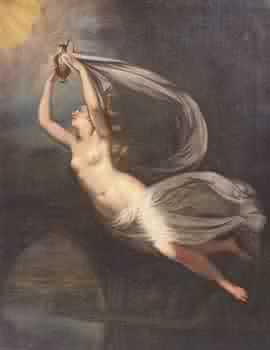
The name of a sea nymph and also possibly an ancient primordial sea goddess, according to Greek mythology, Rhode was one of the oldest of the Oceanid nymphs and was said to be the daughter of Poseidon/Oceanus and Tethys. She is sometimes claimed to be the daughter of Halia and Poseidon, Amphitrite and Poseidon or the daughter of Aphrodite.

It is even suggested by some scholars that Rhode, Halia and Amphitrite might have been one and the same sea goddess who was later replaced by the Olympic pantheon and relegated to a sea nymph.

Rhode’s cult was especially popular on the Isle of Rhodes where it was believed she was the wife of the sun-god, Helios and one and the same with the goddess Athena. She was the mother of the Curetes of Crete. It is also suggested that the Island of Rhodes gets its names from her.

There is also the more modern Biblical form of Rhoda, (RO-dah).

In the New Testament it was the name of a maid who lived in the house of Mary, mother of John Mark. In the English speaking world, Rhoda came into usage in the 17th century, she has not ranked in the U.S. Top 1000 since 1975 when she came in at # 777. The highest she ever ranked in U.S. naming history was # 159 in 1881. In the 1970s Rhoda was the name of a character in the popular sitcom of the same name.