Apollinaris, Apollinaire

  • Origin: Greek Ἀπολλινάρις
  • Meaning: “of Apollo.”
  • Gender: Masculine

The name is from the classical Greek, related to Apollo. It was borne by several early Christian saints. The most notable being St. Apollinaris of Ravenna, a Syrian Christian missionary to Ravenna who was martyred there and thereafter became the city’s patron saint.

The French form Apollinaire is linked to the Franco-Polish poet, Guillaume Apollinaire. He lived from 1880 to 1918. He was born Wilhelm Albert Włodzimierz Apolinary Kostrowicki.

Apolinary was common in Poland during the late 19th-century and early 20th-centuries, it is now obsolete. Diminutives include: Apolinek, Apollinek, Apolin, Apollin, Polin, Polinary, Polinarek, Polinaruś, Poli, and Polik.

In Italy, Apollinare was mainly used in the Romagna region due to it being the name of their patrion saint, but it has since fallen out of use.

Apollinaire sporadically appeared in the French Top 1000 between 1900 and 1926 and peaked at #403 in 1923. In 2024, 5 babies were given this name.

Neither its masculine form nor its feminine form had much usage in the English-speaking world. It was mostly used in families of Greek or Eastern European background during the late 19th-century.

Designated name-days include July 20th, July 23rd, and September 12th

Other forms include

  • Abolinarius أبونيناريوس (Arab Christian)
  • Apolighnar Ապողլինար (Armenian)
  • Apolinar Ապոլինար (Armenian, Spanish)
  • Apolinaris ܐܦܘܠܝܢܪܝܣ (Assyrian)
  • Apoliñari (Basque)
  • Apalinariy Апалінарый (Belarusian)
  • Appolinariy Апполінарій (Bulgarian, Ukrainian, Rusyn, Russian)
  • Apol·linar, Apol·linari (Catalan)
  • Apollinaris Ⲁⲡⲟⲗⲗⲓⲛⲁⲣⲓⲥ (Coptic, Dutch, English, German, Greek, Scandinavian)
  • Apollinari (Corsican, Sardinian)
  • Apolinár (Czech, Slovak)
  • Apollinaire (French)
  • Apolinario (Galician, Spanish)
  • Apo’linar აპოლინარ (Georgian)
  • Apollinarios Ἀπολλινάριος (Greek)
  • Apollinár (Hungarian)
  • Apollinare (Italian)
  • Apolenaris (Late Latin)
  • Apolinārs (Latvian)
  • Apolinaras (Lithuanian)
  • Apollinarju (Maltese)
  • Apolinary (Polish)
  • Apolinário (Portuguese)
  • Apolinàri (Provençal)
  • Pulinéra (Romagnol)
  • Apollinari (Romansh)
  • Apolinariu (Romanian)
  • Apolinarije (Serbo-Croatian, Slovenian)
  • Apołinare (Venetian)

Its feminine form is Apollinaria, which is also borne by an early Christian saint.

Other feminine forms include:

  • Abolinarya أبوليناريا (Arab Christian)
  • Apoghlinaria Ապողլինարիա (Armenian)
  • Apolinaria Ապոլինարիա, აპოლინარია (Armenian, Galician, Georgian, Polish, Romanian, Spanish)
  • Apolinaryja, Apolinariya,ܐܦܘܠܝܢܪܝܐ, Аполлинария (Assyrian, Bulgarian, Russian, Rusyn, Ukrainian)
  • Apalinariya, Apalinaryja, Апалінарія (Belarusian)
  • Apollinaria Ⲁⲡⲟⲗⲗⲓⲛⲁⲣⲓⲁ, Ἀπολλιναρία (Coptic, Corsican, German, Greek, Lithuanian, Romansh, Sardinian)
  • Apolinária (Czech, Portuguese, Sardinian, Slovak)
  • Apollinarie (French)
  • Apollinária (Hungarian)
  • Apolinārija (Latvian)
  • Apollinarja (Maltese)
  • Apolinària (Provençal)
  • Apolinarija (Serbo-Croatian, Slovenian)

A traditional feminine diminutive form in Russian is Polina. Polish diminutives include: Apollinka, Apollina, Apolinka, Apolla, Apola, Pola, Polka, Polcia, Polina, and Polinka. Modern Greek diminutives include: Nαρία (Naría), Πόλλα (Pólla), or Λίνα (Lina). Potential English short forms would include: Apple, Pollie, Polly, and Narey, or Narie.

Sources

Safin, Safana, Safina

Safin سَفِين is an Arabic male name that derives from the Arabic root, S-F-N س ف ن meaning, “ship.” Safin itself is the plural form and therefore means “ships.” The singular form of Safina سَفِينة (ship) is used as a female given-name. Another feminine form, which is Safana سَفّانة, literally meaning “boatwright” in modern Arabic derives from the same root but may have had a connotation of a precious gem or pearl in old Arabic and was also used as a term of endearment for a daughter.

The name is used in reference to “سفينة نوح” (safinat Nuh), which is Arabic for Noah’s ark.

Other forms include: Safeen (masculine), Saffanah (feminine), Safanah (feminine) & Safinah (feminine).

A Tatar form is Сәфинә” (Säfinä).

Safina is used throughout the Islamic world.

Sources

Spyridon, Spyridoula

Spyridon is a Byzantine Greek male name which comes directly from the Greek word σπυρίδιον (spyridion), meaning “basket.” Other sources suggest it is a hellenised form of the Latin Spiritus (spirit). It was popularized by a 4th-century Greek saint who played a key role in the Council of Nicaea. He is revered as the patron saint of Corfu and of potters.

His feast day is December 12.

Spiro & Spyros are its short forms, while Spyridoula is the femininine form.

Spiro was borne by the 39th vice president of the United States, Spiro Agnew (1918-1996).

It was borne by Spyridon Louis, the first modern Olympic Gold medalist in the 1896 Summer Olympics.

Forms and usage include:

  • Spiridoni, Spiridhoni (Albanian)
  • Asbiridun اسبيريدون (Arabic)
  • Spiridon Спиридон (Assyrian, Bulgarian, Croatian, German, Lebanese-Arabic, Romanian, Serbian)
  • Espiridió, Espiridó (Catalan)
  • Spyridon Σπυρίδων (Coptic, French, Greek)
  • Špiro (Croatian)
  • Spi’ridon სპირიდონ (Georgian)
  • Spiridione, Spiridone (Italian)
  • Spirydon (Polish)
  • Espiridão (Portuguese)
  • Spiridón (Russian)
  • Espiridón, Espiridión (Spanish)
  • Spyrydon Спиридон (Ukrainian)

Italian feminine forms include: Spiridiona & Spiridona.

Sources

Latif, Latifa

  • Origin: Arabic لَطِيْف
  • Meaning: “gentle; kind; benevolent.”

Latif is a masculine given-name which comes directly from the Arabic word لَطِيف (gentle; kind; benevolent). In Islam, Al-Latif لطيف, (the Kind; the Benevolent) is one of the 99 names of Allah (God). It’s feminine form is Latifa.

Latif & Latifa are commonly used throughout the Islamic world.

A notable American bearer is actress & singer, Queen Latifah.

Other forms include:

  • Latıif (m), Latıifa (f) (Avar)
  • Lətif (m), Lətife (f) (Azeri)
  • Latheef, Latheefa (Dhivehi)
  • Latifah (f) (Indonesian, Malaysian)
  • Letîf (m), Letîfe (f) (Kurdish)
  • Lәtyjif (m), Lәtyjifә (f) (Tatar)
  • Letife (f) (Turkish)
  • Lateef لطیف, Lateefa(h) (Urdu)

Sources

Fuad

  • Origin: Arabic فُؤاد
  • Meaning: “heart.”
  • Gender: masculine
  • Pronunciation: foo-AD

The name comes directly from the Arabic word for heart. It is used equally among Arab- Muslims & Christians. Among Christians, particularly Palestinians, Chaldeans and Lebanese Christians who profess Roman Catholicism, it is used in reference to the Sacred Heart of Jesus or the Immaculate Heart of Mary, in the same way the Spanish name Corazón is used in the Spanish-speaking world, though in the Arabic case, the name is strictly masculine.

Among Muslims, the term fu’ad is used at least 5 times in the Quran. The name is used throughout the Islamic world.

It is even used among Non-Arab groups in the Middle East, such as Mizrachi Jews.

The name was borne by two Egyptian kings.

Other forms include:

  • Fuad (Amharic, Azeri, Bosnian, Indonesian)
  • Fouad (Maghrebi)
  • Fuat (Turkish)
  • Fawad (Urdu)

A feminine form is Fuada(h).

Sources

Menas, Minas, Mina

  • Arabic مينا;
  • Armenian Մինաս
  • Coptic ⲙⲏⲛⲁ
  • Ge’ez ሜናስ
  • Greek Μηνᾶς

Menas is a popular male name among Eastern Christians, it is of uncertain meaning, it may derive from the Greek μήνη (mene) meaning, “moon,” or the ancient Egyptian Menes, which is the name of a 3rd-century BCE Egyptian pharaoh, in which case, the name derives from the ancient Egyptian, mnj (he who endures). It may also be related to the ancient Egyptian divinity name, Min, which is of uncertain meaning. However, according to Coptic tradition, the name means “amen.”

It is the name of a popular 2nd-century Coptic saint and martyr, known as Ⲁⲃⲃⲁ Ⲙⲏⲛⲁ (Abba Mina). According to legend, St. Menas’ parents were devout Christians who were having a hard time having children. His mother prayed to the Virgin Mary for a child, and she heard a response saying “amen,” this is where the name Menas supposedly derives from. It is speculated by some that the Western St. Christopher and the Eastern St. Menas are one and the same person. It is also borne by an Ethiopian saint of the 6th-century (CE) and a 16th-century CE Ethiopian emperor.

It was the name of 1st-century CE Roman admiral who features in Shakespeares, Antony & Cleopatra.

Other forms of the name include:

  • Minasə ሚናስ (Amharic)
  • Mina مينا; Мина ⲙⲏⲛⲁ Ми́на Міна (Arabic, Bulgarian, Coptic, Romanian, Russian, Ukrainian)
  • Minas Մինաս Μηνάς (Armenian, Greek)
  • Menna (Catalan)
  • Ménas (French)
  • Menas (German, Latin, Polish, Portuguese, Spanish)
  • Ménász, Mennasz, Mínász (Hungarian)
  • Mena (Italian)

Sources

Sharbel, Charbel

Sharbel, CharbelOrigin: Aramaic
Meaning: uncertain
Gender: Masculine
(shar-BEL)

A traditional Aramaic male name, many sources erroneously list this name as Arabic. Its meaning is illusive, but what is known is that the second element of the name is either from the Aramaic el (God) or Ba’al, meaning “master; lord.”

This is a very common name among Assyrian Christians as it was borne by an early Christian martyr and saint of Syria (known to Western Christians as St. Sarbelius). St. Sarbelius was martyred under the Roman Emperor Trajan.

In the 19th-century, the name was borne by a Lebanese mystic and monk, St. Charbel Makhlouf (1828-1898).

The name is sometimes transliterated as Šarbel or Šarbil.

Since this is the name of a saint venerated among Roman Catholics and Eastern Christians, there are equivalents that appear on several Christian calendars across the world, however, the following names are not necessarily in common use in said languages:

  • Xàrbel (Catalan)
  • Šarbel (Croatian/Czech)
  • Charbel (French, used among French-speakers of Lebanese or Assyrian descent)
  • Scharbel (German)
  • Sarbelius (Latin)
  • Chárbel (Spanish, used among Spanish-speakers of Lebanese descent, especially in Mexico where there is a large Lebanese-Mexican community)
  • Szarbel (Polish: not in use, but appears on the Catholic Saint calendar)

Sources

Hakim, Hakeem

Istanbul,_Hagia_Sophia,_AllahThe name is derived from an Arabic honorific title حكيم that can have several different meanings. The name roughly translates as “sage” or “wise” but it can also mean “physician” or “philosopher” and is often used to denote a doctor, judge or someone highly educated in a particular scientific field in the Arabic world.

It is also used as a given name in most of the Islamic world,as in Islam, Al-Hakim is one of the 99 names of Allah.

As of 2016, Hakeem 905th most popular male name. Hakeem first entered the U.S. top 1000 in 1989 when it peaked at its highest in popularity, coming in as the 586th most popular male name. Hakim has only appeared in the U.S. Top 1000 one time in 1976, when it was the 881st most popular male name.

In France, Hakim appeared in the Top 1000 between 1961 and 2008 and peaked in popularity in 1981 when it was the 161st most popular male name in France.

Another form is

  • Hakimi ჰაქიმი (Georgian)

Sources


Manel, Manelle

Gender: Feminine
Origin: Arabic
Meaning: “gift.”

The name is derived from the Arabic منحة (menhh) meaning, “gift.”

As of 2010, Manel was the 96th most popular female name in France, while its franconized version of Manelle came in as the 365th most popular female name, (2010).

The name is sometime transcribed as Manal. A masculine version is Manil.

The name should not be confused with the Catalan masculine form of Emmanuel.

Thaïs

Gender: Feminine
Origin: Greek Θαις
Meaning: “headband; band.”
Eng (tye-YEES); Fre (tah-YEEZ); Por (TAH-ees)

The name is derived from the Greek root for a band worn around the head. It was borne by a 3rd-century B.C.E. Greek hetaera who was credited as being the burner of Persopolis. She is sometimes believed to have been a lover of Alexander the Great, but there is no conclusive evidence that the two were ever together, what is known for sure is that she was the courtesan of Ptolomy Soter I, Alexander’s general. Her character later inspired other characters of the same name in both Classical Roman and post-Classical literature. She appears in Terence’s Eunuchas, her lines were later quoted by Cicero and a Thaïs is mentioned in Dante’s Inferno. In more recent history, she was the inspiration of Ivan Eframov’s novel, Thaïs of Athens (1975).

The name was also borne by a legendary Egyptian Christian saint who was believed to have originally been a prostitute. She was converted by St. Paphnutius who had disguised himself as a “customer.” Thaïs became a fervent Christian, abandoning her comfortable life as a high-end prostitute and spending three years in repentance eventually dying in peace as a hermit in the Egyptian desert. Her story is the inspiration behind the Anatole France novel Thaïs (1890) which was later adapted into an opera of the same name. Demetre Chiparus famous sculpture, Thaïs, was in turn inspired by the Opera.
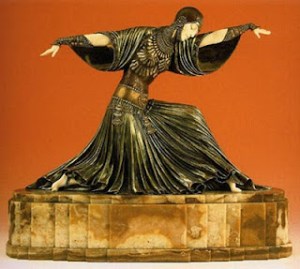
Due to the cult of St. Thaïs of Egypt, the name remained in use throughout the former Byzantine Empire. She was used to a certain extent on the continent and in 18th-century England during the Romantic Period.

As of 2010, Thaïs was the 97th most popular female name in France. Her Slovene form of Tajda was the 74th most popular female name in Slovenia, (2010), while Taja came in as the 23rd most popular female name in Slovenia, (2010).

Other forms of the name include:

  • Taisija/Taisiya (Bulgarian/Macedonian/Serbian/Russian/Ukrainian)
  • Taís (Catalan/Spanish)
  • Tayys تاييس (Coptic/Lebanese/Syrian)
  • Thaïs (English/French/German/Greek)
  • Thaisia (German)
  • Thaisis (German)
  • Taide (Italian)
  • Taisia (Italian)
  • Taida (Polish)
  • Tais (Polish)
  • Taisja (Polish)
  • Tesja (Polish)
  • Thaís (Portuguese)
  • Taja (Slovene)
  • Tajana (Slovene)
  • Tajda (Slovene)
  • Tajka (Slovene)
  • Tajša (Slovene)