
Shams

  • Origin: Arabic شمس
  • Meaning: “sun.”
  • Gender: Unisex
  • (SHEMZ)

The name comes directly from the Arabic word for “sun.” It was the name of a Pre-Islamic South Arabian sun goddess, the equivalent of the North Arabian diety, Nuha.

A strictly feminine form is Shamsa شمسة

Maghrebi spellings are Chams and Chamsa, a Comorian feminine form is Chamsia. Turkish forms are Şems and Şemsa.

The name shares an etymological link with the Hebrew male name, Samson.

It was borne by Shams Pahlavi, one of the sisters of (1917-1996), a member of the Iranian royal family.

In recent years, it has become particularly trendy among females in the Gulf Arab countries

Sources

Mais, Mays

  • Origin: Arabic ميس
  • Meaning: “hackberry tree; sugarberry tree”
  • Gender: feminine
  • Pron: (MAH-ees; MIES)

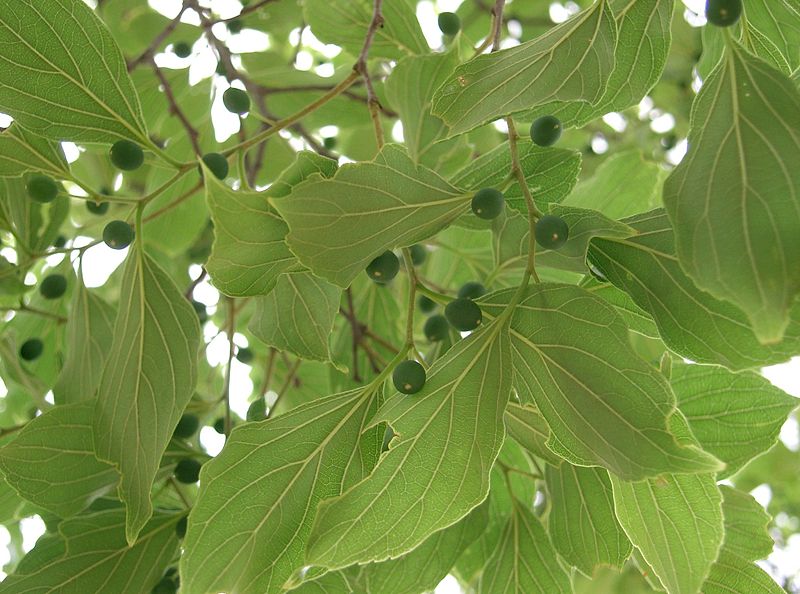
The name comes directly from the Arabic word ميس which is the name of the hackberry tree.

Sources

Azraq, Zaraq, Zarqaa

Photo by cottonbro studio on Pexels.com
  • Origin: Arabic زرقاء
  • Meaning: “blue”
  • (uz-ROCK); (zuh-ROCK); (zar-KA)
  • Usage: Arabic-Speaking countries, India and Pakistani among Muslim communities

Azraq أَزْرَق is from the masculine Arabic noun from the word for blue. The name has occasional use in Arabic-speaking North Africa and the Levant.

It’s feminine form of Zarqaa زرقاء is the Arabic feminine version of the word for blue زرقاء. It is transliterated as Zerqa or Zerka in Maghrebi Arab countries. Zerka can also be the Bosnian or Albanian form. This name has occasional use across the Islamic world.

Zaraq زرق is an Arabic unisex name derived from the neuter Arabic noun meaning “greenish-blue,” roughly translating to the color of turquoise (not the gemstone which in Arabic is Fairuz فيروز). Zaraq is mainly used as a masculine name in Southeast Asian countries such as Pakistan and India, but is considered unisex in the Arabic-Speaking world.

All three names derive from the Arabic root word z-r-q (ز-ر-ق), which means “blue.”

Other transliterations of the feminine form are Zurqa and Zurqa.’

Sources

Nectar, Nectaire, Nectarius, Nectaria

  • Origin: Greek
  • Meaning: “nectar.”

Nectar is the English form of the Greek Nektarios Νεκτάριος, which is derived from νέκταρ (nektar), meaning “nectar, the drink of the gods. Nectar is not a name that has ever been in common use in the English-speaking world, but since it is the name of several Eastern and Western Christian saints, the proper English male translation of the name would be Nectar; or it would have appeared thus in the calendar.

It was borne by St. Nectaire of Auvergne, a 4th-century Christian missionary to the Gauls in what is now the Massif Central region of France. According to Gregory of Tours, he was sent by Pope Fabian, along with his brothers, where he transformed a temple that was dedicated to Apollo on Mont Cornadore into a cathedral that still stands, and was subsequently beheaded by the local Gaulic chieftain. The commune of Saint-Nectaire in the Puy-de-Dôme department of France gets its name from him, as does the cheese of the same name; or the latter technically comes from the Marshal of Senneterre, which is a linguistic corruption of Saint-Nectaire.

Male forms include:

  • Nektarij, Nektary Нектарий (Bulgarian, Russian, Ukrainian)
  • Nectari (Catalan)
  • Nektarious (Coptic)
  • Nectarije (Croatian-Serbian)
  • Nectar (English)
  • Nectaire (French)
  • Nektari ნეკტარი (Georgian)
  • Nektarios Νεκτάριος (Greek)
  • Nettario (Italian)
  • Nectareus, Nectarius (Late Latin)
  • Nektārijs (Latvian)
  • Nektariusz (Polish)
  • Nectário (Portuguese)
  • Nectarie (Romanian)
  • Nectario (Spanish)

Feminine forms include

  • Nektaria, Nektarija Νεκταρία Nექთარიჯა Нектария (Coptic, Bulgarian, Georgian, Greek, Polish, Russian, Serbo-Croatian, Ukrainian)
  • Nectarie (French)
  • Nettaria (Italian)
  • Nectaria (Latin, Romanian, Spanish)
  • Nectária (Portuguese)

A modern male Greek diminutive form is Nektary and the Russian diminutive form for both the male and female form is Nechka.

Sources

Safin, Safana, Safina

Safin سَفِين is an Arabic male name that derives from the Arabic root, S-F-N س ف ن meaning, “ship.” Safin itself is the plural form and therefore means “ships.” The singular form of Safina سَفِينة (ship) is used as a female given-name. Another feminine form, which is Safana سَفّانة, literally meaning “boatwright” in modern Arabic derives from the same root but may have had a connotation of a precious gem or pearl in old Arabic and was also used as a term of endearment for a daughter.

The name is used in reference to “سفينة نوح” (safinat Nuh), which is Arabic for Noah’s ark.

Other forms include: Safeen (masculine), Saffanah (feminine), Safanah (feminine) & Safinah (feminine).

A Tatar form is Сәфинә” (Säfinä).

Safina is used throughout the Islamic world.

Sources

Manar

  • Origin: Arabic منار
  • Meaning: “beacon; lighthouse.”
  • Gender: feminine
  • mah-NAR

The name is from the Arabic منار‎ (manar) meaning, “lighthouse; beacon.”

Sources

Glesni

  • Origin: Welsh
  • Meaning: “blueness; verdure.”
  • Gender: feminine
  • Pronunciation: GLESS-nee

The name is derived from the Welsh word glesni (blueness; verdure).

Sources

Luluah

  • Origin: Arabic لبابة
  • Meaning: “pearl.”
  • Gender: feminine
  • Pronunciation: LOO-loo-wah

The name comes directly from the Arabic word لبابة meaning, “pearl.” It is the name of a famous mosque in Cairo, Egypt, built during the Fatimid Caliphate in the 10th-century, CE.

Other transliterated forms include: Lulua, Lu’lu’ah, Louloua & Lolua.

Sources

Poppy

Gender: Feminine
Origin: English

Are you loving Lily? Maybe the popularity has gotten to you. There is this spunky floral moniker that has already reached outrageous popularity in Great Britain. Poppy is a sweet little floral that has been in usage since at least the 19th century. The name may seem a bit too insubstantial for some, hence is why it is sometimes listed as a nickname for such names as Parthenope, Penelope, Persephone, Pippilotta, Philippa, Pomeline and Perpetua.

The associations with the flower are beautiful! Who wouldn’t want to be named for a deep red, eye popping flower (no pun intended). Then again, its symbolisms with death and sleep can be a bit of a turn off for others.

In Ancient Rome and Greece, the poppy was a funerary flower, they were usually placed on graves. The poppy got the association of death and sleep, since opium, (which is extracted from poppy seeds), was such a strong barbiturate. In fact, it was so strong, that the ancients used it as an anesthetic while conducting surgeries. However, Poppy does have the redeeming qualities of being associated with resurrection, since after being put under a death like sleep from opium during an operation, the patients always seemed to awaken as if they had come back to life. Its symbolism for dead soldiers comes from a poem written by John McCrae, entitled in Flanders Fields (1915). McCrae writes how he witnessed his friend perish amidst a field of poppies during WWI, and he compares the field of poppies to all the fallen dead soldiers. The name could be a nice way to honour a relative that has perished in a war.

As of 2010, Poppy was the 16th most popular female name in England/Wales. Her rankings in other countries are as follows:
  • # 47 (Scotland, 2010)
  • # 52 (Northern Ireland, 2010)
  • # 66 (Australia, NSW, 2010)
In the United States, it doesn’t even rank in the top 1000. However, with its growing popularity in Britain along with its similar appeal to other red hot climbers such as Scarlett and Ruby, she just might be making her way into the top 1000 by next year.
Another interesting side note is that Poppy is the flower of the month of August. Not a bad choice for an August baby.
A famous American bearer is CNN news anchor and reporter, Poppy Harlow (née Katharine) b.1982

Keanu

Gender: Masculine
Origin: Hawaiian
Meaning: “cool breeze; the coolness”
(kay-AH-noo)

The name is composed of the Hawaiian words ke meaning (the) and anu (cool).

The name should be pronounced (kay-AH-noo) vs (KEE-ah-NOO). The name first caught the world’s attention through actor, Keanu Reeves (b. 1964).

Currently, Keanu is the 325th most popular male name in Germany, (2011).