Gwenllwyfo

  • Origin: Welsh
  • Meaning: “white elm.”
  • Gender: Female
  • Pron: (GWEN-SHOY-VO)

The name is composed of the Welsh words, gwyn (white, fair, blessed) and llwyf (elm tree). The name was borne by a 7th-century Welsh saint of whom very little is known. Her feast day is November 30th.

Sources

Ptelea

  • Origin: Greek Πτελέα
  • Meaning: “elm tree.”
  • Gender: Female
  • Eng (TEL-ee-ah)

The name is from the Greek word for the elm tree, in Greek mythology, this was the name of one of the Hamadryad nymphs. Ptelea presided over elm trees.

In botany, this is the name of a genus of flowering plants in the citrus family, Rutaceae. Thus names by Carl Linnaeus due to its similar appearance to the elm tree.

Sources

Rudraksha, Rudrakshi

Rudraksha beads
  • Origin: Sanskrit
  • Meaning: “Rudra’s eye’s; also the name of a plant

Rudraksha रुद्राक्ष is a male Sanskrit name. It is the name of a genus of Eleocarpus plant. The seeds are considered sacred to Lord Shiva. They are harvested and dried to be used to create prayer beads in both Hinduism and Buddhism. The etymology is composed of the Sanskrit Rudra and अक्ष (akṣa), meaning “eyes.”

Another masculine for is Rudraksh.

Rudrakshi रुद्राक्षी is the feminine form.

Sources

Mais, Mays

  • Origin: Arabic ميس
  • Meaning: “hackberry tree; sugarberry tree”
  • Gender: feminine
  • Pron: (MAH-ees; MIES)

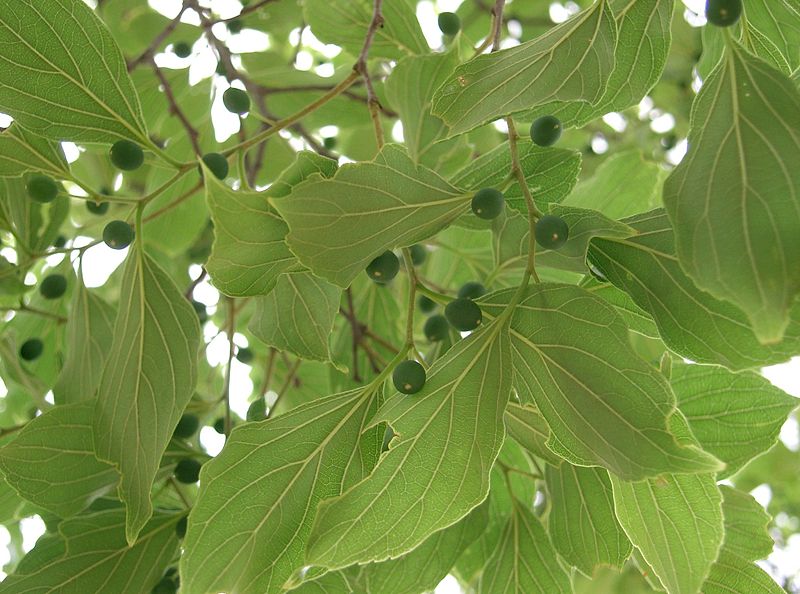
The name comes directly from the Arabic word ميس which is the name of the hackberry tree.

Sources

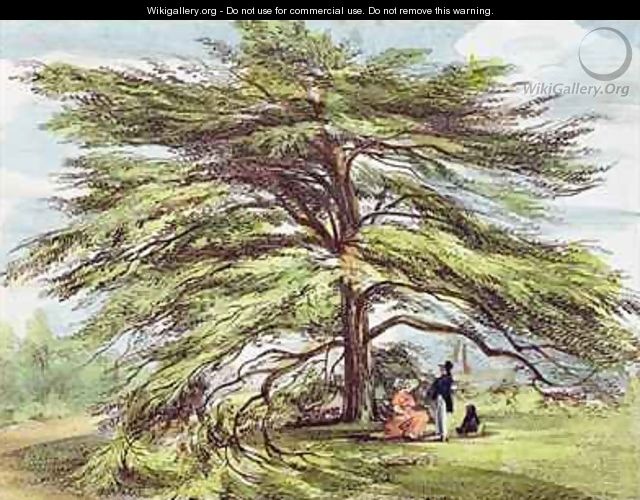
Erez

  • Origin: Hebrew אֶרֶז
  • Meaning: “cedar.”
  • Gender: masculine
  • Pronunciation: ER-ehz

The name comes directly from the Hebrew word for the cedar tree אֶרֶז. This name did not come into use as a masculine given-name among Jews until after the creation of the State of Israel in 1945. It may have been popularized by Aleksander Zederbaum (1816-1893), a Polish-Jewish journalist who founded the Hebrew language newspaper, Ha-Melitz who often used “Erez” as a pseudonym in his writings.

It is also the name of a Kibbutz and of Erez Crossing, the latter being the name of a border crossing on the Israeli-Gaza border.

Sources

Erlis, Erlisa

  • Origin: Albanian
  • Meaning: “scent of the oak.”
  • Pron (AIR-lees; air-LEE-sah)

Erlis is an Albanian male name which is composed of the Albanian words, erë (wind, scent) and lis (oak).

Erlis is also used as a male name in Kyrgyzstan, being a borrowing from the Albanian from Soviet times.

Its feminine form is Erlisa.

Sources

Lubna

  • Origin: Arabic لبنى
  • Gender: feminine
  • Meaning: “storax tree.”
  • Pronunciation: LOOB-nah

The name comes directly from the Arabic word for the storax tree. This is an old poetic name, it appears in a 7th-century Arabic love poem, Lubna & Qays.

It was also reportedly borne by Lubna of Córdoba, a 10th-century Andalusian poet.

Another transliteration is Loubna.

Sources

Ilana

Origin: Hebrew אִילָנָה
Meaning: “tree”.
(ee-LAH-nah).

The name comes directly from the Hebrew word for tree. Another female form is Ilanit (ee-LAH-neet) אִילָנִית. She is borne by Israeli pop-singer, known simply as Ilanit (b.1947) her real name being Hanna Drezner-Tzakh.

As of 2010, Ilana was the 255th most popular female name in France. While in the Netherlands, she comes in as the 321st most popular female name, (2011).

The masculine form is Ilan.

Oliver, Olivier

Gender: Masculine
Origin: debated
Meaning: debated
Eng (AHL-ih-VER); Fre (oh-LEE-vyay)

This name has a very interesting past. Its origins and meaning are debated, despite its obvious similarity with the word “olive”, many sources believe that is is either derived from one or two Old Norse names, Alfihar or OleifrAlfihar meaning “elf army” or Oleifr meaning “ancestral relic,” while other sources argue that it is indeed related to the Latin word oliverus meaning “olive tree.”

The name first appears in the French epic poem, Le Chanson de Roland. Olivier is the one of the better retainers of Roland. The name was introduced into England by the Normans and was consequently anglicized as Oliver.

The name has been in and out of usage in the English-speaking world since the Middle Ages. There was a time in England when the name went out of favor due to the bloody exploits of Oliver Cromwell. It was revived in the 19th-century due to Dicken’s lovable orphaned character of Oliver Twist.

In recent years, the name has seemed to go through a revival in both the United States and the United Kingdom. In 1979, Oliver ranked in at # 396 for the most popular male names in the United States, in 2010, however, he cracked into the top 100, making it all the way up to # 88. No doubt thanks to the popularity of its seemingly feminine form of Olivia.

As of 2010, he was the most popular male name in England/Wales. His rankings in other countries are as follows:

  • # 3 (Australia, NSW, 2010)
  • # 3 (New Zealand, 2010)
  • # 6 (Norway, 2010)
  • # 7 (Sweden, 2010)
  • # 8 (Scotland, 2010)
  • # 9 (Denmark, 2010)
  • # 10 (Finland, 2011)
  • # 12 (Ólafur, Iceland, 2010)
  • # 16 (Northern Ireland, 2010)
  • # 23 (Canada, BC, 2010)
  • # 25 (Oliwier, Poland, 2009)
  • # 38 (Olivér, Hungary, 2010)
  • # 48 (Óliver, Iceland, 2010)
  • # 51 (Austria, 2010)
  • # 52 (Ireland, 2010)
  • # 55 (Olivier, Netherlands, 2010)
  • # 86 (Spain, 2010)
  • # 269 (Netherlands, 2010)
  • # 305 (Olivier, France, 2009)

The name is used throughout continental Europe. Its French form of Olivier is still fairly common in France and it is occassionally found in the Bayous of Louisiana among Cajun families, along with its lovely accented drawled out pronunciation of (oh-LIV-ee-AY).

In Poland it is rendered as Oliwer pronounced the same way as in English though the final R is rolled. In Iceland the popular male name of Olafur may be related. Pronounced (OH-lahf-ER), it has a feminine form of Olafia (OH-lah-FEE-ah).

Popular English nicknames are Ollie and the less common Noll.

Its designated name day is July 12.

Other forms include:

  • Olivier (Afrikaans/Dutch/French/Frisian)
  • Oliver Оливер (Croatian/Czech/Dutch/English/Estonian/Finnish/German/Hungarian/Macedonian/Portuguese/Russian/Serbian/Slovak/Spanish)
  • Fier (Dutch: originally a diminutive form, used as an independent given name)
  • Oluvier (Dutch)
  • Olivur (Faroese)
  • Ólivar (Faroese)
  • Olivér (Hungarian)
  • Ólafur (Icelandic)
  • Óliver (Icelandic)
  • Ólíver (Icelandic)
  • Oilibhéar (Irish)
  • Oliviero (Italian)
  • Olivarius/Oliverus (Latin)
  • Alfher (Old High German)
  • Áleifr (Old Norse)
  • Oliwer/Oliwier (Polish)
  • Oliwir/Olwer/Olwir (Polish: obscure)
  • Oliveiros (Portuguese)
  • Olaghair (Scottish)
  • Oilbhreis (Scottish)