Dahlia, Dalia

Gender: Feminine
(DAHL-yah)

A name with various different meanings and references depending on how you choose to spell it. It is an edgier floral appellation that could overcome a Lily or Daisy any day, as well as a name that can fit into any culture or society. Along with its easy pronunciation and feminine, vivacious sound, the name is pleasing to just about any language on the planet.

If you prefer the Dalia route, then the name can either be Lithuanian, Hebrew or Arabic. If spelled like the flower, the meaning stems from the surname of the botanist who first classified the species, Anders Dahl; Dahl being a common Swedish surname meaning “valley. ”

Dalia by Emily Blivet

Dalia by Emily Blivet

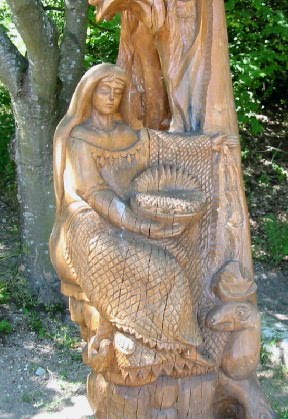
The name could be derived from the Lithuanian word for “fate; luck; lot.” It was the name from the Baltic goddess of weaving, fate and childbirth and she is believed to have been interchangeable with the goddess Laima. The name is still relatively popular in Lithuania, and is currently borne by Lithuania’s President, Dalia Grybauskaitė (b.1956).

The name is also very common in the Middle East. In Israel, it is a more modern Hebrew word name meaning “branch.” In Arabic, it means “grapevine.”

The name is occasionally used in Mexico, where the dahlia is considered the national flower. In fact, the ancient Aztecs used the flower for ceremonial purposes and fashioned its stems into pipes.

Currently, Dalia is the 476th most popular female name in Germany, (2011), and the 969th most popular in the United States, (2010). Its floral counterpart of Dahlia came in as the 650th most popular female name in the United States, (2010).

A possible nickname option is the sweet, yet vintagy Dolly

Vaiva

Gender: Feminine
Origin: Lithuanian
Meaning: “rainbow.”
(VYE-vah).

The name is derived from the Lithuanian word vaivorykštė meaning “rainbow.”

In Lithuanian mythology, the name is borne by a minor goddess of the rainbow.

According to one account, the lightning god, Perkunas, was suppose to marry the goddess Vaiva on a Thursday, but she was kidnapped by the evil Velnias and Perkunas has hunted down Velnias ever since.

Another form of the name is Vaivora.

The designated name-day is June 18.

Sources

  1. http://people.tribe.net/dreamkeeper/blog/ea3bb428-113e-4b5e-8214-da6ea680bcff
  2. http://www.behindthename.com/namedays/lists/6.php

Meri

Gender: Feminine
Origin: Finnish/Estonian
Meaning: “the sea.”
(MEH-ree). Pronunciation can be heard here: http://www.forvo.com/word/meri/

The name comes directly from the Finnish and Estonian word for the sea, but it is also speculated that it may have originally been used as an alternative for Maria. As of 2008, approximately 5521 women in Finland bore the name Meri. There is also a popular compound form, which is Meri-Tuuli, literally meaning “sea wind.” The designated name-day in Finland is December 3, while in Estonia, it is April 22nd.

Selga

Gender: Feminine
Origin: Latvian
Meaning: “deep sea.”
(SEL-gah)

The name is derived from the Latvian word used to refer to the deep sea. In Latvia, at least 230 women bore this name as of 2008.

It is also the name of a type of biscuit produced by Latvian chocolatier compant, Laima.

Its designated name-day in Latvia is September 12th.

Another form is Silga.

Višnja

Gender: Feminine
Origin: Serbo-Croat
Meaning: “cherry.”
(VEESH-nyah)

As summer comes to a close, I almost forgot to post about this lovely gem. Find Cherry too tacky as a given name? Then why not this Balkan beauty. The name comes directly from the South Slavic word for the cherry, and it a fairly common name in the former Yugoslav Republic. In Slovenia, its the name of a mountain Gora Visnja, known as Weichselburg in German.

Neringa

Gender: Feminine
Origin: Lithuanian
Meaning: “to dive like a swimmer”
(ne-RIN-gah)

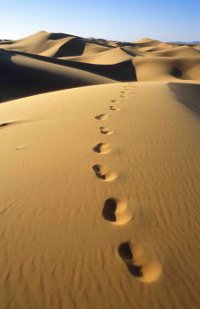
Beautiful Neringa is a city that lies in the Curonian Spit, a jewel on the Baltic coast. A famous resort which boasts the highest sand dunes in all of Europe, it was once the seat of the Teutonic Knights, in fact, it belonged to Germany for 700 years before being handed over to Lithuania in 1923. Though the regions inhabitants were not Germans themselves, they were a melange of various Baltic tribes comprised mostly of Latvian, Prussian and Lithuanian fishing villages. Today Neringa is renowned for its beauty and summer getaways for Lithuanian, Russian, Latvian and German tourists.

Legend has it that the city got its name from a virginal giantess. There are a few different legends of the maiden floating around, most of the legends tell of a gentle giant who built a mound of sand to keep the stormy waves of the Baltic sea at bay, but the most amusing, (made famous by a Lithuanian children’s book, written and illustrated by Domicela Tarabildienės in 1949, Naglis ir Neringa), is s quirky tale about unrequited love, which includes the love sick dragon by the name of Naglis, (also the name of a famous dune on the sands of the Curonian Spit).

Neringa lived on the Baltic coast, like the city named for her, she was renowned for her beauty, she caught the attention of a local dragon or a sea serpent by the name of Naglis, who quickly fell in love with her. When Neringa did not return his love, he started to eat the local fishermen in grief. In order to completely cut of all ties with Naglis the dragon, Neringa had to create a strip of sand between the bay and the Baltic sea, which would seperate her and her subjects from the dragon forever. This is supposedly how the spit was created.
As for the etymology of Neringa itself, many sources claim that it is derived from an ancient Latvian or Prussian word neria which means “to dive like a swimmer.” The name has been in usage as a feminine given name for awhile, it most likely caught on after 1923 when the spit was incorporated into Lithuania and the legend of the giantess revived. Its name day in Lithuania August 20.

Kanerva

Gender: Feminine
Origin: Finnish
Meaning: “heather”
(kuh-NARE-vah)

The name comes directly from the Finnish word for the calluna vulgaris species of heather. The flowers usually bloom in late summer. The name might be an appealing alternative to the dated floral Heather. Its designated name day is August 14. To hear how its pronounced by native speakers, consult this site: http://www.forvo.com/word/kanerva/

Mesike

Gender: Feminine
Origin: Estonian/Hungarian
Meaning: “honey.”
(MES-ee-KEH)

The name is derived from the Estonian word mesi meaning “honey.” Its designated name-day is August 9. Melita and Deboora are often used as a variations. It’s also used as a diminutive form of Emese is Hungary, in which case, it is pronounced as (MESH-ee-keh).