Dunja

quinceGender: Feminine
Origin: South Slavic Дуња
Meaning: “quince fruit.”
(DOON-yah)

The name comes directly from the South Slavic word for the quince fruit. The quince is usually ready to fall from its stems from early October all the way to November, it is considered an autumnal fruit.

Coincidentally, the name could also be a Russian diminutive form of Avdotya which is a Russian form of the Greek name Eudoxia meaning “good fame.”  The spelling is also sometimes transliterated as Dunya.

As of 2009, Dunja was the 97th most popular female name in Croatia.

The name is borne by Russian violinist Dunja (Avdotya) Lavrova (b.1985).

Adrian

Gender: Masculine
Origin: Latin
Meaning: “from Hadria”

The name is derived from the Latin Hadrianus, a Roman cognomen meaning, “from Hadria.” Hadria was a small town in the North of Italy. It gave its name to the Adriatic Sea.
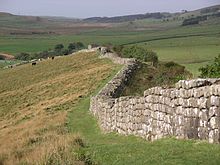
The name was borne by Publius Aelius Hadrianus (76-138 CE), known in the modern world as Emperor Hadrian, he is most famous for the wall he built across Great Britain, known as Hadrian’s Wall.
The name remained common throughout Europe, and is fairly popular across the Western World till this day. It was borne by several saints and popes, including the first and only English pope, Adrian IV, as well as the only Dutch pope, Adrian VI.
Currently, Adrian is the 6th most popular male name in Spain, (2010) and the 7th most popular in Norway, (2010). His rankings in other countries are as follows:
  • # 29 (Catalonia, 2009)
  • # 33 (Poland, 2010)
  • # 43 (Germany, 2011)
  • # 48 (Austria, 2010)
  • # 49 (Croatia, 2010)
  • # 51 (France, Adrien, 2010)
  • # 56 (United States, 2010)
  • # 60 (Sweden, 2010)
  • # 63 (Hungary, 2010)
  • # 81 (Belgium, Adrien, 2009)
  • # 455 (France, Adrian, 2009)

Other forms of the name include:

  • Ad (Afrikaans/Limbergish)
  • Adriaan (Afrikaans/Dutch)
  • Adrianus (Afrikaans/Latin)
  • Arrie (Afrikaans)
  • At (Afrikaans)
  • Daan (Afrikaans)
  • Jaans (Afrikaans)
  • Adrian Адриан (Albanian/Bulgarian/Croatian/Dutch/English/Finnish/Polish/Romanian/Russian/Scandinavian/Ukrainian)
  • Ardian (Albanian)
  • Adrianu (Asturian/Corsican/Sicilian)
  • Adiran (Basque)
  • Adrijan (Bosnian/Croatian/Serbian/Slovene)
  • Hadrijan (Bosnian)
  • Adrià (Catalan)
  • Jadran(ko) (Croatian)
  • Adrián (Czech/Hungarian/Slovak/Spanish)
  • Arie (Dutch)
  • Arjan (Dutch)
  • Hadrian(us) (Dutch/German/Latin)
  • Adrien (French)
  • Hadrien (French)
  • Aidrean (Gaelic)
  • Adrán (Galician)
  • Adrao (Galician)
  • Hadrán (Galician)
  • Hadrao (Galician)
  • Hádrian (Galician)
  • Adrianos Αδριανός (Greek)
  • Adorján (Hungarian)
  • Adrían (Icelandic)
  • Adriano (Italian/Portuguese)
  • Adrio (Italian)
  • Adriāns (Latvian)
  • Adrianas (Lithuanian)
  • Adrijonas (Lithuanian)
  • Adrião (Portuguese)
  • Adriànu (Sardinian)

Feminine forms include:

  • Adriana  (Albanian/Bulgarian/Catalan/Czech/Galician/German/Greek/Italian/Latin/Lithuanian/Polish/Romanian/Russian/Slovak/Spanish)
  • Adrijana (Bosnian/Croatian/Serbian)
  • Hadrijana (Bosnian/Croatian/Serbian)
  • Jadranka (Croatian)
  • Adriána (Czech/Hungarian/Slovak)
  • Ariane (Dutch)
  • Hadriana (Galician/Latin)
  • Adria (German/Italian)
  • Adriane (German)
  • Adrienne (French)
  • Adrienn (Hungarian)
  • Adrianna (Polish)
  • Drina (Spanish)

Polish feminine diminutives are Ada and Adi.

Zdravomil

Gender: Masculine
Origin: Serbo-Croat/Slovakian/Slovene/Bulgarian
Meaning: “good health; pleasant health; favorable health.”
(ZDRAH-vo-MEEL)

The name is composed of the Old Slavonic elements zdravo meaning “health” and mil meaning “favor, pleasant.” Its designated name-day is October 22. Diminutive form is Zdravko which is often used as an independent given name.

Maximilian

Durer Maximilian I 1518 BRGender: Masculine
Origin:  Latin
Meaning: “one who is great.”

The name is derived from the Roman cognomen Maximilianus which refers to someone of greatness. The name was borne by a 3rd century martyr. It was borne by several other Christian martyrs, including Maximilian of Lorch, a Christian martyr of Austrian heritage and Maximilian of Antioch. The name was especially popular amongst the Habsburgs, starting with Frederick III who gave it to his son Maximilian I (1459-1519) to honour the two ancient Roman generals Fabius Maximus and Cornelius Scipio Aemilianus, in this case the name was suppose to be a blend of Maximus and Aemilianus. It was also borne by Maximilian II of the Holy Roman Empire, another Habsburg (1527-1576). Maximilian I Duke Bavaria (1573-1651), Maximilian II Emanuel, Elector of Bavaria (1662-1726), Maximilian III Joseph, Elector of Bavaria (1727-1777), Maximilian I of Bavaria (1756-1825), Maximilian II of Bavaria (1811-1864), Prince Maximilian of Baden (1867-1929) and Maximilian I of Mexico (1832-1867). It was also borne by a 20th-century Polish Catholic priest who was killed at Auschwitz known as St. Maximilian Kolbe.

In recent years, in the United States, the name has grown significantly in popularity, it currently comes in at # 300 of the Top 1000 Male Names. It is popular in other countries, especially in Germany and in Sweden. In Sweden, it was the 88th most popular male name in 2007. Its designated name-day is October 12. Other forms of the name include (listed alphabetically by nationality):

  • Maximilián (Czech/Slovak)
  • Maximiliaan (Dutch)
  • Maximilien (French)
  • Miksa (Hungarian)
  • Massimiliano (Italian)
  • Maksymilian (Polish)
  • Maksimiljan/Makso (Serbo-Croatian/Slovenian)
  • Maximiliano (Spanish/Portuguese)
  • Maksimilian/Maks (Russian/Ukrainian)

Feminine forms include:

  • Maximiliana (Czech/Slovak, German, Spanish, Portuguese)
  • Maximilienne (French)
  • Massimiliana (Italian)
  • Maksymiliana (Polish)

A common diminutive is Max

Krasomila

pysna_princeznaGender: Feminine
Origin: Czech/Slovak, Bulgarian, Serbo-Croatian, Slovenian, Macedonian
Meaning: “lover of beauty.”
(krah-soh-MEE-lah).

The name is composed of the Old Slavonic elements kras meaning “beauty” and mil meaning “love; favour; grace.” In Czech and Slovak, the name is associated with Pysna Princezna a beloved Czechoslovak fairy tale written by Bozena Nemcova, the story was adapted into a classic Czech film in the 1950s. The protagonist princess is named Krasomila. The designated name-day is October 10.

Aurelia, Aurelius

thumbnailOrigin: Latin
Meaning: “golden”

Originally a Roman gens name, Aurelius is from the Latin meaning, “golden; gilded.”

The name is borne by several famous personages throughout history, the earliest being the Roman Emperor Marcus Aurelius and its feminine form, by his daughter Annia Aurelia Galeria Lucilla. Aurelia is also the name of the mother of Julius Caesar, (Aurelia Cotta), Tacitus proclaimed her the ideal Roman Matron. The Via Aurelia was named for an ancestor of her’s, Aurelius Cotta. The Via Aurelia is an ancient road that runs through Rome. Other famous Aurelias include Portuguese painter Aurélia de Souza (1867-1922), famous Romanian gymnast Aurelia Dobre (b.1972) and the mother of famed poetess, Sylvia Plath.

The Latinate form is popular in all the Latin based countries: Italy, Portugal and Spain including South America, as is its masculine counterpart, Aurelio.  Aurelia is also quite prevalent in Poland. In addition, Aurelia shares her name with a genus of jellyfish, an asteroid and it is also used as a synonym for a chrysalis.

Other feminine forms of the names and cognates are:

  • Aorell (Breton)
  • Aurelija (Croatian/Lithuanian)
  • Aurélie (Czech: ow-REL-yeh)
  • Zlata. Zlatka, Zlatica (Czech/Slovakian: these names are often used as cognates for the Latin Aurelia, but literally mean “gold” in Czech and Slovakian)
  • Aurélie (French: the name came in as the 74th most popular female name in Belgium in 2006 and the 89th most popular female in France in 2003. oh-hray-LEE)
  • Aureliane/Auriane (French: obscure)
  • Aranka (Hungarian: this is another one that literally means “gold” in Hungarian but is used as a form of Aurelia)
  • Aurélia (Hungarian/Portuguese/Slovakian)
  • Rella/Relli (Hungarian: originally diminutive forms, now used as independent given names, they even have their own name day, which is October 15).
  • Auksė (Lithuanian: literally means “gold” in Lithuanian but is often used as a cognate)
  • Aura/Aurelia/Aurica (Romanian)

Hungarian diminutive forms are: AuraAurácska and Aurika.

Its masculine forms include:

  • Aurelian (English/Romanian)
  • Aurèle (French)
  • Aurélien (French: in France, he came in as the 88th most popular male name in 2006).
  • Aurel (German, Romanian and Czech)
  • Aurél (Hungarian/Romansch/ Bavarian)
  • Aurelianus (Latin)
  • Auksys (Lithuanian)
  • Aureliusz (Polish)
  • Oral (Romansch)
  • Aureliano (Spanish)

Its designated name-day in some countries is September 25, and the name is borne by several saints.

Matthew

Matthew_Evangelist

Gender: Masculine
Origin: Hebrew
Meaning: “Gift from Yahweh.”

A bit dull and overused, he sits in the U.S  Top Ten. He is quite a hit in other English speaking countries as well. Just over the border in Canada, he comes in even higher at # 6. Down under in Australia, he comes in at # 16. While in Great Britain and Ireland he sits at # 24. Over in Bonnie Scotland # 9 and in the Republic of Northern Ireland he comes in at the highest at resting at # 2. Matthew may seem to be just the ordinary every day guy type of name, but the name itself has avery long and rich history. Matthew is the English form of the Latinization Mattheus a translation of the Greek Μαθαιος (Mathaios). Mathaios is a vulgar Greek transliteration of the Aramaic diminutive name Maty or Mattay מתי which is ultimately derived from the Hebrew name Matatyahu or Mattathias מתתיהו. Other Biblical forms of the name include Matanyahu מתניהו and Netanyahu נתניהו. Yehonatan, the original form of Jonathan, is an anagram Netanyahu. The name was introduced into the Western World through the veneration of  St. Matthew the Evangelist. He was one of the 12 Apostles of Christ and is credited by most Christian denominations as the author of the Gospel of Matthew. In the Western Churches, St. Matthew’s feast is held on September 21, while in the Eastern Calender it is set for November 16th. We cannot forget the different variations the name has spun off over the centuries. Including the following:

  • Mathyu (Arabic)
  • Mateu (Catalan)
  • Matiša (Croatian)
  • Matouš (Czech)
  • Mads (Danish): originally a diminutive form, now used as an independent name throughout Scandinavia
  • Matthieu (French): 98th most popular name in Belgium and 48th most popular name in France (2006)
  • Maitiú (Gaelic)
  • Matthäus (German)
  • Makaio (Hawaiian)
  • Máté (Hungarian): Máté was the 2nd most popular male name in Hungary of 2005
  • Matteo (Italian)
  • Matiss (Latvian)
  • Modris (Latvian)
  • Matas (Lithuanian)
  • Mats (Norwegian/Swedish): Orginally a diminutive form, now used as an independent given name
  • Mateusz (Polish)
  • Mateus (Portuguese)
  • Matej (Czech-Slovak/Slovenian/Croatian): In Slovenia, Matej was the 22nd most popular male name of 2005. In the Czech Republic and Slovakia, this name is used in reference to the Apostle Mathias who replaced Judas Iscariot and not in reference to the Apostle Matthew the Evangelist. In Croatia and Slovenia, Matej is used in reference to the latter.
  • Mateja (Serbian): In Slovenia Mateja is considered the feminine form of Matej
  • Matúš (Slovakian)-this form is used to refer to St. Matthew the Apostle
  • Matevz (Slovenian): 38th most popular name in Slovenia (2005)
  • Mateo (Spanish)-In the United States Mateo came in #251 in the popularity charts. In Spain he stands at #73 (2006). Chile at # 65 (2006) and France he comes in at # 67 (2006).
  • Matteus (Swedish/Norwegian)
  • Matfey (Russian)

You are probably wondering why I have not mentioned Mathias or Matthias. Though Mathias/Matthias are related etymologically to Matthew, I felt that they deserved a post all of their own. Therefore, stay tuned, and I will further discuss them in a future installment. An older English form of the name includes Mathew. Matt is the most popular diminutive form used in the English speaking world.

Višnja

Gender: Feminine
Origin: Serbo-Croat
Meaning: “cherry.”
(VEESH-nyah)

As summer comes to a close, I almost forgot to post about this lovely gem. Find Cherry too tacky as a given name? Then why not this Balkan beauty. The name comes directly from the South Slavic word for the cherry, and it a fairly common name in the former Yugoslav Republic. In Slovenia, its the name of a mountain Gora Visnja, known as Weichselburg in German.

Milica

Gender: Feminine
Origin: Bulgarian/Czech-Slovak/Serbo-Croat
Meaning: “gracious”
Милица
(mee-LEET-sah).

The name looks pleasant enough, but has somewhat of a harsh sound, possibly due to its similar sound to militia, a term used to describe a military force made up of ordinary citizens. Though the name has no relation at all to the word, it is actually just an old Slavic feminine name made up of the element mila meaning “gracious” along with the diminutive feminine ending of-ica attached.

The name was borne by Princess Milica of Serbia (1300-1405), she was the wife of Prince Lazar and mother of Stepan Lazaravic and of Princess Oliveria Despina. Milica is known for her achievements in her old age, when her husband died, she joined an Orthodox convent and became a nun where she composed several books of poems and prayers. She is canonized by the Serbian Orthodox Church. The name is also used in Slovakia and Slovenia and the official name day is August 17.

A Bulgarian form is Militza.

Jasna

Gender: Feminine
Origin: Serbo-Croat
Meaning:”light; bright; clear.”
(YAHS-nah)

The name comes directly from the Serbo-Croatian word for light, bright or clear. Its designated name day is August 11. In other Slavic speaking countries such as Poland and the Czech Republic, this element appears in several place names, most notably the village of Jasna Gora in Czestochowa Poland. There is a famous monastery and an icon which is also a Polish national symbol attributed to the area. This could be a nice choice for Catholic or Orthodox Christian families who are looking for a way to honour the Virgin Mary but find the other Mary alternatives overused or plain. Likewise, it could also be used as an alternative for Claire or Clara. Another place which bears this appellation is a ski resort in Slovakia. Despite it being a word and place name in other Slavonic countries, it is a legitimate given name in the former Republic of Yugoslavia.