Gedgaudas

Gender: Masculine
Origin: Lithuanian
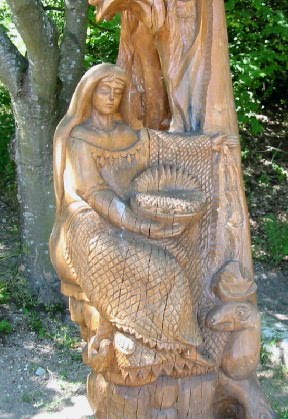
Meaning: “mourning fish.”
(ged-GOH-dahs)

The name is composed of the Lithuanian elements, ged (gedėti) meaning “mourn” and gaud(gaudyti) meaning “fish.”

The name is of ancient origins and its true euphemism is not known.

The feminine form is Gedgaudė.

The designated name-day is March 22.

Sources

  1. http://day.lt/vardai/Gedgaudas

Yemoja, Yemaya

Gender: Feminine
Origin: Yoruba
Meaning: “mother whose children are like fish.”

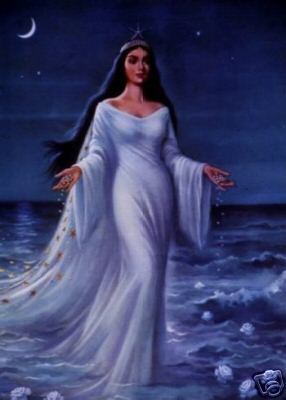
Yemaya is the name of an Orisha in Candomblé, Lucumí/Santería and Vodou. An Orisha is a spirit or diety that reflects an aspect of God. Followers of the above religions are most likely of African heritage and are mostly found in the American south, the Caribbean and in Latin America.

The origins of Yemaya can be traced back to Africa, in Yoruban mythology, Yemoja is a type of mother goddess who lives in the Ogun River. She is considered a special patron of pregnant women and the mother of all dieties and spirits.

Her name is believed to be a contraction of the Yoruba phrase, yeye emo eja, which means, “mother whose children are like fish.”

Her cult was brought to the shores of the New World with African slaves, today, she is often synchronized with the Virgin Mary, in particular Stella Maris (Star of the Sea), and festivals are held in her honour throughout Latin America. In Brazil, especially in Bahía state, her festival usually occurs on February 2, in which devotees send out small offerings to sea, in tiny rafts. Afterwards, a huge festival takes place.

Yemaya and Yemoja are her more common names. She is also known by the following, depending on the religion and country:

  • Yemanjá/Iemanjá/Janaína (Brazil)
  • Yemaya/Iemanya (Cuba)
  • Yemalla/Yemaya (Creole-New Orleans)
  • Imanja (Uruaguay).

The name is occasionally used among devotees, in honour of the orisha.

Sources

  1. http://www.clicrbs.com.br/zerohora/jsp/default.jsp?uf=1&local=1&section=Geral&newsID=a1754874.xml
  2. http://pt.wikipedia.org/wiki/Yemanjá_no_Xambá
  3. http://zerohora.clicrbs.com.br/zerohora/jsp/default2.jsp?uf=1&local=1&source=a1755838.xml&template=3898.dwt&edition=9234&section=74
  4. http://findarticles.com/p/articles/mi_m1310/is_1991_August-Sept/ai_11322122/
  5. Verger, Pierre. Dieux D’Afrique. Paris: Paul Hartmann (1st edition, 1954; 2nd edition, 1995).

Banga, Banguolė

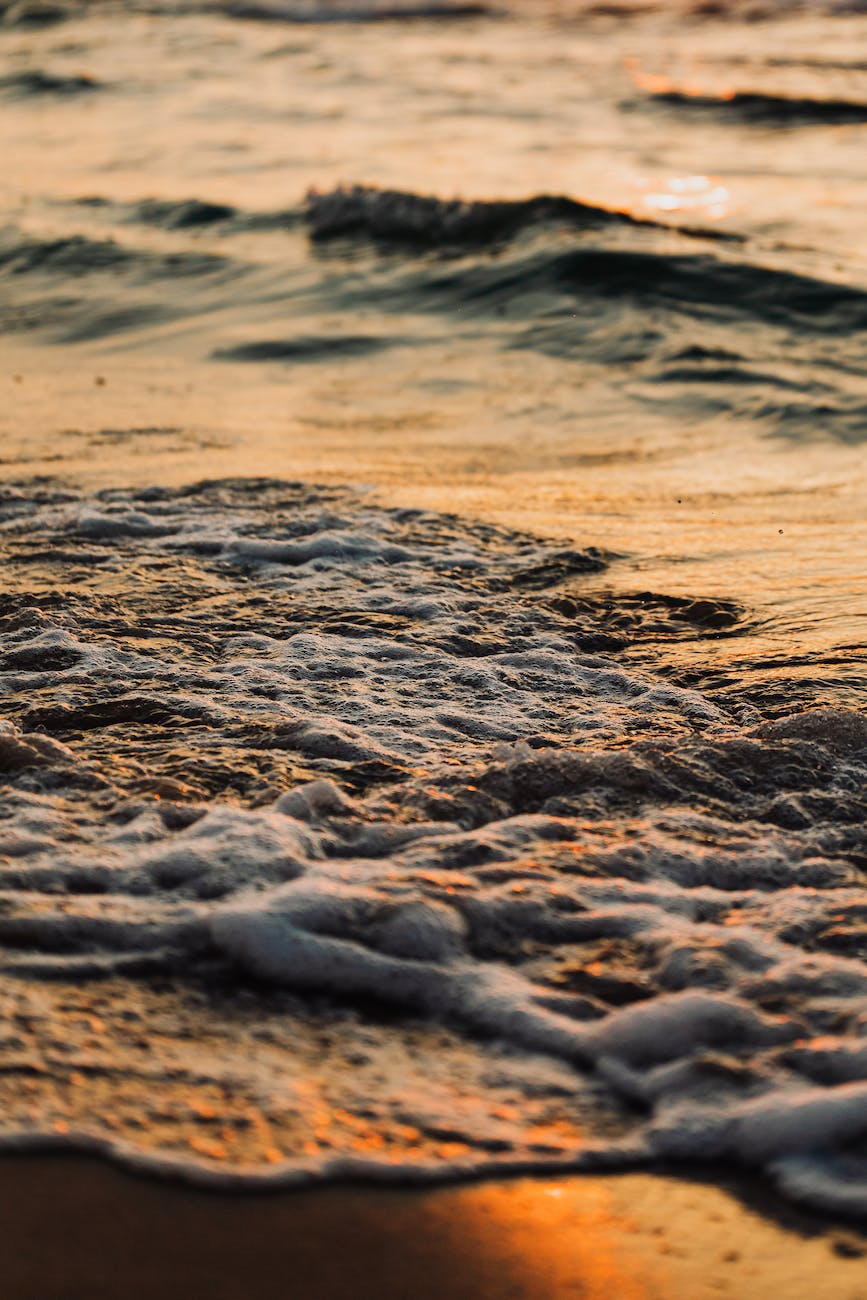
close up photo of sea waves

Photo by Karolina Grabowska on Pexels.com

Gender: Feminine
Origin: Latvian, Lithuanian
Meaning: “wave.”
(BAHN-gah); (bahn-GWOH-lay)

Banga comes directly from the Latvian and Lithuanian word meaning, “wave; billow.” Banguolė is another Lithuanian form that would roughly translate as “little wave.”

In the Master and Margarita (1967) by Mikhail Bulgakov, Banga is the name of Pontius Pilate’s dog. It is uncertain what the etymology of the name was in this case.

Masculine forms are Bangis, Bangius, Bangys and Banguolis.

In the Shona language, Banga is a masculine name which comes directly from the word for sword or knife.

The designated name-day for Banguolė and Banguolis is January 30th. In Latvia, Banga’s designated name is November 16.

Calques include:

  • Laine (Estonian).
  • Adva, Gal, Galit (Hebrew)
  • Alda (Icelandic)
  • Ondina (Italian)
  • Undine (German)
  • Ondine (French)
  • Unnr (Old Norse)

Sources

Mary, Maria, Miriam

Mary and its various forms has to be one of the quintessential, classic female names of all time, she has been used in Protestant England in the form of Mary, in the Islamic world as Maryam, in Jewish communities in the form of Miriam and in the Catholic world as Maria, Marie or Mary.

In the United States, she has never quite detracted from the top 100, if Mary is not in fashion then it is usually one of her other forms that may take her place, such as Molly, Mariah, Maria or Mia, all depending on the flavor of the day.

Currently, Mary is the 97th most popular female name in the United States, (2008). Mary’s rankings in other countries are as follows:

  • # 7 (Armenia, 2008)
  • # 57 (Ireland, 2007)

Its French form of Marie is popular outside the Hexagon, she currently ranks in as the 546th most popular female name in the United States, but in other countries, she appears in the top 10. Her rankings are as follows:

  • # 9 (Armenian, 2008)
  • # 4 (Belgium, 2008)
  • # 17 (Czech Republic, 2008)
  • # 24 (Denmark, 2008)
  • # 20 (France, 2009)
  • # 9 (Germany, 2009)
  • # 270 (the Netherlands, 2008)

The continental form of Maria is extremely popular across Europe and Latin America, her rankings in other countries are as follows:

  • # 4 (Argentina, 2009)
  • # 8 (Basque Country, Spain, 2008)
  • # 3 (Belarus, 2005)
  • # 3 (Bulgaria, 2008)
  • # 89 (Canada, B.C., 2008)
  • # 6 (Catalonia, Spain, 2008)
  • # 8 (Chile, 2008)
  • # 91 (England/Wales, 2008)
  • # 6 (Estonia, 2007)
  • # 4 (Faroe Islands, 2008)
  • # 59 (Germany, 2009)
  • # 1 (Greece, 2004)
  • # 90 (Hungary, 2008)
  • # 5 (Iceland, 2004-2007)
  • # 49 (Ireland, 2008)
  • # 1 (Israel, among Christian girls, 2004)
  • # 9 Marija (Latvia, 2005)
  • # 1 Marija (Macedonia, 2006)
  • # 1 (Malta, 2008)
  • # 39 (the Netherlands, 2008)
  • # 14 (Norway, 2008)
  • # 17 (Poland, 2009)
  • # 1 (Portugal, 2008)
  • # 2 (Romania, 2008)
  • # 2 (Russia, 2007)
  • # 99 (Scotland, 2008)
  • # 1 (Slovakia, 2004)
  • # 2 (Spain, 2008)
  • # 96 (Sweden, 2008)
  • # 7 (Ukraine, 2009)
  • # 64 (United States, 2008)

Her diminutive offshoot of Mia, has also been quite trendy the last 10 years, as of 2008, she was the 14th most popular female name in the United States. In other countries, her rankings are as follows:

  • # 1 (Australia, 2008)
  • # 25 (Canada, B.C., 2008)
  • # 44 (Chile, 2006)
  • # 11 (England/Wales, 2008)
  • # 1 (Germany, 2009)
  • # 23 (Ireland, 2008)
  • # 5 (Isle of Man, 2009)
  • # 350 (the Netherlands, 2008)
  • # 24 (New Zealand, 2009)
  • # 12 (Norway, 2008)
  • # 26 (Scotland, 2008)
  • # 46 (Slovenia, 2005)
  • # 3 (Switzerland, among Romansch-speakers, 2008)

Another common diminutive offshoot, is Molly, which is mostly used in the English speaking world, but has also shifted over to some of the Scandinavian countries. Her rankings in other countries are as follows:

  • # 57 (Australia, 2007)
  • # 84 (Canada, B.C., 2008)
  • # 32 (England/Wales, 2008)
  • # 25 (Ireland, 2008)
  • # 33 (New Zealand, 2009)
  • # 39 (Scotland, 2008)
  • # 11 (Sweden, 2008)
  • # 104 (United States, 2008)

Miriam is another common choice which is popular throughout Europe and the Middle East. Her rankings are as follows:

  • # 1 Mariam (Georgia, 2008)
  • # 6 Maryam (Iran, 2007)
  • # 4 Maryam (Israel, among Muslim girls, 2004)
  • # 6 Maryam (Pakistan)
  • # 48 Miriam (Spain, 2008)
  • # 1 Mariam (Tunisia, 2005)
  • # 309 Miriam (United States, 2008)

As for its meaning and derivation, though the its origins can be traced back to the Bible, its lingustic and etymological meaning has long been debated. Many hypothesis include that the name could be a derivative of the Hebrew meri, ‘rebel’ related to the Hebrew verb MRH, mara or Marah which means’ to be “rebellious.” Or that it is related to the Hebrew word מרא (MRA, mara) which means ‘well-fed’, something which would have been considered a comely attribute in Biblical times.

One of the most popular etymological theories is its association with the Hebrew מר (MR, mar), meaning. “bitter” or “bitterness, and another very well established hypothesis suggests that it is from an Egyptian source, mry “beloved” or mr meaning “love.”

Other possible theories include:

That is it a combination of the Hebrew words מר (MR, mar), meaning “bitter” or the Hebrew (mar) meaning, “drop”; or (mor) meaning, “myrrh” or ” (mari ) meaning “mistress’.

The name is borne by several female characters in both the Old and New Testament.

Among Jews, the name was originally used in honour of the sister of Aaron, Miriam the Prophetess.

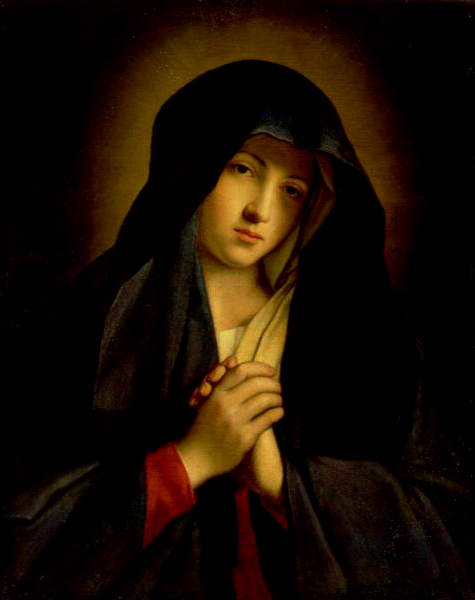
Among Muslims and Christians, (particularly Catholics and Eastern Orthodox), the name is usually used in honour of the Virgin Mary, the mother of Jesus.

However, in certain eras and cultures, Mary or Maria was considered too sacred of a name to use on a child, and in other cultures, the name Maria is so honorable to have, that it is even bestowed upon males, usually in conjunction with a male name or as a middle name. This is especially so in Spanish-speaking countries, French speaking countries and occasionally done in other predominate Catholic countries such as Ireland, Poland and in Bavaria, Germany.

The name has made is presence known in British royalty as well as in the continental ruling houses. Other forms are as follows:

Latinate Forms
Forms used in Latin-based languages

  • Marieta (Catalan: originally a diminutive form, used as an independent given name in Spanish-speaking countries)
  • Miryam (Catalan: archaic form from the 13th-century)
  • Maria (Corsican/Italian/Occitanian/Portuguese/Romanian/Romansch/Latin)
  • Manon (French: originally a diminutive form of Marie, the name has been used as an independent given name for centuries. In fact, it currently ranks in as the 7th most popular female name in Belgium (2006), the 4th most popular female name in France (2006), and the 184th most popular female name in the Netherlands (2008). Pronunciation can be heard here: http://www.forvo.com/search/Manon/)
  • Marie (French: she is one of the most popular middle names in the English speaking world. In French, this form is bestowed on males in conjunction with other male names or as a middle name. There are several common French female names used in conjunction with Marie, as well. Those of which, I will save for future postings).
  • Marielle (French: originally a diminutive form of Marie, now used exclusively as an independent given name)
  • Mariette (French: a diminutive form of Marie, occasionally used as an independent given name, now considered dated in French-speaking countries).
  • Mariolle(French: obscure, very old diminutive form of Marie, the inspiration of the Polish offshoot, Mariola).
  • Marion (French: a medieval French diminutive form of Marie, now exclusively used as an independent given name, the name was borne in legend by the love interest of Robin Hood, Maid Marion, and is borne by French actress, Marion Cotillard. In France, it is the 59th most popular female name (2006)
  • Myriam (French: form of the Biblical, Miriam, she ranks in as the 95th most popular female name in France (2006)
  • Mariella (Italian: originally a diminutive form of Maria, now exclusively used as an independent given name)
  • Marietta (Italian: a diminutive form of Maria, occasionally used as an independent given name).
  • Marigia (Italian: obscure)
  • Mariuzza/Maruzziella (Italian: obscure)
  • Mariana (Portuguese: Mariana is usually considered a name of a seperate etymology, but is used in Portuguese and Spanish as a form of Miriam. She is the 73rd most popular female name in Chile, 2006).
  • María (Spanish/Galician).
  • Marita (Spanish: a diminutive form of Maria, now often used as an independent given name)
  • Maritza (Spanish: a Latin American spin-off of Maria, originally a diminutive form, now a trendy given name, especially among Mexican-Americans, she is currently the 560th most popular female name in the United States).
  • Mareye (Walon)

An Italian diminutive form is Mimi. A Portuguese diminutive form is Mariazinha.

Masculine forms are:

  • Mari (Catalan)
  • Mariu (Corsican)
  • Mario (Italian/Galician)
  • Marius (Latin/French/Romanian)
  • Mário (Portuguese)

Germanic Forms
Forms used in Germanic-speaking countries

  • Maiken/Majken (Danish/Norwegian/Swedish: originally a diminutive form of Maria, now used exclusively as an independent given name).
  • Maria (Danish/Dutch/English/Faroese/Frisian/German/Norwegian/Swedish)
  • Marie (Danish/German/Norwegian/Swedish: a borrowing from the French)
  • Mari (Danish)
  • Maaike/Maike (Dutch/Frisian/German: originally a diminutive form, used exclusively as an independent given name. In 2008, it was the 98th most popular female name in the Netherlands)
  • Marieke(Dutch: originally a diminutive form, now exclusively used as an independent given name. In 2008, it was the 188th most popular female name in the Netherlands)
  • Marijke (Dutch: mah-RYE-keh)
  • Marike (Dutch: originally a diminutive form of Maria, now used exclusively as an independent given name, pronounced mah-REE-keh)
  • Marja (Dutch/Faroese/Gothic/Limburgish: MAHR-yah).
  • Meike (Dutch/German: originally a diminutive form, now used as an independent given name, it was the 53rd most popular female name in the Netherlands of 2008.)
  • Mia (Dutch/German/English/Scandinavian: originally a diminutive form, now used as an independent given name)
  • Mieke (Dutch/Limburgish: originally a diminutive form, used exclusively as an independent given name MEE-keh)
  • Miep(Dutch: a diminutive form, but occasionally used as an independent given name MEEP).
  • Miet (Dutch: originally a diminutive form, occasionally used as an independent given name MEET).
  • Mirjam (Dutch/German/Swedish: form of the Biblical Miriam).
  • Mariel (English: just an anglicized form of the French, Marielle).
  • Mariota (English: archaic, form used in the 13th-century)
  • Mary (English)
  • Molly/Mollie (English: originally a diminutive form, now used more often as an independent given name)
  • Polly (English: originally a diminutive form, now used more often as an independent given name)
  • Marý(Faroese)
  • Mareike (Frisian/German: originally a diminutive form of Maria, now used exclusively as an independent given name)
  • Maja (German/Scandinavian: originally a diminutive form of Maria, used exclusively as an independent given name. It is the 2nd most popular female name in Sweden, (2008)
  • Mariele(German: originally diminutive form of Maria, used exclusively as an independent given name, pronounced mah-REE-leh).
  • Miriam(German/English: Biblical form, often used in German and English speaking countries)
  • Mitzi (German/English: not really used as an independent given name in German speaking countries, but experienced a short usage of popularity as an independent given name in the United States).
  • Ria(German/Dutch: originally diminutive forms, occasionally used as independent given names)
  • Mæja (Icelandic: originally a diminutive form of Maria, used exclusively as an independent given name)
  • María(Icelandic)
  • Mies (Limburgish: diminutive form of Maria, used as an independent given name in the Netherlands. MEES)
  • Mathie (Normand: mah-TEE)
  • My(Swedish: originally a diminutive form of Maria, now used as an independent given name MEE. In 2007, it was the 79th most popular female name in Sweden).
  • Mirele מִירֶעל(Yiddish: a form of Miriam. MEER-eh-leh)

Common English diminutives include May, Mayme, Mare, Mia, Molle, Molly, Moll and Polly, German diminutive forms are Mariechen and Mitzi.

Masculine forms include:

  • Marius (Dutch/German/English/Norwegian/Swedish)
  • Marjus (Faroese)
  • Maríus (Icelandic)

Baltic Forms
Variations used in Baltic countries.

  • Maaja (Estonian)
  • Maare/Maari (Estonian)
  • Maarika (Estonian/Finnish)
  • Maaria/Maarja (Estonian)
  • Maie/Maiu (Estonian: initially diminutive forms, now used as independent given names, MY-eh, MY-oo)
  • Maila/Maili/Mailu (Estonian: Maili is pronounced somewhat like Miley)
  • Mari (Estonian/Finnish)
  • Marjam (Estonian)
  • Marje/Marjen (Estonian)
  • Marjette (Estonian)
  • Mary (Estonian)
  • Maija/Maiju (Finnish)
  • Maikki (Finnish: a Finnicized form of the Sweden and Danish Majken, pronounced somewhat like Mikey)
  • Maaria/Maria (Finnish)
  • Marika (Finnish)
  • Maritta (Finnish)
  • Marjatta (Finnish: can also mean “without a berry” in Finnish, and is the name of a character in the Kalevala, but is often used as a variation of Maria; also used in Estonia)
  • Marjo (Finnish)
  • Marjukka (Finnish)
  • Marjut (Finnish)
  • Miia (Finnish)
  • Mirja (Finnish: translation of Miriam)
  • Mirjam/Mirjami (Finnish)
  • Maija (Latvian)
  • Maila (Latvian: MY-lah)
  • Mairita/Mairīta/Mairīte (Latvian)
  • Mairuta (Latvian)
  • Mare (Latvian: final E is pronounced)
  • Mareka (Latvian)
  • Mareta/Māreta (Latvian)
  • Marī (Latvian)
  • Mārica (Latvian)
  • Mariela (Latvian)
  • Mārieta (Latvian)
  • Marija (Latvian/Lithuanian)
  • Mārika (Latvian)
  • Marite/Mārita/Mārīte/Marīte (Latvian)
  • Marjama (Latvian)
  • Maruta/Māruta/Marute (Latvian)
  • Mare (Lithuanian)
  • Maryte (Lithuanian)

Masculine forms are:

  • Maarius/Mairo/Mario (Estonian)
  • Marijus/Marius (Lithuanian)

Slavic Forms
Forms used in Slavic countries

  • Merjem (Bosnian)
  • Mirjana (Bosnian/Croatian/Serbian/Slovene: translation of Miriam)
  • Mariya (Bulgarian/Russian/Ukrainian)
  • Marija (Croatian/Macedonian/Serbian/Slovene)
  • Marie (Czech: MAHR-yeh)
  • Maria (Polish)
  • Marieta (Polish)
  • Mariola (Polish: mahr-YOLE-ah)
  • Marita (Polish)
  • Maryla (Polish: mah-RIH-lah)
  • Marzena (Polish: not really etymologically related, but has had a historical usage as a variation of Maria in Poland. The name is actually the name of an ancient Polish goddess and it may be linked with the either Polish word for “hope; dream” or with the Old Slavonic word for “death.” mahr-ZHEH-nah, diminutive form is Marzenka).
  • Mária (Slovakian)
  • Marika (Slovakian)
  • Marica (Slovene: initially a diminutive form, used as an independent given name in Slovenia, but is also used as a diminutive form in Bosnian, Croatian, Serbian, Czech and Slovakian, mah-REET-sah).
  • Mojca (Slovene: initially a diminutive form, now used exclusively as an independent given name in Slovenia. MOY-tsah)
  • Marya Марья (Russian)

Czech and Slovak diminutive forms are: Mája, MáňaMaruška and Maryška. Serbian and Slovene diminutives are Maša. Russian diminutives are Manya, Masha, Mashenka and Mashka. Polish diminutives are MasiaMarysia (mah-RISH-ah) and Maryska.

Masculine forms are:

  • Marian (Polish)
  • Mariusz (Polish)
  • Marij/Mario (Slovene)

Celtic Forms
Forms used in Celtic Languages

  • Mari (Breton)
  • Mallaidh (Irish-Gaelic: translation of Molly)
  • Maira/Máire (Irish-Gaelic)
  • Mairenn/Máirín (Irish-Gaelic)
  • Muire (Irish-Gaelic)
  • Mariod/Mariot (Manx)
  • Moirrey/Voirrey (Manx)
  • Màiri (Scotch-Gaelic)
  • Mhari (Scotch-Gaelic)
  • Mhairi/Mhairie (Scotch-Gaelic)
  • Moire (Scotch-Gaelic)
  • Mair (Welsh)

Other Forms
Forms used in other languages not listed in the above

  • Maria (Albanian/Kiswahili)
  • Maryam مريم (Arabic)
  • Mariam (Armenian)
  • Məryəm (Azeri)
  • Maia (Basque)
  • Miren (Basque)
  • Mariam (Coptic/Egyptian)
  • Mariami (Georgian)
  • Maria Μαρία (Greek: Modern)
  • Maroula/Roula (Greek: Modern: initially diminutive forms)
  • Malia (Hawaiian/Zuni)
  • Mária (Hungarian)
  • Maria (Indonesian)
  • Meryem (Kurdish/Turkish)
  • Mariam/Mariamma/Mariamme (Malayalam)
  • Marija (Maltese)
  • Mere (Maori)
  • Miriama (Maori)

The name has several name-days.

Meri

Gender: Feminine
Origin: Finnish/Estonian
Meaning: “the sea.”
(MEH-ree). Pronunciation can be heard here: http://www.forvo.com/word/meri/

The name comes directly from the Finnish and Estonian word for the sea, but it is also speculated that it may have originally been used as an alternative for Maria. As of 2008, approximately 5521 women in Finland bore the name Meri. There is also a popular compound form, which is Meri-Tuuli, literally meaning “sea wind.” The designated name-day in Finland is December 3, while in Estonia, it is April 22nd.

Kaija

Gender: Feminine
Origin: Latvian
Meaning: “gull; seagull.”
Lat (KYE-yah).

The name comes directly from the Latvian word for sea-gull, coincidentally, it is also used in Finland as a form of Katherine. As of 2008, there were 97 registered Kaijas in Latvia. Its designated name-day in Latvia is November 12.

Martin, Martina

Origin: Latin
Meaning: “belonging to the god Mars.”

This popular pan-European name is derived from Latin name Martinus, a derivative of the Latin genitive Martis, used in reference to the Roman god Mars. The usage of the genitive case would reflect possession, therefore the name would roughly translate as meaning “belonging to Mars” or “possessed by Mars.”

The name was popularized by a 4th-century bishop and saint, (the patron saint of France), known as Martin of Tours. According to legend, he came upon a beggar in the middle of a harsh and cold winter, Martin cut his only cloak in half and gave it to the beggar, later that night, he had a dream of Christ appearing before him, wearing the other half of his cloak. Saint Martin of Tours was not only a popular devotional saint in France, but in the rest of Europe as well. Today, the surname of Martin is the most common in France, originally the surname was taken in honour of the saint.

Another popular saint who bears the name is St. Martin de Porres, attributed as the first African-American saint, he was born in Peru in the 1500s. He was the son of a Spanish nobleman and an African slave woman. He later became a Dominican and was known for his charity and mystical powers. In Spanish-speaking countries, the name Martin is mostly given in commemoration of him.

The name became popular among protestants, particularly adherents of the Lutheran faith, due to its associations with the German Reformer Martin Luther (1483-1546). It was also borne by Civil Rights Activist Martin Luther King Jr. 1929-1968).

In Europe today, Martin is still a fairly common choice. Its rankings are as follows:

  • #55 (Belgium 2006)
  • #56 (France 2006)
  • #20 (Hungary 2005)
  • #73 (Ireland 2007)
  • # 72 (Northern Ireland 2007)
  • # 8 (Norway 2007)
  • #32 (Slovenia 2005)
  • #59 (Spain 2006)
  • # 79 (Sweden 2007)

In Chile, he was the 4th most popular male name in 2006, while in the United States he comes in at a meagre # 221. The perfect classic male name for someone looking for something not too odd yet not too popular.

Other forms of the name include (divided alphabetically by origin)

  • Mardig (Armenian)
  • Mattin (Basque: diminutive form is Matxin)
  • Marzhin/Marzin (Breton)
  • Martí (Catalan: 77th most popular male name in Spain in 2006)
  • Martinu (Corsican)
  • Morten (Danish/Norwegian)
  • Maarten/Marten/Martijn (Dutch Pronunciation for the latter: http://www.forvo.com/search/Martijn/)
  • Ties (Dutch: originally a diminutive form, used as an independent given name)
  • Tinus (Dutch: originally a diminutive form of Martinus, now used as an independent given name)
  • Tijn (Dutch: originally a diminutive, now used as an independent given name. It was the 28th most popular male name in the Netherlands in 2008)
  • Madro/Mardi/Mardu/Mart/Märten/Märtin/Märt (Estonian)
  • Martti (Finnish)
  • Merten (Frisian)
  • Marti/Martinni (Greenlandic)
  • Márton (Hungarian: Pronunciation: http://www.forvo.com/search/Marton/ 31st most popular male name in Hungary 2005. Diminutive is Mártos)
  • Marteinn/Martin (Icelandic)
  • Mairtín (Irish Gaelic)
  • Martiniano (Italian: obscure)
  • Martino (Italian)
  • Martianus (Latin/Dutch)
  • Martinus (Latin/Dutch)
  • Marcis/Martins/Martiņš/Mārtiņš/Marts/Mārts (Latvian)
  • Martynas (Lithuanian)
  • Marcin (Polish. Pronunciation:http://www.forvo.com/search/Marcin/pl/. Diminutive is Marcinek)
  • Martim/Martinho (Portuguese)
  • Martinián (Slovakian)
  • Tinek (Slovenian: initially a diminutive form, now used as an independent given name)
  • Tine (Slovenian: originally a diminutive form, now a popular independent given name ranking in as the 59th most popular male name in Slovenia as of 2008. The final e is pronounced)
  • Martín (Spanish)
  • Mårten (Swedish)
  • Martyn (Welsh/Ukrainian)

Martin is not only used in English, but is also used in Croatian, Estonian, French, German, Maltese, Scandinavian, Romanian, Russian, Czech, Slovenian, Hungarian and Bulgarian languages as well. German nicknames include Marte, Mart,  Marti or Marty. Maroš is the Czech and Slovakian pet form and Marty is the common English nickname.

The name-days are:

  • March 1 (Bulgaria)
  • November 11 (Czech Republic/France/Germany/Poland/Lithuania/Slovakia)
  • November 10 (Sweden/Estonia/Latvia)

    Dutch children celebrating St. Martin's Day

    In some parts of Holland,  Belgium, Germany, Austria and Switzerland, children celebrate St. Maarten’s Day (November 11) by carrying lanterns from door-to-door and getting sweets in exchange for song. The same holiday is observed under the name of Mardispäev in Estonia, Jum San Martin in Malta and to a lesser extent, the holiday is celebrated in the greater region of Poland, particularly in Poznan. Only on this day, instead of it being a children’s holiday, it is more of a day to get a traditional poppy-filled croissant sold by bakers just on that one day of the year, occasionally there are concerts held in the city.

    The most common feminine form is usually Martina, which has experienced wide usage in Bulgaria, Croatia, Czech Republic, Dutch-speaking countries, Estonia, Faroe Islands, German-speaking countries, Italy, Portuguese-speaking countries, Romania, Scandinavia, Serbia, Slovakia and Spanish-speaking countries. It was borne by a 3rd-century Roman saint and martyr as well as a 6th-century Byzantine empress.

    Martinitsa

    It is interesting to note that in Bulgaria, the designated name-day is March 1, and Martin, as well as Martina, have historically been connected to the Bulgarian word mart (meaning March). In this case, the names are sometimes bestowed upon a March baby or children born on March 1. The Holiday of Baba Marta (meaning “grandmother March.”) is a traditional Bulgarian festival that celebrates the arrival of spring and the end of winter, Baba Marta is the harbinger of good weather and if she is displeased, she will continue to bring stormy weather. Baba Marta is considered a moody and fickle old woman, so one must always be careful not to displease her, one way of doing this is the exchange of martenitsi, (white and red tassles which are pinned to clothing), this is used as a way to ask Baba Marta for mercy. A martinitsa is worn either till the end of March or until the wearer spots a stork or a blooming tree, with this, the bearer knows that Baba Marta is pleased, afterwards, they are hung on trees in order to transfer luck onto the tree. The martenitsa symbolizes new life, fertility and spring.

    The rankings of Martinas popularity from country to country are as follows:

    • # 1 (Chile, 2006)
    • # 2 (Malta, 2007)
    • # 76 (Slovenia, 2005)
    • # 34 (Spain, 2006)

    Other feminine forms are:

    • Marzhina (Breton)
    • Maatje/Maartje/Martien/Martijntje (Dutch)
    • Tieneke/Tineke/Tine/Tini (Dutch diminutive forms, used as an independent given names)
    • Martine (French/Estonian/Norwegian/Danish: an obscure French feminine diminutive form is Martinette, the name is very popular in Norway coming in as the 28th most popular female name in 2007, in the Danish/Norwegian case, the final e is pronounced).
    • Martinka (Hungarian: initially used as a diminutive, occassionally used as an independent given name)
    • Martína (Icelandic)
    • Martana (Italian: obscure)
    • Martinella (Italian: obscure)
    • Marcina (Polish: the original Polish feminine form, this form has always been unusual and its latinized counterpart of Martyna has recently enjoyed popularity)
    • Martyna (Polish: popularized by a popular French children series known as Martine in French and Martynka in Polish written by Belgian authors Marcel Marlier and Gilbert Delahaye, published (1954). In Polish Martyna is pronounced (mahr-TIH-nah) the Y is akin to the i sound in pig, but not exactly so. Martyna is also the Ukrainian and Lithuanian version, but in those cases, it is pronounced with the long i sound (mahr-TEE-nah).\
    • Martinha (Portuguese)

    Other famous bearers of the name include: Martina von Trapp (1921-1951) is immortalized in the Sound of Music as Gretl von Trapp, she was named for the manor house she was born in, Martinschlössel (Martin’s Castle in English). Czech-American tennis player, Martina Návratilová (b.1956). American country-Western singer Martina McBride (b.1966). Italian actress, Martina Stella (b.1984).

    The name-days are:

    • March 1 (Bulgaria)
    • July 17 (Czech Republic)
    • January 30 (Germany/Hungary)
    • September 9 (Slovakia)
    • November 10 (Sweden)

    Selga

    Gender: Feminine
    Origin: Latvian
    Meaning: “deep sea.”
    (SEL-gah)

    The name is derived from the Latvian word used to refer to the deep sea. In Latvia, at least 230 women bore this name as of 2008.

    It is also the name of a type of biscuit produced by Latvian chocolatier compant, Laima.

    Its designated name-day in Latvia is September 12th.

    Another form is Silga.

    Neringa

    Gender: Feminine
    Origin: Lithuanian
    Meaning: “to dive like a swimmer”
    (ne-RIN-gah)

    Beautiful Neringa is a city that lies in the Curonian Spit, a jewel on the Baltic coast. A famous resort which boasts the highest sand dunes in all of Europe, it was once the seat of the Teutonic Knights, in fact, it belonged to Germany for 700 years before being handed over to Lithuania in 1923. Though the regions inhabitants were not Germans themselves, they were a melange of various Baltic tribes comprised mostly of Latvian, Prussian and Lithuanian fishing villages. Today Neringa is renowned for its beauty and summer getaways for Lithuanian, Russian, Latvian and German tourists.

    Legend has it that the city got its name from a virginal giantess. There are a few different legends of the maiden floating around, most of the legends tell of a gentle giant who built a mound of sand to keep the stormy waves of the Baltic sea at bay, but the most amusing, (made famous by a Lithuanian children’s book, written and illustrated by Domicela Tarabildienės in 1949, Naglis ir Neringa), is s quirky tale about unrequited love, which includes the love sick dragon by the name of Naglis, (also the name of a famous dune on the sands of the Curonian Spit).

    Neringa lived on the Baltic coast, like the city named for her, she was renowned for her beauty, she caught the attention of a local dragon or a sea serpent by the name of Naglis, who quickly fell in love with her. When Neringa did not return his love, he started to eat the local fishermen in grief. In order to completely cut of all ties with Naglis the dragon, Neringa had to create a strip of sand between the bay and the Baltic sea, which would seperate her and her subjects from the dragon forever. This is supposedly how the spit was created.
    As for the etymology of Neringa itself, many sources claim that it is derived from an ancient Latvian or Prussian word neria which means “to dive like a swimmer.” The name has been in usage as a feminine given name for awhile, it most likely caught on after 1923 when the spit was incorporated into Lithuania and the legend of the giantess revived. Its name day in Lithuania August 20.

    Laine

    Gender: Feminine
    Origin: Estonian
    Meaning: “wave.”
    (LAHEE-neh)

    No, this is not a new trendy spelling for the masculine surname name Lane. It is, however, a traditional Estonian female name that somewhat rhymes with the last part of Carolina.

    It comes directly from the Estonian word for wave.

    Its designated name day is August 6.

    Variations include Lainela, Laina and Laini.

    Sources

    1. http://www.behindthename.com/namedays/lists/8.php
    2. http://www.behindthename.com/php/find.php?name=laine