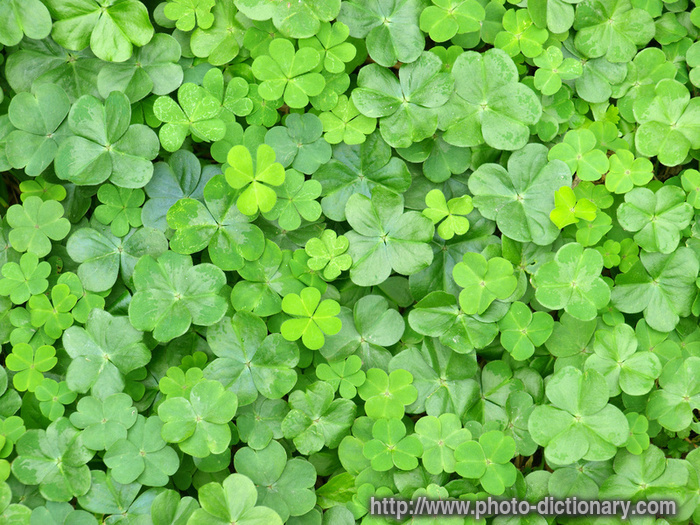
 Origin: Lithuanian
Meaning: “Clover.”
(doh-BIL-ahs; dob-BIL-ay).
Both names are derived from the Lithuanian word dobilas meaning “clover.” Dobilas is the masculine form and Dobile, the feminine. Their designated name-day is November 26.
Origin: Lithuanian
Meaning: “Clover.”
(doh-BIL-ahs; dob-BIL-ay).
Both names are derived from the Lithuanian word dobilas meaning “clover.” Dobilas is the masculine form and Dobile, the feminine. Their designated name-day is November 26.
 Origin: Latin
Meaning: “belonging to the god Mars.”
This popular pan-European name is derived from Latin name Martinus, a derivative of the Latin genitive Martis, used in reference to the Roman god Mars. The usage of the genitive case would reflect possession, therefore the name would roughly translate as meaning “belonging to Mars” or “possessed by Mars.”
The name was popularized by a 4th-century bishop and saint, (the patron saint of France), known as Martin of Tours. According to legend, he came upon a beggar in the middle of a harsh and cold winter, Martin cut his only cloak in half and gave it to the beggar, later that night, he had a dream of Christ appearing before him, wearing the other half of his cloak. Saint Martin of Tours was not only a popular devotional saint in France, but in the rest of Europe as well. Today, the surname of Martin is the most common in France, originally the surname was taken in honour of the saint.
Another popular saint who bears the name is St. Martin de Porres, attributed as the first African-American saint, he was born in Peru in the 1500s. He was the son of a Spanish nobleman and an African slave woman. He later became a Dominican and was known for his charity and mystical powers. In Spanish-speaking countries, the name Martin is mostly given in commemoration of him.
The name became popular among protestants, particularly adherents of the Lutheran faith, due to its associations with the German Reformer Martin Luther (1483-1546). It was also borne by Civil Rights Activist Martin Luther King Jr. 1929-1968).
In Europe today, Martin is still a fairly common choice. Its rankings are as follows:
In Chile, he was the 4th most popular male name in 2006, while in the United States he comes in at a meagre # 221. The perfect classic male name for someone looking for something not too odd yet not too popular.
Other forms of the name include (divided alphabetically by origin)
Martin is not only used in English, but is also used in Croatian, Estonian, French, German, Maltese, Scandinavian, Romanian, Russian, Czech, Slovenian, Hungarian and Bulgarian languages as well. German nicknames include Marte, Mart, Marti or Marty. Maroš is the Czech and Slovakian pet form and Marty is the common English nickname.
The name-days are:

Dutch children celebrating St. Martin's Day
In some parts of Holland, Belgium, Germany, Austria and Switzerland, children celebrate St. Maarten’s Day (November 11) by carrying lanterns from door-to-door and getting sweets in exchange for song. The same holiday is observed under the name of Mardispäev in Estonia, Jum San Martin in Malta and to a lesser extent, the holiday is celebrated in the greater region of Poland, particularly in Poznan. Only on this day, instead of it being a children’s holiday, it is more of a day to get a traditional poppy-filled croissant sold by bakers just on that one day of the year, occasionally there are concerts held in the city.
The most common feminine form is usually Martina, which has experienced wide usage in Bulgaria, Croatia, Czech Republic, Dutch-speaking countries, Estonia, Faroe Islands, German-speaking countries, Italy, Portuguese-speaking countries, Romania, Scandinavia, Serbia, Slovakia and Spanish-speaking countries. It was borne by a 3rd-century Roman saint and martyr as well as a 6th-century Byzantine empress.

Martinitsa
It is interesting to note that in Bulgaria, the designated name-day is March 1, and Martin, as well as Martina, have historically been connected to the Bulgarian word mart (meaning March). In this case, the names are sometimes bestowed upon a March baby or children born on March 1. The Holiday of Baba Marta (meaning “grandmother March.”) is a traditional Bulgarian festival that celebrates the arrival of spring and the end of winter, Baba Marta is the harbinger of good weather and if she is displeased, she will continue to bring stormy weather. Baba Marta is considered a moody and fickle old woman, so one must always be careful not to displease her, one way of doing this is the exchange of martenitsi, (white and red tassles which are pinned to clothing), this is used as a way to ask Baba Marta for mercy. A martinitsa is worn either till the end of March or until the wearer spots a stork or a blooming tree, with this, the bearer knows that Baba Marta is pleased, afterwards, they are hung on trees in order to transfer luck onto the tree. The martenitsa symbolizes new life, fertility and spring.
The rankings of Martinas popularity from country to country are as follows:
Other feminine forms are:
Other famous bearers of the name include: Martina von Trapp (1921-1951) is immortalized in the Sound of Music as Gretl von Trapp, she was named for the manor house she was born in, Martinschlössel (Martin’s Castle in English). Czech-American tennis player, Martina Návratilová (b.1956). American country-Western singer Martina McBride (b.1966). Italian actress, Martina Stella (b.1984).
The name-days are: