Tara

Gender: Feminine
Origin: Various
Eng (TAH-rah; TARE-uh)

The name can be of several different origins and meanings depending on the bearer of the name. It could be from the Sanskrit and Hindi तारा meaning, “star.”

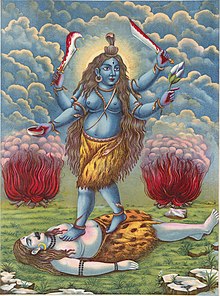
In Hinduisim, Tara (Devi), a Mahavidya of Mahadevi, Kali or Parvati is a star goddess, she is considered one of the Great Wisdom goddesses.

In Buddhism, Tara is the name of a tantric meditation goddess.

In the Hindu epic, the Ramayana, it is the name of the wife of the monkey king, Vali, who married the king’s brother, Sugriva, after Vali’s death.

Among the Irish Diaspora, the name was usually used in reference to the sacred hill, Tara, where the high kings were usually coronated. In this case, the name is an anglicized form of the Gaelic, Teamhair, meaning, “elevated place.”

It may have been further popularized in the English-speaking world by the 1936 Margaret Mitchell novel, Gone with the Wind, in which the plantation is called Tara, in honour of the hill in Ireland.

In South Slavic languages, it could either be a contracted form of Tamara, or it could be taken from the name of the river which runs through Montenegro and Bosnia and Herzegovina. It is also the name of a river in Russia.

As of 2009, Tara was the 30th most popular female name in Croatia. Her popularity in other countries are as follows:

  • # 50 (Slovenia, 2010)
  • # 62 (Ireland, 2010)
  • # 77 (Northern Ireland, 2010)
  • # 126 (Netherlands, 2010)
  • # 774 (United States, 2010)

It is also the name of a sea goddess in Polynesian Mythology.

Adrian

Gender: Masculine
Origin: Latin
Meaning: “from Hadria”

The name is derived from the Latin Hadrianus, a Roman cognomen meaning, “from Hadria.” Hadria was a small town in the North of Italy. It gave its name to the Adriatic Sea.
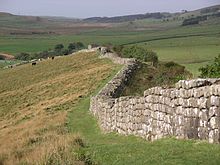
The name was borne by Publius Aelius Hadrianus (76-138 CE), known in the modern world as Emperor Hadrian, he is most famous for the wall he built across Great Britain, known as Hadrian’s Wall.
The name remained common throughout Europe, and is fairly popular across the Western World till this day. It was borne by several saints and popes, including the first and only English pope, Adrian IV, as well as the only Dutch pope, Adrian VI.
Currently, Adrian is the 6th most popular male name in Spain, (2010) and the 7th most popular in Norway, (2010). His rankings in other countries are as follows:
  • # 29 (Catalonia, 2009)
  • # 33 (Poland, 2010)
  • # 43 (Germany, 2011)
  • # 48 (Austria, 2010)
  • # 49 (Croatia, 2010)
  • # 51 (France, Adrien, 2010)
  • # 56 (United States, 2010)
  • # 60 (Sweden, 2010)
  • # 63 (Hungary, 2010)
  • # 81 (Belgium, Adrien, 2009)
  • # 455 (France, Adrian, 2009)

Other forms of the name include:

  • Ad (Afrikaans/Limbergish)
  • Adriaan (Afrikaans/Dutch)
  • Adrianus (Afrikaans/Latin)
  • Arrie (Afrikaans)
  • At (Afrikaans)
  • Daan (Afrikaans)
  • Jaans (Afrikaans)
  • Adrian Адриан (Albanian/Bulgarian/Croatian/Dutch/English/Finnish/Polish/Romanian/Russian/Scandinavian/Ukrainian)
  • Ardian (Albanian)
  • Adrianu (Asturian/Corsican/Sicilian)
  • Adiran (Basque)
  • Adrijan (Bosnian/Croatian/Serbian/Slovene)
  • Hadrijan (Bosnian)
  • Adrià (Catalan)
  • Jadran(ko) (Croatian)
  • Adrián (Czech/Hungarian/Slovak/Spanish)
  • Arie (Dutch)
  • Arjan (Dutch)
  • Hadrian(us) (Dutch/German/Latin)
  • Adrien (French)
  • Hadrien (French)
  • Aidrean (Gaelic)
  • Adrán (Galician)
  • Adrao (Galician)
  • Hadrán (Galician)
  • Hadrao (Galician)
  • Hádrian (Galician)
  • Adrianos Αδριανός (Greek)
  • Adorján (Hungarian)
  • Adrían (Icelandic)
  • Adriano (Italian/Portuguese)
  • Adrio (Italian)
  • Adriāns (Latvian)
  • Adrianas (Lithuanian)
  • Adrijonas (Lithuanian)
  • Adrião (Portuguese)
  • Adriànu (Sardinian)

Feminine forms include:

  • Adriana  (Albanian/Bulgarian/Catalan/Czech/Galician/German/Greek/Italian/Latin/Lithuanian/Polish/Romanian/Russian/Slovak/Spanish)
  • Adrijana (Bosnian/Croatian/Serbian)
  • Hadrijana (Bosnian/Croatian/Serbian)
  • Jadranka (Croatian)
  • Adriána (Czech/Hungarian/Slovak)
  • Ariane (Dutch)
  • Hadriana (Galician/Latin)
  • Adria (German/Italian)
  • Adriane (German)
  • Adrienne (French)
  • Adrienn (Hungarian)
  • Adrianna (Polish)
  • Drina (Spanish)

Polish feminine diminutives are Ada and Adi.

Delphine, Delfina

Gender: Female
Origin: French
Meaning: “dolphin”
(del-FEEN)

This French classic was quite popular in the English-speaking world during the early 19th-century, now seen as a sort of vintage classic, the name may hold appeal to those who are endeared to such names as Josephine, Louise or Marguerite.

The name has its origins in the Greek male name, Delphinos, who, in Greek mythology was a dolphin lord under the god Poseidon.

When his master was wooing the beautiful Naiad Amphitrite, Poseidon demanded Delphinos to seek Amphitrite and to propose to her on his behalf. When Delphinos found the Naiad and brought her before the sea god, Poseidon made Delphinos into a constellation in gratitude for his services.

Alternately, the name could also be taken from the Greek city, Delphi, which ultimately has the same origin as Delphinos, meaning “dolphin.”

In the mortal world, the name first made its appearance in France around the 14th-century. It was borne by a Provençal saint. It was thereafter commonly used among the French aristocracy.

The name was also the subject of a famous French book entitled Delphine by Anne Louise Germaine de Staël, (1802).

The Delphinium plant has the same root and meaning as the name Delphine.

In English, delphine is also used as the adjectival form of dolphin.

Currently, Delfina is the 15th most popular female name in Argentina, (2009).

Other forms of the name include:
  • Delphia (Greek)
  • Delphina (Latin)
  • Delphinia (Latin)
  • Delfina (Italian/Polish/Spanish)
  • Delfino (Provençal)

It also has some male incarnations such as the French Delphin (del-FAHn). Other forms include

  • Delfin (French/Polish)
  • Delphinos (Greek)
  • Delphinus (Latin)
  • Delfino (Italian/Spanish)

Its designated name-day is November 9th.

Marisol

Gender: Feminine
Origin: Spanish

The name is either a contraction of María Soledad or María del Sol, the name was originally used in honour of the Virgin Mary. In recent years, Spanish-speaking parents may have used it due to the fact that it sounds like Mar y Sol (sea and sun).

It is also the name of a 1996 Mexican telenovela.

Currently, Marisol is the 528th most popular female name in the United States, (2010).

Source

  1. http://www.behindthename.com/name/marisol

Pelagia

Gender: Feminine
Origin: Greek
Meaning: “the sea.”
(peh-LAH-gee-ah); Fre (pay-lah-ZHEE)

The name is a feminine form of the Greek male name, Pelagios (Πελαγιος), which is derived from the Greek pelagos (πελαγος) meaning “the sea.”

Both the masculine and feminine version have been borne by several saints. Pelagios was even borne by two popes.

Other feminine forms of the name include:

Pélagie (French)
Pelagia (Greek/Polish)
Pelageya Пелагея (Russian/Ukrainian)

Another masculine form is the Late Latin Pellagius.

The designated name-days are: March 23 (Poland); May 4 (Greece); June 9 (Poland); July 11 (Poland); October 8 (France/Greece/Poland); October 19 (Poland); October 21 (Poland).

Source

  1. http://www.behindthename.com/php/find.php?name=pelagia

Mariana

Gender: Feminine
Origin: Latin
Meaning: “sea-fearer; sailor.”

The name is a feminine form of the Roman family name, Marianus, which is derived from the Latin, maris, meaning “sea.”

However, the name has long been associated with the Biblical Mary and Miriam, and was usually bestowed in honour of the Virgin Mary. In other instances, it has been used in reference to both the Virgin Mary and her legendary mother, St. Anne.

Mariana currently ranks in as the 289th most popular female names in the United States. Her rankings in other countries are as follows:

Brazil (# 6, 2009)
# 5 (Portugal, 2008)
# 7 (Mexico, 2009)

Throughout the centuries, Mariana has been borne by several important personages, including:

Mariana of Austria (1634-1696), Queen Consort of Spain and wife to Philip IV. Mariana Victoria of Spain, Portuguese Queen Consort (1718-1781). Spanish national heroin, Mariana Pineda (1804-1831); Mariana Bracetti (1825-1903), considered the designer of the Puerto Rican flag and viewed as a heroin of Puerto Rican Independence. Mexican Telenovela actress, Mariana Levy (1966-2006); Mexican pop singer and actress, Mariana Ochoa (b.1979); American sculptor, Marianna Pineda (1925-1996); and Brazilian actress, Mariana Ximenes (b.1981).

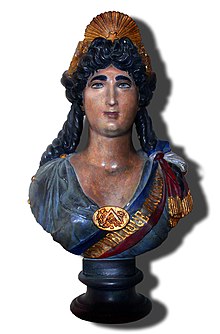
Shortly after the adoption of the French Republic in 1792, Marianne was a female figure used to personify the state.
Other forms of the name include:

Marianna Μαριαννα (Breton/Estonian/Greek/Hungarian/Italian/Occitanian/Polish/Romansch/Slovak)
Mariana (Bulgarian/Catalan/Czech/English/Italian/Latin/Portuguese/Romanian/Spanish/Swedish)
Marianne (Danish/Dutch/Estonian/French/English/German/Norwegian/Swedish)
Marijana Маријана (Croatian/Macedonian/Serbian)
Mariann (Estonian/Hungarian)
Mariannina (Italian)
Marijona (Lithuanian)
Marianno (Provençal)
Marionna (Romansch)
Maryana Марьяна (Russian)

Nicknames include:

Májinka/Marjánka/Márinka/Marka/Riana (Czech/Slovak)
Mariannette (French)

Male versions include:

Marijan (Croatian/Slovene)
Marjan (Croatian/Slovene)
Mariano (Italian/Portuguese/Spanish)
Marianno (Italian)
Mariannino (Italian)
Marianus (Latin)
Marian (Polish)

The designated name-days are: April 30 (Sweden) and September 8 (Czech Republic).

Source

  1. http://www.behindthename.com/php/find.php?name=mariana

Meltem

Gender: Feminine
Origin: Turkish
Meaning: “sea breeze; sea wind.”
(MEL-tehm)

The name is derived from the Turkish word used to describe the annual winds felt on the Aegean. They are dry North winds which blow from Mid-May to September and are hence associated with the summer months.

Sources

  1. http://turkishnamesfromturkey.blogspot.com/2009/03/m-turkish-girl-names-m.html
  2. http://www.behindthename.com/name/meltem
  3. http://en.wikipedia.org/wiki/Etesian

Vuokko

Gender: Feminine
Origin: Finnish
Meaning: “anemone.”

The name comes directly from the Finnish word for anemone.

Its designated name-day is May 2.

Other forms include:

  • Vuohkku (Sami)

Pet forms are: Voke, Vokko, and Vouksa.

Sources

  1. http://www.behindthename.com/namedays/lists/fin.php
  2. http://www.nordicnames.de/wiki/Vuokko
  3. http://images.google.com/imgres?imgurl=http://www.advancedaquarist.com/2006/11/anemone.jpg&imgrefurl=http://www.advancedaquarist.com/2006/11/tips&usg=___f3x6c5QUqsbvcob_K6yhJ_dzXk=&h=769&w=1024&sz=106&hl=en&start=2&um=1&itbs=1&tbnid=lKOcNf5fUD6n9M:&tbnh=113&tbnw=150&prev=/images%3Fq%3Danemone%26um%3D1%26hl%3Den%26sa%3DN%26tbs%3Disch:1

Jūratė

Gender: Feminine
Origin: Lithuanian
Meaning: “sea.”
(yoo-RAH-tey)

The name is derived from the Lithuanian jūra meaning, “sea.”

One of the most beautiful and romantic stories from Baltic legend has to be Jūratė and Kastytis.

According to the legend, Jūratė was a beautiful marine goddess that lived beneath the Baltic sea in an amber palace. She was the queen of the fishes and ruled over all sea-life. A fisherman by the name of Kastystis was catching too many of her fish. Out of distress, Jūratė came ashore to reprimand Kastytis, but ended up falling in love with him instaed.

Jūratė invited Kastytis to live in her amber palace and they lived in peace. When the thunder god, Perkūnas found out that the immortal sea-goddess had fallen in love with a mortal man, he was outraged, and in retribution, the chief god struck her amber palace, shattering it into tiny fragmented pieces. It is said that the amber pieces found on the shores of the Baltic are the fragments of Jūratė’s palace.

Throughout Lithuanian literary history, the story has been the subject of poems, ballads and it was even recently made into a rock opera.

The designated name-day is April 12.

An obscure Polish form is Jurata.

Sources

  1. http://www.behindthename.com/namedays/lists/lth.php