
Tara
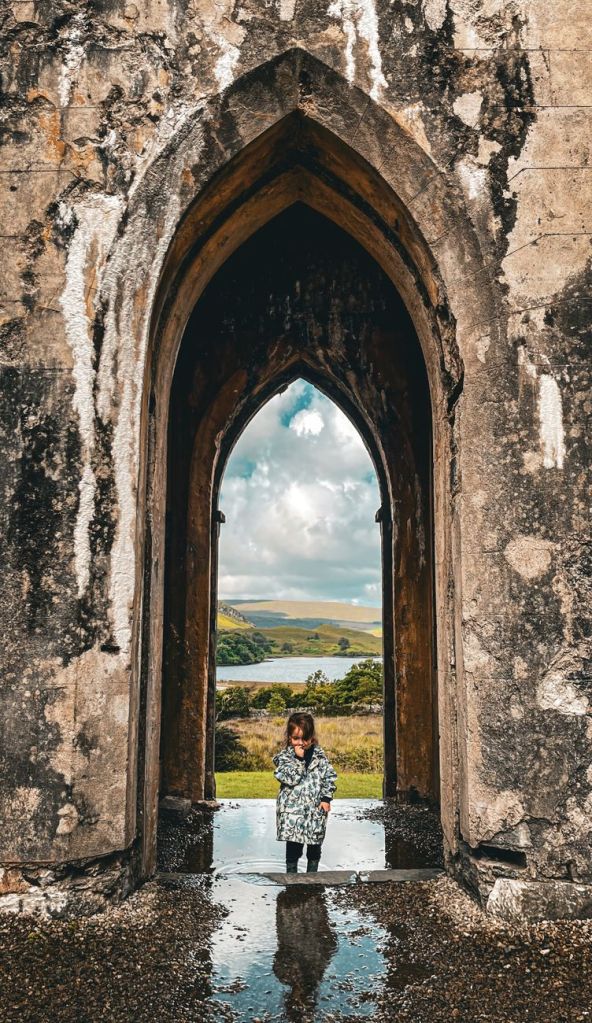
Gender: Feminine
Origin: Various
Eng (TAH-rah; TARE-uh)
The name can be of several different origins and meanings depending on the bearer. It could be from the Sanskrit and Hindi तारा (tārā), meaning “star.”
In Hinduism, Tara Devi is one of the Mahavidyas, or Great Wisdom Goddesses, and is associated with Mahadevi, Kali and Parvati.
In Buddhism, Tara is the name of an important tantric meditation goddess.
In the Hindu epic, the Ramayana, Tara is the wife of the monkey king Vali. Following Vali’s death, she marries his brother, Sugriva.
Among the Irish diaspora, the name has usually been associated with the Hill of Tara, the ancient ceremonial site traditionally connected with the High Kings of Ireland. In this case, Tara is an anglicized form of the Irish Teamhair, generally interpreted as “elevated place.”
The name may have been further familiarized in the English-speaking world by Margaret Mitchell’s 1936 novel Gone with the Wind, in which Tara is the name of the O’Hara family’s plantation, itself named after the Hill of Tara in Ireland.
In South Slavic languages, Tara may be used as a contracted form of Tamara, a feminine form of Taras, or it may be taken from the Tara River, which runs through Montenegro and Bosnia and Herzegovina.
In the Canary Islands, Tara has also come into use in reference to the so-called Idol of Tara, a prehistoric female terracotta figure from Gran Canaria associated with fertility. The figure was named after the pre-Hispanic settlement of Tara in Telde, where it was once believed to have been discovered. Its actual place of origin on Gran Canaria remains uncertain. The name of the settlement itself is uncertain but likely comes from a Guanche or Amazigh origin
Tara became especially popular throughout the English-speaking world in the 1970s and 80s. In the United States, it entered the Top 100 in 1970 and peaked at #35 in 1977, remaining in the Top 100 until 1990. It was likely popularized by the character Tara Martin on the soap opera All My Children. It was also very popular in Canada, where it peaked at #23 in 1975 and remained in the Top 50 through the mid-1980s.
In Australia, Tara was especially popular in the 1980s. It was the 49th most popular female name of the decade, while in New South Wales it peaked at #20 in 1985.
Tara became popular in Ireland around the same time as it did elsewhere in the English-speaking world, entering the Irish Top 100 in 1969. Unlike in the United States and Canada, however, its popularity had much greater longevity. It reached #27 in 1987 and remained a Top 50 name through much of the 1990s and into the early 2000s. Its strong association with the Hill of Tara likely helped the name retain its appeal in Ireland long after its popularity had begun to decline elsewhere.
Tara was also fairly popular in Northern Ireland. It ranked at #50 in 1997 and #45 in 2000, remaining in regular use throughout the 2000s.
The name has since fallen considerably in popularity throughout much of the English-speaking world. Its current rankings in other countries are as follows:
The name has since fallen considerably in popularity throughout the English-speaking world. Its rankings in other countries are as follows:
- # 40 (Slovenia, 2024)
- # 41 (Croatia, 2025)
- # 340 (Netherlands, 2025)
- # 884 (United States, 2025)
- # 444 (England & Wales, 2025)
Variations
- Tarah (English)
- Dara (Khmer)
- Tajra Taraja, Tarisa, Tarita (Slovenian)
Sources
- https://www.behindthename.com/name/tara-1
- https://www.behindthename.com/name/tara-2
- https://sl.wikipedia.org/wiki/Tara
- https://es.wikipedia.org/wiki/%C3%8Ddolo_de_Tara
Ad space — add Google AdSense code in Appearance › Ad Settings