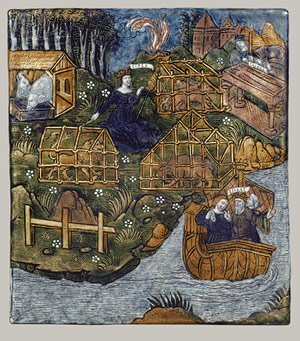
Gaétan


Gender: Masculine
Origin: German/Polish/Italian/French
Meaning: “from Caieta.”
It (guy-TAH-no); Fre (GAH-eh-TAWn); Pol/Germ (KYE-eh-TAHN)

The name is derived from the Latin place name, Caietanus, meaning,  “from Caieta”. Caieta is now known as Gaeta.

In ancient Greece, this was a town where prisoners were taken to be executed. The town probably got its name from the wet nurse of Zeus in Greek myth.

It was borne by a 16th-century Italian saint, which spurred the popularity of the name throughout Europe. It has been in usage in German speaking countries as well as in Poland in the form of Kajetan and Cajetan, the name Kaj was later spun off from this name, now being more popular than its formal form in Sweden and Denmark.

As of 2010, its French form of Gaétan was the 122nd most popular male name in France.

Other forms of the name include:

  • Caitanu (Asturian)
  • Kaitan (Basque)
  • Gaietà (Catalan)
  • Gaitanu (Corsican)
  • Kajetán (Czech/Hungarian/Slovak)
  • Cajetaan (Dutch)
  • Gaétan (French)
  • Gaëtan (French)
  • Gaetano (Galician/Italian)
  • Kayetan (German)
  • Kajetan (German/Polish/Scandinavian)
  • Gaïtános Γαϊτάνος (Greek)
  • Caietanus (Latin)
  • Kajetonas (Lithuanian)
  • Aitano (Neopolitan)
  • Gaitano (Neopolitan)
  • Caetano (Portuguese)
  • Caetan (Romanian)
  • Cajetan (Romansch)
  • Kaetan Каетан (Russian)
  • Gajetànu (Sardinian)
  • Cayetano (Spanish)

Feminine forms are:

  • Gaetana (Italian)
  • Gaétane (French)
  • Gaëtane (French)
  • Kajetana (German/Polish)
  • Kaia (German)
  • Kaja (German/Polish)
  • Caietana (Latin)

Its designated name day is August 7.

Cecilia, Cecily

Gender: Feminine
Origin: Latin
Meaning “blind”
Eng (seh-SEE-lee-yuh); Lat (kay-KEE-lyah); Italian (chay-CHEEL-yah).

This four syllable, melodic name has been in usage throughout the Western World since the early Middle Ages. Thanks to the cult of Saint Cecilia, an early Christian martyr, considered to be the patron saint of music and musicians.

Geoffrey Chaucer made the saint a subject of his writings and refers to the name as meaning “lily of heaven”; “the way for the blind”; “contemplation of heaven and an active life”; “as if lacking in blindness”; “a heaven for people to gaze upon.”

However, these were only epithets used by the early English writer describing the wondrous attributes and virtues of the saint, and should not be confused for its real meaning.

The name is a feminine form of the Latin Caecilius which comes from the word caecus meaning blind.

The name was introduced into England after the Norman conquest in the form of Cecily (SES-ih-LEE). The name was very popular in England until the Protestant Reformation where it fell out of usage.

Its Latin counterpart of Cecilia was not introduced into the English speaking world until the 18th-century, afterwards, its early English form of Cecily became quite popular during Victorian England.

As of 2010, its Danish form of Cecilie was the 30th most popular female name in Denmark. Her rankings in other countries are as follows:

  • # 39 (Silje, Denmark, 2010)
  • # 65 (Silje, Norway, 2010)
  • # 277 (Cecilia, United States, 2010)
  • # 385 (Cécile, France, 2009)
  • # 486 (Cecilia, France, 2009)
  • # 741 (Cecelia, United States, 2010)

There is the masculine English form of Cecil. Other forms of the name include:

  • Aziliz (Breton)
  • Cicilia (Corsican)
  • Cecilija (Croatian)
  • Cila (Croatian)
  • Cecílie (Czech: tset-TSEEL-yeh)
  • Cecilie (Danish/Norwegian)
  • Cille (Danish)
  • Sille (Danish)
  • Cecile/Ceciel (Dutch)
  • Cecilia (Dutch/Finnish/German/Italian/Romanian/Spanish/Swedish)
  • Cilla (Dutch/Swedish)
  • Cecelia (English)
  • Säsil (Estonian)
  • Sesilia (Faroese)
  • Selja/Silja (Finnish)
  • Cécile (French)
  • Silke (Frisian/German: ZIL-kə)
  • Síle (Gaelic)
  • Kek’ik’ilia კიკილია (Georgia)
  • Cäcilia/Caecilia (German: tsay-TSEEL-yah or tsay-TSEE-lee-yah)
  • Cäcilie (German: tsay-TSEEL-yə or tsay-TSEE-lee-yə)
  • Zilla (German: originally a diminutive form sometimes used as an independent given name, another diminutive is Zilly)
  • Kekilia (Greek Modern)
  • Sissiilia/Sissii (Greenlandic)
  • Kikilia (Hawaiian)
  • Cecília (Hungarian/Portuguese/Slovak)
  • Cili (Hungarian/Slovene)
  • Szöszill (Hungarian)
  • Seselía, Sesilía, Sesselía, Sessilía (Icelandic)
  • Sisilia (Indonesian)
  • Sheila (Irish)
  • Caecilia (Latin)
  • Cecilė/Cilė(Lithuanian)
  • Cissolt (Manx: SIS-solt)
  • Sidsel (Norwegian/Danish)
  • Silje (Norwegian/Danish)
  • Sissel (Norwegian/Danish)
  • Cilgia (Romansch)
  • Tsetsiliya (Russian)
  • Sìleas (Scottish)
  • Cecília (Slovakian)
  • Šejla (Slovakian)
  • Cecilija (Slovenian)
  • Cilika (Slovenian)
  • Cilka (Slovenian)
  • Sisel (Yiddish)
  • Zisel (Yiddish)

Male forms include

  • Cecil (English)
  • Cecilio (Italian/Spanish)
  • Caecilius (Latin)
  • Cecilijus (Lithuanian)
  • Cecilián (Slovakian)

Czech diminutive forms are: Cecilka, Celia, Cilia, Cilka and Cilinka.

English diminutive forms are: Cece, Celia and Sissy.

The designated name-day is November 22nd.

Bruno, Bruna, Brune


Gender: Masculine
Origin: German
Meaning: “brown.”
(BROO-no)

The name has a Latin sound but is actually of German origins. It is derived from the German word brun meaning “brown.” A follower of my blog, Capucine, informed me that the meaning of the name was originally a euphemism for a bear.

It has also been suggested that the name might be related to the Old High German, brunja, meaning, “breastplate.”

According to askoxford.com, the name has been borne by German royalty and nobility alike. It was also borne by a 10th-century saint and the son of Emperor Henry the Fowler as well as by the Saxon Duke who gave his name to the town of Brunswick (in German Braunschweig).

The name has also experienced popular usage in Spanish-speaking countries, French-speaking countries, as well as in Italy, Portugal and Poland.

Thanks to the influx of German immigrants at the beginning of the 20th century, it reached # 260 way back in 1915. The highest it has ever reached in the Social Security list. It currently comes in at a mere # 665 (2018).

His rankings in other countries are as follows:

  • # 14 (Catalonia, 2018)
  • # 21 (Spain, 2018)
  • # 29 (Galicia, Spain, 2018)
  • # 44 (Poland, 2018)
  • # 59 (Portugal, 2018)
  • # 115 (Italy, 2018)
  • # 377 (England & Wales, 2018)
  • # 476 (the Netherlands, 2018)
Other forms of the name include:
  • Bru (Catalan)
  • Bruneau (French)
  • Brun (German)
  • Brúnó (Hungarian)
  • Brunello (Italian)
  • Brunetto (Italian)
  • Brunino (Italian)
  • Brunone (Italian)
  • Broen (Limbergish)
  • Brunon (Occitanian/Polish)

The feminine form of Bruna is a popular name in Brazil, Italy and Croatia.

It is currently the 28th Most Popular Female Name in Spain (2018) and the 66th Most Popular Female Name in Portugal (2018), while its French form of Brune currently ranks in at # 363 in France (2018).

Other feminine forms include:

  • Brune (Dutch/French)
  • Brunonia (English), which is borne by author, Brunonia Barry
  • Brunelle (French)
  • Brunette (French)
  • Brunella (Italian)
  • Brunetta (Italian)
  • Brunina (Italian)
  • Brunona (Polish)

Its designated name day is July 12.


Updated by Sebastiane on 12/21/2019
Sources

Luna

Gender: Female
Origin: Latin
Meaning; “moon”
(LOO-nah).

The name comes directly from the Latin word for moon, and it was the name of a Roman goddess, the counterpart to the Greek goddess, Selene.

Luna had a temple dedicated to her on the Aventine Hill in Rome in the 6th-century BCE. Including another temple dedicated to her on the Palatine Hill, Luna Noctiluca, (luna that shines by night).

Luna, as a word, has transferred over into other languages, it is the Spanish, Romanian, Italian, Bulgarian and Russian word for moon.

The name has become increasingly popular across Europe, in recent years. In 2009, she was the 43rd most popular female name in France, add the trendier phonetic French spelling of Louna, and she would probably rank even higher. Her rankings in other countries are as follows:

  • # 12 (Belgium, 2006)
  • # 31 (Netherlands, 2010)
  • # 45 (Denmark, 2010)
  • # 65 (Croatia, 2010)
  • # 86 (Slovenia, 2010)
  • # 86 (Spain, 2010)
  • # 343 (United States, 2010)

She is rising occasionally used in Bosnia, Germany, Poland and in Italy.

There is also the French, Lune (literally, the French word for moon), which is also becoming more prevalent in France, and the Dutch corruption is Loena, (a phonetic Dutch spelling to reflect the true Latin pronunciation).

In France, its designated name-day is August 4th.

Anna, Anne

Gender: Feminine
Origin: Biblical Hebrew
Meaning: “grace.”
(ANN; AHN). (ANN-uh; AHN-nah). (HANN-uh; HAHN-nah)

Anne is possibly one of the quintessential classic English and French female names. Prior to the 18th-century, it seems that every other girl born in England was either named Anne, Jane or Mary. There were several British and French queens who bore this simplistic moniker, including the ill fated Anne Boleyn, the mother of Elizabeth I. The history of Anne is rather long and complicated.

It was foremost popularized through the cult of St. Anne, a legendary figure who was said to be the mother of the Virgin Mary and the grandmother of Christ.

In Brittany, the name became especially popular because it happened to coincide with the name of an ancient Celtic goddess, her cult being replaced by St. Anne’s. In fact, it was borne by one Breton Princess, Anne of Brittany.

The name was introduced into Britain by the French-Normans after the invasion in 1066. Previously, there had been a minor Saxon king named Anna, but in this case the name is related to the Saxon arn (eagle). Anna and Anne are still occasionally used as male given names in Friesland.

Other than the apocryphal saint, the name Anne can be traced directly back to the Bible. In the New Testament, it is the name of a prophetess who predicts the Crucifixion of Christ.

Anna (Αννα), is the Greek translation of the early Hebrew Channah חַנָּה, usually transliterated as Hannah, meaning “grace.”

Hannah is borne in the Old Testament by the faithful mother of the prophet, Samuel.

Hannah has always been popular among Jewish families, but was virtually unheard of among non-Jews before the Reformation, except in some cases where it may have been used as a diminutive form of Johanna, spelled Hanna.

It was the Byzantines who had introduced the Anna form to the world, making it popular throughout Eastern and Southern Europe. It was a very popular name among the Byzantine royal family and it was borne by the majestic Anna of Byzantium.

Anna may be the more melodic form of the bunch, but Anne’s minimalistic qualities are charming. Short, to the point, no frills. It’s not a bad name, though it does lack some spice, which is why parents are probably more attracted to its more exotic alternatives. In fact, Anne only comes in at # 608 in the top 1000 female names of the United States. It is safe to say, however, that she is very much loved in the middle name spot.

Anna is currently one of the most popular female names in Europe and abroad. Her rankings are as follows:

  • # 1 (Austria, 2010)
  • # 1 (Estonia, 2011)
  • # 2 (Hungary, 2010)
  • # 3 (Ana, Georgia, 2010)
  • # 3 (Iceland, 2010)
  • # 4 (Ana, Croatia, 2010)
  • # 4 (Czech Republic, 2010)
  • # 4 (Germany, 2011)
  • # 4 (Ukraine, 2010)
  • # 5 (Faroe Islands, 2010)
  • # 5 (Ana, Portugal, 2010)
  • # 6 (Armenia, 2010)
  • # 6 (Ane, Greenland, 2002-2003)
  • # 6 (Ana, Romania, 2009)
  • # 6 (Ana, Serbia, 2010)
  • # 7 (Latvia, 2011)
  • # 7 (Russia, 2011)
  • # 8 (German-speaking Switzerland, 2010)
  • # 9 (Denmark, 2011)
  • # 10 (Netherlands, 2010)
  • # 10 (Northern Ireland, 2010)
  • # 10 (Norway, 2010)
  • # 11 (Italy, 2010)
  • # 12 (Ireland, 2010)
  • # 14 (Poland, 2010)
  • # 16 (Catalonia, 2010)
  • # 26 (Canada, B.C., 2010)
  • # 28 (Italian-speaking Switzerland, 2010)
  • # 28 (United States, 2010)
  • # 29 (Scotland, 2010)
  • # 40 (France, 2009)
  • # 46 (French-speaking Switzerland, 2010)
  • # 53 (Belgium, 2009)
  • # 63 (England/Wales, 2010)
  • # 71 (Australia, 2010)
  • # 81 (Sweden, 2010)
  • # 83 (Spain, 2010)
Other forms of the name include:
  • Anneen (Afrikaans/Low German)
  • Anna Анна (Afrikaans/Albanian/Armenian/Breton/Bulgarian/Catalan/Corsican/Czech/Dutch/English/Estonian/Faroese/Finnish/French/Frisian/German/Greek/Hungarian/Icelandic/Italian/Latvian/Limburgish/Maltese/Polish/Russian/Ukrainian/Scandinavian/Slovak)
  • Anne (Basque/Dutch/English/French/Scandinavian)
  • Gánna Га́нна (Belarusian)
  • Annaig (Breton)
  • Annick (Breton)
  • Maina (Breton)
  • Mannaig (Breton)
  • Mannick (Breton)
  • Naig (Breton)
  • Ana Ана ანა (Bulgarian/Croatian/Galician/Georgian/Lombard/Macedonian/Portuguese/Romanian/Samogaitian/Serbian/Slovene/Spanish/Venetian)
  • Jana (Croatian/Ladino)
  • Aneta (Czech/Polish/Samogaitian/Slovak)
  • Aina (Catalan)
  • Anica (Croatian/Serbian/Slovene)
  • Ane (Danish)
  • Anika (Danish)
  • Anneke (Dutch)
  • Anneken (Dutch)
  • Annika (Dutch/Finnish/German/Latvian/Scandinavian)
  • Anka (Dutch/Frisian/German)
  • An(n)ke (Dutch/Frisian)
  • Anouk (Dutch/French)
  • Ans (Dutch)
  • Enneke (Dutch)
  • Enneken (Dutch)
  • Anita (English/German/Polish/Spanish)
  • Annette (English/French/German)
  • Anissa (English)
  • Annelle/Annella (Estonian)
  • Anete (Estonian/Latvian)
  • Anett (Estonian)
  • Anu (Estonian)
  • Anni (Finnish)
  • Annikki (Finnish)
  • Anniina (Finnish)
  • Annukka (Finnish)
  • Niina (Finnish)
  • Anaïs (French/Provençal)
  • Annouche (French)
  • Ninette (French)
  • Ninon (French)
  • Ninouk (French)
  • Anje (Frisian)
  • Ankea (Frisian)
  • Antje (Frisian)
  • Antjen (Frisian)
  • Anute (Fruilian)
  • Anano (Georgian)
  • Annchen (German)
  • Annel (German)
  • Annele (German/Latvian)
  • Anneli(e) (German/Finnish/Swedish)
  • Annet (German)
  • Anina (German)
  • Anja (German/Slovene)
  • Anouschka (German/Italian/Russian)
  • Annaki (Greek)
  • Annoula (Greek)
  • Noula (Greek)
  • Anikó (Hungarian)
  • Annuska (Hungarian)
  • Panni (Hungarian)
  • Áine (Irish)
  • Ánna (Irish)
  • Annarella (Italian)
  • Annella (Italian)
  • Annetta (Italian)
  • Annettina (Italian)
  • Nona (Italian/Romansch)
  • Ance (Latvian)
  • Annija (Latvian)
  • Anninya (Latvian)
  • Ona (Lithuanian)
  • Annamma (Malayalam)
  • Annam (Malayalam)
  • Onnee (Manx)
  • Âone (Norman)
  • Aenna/Aenne (Old High German)
  • Annehe (Old High German)
  • Änna/Änne (Old High German)
  • Neta (Piedmontese)
  • Noto (Piedmontese)
  • Anke (Plattdeutsch)
  • Anneke(n) (Plattdeutsch)
  • Analia (Romansch/Spanish)
  • Annina (Romansch)
  • Annotta (Romansch)
  • Anca (Romanian)
  • Anicuta (Romanian)
  • Anėta (Samogaitian)
  • Anėkė (Samogaitian)
  • Annag (Scottish)
  • Ghianna (Sicilian)
  • Janna (Sicilian)
  • Nanna (Sicilian)
  • Anniken (Swedish)
  • Ann (Welsh)
  • Nan (Welsh)
  • Nanno (Welsh)
  • Nanw (Welsh)
  • Aana (Wolof)
As for the Hannah forms

Hanna without an H is the prefered form on Continental Europe, usually pronounced (HAHN-nah) and in French like Anna. Hanna and Hanne (HAHN-neh) are also used as diminutive forms of Johanna/Johanne in the Netherlands, Sweden, Norway, Denmark and Germany. There is the Hungarian Hajna pronounced (HOY-no). The Czech/Slovak form of Hana nickname Hanka. There are the Yiddish forms of Heyna, Hayna, Hejna (all pronounced like HAY-nah) including the diminutive forms of HenaHende, Hendel and Henye.  The Polish diminutive form of Hania, which might make an interesting alternative to Anya or Hannah. Hannah, Hanna and Henna are all used in the Middle East.

Of course, how could we ever forget the popular diminutive forms of Annie and Nan.

Maurice

Gender: Masculine
Origin: Latin
Meaning: “dark; black”
Fr. (moh-REESE) Eng (MOR-ris).

He may seem a bit dated to some, but parents looking to vintage names like Leo and Brice/Bryce might see the appeal in this. Traditionally nicknamed Maury, parents who opt for the French pronunciation have the advantage of using Reese. Look past Maury Povich and the cartoon character in Madgascar, and you will find that the name has a long and rich history.

He is a derivative of the Roman name Mauritius, which is derived from the Latin Maurus meaning, “dark-skinned; dark complexion.”

The name was borne by Emperor Maurice of Byzantium (539-602). Known in Greek as Maurikios and in his native Armenian as Morik, he was one of the most influential and decisive rulers of the Byzantine Empire, so much so that he is a national hero in his native Armenia till this day.

StMaurice2 (1)The name is also borne by a very popular 3rd century saint. St. Maurice was an Egyptian by birth and a Roman citizen. He served in the Roman army and was apart of the Theban legions, which had been stationed in Switzerland at the time of the saint’s martyrdom. According to legend, Emperor Maximian ordered Maurice and his legions to destroy a local Christian community, when Maurice and his followers refused to harass fellow Christians, the emperor ordered them to be executed. The area of martyrdom is now known as Saint Maurice-en-Valais and the Abbey of Saint Maurice-en-Valais supposedly houses the saint’s relics.

800px-St._Moritz_by_nightThe saint also gave his name to another town in Switzerland: St. Moritz, (Top of the World), is a beautiful little resort town that sits in the Valley of Engadine and the canton of Graubünden. Their coat of arms actually features the legendary saint. St. Maurice is also venerated among Coptic Christians. In fact, the names Maurice and Maurikios are fairly common among Egyptian Christians.

The German form of Moritz is found in the popular German children’s series Max and Moritz written by Wilhelm Busch in 1865. The humorous duo is still a common pop icon in German speaking countries. Other notable appearances include a novel by E.M. Forster, (Maurice) written in 1913, a tale of same sex love in early 20th-century England.

The Island of Mauritius or L’île Maurice in French, is a former French colony off the coast of Africa. It was named in honor of Prince Maurice of Nassau, the Stadtholder of the Netherlands.

The designated name-day is September 22

Currently, Maurice is the 150th most popular male name in Germany, (2011), and he still lurks within the U.S top 1000 coming in as the 445th most popular male name, (2010).

Other forms of the name include:

  • Morik Մորիկ (Armenian)
  • Moïc (Breton)
  • Maurici (Catalan)
  • Maurikios (Coptic/Greek)
  • Maric Мариц (Croatian/Serbian)
  • Maurits (Dutch/Scandinavian)
  • Mauri (Finnish)
  • Maur (French)
  • Maurice (French/English)
  • Moriz (German: archaic)
  • Moritz (German/Scandinavian)
  • Móric (Hungarian/Slovakian)
  • Mór (Hungarian)
  • Muiris (Irish)
  • Maurizio (Italian)
  • Mauro (Italian/Portuguese/Romansch)
  • Mauritius (Late Latin)
  • Maurus (Latin/Romansch)
  • Morics (Latvian)
  • Maurycy (Polish)
  • Maurício (Portuguese)
  • Maurin (Romansch)
  • Murezi (Romansch)
  • Murezzan (Romansch)
  • Mauricio (Spanish)
  • Meuric/Meurig (Welsh)

Its feminine counterparts are Maura, Mauricia and Maurizia.

Common English short forms are  Maury, Moe and Morry.

Dahlia, Dalia

Gender: Feminine
(DAHL-yah)

A name with various different meanings and references depending on how you choose to spell it. It is an edgier floral appellation that could overcome a Lily or Daisy any day, as well as a name that can fit into any culture or society. Along with its easy pronunciation and feminine, vivacious sound, the name is pleasing to just about any language on the planet.

If you prefer the Dalia route, then the name can either be Lithuanian, Hebrew or Arabic. If spelled like the flower, the meaning stems from the surname of the botanist who first classified the species, Anders Dahl; Dahl being a common Swedish surname meaning “valley. ”

Dalia by Emily Blivet

Dalia by Emily Blivet

The name could be derived from the Lithuanian word for “fate; luck; lot.” It was the name from the Baltic goddess of weaving, fate and childbirth and she is believed to have been interchangeable with the goddess Laima. The name is still relatively popular in Lithuania, and is currently borne by Lithuania’s President, Dalia Grybauskaitė (b.1956).

The name is also very common in the Middle East. In Israel, it is a more modern Hebrew word name meaning “branch.” In Arabic, it means “grapevine.”

The name is occasionally used in Mexico, where the dahlia is considered the national flower. In fact, the ancient Aztecs used the flower for ceremonial purposes and fashioned its stems into pipes.

Currently, Dalia is the 476th most popular female name in Germany, (2011), and the 969th most popular in the United States, (2010). Its floral counterpart of Dahlia came in as the 650th most popular female name in the United States, (2010).

A possible nickname option is the sweet, yet vintagy Dolly

Adrian

Gender: Masculine
Origin: Latin
Meaning: “from Hadria”

The name is derived from the Latin Hadrianus, a Roman cognomen meaning, “from Hadria.” Hadria was a small town in the North of Italy. It gave its name to the Adriatic Sea.
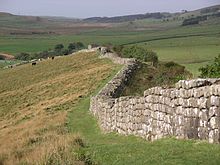
The name was borne by Publius Aelius Hadrianus (76-138 CE), known in the modern world as Emperor Hadrian, he is most famous for the wall he built across Great Britain, known as Hadrian’s Wall.
The name remained common throughout Europe, and is fairly popular across the Western World till this day. It was borne by several saints and popes, including the first and only English pope, Adrian IV, as well as the only Dutch pope, Adrian VI.

Currently, Adrian is the 6th most popular male name in Spain, (2010) and the 7th most popular in Norway, (2010). His rankings in other countries are as follows:
  • # 29 (Catalonia, 2009)
  • # 33 (Poland, 2010)
  • # 43 (Germany, 2011)
  • # 48 (Austria, 2010)
  • # 49 (Croatia, 2010)
  • # 51 (France, Adrien, 2010)
  • # 56 (United States, 2010)
  • # 60 (Sweden, 2010)
  • # 63 (Hungary, 2010)
  • # 81 (Belgium, Adrien, 2009)
  • # 455 (France, Adrian, 2009)

Other forms of the name include:

  • Ad (Afrikaans/Limbergish)
  • Adriaan (Afrikaans/Dutch)
  • Adrianus (Afrikaans/Latin)
  • Arrie (Afrikaans)
  • At (Afrikaans)
  • Daan (Afrikaans)
  • Jaans (Afrikaans)
  • Adrian Адриан (Albanian/Bulgarian/Croatian/Dutch/English/Finnish/Polish/Romanian/Russian/Scandinavian/Ukrainian)
  • Ardian (Albanian)
  • Adrianu (Asturian/Corsican/Sicilian)
  • Adiran (Basque)
  • Adrijan (Bosnian/Croatian/Serbian/Slovene)
  • Hadrijan (Bosnian)
  • Adrià (Catalan)
  • Jadran(ko) (Croatian)
  • Adrián (Czech/Hungarian/Slovak/Spanish)
  • Arie (Dutch)
  • Arjan (Dutch)
  • Hadrian(us) (Dutch/German/Latin)
  • Adrien (French)
  • Hadrien (French)
  • Aidrean (Gaelic)
  • Adrán (Galician)
  • Adrao (Galician)
  • Hadrán (Galician)
  • Hadrao (Galician)
  • Hádrian (Galician)
  • Adrianos Αδριανός (Greek)
  • Adorján (Hungarian)
  • Adrían (Icelandic)
  • Adriano (Italian/Portuguese)
  • Adrio (Italian)
  • Adriāns (Latvian)
  • Adrianas (Lithuanian)
  • Adrijonas (Lithuanian)
  • Adrião (Portuguese)
  • Adriànu (Sardinian)

Feminine forms include:

  • Adriana  (Albanian/Bulgarian/Catalan/Czech/Galician/German/Greek/Italian/Latin/Lithuanian/Polish/Romanian/Russian/Slovak/Spanish)
  • Adrijana (Bosnian/Croatian/Serbian)
  • Hadrijana (Bosnian/Croatian/Serbian)
  • Jadranka (Croatian)
  • Adriána (Czech/Hungarian/Slovak)
  • Ariane (Dutch)
  • Hadriana (Galician/Latin)
  • Adria (German/Italian)
  • Adriane (German)
  • Adrienne (French)
  • Adrienn (Hungarian)
  • Adrianna (Polish)
  • Drina (Spanish)

Polish feminine diminutives are Ada and Adi.

Regina

Gender: Feminine
Origin: Latin
Meaning: “queen.”
Eng (reh-JEE-nah); Old Eng (reh-JYE-nah); It (ray-JEE-nah); Sp (rey-HEE-nah); Pol/Russ (reh-GHEE-nah).

The name is of late Latin origins and in the Middle Ages, was popularized by a French saint.

Saint Reine/Regina was a virgin martyr whose cult was especially popular in the area of Autun France. Her feast day is September 7th.

In Medieval England, the name was used as a epithet for the Virgin Mary, referencing her as Queen of Heaven. The name fell out of usage after the Reformation and was revived in the 19th-century.

Other famous Reginas include a concubine to Emperor Charlemagne (708); she was the mother of Drogo and Hugh.

Currently, the name is borne by Regina Spektor (b.1980).

Other forms include:

Regina (Croatian/Dutch/English/German/Italian/Lithuanian/Polish/Romansch/Swedish)
Regína (Czech/Hungarian/Slovak)
Regine (Danish/German/Norwegian)
Regiina (Estonian)
Reine (French: archaic)
Régine (French)
Gina (Italian/English)
Reggina (Italian)
Reginella (Italian)
Reginetta (Italian)
Reina/Reyna (Spanish/Estonian)

An obscure Italian male form is Regino.

Source

  1. http://www.behindthename.com/php/find.php?name=regina

Basque Names….just a Subcategory of Spanish Names?

This weeks International Name Over View will focus on Basque Names.

The Basque are an ethnic group that inhabit the Pyrenees of Northwestern Spain and the bordering region of Southern France. Their language has yet to be categorized, often a topic of hot debate among Linguists. While some theorists have connected Basque from Georgian to Etruscan, the most widely accepted consensus is that Basque is closely related to the now extinct Aquitanian (spoken in France). It is in fact an indigenous European language. That is, it is not related to any of the Indo-European languages. It is considered an Isolate Language and it was most likely spoken in Europe long before the mass migration of the Indos.

Though either French or Spanish citizens, the Basque are fiercely proud of their language and culture. In the last century, there has been a strong push for autonomy. The Basque have fought hard to keep their language alive, most recently fighting oppression during the Franco regime, and are currently experiencing a revival. The Basque language is spoken by approximately 665,800 people. Not a lot, but believe it or not, the Basque and their language have actually left an impact in Spanish and even English.

Some of the more common Spanish surnames seen among Spanish-speakers are actually of Basque and not of Spanish origin. For example: Aldana, Loyola and Zuñiga.

Since the Basque were valuable in shepherding, fishing and mercantilism, a vast population of them immigrated to the Americas, leaving their imprint on modern Hispanic culture.

The country of Chile boasts Basque as their largest European ethnic group. The largest Basque-American population resides in Boise, Idaho. A fair amount of the Mexican population can claim Basque heritage to some extent.

As a result, several place names throughout the Americas are Basque, like Durango (Mexico), Nuevo Santander, (Mexico), Jalapa (Guatemala) and it is even argued that Arizona is derived from the Basque elements, aritz ona meaning “good oak.”

Our very own Xavier, which appears in the U.S. top 100 most popular male names was inspired by a Basque surname. Its usage as a given name was popularized by the notoriety of the Basque saint, Francis Xavier. Another notable Basque Saint is Ignatius of Loyola, founder of the Society of Jesus.

One of the ways that the Basque people have expressed their culture is through their first names. The Basque have a unique array of names, one feature that seems unique among them is their usage of place names. Unlike Anglo-phone parents who tend to use place names because of “cuteness”  or sonority, the Basque use place names due to religious significance. Basque culture has a strong emphasis on Catholicism, so any place or thing associated with the Virgin Mary is often used as a given name.

For a good idea of what the Basque in Spain are currently naming their children, check out the Top 10 listed below:

Top 10 Male Names in Basque Country, Spain 2008

Mikel

Pablo

Iker

Aimar

Asier

Unai

Iñigo

Javier

Aitor

Adrián

Top 10 Female Names in the Basque Country, Spain 2008

Lucía

Paula

Irati

Nahia

Uxue

Leyre

Sara

María

Ane

Ainhoa/Aitana

Mikel, Pablo, Adrián, Iñaki, Sara, María, Ane, Lucía and Paula are all derived from Biblical or saints names.

Aitor (good fathers) is a name taken from Basque folklore, he is believed to have been the first man and the progenitor of the Basque people.

Iker is the vernacular form of Visitación, an unusual Spanish name used in reference to the Virgin Mary (Our Lady of the Visitation). This is the same case with the female Irati, which is a place-name associated with a shrine to the Virgin Mary, which literally means “fern field”; and Uxue taken from the name of a Catholic shrine, but is also associated with the Basque word for dove. Ainhoa is a religious place-name name and even appears in the Spanish Top 100, coming in as the 31st most popular female name in all of Spain. Aitana is a Spanish place-name of unknown meaning. Leyre is the Spanish form of Leire, the name of a place in the Basque country associated with a Catholic monastery.

Nahia is from a Basque word meaning, “wish; desire.”

Unai is an indigenous Basque name with no Spanish or English equivalent, meaning “cowherd.”

Asier is from the Basque hasiera meaning “beginning.”

I have yet to find any information on Aimar, but subsequent searches led me to several notable Basque bearers, so I am assuming that he is Basque too. If anyone has anymore info on him, please step forward 🙂

You might be one of the many Latinas or Americans who claim Basque heritage, or perhaps you are just looking for a cool and different name that is actually legitimate. Below are a list of names I have compiled for the Anglo-phone parent. Basque names that would be easy for an English-speaking child to wear. Enjoy 🙂

Easy to say Basque alternatives to common English names

Instead of Caitlin try Catalin

Instead of Emma try out Ama

Instead of Madison or Madelyn, you might like Maialen or Malen

Like Olivia, try Olaria

Loving Ella, then you might like Elaia (swallow)

Considering Hannah well you just might like Oihana (forest)

Like Nevaeh check out Nerea

Here is a selection of Basque names compatible with English:

Female

  • Alaia (joyful; happy)
  • Amaia (end)
  • Elixane (Elise)
  • Esti (Sweet; honey)
  • Garden (transparent; clear)
  • Julene (Juliana)
  • Katerin (Catherine)
  • Lilura (enchantment)
  • Lorea (flower)
  • Maia (Maddie)
  • Miren (Mary)
  • Naiara
  • Nora
  • Oria
  • Pauli
  • Semera
  • Zerran
  • Zilia

Male

  • Adon
  • Bingen (Vincent)
  • Denis (Dennis)
  • Eder (beautiful)
  • Erroman (Raymond)
  • Gabon (Christmas)
  • Harri (rock)
  • Hartz (Bear)
  • Igon (Ascension)
  • Jurdan (Jordan)
  • Kelemen (Clement)
  • Kemen (Strength)
  • Lain
  • Luken (Luke)
  • Manex (John)
  • Zorion (happy)

Basque Equivalents to Common English Given Names

Female

  • Alize (Alice)
  • Ane (Anna)
  • Elixabete (Elizabeth)
  • Estebeni (Stephanie)
  • Fede (Faith)
  • Gartxene (Grace)
  • Itxaro (Hope)
  • Kalare (Claire)
  • Lili (Lily)
  • Mikele (Michaela)
  • Mixtoleta (Poppy)
  • Nikole (Nicole)
  • Hirune/Irune (Trinity)
  • Udane (Summer)
  • Udazken (Autumn)

Male

  • Adame (Adam)
  • Alesander (Alexander)
  • Danel (Daniel)
  • Edorta (Edward)
  • Eli (Elias)
  • Gabirel (Gabriel)
  • Gilen (William)
  • Handi (Max)
  • Ixaka (Isaac)
  • Jakes (Jacob)
  • Jon (John)
  • Marz (Mark)
  • Nikola (Nicholas)
  • Txomin (Dominic)
  • Xabier (Xavier)
  • Xarles (Charles)

What are your favorite Basque names? Would you use any of the above?

Sources

  1. http://www.behindthename.com/
  2. http://www.people.fas.harvard.edu/~witzel/mt26s.html
  3. http://www.ei.ehu.es/p056-12532/eu/contenidos/informacion/grammar_euskara/en_doc/index.html
  4. http://www1.euskadi.net/morris/resultado.asp
  5. http://www.euskarakultur.org/
  6. http://www.eke.org/euskara/
  7. http://basque.unr.edu/