Jaione, Natividad

Gender: Feminine
Origin: Basque/Spanish
Meaning: “nativity.”
Pronunciation can be heard here: http://www.forvo.com/search/Jaione/
http://www.forvo.com/search/Natividad/es/

Jaione is from the Basque word for “nativity” referring to the birth of Christ and is usually bestowed on girls born on Christmas or around Christmas.

The Spanish version is Natividad, which comes directly from the Spanish word.

In Spain, Natividad’s designated name-day is December 25.

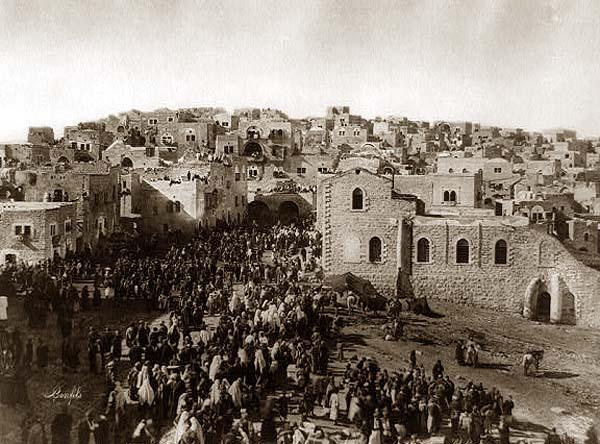
Belén

Gender: Feminine
Origin: Spanish
Meaning: “Bethlehem”
(be-LEN)

The name is a Spanish form of the Hebrew place name, Bethlehem, which is ultimately derived from the Hebrew בֵּית לָחֶם (beit lachem) meaning “house of bread.” The name was originally bestowed upon girls born around the Christmas season, it is sometimes used in conjunction with other names, such as Maria Belén and Ana Belén.

As of 2008, Belén ranked in as the 866th most popular female name in the United States. She ranked in at # 18 in Chile in 2006.

In Spain, her designated name-day is December 25.

Noël, Noëlle

Origin: French
Meaning: Christmas
Fre masc. (no-EL); Eng masc (NOLE)
Fre/Eng Fem. (no-EL)

The name comes directly from the French word for Christmas, noël, which in itself, is the Old French form of the Latin nael. It is commonly believed to be related to the Latin, natalis, meaning “birth”, but Irish linguist, Charles Vallencey, has proposed that the etymology may be from the Hebrew word nolah, (composed of the Hebrew letters nuwn, waw, lamed and he), which would mean “to bring forth young.” Subsequently the Irish word for December, Mi Nolagh, (literally meaning the “month of the newborn”) and the Irish word for Christmas, nolagh, is related to the French word noël.

Nolagh, (NOH-lahg), is used as a feminine given name in Ireland, usually a cognate of Natalie or Noëlle, it was usually bestowed on girls born around the Christmas season.

In France, Noël is traditionally bestowed on baby boys born on Christmas or around Christmas, while Noëlle is its feminine version. In the English speaking world, it did not catch on as name till around the 19th-century, but noel was a word often used interchangeably with Christmas, sometimes spelled nowell.

A Spanish corruption of the French is Noelia, Noelina and the masculine version, Noelino. An Old French diminutive form, which is currently rising in popularity in France, is the feminine Noéline. There are a few obscure Provençal and Occitanian forms: Nadal and Nadau and the feminine Nadaleta, and there is Calendau, which means “Christmas” in both languages.

Joy

Gender: Feminine
Origin: English

The name comes directly from the English word and has been in usage since at least the 16th-century. In the United States, Joy ranked in as the # 548th most popular female name. Another variation is the Italian Gioia, (JOY-ah).

The name is borne by TV host of the View, (nee Josephina Victoria b.1042) and Italian pop singer, Gioia Bruno (b.1963)

Javier, Xavier

Gender: Masculine
Origin: Basque
Meaning: “the new house.”

The name is derived from a Basque surname Extaberri meaning “the new house” and has been in use as a given name for centuries. It was popularized by St. Francis Xavier (1506-1552), and was also the family name of the Lords of Javier. After the popularity of the saint, the name spread throughout the Spanish speaking world as a popular male given name, its usage was followed in due course by other Catholic countries.

The name has experienced a sudden surge of popularity in the United States, ranking in as the  71st most popular male name for 2008.

In Australia he ranks in at # 56 (2007), and # 90 in Spain for 2005. Its designated name-day is December 3rd.

Other forms of the name include:

  • Chabier (Aragonese)
  • Xabel (Asturian)
  • Xabier/Xabi (Basque)
  • Xavier (Catalan/French/Galician/Portuguese/Valencian: Catalan diminutives are Xavi and Xevi)
  • Saveriu (Corsican)
  • Xaver (German/Czech)
  • Savy (Irish)
  • Saverio/Zaverio (Italian)
  • Xaverius (Latin)
  • Xabiere (Leonese)
  • Xavêio (Piedmontese)
  • Ksawery/Xawery (Polish: latter form is archaic, diminutive form is Ksawerek)
  • Ksaber Ксавьер (Russian)
  • Xavér (Slovakian/Hungarian)
  • Javier (Spanish)

Feminine forms

  • Xavière (French)
  • Saveria/Saverina/Zaveria (Italian)
  • Ksawera/Ksaweryna (Polish: diminutive forms are Ksawerka or Ksawerynka)
  • Xavéria (Slovakian)
  • Javiera/Xaviera (Spanish)

A popular compound name, used among Catholics, is Francis Xavier (English: common in Ireland); Franz Xaver (German: used in the Catholic areas of German speaking countries); Francisco Xavier (Portuguese) Francisco Javier; (Spanish) and Francois-Xavier (French).

In Portugal, Xavier is sometimes used in conjunction with Maria or Francisca as a feminine name, but is never used on females as a stand alone name. Its conjunction with names like Maria or Francisca are usually used in a religious context, in reference to the saint.

Viviana, Vivienne, Bibiana

Origin: Latin
Meaning: “alive.”

For many, the name Vivian probably brings to mind the silverscreen and beautiful leading ladies like Vivien Leigh, however, both Vivian and Vivien are masculine forms, though they have not ranked in the U.S. top 1000 for males, for the policy of defining a legitimate name, I have decided to list both Vivian and Vivien as male forms, while Viviane and Vivienne are legitimate feminine forms. In fact, Vivien is still considered a male form in France. Currently, Vivian ranks in the U.S. top 1000 female names as the 207th most popular female name for 2008, with the rising popularity of such vintage names like Ava and Sophie, this one might rise, plus add to the mix that Angelina Jolie and Brad Pitt recently named a child Vivienne.

The name is derived from Vivianus, which is derived from the Latin word vivus meaning “alive.” The name was borne by two saints, one an early Christian martyr, known as St. Viviana or St. Bibiana, the other a French Bishop who was known for providing protection against the Visigothic invasion.

In addition, in some Arthurian legends, the Lady of the Lake is sometimes given the name Viviane.

The name-days are June 2nd (Estonia) and December 2nd.

Other forms of the name include: (divided alphabetically by linguistic origin):

  • Bibijana (Croatian)
  • Viivi (Finnish)
  • Bibiane/Bibienne (French)
  • Viviane/Vivienne (French: common diminutive form is Vienne)
  • Viviette (French: originally a diminutive form; used as an independent given name)
  • Bibiana (German/Italian/Spanish)
  • Bibbiana (Italian)
  • Viviana (Italian/Spanish)
  • Bibianna/Wiwianna (Polish: the latter form is more common and is currently rising in popularity)
  • Bibiána/Viviána (Slovakian/Hungarian: diminutive forms in Slovak are: Vivi, Vivianka, Via and Vianka)
  • Viviann/Vivianne/Vivan/Wivan (Swedish)

Masculine forms

  • Vivian (English)
  • Vivien (French/Hungarian)
  • Bibbiano/Bibiano (Italian)
  • Vivianus (Latin)
  • Bibian (Polish)
  • Vivián (Spanish)

Renata, Renatus, René, Renée

Origin: Latin
Meaning: “rebirth.”

The origins of René and Renée can be traced back to the Late Latin male name Renatus, meaning “rebirth; born again.” The name is borne by several saints in both its Latin masculine form and feminine Latin form. The French forms have experienced usage in the Netherlands, Slovenia, Slovakia, the Czech Republic as well as Anglo-phone countries.

Renée enjoyed a short spout of popularity in the United States during the late 60s and early 70s, the highest it peaked was in 1967 coming in at # 62. As of 2008, she came in at # 734. Surprisingly, its masculine version ranked in higher in the top 1000, coming in as the 561st most popular male name in 2008. René is still somewhat prevalent among the Cajun and Creole communities of Louisiana.

In 2005, he was the 57th most popular male name in Slovenia.

Renata has experienced usage from South America to Eastern Europe, she is a common choice in Poland, Germany, Italy and Brazil. In 2006, she was the 34th most popular female name in Chile and the 68th most popular female name in Hungary.

Other forms of the name include:

  • Renata (Czech, Croatian, German, Italian, Lithuanian, Polish, Portuguese, Spanish. Polish diminutive forms are: Rena, Renatka and Renia. Spanish diminutive form is Renita, often used as an independent given name)
  • Renate (Dutch/German)
  • Renáta (Hungarian/Czech/Slovak)

Masculine forms include:

  • René (French, Czech, Dutch, German, Hungarian, Slovakian, Slovenian)
  • Renát (Hungarian/Slovakian)
  • Röné (Hungarian)
  • Renato (Italian/Spanish)
  • Renatus (Late Latin)
  • Renáto (Slovakian)
  • Renátus (Slovakian)

The designated name-day is November 6 in Slovakia, October 19 in France, November 12 in Poland and Lithuania, November 28 in the Czech Republic (Renata is October 13); October 6 in Hungary and January 23 in Estonia.

The name is borne by French mathematician and philosopher René Descartes and French painter René Magritte and American actress Renée Zellweger.

Blandina, Blandine

St. Blandine

St. Blandine

Gender: Feminine
Origin: Latin
Meaning: “charming; flattering; friendly”

Both names come from an early Roman name, a feminine form of Blandinus, which is a derivative of the cognomen, Blandus, meaning “charming; flattering” or “friendly” in Latin.

The name was popularized, in France, in the form of Blandine.

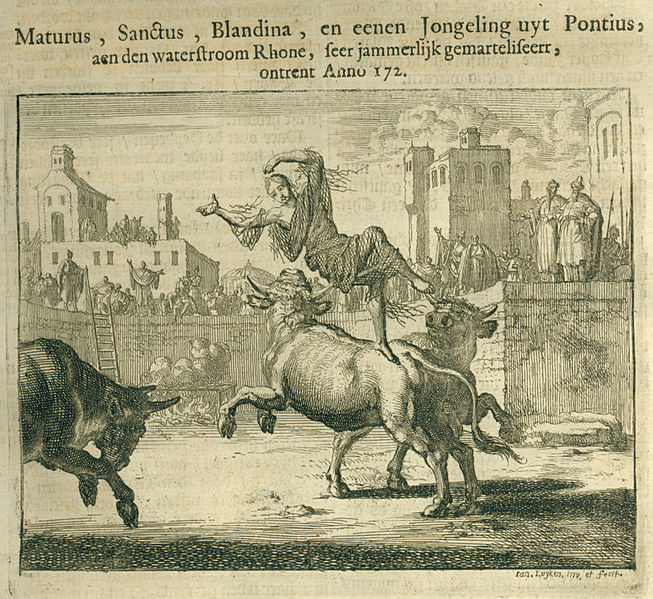
It was the name of an early Christian martyr who had been killed in Lyons in the first-century C.E.

According to legend, she was a slave and Christian of frail health and when an edict against Christians in the area was produced, she and her master were tried and executed.

Allegedly, Blandina was tied to a stake in the local arena where wild animals were set loose upon her, the animals did not harm her, afterwards, she was scourged, placed on a burning grate and then thrown before a wild bull. She still didn’t die. She was finally executed with a dagger.

In France the name-day is June 2nd, while in Germany it is October 22.

The name has also had some usage in Italy , Spanish-speaking countries and in the Romantsch speaking cantons of Switzerland.

The Polish forms are Blandyna and the masculine, but very unusual form, of Blandyn.

Adeline

411px-Adelina_Patti_1863Gender: Feminine
Origin: French
Meaning: “noble”
Eng (AD-eh-LINE); Fr (ah-de-LEEN)

The name was a Medieval French diminutive form of Adéle which is from the Germanic Adela meaning “noble.” The name fell out of usage as a diminutive form and has been used as an independent given name in its own right since the late Middle Ages. The name enjoyed a trend in English speaking countries during the 18th and 19th-century. It has since then been creeping back into widespread usage. In 1999, Adeline stood at # 924 in the Top 1000 Female Names, it has risen all the way up to #361 in 2008. The name was borne by Blessed Adeline (b. 1125) a French nun known for her piety. It was also the nickname of Adelina Patti (born Adela Juana Maria Patti 1843). She was a famous opera singer of Italian descent. Other forms of the name excluding Adele are:

  • Aline (French: popularized by a 1950s French pop song sung by Christophe of the same name)
  • Alina (Polish/Russian/German/Finnish: diminutives in Polish include Alinka)
  • Adelina (Spanish/Italian/Romanian/Romansch/Portuguese/Finnish/Bulgarian)
  • Adelita (Spanish diminutive form, occasionally used as an independent given name, especially in Latin American Countries. It was popularized as an independent given name by a Mexican folk song of the same name)

Popular English nicknames include: Addie, Adele, and Del. In France, the designated name-day is October 20.

Griselda

The_Story_of_Patient_Griselda_circa_1490Origin: German/Italian/Portuguese/Spanish
Gender: Feminine
Meaning: “grey battle; grey gravel.”
(grih-ZEL-dah)

The name is either derived from the Germanic gris meaning “grey” and hild meaning “battle” or the Germanic gries meaning “gravel, stone.” The name was used in folklore as a sort of euphemism for a patient and obedient woman. In the dark tale written by Italian poet Boccaccio, it is the name of the wife of a nobleman who is told by husband that her children must die. She obeys, but does not realize that she is being tested by her husband, who has taken the children away and hid them in another town, rather than kill them. Griselda’s husband then tells her that he must divorce her and marry another woman, when he introduces her to the “new wife” (a twelve year old little girl who is actually her daughter), Griselda wishes them well and at this her husband reveals that all he had put her through had been a test. The same tale is retold in Chaucer’s The Clerk’s Tale, in which case, Griselda is treated as an allegory for the Biblical Job. Charles Perrault took the same tale and wrote Patient Griselda. There was a play based off of the French version entitled Patient Grissel (1599). There are several Italian opera’s based off the story including La Griselda by Alessandro Scarlatti (1721). The name is used in Italy, Spain and was common in German speaking countries but is now considered dated. Other forms of the name include:

  • Grizelda (Czech/Slovak/Hungarian)
  • Selda (Dutch contraction)
  • Grissel (English)
  • Griselde/Grisold (German)
  • Zelda (German/English contraction)
  • Grizeldisz (Hungarian)
  • Grizel (Scottish)