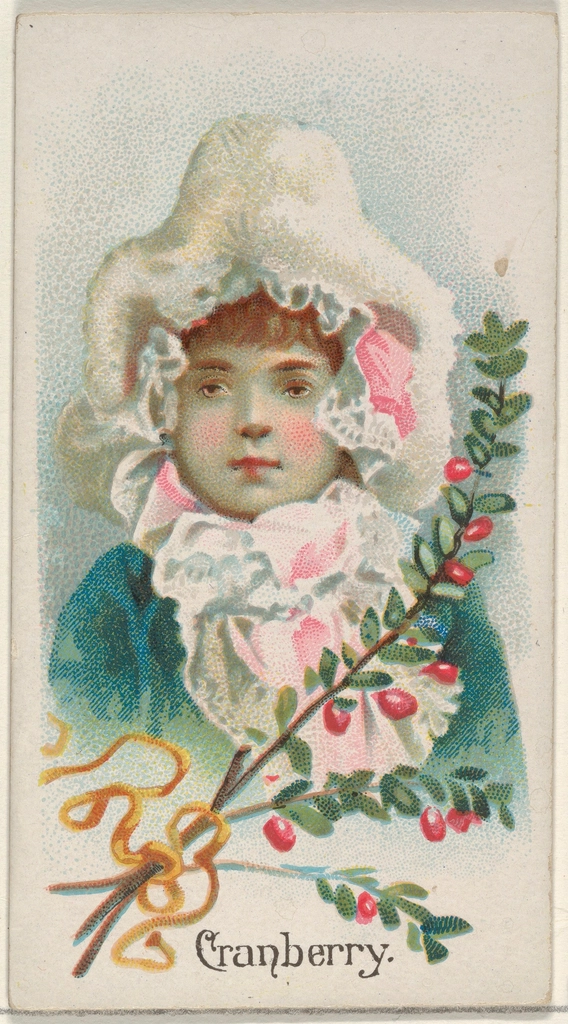
- Origin: Mordvin Чеймарина
- Meaning: “cranberry.”
- Gender: Female
A Pre-Christian Mordvin female name meaning, “cranberry.”
Source
A Pre-Christian Mordvin female name meaning, “cranberry.”
Source

These are separate names but they have identical pronunciation. The former is from the Yoruba phrase ará-olúwa (the Lord’s kin), while the latter is derived from àrà-olúwa, meaning, (the Lord’s wonder).
A common short form is Ara.
Sources

This lyrical gem looks like a cross between Tammy & Lora, but is actually a Yoruba feminine name. It comes from the Yoruba phrase, ta mí lọ́rẹ, literally, “give me a gift.” It would make a lovely and unique option for a child born around the holidays.
Possible nicknames include, Tami, Tammie, Tammy, Lore or Lori.
Source

The name is borne in Greek mythology by the daughter of Astraeus and Eos. She is the goddess of justice, innocence, purity, & precision and is closely associated with Dike, the goddess of Justice. According to Ovid, Astraea was a mortal woman during the Golden Age, but ascended into the heavens to become the constellation Virgo.
Other froms of the name include:
Sources

The name is composed of the Yoruba words ayọ̀ (joy) kún (fill, complete, add to) & ilé (house).
Short forms are Ayo & Kunlé.
Sources

The name is composed of the Yoruba words ayọ̀ (joy); mi (my) and kún (full). A common short form is Ayo.
Sources

The name comes directly from the Cornish noun meaning “happiness; bliss; joy.”
It is sometimes spelled Lowenna to reflect the true pronunciation.
Sources
 Origin: Greek
Meaning: “victory of the people.”
Today is St. Nicholas Day! So, I thought, what a perfect opportunity to blog about the name Nicholas and all his myriad variations.
This is an update of a post I wrote three years ago in December. I thought I would rerun it with some updates.
The name is derived from the Greek, Νικόλαος, (Nikolaos), which is composed of the Greek words νικη (níkē), meaning, “victory” and λαὸς (laos), meaning, “people.” λαὸς (laos) could also derive from the Greek root word, λας (-las) as in “λα-τομεῑο“, which means, “stone” “rock”, as in Greek mythology it was believed that all humans were formed from the stones that Deucalion and Pyrrah threw over their shoulders as they were running.
In the post-Christian world, the name Nicholas was popularized through the cult of St. Nicholas, Bishop of Myra in Lycia, (the inspiration for the modern-day Santa Claus). He was known for his acts of charity toward the poor, the most popular story being that he saved a local poor man’s daughters from lives of prostitution by dropping gold nuggets down the man’s chimney so that the man could pay for his debts instead of selling his daughters.
St. Nicholas is a very popular saint in both the Eastern and Western Churches.
The name was introduced into England in the form of Nicholas, though the sans H version has also its share of usage in the Anglophone world. Nicholas first came into usage in England around the 12th-century and remained common even through the period of the Reformation. Currently, Nicholas is the 42nd most popular male name for boys in the United States, (2011). His rankings in all his various forms in other countries are as follows:
Other forms of the name include the following, (divided alphabetically by linguistic origin):
Latinate Forms
Variations used in Latin languages
Feminine forms ares
Germanic Forms
Variations used in Germanic based languages
Germanic feminine forms are:
Slavic Forms
Forms used in Slavonic languages
Feminine forms are:
Celtic Forms
Forms used in Celtic Countries
Baltic Forms
Forms used in the Baltic
Feminine forms are:
Other Forms
Forms used in other languages
Feminine forms are as follows:
 Gender: Feminine
Origin: Greek
Meaning: “God appears; manifestation of God; epiphany.”
Eng (TIFF-uh-NEE); (thee-o-FAH-nee-ah)
Tiffany, now considered a name of the 80s, is actually an early English Medieval form of the Greek female name Theophania, which means “God appears”, being composed of the Greek elements, θεος (theos), meaning, “God” and φανης (phanes), meaning “appears.”
The name was usually bestowed upon girls born on the feast of the Epiphany (January 6), which celebrates when the Three Wise Men visited the Christ Child.
The name was popular in Medieval England and fell out of usage, being introduced into England via the Normans in the form of Tiphaine.
A few English matronymic surnames developed from it, Tiffany being the most notable, becoming one of very few female given names to appear in an English surname. A few other female names being: Alice, Isemay and Maude.
At of the turn of the last century, the name came to be associated with Tiffany & Co, which was founded by Charles Lewis Tiffany in 1837.
The name may have caught the public attention via the company, but most likely, its popularity was sparked after the publication of the Truman Capote novella, Breakfast at Tiffany’s (1958), which was later made into a film, starring Audrey Hepburn, in 1961.
Tiffany appeared in the U.S. top 1000 the following year. In 1962, she was the 783rd most popular female name. The highest she peaked was in 1982, coming in as the 13th most popular female name. She peaked again in 1988, coming in at # 13.
As of 2010, she ranks in as 311th most popular female name in the United States, while in France she ranked in as the 432nd most popular (2009).
Other forms of the name include:
Males forms are:
 Gender: Feminine
Origin: Latin
Meaning: “angelic.”
Eng (AN-jel-ik-ah), It/Pol (ahn-JAY-lee-kah); Germ (ahn-GAY-lee-kah); Sp (ahn-HAY-lee-lah) Swe/Nor (ahn-YAY-lee-kah); Fre (Pronunciation)
The name is derived from the Latin angelicus meaning “angelic” and is ultimately derived from the Greek, άγγελος (ángelos) meaning, “messenger.” The name was used by the 16th-century, Italian poets, Boiardo and Aristo for their Orlando poems, in which it is the name of Orlando’s love interest.
In England, Angelica has been used as a given name since the 18th-century.
Angelica is also the name of a type of herb.
As of 2010, Angelica stood as the 345th most popular female name in the United States, while the French form of Angélique came in as the 439th most popular female name in France, (2009) and the 627th most popular in the United States, (2010).
As of 2009, its Spanish form of Angélica was the 88th most popular female name in Mexico.
The name is borne by several saints, and was also borne by 18th-century Swiss painter, Angelica Kauffman (1741-1807). Other notable Angelicas include:
Italian opera singer, Angelica Catalani (1780-1849), Stand-in American First Lady, Angelica Van Buren (1818-1877), American nun and TV host, Mother Angelica (b.1923); Angelica Pickles, a popular cartoon character featured on the Rugrats; American actress, Anjelica Huston; Norwegian princess, Maud Angelica Behn (b.2003) .
The Latinate, Angelica form, is used in English speaking countries, Italy, Romania, Norway, Sweden and occasionally Poland. Other forms of the name include:
There is an Italian masculine form, which is Angelico, and the Late Latin masculine form, Angelicus.