
- Origin: Shona
- Meaning: “the Lord is with us; the Lord is within us.”
- Gender: Unisex
- Pron: moo-NAH-sheh
A Shona theophoric unisex name, it is from a phrase mu ne ishe (the Lord is with us or the Lord is within us).
Sources
A Shona theophoric unisex name, it is from a phrase mu ne ishe (the Lord is with us or the Lord is within us).
Sources

The name is from the Edo language (a language spoken by the Edo people of Nigeria), meaning, “what God has said.”
A short form is Nosa.
Sources

The name is composed of the Shona words, tamira (to stand, to wait, to endure, to be ready), na (with, for) and ishe (the Lord).
Sources

Bogoljub is composed of the South Slavic elements, bog (God) and ljub (love). It was originally a South Slavic vernacular form of Theophilus and Amadeus.
Its designated name-day in Croatia is March 7th and March 30 in Slovenia.
Common diminutive forms include: Bole, Bogo, Bogi, Bojan, Bojica, Bojko, Ljubo and Ljuban.
It is borne by Serbian Statesman, Bogoljub Jevtić (1886–1960), Serbian Businessman, Bogoljub Karić (b. 1954), and Serbian basketball player, Bogoljub Marković (b. 2005).
Its feminine form is Bogoljuba, and affectionate forms include Boba, Bojana, Bojka, Ljubica.
Sources

The name is composed of the Yoruba dá…l’ọ́lá (to make wealthy by God) and mi (me).
Another form is Dánlọlá.
It is borne by Nigerian model and actress, Dámilọ́la Adégbìtẹ́ (b. 1985).
Sources

These are separate names but they have identical pronunciation. The former is from the Yoruba phrase ará-olúwa (the Lord’s kin), while the latter is derived from àrà-olúwa, meaning, (the Lord’s wonder).
A common short form is Ara.
Sources

Dárasími is from the Yoruba phrase, dára-sí-mi (good to me), there is also Ọlúwadárasími, which means “the Lord is good to me.”
Sources

The name is composed of the Yoruba words ẹbùn (gift) and olúwa (the Lord).
Other forms are Ẹ̀bùn & Ẹ̀bùnolú.
Sources

The name is from the Urhobo language, meaning “God’s gift.”
A common short form is Ese.
Sources
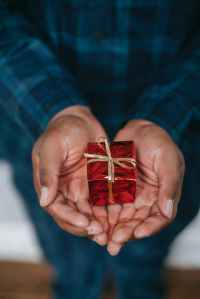
The name is from the Edo language meaning “God’s gift.”
Sources