Minttu

Gender: Feminine
Origin: Finnish
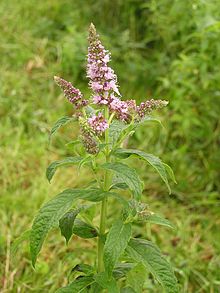
Meaning: “mint.”

The name comes directly from the Finnish word for mint.

Its designated name-day is October 6.

The name is borne by Finnish actress Minttu Mustakaillo (b.1973). It is also the name of a popular Finnish peppermint-flavored liqueur, despite the liqueur associations, the name seems to be fairly common in Finland.

The Holidays aren’t too far off and if you due around that time and are considering a Holiday-themed name with a bit of an edge, this might be just what you are looking for.

Update: As of 2011, Minttu is the 43rd most popular female name in Finland.

Melchior

Gender: Masculine
Origin: Debated
Meaning: Debated

The name is of uncertain origin or meaning, but may be related to the Phoenician deity name, Melqart, which means “king city” or possibly even to the Hebrew components, malki (my king) and or (light), which would roughly translate as “my king is light.”

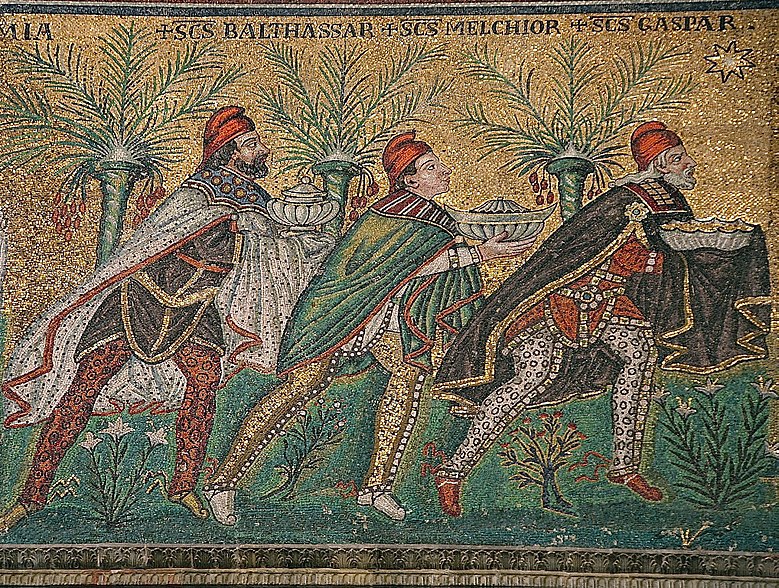
According to Christian lore, it is the name of one of the Three Wise Men (Magi) who visited Christ.

Its designated name-day is January 6th.

Other forms of the name include:

  • Meltxor (Basque)
  • Melcion/Melcior (Catalan)
  • Melchioru (Corsican)
  • Melkior (Croatian/Serbian/Slovene)
  • Melker (Danish/Norwegian/Swedish: currently very popular in Sweden, in 2007, it was the 54th most popular male name in Sweden)
  • Melchior (English/French/German/Polish/Slovak)
  • Malchior (German/Polish: older forms)
  • Marchal/Melcher (German: archaic)
  • Melchiorre (Italian)
  • Melchioras/Melkijoras (Lithuanian)
  • Merkelis (Lithuanian)
  • Melkjor (Maltese)
  • Marchion (Occitanian)
  • Melhior (Polish: very obscure)
  • Belchior (Portuguese)
  • Melkhior (Russian)
  • Melichar (Slovak)
  • Melchor (Spanish/Galician)

an obscure feminine form is Melchiora.

Balthazar

Gender: Masculine
Origin: Phoenician
Meaning: “Ba’al protects the king.”
Eng (Bel-the-Zar)

The name is believed to be a corruption of the Biblical Phoenician name, Belshazzar, which appears in the Book of Daniel as the name of a Babylonian king.

In Christian folklore, the name is attributed to one of the Three Wise Men, in both the Eastern and Western Christian Church, Balthazar is honored as a saint.

The designated name-day is January 6th.

Other forms of the name include:

  • Baltasar (Basque/Galician/Maltese/Spanish)
  • Hausl (Bavarian)
  • Balthazar (Catalan/English/French/Dutch/German)
  • Baltazaru (Corsican)
  • Baltazar (Croatian/Czech/Polish)
  • Hauser (German: Austrian dialectical form)
  • Boldizsár/Baltazár (Hungarian)
  • Baldasarre (Italian)
  • Baltazaras (Lithuanian)
  • Bautesar (Occitanian)
  • Balser/Balzer (Romansch)
  • Valtasar (Russian)
  • Baltazár (Slovak)
  • Boltežar (Slovene)
  • Baltsar (Swedish)

As for nicknames, Bolt might make an interesting choice.

Casper/Jasper

Gender: Masculine
Origin: Persian
Meaning: “treasurer; treasure bringer.”

Caspar, Casper and Jasper are Greek corruptions of an ancient Chaldean or Persian word, gizbar, which means “treasurer.” In modern Hebrew, gizbar is still the word for “treasurer.”

Traditionally, the name is attributed to one of the three Magi, or the Three Wise Men, who are noted for bearing the Christ child gifts. Gaspar is supposedly the one who brought frankincense.

The names of the Magi first appeared in Latin texts which date from the 9th-century C.E. Since then, the name has been in usage in Europe since the Middle Ages, and Gaspar/Caspar is attributed as a saint.

Currently, Jasper ranked in as the # 451st most popular male name in the United States. In Belgium, it is the 51st (2006) and in the Netherlands, the 35th (2008).

Casper did not make it into the U.S. top 1000, the name has not been in the top 1000 since 1933, when it came in as the 978th most popular male name for that year. Its disfavor may have been due to the popular children’s cartoon series, Casper the Friendly Ghost.

His rankings in other countries are as follows:

  • # 77 (the Netherlands, 2008)
  • # 86 (Norway, 2007)
  • # 46 (Sweden, 2007)

Other forms of the name include:

  • Karsudan (Amharic/Ethiopian)
  • Kagpha (Armenian)
  • Gasparu (Corsican)
  • Kašpar (Czech)
  • Jesper (Danish/Dutch/Norwegian/Swedish: YES-per. The 97th most popular male name in the Netherlands-2008, 56th most popular in Norway-2007 and the 74th most popular in Sweden-2007)
  • Kasper/Kaspar (Danish/Dutch/German/Maltese/Norwegian/Swedish)
  • Casper/Caspar (Dutch/English)
  • Jasper (Dutch/English/German: pronounced YAHS-per in Dutch and German)
  • Gaspard (French/Portuguese)
  • Jaspert (Frisian)
  • Gaspare (Italian: gahs-PAH-re)
  • Gasparo/Gaspero (Italian)
  • Gasparino/Gasperino (Italian)
  • Caspar/Gasparus (Latin)
  • Gaspars (Latvian)
  • Kasparas (Lithuanian)
  • Ġaspar (Maltese)
  • Kacper (Polish: most common form)
  • Kasper/Gaspar (Polish)
  • Gašpar (Prekmurian)
  • Chasper/Chispar (Romansch: diminutive is Chasprot)
  • Hasper (Romansch)
  • Papper (Romansch)
  • Tgasper (Romansch)
  • Aspano/Asparinu (Sicilian)
  • Gašpar (Slovene/Croatian)
  • Gaspar (Spanish/Basque/French/Occitanian)
  • Gushnasaph (Syrian)

Feminine forms are the Dutch Jasperine, the French Gasparine and the Italian Gasparina.

The designated name-day is January 6th.

Jaione, Natividad

Gender: Feminine
Origin: Basque/Spanish
Meaning: “nativity.”
Pronunciation can be heard here: http://www.forvo.com/search/Jaione/
http://www.forvo.com/search/Natividad/es/

Jaione is from the Basque word for “nativity” referring to the birth of Christ and is usually bestowed on girls born on Christmas or around Christmas.

The Spanish version is Natividad, which comes directly from the Spanish word.

In Spain, Natividad’s designated name-day is December 25.

Belén

Gender: Feminine
Origin: Spanish
Meaning: “Bethlehem”
(be-LEN)

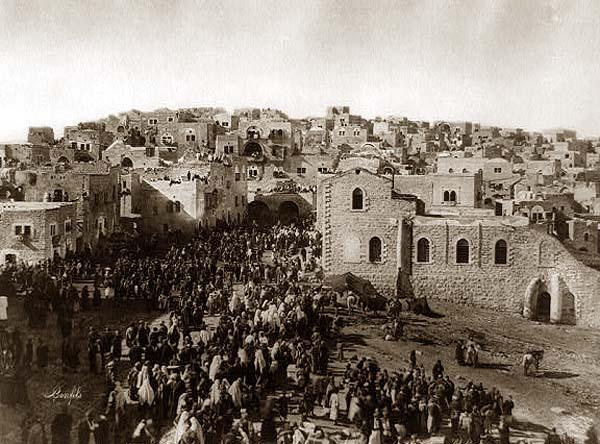
The name is a Spanish form of the Hebrew place name, Bethlehem, which is ultimately derived from the Hebrew בֵּית לָחֶם (beit lachem) meaning “house of bread.” The name was originally bestowed upon girls born around the Christmas season, it is sometimes used in conjunction with other names, such as Maria Belén and Ana Belén.

As of 2008, Belén ranked in as the 866th most popular female name in the United States. She ranked in at # 18 in Chile in 2006.

In Spain, her designated name-day is December 25.

Noël, Noëlle

Origin: French
Meaning: Christmas
Fre masc. (no-EL); Eng masc (NOLE)
Fre/Eng Fem. (no-EL)

The name comes directly from the French word for Christmas, noël, which in itself, is the Old French form of the Latin nael. It is commonly believed to be related to the Latin, natalis, meaning “birth”, but Irish linguist, Charles Vallencey, has proposed that the etymology may be from the Hebrew word nolah, (composed of the Hebrew letters nuwn, waw, lamed and he), which would mean “to bring forth young.” Subsequently the Irish word for December, Mi Nolagh, (literally meaning the “month of the newborn”) and the Irish word for Christmas, nolagh, is related to the French word noël.

Nolagh, (NOH-lahg), is used as a feminine given name in Ireland, usually a cognate of Natalie or Noëlle, it was usually bestowed on girls born around the Christmas season.

In France, Noël is traditionally bestowed on baby boys born on Christmas or around Christmas, while Noëlle is its feminine version. In the English speaking world, it did not catch on as name till around the 19th-century, but noel was a word often used interchangeably with Christmas, sometimes spelled nowell.

A Spanish corruption of the French is Noelia, Noelina and the masculine version, Noelino. An Old French diminutive form, which is currently rising in popularity in France, is the feminine Noéline. There are a few obscure Provençal and Occitanian forms: Nadal and Nadau and the feminine Nadaleta, and there is Calendau, which means “Christmas” in both languages.
Joy

Gender: Feminine
Origin: English

The name comes directly from the English word and has been in usage since at least the 16th-century. In the United States, Joy ranked in as the # 548th most popular female name. Another variation is the Italian Gioia, (JOY-ah).

The name is borne by TV host of the View, (nee Josephina Victoria b.1042) and Italian pop singer, Gioia Bruno (b.1963)