Elara

  • Origin: Greek Ἐλάρα
  • Meaning: “hazelnut; spear.”
  • Gender: Female
  • Pron: EL-e-ruh; EHL-ə-rə

The name is of uncertain etymology. It has sometimes been linked to the ancient Greek word ἄλαρα (álara), said to mean “hazelnut” or “spear-shaft.”

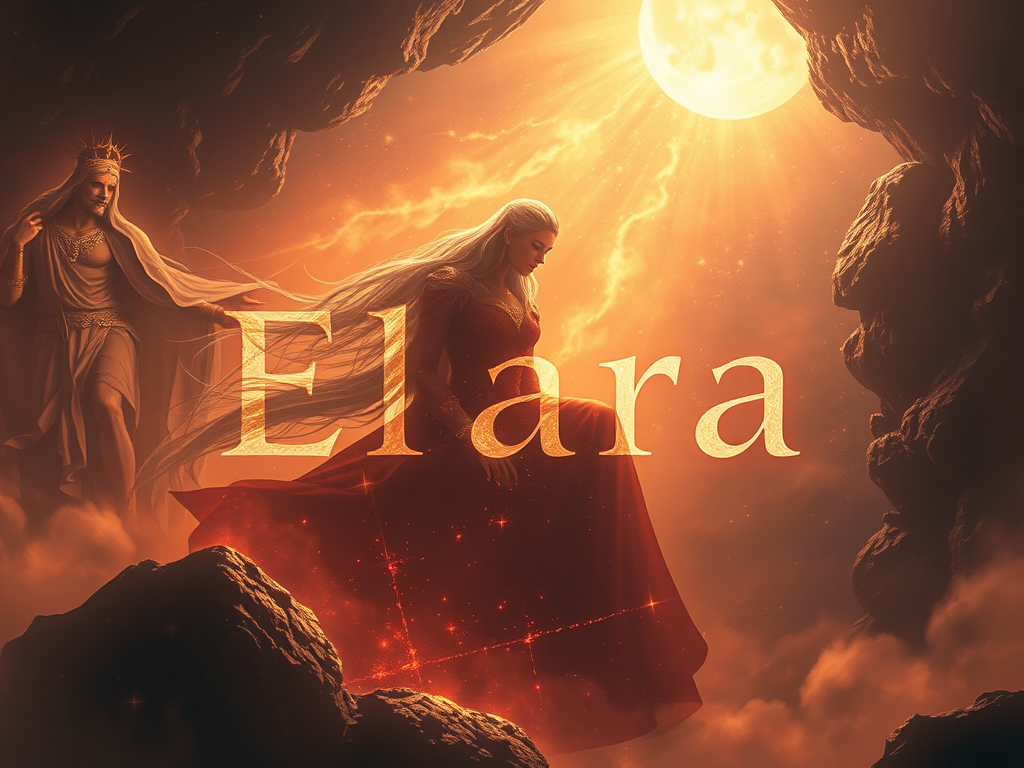
In Greek mythology, Elara was a mortal princess of Orchomenus loved by Zeus. When she became pregnant, Zeus hid her deep beneath the earth to protect her from Hera’s jealousy. There she gave birth to their gigantic son Tityos (Τιτυός). Because of this myth, Elara is sometimes associated with the earth or the underworld. One of Jupiter’s moons, discovered in 1905 by Charles Dillon Perrine, was later named in her honor.

As a given-name in the English-speaking world, it does appear in records in the 19th-century, mainly in the U.S. Recently, it has appeared in England & Wales Top 900 girls’ name, coming at #467 (2024).

With its celestial link and mythological depth, Elara feels like a luminous and romantic alternative to other El- names such as Elena, Eleanor, and Elodie. Its lunar connection gives it a quietly modern yet timeless appeal.

Sources

Keyvan

  • Origin: Persian کیوان,
  • Meaning: “Saturn.”
  • Gender: Male
  • Variant Transcriptions: Keyvan, Kayvon, Kaivon, Keivan, Kaywan, Kavon, Kevan, or Kaevon.
  • Pron: KAY-VAHN

The name comes directly from the Persian کیوان, which is the Persian word for the planet Saturn. It is ultimately derived from the Sumerian designation of the planet, Kaimanu.

In Zoroastrianism, the planet Saturn was viewed as the planet of strength, endurance, loyalty and patience. The Mandaic version of the name is Kiwan ࡊࡉࡅࡀࡍ.

Despite its pre-Islamic associations, the name is still popularly used in Iran and is still used among Zoroastrian families.

The Syriac version of Kewan ܟܝ݂ܘܢ is used among Assyrian Christians.

Sources

Noctiluca

  • Origin: Latin
  • Meaning: “shining at night.”
  • Gender: Female

The name is formed from the Latin nox (“night”) and lucere (“to shine”). It is an obscure Roman epithet but may make the right choice for parents looking for a gothic, romantic and celestial appellation.

Noctiluca served as an epithet of Venus in ancient Rome. According to Ovid (Fasti 4.373–376), the Romans celebrated a festival to Venus Noctiluca (“Venus the Night-Shining”) on the Aventine Hill, where fires were lit in her honor.

The word was later borrowed into natural history as the name of a bioluminescent sea creature—Noctiluca scintillans—whose glowing waters inspired comparisons to stars reflected in the ocean.

Noctiluna is another variation that may be appealing to those who love Luna but want something more unique.

The nicknames Nockti, Nocktie, Nockty or Luca are options.

Sources

Evren

Photo by Pixabay on Pexels.com
  • Origin: Turkish
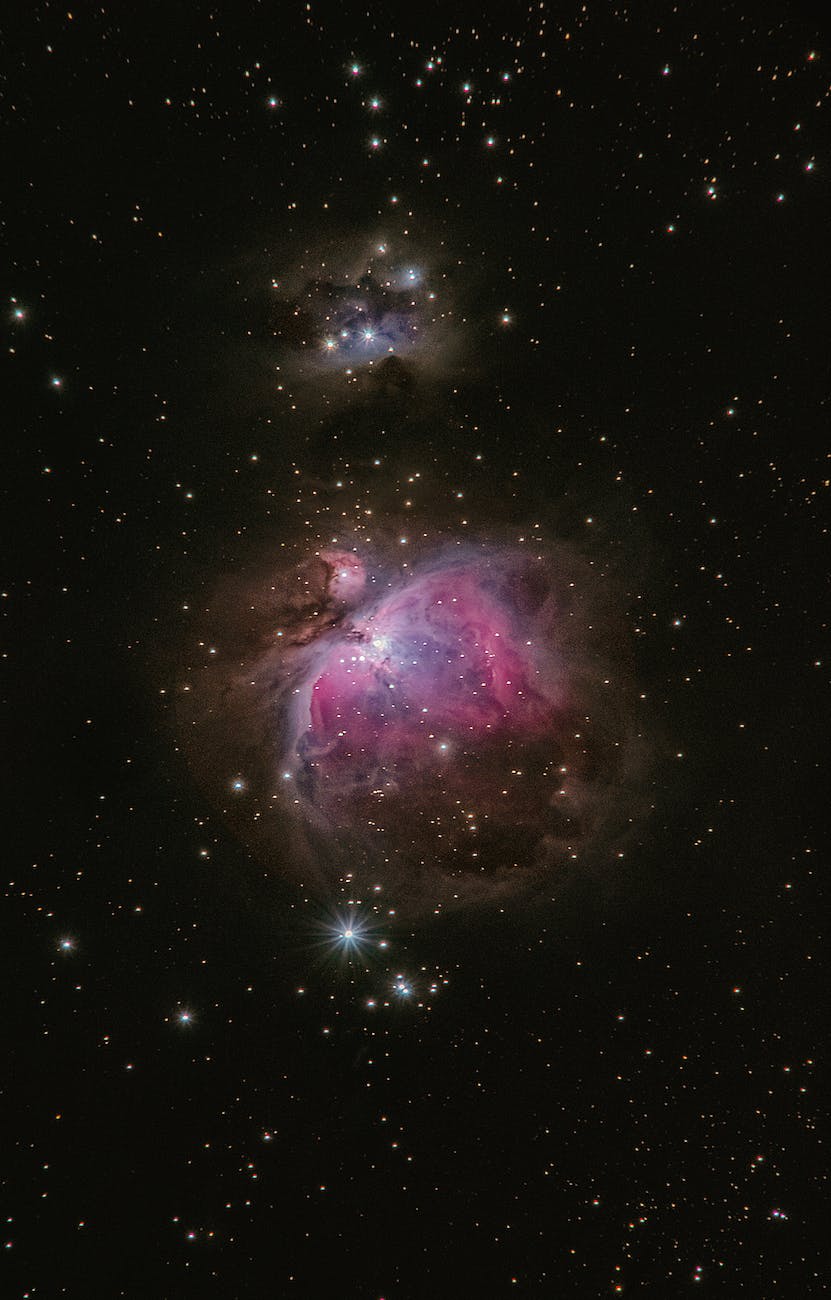
  • Meaning: “cosmos; the universe.”
  • Gender: Unisex

The name is from the Turkish word for “cosmos; the universe.” In Turkic mythology, it is the name of a dragon.

The name experienced some brief popularity among males in Turkey during the 1980s. As of 2024, it was the 973rd most popular male name in the United States.

Sources

Suhail, Suhaila

Suhail or sometimes transliterated as Suhayl, is derived from the Arabic word سَھْل (sahl) meaning “level; even; smooth, easy.” It is the Arabic name of the second brightest star known in the western world as Canopus. It’s appearance in the skies have traditionally been linked with the end of summer in the Arab world. It is the name of a few other stars.

It was also borne by one of the contemporaries of the Prophet Mohammed, known as Suhayl ibn ʿAmr (6th-century C.E).

Suhail appeared in the U.K. Top 1000 between 1996-2002, peaking at #694 in 1997. Its Urdu form of Sohail appeared in the U.K. Top 1000 between 1996-2007 and peaked at #305 in 1997.

Other forms include:

  • Suhajl (Albanian, Bosnian)
  • Süheyl (Azeri, Turkish)
  • Suhejlo (Bosnian)
  • Suhӏajlʹ СухӀайль (Chechen)
  • Suheyl (Kurdish)
  • Souhail (Maghrebi Arabic)
  • Soheil سهیل (Persian)
  • Sohail سہیل (Urdu)

It’s feminine form is Suhaila or Suhayla سهيلة

Other forms include:

  • Suhajla (Albanian, Bosnian)
  • Suhejla (Albanian, Bosnian)
  • Süheyla (Azeri, Turkish)
  • Souhaila (Maghrebi Arabic)
  • Soheila سهیلا (Persian)
  • Sohaila سہیل (Urdu)

Sources

Sadime, Sadeem

  • Origin: Arabic سديم
  • Meaning: “nebula; fog; mist.”
  • Gender: female

The name comes directly from the Arabic word سديم meaning “nebula, fog; mist.” The word itself is from the Arabic root s-d-m, which means “darkness” “obscurity.”

The word use is found in Arabic poetry to describe a mist or haze that obscures the view.

sources

Astraea

  • Origin: Greek Ἀστραία
  • Meaning: “star.”
  • Gender: feminine
  • Eng Pronunciation: (uh-STRAY-ah)

The name is borne in Greek mythology by the daughter of Astraeus and Eos. She is the goddess of justice, innocence, purity, & precision and is closely associated with Dike, the goddess of Justice. According to Ovid, Astraea was a mortal woman during the Golden Age, but ascended into the heavens to become the constellation Virgo.

Other froms of the name include:

  • Astraia Աստրաիա (Armenian, Czech, German, modern Greek, Scandinavian)
  • Astrea Астрея (Bulgarian, Catalan, Italian, Russian, Spanish, Ukrainian)
  • Astrée (French)
  • Astraja (Lithuanian, Polish)
  • Astreia (Portuguese)

Sources

Vyom

  • Origin: Hindi, Sanskrit व्योम
  • Meaning: “space; ether; firmament; heavens; sky.”
  • Gender: masculine
  • Pronunciation: VYOOM

The name comes directly from the Hindi word व्योम (vyom), which means, “space, ether, firmament, sky; heavens.” It is ultimately linked to the Sanskrit व्योमन् (vyoman) of the same meaning.

Sources