- Origin: Greek Ἐλάρα
- Meaning: “hazelnut; spear.”
- Gender: Female
- Pron: EL-e-ruh; EHL-ə-rə
The name is of uncertain etymology. It has sometimes been linked to the ancient Greek word ἄλαρα (álara), said to mean “hazelnut” or “spear-shaft.”
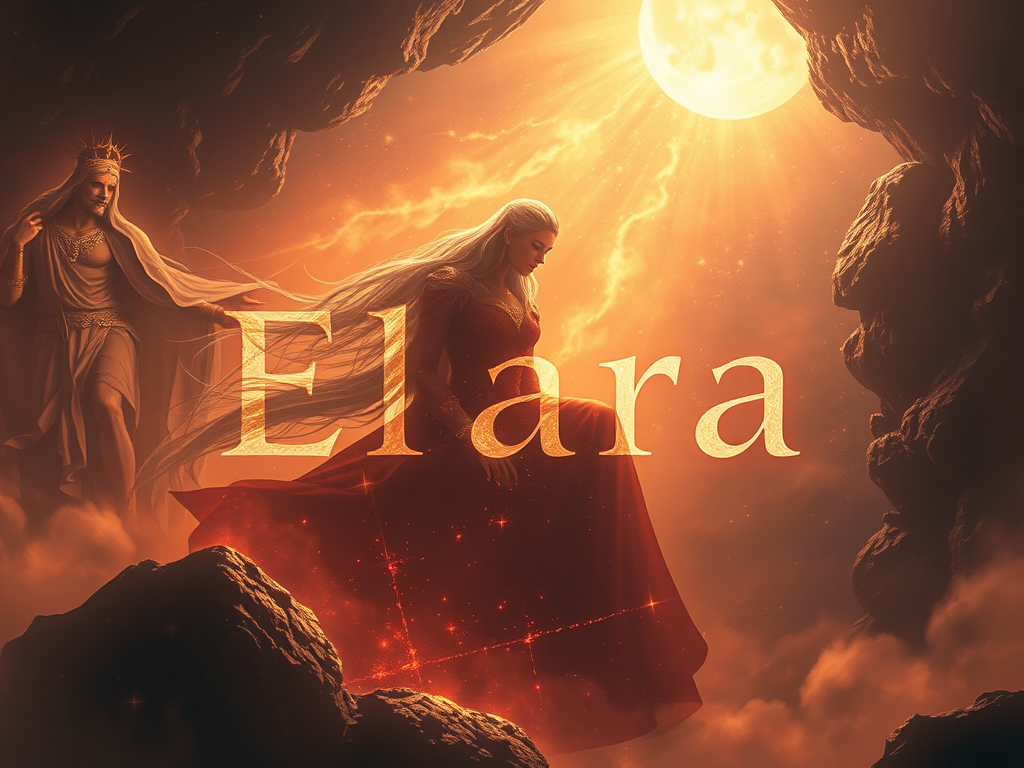
In Greek mythology, Elara was a mortal princess of Orchomenus loved by Zeus. When she became pregnant, Zeus hid her deep beneath the earth to protect her from Hera’s jealousy. There she gave birth to their gigantic son Tityos (Τιτυός). Because of this myth, Elara is sometimes associated with the earth or the underworld. One of Jupiter’s moons, discovered in 1905 by Charles Dillon Perrine, was later named in her honor.
As a given-name in the English-speaking world, it does appear in records in the 19th-century, mainly in the U.S. Recently, it has appeared in England & Wales Top 900 girls’ name, coming at #467 (2024).
With its celestial link and mythological depth, Elara feels like a luminous and romantic alternative to other El- names such as Elena, Eleanor, and Elodie. Its lunar connection gives it a quietly modern yet timeless appeal.
Sources
 Gender: Female