Amber

418px-Gouttes-drops-resine-2Gender: Feminine
Origin: English

September is almost over and the season of Fall is really starting to hit home. The trees are finally shedding their leaves and some are even exposing their yellow brown colors before falling off the branches. The name Amber has always brought to mind the autumnal season for me. Possibly due to her brownish yellow hues that she is known for, though Amber also comes in spring greens and bright yellows. The appellation itself gets somewhat of a bad rap. I have heard her being classified as “trashy” and even as an “exotic dancer” name. She didn’t seem to hit big really till the late 1970s to early-mid 1980s. Ever curious as to the origins and beginnings of all given names, I decided to track her down. How and when did Amber begin to be used as a first name? I know that in other cultures, the equivalent forms such as Dzintra in Latvian, Gintare in Lithuanian have been used as given names for centuries. Evidently, Amber is derived from an Arabic word ‘anbar. Amber of course is the word for the fossilized resin used in jewellery as well as the name of a colour. Its usage seems to have begun around the 19th-century. It was brought to the spot-light thanks to Katherine Winsor’s explicit 1944 novel Forever Amber. It was later turned into a movie, and the book sparked quite a bit of controversy at the time of its publication. Forever Amber tells the story of  a woman by the name of Amber St. Clair, living in 17th-century England, who manages to sleep her way to the top by hanging around with British aristocrats. I found this very interesting since Amber does seem to have those associations for many people, and I truly wonder if Katherine Winsor is the culprit for Amber’s sullied reputation. I suppose we will never know.

As for her popularity, the highest that Amber ever reached in the United States was #13 way back in 1986. I found this rather surprising as I don’t know many girls born in that same year named Amber. Compare that to this past year, Amber remains in the top 1000, but has slid down to # 224 (2010). Surprisingly, Amber is quite popular in both the Netherlands and Belgium. In Belgium alone, she came in at #24 for the most popular female names in Belgium, (2008). Meanwhile, over in the Netherlands, she stands at # 36 as of 2010. Her rankings in other countries are as follows:

  • # 45 (Scotland, 2010)
  • # 52 (England/Wales, 2010)
  • # 65 (Northern Ireland 2010)
  • # 71 (Ireland, 2010)
  • # 80 (Australia, NSW, 2010)

The French form of Ambre has recently become a trend in France, in 2009, she was the 29th most popular female name in France. There is the more elaborate French form of Ambrine. In Italian there is the form of Ambra. Another interesting fact is that the Greek female given name of Electra is related to the word for amber in Greek, which is electron. In Hebrew, the name is Inbar, and in recent years, has been used as a given name. Ámbar is the Spanish form, also occasionally used as a given name in Spanish-speaking countries.

The name has been given to the United State’s Child Abduction Emergency code the Amber Alert. Originally named for Amber Hangermann the term is now used as a backronym for America’s Missing: Broadcast Emergency Response.

Luna

Gender: Female
Origin: Latin
Meaning; “moon”
(LOO-nah).

The name comes directly from the Latin word for moon, and it was the name of a Roman goddess, the counterpart to the Greek goddess, Selene.

Luna had a temple dedicated to her on the Aventine Hill in Rome in the 6th-century BCE. Including another temple dedicated to her on the Palatine Hill, Luna Noctiluca, (luna that shines by night).

Luna, as a word, has transferred over into other languages, it is the Spanish, Romanian, Italian, Bulgarian and Russian word for moon.

The name has become increasingly popular across Europe, in recent years. In 2009, she was the 43rd most popular female name in France, add the trendier phonetic French spelling of Louna, and she would probably rank even higher. Her rankings in other countries are as follows:

  • # 12 (Belgium, 2006)
  • # 31 (Netherlands, 2010)
  • # 45 (Denmark, 2010)
  • # 65 (Croatia, 2010)
  • # 86 (Slovenia, 2010)
  • # 86 (Spain, 2010)
  • # 343 (United States, 2010)

She is rising occasionally used in Bosnia, Germany, Poland and in Italy.

There is also the French, Lune (literally, the French word for moon), which is also becoming more prevalent in France, and the Dutch corruption is Loena, (a phonetic Dutch spelling to reflect the true Latin pronunciation).

In France, its designated name-day is August 4th.

Milena

Gender: Feminine
Origin: Slavic Милена
Meaning: “dear; gracious.”
(mee-LEH-nah)

The name is derived from the Slavonic element mil meaning “gracious; dear.”

The name is used in virtually every Slavic speaking country, and is currently the most popular female name in Armenia. It is also used in Brazil, Spanish-speaking countries, German-speaking countries, Italy and Hungary.

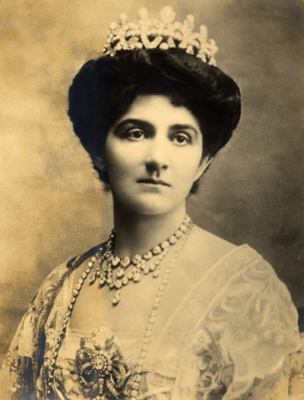
The name was introduced into Italy when King Emmanuel III of Italy married Milena Vukotić (1847-1923).

Her rankings in other countries are as follows:

  • # 2 (Romansch-speaking Switzerland, 2010)
  • # 25 (Poland, 2010)
  • # 32 (Poland, Warsaw, 2010)
  • # 50 (Brazil, 2010)
  • # 54 (Argentina, 2009)
  • # 73 (Germany, 2011)
  • # 353 (Netherlands, 2010)

The Bulgarian masculine form is Milen Милен.

Other forms of the name include:

  • Miléna (Hungarian)
  • Milica (Croatian/Serbian)
  • Mileva (Serbian)
  • Mylyca (Ukrainian)

Anna, Anne

Gender: Feminine
Origin: Biblical Hebrew
Meaning: “grace.”
(ANN; AHN). (ANN-uh; AHN-nah). (HANN-uh; HAHN-nah)

Anne is possibly one of the quintessential classic English and French female names. Prior to the 18th-century, it seems that every other girl born in England was either named Anne, Jane or Mary. There were several British and French queens who bore this simplistic moniker, including the ill fated Anne Boleyn, the mother of Elizabeth I. The history of Anne is rather long and complicated.

It was foremost popularized through the cult of St. Anne, a legendary figure who was said to be the mother of the Virgin Mary and the grandmother of Christ.

In Brittany, the name became especially popular because it happened to coincide with the name of an ancient Celtic goddess, her cult being replaced by St. Anne’s. In fact, it was borne by one Breton Princess, Anne of Brittany.

The name was introduced into Britain by the French-Normans after the invasion in 1066. Previously, there had been a minor Saxon king named Anna, but in this case the name is related to the Saxon arn (eagle). Anna and Anne are still occasionally used as male given names in Friesland.

Other than the apocryphal saint, the name Anne can be traced directly back to the Bible. In the New Testament, it is the name of a prophetess who predicts the Crucifixion of Christ.

Anna (Αννα), is the Greek translation of the early Hebrew Channah חַנָּה, usually transliterated as Hannah, meaning “grace.”

Hannah is borne in the Old Testament by the faithful mother of the prophet, Samuel.

Hannah has always been popular among Jewish families, but was virtually unheard of among non-Jews before the Reformation, except in some cases where it may have been used as a diminutive form of Johanna, spelled Hanna.

It was the Byzantines who had introduced the Anna form to the world, making it popular throughout Eastern and Southern Europe. It was a very popular name among the Byzantine royal family and it was borne by the majestic Anna of Byzantium.

Anna may be the more melodic form of the bunch, but Anne’s minimalistic qualities are charming. Short, to the point, no frills. It’s not a bad name, though it does lack some spice, which is why parents are probably more attracted to its more exotic alternatives. In fact, Anne only comes in at # 608 in the top 1000 female names of the United States. It is safe to say, however, that she is very much loved in the middle name spot.

Anna is currently one of the most popular female names in Europe and abroad. Her rankings are as follows:

  • # 1 (Austria, 2010)
  • # 1 (Estonia, 2011)
  • # 2 (Hungary, 2010)
  • # 3 (Ana, Georgia, 2010)
  • # 3 (Iceland, 2010)
  • # 4 (Ana, Croatia, 2010)
  • # 4 (Czech Republic, 2010)
  • # 4 (Germany, 2011)
  • # 4 (Ukraine, 2010)
  • # 5 (Faroe Islands, 2010)
  • # 5 (Ana, Portugal, 2010)
  • # 6 (Armenia, 2010)
  • # 6 (Ane, Greenland, 2002-2003)
  • # 6 (Ana, Romania, 2009)
  • # 6 (Ana, Serbia, 2010)
  • # 7 (Latvia, 2011)
  • # 7 (Russia, 2011)
  • # 8 (German-speaking Switzerland, 2010)
  • # 9 (Denmark, 2011)
  • # 10 (Netherlands, 2010)
  • # 10 (Northern Ireland, 2010)
  • # 10 (Norway, 2010)
  • # 11 (Italy, 2010)
  • # 12 (Ireland, 2010)
  • # 14 (Poland, 2010)
  • # 16 (Catalonia, 2010)
  • # 26 (Canada, B.C., 2010)
  • # 28 (Italian-speaking Switzerland, 2010)
  • # 28 (United States, 2010)
  • # 29 (Scotland, 2010)
  • # 40 (France, 2009)
  • # 46 (French-speaking Switzerland, 2010)
  • # 53 (Belgium, 2009)
  • # 63 (England/Wales, 2010)
  • # 71 (Australia, 2010)
  • # 81 (Sweden, 2010)
  • # 83 (Spain, 2010)
Other forms of the name include:
  • Anneen (Afrikaans/Low German)
  • Anna Анна (Afrikaans/Albanian/Armenian/Breton/Bulgarian/Catalan/Corsican/Czech/Dutch/English/Estonian/Faroese/Finnish/French/Frisian/German/Greek/Hungarian/Icelandic/Italian/Latvian/Limburgish/Maltese/Polish/Russian/Ukrainian/Scandinavian/Slovak)
  • Anne (Basque/Dutch/English/French/Scandinavian)
  • Gánna Га́нна (Belarusian)
  • Annaig (Breton)
  • Annick (Breton)
  • Maina (Breton)
  • Mannaig (Breton)
  • Mannick (Breton)
  • Naig (Breton)
  • Ana Ана ანა (Bulgarian/Croatian/Galician/Georgian/Lombard/Macedonian/Portuguese/Romanian/Samogaitian/Serbian/Slovene/Spanish/Venetian)
  • Jana (Croatian/Ladino)
  • Aneta (Czech/Polish/Samogaitian/Slovak)
  • Aina (Catalan)
  • Anica (Croatian/Serbian/Slovene)
  • Ane (Danish)
  • Anika (Danish)
  • Anneke (Dutch)
  • Anneken (Dutch)
  • Annika (Dutch/Finnish/German/Latvian/Scandinavian)
  • Anka (Dutch/Frisian/German)
  • An(n)ke (Dutch/Frisian)
  • Anouk (Dutch/French)
  • Ans (Dutch)
  • Enneke (Dutch)
  • Enneken (Dutch)
  • Anita (English/German/Polish/Spanish)
  • Annette (English/French/German)
  • Anissa (English)
  • Annelle/Annella (Estonian)
  • Anete (Estonian/Latvian)
  • Anett (Estonian)
  • Anu (Estonian)
  • Anni (Finnish)
  • Annikki (Finnish)
  • Anniina (Finnish)
  • Annukka (Finnish)
  • Niina (Finnish)
  • Anaïs (French/Provençal)
  • Annouche (French)
  • Ninette (French)
  • Ninon (French)
  • Ninouk (French)
  • Anje (Frisian)
  • Ankea (Frisian)
  • Antje (Frisian)
  • Antjen (Frisian)
  • Anute (Fruilian)
  • Anano (Georgian)
  • Annchen (German)
  • Annel (German)
  • Annele (German/Latvian)
  • Anneli(e) (German/Finnish/Swedish)
  • Annet (German)
  • Anina (German)
  • Anja (German/Slovene)
  • Anouschka (German/Italian/Russian)
  • Annaki (Greek)
  • Annoula (Greek)
  • Noula (Greek)
  • Anikó (Hungarian)
  • Annuska (Hungarian)
  • Panni (Hungarian)
  • Áine (Irish)
  • Ánna (Irish)
  • Annarella (Italian)
  • Annella (Italian)
  • Annetta (Italian)
  • Annettina (Italian)
  • Nona (Italian/Romansch)
  • Ance (Latvian)
  • Annija (Latvian)
  • Anninya (Latvian)
  • Ona (Lithuanian)
  • Annamma (Malayalam)
  • Annam (Malayalam)
  • Onnee (Manx)
  • Âone (Norman)
  • Aenna/Aenne (Old High German)
  • Annehe (Old High German)
  • Änna/Änne (Old High German)
  • Neta (Piedmontese)
  • Noto (Piedmontese)
  • Anke (Plattdeutsch)
  • Anneke(n) (Plattdeutsch)
  • Analia (Romansch/Spanish)
  • Annina (Romansch)
  • Annotta (Romansch)
  • Anca (Romanian)
  • Anicuta (Romanian)
  • Anėta (Samogaitian)
  • Anėkė (Samogaitian)
  • Annag (Scottish)
  • Ghianna (Sicilian)
  • Janna (Sicilian)
  • Nanna (Sicilian)
  • Anniken (Swedish)
  • Ann (Welsh)
  • Nan (Welsh)
  • Nanno (Welsh)
  • Nanw (Welsh)
  • Aana (Wolof)
As for the Hannah forms

Hanna without an H is the prefered form on Continental Europe, usually pronounced (HAHN-nah) and in French like Anna. Hanna and Hanne (HAHN-neh) are also used as diminutive forms of Johanna/Johanne in the Netherlands, Sweden, Norway, Denmark and Germany. There is the Hungarian Hajna pronounced (HOY-no). The Czech/Slovak form of Hana nickname Hanka. There are the Yiddish forms of Heyna, Hayna, Hejna (all pronounced like HAY-nah) including the diminutive forms of HenaHende, Hendel and Henye.  The Polish diminutive form of Hania, which might make an interesting alternative to Anya or Hannah. Hannah, Hanna and Henna are all used in the Middle East.

Of course, how could we ever forget the popular diminutive forms of Annie and Nan.

Ava

Gender: Feminine
Origin: German/Persian
Eng (AY-vah); Germ/Per (AH-vah)

This vintagy, two syllable name has risen way up to the US top 10, coming in at # 5 most popular female name in the United States, (2010).

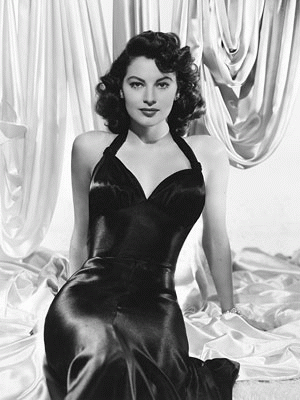
The name was relatively rare before 2000, and came out of nowhere, thanks, no doubt, to such Hollywood trendsetters as Heather Locklear and Reese Witherspoon, both of whom used the name for their daughters in the late 1990s. Both actresses named their daughters in honour of actress, Ava Gardner (1922-1990), whose full name was Ava Lavinia Gardner.

The name has several different origins and meanings, the beloved English counterpart is probably derived from a medieval Frankish name, which was borne in the 9th-century by a saint and the daughter of King Pepin II. In this case, it might be derived from the Germanic element avi meaning “desired.” Other sources have related it to the Frisian awa (water) or from the old Saxon, aval (power).

Another notable bearer is Ava of Melk (1060-1127), a Medieval poetess credited as being the first German language writer. Its recent popularity in German-speaking countries may in part be in tribute to her millennial anniversary and in part to Hollywood.

The name is also a popular Persian female name and is commonly used in Iran and throughout Central Asia. It can either be related to the Persian meaning, “sound, voice” or it may be connected with the Avestan word meaning “first.”

In Ireland and Scotland, it is sometimes used as an anglicized form of Aoife.

Its rankings in other countries are as follows:

  • # 3 (Scotland, 2010)
  • # 6 (Canada, B.C., 2010)
  • # 6 (Ireland, 2010)
  • # 11 (England/Wales, 2010)
  • # 14 (Australia, 2010)
  • # 20 (Northern Ireland, 2010)
  • # 188 (Germany, 2011)
  • # 246 (France, 2009)
  • # 444 (the Netherlands, 2010)

Cillian, Killian

Gender: Masculine
Origin: Gaelic
Meaning: debated
(KILL-yen); (KIL-lee-en)

The name is either derived from the Gaelic, keallach, meaning, “strife,” or the word, ceall meaning, “church; monastery.”

Killian is usually the anglicized version and its one of the few Irish names used outside the English speaking world. It has been in usage in Germany, Poland and France, no doubt, due to the associations with the saint.

It was borne by Saint Killian, the author of the Life of St. Bridget, he was also a missionary to Artois and Franconia and is considered the patron saint of Franconia.

In modern day Bavaria, the name is still quite popular, often rendered as Kilian.

The name is also borne by actor Cillian Murphy.

Kelly is occasionally used as a nickname.

The feast day of St. Killian is July 8.

Currently, Cillian is the 21st most popular male name in Ireland, (2010). His rankings in other countries are as follows:

  • # 43 (Austria, Kilian, 2010)
  • # 62 (Northern Ireland, Cillian, 2010)
  • # 62 (Ireland, Killian, 2010)
  • # 88 (Germany, Kilian, 2011)
  • # 110 (France, Killian, 2009)
  • # 173 (France, Kilian, 2009)
  • # 763 (United States, Killian, 2010)

Other forms include:

  • Quilià (Catalan)
  • Killianus (Dutch/Latin)
  • Killian (English)
  • Kelian (French)
  • Kilien (French)
  • Kilian (German/French/Polish/Romanian)
  • Cillín (Irish-Gaelic)
  • Chiliano (Italian)

Obscure feminine forms include:

  • Kiliane (French)
  • Kiliana (Polish)

Adrian

Gender: Masculine
Origin: Latin
Meaning: “from Hadria”

The name is derived from the Latin Hadrianus, a Roman cognomen meaning, “from Hadria.” Hadria was a small town in the North of Italy. It gave its name to the Adriatic Sea.
The name was borne by Publius Aelius Hadrianus (76-138 CE), known in the modern world as Emperor Hadrian, he is most famous for the wall he built across Great Britain, known as Hadrian’s Wall.
The name remained common throughout Europe, and is fairly popular across the Western World till this day. It was borne by several saints and popes, including the first and only English pope, Adrian IV, as well as the only Dutch pope, Adrian VI.
Currently, Adrian is the 6th most popular male name in Spain, (2010) and the 7th most popular in Norway, (2010). His rankings in other countries are as follows:
  • # 29 (Catalonia, 2009)
  • # 33 (Poland, 2010)
  • # 43 (Germany, 2011)
  • # 48 (Austria, 2010)
  • # 49 (Croatia, 2010)
  • # 51 (France, Adrien, 2010)
  • # 56 (United States, 2010)
  • # 60 (Sweden, 2010)
  • # 63 (Hungary, 2010)
  • # 81 (Belgium, Adrien, 2009)
  • # 455 (France, Adrian, 2009)

Other forms of the name include:

  • Ad (Afrikaans/Limbergish)
  • Adriaan (Afrikaans/Dutch)
  • Adrianus (Afrikaans/Latin)
  • Arrie (Afrikaans)
  • At (Afrikaans)
  • Daan (Afrikaans)
  • Jaans (Afrikaans)
  • Adrian Адриан (Albanian/Bulgarian/Croatian/Dutch/English/Finnish/Polish/Romanian/Russian/Scandinavian/Ukrainian)
  • Ardian (Albanian)
  • Adrianu (Asturian/Corsican/Sicilian)
  • Adiran (Basque)
  • Adrijan (Bosnian/Croatian/Serbian/Slovene)
  • Hadrijan (Bosnian)
  • Adrià (Catalan)
  • Jadran(ko) (Croatian)
  • Adrián (Czech/Hungarian/Slovak/Spanish)
  • Arie (Dutch)
  • Arjan (Dutch)
  • Hadrian(us) (Dutch/German/Latin)
  • Adrien (French)
  • Hadrien (French)
  • Aidrean (Gaelic)
  • Adrán (Galician)
  • Adrao (Galician)
  • Hadrán (Galician)
  • Hadrao (Galician)
  • Hádrian (Galician)
  • Adrianos Αδριανός (Greek)
  • Adorján (Hungarian)
  • Adrían (Icelandic)
  • Adriano (Italian/Portuguese)
  • Adrio (Italian)
  • Adriāns (Latvian)
  • Adrianas (Lithuanian)
  • Adrijonas (Lithuanian)
  • Adrião (Portuguese)
  • Adriànu (Sardinian)

Feminine forms include:

  • Adriana  (Albanian/Bulgarian/Catalan/Czech/Galician/German/Greek/Italian/Latin/Lithuanian/Polish/Romanian/Russian/Slovak/Spanish)
  • Adrijana (Bosnian/Croatian/Serbian)
  • Hadrijana (Bosnian/Croatian/Serbian)
  • Jadranka (Croatian)
  • Adriána (Czech/Hungarian/Slovak)
  • Ariane (Dutch)
  • Hadriana (Galician/Latin)
  • Adria (German/Italian)
  • Adriane (German)
  • Adrienne (French)
  • Adrienn (Hungarian)
  • Adrianna (Polish)
  • Drina (Spanish)

Polish feminine diminutives are Ada and Adi.

Daniel, Danielle

Gender: Masculine
Origin: Biblical Hebrew
Meaning: “God is my Judge.”

If you are like me, you probably think Daniel is dull and overused. Then there is the other camp who might think this is a wonderful classic. It has the youthful nickname options of Dan and Danny and its used in just about every European country with such variants as the Italian Daniele and the Czech and Polish diminutive forms of Danek. Another plus is that, while the name has religious connotations, its doesn’t adhere to a specific denomination. It is fair game for both Jewish and Christian parents alike, Catholic and Protestant. It is even used among Muslims.

The name Daniel is found in the Old Testament, (it has its own book), composed of the Hebrew elements dan meaning “judge” and the 1st person possessive singular suffix of i plus El which was a reference to God.

As for the Biblical Daniel himself, according to the Bible, he was a Jewish boy who was captured by the Babylonians and employed as a sort of dream-reader, (sounds like a pretty cool job). Daniel was so good at his job that he eventually became famous, even among his Persian and Babylonian captives. Due to his prestige and influence, Daniel was also able to persuade his captors to release the Jews back to their homeland. There is far more to the Biblical Daniel’s story than I will write here, but he is probably most noted for his steadfast loyalty to his faith and people as well as his miraculous survival after being thrown in a den of lions.

In the United States, Daniel has been steadfast in its popularity. He currently comes in at # 5. Meanwhile, in the United Kingdom, he comes in at # 7. In Scotland at # 3. In Ireland # 4. While in Spain he comes in at a whopping # 2.

This forms is also used in the Czech Republic, Finland, French-speaking countries, German-speaking countries, Poland, Portuguese-speaking countries, Romania,  Scandinavia, Slovakia and Spanish-speaking countries

Other forms include :

  • Dana (Afrikaans)
  • Danieli (Albanian)
  • Danyal دانيال (Arabic)
  • Taniel (Armenian)
  • Danel (Basque)
  • Danilo (Bosnian/Croatian/Serbian)
  • Deniel (Breton)
  • Danail Данаил (Bulgarian)
  • Danelu (Corsican/Sardinian/Sicilian)
  • Daan (Dutch/Limburgish)
  • Daniël (Dutch)
  • Daaniel/Taaniel (Estonian)
  • Tanel/Tani (Estonian)
  • Taano/Tanno (Estonian)
  • Taneli/Tatu (Finnish)
  • Dāniyyêl דָּנִיֵּאל (Hebrew: Modern)
  • Dániel (Hungarian)
  • Daniló (Hungarian)
  • Dános (Hungarian)
  • Daniele (Italian: dahn-YAY-lay)
  • Daniello (Italian: an archaic version which died out in the 17th-century)
  • Danilo/Danilio (Italian: obscure)
  • Danielius (Lithuanian)
  • Daniilu Данїилъ (Old Church Slavonic)
  • Dani داني (Persian)
  • Daniyal دانيال (Persian)
  • Danil/Dănuṭ (Romanian: duh-NOOTS)
  • Daniil Даниил (Russian)
  • Daniele/Danijel (Slovene)
  • Dani/Däne/Dänu/Danü (Swiss-German: Bern dialect)
  • Danyal/Danyel(Turkish)
  • Deiniol (Welsh)

Czech diminutives are: Dan, Daník, Daneček, Danoušek, Danny, Dandýsek, Dady, Danda, Dáda, Danda, Dannys, Danušík and Dandýsek, Italian diminutive forms are: Nilo, Danio, Danino and Nilio.

Danya Даня is a common Russian and Ukrainian diminutive form.

Let us not forget its feminine versions of Daniella, Daniela and Danielle. As of 2010, its Spanish and Slavic diminutive form of Dania reached the top 1000, coming in as the 999th most popular female name in the United States.

The French Danielle, does not have the same staying power as its masculine counterpart. Though always more common as a middle name, Danielle is one of the quintessential names of the 1980s. In 1987, she came close to reaching the top 10 by hitting # 14. In the last popularity census, Danielle still comes in rather high at # 144.  Its Latinate counterpart of Daniela comes in a tad bit higher at # 121, while the Italian Daniella is all the way down at # 303.

Other forms are:

  • Danijela (Bosnian/Croatian/Serbian/Slovene)
  • Danaila (Bulgarian)
  • Daniela (Czech/German/Polish/Portuguese/Romanian/Scandinavian/Slovene/Spanish)
  • Danielle (English)
  • Danièle (French)
  • Danelia (Italian: obscure)
  • Daniella (Italian)
  • Danila/Danilla (Italian: obscure)

Italian feminine diminutives are : Dana, Dania and Nila.

Designated name-days are: July 21 (Germany/Hungary/Slovakia), December 10 (Poland/Lithuanian), December 11 (Denmark, Estonia, Finland, France, Norway, Sweden), December 17 (Greec/Czech Republic)

Samantha

Gender: Feminine
Origin: Uncertain
Meaning: unknown
Eng (sə-MAN-thə); Fre (SAH-mAWn-TAH)

The name is of unknown derivation or meaning, some sources believe that it may have been an 18th-century feminization of the Biblical male name, Samuel, which means “heard by God”, while others believe it to be a smush of Sam and the Greek female name Antha, meaning “flower.”

The name seems to have first appeared in Colonial America.

Currently, Samantha is the 11th most popular female name in the United States, and the highest she has ranked in U.S. naming history was in 1998, coming in as the third most popular female name. The lowest Samantha has ranked in U.S. history was 1907 when she came as the 945th most popular female name.

The earliest records of U.S. naming trends, which goes far back as 1880, indicates that Samantha was 352nd most popular female name of that year.

Samantha’s popularity may have been due to the hit 1960’s SitCom Bewitched, in which the lead character, named Samantha Stephens, was a witch born in the 16th-century, who decides to settle down in contemporary society.

Whatever Samantha’s origins, its long historical usage in the United States has rendered it a legitimate name, her usage has even gone overseas. Her rankings in other countries are as follows:

  • # 40 (Australia, 2007)
  • # 21 (Canada, B.C., 2008)
  • # 261 (the Netherlands, 2008)
  • # 137 Samanta (Poland, Warsaw, 2009)
  • # 90 (Scotland, 2008)

Samantha is also used ocassionally in French-speaking countries and German-speaking countries, although, Samantha does not currently appear in Germany’s top 500 names (2008).

Samanta has recently become trendy in Central Europe and Italy. An obscure French form is Samanthée.

In English, the most common pet forms are Sam and Sammie.

Italy has given Samantha the name-day of November 1st.

The name is borne by:

“Aunt” Samantha Bumgarner (1878-1960), considered the first recorded female country artist, she was known for her work with the fiddle and banjo in the early 1900s.

Samantha Barning (b.1989) Dutch professional Badminton player

1970s/80s Dutch Radio Presenter, Samantha Dubois, (née Ellen Kraal)/

British model and pop singer, Samantha Fox (b.1966)

Haik

Gender: Masculine
Origin: Armenian
Meaning: “Armenian.”
Հայկ

Currently the 3rd most popular male name in Armenia (2008), the name is borne in Armenian legend by the founder and patriarch of the Armenian nation.

The name is derived from the nominative plural classical Armenian word, հայ, (hay), meaning, “Armenian.”

The name is borne in Armenian legend by Haik, (or Hayk), son of Moses, a Babylonian prince who fled his homeland along with his royal entourage to what is now Armenia to escape the harsh rule of Bel.

Years later, Haik decides to rebel against the wicked Bel, and he and his warriors defeat him, establishing a kingdom which they called Haykashen.