Amber

418px-Gouttes-drops-resine-2Gender: Feminine
Origin: English

September is almost over and the season of Fall is really starting to hit home. The trees are finally shedding their leaves and some are even exposing their yellow brown colors before falling off the branches. The name Amber has always brought to mind the autumnal season for me. Possibly due to her brownish yellow hues that she is known for, though Amber also comes in spring greens and bright yellows. The appellation itself gets somewhat of a bad rap. I have heard her being classified as “trashy” and even as an “exotic dancer” name. She didn’t seem to hit big really till the late 1970s to early-mid 1980s. Ever curious as to the origins and beginnings of all given names, I decided to track her down. How and when did Amber begin to be used as a first name? I know that in other cultures, the equivalent forms such as Dzintra in Latvian, Gintare in Lithuanian have been used as given names for centuries. Evidently, Amber is derived from an Arabic word ‘anbar. Amber of course is the word for the fossilized resin used in jewellery as well as the name of a colour. Its usage seems to have begun around the 19th-century. It was brought to the spot-light thanks to Katherine Winsor’s explicit 1944 novel Forever Amber. It was later turned into a movie, and the book sparked quite a bit of controversy at the time of its publication. Forever Amber tells the story of  a woman by the name of Amber St. Clair, living in 17th-century England, who manages to sleep her way to the top by hanging around with British aristocrats. I found this very interesting since Amber does seem to have those associations for many people, and I truly wonder if Katherine Winsor is the culprit for Amber’s sullied reputation. I suppose we will never know.

As for her popularity, the highest that Amber ever reached in the United States was #13 way back in 1986. I found this rather surprising as I don’t know many girls born in that same year named Amber. Compare that to this past year, Amber remains in the top 1000, but has slid down to # 224 (2010). Surprisingly, Amber is quite popular in both the Netherlands and Belgium. In Belgium alone, she came in at #24 for the most popular female names in Belgium, (2008). Meanwhile, over in the Netherlands, she stands at # 36 as of 2010. Her rankings in other countries are as follows:

  • # 45 (Scotland, 2010)
  • # 52 (England/Wales, 2010)
  • # 65 (Northern Ireland 2010)
  • # 71 (Ireland, 2010)
  • # 80 (Australia, NSW, 2010)

The French form of Ambre has recently become a trend in France, in 2009, she was the 29th most popular female name in France. There is the more elaborate French form of Ambrine. In Italian there is the form of Ambra. Another interesting fact is that the Greek female given name of Electra is related to the word for amber in Greek, which is electron. In Hebrew, the name is Inbar, and in recent years, has been used as a given name. Ámbar is the Spanish form, also occasionally used as a given name in Spanish-speaking countries.

The name has been given to the United State’s Child Abduction Emergency code the Amber Alert. Originally named for Amber Hangermann the term is now used as a backronym for America’s Missing: Broadcast Emergency Response.

Anna, Anne

Gender: Feminine
Origin: Biblical Hebrew
Meaning: “grace.”
(ANN; AHN). (ANN-uh; AHN-nah). (HANN-uh; HAHN-nah)

Anne is possibly one of the quintessential classic English and French female names. Prior to the 18th-century, it seems that every other girl born in England was either named Anne, Jane or Mary. There were several British and French queens who bore this simplistic moniker, including the ill fated Anne Boleyn, the mother of Elizabeth I. The history of Anne is rather long and complicated.

It was foremost popularized through the cult of St. Anne, a legendary figure who was said to be the mother of the Virgin Mary and the grandmother of Christ.

In Brittany, the name became especially popular because it happened to coincide with the name of an ancient Celtic goddess, her cult being replaced by St. Anne’s. In fact, it was borne by one Breton Princess, Anne of Brittany.

The name was introduced into Britain by the French-Normans after the invasion in 1066. Previously, there had been a minor Saxon king named Anna, but in this case the name is related to the Saxon arn (eagle). Anna and Anne are still occasionally used as male given names in Friesland.

Other than the apocryphal saint, the name Anne can be traced directly back to the Bible. In the New Testament, it is the name of a prophetess who predicts the Crucifixion of Christ.

Anna (Αννα), is the Greek translation of the early Hebrew Channah חַנָּה, usually transliterated as Hannah, meaning “grace.”

Hannah is borne in the Old Testament by the faithful mother of the prophet, Samuel.

Hannah has always been popular among Jewish families, but was virtually unheard of among non-Jews before the Reformation, except in some cases where it may have been used as a diminutive form of Johanna, spelled Hanna.

It was the Byzantines who had introduced the Anna form to the world, making it popular throughout Eastern and Southern Europe. It was a very popular name among the Byzantine royal family and it was borne by the majestic Anna of Byzantium.

Anna may be the more melodic form of the bunch, but Anne’s minimalistic qualities are charming. Short, to the point, no frills. It’s not a bad name, though it does lack some spice, which is why parents are probably more attracted to its more exotic alternatives. In fact, Anne only comes in at # 608 in the top 1000 female names of the United States. It is safe to say, however, that she is very much loved in the middle name spot.

Anna is currently one of the most popular female names in Europe and abroad. Her rankings are as follows:

  • # 1 (Austria, 2010)
  • # 1 (Estonia, 2011)
  • # 2 (Hungary, 2010)
  • # 3 (Ana, Georgia, 2010)
  • # 3 (Iceland, 2010)
  • # 4 (Ana, Croatia, 2010)
  • # 4 (Czech Republic, 2010)
  • # 4 (Germany, 2011)
  • # 4 (Ukraine, 2010)
  • # 5 (Faroe Islands, 2010)
  • # 5 (Ana, Portugal, 2010)
  • # 6 (Armenia, 2010)
  • # 6 (Ane, Greenland, 2002-2003)
  • # 6 (Ana, Romania, 2009)
  • # 6 (Ana, Serbia, 2010)
  • # 7 (Latvia, 2011)
  • # 7 (Russia, 2011)
  • # 8 (German-speaking Switzerland, 2010)
  • # 9 (Denmark, 2011)
  • # 10 (Netherlands, 2010)
  • # 10 (Northern Ireland, 2010)
  • # 10 (Norway, 2010)
  • # 11 (Italy, 2010)
  • # 12 (Ireland, 2010)
  • # 14 (Poland, 2010)
  • # 16 (Catalonia, 2010)
  • # 26 (Canada, B.C., 2010)
  • # 28 (Italian-speaking Switzerland, 2010)
  • # 28 (United States, 2010)
  • # 29 (Scotland, 2010)
  • # 40 (France, 2009)
  • # 46 (French-speaking Switzerland, 2010)
  • # 53 (Belgium, 2009)
  • # 63 (England/Wales, 2010)
  • # 71 (Australia, 2010)
  • # 81 (Sweden, 2010)
  • # 83 (Spain, 2010)
Other forms of the name include:
  • Anneen (Afrikaans/Low German)
  • Anna Анна (Afrikaans/Albanian/Armenian/Breton/Bulgarian/Catalan/Corsican/Czech/Dutch/English/Estonian/Faroese/Finnish/French/Frisian/German/Greek/Hungarian/Icelandic/Italian/Latvian/Limburgish/Maltese/Polish/Russian/Ukrainian/Scandinavian/Slovak)
  • Anne (Basque/Dutch/English/French/Scandinavian)
  • Gánna Га́нна (Belarusian)
  • Annaig (Breton)
  • Annick (Breton)
  • Maina (Breton)
  • Mannaig (Breton)
  • Mannick (Breton)
  • Naig (Breton)
  • Ana Ана ანა (Bulgarian/Croatian/Galician/Georgian/Lombard/Macedonian/Portuguese/Romanian/Samogaitian/Serbian/Slovene/Spanish/Venetian)
  • Jana (Croatian/Ladino)
  • Aneta (Czech/Polish/Samogaitian/Slovak)
  • Aina (Catalan)
  • Anica (Croatian/Serbian/Slovene)
  • Ane (Danish)
  • Anika (Danish)
  • Anneke (Dutch)
  • Anneken (Dutch)
  • Annika (Dutch/Finnish/German/Latvian/Scandinavian)
  • Anka (Dutch/Frisian/German)
  • An(n)ke (Dutch/Frisian)
  • Anouk (Dutch/French)
  • Ans (Dutch)
  • Enneke (Dutch)
  • Enneken (Dutch)
  • Anita (English/German/Polish/Spanish)
  • Annette (English/French/German)
  • Anissa (English)
  • Annelle/Annella (Estonian)
  • Anete (Estonian/Latvian)
  • Anett (Estonian)
  • Anu (Estonian)
  • Anni (Finnish)
  • Annikki (Finnish)
  • Anniina (Finnish)
  • Annukka (Finnish)
  • Niina (Finnish)
  • Anaïs (French/Provençal)
  • Annouche (French)
  • Ninette (French)
  • Ninon (French)
  • Ninouk (French)
  • Anje (Frisian)
  • Ankea (Frisian)
  • Antje (Frisian)
  • Antjen (Frisian)
  • Anute (Fruilian)
  • Anano (Georgian)
  • Annchen (German)
  • Annel (German)
  • Annele (German/Latvian)
  • Anneli(e) (German/Finnish/Swedish)
  • Annet (German)
  • Anina (German)
  • Anja (German/Slovene)
  • Anouschka (German/Italian/Russian)
  • Annaki (Greek)
  • Annoula (Greek)
  • Noula (Greek)
  • Anikó (Hungarian)
  • Annuska (Hungarian)
  • Panni (Hungarian)
  • Áine (Irish)
  • Ánna (Irish)
  • Annarella (Italian)
  • Annella (Italian)
  • Annetta (Italian)
  • Annettina (Italian)
  • Nona (Italian/Romansch)
  • Ance (Latvian)
  • Annija (Latvian)
  • Anninya (Latvian)
  • Ona (Lithuanian)
  • Annamma (Malayalam)
  • Annam (Malayalam)
  • Onnee (Manx)
  • Âone (Norman)
  • Aenna/Aenne (Old High German)
  • Annehe (Old High German)
  • Änna/Änne (Old High German)
  • Neta (Piedmontese)
  • Noto (Piedmontese)
  • Anke (Plattdeutsch)
  • Anneke(n) (Plattdeutsch)
  • Analia (Romansch/Spanish)
  • Annina (Romansch)
  • Annotta (Romansch)
  • Anca (Romanian)
  • Anicuta (Romanian)
  • Anėta (Samogaitian)
  • Anėkė (Samogaitian)
  • Annag (Scottish)
  • Ghianna (Sicilian)
  • Janna (Sicilian)
  • Nanna (Sicilian)
  • Anniken (Swedish)
  • Ann (Welsh)
  • Nan (Welsh)
  • Nanno (Welsh)
  • Nanw (Welsh)
  • Aana (Wolof)
As for the Hannah forms

Hanna without an H is the prefered form on Continental Europe, usually pronounced (HAHN-nah) and in French like Anna. Hanna and Hanne (HAHN-neh) are also used as diminutive forms of Johanna/Johanne in the Netherlands, Sweden, Norway, Denmark and Germany. There is the Hungarian Hajna pronounced (HOY-no). The Czech/Slovak form of Hana nickname Hanka. There are the Yiddish forms of Heyna, Hayna, Hejna (all pronounced like HAY-nah) including the diminutive forms of HenaHende, Hendel and Henye.  The Polish diminutive form of Hania, which might make an interesting alternative to Anya or Hannah. Hannah, Hanna and Henna are all used in the Middle East.

Of course, how could we ever forget the popular diminutive forms of Annie and Nan.

Maurice

Gender: Masculine
Origin: Latin
Meaning: “dark; black”
Fr. (moh-REESE) Eng (MOR-ris).

He may seem a bit dated to some, but parents looking to vintage names like Leo and Brice/Bryce might see the appeal in this. Traditionally nicknamed Maury, parents who opt for the French pronunciation have the advantage of using Reese. Look past Maury Povich and the cartoon character in Madgascar, and you will find that the name has a long and rich history.

He is a derivative of the Roman name Mauritius, which is derived from the Latin Maurus meaning, “dark-skinned; dark complexion.”

The name was borne by Emperor Maurice of Byzantium (539-602). Known in Greek as Maurikios and in his native Armenian as Morik, he was one of the most influential and decisive rulers of the Byzantine Empire, so much so that he is a national hero in his native Armenia till this day.

StMaurice2 (1)The name is also borne by a very popular 3rd century saint. St. Maurice was an Egyptian by birth and a Roman citizen. He served in the Roman army and was apart of the Theban legions, which had been stationed in Switzerland at the time of the saint’s martyrdom. According to legend, Emperor Maximian ordered Maurice and his legions to destroy a local Christian community, when Maurice and his followers refused to harass fellow Christians, the emperor ordered them to be executed. The area of martyrdom is now known as Saint Maurice-en-Valais and the Abbey of Saint Maurice-en-Valais supposedly houses the saint’s relics.

800px-St._Moritz_by_nightThe saint also gave his name to another town in Switzerland: St. Moritz, (Top of the World), is a beautiful little resort town that sits in the Valley of Engadine and the canton of Graubünden. Their coat of arms actually features the legendary saint. St. Maurice is also venerated among Coptic Christians. In fact, the names Maurice and Maurikios are fairly common among Egyptian Christians.

The German form of Moritz is found in the popular German children’s series Max and Moritz written by Wilhelm Busch in 1865. The humorous duo is still a common pop icon in German speaking countries. Other notable appearances include a novel by E.M. Forster, (Maurice) written in 1913, a tale of same sex love in early 20th-century England.

The Island of Mauritius or L’île Maurice in French, is a former French colony off the coast of Africa. It was named in honor of Prince Maurice of Nassau, the Stadtholder of the Netherlands.

The designated name-day is September 22

Currently, Maurice is the 150th most popular male name in Germany, (2011), and he still lurks within the U.S top 1000 coming in as the 445th most popular male name, (2010).

Other forms of the name include:

  • Morik Մորիկ (Armenian)
  • Moïc (Breton)
  • Maurici (Catalan)
  • Maurikios (Coptic/Greek)
  • Maric Мариц (Croatian/Serbian)
  • Maurits (Dutch/Scandinavian)
  • Mauri (Finnish)
  • Maur (French)
  • Maurice (French/English)
  • Moriz (German: archaic)
  • Moritz (German/Scandinavian)
  • Móric (Hungarian/Slovakian)
  • Mór (Hungarian)
  • Muiris (Irish)
  • Maurizio (Italian)
  • Mauro (Italian/Portuguese/Romansch)
  • Mauritius (Late Latin)
  • Maurus (Latin/Romansch)
  • Morics (Latvian)
  • Maurycy (Polish)
  • Maurício (Portuguese)
  • Maurin (Romansch)
  • Murezi (Romansch)
  • Murezzan (Romansch)
  • Mauricio (Spanish)
  • Meuric/Meurig (Welsh)

Its feminine counterparts are Maura, Mauricia and Maurizia.

Common English short forms are  Maury, Moe and Morry.

Chloe, Chloë, Chloé

Gender: Feminine
Origin: Greek
Meaning: “young green shoot.”
Χλοη
Eng (KLO-wee); Fre (klo-AY)

Currently the 10th most popular female name in the United States, the name is of Greek origin and its meaning refers to a recently budding plant.

In Ancient Greece, the name was used as an epithet for the Greek goddess Demeter.

The name also appears in the New Testament, where it is the name of a woman mentioned by Paul in one of his epistles.

The name also appears in Ancient Greek romance written by Longus, Daphnis & Chloe.

In the English speaking world, the name has been in and out of usage since at least the 18th-century. Between 1944 and 1981, Chloe did not even make it to the U.S. top 1000. For the last decade, Chloe has been one of the most popular female names in the English speaking world.

In other countries, its popularity is as follows:

  • # 2 (Australia, 2008)
  • # 17 (Belgium, 2006)
  • # 2 (Canada, B.C., 2008)
  • # 6 (England/Wales, 2008)
  • # 4 (France, 2009)
  • # 9 (Ireland, 2008)
  • # 6 (Isle of Man, 2008)
  • # 9 (Northern Ireland, 2009)
  • # 6 (Scotland, 2009)
  • # 2 (Switzerland, among French-speakers, 2008)

Chloë and Chloe are both used in the English speaking world, without the diacritic (that is the two dots over the E), she is used in Germany, Poland, the Netherlands, Scandinavia, the Czech Republic and Slovenia.

Other forms include:

  • Chloé (French)
  • Kloé (Hungarian)
  • Cloe (Italian)
  • Cloé (Portuguese)

The name is borne by actress American actress, Chloë Sevigny (b.1974)

Leonie, Léonie, Leona, Leon

Origin: Greek
Meaning: “lion.”
(Eng: lee-OWE-nee; lee-OWE-nuh); Germ (LE-o-nee); Fre (lay-o-NEE)
(Eng: lee-ON; Germ LE-own; Fre (lay-OWn)

Leonie is currently a very popular name in the German-speaking countries, she ranked in at # 1 Austria (2008), she was the 3rd most popular in Germany (2009), the 4th most popular in Liechtenstein (2009) and the 4th most popular female name in all of Switzerland (2008).

In France, she ranked in at # 67 (2006) and at # 251 in the Netherlands (2008) and has yet to hit the U.S. top 1000.

The name Leonie is from the French feminine name, Léonie, which is a French form of the Latinate, Leona, a feminine form of the Greek male name Leon, which comes directly from the Greek word for “lion.”

The name was borne by several saints, which sparked the popularity for both the male and female forms.

In the United States, Leon ranked in as the 501st most popular male name, the highest he peaked in the United States was in 1921, coming in as the 74th most popular male name. In other countries, his rankings are as follows:

  • # 62 (England/Wales, 2008)
  • # 75 (Ireland, 2007)
  • # 184 (the Netherlands, 2008)
  • # 39 (Norway, 2007)
  • # 62 (Scotland, 2008)
  • # 35 (Slovenia, 2005)
  • # 56 (Sweden, 2007)
  • # 2 (Switzerland, 2008)

Lionel is an old French diminutive form that is now exclusively used as an independent given name.

The Latin for of Leo is a cognate, a name which I shall dedicate a separate entry to in another installment.

Other forms of the male form include:

  • Levon (Armenian)
  • Léon (French)
  • Leonius (Late Latin)
  • Leonas (Lithuanian)
  • Leone (Italian)
  • Liun (Romansch)
  • León (Spanish)

Feminine forms include:

  • Leona (English/Italian/Polish/Spanish)
  • Léonie (French)
  • Léonne (French)
  • Leonie (German)
  • Leonia (Late Latin)

Designated name-day for Leonie is January 10 (Germany).

Alexander, Alexandra

Origin: Greek
Meaning: “defender of man.”

The name is composed of the Greek elements, ἀλέξω (alexos), meaning “to defend; to help” and the genitive Greek noun, ἀνδρός (andros) “belonging to man.” Hence, the name would roughly translate as “defender of man” or “helper of man.”

The name is extremely ancient, and possibly, even pre-Hellenistic, the oldest record of the name dates back to the Mycenean period, where the feminine form of Alexandra, is found written in Linear B.

In Greek mythology, Alexander was another name used for the hero, Paris and Alexandra was used as an epithet for the goddess, Hera.

The name is also found several times in the Bible and the most famous bearer in history has to possibly be attributed to Alexander the Great, a 4th-century Greek emperor who expanded his empire as far away as Asia, spreading his fame and his name.

Later the name was borne by several saints and kings throughout Europe, including Tsar Alexander I of Russia.

Currently, Alexander is the 6th most popular male name for boys in the United States, (2008), the lowest that Alexander ever ranked in U.S. naming history was in 1959, coming in at # 233.

In other countries, his rankings are as follows:

  • # 19 (Australia, 2008)
  • # 8 (Austria, 2008)
  • # 37 (Belgium, 2006)
  • # 3 (Bulgaria, 2008)
  • # 14 (Canada, B.C., 2008)
  • # 44 (Chile, 2006)
  • # 19 (England/Wales, 2008)
  • # 1 (Estonia, 2007)
  • # 9 (Finland, among Finnish-speakers)
  • # 99 (Hungary, 2008)
  • # 5 (Iceland, 2004-2007)
  • # 5 (Isle of Man, 2008)
  • # 2  Alessandro (Italy, 2007)
  • # 4 Alecsander/Alessandro (Liechtenstein, 2008)
  • # 1 Aleksander (Macedonia, 2006)
  • # 5  Alejandro (Mexico, 2008)
  • # 97 (the Netherlands, 2008)
  • # 10 (Norway, 2008)
  • # 14 Aleksander (Poland, Warsaw, 2009)
  • # 2 Alexandru (Romania, 2008)
  • # 1  (Russia, Moscow, 2007)
  • # 11 (Scotland, 2008)
  • # 2 Alejandro (Spain, 2008)
  • # 2 Àlex (Spain, Catalonia, 2008)
  • # 6 (Sweden, 2008)
  • # 1 Alessandro (Switzerland, among Italian-speakers, 2008)

Other forms of Alexander include:

  • Aleksandër/Sandër/Skënder (Albanian: Aleko, Aleks, Leka, Lekë, Leksi and Leks are diminutive forms)
  • Eskender (Amharic/Ethiopian)
  • Iskander الاسكندر / اسكندر (Arabic)
  • Alixandre (Aragonese)
  • Aleksandr/Alexandr Ալեքսանդր (Armenian)
  • Aleksan/Alexan Ալեքսան (Armenian)
  • Aleq/Alik Ալեք/ Ալիկ (Armenian: originally diminutive forms, now used as independent given names)
  • Alexandru (Asturian/Romanian)
  • İsgəndər (Azeri)
  • Alakshendra/Alekzandar (Bangali)
  • Iskandar/Skandar (Bangali)
  • Iskәndәr Искәндәр (Bashkir)
  • Alesander (Basque)
  • Aliaksandr Аляксандp (Belarusian: Aleś Алeсь is usually the diminutive form)
  • Alaksander Аляксандаp (Belarusian: Tarashkevitsa spelling)
  • Aleksandar (Bosnian/Croatian: Saša is the diminutive form)
  • Aleksandar Александър (Bulgarian: Sasho Сашо and Aleks Aлекс are the diminutives)
  • Alexandre/Àlex/Xandre (Catalan/Galician)
  • Lisandru (Corsican/Lombard)
  • Alexandr (Czech)
  • Alexander (Czech/Dutch/English/Estonian/German/Icelandic/Norwegian/Swedish)
  • Alexander/Aleksander (Danish)
  • Xander (English)
  • Sander (Dutch/Estonian/Norwegian: contracted form)
  • Aleksander (Estonian)
  • Alejandru (Extrumaduran: a dialect of Spanish)
  • Aleksandur (Faroese)
  • Aleksanteri (Finnish)
  • Santeri/Santtu (Finnish: contracted forms)
  • Alexandre (French)
  • Aleksander (Frisian)
  • Alexandré/Aleksandre ალექსანდრე (Georgian)
  • Aleko ალეკო/Lexo ლექსო (Georgian: contracted forms)
  • Aléxandros Αλέξανδρος (Greek: Modern)
  • Alakshendra अलक्षेन्द्र (Hindi)
  • Sándor (Hungarian)
  • Iskandar (Indonesian/Malay)
  • Alasandar/Alastar/Alsander (Irish-Gaelic)
  • Alessandro (Italian: Ale is a diminutive form)
  • Alessandrino (Italian: obscure)
  • Sandro (Italian: a diminutive form now used exclusively as an independent given name)
  • Sandrino (Italian: originally a diminutive form, used as an independent given name, obscure)
  • Askander/Eskander/Îskenderê (Kurdish)
  • İskender Искендер (Kyrgyz)
  • Aleksandrs (Latvian)
  • Alexandrus (Latin)
  • Aleksandras (Lithuanian)
  • Lisandor (Lombard)
  • Aleksandar Александар (Macedonian: Alek Алек, Atse Аце, Atso Ацо and Sasho Сашо are diminutive forms)
  • Chandy ചാണ്ടി (Malayalam)
  • Lixandru (Maltese)
  • Alxandre (Mirandese: a dialect of Portuguese)
  • Aleksandr/Alexandr Алєѯандръ (Old Church Slavonic)
  • Sikandar سکندر (Persian)
  • Aleksander (Polish: more common form, diminutives include, Alek, Aleks and Olek.)
  • Oleksander (Polish: archaic form)
  • Alexandre (Portuguese)
  • Alexandro (Portuguese: obscure)
  • Alesch (Romansch)
  • Alexi (Romansch)
  • Aleksandr Александр (Russian: diminutive forms include: Alik Алик, Sasha Саша, Sashka Сашка, Sashok Сашок, Sashkin Сашкин, Shura Шура, Shurik Шурик and Sanyok Санёк )
  • Alasdair/Alastair/Alistair/Alisdair/Aldair (Scotch-Gaelic)
  • Aleksandar Александар (Serbian: Aca Аца, Aleks Алекс, Sale Сале, and Saša Саша are diminutives)
  • Alessandru (Sardinian)
  • Alissandru (Sicilian)
  • Lisciànniru/Lisciànnuru/Lisciànnaru (Sicilian)
  • Aleksander (Slovene: Aleks, Sandi and Sašo are the diminutives)
  • Alejandro (Spanish: Alejo, Alex, Jano and Jandro are the diminutive forms)
  • Aleksandar (Tamil)
  • İskender (Turkish)
  • Olexandr/Oleksandr Олександр (Ukrainian: Oles Олесь and Sashko Сашко are the diminutives)
  • Iskandar (Uzbek)
  • Alecsander (Welsh)
  • Sender/Senderl סענדער (Yiddish)

As for its feminine form, it has also been borne by several monarchs and saints throughout history. Currently, she is the 61st most popular female name in the United States, the highest she ranked was at # 26 in 1995-1996, the lowest she ever ranked was in 1936 coming in as the 991st most popular female name. Her rankings in other countries is as follows:

  • # 74 (Australia, 2007)
  • # 5 (Bulgaria, 2008)
  • # 53 (Canada, B.C., 2008)
  • # 45 (Chile, 2006)
  • # 90 (England/Wales, 2008)
  • # 21 (Hungary, 2008)
  • # 67 (Ireland, 2007)
  • # 7 (Macedonia, 2006)
  • # 397 (the Netherlands, 2008)
  • # 99 (Norway, 2007)
  • # 8 Aleksandra (Poland, 2oo8)
  • # 4 (Romania, 2008)
  • # 77 (Sweden, 2007)

Alexandra has also spun off Sandra, which is currently the 7th most popular female name in Estonia, and ranks in as the # 441st most popular female name in the United States.

In the United States, the highest she peaked was in 1947, coming in as the 5th most popular female name. Sandy is the preferred pet form.

In other countries, her rankings are as follows:

  • # 58 (Norway, 2008)
  • # 30 (Spain, 2006)

Its more elaborated version of Alexandria, currently ranks in as the 189th most popular female name in the United States (2008).

Other forms of Alexandra include:

  • Aleksandra Александра (Bulgarian/Croatian/Estonian/Polish/Russian/Serbian/Slovene)
  • Aleksandrina Александрина (Bulgarian/Russian)
  • Alexandra (Catalan/Czech/Dutch/English/French/German/Greek/Hungarian/Portuguese/Romanian/Scandinavian/Slovak)
  • Alexandrine (Danish/French/German)
  • Sandra (Dutch/English/Finnish/German/Italian/Latvian/Lithuanian/Portuguese/Scandinavian/Slovene)
  • Xandra (Dutch)
  • Alexandria (English/German)
  • Alexandrina (English: the first name of Queen Victoria)
  • Sandrine (French)
  • Szandra (Hungarian)
  • Alessandra (Italian)
  • Alessandrina (Italian)
  • Sandrina (Italian/Spanish)
  • Lisandra (Maltese)
  • Alexandreina (Romanian)
  • Sanda (Romanian/Croatian)
  • Alastríona/Alastrina (Scotch-Gaelic)
  • Alissandra (Sicilian)
  • Alejandra (Spanish)
  • Oleksandra Олександра (Romanian)

Common English diminutive forms for both genders are Alex, Lex, and Sandy. For males, Ander, Andy and Xander, for females, Alexa, Lexa, Lexie, Sandra and Xandra.

The designated name-days for Alexander are: February 27 (Slovakia), November 19 (Russia) and December 12 (Sweden).

The designated name-days for Alexandra are: April 21st (Czech Republic), May 6/31 (Russia), May 18 (Hungary), June 23 (Russia), August 30 (Greece), Janury 2nd (Slovakia) and February 17 (Sweden)

A Hungarian male diminutive is Sanyi.

Polish diminutives are: Ola, Olka and Olusia.

In Russian, common unisexual diminutives, are Sasha and Shura. Popular feminine diminutives are: Lesya Леся,

A Romanian male diminutive form is Sandu.

An obscure Scottish male diminutive is Sawney.

Photine, Fotini

Gender: Feminine
Origin: Greek
Meaning: “light.”
Φωτινη
(foh-TEEN; foh-TEE-nee)

The name is derived from the Greek φως (phos) meaning “light.”

The name is borne by a Christian saint, considered very important to the Greek Orthodox Church.

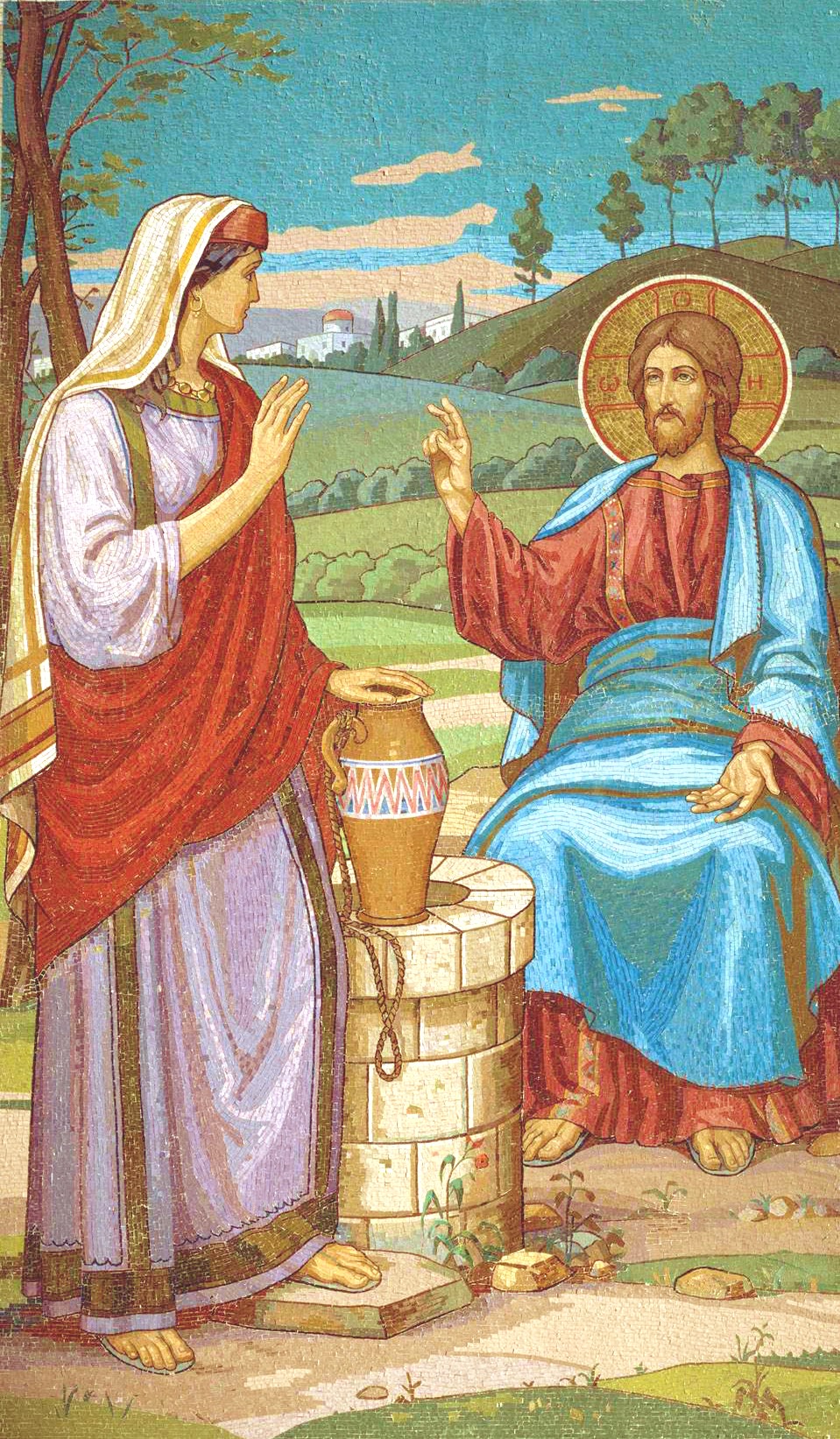
St. Photine the Samaritan woman, has been honoured as an Equal-to-the-Apostles.

A legend, which was based on the story in the New Testament when Christ met the woman at the Well, was that the woman at the well was named Photine and that, after repenting of her sins, she went on to evangelize Carthage, only to be martyred under Nero’s reign.

She had 4 sisters who were venerated as saints, one of whom was named Fotis and who shares the same name-day as her, and her son Photinos, who also shares a name-day with her.

Fotoula and Toula are modern Greek diminutives.

Another form is Fotine, and a Polish form is Fotyna.

In Russian she is referred to as St. Svetlana, (which is a literal translation of the name Photine).

The designated name-day is January 5.

Angela

Gender: Feminine
Origin: Greek
Meaning: “messenger.”
Eng (AN-je-luh)

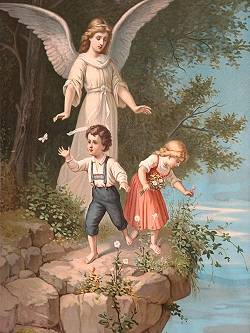
The name is a feminine form of the Greek male name, Ángelos (αγγελος), meaning, “messenger.”

In Greek mythology, Ángelos was an epithet for the god, Hermes. In later Judeo-Christian culture, the name became associated with angels since it shares the same etymology with the word angel.

The name has been borne by several saints.

In the United States, she currently ranks in at # 133. The highest she peaked in U.S. naming history was between 1974-1976 where she was the 5th most popular female name in the United States.

Her rankings in other countries are as follows:

  • # 91 (Canada, B.C. 2008)
  • # 56 (Chile, 2006)
  • # 481 (the Netherlands, 2006)
  • # 25 (Spain, 2006)

Angela is used in Danish, Dutch, English, German, Icelandic, Italian, Norwegian, Romanian, Romansch, Slovak , Slovene and Swedish.

Its Latinate diminutive form, Angelina, has recently sparked in popularity, due to the fame of American actress, Angelina Jolie.

In the United States, she currently ranks in as the 69th most popular female name (2008). Her rankings in other countries are as follows:

  • # 54 (Australia, 2007)
  • # 91 (Canada, B.C. 2008)
  • # 72 (France, 2006)
  • # 184 (the Netherlands, 2008)
  • # 96 (Sweden, 2007).

Other feminine forms Angela include:

  • Anxhela (Albanian)
  • Anela/Aneliya (Bulgarian)
  • Àngela (Catalan)
  • Angiola (Corsican/Romansch/Sardinian)
  • Angioletta (Corsican/Romansch/Sardinian)
  • Anđela (Croatian)
  • Anděla (Czech)
  • Angèle (French: an obscure diminutive form is Angelette)
  • Anela/Ankela (Hawaiian)
  • Angéla (Hungarian)
  • Aingeal (Irish Gaelic)
  • Angeletta (Italian: obscure diminutive form which was occasionally used as an independent given name)
  • Anġla (Maltese)
  • Ainle (Manx)
  • Aniela (Polish: diminutive form is Anielka)
  • Ângela (Portuguese)
  • Anzhela ангела (Russian)
  • Andjela Анђела (Serbian)
  • Ángela (Spanish)
  • Angelia (Spanish)
  • Angelita (Spanish: a diminutive form occasionally used as an independent given name)

An English diminutive is Angie, German diminutives are Angie and Geli.

Some Italian smush names include Giovannangela, Giuliangela, Mariangela, Michelangela, and Rosangela.

Masculine forms are:

  • Angeru (Basque)
  • Angel Ангел (Bulgarian)
  • Àngel (Catalan)
  • Anđelko (Croatian)
  • Anděl (Czech)
  • Anxo (Galician)
  • Angelos Αγγελος (Greek Modern)
  • Angelo (Italian/Spanish: currently the 284th most popular male name in the United States-2008; and the 98th in Chile-2006)
  • Angelus (Latin)
  • Anġlu (Maltese)
  • Ángel (Spanish)

Other forms of Angelina include:

  • Angiolina (Corsican/Romansch/Sardinian)
  • Angelien (Dutch)
  • Angéline (French)
  • Anzhelina Анжелина (Russian)

Angelina is also used in English, French, German, Italian, Polish, Romanian and Spanish.

Angela’s designated name-day is sometimes January 4th.

Basil

Gender: Masculine

The name, coincidentally, has two different origins and meanings.

It could either be from the Greek, Vassilios, which in itself is derived from the Greek Βασιλειος (Basileos), meaning “king.” The words: basilica, basilisk and the name of the herb, Basil, share the same etymology.

The name was borne by Saint Basil the Great, a 4th-century bishop of Caesarea. He is considered the father of the early Christian Church among both Eastern Orthodox and Roman Catholics.

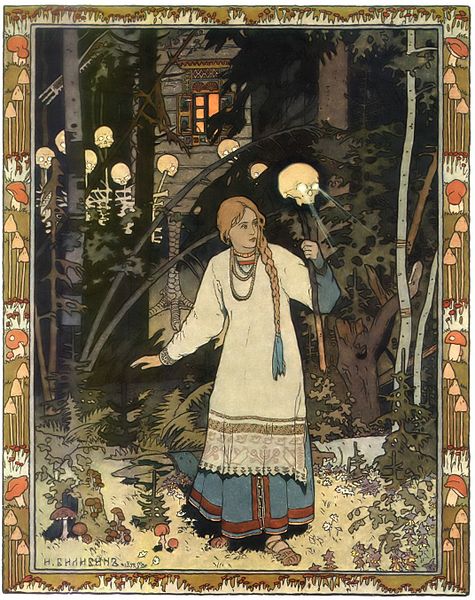
In Russian Folklore, its feminine version of Vasilisa appears in a popular Russian fairytale, entitled Vasilisa the Beautiful, the tale shares similar features to the Western European Cinderella Story.

The designated name-day is often January 2.

Another etymology of the name is the Arabic باسل (Basil), which means “valiant” or “brave.”

Other forms of the first form, include:

  • Vasil (Bulgarian/Albanian)
  • Veselin (Bulgarian)
  • Bazilije (Croatian)
  • Basil/Bazil (Czech/Slovak)
  • Vasilij (Czech)
  • Pasi (Finnish)
  • Basile (French)
  • Breasal (Gaelic/Irish)
  • Basil/Basilius (German/Dutch)
  • Wassili (German)
  • Basileios Βασιλειος (Greek Ancient)
  • Vasílios Βασίλειος/Vasílis Βασίλης (Greek Modern)
  • Bazil (Hungarian)
  • Vászoly (Hungarian)
  • Vazul (Hungarian)
  • Basile/Basileo (Italian)
  • Basilio (Italian: most common form)
  • Basilius (Latin)
  • Basilijus/Bazilijus (Lithuanian)
  • Vasilii Василии (Old Church Slavonic)
  • Bazyli (Polish)
  • Bazylid/Bazylis (Polish)
  • Bazyliusz (Polish)
  • Wasyl/Wasyli (Polish: archaic forms)
  • Basílio (Portuguese)
  • Vasile (Romanian: Vasilica is a diminutive)
  • Baseli (Romansch)
  • Vasily Василий (Russian: Vaska and Vasya are usually the diminutives)
  • Basili (Sardinian)
  • Vasilije Василије (Serbian)
  • Vasil (Slovak)
  • Bazilij (Slovene)
  • Basilio/Basiléo (Spanish)
  • Vasyl Василь (Ukrainian)

Feminine forms include:

  • Vasilka Василка (Bulgarian)
  • Vasilena/Veselina (Bulgarian)
  • Vesela (Bulgarian)
  • Veliki (Croatian)
  • Basilissa (Greek Ancient/Romansch)
  • Vasiliki Βασιλικη (Greek Modern)
  • Basilia (Italian)
  • Basilea/Basiliola (Italian)
  • Bazilė (Lithuanian)
  • Bazyla/Bazylia/Bazylisa (Polish)
  • Vasilisa Василиса (Russian)
  • Vasylyna Василина (Ukrainian)

Stephen

Gender: Masculine
Origin: Greek
Meaning: ” wreath; garland.”
Eng (STEE-ven); (STEF-en)

The name is derived from the Greek, Στεφανος, (Stephanos), which refers to a wreath or garland worn upon the head, hence, the name is sometimes interpreted to mean “crown.”

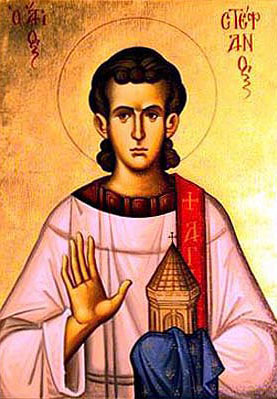
As written in the New Testament, it was the name of a deacon who was stoned to death for his beliefs and is regarded as the first Christian martyr.

The designated name-day is December 26.

In the United States, Stephen currently comes in as the 192nd most popular male name, while Steven is the 104th most popular, (2008).

Other forms of the name include:

  • Stefan/Stefaan/Stëven/Stephan (Afrikaans)
  • Shtjefën/Stefan (Albanian)
  • Istfan, إصتفان, ستيف, ستيفن (Arabic)
  • Stepanos/Stepan Ստեփանոս, Ստեփան (Armenian)
  • Tcheunne (Arpetan)
  • İstfan/Stepan (Azeri)
  • Estebe/Eztebe (Basque)
  • Esteve (Bearnais/Catalan/Occitanian/Provençal)
  • Steven (Breton)
  • Stefan Стефан (Bulgarian: Stefcho Стефчо is a diminutive form)
  • Stjepan (Croatian/Serbian: diminutive forms are Stipe and Stipo).
  • Štěpán/Štefan (Czech)
  • Stephen/Stefan/Stephan (Danish)
  • Steven/Stefaan/Stefanus/Stefan/Stephan (Dutch: Stef is a common Dutch diminutive form)
  • Tehvan (Estonian)
  • Sitiveni (Fijian)
  • Tahvo/Teppo (Finnish)
  • Tapani (Finnish)
  • Étienne (French: classic form)
  • Éstienne (French: medieval form)
  • Stéphane (French: more modern form)
  • Steffen (Frisian: used in Germany, Holland, Norway and Denmark)
  • Estevo (Galician)
  • Stefan/Stephan (German)
  • Stephanos Στέφανος (Greek)
  • Kepano/Kiwini (Hawaiian)
  • István (Hungarian: Pisti, Pisto and Isti. 30th most popular male in Hungary, 2008)
  • Stefán (Icelandic)
  • Steephan (Indian)
  • Steafán/Stiofán (Irish: Gaelic)
  • Stefano (Italian)
  • Stefanino/Stefanio/Stenio/Steno (Italian: obscure forms)
  • Stefanus/Stephanus (Latin)
  • Stefans/Stepans/Stepons (Latvian)
  • Steponas/Stepas (Lithuanian)
  • Stefan/Stevan Стефан, Стеван (Macedonian)
  • Stiefnu (Maltese)
  • Tipene (Maori)
  • Šćepan Шћепан (Montenegrin)
  • Stefanu Стефанъ (Old Church Slavonic)
  • Stefan/Szczepan (Polish)
  • Estêvão (Portuguese)
  • Ştefan (Romanian: Fane is a diminutive form)
  • Steivan/Stiafan (Romansch)
  • Stefan/Stiven/Stepan Стефан, Стивен, Степан (Russian)
  • Istevene (Sardinian)
  • Stìobhan/Stìophan/Stèaphan (Scottish: Steenie is a Scotch diminutive form)
  • Stevan Стеван (Serbian)
  • Štefan (Slovak/Slovene)
  • Esteban (Spanish)
  • Stefan/Staffan/Stephan (Swedish: Steffo is a diminutive form)
  • Êtiên (Vietnamese)
  • Stepan ஸ்டீபன் (Tamil)
  • İstefanos (Turkish)
  • Stefan/Stepan Степан, Стефан (Ukrainian)
  • Steffan (Welsh)

Stephanie is a common feminine form, in the United States, she was one of the most popular feminine names between 1972 and 1994. She ranked in at # 6, four years in a row, between the years 1984 and 1987.

As of 2008, she ranked in as the 105th most popular female name. In other countries, her rankings are as follows:

  • # 84 (Australia, 2007)
  • # 488 (the Netherlands, 2008)

Estefanía was the 77th most popular female name in Chile in 2006.

Other feminine forms include:

  • Esteveneta (Bearnais/Occitanian)
  • Štěpánka (Czech)
  • Stefana (Dutch)
  • Etiennette (French: archaic)
  • Stéphanie (French)
  • Stefanie (German/Danish/Dutch: was a very popular name in Germany during the 1980s and 90s. Germ: SHTEH-fah-nee; Dutch (STAY-fah-nee. Steffi is a common German diminutive form.)
  • Kekepania (Hawaiian)
  • Stefánia (Hungarian)
  • Stefania (Italian/Polish/Romanian: Polish diminutive forms are Stefcia and Stefa)
  • Stefanina (Italian: obscure)
  • Stefanella (Italian: obscure)
  • Stenia/Stena (Italian: obscure)
  • Szczepana (Polish)
  • Estèva (Occitanian/Provençal)
  • Štefánia (Slovak)
  • Estefanía (Spanish)

Stevie, Steff, and Steffie are the preferred English diminutives.