Astraea

  • Origin: Greek Ἀστραία
  • Meaning: “star.”
  • Gender: feminine
  • Eng Pronunciation: (uh-STRAY-ah)

The name is borne in Greek mythology by the daughter of Astraeus and Eos. She is the goddess of justice, innocence, purity, & precision and is closely associated with Dike, the goddess of Justice. According to Ovid, Astraea was a mortal woman during the Golden Age, but ascended into the heavens to become the constellation Virgo.

Other froms of the name include:

  • Astraia Աստրաիա (Armenian, Czech, German, modern Greek, Scandinavian)
  • Astrea Астрея (Bulgarian, Catalan, Italian, Russian, Spanish, Ukrainian)
  • Astrée (French)
  • Astraja (Lithuanian, Polish)
  • Astreia (Portuguese)

Sources

Atreus

  • Origin: Greek Ἀτρεύς
  • Meaning: “to not tremble; fearless.”
  • Gender: masculine
  • Pronunciation: Eng (AY-tree-us); Grek (ah-TRAY-oos)

The name is composed of the Greek elements, ἀ-, “no” and τρέω, “tremble,” hence meaning, “fearless.”

The name is borne in Greek mythology by the son of Pelops & Hippodamia and the father of Agammennon & Menelaus. Atreus and his brother were expelled from their kingdom after killing their elder brother for the throne. Atreus took refuge in Mycenae where he sat-in as a temporary king while Eurystheus was fighting in a war, but ultimately, Atreus took over the the throne. His descendants thereafter are known as Atreides.

In Frank Herbert’s Dune Series, House of Atreides is the name of one of the great houses.

The name has recently entered the U.S. Top 1000 in 2019, currently ranking in as the 788th most popular name in the United States.

Other forms include:

  • Atreüs (Breton)
  • Atreu (Catalan, Portuguese, Romanian)
  • Atreus (Dutch, English, German, Latin, Scandinavian)
  • Atrée (French)
  • At’revsi ატრევსი (Georgian)
  • Atreusz (Hungarian, Polish)
  • Atreos Ατρέας (Modern Greek)
  • Atreifur (Icelandic)
  • Atreo (Italian, Spanish)
  • Atrėjas (Lithuanian)
  • Atrey Атрей (Russian, Ukrainian)
  • Atrej (Serbo-Croatian, Slovenian)

Sources

Ambrose

Gender: Masculine
Origin: Greek
Meaning: “immortal.”
Eng (AM-broze); Fre (ahm-BWAHZ)

Ambrose is an English version of the Late Latin, Ambrosius, which is a form of the Greek male name Αμβροσιος (Ambrosios), meaning, “immortal.”

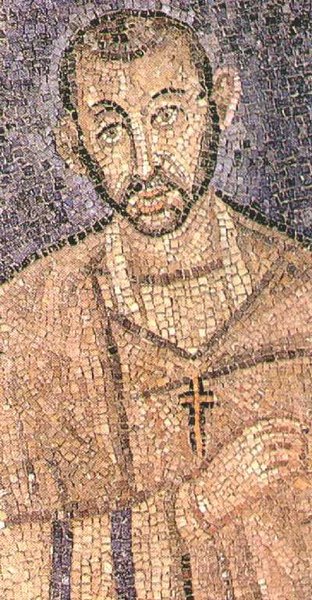
The name was borne by a 4th-century Christian saint, a contemporary of St. Augustine of Hippo. He is considered a Doctor of the Church and the patron saint of Milan.

As of 2010, its French form of Ambroise was the 391st most popular male name in France.

The designated name-day is December 7.

There is a feminine version as well, Ambrosia, and in Greek mythology, it is borne by the daughter of Atlas and Pleione. It was also the name of the food of the gods eaten on Mount Olympos.

Other forms of the name include:

  • Ambrozi (Albanian)
  • Ambrosiu (Asturian)
  • Anbortsi (Basque)
  • Ambroaz (Breton)
  • Amvrosij Амвросий (Bulgarian/Russian/Ukrainian)
  • Ambròs (Catalan)
  • Ambrosgiu (Corsican)
  • Ambrozije (Croatian)
  • Ambrož (Czech/Slovene)
  • Ambroos (Dutch)
  • Broos (Dutch/Limburgish)
  • Ambroise (French)
  • Ambros (German/Romansch)
  • Ambrosios Αμβροσιος (Greek)
  • אמברוזיוס Ambrwzyws (Hebrew)
  • Ambrus (Hungarian)
  • Ambrósíus (Icelandic)
  • Ambróis (Irish)
  • Bosone (Italian: obscure)
  • Ambrogio/Ambrogino (Italian: more common forms)
  • Ambrosino (Italian: obscure)
  • Ambrosi (Kiswahili)
  • Ambrosius (Late Latin/Danish/Dutch/Finnish/German/Estonian/Norwegian/Swedish)
  • Ambrozijs (Latvian)
  • Ambraziejus (Lithuanian)
  • Ambroeus (Lombard)
  • Ambroży (Polish)
  • Ambrósio (Portuguese)
  • Ambrozie (Romanian)
  • Ambrosi(Romansch)
  • Ambròsu (Sardinian)
  • Ambroggiu (Sicilian)
  • Ambróz (Slovakian)
  • Ambrosio (Spanish/Galician/Italian/Venetian)
  • Emrys (Welsh)

Feminine forms include:

  • Ambroisine/Ambrosine (French)
  • Ambrogia/Ambrogina (Italian)
  • Ambrosina (Italian)
  • Ambrosia (Greek/Italian)
  • Ambrozja (Polish)
  • Ambrozija (Slovene)

Achilles

Gender: Male
Origin: Greek
Meaning “pain.”
Eng (uh-KEELZ); (ah-KEEL-leez); Fre (ah-SHEEL); It (ah-KIL-le)

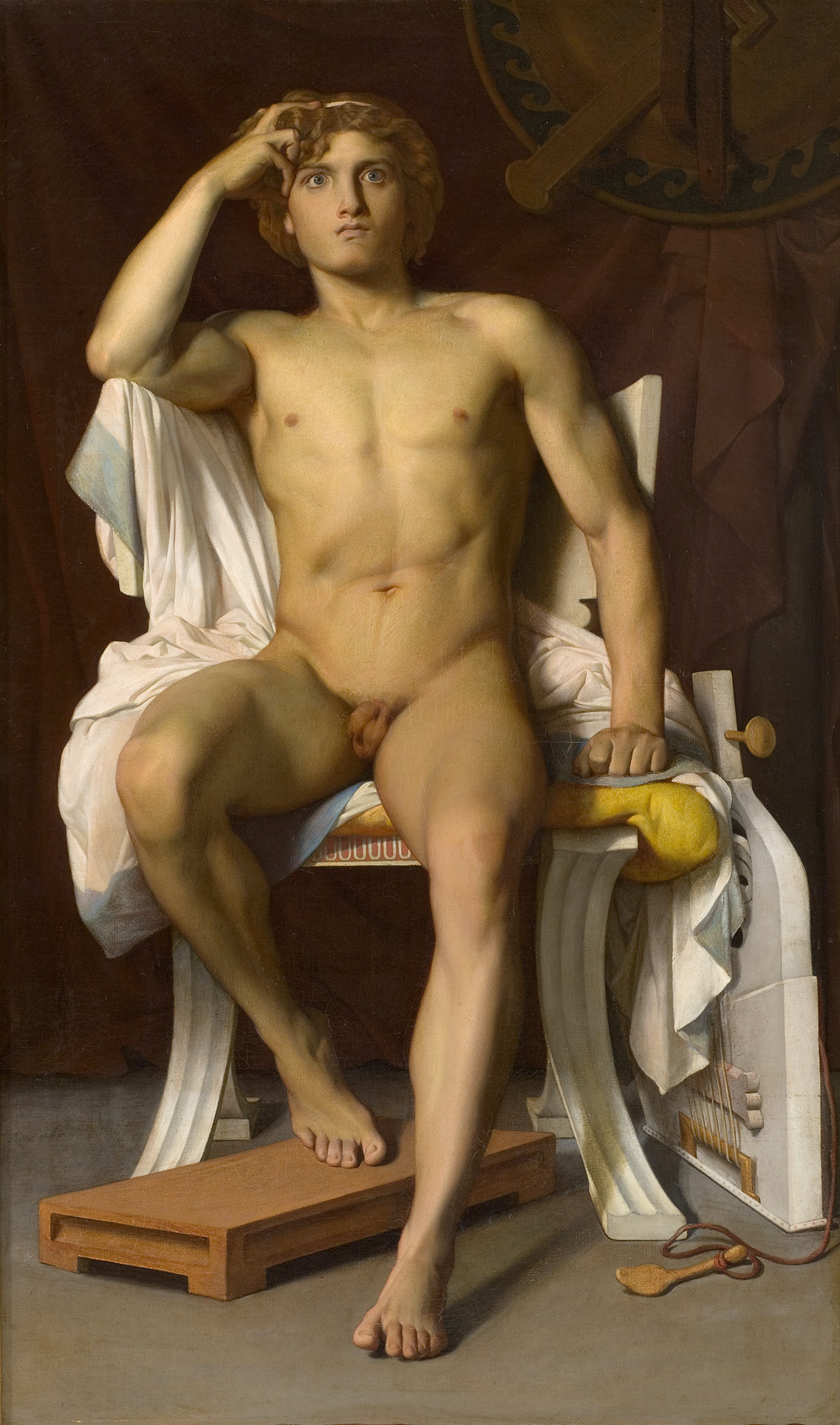
The name of the great Pythian hero of the Trojan war, Achilles was invincible save for the one spot on his heel that was vulnerable to killing him. Achilles was timelessly struck down after a poisoned arrow pierced his heel. Some legends state that his mother, Thetis, had dipped him in the river Styx to render her child immortal. However, since she was holding him by one heel, the waters were unable to pass through her hands onto the area to which she held him.

Achilles’ Heels is a term used to describe a person’s weakness. In anatomy, Achilles Tendon is used to describe a tendon of the posterior leg.

As of 2009, Achille was the 204th most popular male name in France.

Other forms of the name include:

  • Akili (Albanian)
  • Akiles (Basque)
  • Ahilej (Bosnian, Serbo-Croatian)
  • Akilles (Breton)
  • Aquil·les (Catalan)
  • Achilles (Czech/English/Polish)
  • Akhilleus (Finnish/Scandinavian: very obscure)
  • Achille (French/Italian)
  • Achilleus Αχιλλευς (Greek)
  • Akhilleusz (Hungarian: obscure)
  • Ahillejs (Latvian)
  • Achilas (Lithuanian)
  • Akille (Maltese)
  • Akilles (Danish/Norwegian/Swedish)
  • Ahile (Romanian)
  • Achilli (Sicilian)
  • Ahil (Slovene)
  • Aquiles (Spanish/Galician/Portuguese)

Freya

Gender: Feminine
Origin: Old Norse
Meaning “lady; mistress”
(FRAY-yah)

The name is derived from the proto-Germanic word, *frawjōn, which designates a woman of noble birth. The modern German word of Frau is a modern cognate. Many scholars argue whether Freya was originally the name of the goddess or a title used in reference to her; it has even been suggested that the goddess had an actual given that has been lost to history.

In Norse mythology, Freya was believed to be the most beautiful goddesses ever created. Scholars believe that Freya was essentially a fertility goddess who assisted in the growth of wildlife, agriculture and human reproduction; along with birth and life, she was also associated with death. In Norse legend, it was Freya who received half the slain warriors into her heavenly hall.

She is often times the subject of the poetic eddas along with her numerous epithets, which are as follows:

  • Vanadis (beautiful goddess)
  • Mardoll (sea bright)
  • Horn (flaxen)
  • Gefn (the giver)
  • Syr (sow) which illustrates Freya’s association with pigs and fertility.

Today the name has survived in modern Germanic lexicons; the English word Friday means “Freya’s day” likewise the same in German with Freitag; the Danish/Swedish/Norwegian Fredag and the Dutch Vrijdag.

There are a few plants named for the goddess, such as Freyja‘ Hair and Freyja’s Tears, and the chemical Vanadium is derived from her epithet, Vanadis.

Today, Freya, and its alternate forms are still very common throughout Scandinavia and she even appears in the British top 100. Her rankings are as follows:

  • # 8 (Freja, Denmark, 2010)
  • # 19 (England/Wales, 2010)
  • # 19 (Scotland, 2010)
  • # 41 (Freja, Sweden, 2010)
  • # 53 (Northern Ireland, 2010)
  • # 61 (Ireland, 2010)

Other forms include:

  • Frea (Anglo-Saxon/Lombard)
  • Fröe (Danish: obscure form)
  • Freya (English/Modern German/Dutch)
  • Froya (Faroese)
  • Freija (Finnish)
  • Frya/Frija (Frisian)
  • Freja (German/Scandinavian)
  • Fráujo (Gothic)
  • Frėja (Lithuanian)
  • Frieja (Low Saxon)
  • Frøya (Norwegian)
  • Freyja (Old Norse/Icelandic)
  • Frīa/Frija (Old High German)
  • Frowa (Old High German)
  • Fröa (Swedish: very obscure form)
  • Fröja (Swedish: very obscure form)
The designated name-day in Sweden is January 23rd.

Phoebe

Gender: Feminine
Origin: Greek
Meaning: bright; light
(FEE-bee).

To many Americans, Phoebe brings to mind the wacky yet lovable character of Phoebe Buffay on the popular SitCom, Friends. To the British, she is of an upper crust trendy sort, to Christians, she is an admirable woman in the New Testament, and to the Greeks, she is a classic, featured in both the Greek Orthodox calendar of saints as well as in Greek myth.

The name is derived from the Greek, Phoibus, which means “bright, light.”

In Greek Mythology, Phoebe was a pre-Olympic goddess, a Titan. She was the goddess of the moon and the consort of her own brother Coeus, from him, she mothered Asteria and Leto and was believed to be the grandmother of Artemis and Apollo.

The Greeks later associated her with the goddess Artemis. Phoebe was often used as an epithet for Artemis, while the masculine form, Phoebus, was used for Apollo.

Phoebe was also associated with the Oracle of Delphi.

There are a few other Phoebes mentioned in ancient Greek religion, one was a Heliade nymph, another was the daughter of Leucippus and Philodice.

Phoebe, daughter of Leucippus, and her sister Hilaeira, were priestesses to Artemis and Athena. They were both betrothed to Idras and Lynceus. Castor and Pollux, the divine twins, were so impressed by their beauty, that they fell in love with the two maidens and carried them off for themselves. Idras and Lynceus, outraged, sought the two immortals but were both slain. Nevertheless, Phoebe married Pollux. It was also the name of a sister to Leda.

In the New Testament, the name is borne by a woman of Cenchrae, many scholars argue that she was a deaconess, the Catholic Church especially seems to support this stance. She is also believed to have brought Paul’s Epistle of the Romans to Rome. She is a canonized saint in both the Catholic and Greek Orthodox Churches, both rites hold her feast on September 3rd.

Fast forward to the 1500s and you will find the name Phebe, (an older English spelling), as the name of one of Shakespeare’s characters in his play, As You Like It. In the modern American Classic, she is the younger sister of Holden Caulfied in J.D. Salinger’s Catcher in the Rye. Polish Science Fiction writer, Jacek Duraj, uses the name as an acronym for post-human beings in his novel Perfekcyjna niedoskonałość.

Phoebe is also the name of a genus of evergreen tree, a species of bird and a moon of the planet, Saturn.

As of 2010, Phoebe was the 29th most popular female name in England/Wales. Her rankings in other countries are as follows:

  • # 56 (Australia, NSW, 2010)
  • # 90 (Northern Ireland, 2010)
  • # 93 (Scotland, 2010)
  • # 309 (United States, 2010)

Other forms of the name include:

  • Febe (Asturian/Danish/German/Italian/Norwegian/Polish/Portuguese/Spanish/Swedish)
  • Foibe (Danish)
  • Phoebe (Dutch/English/German)
  • Phœbé/Phébé (French)
  • Phoibe (German)
  • Phoebi/Phoibi (Greek)
  • Feba (Serbo-Croatian)
  • Foibe (Swedish)

Aura

The name could be of a few different etymologies.
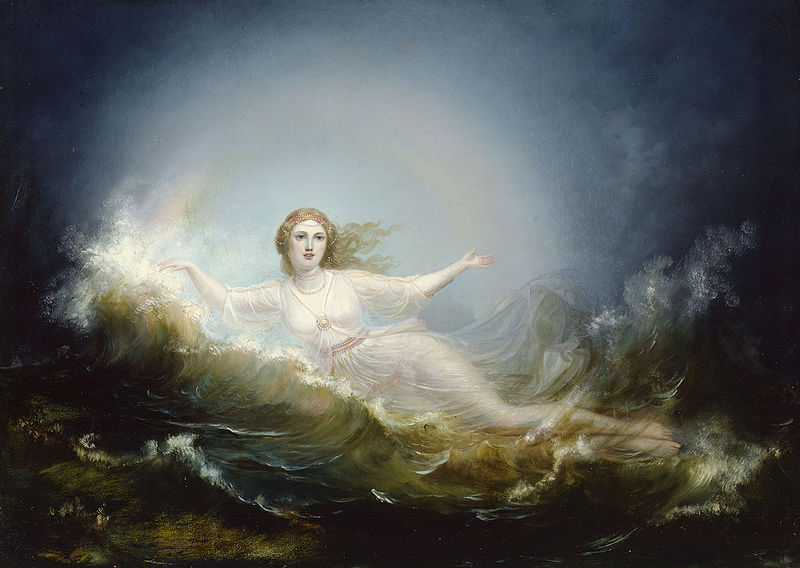
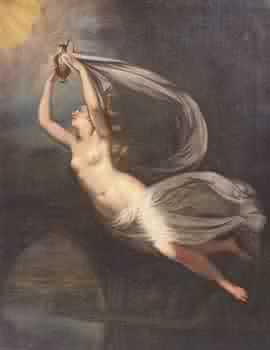
In Greek, it is derived from the word for “breeze”, and is borne by several characters in Greek myth. One was a Titan goddess who was the personification of the fresh breezes and the cool air that accompanies early mornings.

According to one legend, Aura was so proud of her virginity that she mocked the virgin goddess Artemis, claiming that Artemis was not as pure as she, since Artemis was too “womanly.” In revenge, Artemis had Dionysus rape Aura. As a result, the Titaness went mad, becoming a slayer of men. When her twin sons were born, Aura ate one twin, while Artemis rescued the other. Zeus eventually transformed her into a breeze. Other legends state that she was transformed into a stream.

The aurai (the breezes) were a type of nymph, fathered by the sea god Oceanus.

Aura appears in the English lexicon describing a glow or metaphysical halo that is given off by a person’s or object’s energy.

The name has also experienced usage in Scandinavia. Its earliest attestation is in Sweden in 1818. In this case, the name may be a borrowing from the Greek, or it could be a contracted form of Aurora or AureliaHowever, it has been popularly attributed as being derived from a Norse element, aurr, meaning, “clay.”

In Finland, the name is a somewhat of a patriotic name as this was given as a name to the Maiden of Finland, the personification of Finland. In this case, her name is taken from the name of a river. The river name is believed to be related to an archaic Swedish word, aathra, meaning, (waterway), but in Finnish could be translated as meaning, “plow.”

As of 2010, Aura was the 8th most popular female name in the Faroe Islands.

Other forms of the name include:

  • Aura (English/Faroese/Finnish/Latin/Portuguese/Scandinavian/Spanish)
  • Ára (Faroese)
  • Aure (French)
  • Avra (Greek)
  • Aula (Italian)
  • Ávrá (Sami)

Ilma, Ilmatar, Ilmi

Gender: Feminine
Origin: Finnish
Meaning: “air; sky.”
Ilma comes directly from the Finnish word for air or sky. In Finnish mythology, Ilmatar was the name of a female air spirit who mothered Väinämöinen. She was said to have both male and female attributes but she was most often portrayed as a female. In Finnish, the suffix of -tar denotes a feminine spirit. She was also known as Luonotar (female nature spirit). Ilmatar was often the subject of the Finnish National Epic, Kalevala, which chronicles Finnish myths and legends.
As of 2010, Ilma was the 27th most popular female name in Bosnia & Herzegovina. In this case it may be a borrowing from the Italian form of Hilma..
A Finnish masculine form is Ilmari.

Luna

Gender: Female
Origin: Latin
Meaning; “moon”
(LOO-nah).

The name comes directly from the Latin word for moon, and it was the name of a Roman goddess, the counterpart to the Greek goddess, Selene.

Luna had a temple dedicated to her on the Aventine Hill in Rome in the 6th-century BCE. Including another temple dedicated to her on the Palatine Hill, Luna Noctiluca, (luna that shines by night).

Luna, as a word, has transferred over into other languages, it is the Spanish, Romanian, Italian, Bulgarian and Russian word for moon.

The name has become increasingly popular across Europe, in recent years. In 2009, she was the 43rd most popular female name in France, add the trendier phonetic French spelling of Louna, and she would probably rank even higher. Her rankings in other countries are as follows:

  • # 12 (Belgium, 2006)
  • # 31 (Netherlands, 2010)
  • # 45 (Denmark, 2010)
  • # 65 (Croatia, 2010)
  • # 86 (Slovenia, 2010)
  • # 86 (Spain, 2010)
  • # 343 (United States, 2010)

She is rising occasionally used in Bosnia, Germany, Poland and in Italy.

There is also the French, Lune (literally, the French word for moon), which is also becoming more prevalent in France, and the Dutch corruption is Loena, (a phonetic Dutch spelling to reflect the true Latin pronunciation).

In France, its designated name-day is August 4th.

Anna, Anne

Gender: Feminine
Origin: Biblical Hebrew
Meaning: “grace.”
(ANN; AHN). (ANN-uh; AHN-nah). (HANN-uh; HAHN-nah)

Anne is possibly one of the quintessential classic English and French female names. Prior to the 18th-century, it seems that every other girl born in England was either named Anne, Jane or Mary. There were several British and French queens who bore this simplistic moniker, including the ill fated Anne Boleyn, the mother of Elizabeth I. The history of Anne is rather long and complicated.

It was foremost popularized through the cult of St. Anne, a legendary figure who was said to be the mother of the Virgin Mary and the grandmother of Christ.

In Brittany, the name became especially popular because it happened to coincide with the name of an ancient Celtic goddess, her cult being replaced by St. Anne’s. In fact, it was borne by one Breton Princess, Anne of Brittany.

The name was introduced into Britain by the French-Normans after the invasion in 1066. Previously, there had been a minor Saxon king named Anna, but in this case the name is related to the Saxon arn (eagle). Anna and Anne are still occasionally used as male given names in Friesland.

Other than the apocryphal saint, the name Anne can be traced directly back to the Bible. In the New Testament, it is the name of a prophetess who predicts the Crucifixion of Christ.

Anna (Αννα), is the Greek translation of the early Hebrew Channah חַנָּה, usually transliterated as Hannah, meaning “grace.”

Hannah is borne in the Old Testament by the faithful mother of the prophet, Samuel.

Hannah has always been popular among Jewish families, but was virtually unheard of among non-Jews before the Reformation, except in some cases where it may have been used as a diminutive form of Johanna, spelled Hanna.

It was the Byzantines who had introduced the Anna form to the world, making it popular throughout Eastern and Southern Europe. It was a very popular name among the Byzantine royal family and it was borne by the majestic Anna of Byzantium.

Anna may be the more melodic form of the bunch, but Anne’s minimalistic qualities are charming. Short, to the point, no frills. It’s not a bad name, though it does lack some spice, which is why parents are probably more attracted to its more exotic alternatives. In fact, Anne only comes in at # 608 in the top 1000 female names of the United States. It is safe to say, however, that she is very much loved in the middle name spot.

Anna is currently one of the most popular female names in Europe and abroad. Her rankings are as follows:

  • # 1 (Austria, 2010)
  • # 1 (Estonia, 2011)
  • # 2 (Hungary, 2010)
  • # 3 (Ana, Georgia, 2010)
  • # 3 (Iceland, 2010)
  • # 4 (Ana, Croatia, 2010)
  • # 4 (Czech Republic, 2010)
  • # 4 (Germany, 2011)
  • # 4 (Ukraine, 2010)
  • # 5 (Faroe Islands, 2010)
  • # 5 (Ana, Portugal, 2010)
  • # 6 (Armenia, 2010)
  • # 6 (Ane, Greenland, 2002-2003)
  • # 6 (Ana, Romania, 2009)
  • # 6 (Ana, Serbia, 2010)
  • # 7 (Latvia, 2011)
  • # 7 (Russia, 2011)
  • # 8 (German-speaking Switzerland, 2010)
  • # 9 (Denmark, 2011)
  • # 10 (Netherlands, 2010)
  • # 10 (Northern Ireland, 2010)
  • # 10 (Norway, 2010)
  • # 11 (Italy, 2010)
  • # 12 (Ireland, 2010)
  • # 14 (Poland, 2010)
  • # 16 (Catalonia, 2010)
  • # 26 (Canada, B.C., 2010)
  • # 28 (Italian-speaking Switzerland, 2010)
  • # 28 (United States, 2010)
  • # 29 (Scotland, 2010)
  • # 40 (France, 2009)
  • # 46 (French-speaking Switzerland, 2010)
  • # 53 (Belgium, 2009)
  • # 63 (England/Wales, 2010)
  • # 71 (Australia, 2010)
  • # 81 (Sweden, 2010)
  • # 83 (Spain, 2010)
Other forms of the name include:
  • Anneen (Afrikaans/Low German)
  • Anna Анна (Afrikaans/Albanian/Armenian/Breton/Bulgarian/Catalan/Corsican/Czech/Dutch/English/Estonian/Faroese/Finnish/French/Frisian/German/Greek/Hungarian/Icelandic/Italian/Latvian/Limburgish/Maltese/Polish/Russian/Ukrainian/Scandinavian/Slovak)
  • Anne (Basque/Dutch/English/French/Scandinavian)
  • Gánna Га́нна (Belarusian)
  • Annaig (Breton)
  • Annick (Breton)
  • Maina (Breton)
  • Mannaig (Breton)
  • Mannick (Breton)
  • Naig (Breton)
  • Ana Ана ანა (Bulgarian/Croatian/Galician/Georgian/Lombard/Macedonian/Portuguese/Romanian/Samogaitian/Serbian/Slovene/Spanish/Venetian)
  • Jana (Croatian/Ladino)
  • Aneta (Czech/Polish/Samogaitian/Slovak)
  • Aina (Catalan)
  • Anica (Croatian/Serbian/Slovene)
  • Ane (Danish)
  • Anika (Danish)
  • Anneke (Dutch)
  • Anneken (Dutch)
  • Annika (Dutch/Finnish/German/Latvian/Scandinavian)
  • Anka (Dutch/Frisian/German)
  • An(n)ke (Dutch/Frisian)
  • Anouk (Dutch/French)
  • Ans (Dutch)
  • Enneke (Dutch)
  • Enneken (Dutch)
  • Anita (English/German/Polish/Spanish)
  • Annette (English/French/German)
  • Anissa (English)
  • Annelle/Annella (Estonian)
  • Anete (Estonian/Latvian)
  • Anett (Estonian)
  • Anu (Estonian)
  • Anni (Finnish)
  • Annikki (Finnish)
  • Anniina (Finnish)
  • Annukka (Finnish)
  • Niina (Finnish)
  • Anaïs (French/Provençal)
  • Annouche (French)
  • Ninette (French)
  • Ninon (French)
  • Ninouk (French)
  • Anje (Frisian)
  • Ankea (Frisian)
  • Antje (Frisian)
  • Antjen (Frisian)
  • Anute (Fruilian)
  • Anano (Georgian)
  • Annchen (German)
  • Annel (German)
  • Annele (German/Latvian)
  • Anneli(e) (German/Finnish/Swedish)
  • Annet (German)
  • Anina (German)
  • Anja (German/Slovene)
  • Anouschka (German/Italian/Russian)
  • Annaki (Greek)
  • Annoula (Greek)
  • Noula (Greek)
  • Anikó (Hungarian)
  • Annuska (Hungarian)
  • Panni (Hungarian)
  • Áine (Irish)
  • Ánna (Irish)
  • Annarella (Italian)
  • Annella (Italian)
  • Annetta (Italian)
  • Annettina (Italian)
  • Nona (Italian/Romansch)
  • Ance (Latvian)
  • Annija (Latvian)
  • Anninya (Latvian)
  • Ona (Lithuanian)
  • Annamma (Malayalam)
  • Annam (Malayalam)
  • Onnee (Manx)
  • Âone (Norman)
  • Aenna/Aenne (Old High German)
  • Annehe (Old High German)
  • Änna/Änne (Old High German)
  • Neta (Piedmontese)
  • Noto (Piedmontese)
  • Anke (Plattdeutsch)
  • Anneke(n) (Plattdeutsch)
  • Analia (Romansch/Spanish)
  • Annina (Romansch)
  • Annotta (Romansch)
  • Anca (Romanian)
  • Anicuta (Romanian)
  • Anėta (Samogaitian)
  • Anėkė (Samogaitian)
  • Annag (Scottish)
  • Ghianna (Sicilian)
  • Janna (Sicilian)
  • Nanna (Sicilian)
  • Anniken (Swedish)
  • Ann (Welsh)
  • Nan (Welsh)
  • Nanno (Welsh)
  • Nanw (Welsh)
  • Aana (Wolof)
As for the Hannah forms

Hanna without an H is the prefered form on Continental Europe, usually pronounced (HAHN-nah) and in French like Anna. Hanna and Hanne (HAHN-neh) are also used as diminutive forms of Johanna/Johanne in the Netherlands, Sweden, Norway, Denmark and Germany. There is the Hungarian Hajna pronounced (HOY-no). The Czech/Slovak form of Hana nickname Hanka. There are the Yiddish forms of Heyna, Hayna, Hejna (all pronounced like HAY-nah) including the diminutive forms of HenaHende, Hendel and Henye.  The Polish diminutive form of Hania, which might make an interesting alternative to Anya or Hannah. Hannah, Hanna and Henna are all used in the Middle East.

Of course, how could we ever forget the popular diminutive forms of Annie and Nan.