The name is formed from the Latin nox (“night”) and lucere (“to shine”). It is an obscure Roman epithet but may make the right choice for parents looking for a gothic, romantic and celestial appellation.
Noctiluca served as an epithet of Venus in ancient Rome. According to Ovid (Fasti 4.373–376), the Romans celebrated a festival to Venus Noctiluca (“Venus the Night-Shining”) on the Aventine Hill, where fires were lit in her honor.
The word was later borrowed into natural history as the name of a bioluminescent sea creature—Noctiluca scintillans—whose glowing waters inspired comparisons to stars reflected in the ocean.
Noctiluna is another variation that may be appealing to those who love Luna but want something more unique.
The nicknames Nockti, Nocktie, Nockty or Luca are options.
The name is from the Tagalog word, may-ari, meaning, “owner, master.”
In Filipino mythology, Mayari is the goddess of the moon, war, revolution, strength, weaponry, and beauty — and is celebrated as one of the most radiant and formidable deities in the Tagalog pantheon. She is the daughter of Bathala, the supreme god and creator of the world and was mothered by a mortal woman.
When Bathala died without naming an heir to rule his earthly domain, Mayari and her brother Apolaki, the god of the sun, fought for succession, using bamboo sticks as weapons. During their fierce duel, Apolaki struck out one of Mayari’s eyes. Realizing the cost of their conflict, the siblings reconciled and agreed to share rule over the world — Apolaki reigning over the day, and Mayari over the night.
Because of her single remaining eye, the moon’s light is dimmer than the sun’s. In some regional traditions, Mayari is also linked to Tala, the goddess of the stars — as her sister, or in alternate legends, as her mother.
The name is either derived from the Old Norse gandr (magic wand; magic staff), or the Old Norse gǫndul meaning, “magical animal; werewolf.”
In Norse Mythology, this is the name of one of the Valkyries. She appears in several early sources, including the Heimskringla, in which it is written:
“Gǫndul and Skögul sent out / to choose among kings.” Their presence seals Hákon’s fate, and they greet him after death — both destroyers and honour-givers.”
In the Poetic Edda, specifically Hákonarmál, she is again one of the Valkyries who welcome Hákon to Valhalla, confirming her dual role as harbinger of death and divine escort.
In the Norse sagas and Skaldic poetry, gǫndul can also function as a kenning (poetic metaphor) for “valkyrie” or “battle-witch,” used interchangeably with other names like Skögul, Hildr, and Mist.
Its rarely used these days in Nordic countries, but whose to say it won’t become popular with the rise of other Norse myth names. However, in modern Icelandic, it may sound a touch to close to the Icelandic slang term, göndull (cock, dick, penis), which yes, shares the same etymology as the name, referring to a staff or a wand, but other Nordic languages wouldn’t have the same associations.
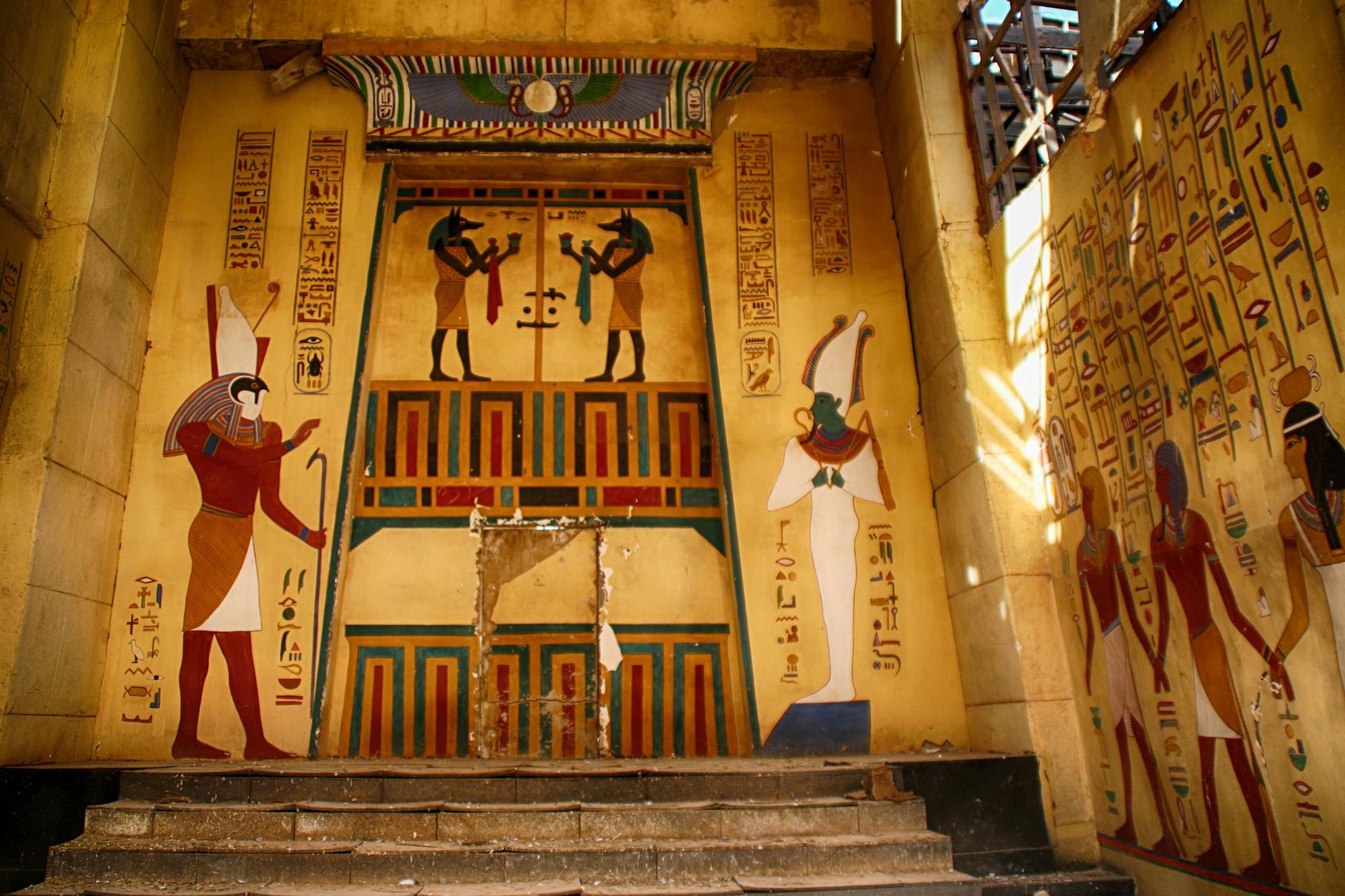
The Ancient Egyptian word and name Heka (transliterated ḥkꜣ, later Hkȝ) literally means “magic,” “sorcery,” or “divine power.” It derives from the root ḥk — “to work magic” — and the ending ꜣ (the Egyptian aleph) which functions as a nominal element.
In Egyptian cosmology, heka was not mere illusion or trickery, but a primordial creative force — the divine energy that allowed both gods and humans to act, heal, and give life. The term is thus best understood as “creative power made manifest,” and shares a root with the Ancient Egyptian ka, roughly translating to “soul.”
Heka was also deified as a god embodying magic itself. He appears as a male deity in Old Kingdom Pyramid Texts (c. 2500 BCE) and remained important through the Greco-Roman period.
In theology, Heka was said to have existed before all other gods — the power through which even the creator gods shaped the universe. The Coffin Texts describe him as:
“I am Heka, the magic, the child of Atum… before the gods came into being, I was.”
In later periods, he was depicted as a man holding two entwined serpents, sometimes accompanying deities such as Khnum and Neith, and invoked by priests and physicians in medical papyri. His power was integral to Egyptian medicine and ritual; magic (heka) was considered a sacred technology given by the gods for healing and protection.
The Coptic form is Hik, it is not used as a name among contemporary Copts but may make an interesting revival.
It is speculated that Hecate’s name and cult may have its roots in the Ancient Egyptian god.
The Greek name Nyx (Νύξ) means “night.” It comes directly from the Proto-Indo-European root nókʷts, the same ancient word that produced Latin nox, Sanskrit nakta (नक्त)*, and Old English niht → modern English night.
Thus, Nyx and Nox are linguistic sisters — two ancient words expressing the same primordial idea: darkness, mystery, and the cosmic night from which creation emerges.
In Greek mythology, Nyx is the goddess and personification of the Night and Nox the Roman counterpart.
She is said to have arisen directly from Chaos, the void before creation, and is counted among the Protogenoi — the primal deities who gave birth to the cosmos itself.
Nyx was both feared and revered by the Olympians. Even Zeus, king of the gods, hesitated to cross her.
Hesiod’s Theogony (c. 700 BCE) describes her as a shadowy figure dwelling in the western lands of perpetual darkness, near the gates of Tartarus.
In recent years, Nyx has appeared more often as a middle name, to fill a void for a longer first name. Its Latin form of Nox may make an appealing choice for those seeking gender-neutral sounding female names, sounding similar to the trendy male name Knocks. It has recently come into use in the Netherlands as a male name for unknown reasons.
Bricta (also spelled Brixta) is an ancient Gaulish female name derived from the Celtic root brict– or brixt-, meaning “magic, spell, incantation.” It shares its etymology with the modern Spanish word bruja. It may also share an etymology or be linked with Bridget.
Bricta is historically attested as the name of a Celtic goddess worshiped in Gaul, particularly in the region of Luxovium (modern Luxeuil-les-Bains, France). In inscriptions, she appears alongside the local healing god Luxovius, who presided over the sacred thermal springs of the area.
This pairing suggests that Bricta was his consort or counterpart, a water and healing deity, perhaps embodying purification, fertility, and the magical powers of sacred springs.
Bricta is a bit clunky but there is something magical sounding about Brixta. Perhaps a modern and fresher take on Brenda.
The name has also appeared as Brixia.
I often wonder how this name would have survived into modern French, Brixie?
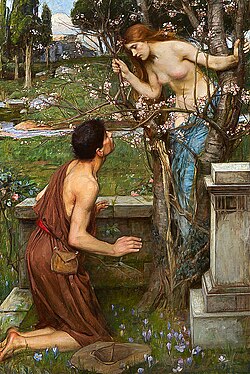
The name appears in Greek mythology. It is connected to a woman who killed herself when her love for Demophon was not returned. She was transformed into an almond or hazelnut tree, depending on the legend. It comes directly from the Greek word, Φυλλίς, meaning, “leaves, foliage,” which shares a root with the words chlorophyll and phyllotaxis. Its Turkish form of Filiz comes from the same root but the meaning slightly changes to “sprout; root.”
It also appears as the name of a minor river god of Bithynia.
It came into widespread use in England in the 16th-century and later spread to the rest of the Anglosphere.
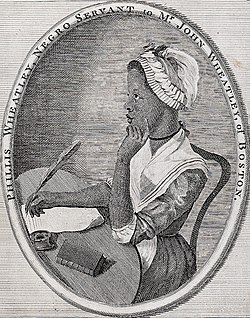
Early Puritan records occasionally include Phyllis/Phillis, reflecting classical learning even among settlers. Phillis Wheatley (1753-1784), the first published African-American female poet, is a striking historical bearer.
An 18th-century English short form was Lissie or Lissy.
It frequently appears in Elizabethan and Restoration poetry and drama. Poets such as Ben Jonson and Andrew Marvell used “Phyllis” as a stock name for a beloved in pastoral verse. Later modernists like Ezra Pound continued this tradition. This usage helped keep it familiar to English speakers for centuries.
It marked its presence in baroque operas (e.g., Handel’s Acis and Galatea includes a character named Phyllis) and in folk songs of the British Isles.
Victorian painters of the Pre-Raphaelite school sometimes chose the Phyllis and Demophon story for mythological canvases.
In the United States, it appeared in the Top 100 Female Names between 1915-1958, peaking at #24 in 1929. In the U.K., it came in at #14 in 1914, #4 in New Zealand in 1911, and #29 in 1922 in Canada.
Its Turkish offshoot of Filiz appeared in the Turkish Top 100 between 1980-1996, peaking at #11 between 1980-1982.
Today, the name is considered dated in the English-speaking world.
Phillyda, pronounced /ˈfɪl.ɪ.də/ in English is an alternate form.
The name comes directly from the Arabic word for “sun.” It was the name of a Pre-Islamic South Arabian sun goddess, the equivalent of the North Arabian diety, Nuha.
A strictly feminine form is Shamsa شمسة
Maghrebi spellings are Chams and Chamsa, a Comorian feminine form is Chamsia. Turkish forms are Şems and Şemsa.
The name shares an etymological link with the Hebrew male name, Samson.
It was borne by Shams Pahlavi, one of the sisters of (1917-1996), a member of the Iranian royal family.
In recent years, it has become particularly trendy among females in the Gulf Arab countries
The name comes directly from the Greek word φαιδρός meaning, “bright.”
It is borne in Greek mythology by the sister of Ariadne and the wife of Theseus. There are several versions of her tragic tale, one is that Aphrodite drove Phaedra to fall madly in love with the latter’s step-son, Hippolytus who rejects Phaedra, and in retaliation, Phaedra claims that Hippolytus attempted to rape her. Theseus who was granted 3 wishes by Poseidon wishes his own’s son death by having Poseidon summon 3 bulls from the sea who subsequently dragged Hippolytus to death. In another version of the tale, Phaedra falls in love with Hippolytus of her own free-will but he rejects her, and the story follows the same sequence of events as above.
The story was retold by Ovid and Senece the Younger and later became the popular subject of plays throughout Europe.
In England and France, the name became more widespread after its use in Jean Racine’s 1677 play, Phèdre and later Algernon Charles Swinborn’s1866 play, Phaedra. Friedrich Schiller also wrote a play and recently it was the subject of the opera written by German playwrite, Hans Werner Henze.
It is also another name for the plant, Bernardia, as well as the name of a genus of butterfly and an asteroid.
In France, Phèdre is a unisex name as it is a translation of both Phaedra & Phaedrus.
Phaedra appeared in the Top 100 Most Popular Female Names in Belgium, ranking in at #87 in 1997.