Mannix, Mainchín

  • Origin: Irish Gaelic
  • Meaning: “little monk.”
  • Latinization: Manchianus
  • Variant: Manchán, Manchéne
  • Gender: Male

Mannix is the Anglicized form of the early Irish given name Mainchín, a diminutive of Old Irish manach, meaning “monk.” The root manach comes from Latin monachus, “monk,” introduced to Ireland through early Christian monasticism.

Mainchín was a popular given name among early Irish saints, particularly during Ireland’s monastic age (6th–8th centuries). Notable bearers include: Saint Mainchín of Limerick, a 6th-century bishop and the patron saint of the city; and Saint Mainchín of Corann, a lesser-known saint of County Sligo.

As Irish names were adapted into English, Mainchín became Mannix (also occasionally Manix or Mannex). Over time, this Anglicized given name also evolved into a family surname, carried by descendants of those named Mainchín.

The name gained brief international attention through Archbishop Daniel Mannix (1864–1963) of Melbourne, a prominent Irish-Australian religious leader, and through the late-1960s detective series Mannix, which reintroduced the name to modern audiences.

Today, Mannix is a rare but genuine revival of an ancient Irish Christian name — never invented, never fabricated from a surname, but descended directly from one of Ireland’s earliest monastic names. It combines the humility of its meaning (“little monk”) with the strong, contemporary rhythm of names ending in -x (Felix, Lennox, Maddox).

Another Anglicized form is Munchin.

Other forms include:

  • Mawgan (Cornish)
  • Manchan (French, Breton, Scottish)
  • Manganus (Late Latin)
  • Mainquino (Spanish)
  • Meugen, Meigant (Welsh)

Sources

Odhrán, Odharnait

  • Origin: Irish-Gaelic
  • Meaning: “dun, pale, sallow, greenish-grey.”
  • Masc pron: Masc. (AW-rawn); Fem (AR-net)

Both names are rooted in the Old Irish adjective odhar, meaning “dun, pale, sallow, greenish-grey.” The word originally described earthy or muted colors — the shade of an animal’s coat, or a green-brown hue in nature.

Odhrán (modern spelling in Irish, often Anglicized as Oran or Orin) is a diminutive form: odhar + -án, meaning “little pale one” or “little sallow/greenish one.”

Odharnait is the feminine form, built from odhar + –ainait, a feminine diminutive ending.

Odhrán is well-attested in medieval Ireland. A 6th-century saint named Odhrán of Iona (also called Odran) was a companion of St. Columba and is remembered as one of the first Irish Christian martyrs. His feast day is celebrated on October 27.

Anglicized Male Variations

  • Odran
  • Otteran
  • Oran, Oren, Orrin

Anglicized Female Variations

  • Eorna
  • Odarnata (Latinized)
  • Odarnat
  • Orna, Ornat

Sources

Ardal, Ardgal

  • Origin: Gaelic
  • Meaning: “high valour.”
  • Gender: masculine
  • AR-dahl

Ardghal is composed of the Gaelic àrd (high; tall) and gal (valour). The name was borne by Ardgal mac Conaill (circ. 6th-century), the 3rd king of Uisnech.

A notable modern bearer is Irish actor, Ardal O’Hanlon.

Other forms include:

  • Ardal (English)
  • Árdghal (Gaelic)
  • Ardghar (Gaelic)
  • Ardgalus (Late Latin)

Sources

Faolán, Phelan, Fillin

  • Origin: Gaelic
  • Meaning: “little wolf.”
  • Gender: masculine
  • Gaelic (FWAY-lahn); Eng (FAY-len; FIL-lin)

The name is derived from the Gaelic, faol, meaning “wolf” and the diminutive suffix –án. It is borne by 3 Medieval Saints from Ireland, 2 who settled in Scotland and another that did missionary work in Frankish Brabant.

There is a Cathedral dedicated to St. Foillan of Brabant in Aachen, Germany.

It is the ancestor of several Irish and Scottish surnames, such as Fylan, Hyland, MacClellan, MacClelland, Mac Giolla Fhaoláin, McClellan, McClelland, Ó Faoláin, Phelan, Whalen & Whelan.

Fillan is also the name of a place in Norway, but the name is probably of a separate etymology.

Other forms include:

  • Foillan (Dutch, French, German)
  • Phillan (English)
  • Feuillien (French)
  • Folien (French)
  • Foilan (French)
  • Pholien (French)
  • Foillano (Italian)
  • Fillano (Italian)
  • Foilanus/Foillanus (Late Latin)
  • Fáelán (Old Irish)
  • Felano (Spanish)

Sources

Anna, Anne

Gender: Feminine
Origin: Biblical Hebrew
Meaning: “grace.”
(ANN; AHN). (ANN-uh; AHN-nah). (HANN-uh; HAHN-nah)

Anne is possibly one of the quintessential classic English and French female names. Prior to the 18th-century, it seems that every other girl born in England was either named Anne, Jane or Mary. There were several British and French queens who bore this simplistic moniker, including the ill fated Anne Boleyn, the mother of Elizabeth I. The history of Anne is rather long and complicated.

It was foremost popularized through the cult of St. Anne, a legendary figure who was said to be the mother of the Virgin Mary and the grandmother of Christ.

In Brittany, the name became especially popular because it happened to coincide with the name of an ancient Celtic goddess, her cult being replaced by St. Anne’s. In fact, it was borne by one Breton Princess, Anne of Brittany.

The name was introduced into Britain by the French-Normans after the invasion in 1066. Previously, there had been a minor Saxon king named Anna, but in this case the name is related to the Saxon arn (eagle). Anna and Anne are still occasionally used as male given names in Friesland.

Other than the apocryphal saint, the name Anne can be traced directly back to the Bible. In the New Testament, it is the name of a prophetess who predicts the Crucifixion of Christ.

Anna (Αννα), is the Greek translation of the early Hebrew Channah חַנָּה, usually transliterated as Hannah, meaning “grace.”

Hannah is borne in the Old Testament by the faithful mother of the prophet, Samuel.

Hannah has always been popular among Jewish families, but was virtually unheard of among non-Jews before the Reformation, except in some cases where it may have been used as a diminutive form of Johanna, spelled Hanna.

It was the Byzantines who had introduced the Anna form to the world, making it popular throughout Eastern and Southern Europe. It was a very popular name among the Byzantine royal family and it was borne by the majestic Anna of Byzantium.

Anna may be the more melodic form of the bunch, but Anne’s minimalistic qualities are charming. Short, to the point, no frills. It’s not a bad name, though it does lack some spice, which is why parents are probably more attracted to its more exotic alternatives. In fact, Anne only comes in at # 608 in the top 1000 female names of the United States. It is safe to say, however, that she is very much loved in the middle name spot.

Anna is currently one of the most popular female names in Europe and abroad. Her rankings are as follows:

  • # 1 (Austria, 2010)
  • # 1 (Estonia, 2011)
  • # 2 (Hungary, 2010)
  • # 3 (Ana, Georgia, 2010)
  • # 3 (Iceland, 2010)
  • # 4 (Ana, Croatia, 2010)
  • # 4 (Czech Republic, 2010)
  • # 4 (Germany, 2011)
  • # 4 (Ukraine, 2010)
  • # 5 (Faroe Islands, 2010)
  • # 5 (Ana, Portugal, 2010)
  • # 6 (Armenia, 2010)
  • # 6 (Ane, Greenland, 2002-2003)
  • # 6 (Ana, Romania, 2009)
  • # 6 (Ana, Serbia, 2010)
  • # 7 (Latvia, 2011)
  • # 7 (Russia, 2011)
  • # 8 (German-speaking Switzerland, 2010)
  • # 9 (Denmark, 2011)
  • # 10 (Netherlands, 2010)
  • # 10 (Northern Ireland, 2010)
  • # 10 (Norway, 2010)
  • # 11 (Italy, 2010)
  • # 12 (Ireland, 2010)
  • # 14 (Poland, 2010)
  • # 16 (Catalonia, 2010)
  • # 26 (Canada, B.C., 2010)
  • # 28 (Italian-speaking Switzerland, 2010)
  • # 28 (United States, 2010)
  • # 29 (Scotland, 2010)
  • # 40 (France, 2009)
  • # 46 (French-speaking Switzerland, 2010)
  • # 53 (Belgium, 2009)
  • # 63 (England/Wales, 2010)
  • # 71 (Australia, 2010)
  • # 81 (Sweden, 2010)
  • # 83 (Spain, 2010)
Other forms of the name include:
  • Anneen (Afrikaans/Low German)
  • Anna Анна (Afrikaans/Albanian/Armenian/Breton/Bulgarian/Catalan/Corsican/Czech/Dutch/English/Estonian/Faroese/Finnish/French/Frisian/German/Greek/Hungarian/Icelandic/Italian/Latvian/Limburgish/Maltese/Polish/Russian/Ukrainian/Scandinavian/Slovak)
  • Anne (Basque/Dutch/English/French/Scandinavian)
  • Gánna Га́нна (Belarusian)
  • Annaig (Breton)
  • Annick (Breton)
  • Maina (Breton)
  • Mannaig (Breton)
  • Mannick (Breton)
  • Naig (Breton)
  • Ana Ана ანა (Bulgarian/Croatian/Galician/Georgian/Lombard/Macedonian/Portuguese/Romanian/Samogaitian/Serbian/Slovene/Spanish/Venetian)
  • Jana (Croatian/Ladino)
  • Aneta (Czech/Polish/Samogaitian/Slovak)
  • Aina (Catalan)
  • Anica (Croatian/Serbian/Slovene)
  • Ane (Danish)
  • Anika (Danish)
  • Anneke (Dutch)
  • Anneken (Dutch)
  • Annika (Dutch/Finnish/German/Latvian/Scandinavian)
  • Anka (Dutch/Frisian/German)
  • An(n)ke (Dutch/Frisian)
  • Anouk (Dutch/French)
  • Ans (Dutch)
  • Enneke (Dutch)
  • Enneken (Dutch)
  • Anita (English/German/Polish/Spanish)
  • Annette (English/French/German)
  • Anissa (English)
  • Annelle/Annella (Estonian)
  • Anete (Estonian/Latvian)
  • Anett (Estonian)
  • Anu (Estonian)
  • Anni (Finnish)
  • Annikki (Finnish)
  • Anniina (Finnish)
  • Annukka (Finnish)
  • Niina (Finnish)
  • Anaïs (French/Provençal)
  • Annouche (French)
  • Ninette (French)
  • Ninon (French)
  • Ninouk (French)
  • Anje (Frisian)
  • Ankea (Frisian)
  • Antje (Frisian)
  • Antjen (Frisian)
  • Anute (Fruilian)
  • Anano (Georgian)
  • Annchen (German)
  • Annel (German)
  • Annele (German/Latvian)
  • Anneli(e) (German/Finnish/Swedish)
  • Annet (German)
  • Anina (German)
  • Anja (German/Slovene)
  • Anouschka (German/Italian/Russian)
  • Annaki (Greek)
  • Annoula (Greek)
  • Noula (Greek)
  • Anikó (Hungarian)
  • Annuska (Hungarian)
  • Panni (Hungarian)
  • Áine (Irish)
  • Ánna (Irish)
  • Annarella (Italian)
  • Annella (Italian)
  • Annetta (Italian)
  • Annettina (Italian)
  • Nona (Italian/Romansch)
  • Ance (Latvian)
  • Annija (Latvian)
  • Anninya (Latvian)
  • Ona (Lithuanian)
  • Annamma (Malayalam)
  • Annam (Malayalam)
  • Onnee (Manx)
  • Âone (Norman)
  • Aenna/Aenne (Old High German)
  • Annehe (Old High German)
  • Änna/Änne (Old High German)
  • Neta (Piedmontese)
  • Noto (Piedmontese)
  • Anke (Plattdeutsch)
  • Anneke(n) (Plattdeutsch)
  • Analia (Romansch/Spanish)
  • Annina (Romansch)
  • Annotta (Romansch)
  • Anca (Romanian)
  • Anicuta (Romanian)
  • Anėta (Samogaitian)
  • Anėkė (Samogaitian)
  • Annag (Scottish)
  • Ghianna (Sicilian)
  • Janna (Sicilian)
  • Nanna (Sicilian)
  • Anniken (Swedish)
  • Ann (Welsh)
  • Nan (Welsh)
  • Nanno (Welsh)
  • Nanw (Welsh)
  • Aana (Wolof)
As for the Hannah forms

Hanna without an H is the prefered form on Continental Europe, usually pronounced (HAHN-nah) and in French like Anna. Hanna and Hanne (HAHN-neh) are also used as diminutive forms of Johanna/Johanne in the Netherlands, Sweden, Norway, Denmark and Germany. There is the Hungarian Hajna pronounced (HOY-no). The Czech/Slovak form of Hana nickname Hanka. There are the Yiddish forms of Heyna, Hayna, Hejna (all pronounced like HAY-nah) including the diminutive forms of HenaHende, Hendel and Henye.  The Polish diminutive form of Hania, which might make an interesting alternative to Anya or Hannah. Hannah, Hanna and Henna are all used in the Middle East.

Of course, how could we ever forget the popular diminutive forms of Annie and Nan.
Maurice

Gender: Masculine
Origin: Latin
Meaning: “dark; black”
Fr. (moh-REESE) Eng (MOR-ris).

He may seem a bit dated to some, but parents looking to vintage names like Leo and Brice/Bryce might see the appeal in this. Traditionally nicknamed Maury, parents who opt for the French pronunciation have the advantage of using Reese. Look past Maury Povich and the cartoon character in Madgascar, and you will find that the name has a long and rich history.

He is a derivative of the Roman name Mauritius, which is derived from the Latin Maurus meaning, “dark-skinned; dark complexion.”

The name was borne by Emperor Maurice of Byzantium (539-602). Known in Greek as Maurikios and in his native Armenian as Morik, he was one of the most influential and decisive rulers of the Byzantine Empire, so much so that he is a national hero in his native Armenia till this day.

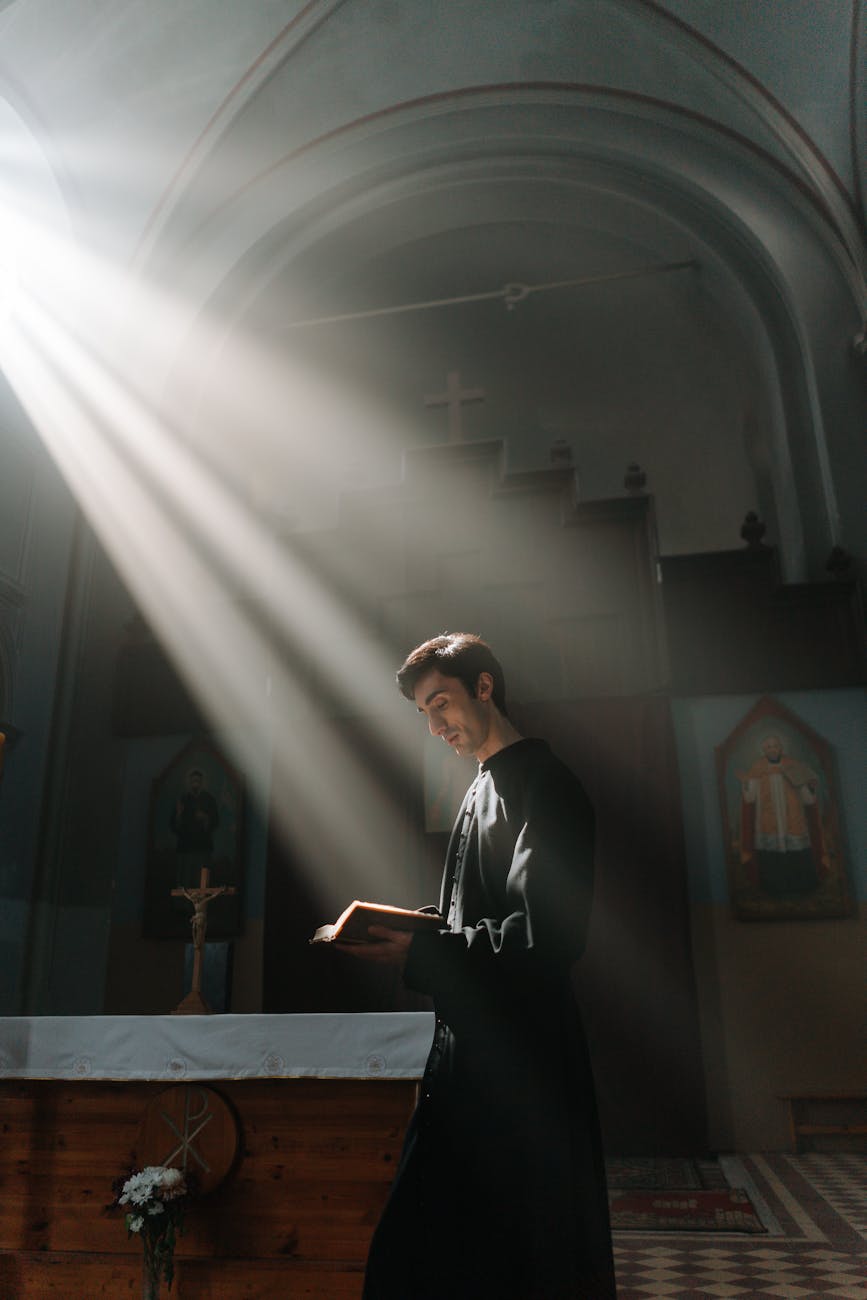
StMaurice2 (1)The name is also borne by a very popular 3rd century saint. St. Maurice was an Egyptian by birth and a Roman citizen. He served in the Roman army and was apart of the Theban legions, which had been stationed in Switzerland at the time of the saint’s martyrdom. According to legend, Emperor Maximian ordered Maurice and his legions to destroy a local Christian community, when Maurice and his followers refused to harass fellow Christians, the emperor ordered them to be executed. The area of martyrdom is now known as Saint Maurice-en-Valais and the Abbey of Saint Maurice-en-Valais supposedly houses the saint’s relics.

800px-St._Moritz_by_nightThe saint also gave his name to another town in Switzerland: St. Moritz, (Top of the World), is a beautiful little resort town that sits in the Valley of Engadine and the canton of Graubünden. Their coat of arms actually features the legendary saint. St. Maurice is also venerated among Coptic Christians. In fact, the names Maurice and Maurikios are fairly common among Egyptian Christians.

The German form of Moritz is found in the popular German children’s series Max and Moritz written by Wilhelm Busch in 1865. The humorous duo is still a common pop icon in German speaking countries. Other notable appearances include a novel by E.M. Forster, (Maurice) written in 1913, a tale of same sex love in early 20th-century England.

The Island of Mauritius or L’île Maurice in French, is a former French colony off the coast of Africa. It was named in honor of Prince Maurice of Nassau, the Stadtholder of the Netherlands.

The designated name-day is September 22

Currently, Maurice is the 150th most popular male name in Germany, (2011), and he still lurks within the U.S top 1000 coming in as the 445th most popular male name, (2010).

Other forms of the name include:

  • Morik Մորիկ (Armenian)
  • Moïc (Breton)
  • Maurici (Catalan)
  • Maurikios (Coptic/Greek)
  • Maric Мариц (Croatian/Serbian)
  • Maurits (Dutch/Scandinavian)
  • Mauri (Finnish)
  • Maur (French)
  • Maurice (French/English)
  • Moriz (German: archaic)
  • Moritz (German/Scandinavian)
  • Móric (Hungarian/Slovakian)
  • Mór (Hungarian)
  • Muiris (Irish)
  • Maurizio (Italian)
  • Mauro (Italian/Portuguese/Romansch)
  • Mauritius (Late Latin)
  • Maurus (Latin/Romansch)
  • Morics (Latvian)
  • Maurycy (Polish)
  • Maurício (Portuguese)
  • Maurin (Romansch)
  • Murezi (Romansch)
  • Murezzan (Romansch)
  • Mauricio (Spanish)
  • Meuric/Meurig (Welsh)

Its feminine counterparts are Maura, Mauricia and Maurizia.

Common English short forms are  Maury, Moe and Morry.

Cillian, Killian

Gender: Masculine
Origin: Gaelic
Meaning: debated
(KILL-yen); (KIL-lee-en)

The name is either derived from the Gaelic, keallach, meaning, “strife,” or the word, ceall meaning, “church; monastery.”

Killian is usually the anglicized version and its one of the few Irish names used outside the English speaking world. It has been in usage in Germany, Poland and France, no doubt, due to the associations with the saint.

It was borne by Saint Killian, the author of the Life of St. Bridget, he was also a missionary to Artois and Franconia and is considered the patron saint of Franconia.

In modern day Bavaria, the name is still quite popular, often rendered as Kilian.

The name is also borne by actor Cillian Murphy.

Kelly is occasionally used as a nickname.

The feast day of St. Killian is July 8.

Currently, Cillian is the 21st most popular male name in Ireland, (2010). His rankings in other countries are as follows:

  • # 43 (Austria, Kilian, 2010)
  • # 62 (Northern Ireland, Cillian, 2010)
  • # 62 (Ireland, Killian, 2010)
  • # 88 (Germany, Kilian, 2011)
  • # 110 (France, Killian, 2009)
  • # 173 (France, Kilian, 2009)
  • # 763 (United States, Killian, 2010)

Other forms include:

  • Quilià (Catalan)
  • Killianus (Dutch/Latin)
  • Killian (English)
  • Kelian (French)
  • Kilien (French)
  • Kilian (German/French/Polish/Romanian)
  • Cillín (Irish-Gaelic)
  • Chiliano (Italian)

Obscure feminine forms include:

  • Kiliane (French)
  • Kiliana (Polish)

Fionnghall, Fingal

800px-Staffa_Fingal's_Cave_14712Gender: Masculine
Origin: Irish/Scottish/Swedish
Meaning: “white stranger, fair stranger.”

The name is from the Gaelic fionn meaning “white; fair” and gall meaning “stranger.” In Ireland, it is the name of an area in county Dublin, it was settled by Vikings in the early middle ages, and the name Fingal was given in reference to the fair-haired inhabitants. A language known as Fingalian, (now extinct) was spoken by the inhabitants till the mid-1800s. It was a mix of Old Norse, Anglo-Saxon and Gaelic. It was also the name of the hero in the English prose epic written by James Macpherson known as the Poems of Ossian and was the middle name of Oscar Wilde. In the Inner Hebrides of Scotland, it is the name of a cave on the uninhabited Isle of Staffa. It was popularized as a tourist destination after Felix Mendelsohn composed an overture in 1829, entitled Die Hebriden, which were inspired by the echoes he heard in the cave. In Sweden, its designated name-day is October 17.

Tola

autumn_d2ofFzMkZ601

The name can either be a Polish diminutive form of Antonina, a Sanskrit name meaning “balance” or a Khmer name meaning “October.” Coincidentally, spelled Tóla, it is an Irish male name meaning “flood” or “abundance” and is the name of a Saint, also known as Tolanus or Thola.

Matthew

Matthew_Evangelist

Gender: Masculine
Origin: Hebrew
Meaning: “Gift from Yahweh.”

A bit dull and overused, he sits in the U.S  Top Ten. He is quite a hit in other English speaking countries as well. Just over the border in Canada, he comes in even higher at # 6. Down under in Australia, he comes in at # 16. While in Great Britain and Ireland he sits at # 24. Over in Bonnie Scotland # 9 and in the Republic of Northern Ireland he comes in at the highest at resting at # 2. Matthew may seem to be just the ordinary every day guy type of name, but the name itself has avery long and rich history. Matthew is the English form of the Latinization Mattheus a translation of the Greek Μαθαιος (Mathaios). Mathaios is a vulgar Greek transliteration of the Aramaic diminutive name Maty or Mattay מתי which is ultimately derived from the Hebrew name Matatyahu or Mattathias מתתיהו. Other Biblical forms of the name include Matanyahu מתניהו and Netanyahu נתניהו. Yehonatan, the original form of Jonathan, is an anagram Netanyahu. The name was introduced into the Western World through the veneration of  St. Matthew the Evangelist. He was one of the 12 Apostles of Christ and is credited by most Christian denominations as the author of the Gospel of Matthew. In the Western Churches, St. Matthew’s feast is held on September 21, while in the Eastern Calender it is set for November 16th. We cannot forget the different variations the name has spun off over the centuries. Including the following:

  • Mathyu (Arabic)
  • Mateu (Catalan)
  • Matiša (Croatian)
  • Matouš (Czech)
  • Mads (Danish): originally a diminutive form, now used as an independent name throughout Scandinavia
  • Matthieu (French): 98th most popular name in Belgium and 48th most popular name in France (2006)
  • Maitiú (Gaelic)
  • Matthäus (German)
  • Makaio (Hawaiian)
  • Máté (Hungarian): Máté was the 2nd most popular male name in Hungary of 2005
  • Matteo (Italian)
  • Matiss (Latvian)
  • Modris (Latvian)
  • Matas (Lithuanian)
  • Mats (Norwegian/Swedish): Orginally a diminutive form, now used as an independent given name
  • Mateusz (Polish)
  • Mateus (Portuguese)
  • Matej (Czech-Slovak/Slovenian/Croatian): In Slovenia, Matej was the 22nd most popular male name of 2005. In the Czech Republic and Slovakia, this name is used in reference to the Apostle Mathias who replaced Judas Iscariot and not in reference to the Apostle Matthew the Evangelist. In Croatia and Slovenia, Matej is used in reference to the latter.
  • Mateja (Serbian): In Slovenia Mateja is considered the feminine form of Matej
  • Matúš (Slovakian)-this form is used to refer to St. Matthew the Apostle
  • Matevz (Slovenian): 38th most popular name in Slovenia (2005)
  • Mateo (Spanish)-In the United States Mateo came in #251 in the popularity charts. In Spain he stands at #73 (2006). Chile at # 65 (2006) and France he comes in at # 67 (2006).
  • Matteus (Swedish/Norwegian)
  • Matfey (Russian)

You are probably wondering why I have not mentioned Mathias or Matthias. Though Mathias/Matthias are related etymologically to Matthew, I felt that they deserved a post all of their own. Therefore, stay tuned, and I will further discuss them in a future installment. An older English form of the name includes Mathew. Matt is the most popular diminutive form used in the English speaking world.