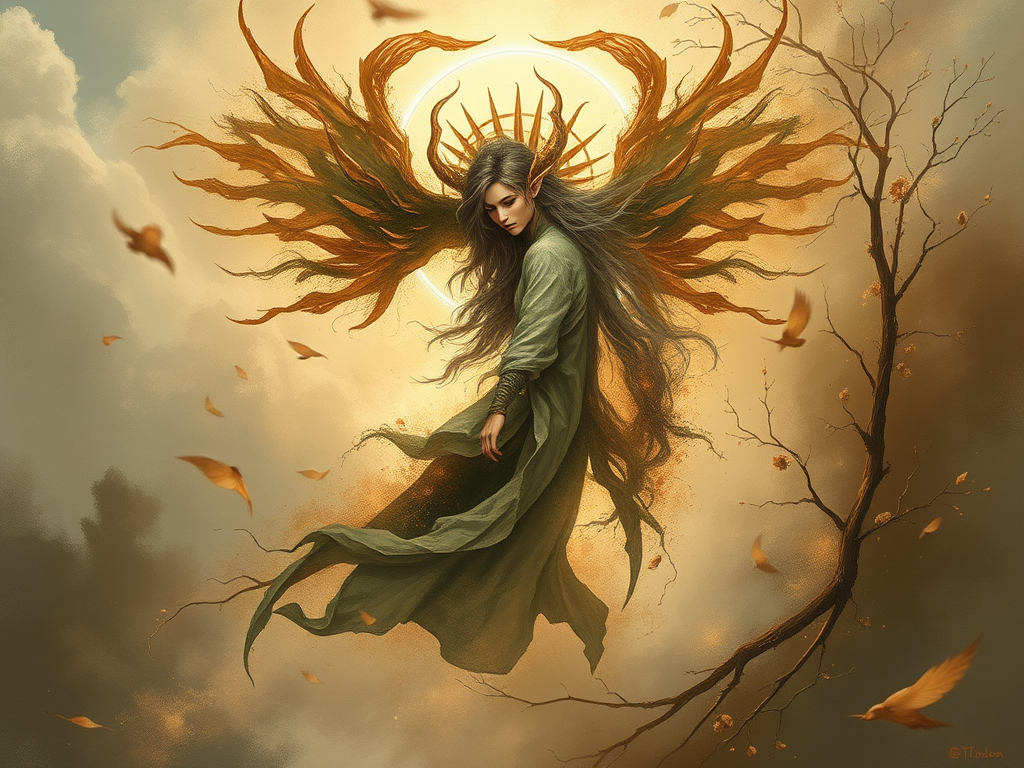
- Origin: Irish-Gaelic
- Meaning: “dun, pale, sallow, greenish-grey.”
- Masc pron: Masc. (AW-rawn); Fem (AR-net)
Both names are rooted in the Old Irish adjective odhar, meaning “dun, pale, sallow, greenish-grey.” The word originally described earthy or muted colors — the shade of an animal’s coat, or a green-brown hue in nature.
Odhrán (modern spelling in Irish, often Anglicized as Oran or Orin) is a diminutive form: odhar + -án, meaning “little pale one” or “little sallow/greenish one.”
Odharnait is the feminine form, built from odhar + –ainait, a feminine diminutive ending.
Odhrán is well-attested in medieval Ireland. A 6th-century saint named Odhrán of Iona (also called Odran) was a companion of St. Columba and is remembered as one of the first Irish Christian martyrs. His feast day is celebrated on October 27.
Anglicized Male Variations
- Odran
- Otteran
- Oran, Oren, Orrin
Anglicized Female Variations
- Eorna
- Odarnata (Latinized)
- Odarnat
- Orna, Ornat
Sources
- https://www.behindthename.com/name/odhra10n
- https://www.teanglann.ie/en/fgb/odhar
- https://en.wikipedia.org/wiki/Odran_(disciple_of_Saint_Patrick)
- https://www.catholic.org/saints/saint.php?saint_id=4888
- https://www.scottish-places.info/people/famousfirst4166.html
- https://www.behindthename.com/name/odharnait
- https://irelandxo.com/ireland-xo/news/old-irish-gaelic-girl-names-nicknames