Adam

Gender: Masculine
Origin: Hebrew
Meaning: “man”

The name is found in the Old Testament as the name of the first man created by God. Whether Adam is used as a personal name or in a generic sense is up to debate, many Biblical scholars agree that the authors of Genesis were not using Adam as a personal name, but more of a generic term.

Though in modern Semitic languages, the modern word for man is many times Adam, or Ben-Adam (son of Adam), its actual etymology is also debated. Some believe it is ultimately derived from the Hebrew אדם (‘adam) meaning “red” referring either to human skin tone, or to the colour of earth, which in the Bible, is what God created Adam from. Other sources suggest that it may be related to an Akkadian source, Adamu, meaning “to make.”

The name is a popular choice among Christians, Jews and Muslims alike. In Europe, it has been in use since the early Middle Ages. Among Christians, Christ is often given the title of the “New Adam.”

Its designated name-day, along with Eve, is usually December 24.

Currently, Adam is the # 78th most popular male name in the United States. In other countries, his rankings are as follows:

  • # 35 (Australia, 2007)
  • # 28 (Belgium, 2006)
  • # 47 (Canada, BC, 2008)
  • # 8 (Czech Republic, 2008)
  • #32 (England/Wales, 2008)
  • # 34 (France, 2006)
  • # 7 (Hungary, 2008)
  • # 7 (Ireland, 2008)
  • # 10 (Israel, among Muslim boys, 2004)
  • # 1 (Israel, among Druze boys, 2004)
  • # 76 (the Netherlands, 2008)
  • # 6 (Northern Ireland, 2009)
  • # 19 (Scotland, 2008)
  • # 75 (Spain, 2006)
  • # 28 (Sweden, 2007)

In addition, the Adam form is also used in Armenian, Bulgarian, Catalan, Croatian/Serbian, Czech, Danish, Dutch, German, Icelandic, Polish, Romanian, Slovakian and Slovenian.

Other forms of the name include:

  • Adami (Albanian)
  • Ādam آدم (Arabic)
  • Adəm (Azeri)
  • Adame (Basque)
  • Adem (Bosnian/Kurdish)
  • Aadam (Estonian)
  • Ádam (Faroese)
  • Aadam/Aatami (Finnish)
  • Adám Αδάμ (Greek)
  • Akamu (Hawaiian)
  • ʼĀḏām אָדָם (Hebrew: Modern)
  • Ádám (Hungarian)
  • Ádhamh/Ádam (Irish)
  • Adamo (Italian)
  • Adamus (Latin)
  • Ādams (Latvian)
  • Adomas (Lithuanian)
  • Adamu (Old Church Slavonic)
  • Adão (Portuguese)
  • Aden/Adom (Romansch)
  • Adam Адам (Russian/Ukrainian)
  • Adàmu (Sardinian)
  • Addamu (Sicilian)
  • Aadam (Somalian)
  • Adán (Spanish, ah-DAHN)
  • Adan (Tagalog)
  • Âdem (Turkish)
  • Odam (Uzbek)
  • Adda (Welsh)

A feminine version is the Spanish and Scotch, Adamina.

A Polish diminutive form is Adaš

Lazarus

Gender: Masculine
Origin: Aramaic/Greek

Lazarus is Biblical name that has never really caught on in the English speaking world, he has a morbid and Gothic vibe, he has that feel that belongs in an Anne Rice or Stephanie Meyer novel.

The name is derived from the Greek, Lazaros (Λαζαρος), which is a form of the Aramaic, Lazar. Lazar is in turn an Aramaic form of the Hebrew, male name, Eleazar אלעזר, Elʿāzār, meaning “God’s assistance” or “God has helped.”

I shall go into Eleazar in a separate posting, for now, I shall just focus on Lazarus and his variants, since, he seems to have created a persona all of his own.

In the New Testamant, the name Lazarus is mentioned twice, the strongest association has to be with Lazarus of Bethany, who is mentioned in the Gospel of John as a man who was miraculously resurrected from the dead by Jesus. Another Lazarus is the subject of Jesus’ parable Lazarus and Dives, (recounted in the Gospel of Luke).

In Eastern Orthodox and Catholic traditions, Lazarus of Bethany is revered as a saint, and later apocryphal accounts of his life became popular. Among Eastern Christian traditions, it is believed that Lazarus sailed off to Cyprus to evangelize the inhabitants where he later became the first Bishop Kittim, (Larnaka), other traditions have Lazarus and his sisters relocating to Provence, France, where it is said that he became the first Bishop of Marseilles.

Other forms of the name include:

  • Llàtzer (Catalan)
  • Lazar Лазарь/Лазар (Croatian/Czech/Bulgarian/Serbian/Russian/Ukrainian)
  • Lazarus (English/Danish/Dutch/German/Latin/Norwegian/Swedish)
  • Lasarus (Finnish/Swedish/Norwegian)
  • Lazare (French: lah-ZAHR)
  • Lazaros Λαζαρος (Greek)
  • Lázár (Hungarian)
  • Lazzaro (Italian)
  • Lozorius (Lithuanian)
  • Łazarz/Lazarz (Polish: WAH-zahsh/LAH-zahsh)
  • Lázaro (Portuguese/Spanish: LAH-sah-roh Latin American Spanish; LAH-thah-ro Iberian Spanish)
  • Lazár (Slovak)
  • Lasaros (Swedish)

Spanish feminine forms are Lázara and Lazarina.

The designated name-day is December 17.

Judah/Jude/Judith

Origin: Biblical Hebrew
Meaning: “celebrated; praise.”

Judah is a Greek form of the Hebrew name, Yehuda יְהוּדָה, which is the name of several characters in the Old Testament and at least two figures in the New Testament. In the Old Testament, the original Judah was said to be the fourth son of Leah and Jacob, the progenitor of the Judah tribe, and he is also traditionally believed to be a direct ancestor of Jesus. In Biblical Greek, Judah, Judas and Jude were all interchangeable, since in Greek, Yehudah was translated as Ioudas, but for convenience sake, especially in English, Judas is usually used to refer to the ex Apostle, Judas Iscariot, who is known for his betrayal of Christ, and due to these associations, this form of the name has extremely dubious connotations, especially among Christians. However, Jude is used in reference to another apostle, known as St. Jude Thaddeus, who is a very popular saint among Roman Catholics.

In Jewish circles, Judah is usually used in reference to the tribe, or in reference to Judah, the fourth son of Leah and Jacob. It is sometimes bestowed upon boys born around the festival of Hanukkah, which is used in honour of Judah Maccabeus, who is considered to be one of the greatest warriors in Jewish history. He was the son of Mattathias, a Cohen, and was known for his uprising against the Seleucid Empire in 167 BCE-160 BCE. The Jewish feast and holiday, known as Hanukkah, (Hebrew for “dedication”), commemorates the restoration of the temple in Jerusalem after Judah Maccabeus removed Pagan statuary from the Temple.

The name Jude has increased in popularity the last 10 years, as of 2008, he ranked in as the # 224th most popular male name in the United States.

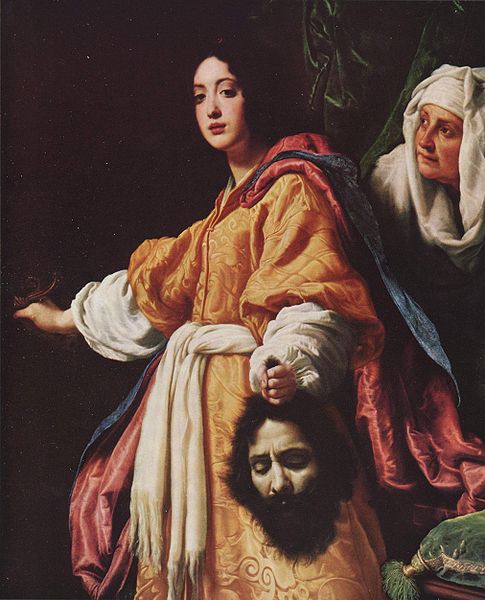
Its feminine form of Judith, Hebrew יְהוּדִית Yehudit, was borne in the Old Testament by a wife of Esau, but is probably most closely associated with the protagonist found in the Book of Judith, which is a deuterocanonical book, included in the Septuagint and in the Roman Catholic and Eastern Orthodox Christian Old Testament of the Bible. The book is rejected by Protestant Christians and Jews since it is mostly apocryphal and believed to be more of a morality tale versus anything based on historical fact, however, though the book is not considered historically accurate by Jews, Judith remained a popular Jewish heroine and symbol. In fact, the name’s popularity among Jews is probably more in association with her than of the wife of Esau. Judith is known for her beheading of the evil, Assyrian invader, Holofernes. She was a popular subject of artists for centuries.

The name experienced some usage in Catholic Europe during the Middle Ages, since Judith was considered as much a heroine among Christians as she was among Jews. The highest Judith ranked in the U.S. popularity charts, was at # 4 in 1940. As of 2008, she ranks in at a measly # 713. In 2006, she was the 6oth most popular female name in Spain.

Other forms of Judah and Jude include:

  • Chudas (Aragonese)
  • Judes (Catalan)
  • Judas (Danish/Dutch/German/Lithuanian/Norwegian/Portuguese/Spanish/Swedish: Portuguese ZHOO-dazh)
  • Jude (English/French)
  • Juudas (Finnish)
  • Juda (German/Czech/Croatian/Slovene)
  • Ioudas Ιουδας (Greek: Modern/Biblical)
  • Yehudah יְהוּדָה (Hebrew)
  • Júdás (Hungarian)
  • Yudas (Indonesian)
  • Iúdás (Irish)
  • Giuda (Italian)
  • Yuda (Kiswahili)
  • Iudas (Late Latin)
  • Juda/Judasz (Polish)
  • Júda (Slovakian)
  • Judá (Spanish/Portuguese: Spanish hoo-DAH, Portuguese zhoo-DAH)
  • Hudas (Tagalog/Filipino)
  • Yudel/Yidel (Yiddish)

Other forms of Judith include:

  • Ioudith Ιουδιθ (Biblical Greek)
  • Iudith (Biblical Latin)
  • Jitka (Czech: originally a diminutive form, now used as an independent given name YEET-kah).
  • Judita (Czech/Romansch/Slovak/Slovene)
  • Júdit (Czech)
  • Judit (Danish/Catalan/Hungarian/Norwegian/Spanish/Swedish)
  • Jytte (Danish)
  • Jutka (Dutch/Hungarian: originally diminutive forms, used as independent given names)
  • Juut (Dutch)
  • Judith (English/Dutch/Icelandic: English nickname is usually Judy)
  • Juudit/Juta (Estonian)
  • Judith/Judithe (French: diminutive is Juju)
  • Xudit (Galician)
  • Juditha (German: Jüdie is a diminutive form)
  • Jutta/Jutte (German/Dutch/Polish: originally a diminutive form, used as an independent given name, now considered dated)
  • Yehudit יְהוּדִית (Hebrew)
  • Yudit (Indonesian)
  • Giuditta (Italian: joo-DEET-tah)
  • Yuditi (Kiswahili)
  • Ita (Polish)
  • Judyta (Polish: yoo-DIH-tah)
  • Judite (Portuguese/Latvian: Portuguese pronunciation: zhoo-DEET, Brazilian Portuguese zhoo-JEE-che )
  • Juditta (Romansch)
  • Yudif/Yudita (Russian)
  • Judetta/Judina (Spanish)
  • Hudes (Yiddish)
  • Yutke (Yiddish)

Other notable bearers of the name include Judah Benjamin (1811-1884), former Attorney General of the Confederacy and the first Jewish American to be seriously considered for the Supreme Court and the first Jewish American to serve as a U.S. Senator. It is also borne by British actor, Jude Law (b.1972).

Notable Judiths include:

Judge Judith Scheindlin (b. 1942) an American judge, TV personality and author, and Judy Jetson of the 1950s cartoon series, The Jetsons.

Designated name-days are: October 28 (France: for Jude), May 5 (France: Judith), December 5th (Czech Republic), December 10 (Estonia, Hungary and Latvia).

Axel

Gender: Masculine
Origin: Scandinavian
Meaning: debated

The name has long been considered a Danish form of the Biblical Absalom (father of peace), the usage of Absalom as a cognate of Axel was first used by the bishop Absalom Hvide (1128-1201), it has been suggested that Absalom was merely the closest sounding Christian equivalent to the Old Norse Áskell (god cauldron; god helmet), which was the Bishop’s true name, and that Axel and Absalom were considered one and the same thereafter. Other sources suggest that it is related to an old Germanic source meaning “shoulder” which would signify strength.

The name is in prevalent usage throughout Scandinavia and is used in German and Spanish-speaking countries and is occasionally used in the United States and France. It was the 16th most popular name for boys  in Sweden in 2007.  In France, it was the 27th most popular name for boys in 2006. In the United States it ranks in at # 272 as of 2008.

The designated name-day in Denmark and the Faroe Islands is October 30.

Other forms of the name include:

  • Aksel (Danish, Faroese, Norwegian, Yiddish)
  • Axelen/Axeln/Axilan/Axlan (Danish)
  • Aksal (Faroese)
  • Akseli (Finnish)
  • Áksel (Saami)
  • Acke (Swedish diminutive form)

Feminine forms include

  • Axeline (Danish)
  • Axelle (French)
  • Akseliane/Akseline (Norwegian)
  • Axelia/Axelina (Swedish)

Salome

407px-GustavemoreauGender: Feminine
Origin: Aramaic
Meaning: “peace.”
(SAH-loh-MAY)

The name is derived from the Greek Σαλωμη which is from an Aramaic name that was related to the Hebrew word שָׁלוֹם (shalom). The name is associated with the notorious daughter of Herodias who danced for King Herod and was rewarded by dancing with the head of John the Baptist on a platter. Though it was the name of a Herodias’ daughter, the name was used by Christians in reference to the handmaid of the Virgin Mary, (mentioned in the New Testament), who witnessed the Crucifixion, and is considered a saint by the Catholic Church and Orthodox Church. The name was also borne by Salome Alexandra (136-67 BCE) who was the only Jewish regnant queen in history. In Jewish sources she is known as Shalomzion שְׁלוֹמְצִיּוֹ. There are a few other characters in the New Testament mentioned with the name Salome, and it seems to have been common in the Jewish royal family. The name has experienced prevalent usage in Poland, Germany, France, Spain and Portugal.

It was borne by Blessed Salomea (sometimes spelled Salomeja) also known as Salomea of Krakow and Błogosławiona Salomea in Polish, was a Polish princess (1211-1268) and upon being widowed entered the Poor Clares. She is up for canonization. In Polish literature it is the name of a character in Stefan Żeromski‘s 1912 classic the Faithful River (Wierna Rzeka). Polish diminutive forms are Meja, Salcia, Salka, Salomejcia and Salusia (thanks to Magdalena for contributing the latter two diminutive forms). The name is also borne by a famous Lithuanian poetess Salomėja Nėris (1904-1946) and a famous Ukrainian opera singer Salomiya Kruscelnytska (1872-1952).

The designated name-day is October 22.

Other forms of the name include:

  • Saloma (Croatian/Faroese)
  • Salome (Dutch/German/English/Latvian)
  • Saalome (Estonian)
  • Salomé (French/Portuguese/Spanish)
  • Salomi (Greek Modern)
  • Shlomtzion (Hebrew Modern)
  • Szalóme (Hungarian)
  • Salóme (Icelandic)
  • Salomè/Salomina (Italian: latter form was originally a diminutive form: thanks to Magdalena for contributing the info)
  • Salomėja (Lithuanian)
  • Salomea (Polish/Czech/Romanian/Romansch/Slovak)
  • Salomeja (Polish)
  • Saloména (Slovakian)
  • Solomia (Slovakian)
  • Salomiya (Ukrainian)
  • Saltscha (Yiddish)

Oren

Gender: Masculine
Origin: Hebrew
Meaning: “ash tree; pine tree.”
אֹרֶן
(oh-rehn)

The name was originally a Biblical name, in old Hebrew the name possibly meant “ash tree” while in modern Hebrew it has evolved into meaning “pine tree.” In the Old Testament, Oren is a minor character, the son of Jerahmeel 1 Chroncles 2:25. The name is fairly common in Israel. A feminine form is Orna אָרְנָה

Matthew

Matthew_Evangelist

Gender: Masculine
Origin: Hebrew
Meaning: “Gift from Yahweh.”

A bit dull and overused, he sits in the U.S  Top Ten. He is quite a hit in other English speaking countries as well. Just over the border in Canada, he comes in even higher at # 6. Down under in Australia, he comes in at # 16. While in Great Britain and Ireland he sits at # 24. Over in Bonnie Scotland # 9 and in the Republic of Northern Ireland he comes in at the highest at resting at # 2. Matthew may seem to be just the ordinary every day guy type of name, but the name itself has avery long and rich history. Matthew is the English form of the Latinization Mattheus a translation of the Greek Μαθαιος (Mathaios). Mathaios is a vulgar Greek transliteration of the Aramaic diminutive name Maty or Mattay מתי which is ultimately derived from the Hebrew name Matatyahu or Mattathias מתתיהו. Other Biblical forms of the name include Matanyahu מתניהו and Netanyahu נתניהו. Yehonatan, the original form of Jonathan, is an anagram Netanyahu. The name was introduced into the Western World through the veneration of  St. Matthew the Evangelist. He was one of the 12 Apostles of Christ and is credited by most Christian denominations as the author of the Gospel of Matthew. In the Western Churches, St. Matthew’s feast is held on September 21, while in the Eastern Calender it is set for November 16th. We cannot forget the different variations the name has spun off over the centuries. Including the following:

  • Mathyu (Arabic)
  • Mateu (Catalan)
  • Matiša (Croatian)
  • Matouš (Czech)
  • Mads (Danish): originally a diminutive form, now used as an independent name throughout Scandinavia
  • Matthieu (French): 98th most popular name in Belgium and 48th most popular name in France (2006)
  • Maitiú (Gaelic)
  • Matthäus (German)
  • Makaio (Hawaiian)
  • Máté (Hungarian): Máté was the 2nd most popular male name in Hungary of 2005
  • Matteo (Italian)
  • Matiss (Latvian)
  • Modris (Latvian)
  • Matas (Lithuanian)
  • Mats (Norwegian/Swedish): Orginally a diminutive form, now used as an independent given name
  • Mateusz (Polish)
  • Mateus (Portuguese)
  • Matej (Czech-Slovak/Slovenian/Croatian): In Slovenia, Matej was the 22nd most popular male name of 2005. In the Czech Republic and Slovakia, this name is used in reference to the Apostle Mathias who replaced Judas Iscariot and not in reference to the Apostle Matthew the Evangelist. In Croatia and Slovenia, Matej is used in reference to the latter.
  • Mateja (Serbian): In Slovenia Mateja is considered the feminine form of Matej
  • Matúš (Slovakian)-this form is used to refer to St. Matthew the Apostle
  • Matevz (Slovenian): 38th most popular name in Slovenia (2005)
  • Mateo (Spanish)-In the United States Mateo came in #251 in the popularity charts. In Spain he stands at #73 (2006). Chile at # 65 (2006) and France he comes in at # 67 (2006).
  • Matteus (Swedish/Norwegian)
  • Matfey (Russian)

You are probably wondering why I have not mentioned Mathias or Matthias. Though Mathias/Matthias are related etymologically to Matthew, I felt that they deserved a post all of their own. Therefore, stay tuned, and I will further discuss them in a future installment. An older English form of the name includes Mathew. Matt is the most popular diminutive form used in the English speaking world.

Lydia

Gender: Feminine
Origin: Latin/Greek
(LID-dee-uh)

Lydia has a sweet feminine vibe. Its classic without sounding too stuffy. Lydia could work just as well on a five month old as it would on a 55 five year old. It has the same feel as the popular Olivia and it wouldn’t be surprising if Lydia soon took Olivia’s place. Lydia currently stands as the 120th most popular female name in the United States.

As for Lydia’s history, it first appears as a given name in the New Testament. It was the name of a woman who had converted to Christianity after befriending St. Paul. Some scholars believe that Lydia was not her actual name, rather, it was a nickname to denote her place of origins, (Lydia in Asia Minor).

Lydia is a Greek word for an ancient country, known in Assyrian as Luddu, this particular’s country’s culture and language has been lost to history and speculation. The Greeks talked quite a bit about it, and in the Bible it is often refered to as Lud.

Lydia has multiple forms, including:

  • Lidiya Лидия (Bulgarian/Russian: Lidochka is a Bulgarian diminutive form)
  • Lídia (Catalan/Hungarian/Portuguese/Spanish)
  • Lýdie (Czech: LEED-yeh)
  • Lydia Λυδια (English/Estonian/Greek)
  • Lii/Ly (Estonian)
  • Liidia/Liidi (Estonian)
  • Lyydia/Lyyti (Finnish)
  • Lydie (French: LEE-DEE)
  • Lida (Hungarian)
  • Licia (Italian: lee-CHEE-ah).
  • Lidia (Polish/Italian/Romansch: a Polish diminutive form is Lidka.)
  • Livli (Sami)
  • Lýdia (Slovakian)
  • Lidija (Slovene/Croatian: diminutive forms are, Lidonka, Lidunka and Liduška)

In other Continental European countries, the name is usually rendered the same as it is in English. In German speaking countries its pronounced (LUY-dee-ah). Its designated name day is August 3rd.

Martha, Marta, Marthe

Origin: Aramaic
Meaning: “lady.”
Eng (MAR-thuh); (MAR-tah); Fre (MAHRT)

Vintagy, classic and a bit waspy, Martha brings to mind quaint housewives of Connecticut and solid first ladies.

The name traces its origins back to the New Testament, being the name of the sister of Lazarus and Mary of Bethany. It seems almost fitting that she is the patron saint of cooks! It is derived from the Aramaic word martâ מַרְתָּא meaning “lady”

Its continental form of Marta, has a sweet, exotic appeal. Martha might feel a bit too heavy and clunky for a comeback, but Marta certainly has potential. Other forms include:

  • Marte (Basque)
  • Marta(Catalan/Bulgarian/Croatian/Czech/Georgian/Italian/Norwegian/Polish/Romanian/Serbian/Slovakian/Slovene/Swedish
  • Martta (Finnish)
  • Marthe (French: MAHRT)
  • Martje (Frisian: MAHRT-ye)
  • Marta/Marthe/Martha (German/Dutch: MAHR-te/MAHR-tah)
  • Martha Μαρθα (Greek)
  • Martâ מרתא (Hebrew)
  • Márta (Hungarian)
  • Morta (Lithuanian)
  • Marte (Norwegian: MAHR-te)
  • Marfa Марфа (Russian)
  • Märtha (Swedish: MARE-tah).

The name was borne by Martha Washington, the first First Lady of the United States and was borne by several other St. Marthas. Of course, how can we ever forget Martha Stewart.

A Spanish diminutive form is Martita, a Hungarian diminutive form is Mártuska. Polish diminutives are: Marusza MarchwaMarocha, Marsza, Marszka, Marucha, Maruchna, Maruszka

Magdalena, Madeleine, Madeline

Gender: Feminine
Origin: Latin
Meaning: “of Magdala.”

We have the exotic and sophisticated Magdalena, the French classic Madeleine and the English trend setter Madeline.  The origins of these names go all the way back to the Bible, the New Testament to be exact. It is derived from a title given to the famous Catholic saint, Mary Magdalen, also known as Mary of Magdala. Magdala, being the town that the former prostitute turned follower of Christ, hailed from, a town on the sea, near Galilee, its meaning being “tower.”

In the Middle Ages, St. Mary Magdalen was a beloved saint, making the name popular in virtually every European country, evolving into myriad different forms. The cult of St. Mary Magdalen was especially popular in France, where she was known as La Madeleine (lah mah-deh-LEN). In fact, tradition holds that, after the death of Christ, Mary Magdalen travelled to France, where she converted many of the early inhabitants to the new faith. She is considered one of France’s patron saints and it is believed that her bones were buried in France. La Madeleine gave her name to several communes in France as well as a river. It is even the name of a famous French pastry.

While you are out rushing to work, standing in line, getting your daily fix of Starbucks, you may notice that at the front counter there are packages of a soft little sponge-like cookie. These are madeleines or petit madeleines. They are a popular snack in France, made from lemon and butter, and are known for their distinctive shell shape. Legend has it that they acquired their name from the lady who invented them, Madeleine Paulmier. They are a delightful little treat, and I recommend that the next time you are at Starbucks, you should try them yourself.

Likewise, Madeleine has been a very popular choice in Great Britain and currently ranks in as the 80th most popular feminine name in Britain and Wales for 2007, while in its home country of France, it comes in rather low. It was the 454th most popular feminine name in France for 2006.

Let us not forget the fun and sweet version of Madeline (MAD-eh-LINE), Madeline seems to be specifically a North American version of the French form. Originally pronounced (MAD-eh-LIN), its preferred pronunciation has switched over to the former in the last decade, no doubt due to the popular children’s series of books of the same name.

Madeline has been quite popular the last few years, she ranked in at a whopping 61 in the 2007 most popular feminine names in the United States. She has also made her mark in other non-British English speaking countries, such as Canada and Australia. In Canada she came in at 85, while in Australia 93.

There is also the trendified corrupted form of Madelyn, which currently comes in at # 104, however, it is advisable to use the French spelling if you prefer the (Mad-eh-lin) pronunciation, which seems to be the goal of the parents of the Madelyns.

Nicknames include Maddie, Leine and Lynn. The name is borne by Princess Madeleine of Sweden, Madeleine Albright, and author Madeleine L’Engle.

Let us now move on to its Eastern European alternative of Magdalena (MAHG-dah-LAY-nah). This form is used in Spain, the Czech Republic, Slovakia, Bulgaria and Poland. It is especially popular in both Poland and the Czech Republic where it is often shortened to Magda, and occasionally Lenka. There are the Czech spin offs of Alenka and Madlenka, used as an independent name.

Magdalena might be appealing to English speaking parents who love the nickname Maggie but really dislike Margaret. On top of that, it can be shortened to appealing and trendy Laney or even Lena.

Other forms of the trio include:
  • Magdalawit (Amharic/Eritrean)
  • Maialen (Basque: MY-ah-LEN)
  • Madenn (Breton)
  • Miglena (Bulgarian)
  • Alena (Czech-Slovak and occasionally used in Germany. Diminutive form is Alenka)
  • Magdaléna (Czech)
  • Mahulena (Czech: a form created by Czech author, Julius Zeyer, for his his Ráduz and Mahulena-1898)
  • Magdalene (Danish)
  • Magdalone/Malene/Lone (Danish)
  • Malle/Madli (Estonian pronounced MAHL-leh and MAHD-lee) other forms include Mall, Leen (LANE), Leena and Made (MAH-deh)
  • Matleena (Finnish pronounced maht-LAY-nah) diminutive forms now commonly used as independent names include: Leen, Leena and Lenita)
  • Magdeleine (French: archaic form)
  • Leni (German: originally a diminutive form, it has recently become trendy in German speaking countries as an independent name)
  • Madelene (German: mah-deh-LEH-neh: other forms include, Madlene and Madlen)
  • Magdalini (Greek Modern-pronounced mahg-dah-LEE-nee)
  • Magdolna (Hungarian, pronounced mog-DOH-noh) diminutive forms now popularly used as independent name in Hungary are Lenke (LEHN-keh) and Duci (DOOT-see).
  • Madalein (Irish-Gaelic)
  • Mailin (Irish-Gaelic)
  • Maddalena (Italian pronounced mahd-dah-LAY-nah. Other forms include Maida, Madina and Magdala)
  • Madala (Latvian) another form is Magone
  • Talena (Latvian/Scottish)
  • Maguelone (Occitanian)
  • Madalena (Portuguese pronounced mah-dah-LAY-nah)
  • Maclaina (Romansch pronounced mugg-LIE-nah) other Romansch forms include Madina, Madlaina (mudd-LIE-nah) and Madlena (mudd-LEH-nah).
  • Madalina (Romanian pronounced mah-dah-LEE-nah)
  • Magdalina Магдалина (Russian)
  • Manda (Serbo-Croatian/Macedonian/Slovene)
  • Madlena (Sorbian)
  • Malin/Målin (Swedish/Norwegian pronounced MAW-lin, other forms include Malena and Madicken (MAH-dee-KEN)
  • Mädi (Swiss-German: dialectical form from Bern MAD-dee)
  • Magdalyna (Ukrainian)
  • Madałena (Venetian)

Other popular offshoots include the English corrupted form of Madelaine (MAD-eh-LANE): given to the daughter of David Duchovny and Téa Leoni. The dated German forms of Marlene (Eng mar-LEEN; Germ mahr-LEH-neh) & Marla and the Polish Marlena.The designated name day for all of these names is July 22.

French diminutives are Mado and Madelon. Polish diminutive forms are: Madzia, Magda, Magdunia, Magdusia and Magdeczka. Hungarian diminutives are, Duci

There are a few Italian masculine forms and that includes, Maddaleno, Magdalo and Maido.