Polina

Gender: Feminine
Origin: Russian Полина
(pah-LEE-nah)

The name is somewhat of debated origin, it is believed to either be a short form of Apollonaria, now used as an independent given name, or it is believed to be a feminine form of Paul.

It is currently the 3rd most popular female name in Belarus, (2011) and her rankings in other countries are as follows:

  • # 5 (Russia, 2011)
  • # 7 (Ukraine, 2010)

Ruslan

Gender: Masculine
Origin: Russian Руслан
Meaning: uncertain
(ROOS-lahn)

The name is of uncertain origin or meaning but is believed to be of Turkic origins. It has sometimes been connected with the Turkish male name, Arslan (lion).

It was first used by Alexander Pushkin for his 1820 epic fairytale romance and poem, Ruslan & Ludmila.

The name has been used throughout Russia and Central Asia since.

It is currently the 18th most popular male name in Kazakhstan, (2010).

The feminine form is Ruslana.

Sabina

Gender: Feminine
Origin: Latin Сабина
Meaning: “Sabine.”
Eng (suh-BEE-nah; suh-BYE-nah).

The name comes from a Roman cognomen, Sabinus, which was usually carried by people of Sabine origins. The Sabines were an ancient Italic people who lived in Central Italy and whose culture was eventually absorbed by the Romans.

The name was borne by an early Christian saint and martyr. It is also the name of a region in Italy which takes its name from the tribe.

It is also the name of a genus of tree, which has probably further popularized the name.

The name could also be from the Arabic, sometimes transliterated as Sabeen, meaning “follower of another religion” and was said to be a name given to the Prophet Mohammed by non-Muslims.

Currently, Sabina is the 13th most popular female name in Kazakhstan, (2010), while Sabine is the 392nd most popular in the Netherlands, (2010).

The name is used throughout Europe and Central Asia.

Other forms include:

  • Sabien (Dutch)
  • Sabine (German/French)
  • Szabina (Hungarian)
  • Sabeena (Indian)
  • Savina (Italian)

Masculine forms include:

  • Sabino (Italian)
  • Savino (Italian)
  • Sabinus (Latin)
  • Sabin (Romanian)

A Czech and Polish diminutive is Sabinka.

Milena

Gender: Feminine
Origin: Slavic Милена
Meaning: “dear; gracious.”
(mee-LEH-nah)

The name is derived from the Slavonic element mil meaning “gracious; dear.”

The name is used in virtually every Slavic speaking country, and is currently the most popular female name in Armenia. It is also used in Brazil, Spanish-speaking countries, German-speaking countries, Italy and Hungary.

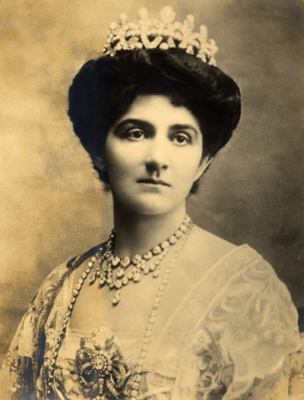
The name was introduced into Italy when King Emmanuel III of Italy married Milena Vukotić (1847-1923).

Her rankings in other countries are as follows:

  • # 2 (Romansch-speaking Switzerland, 2010)
  • # 25 (Poland, 2010)
  • # 32 (Poland, Warsaw, 2010)
  • # 50 (Brazil, 2010)
  • # 54 (Argentina, 2009)
  • # 73 (Germany, 2011)
  • # 353 (Netherlands, 2010)

The Bulgarian masculine form is Milen Милен.

Other forms of the name include:

  • Miléna (Hungarian)
  • Milica (Croatian/Serbian)
  • Mileva (Serbian)
  • Mylyca (Ukrainian)

Anna, Anne

Gender: Feminine
Origin: Biblical Hebrew
Meaning: “grace.”
(ANN; AHN). (ANN-uh; AHN-nah). (HANN-uh; HAHN-nah)

Anne is possibly one of the quintessential classic English and French female names. Prior to the 18th-century, it seems that every other girl born in England was either named Anne, Jane or Mary. There were several British and French queens who bore this simplistic moniker, including the ill fated Anne Boleyn, the mother of Elizabeth I. The history of Anne is rather long and complicated.

It was foremost popularized through the cult of St. Anne, a legendary figure who was said to be the mother of the Virgin Mary and the grandmother of Christ.

In Brittany, the name became especially popular because it happened to coincide with the name of an ancient Celtic goddess, her cult being replaced by St. Anne’s. In fact, it was borne by one Breton Princess, Anne of Brittany.

The name was introduced into Britain by the French-Normans after the invasion in 1066. Previously, there had been a minor Saxon king named Anna, but in this case the name is related to the Saxon arn (eagle). Anna and Anne are still occasionally used as male given names in Friesland.

Other than the apocryphal saint, the name Anne can be traced directly back to the Bible. In the New Testament, it is the name of a prophetess who predicts the Crucifixion of Christ.

Anna (Αννα), is the Greek translation of the early Hebrew Channah חַנָּה, usually transliterated as Hannah, meaning “grace.”

Hannah is borne in the Old Testament by the faithful mother of the prophet, Samuel.

Hannah has always been popular among Jewish families, but was virtually unheard of among non-Jews before the Reformation, except in some cases where it may have been used as a diminutive form of Johanna, spelled Hanna.

It was the Byzantines who had introduced the Anna form to the world, making it popular throughout Eastern and Southern Europe. It was a very popular name among the Byzantine royal family and it was borne by the majestic Anna of Byzantium.

Anna may be the more melodic form of the bunch, but Anne’s minimalistic qualities are charming. Short, to the point, no frills. It’s not a bad name, though it does lack some spice, which is why parents are probably more attracted to its more exotic alternatives. In fact, Anne only comes in at # 608 in the top 1000 female names of the United States. It is safe to say, however, that she is very much loved in the middle name spot.

Anna is currently one of the most popular female names in Europe and abroad. Her rankings are as follows:

  • # 1 (Austria, 2010)
  • # 1 (Estonia, 2011)
  • # 2 (Hungary, 2010)
  • # 3 (Ana, Georgia, 2010)
  • # 3 (Iceland, 2010)
  • # 4 (Ana, Croatia, 2010)
  • # 4 (Czech Republic, 2010)
  • # 4 (Germany, 2011)
  • # 4 (Ukraine, 2010)
  • # 5 (Faroe Islands, 2010)
  • # 5 (Ana, Portugal, 2010)
  • # 6 (Armenia, 2010)
  • # 6 (Ane, Greenland, 2002-2003)
  • # 6 (Ana, Romania, 2009)
  • # 6 (Ana, Serbia, 2010)
  • # 7 (Latvia, 2011)
  • # 7 (Russia, 2011)
  • # 8 (German-speaking Switzerland, 2010)
  • # 9 (Denmark, 2011)
  • # 10 (Netherlands, 2010)
  • # 10 (Northern Ireland, 2010)
  • # 10 (Norway, 2010)
  • # 11 (Italy, 2010)
  • # 12 (Ireland, 2010)
  • # 14 (Poland, 2010)
  • # 16 (Catalonia, 2010)
  • # 26 (Canada, B.C., 2010)
  • # 28 (Italian-speaking Switzerland, 2010)
  • # 28 (United States, 2010)
  • # 29 (Scotland, 2010)
  • # 40 (France, 2009)
  • # 46 (French-speaking Switzerland, 2010)
  • # 53 (Belgium, 2009)
  • # 63 (England/Wales, 2010)
  • # 71 (Australia, 2010)
  • # 81 (Sweden, 2010)
  • # 83 (Spain, 2010)
Other forms of the name include:
  • Anneen (Afrikaans/Low German)
  • Anna Анна (Afrikaans/Albanian/Armenian/Breton/Bulgarian/Catalan/Corsican/Czech/Dutch/English/Estonian/Faroese/Finnish/French/Frisian/German/Greek/Hungarian/Icelandic/Italian/Latvian/Limburgish/Maltese/Polish/Russian/Ukrainian/Scandinavian/Slovak)
  • Anne (Basque/Dutch/English/French/Scandinavian)
  • Gánna Га́нна (Belarusian)
  • Annaig (Breton)
  • Annick (Breton)
  • Maina (Breton)
  • Mannaig (Breton)
  • Mannick (Breton)
  • Naig (Breton)
  • Ana Ана ანა (Bulgarian/Croatian/Galician/Georgian/Lombard/Macedonian/Portuguese/Romanian/Samogaitian/Serbian/Slovene/Spanish/Venetian)
  • Jana (Croatian/Ladino)
  • Aneta (Czech/Polish/Samogaitian/Slovak)
  • Aina (Catalan)
  • Anica (Croatian/Serbian/Slovene)
  • Ane (Danish)
  • Anika (Danish)
  • Anneke (Dutch)
  • Anneken (Dutch)
  • Annika (Dutch/Finnish/German/Latvian/Scandinavian)
  • Anka (Dutch/Frisian/German)
  • An(n)ke (Dutch/Frisian)
  • Anouk (Dutch/French)
  • Ans (Dutch)
  • Enneke (Dutch)
  • Enneken (Dutch)
  • Anita (English/German/Polish/Spanish)
  • Annette (English/French/German)
  • Anissa (English)
  • Annelle/Annella (Estonian)
  • Anete (Estonian/Latvian)
  • Anett (Estonian)
  • Anu (Estonian)
  • Anni (Finnish)
  • Annikki (Finnish)
  • Anniina (Finnish)
  • Annukka (Finnish)
  • Niina (Finnish)
  • Anaïs (French/Provençal)
  • Annouche (French)
  • Ninette (French)
  • Ninon (French)
  • Ninouk (French)
  • Anje (Frisian)
  • Ankea (Frisian)
  • Antje (Frisian)
  • Antjen (Frisian)
  • Anute (Fruilian)
  • Anano (Georgian)
  • Annchen (German)
  • Annel (German)
  • Annele (German/Latvian)
  • Anneli(e) (German/Finnish/Swedish)
  • Annet (German)
  • Anina (German)
  • Anja (German/Slovene)
  • Anouschka (German/Italian/Russian)
  • Annaki (Greek)
  • Annoula (Greek)
  • Noula (Greek)
  • Anikó (Hungarian)
  • Annuska (Hungarian)
  • Panni (Hungarian)
  • Áine (Irish)
  • Ánna (Irish)
  • Annarella (Italian)
  • Annella (Italian)
  • Annetta (Italian)
  • Annettina (Italian)
  • Nona (Italian/Romansch)
  • Ance (Latvian)
  • Annija (Latvian)
  • Anninya (Latvian)
  • Ona (Lithuanian)
  • Annamma (Malayalam)
  • Annam (Malayalam)
  • Onnee (Manx)
  • Âone (Norman)
  • Aenna/Aenne (Old High German)
  • Annehe (Old High German)
  • Änna/Änne (Old High German)
  • Neta (Piedmontese)
  • Noto (Piedmontese)
  • Anke (Plattdeutsch)
  • Anneke(n) (Plattdeutsch)
  • Analia (Romansch/Spanish)
  • Annina (Romansch)
  • Annotta (Romansch)
  • Anca (Romanian)
  • Anicuta (Romanian)
  • Anėta (Samogaitian)
  • Anėkė (Samogaitian)
  • Annag (Scottish)
  • Ghianna (Sicilian)
  • Janna (Sicilian)
  • Nanna (Sicilian)
  • Anniken (Swedish)
  • Ann (Welsh)
  • Nan (Welsh)
  • Nanno (Welsh)
  • Nanw (Welsh)
  • Aana (Wolof)
As for the Hannah forms

Hanna without an H is the prefered form on Continental Europe, usually pronounced (HAHN-nah) and in French like Anna. Hanna and Hanne (HAHN-neh) are also used as diminutive forms of Johanna/Johanne in the Netherlands, Sweden, Norway, Denmark and Germany. There is the Hungarian Hajna pronounced (HOY-no). The Czech/Slovak form of Hana nickname Hanka. There are the Yiddish forms of Heyna, Hayna, Hejna (all pronounced like HAY-nah) including the diminutive forms of HenaHende, Hendel and Henye.  The Polish diminutive form of Hania, which might make an interesting alternative to Anya or Hannah. Hannah, Hanna and Henna are all used in the Middle East.

Of course, how could we ever forget the popular diminutive forms of Annie and Nan.

Noah

Gender: Masculine
Origin: Biblical Hebrew נוֹחַ 
Meaning: “rest; comfort.”
Eng (NOH-ah)

The name is derived from the Hebrew male name נוֹחַ (Noach) which can either be from the Hebrew (nāḥam) meaning “comfort” or (nûaḥ) meaning, “rest.”

It borne in the Old Testament (Genesis) by the builder of the Ark that allowed him, his family and the animal species to survive the Great Flood. The same story also appears in the Qu’ran. In Islam, Nuh (Noah) is revered as a prophet.

The story of Noah’s Ark was extremely popular in Medieval Europe and he was even revered as a saint by the Catholic Church, but Noah itself never caught on as a given name until after the Protestant Reformation, when it became extremely popular among the Puritans. It fell out of usage between the 19th-century up until recently, where it is now one of the most popular male names in the Western World.

Its recent boom in popularity is a mystery. It is currently the most popular male name in German-speaking Switzerland (2010) and Belgium (2009), and his rankings in other countries are as follows:

  • # 2 (Nojus, Lithuanian, 2010)
  • # 3 (Denmark, 2011)
  • # 3 (French-speaking Switzerland, 2010)
  • # 5 (Nóa Faroe Islands, 2010)
  • # 7 (United States, 2010)
  • # 8 (Australia, 2010)
  • # 9 (Canada, B.C., 2010)
  • # 11 (Germany, 2011)
  • # 11 (Northern Ireland, 2010)
  • # 11 (Norway, 2010)
  • # 12 (New Zealand, 2010)
  • # 14 (France, 2009)
  • # 18 (England/Wales, 2010)
  • # 21 (Netherlands, 2010)
  • # 23 (Italian-speaking Switzerland, 2010)
  • # 25 (Sweden, 2010)
  • # 26 (Ireland, 2010)
  • # 27 (Austria, 2010)
  • # 32 (Noé, French-speaking Switzerland, 2010)
  • # 32 (Noé France, 2009)
  • # 41 (Scotland, 2010)
  • # 99 (Noé, Belgium, 2009)
  • # 534 (Noé, United States, 2010)

Other forms of the name include:

  • Noah (Albanian/Czech/Dutch/English/French/German/Italian/Scandinavian)
  • Nuh  نوح (Arabic/Azeri/Bosnian/Chechen/Chuvash/Coptic/Ethiopian/Indonesian/Javanese/Kazakh/ Kyrgyz/Tatar/Turkmen/Turkish/Uzbek)
  • Noy Նոյ (Armenian)
  • Noj Ной (Belarusian/Bulgarian/Russian/Ukrainian)
  • Noe ნოე Ное (Bosnian/Czech/Georgian/Macedonian/Polish/Romanian/RomanschSerbian/Slovak/Slovene)
  • Noè (Catalan/Italian)
  • Noa (Croatian/Estonian)
  • Noach (Dutch)
  • Nóa (Faroese)
  • Nooa (Finnish)
  • Noé Νωέ (French/Galician/Greek/Hungarian/Portuguese/Romansch/Spanish)
  • Noach נוֹחַ (Hebrew)
  • Nói (Icelandic)
  • Nûh (Kurdish)
  • Noë (Latin)
  • Noahas (Lithuanian)
  • Nojus (Lithuanian)
  • Noje Ноје (Serbian)
  • Nuux (Somali)
  • Noak (Swedish)
The name Noah also appears in the Book of Mormon as the name of an evil Nephite king who burned the prophet Abinadi at the stake.
An obscure French feminine form is Noée.

Paul

Gender: Masculine
Origin: Latin
Meaning: “short; small; humble; few.”
Eng (PAWL)

The name is derived from the Latin Roman family name, Paulus, which could translate as meaning, “small, short; humble; few.”

Paul and his various forms has to be one of the most common male names used throughout the Christian world. It has been used equally among Orthodox Christians, Roman Catholics and Protestants.

Its most famous bearer was Paul of Tarsus, whose real name was Saul. St. Paul, as referred to by the Roman Catholic and Eastern Orthodox Churches, is attributed as being the author of much of the New Testament.

The name was borne by several popes, royals and saints thereafter.

Currently, its Germanic form of Paul is the 8th most popular male name in Germany, (2011). His rankings in other countries are as follows:

  • # 13 (Austria, 2010)
  • # 22 (France, 2009)
  • # 41 (Romania, 2009)
  • # 90 (Ireland, 2010)
  • # 130 (Scotland, 2010)
  • # 178 (United States, 2010)
  • # 485 (Netherlands, 2010)
His foreign equivalents rankings are as follows:
  • # 3 (Pablo, Spain, 2010)
  • # 4 (Páll, Faroe Island, 2010)
  • # 4 (Pau, Catalonia, 2010)
  • # 17 (Paweł, Poland, 2010)
  • # 26 (Pablo, Chile, 2010)
  • # 29 (Pavel, Czech Republic, 2010)
  • # 31 (Pablo, Catalonia, 2010)
  • # 44 (Pau, Spain, 2010)
  • # 91 (Pál, Hungary, 2010)
  • # 144 (Pablo, France, 2009)
  • # 202 (Paolo, France, 2009)
  • # 361 (Pablo, United States, 2010)

Other forms of the name include:

  • Pali (Albanian)
  • Paulë (Albanian)
  • Boulos/Bulos بولس (Arabic)
  • Faulus (Aramaic)
  • Boghos Պողոս (Armenian)
  • Poghos Պողոս (Armenian)
  • Paul (Basque/Dutch/English/Estonian/German/French/Romanian/Scandinavian/Silesian)
  • Paweł Павeл (Belarusian/Polish)
  • Polus (Berber)
  • Paol (Breton)
  • Pavel Павел (Bulgarian/Czech/Russian/Slovene)
  • Pavolo (Calabrian)
  • Pavulu (Calabrian)
  • Pau (Catalan/Occitanian)
  • Pawl (Cornish/Welsh)
  • Paulu (Corsican/Sardinian/Sicilian)
  • Pavao (Croatian)
  • Pavle პავლე Павле (Croatian/Georgian/Macedonian/Serbian)
  • Pavo (Croatian)
  • Palle (Danish)
  • Poul (Danish)
  • Pauwel (Dutch)
  • Paavel (Estonian)
  • Paavo (Estonian/Finnish)
  • Páll (Faroese/Icelandic)
  • Paavali (Finnish)
  • Pauli (Finnish)
  • Pol (Flemmish/Romansch)
  • Paale (Frisian)
  • Pals (Frisian)
  • Paulus पौलुस (Frisian/Hindi/Latin)
  • Pay (Frisian)
  • Powles (Frisian)
  • Pouw (Frisian)
  • Pauli (Fruilian)
  • Pódhl (Gaelic)
  • Pól (Gaelic)
  • Paulo (Galician)
  • Pavlos Παυλος (Greek)
  • Pāl पॉल (Hindi)
  • Pál (Hungarian)
  • Pósa (Hungarian)
  • Paolo (Italian/Portuguese)
  • Paolino (Italian/Portuguese)
  • Paulinus (Latin)
  • Pāvils (Latvian)
  • Paulius (Lithuanian)
  • Povilas (Lithuanian)
  • Paol (Lombard)
  • Paulose (Malayalam)
  • Pawl (Maltese)
  • Pawlu (Maltese)
  • Payl (Manx)
  • Paora (Maori)
  • Pål (Norwegian/Swedish)
  • Pavel (Romanian)
  • Paulin (Romansch)
  • Polet (Romansch)
  • Polin (Romansch)
  • Pulegn (Romansch)
  • Pàl (Scots-Gaelic)
  • Pawůł (Silesian)
  • Pavol (Slovak)
  • Pawoł (Sorbian)
  • Pablo (Spanish)
  • Paoro (Tahitian)
  • Pàul (Tuscan)
  • Pavlo Павло (Ukrainian)

For a Reference a Female forms See Paula and Paulina (soon to come)

Linus

Gender: Masculine
Origin: Greek
Meaning: debated
Eng (LIE-nus); Germ (LEE-nuws); Swe (LEE-nus)

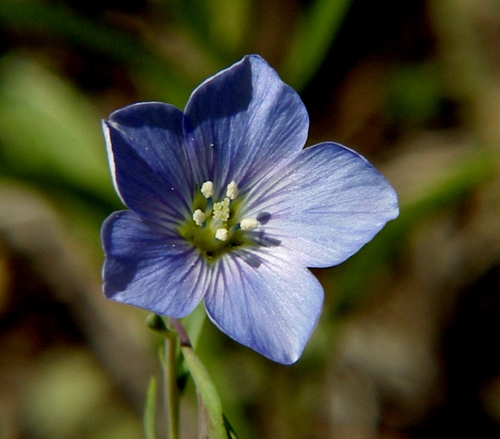
The name is either derived from the Greek verb ailinon meaning “to whine; complain” or it could be from the Greek Λινος (linos) meaning “flax.” In the latter case, the Lithuanian male name, Linas, would share the same etymology. It was also a Roman cognomen, which may have been derived from the Greek.

In Greek mythology, the name was borne by a son of Apollo, who in some legends was accidentally killed by his own father and in other legends was the music teacher of Hercules.

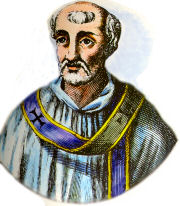
The name was also borne by the 2nd pope and saint who succeeded St. Peter.

In the English-speaking world, the name is often associated with the Charles Schulz character who appears in the Peanuts Comic strips.

The name was fairly common in 19th-century America and Britain, being borne by Linus Bacon Comins (1817-1892), a Massachusetts politician, Linus Yale, Jr. (1821-1868) a mechanical engineer, Linus Pauling (1901-1994) a famous American chemist and British actor, Linus Roache (b.1964)

Currently, Linus is the 30th most popular male name in Germany, (2011). His rankings in other countries are as follows:

  • # 44 (Sweden, 2010)
  • # 53 (Norway, 2010)

Other forms of the name include:

  • Llinu (Asturian)
  • Lin Лін Лин (Belarusian/Breton/Bulgarian/French/Piedmontese/Russian/Serbian/Slovene/Ukrainian)
  • Lli (Catalan)
  • Lino (Croatian/Galician/Italian/Portuguese/Spanish)
  • Linus (Danish/Dutch/English/Estonian/Finnish/French/German/Hungarian/Norwegian/Polish/Romanian/Swedish)
  • Líneas (Gaelic)
  • Linusi ლინუსი (Georgian)
  • Linos Λινος (Greek)
  • Línus (Icelandic)
  • Lins (Latvian)
  • Linas (Lithuanian)

Lina

The name is of several different origins and meanings. It could be a German and Swedish short form of any name ending in –lina.

In Lithuanian, it is the feminine form of Linas, meaning, “flax.” It is also the Estonian and Finnish word for flax, and is used as a given name in both countries.

It could also be from the Arabic لينا meaning “palm tree” or “tender.”

In Sanskrit लीना it means “absorbed; united.”

The name is also used in Chinese, being a composition of the words 丽 (Li) meaning “pretty” and 娜 (Na), meaning “elegant.”

Currently, Lina is the 7th most popular female name in Germany, (2011). Her rankings in other countries are as follows:

  • # 15 (German-speaking, Switzerland, 2010)
  • # 19 (France, 2009)
  • # 20 (Slovenia, 2010)
  • # 25 (Belgium, 2009)
  • # 36 (Austria, 2010)
  • # 61 (Netherlands, 2010)
  • # 84 (Norway, 2010)
  • # 91 (Sweden, 2010)
  • # 848 (United States, 2010)

Elina

Gender: Feminine
Origin: Belarussian/Finnish
Finn (EH-lee-nah); Germ/Swe/Nor (eh-LEE-nah)

The name is possibly a Finnish and Belorussian form of Helen. It is also a common name in Central Asia, particularly in Chechnya and Uzbekistan, but in this case, the name is of uncertain meaning.

The name may have been popularized in Finland via the 15th-century ballad The Death of Elina (Elina Surma), published by Elias Lönnrot in the Kanteletar (1840). The ballad recounts the murder of Elina by her husband after he finds her with a lover.

It is also the name of a genus of butterfly.

Currently, it is the 35th most popular female name in German-speaking Switerland, (2010). Her rankings in other countries are as follows:

  • # 87 (Sweden, 2010)
  • # 114 (France, 2009)
  • # 115 (Germany, 2011)
  • # 317 (Netherlands, 2010)
Other forms of the name include:
  • Elina (Belarussian/Chechen/Danish/Dutch/Estonian/Finnish/French/German/Icelandic/Kazakh/Kyrgyz/Norwegian/Romanian/Swedish/Tatar/Turkmen/Uzbek)
  • Eliina (Finnish)
  • Elīna (Latvian)