Alina

The name could be of several different origins and meaning depending on the bearer of the name.

In Romanian, it is derived from the verb meaning “to sooth”. It even boasts its own masculine version: Alin.

It could also be a German and Dutch contraction of Adelina.

Other sources have popularly attributed it to be a form of the Arabic, Alia (lofty; sublime). In this case, the name appears in One Thousand and One Nights as the name of a beautiful princess.

In Belarusian, it is a name of pre-Christian origins, being derived from the old Slavic word алы (aly) meaning “scarlet.” In Russian, it has been linked with the names Albina, Aleksandra and Akulina, considered contracted forms. While in Bulgarian, it is considered a contracted form of Angelina.

In Italy, it is viewed as a contracted form of Rosalina or Pasqualina, the name can be typically found in Northern and Central Italy.

In Polish and Lithuanian, it has been suggested that the name may be derived from Alna, the Lithuanian name of a river which runs through northern Poland and Kaliningrad, (known in Polish as Łyna). Alna is from a medieval Baltic word meaning, “doe; female deer”, (compare modern Lithuanian elnias). Famed Polish playwright, Juliusz Słowacki seems to have popularized the name via his 1839 play, Balladyna.  Alina is murdered by her jealous sister Balladyna as they are picking raspberries.

It has also been suggested to be related to Halina, a Polish form of Galina.

Currently, Alina is the 4th most popular female name in German-speaking Switzerland, (2010). Her rankings in other countries are as follows:

  • # 4 (Liechtenstein, 2010)
  • # 17 (Russia, 2011)
  • # 28 (Germany, 2011)
  • # 30 (Austria, 2010)
  • # 38 (Slovenia, 2010)
  • # 39 (Romania, 2009)
  • # 78 (Bosnia & Herzegovina, 2010)
  • # 264 (United States, 2010)
  • # 323 (Netherlands, 2010)

Other forms of the name include:

  • Alina Аліна الينا (Arabic/Belarusian/Bosnian/Bulgarian/Czech/Dutch/Finnish/German/Hungarian/Italian/Latvian/Lithuanian/Polish/Romanian/Russian/Scandinavian/Serbian/Slovak/Slovene/Ukrainian)
  • Aliina (Finnish)
  • Aline (French)

Nikita

Gender: Masculine
Origin: Greek
Meaning: “victory.”

The name is a Russian and Macedonian form of the Greek, Nicetas, which is derived from νικη (nike) meaning, “victory.”

It was borne by a 5th-century Serbian saint, considered the patron saint of Romania.

In more recent years it has been associated with Russian General Secretary and Premier of the Soviet Union during the 1950s and 1960s, Nikita Krushchev (1894-1971).

In Russian folklore, it is borne by Nikita the Tanner, who is believed to have rescued a Kievan princess from the clutches of an evil dragon.

Currently, Nikita is the 10th most popular male name in Moscow, Russia (2010) and the 176th most popular male name in Germany, (2011).

In the West, the name has occasionally been used for females, however, it is uncertain if this is a borrowing from the Russian or if it in fact a borrowing from the Indian. The name is coincidentally a feminine Indian name, which is derived from the Sanskrit meaning “earth” or “sleep.” It is sometimes transliterated as Nikhita.

Other forms of the name include:

  • Nikita Никита Նիկիտա ნიქითა (Armenian/Bulgarian/Chuvash/Georgian/Macedonian/Romanian/Serbian)
  • Mikita мікіта (Belarusian)
  • Niketas Νικήτας (Greek)
  • Nicetas (Latin/Polish)
  • Mykyta Микита (Ukrainian)

Jerome

Gender: Masculine
Origin: Greek ‘Ιερωνυμος
Meaning: “sacred name.”
Eng (jə-ROM), Fre (zheh-HROME)

The name is derived from the Greek male name, Hieronymus (‘Ιερωνυμος).

It was borne by a 5th-century saint who is responsible for creating the Vulgate Bible. He is revered as a Doctor of the Church.

The name was common in England during the 12th-century, but fell out of usage after the Protestant Reformation, only to be reintroduced again in 19th-century America via Catholic immigrants from Germany, Ireland and Italy.

Currently, Jerome is the 208th most popular male name in Germany, (2011).

Other forms of the name include:

  • Jeronimi (Albanian)
  • Hieronimos Հիերոնիմոս (Armenian)
  • Jerolin (Basque)
  • Gerasim Герасім (Belarusian)
  • Jeronim Йероним (Bulgarian)
  • Jeroni (Catalan)
  • Jeronim Јероним (Croatian/Serbian)
  • Jeroným (Czech)
  • Hero (Dutch)
  • Hiëronymus (Dutch)
  • Jeroen (Dutch)
  • Jero(o)m (Dutch)
  • Jerome (English/German)
  • Jérôme (French)
  • Iaróm (Gaelic)
  • Ieróim (Gaelic)
  • Xerome (Galician)
  • Jeromos (Hungarian)
  • Geronimo (Italian)
  • Girolamo (Italian)
  • Jeronimas (Lithuanian)
  • Ġlormu (Maltese)
  • Jiròni (Occitanian)
  • Hieronim (Polish/Slovene)
  • Jerônimo (Portuguese: Brazilian)
  • Jerónimo (Portuguese/Spanish)
  • Ieronim Иерони́м Ієронім (Romanian/Russian/Ukrainian)
  • Jaronas (Romansch)
  • Jerun (Romansch)
  • Giron(n)as (Romansch)
  • Jerone (Sardinian)
  • Zirominu (Sardinian)
  • Giròlamu (Sicilian)
  • Hieronym (Slovak)
  • Jarolím (Slovak)
  • Hierónimo (Spanish)
  • Sierôm (Welsh)


Dana

The name is of a few different etymology depending on the source of the bearer. In Slavic-speaking countries, the name is a short form of any name containing the element dan meaning, “gift.” It could also be used as a diminutive form of Danijela or Daniela.

The name is also a modern form of the ancient Celtic theonym, Dânu, an early Irish mother goddess of the Tuatha Dé Danann. Her name has been traced to early Indo-European roots and is believed to have some connection to water. This element appears in several river names across Europe, such as the Dnieper, Danube and Don. This form is borne by Irish singer, Dana Scallon (b.1951).

Its usage in the English-speaking world may actually derived from a Danish surname, usually pronounced (DAY-nah) in English, the former are both pronounced (DAH-nah).

Currently, Dana is the 146th most popular female name in Germany, (2011). Her rankings in other countries are as follows:

  • # 248 (Netherlands, 2010)
  • # 463 (United States, 2010)


Leandra

Gender: Feminine
Origin: Greek
Meaning: “lion man.”
Eng (lee-AHN-druh); Germ/Grk/Rus (ley-AHN-drah)

The name is a feminine form of Leander.

Currently, Leandra is the 182nd most popular female name in Germany.

The name is also in Greece, Poland, Romania, Russia and throughout the former Yugoslav. It is also used in Italy and in Spanish and Portuguese-speaking countries.

The name is borne by teen German-pop singer, Leandra Gamine (b.1994) and Belarusian-German pianist, Leandra Ophelia Dax (b.1981)

Leonidas

Gender: Masculine
Origin: Greek Λεωνιδας
Meaning: “lion.”
Eng (lee-o-NYE-dus)

The name is derived from the Greek λεων (leon) meaning “lion.”

The name was borne by several famous leaders in Classical Greek history, one being King Leonidas I of Sparta, known for his heroic defense of the Thermopylae Pass from the Persians in the 5th-century B.C.E. His life has been the inspiration of Frank Miller’s 1988 comic 300, later adapted into a movie of the same name. He came to be deified in Sparta as a hero god. A Belgian Chocolate company is also named in his honour and he is the inspiration for their logo.

The name was also borne a teacher of Alexander the Great and by the father of Origen, St. Leonidas (3rd-century CE).

Leonidas seems to have enjoyed some popularity in 18th and 19th-century America and England. This may have been due to the epic eponymous poem based on the Spartan hero, written by Richard Glover (1737).

In more recent history, it was borne by Confederate general, Leonidas Polk (1806-1864) and the first modern Greek Olympic gold medalist, Leonidas Pyrgos (*1871).

Currently, Leonidas is the 282nd most popular male name in Germany, (2011) and the 922nd most popular in the United States, (2010).

Other forms of the name include:

  • Leonit (Albanian)
  • Ljeanid Леанід (Belarusian)
  • Leònides (Catalan)
  • Leonida (Croatian/Italian/Serbian)
  • Leónidás (Czech)
  • Leonidas Λεωνιδας (English/German/Greek/Lithuanian/Romanian)
  • Léonide (French)
  • Leonidasi ლეონიდასი (Georgian)
  • Leoneidas (German)
  • Leonides (German)
  • Leónidasz (Hungarian)
  • Leonīds (Latvian)
  • Leonid Леонид (Macedonian/Polish/Russian/Ukrainian)
  • Leónidas (Portuguese-European)
  • Leônidas (Portuguese-Brazilian)
  • Leónidas (Spanish)
A feminine form is Leonida, occassionally used in Spanish-speaking countries, Greece and Poland.

Alena

Gender: Feminine
Origin: Czech/German
(ah-LEH-nah)

The name has several possible derivations, the most popular being that it is a Czech contracted form of Magdalena or Helena. Other sources contend that it is derived from an archaic Russian diminutive form of Olga or Alexandra. It has even been suggested to be an earlier Czech feminine form of Alan

It is possible that it is derived from the Norman female name, Alenn, again, a form of Magdalena.

In Belarus, the name used as a form of Helen.

Currently, it is 226th most popular female name in Germany, (2011).

Other forms of the name include:

  • Alena (Belarusian/Croatian/Czech/German/Russian/Slovak/Slovene)
  • Aléna (Hungarian)
  • Alenka (Slovene)

In Czech and Slovak, Alenka is the diminutive form.

The name is borne by Czech supermodel Alena Šeredová Buffon (b.1978).


Timur

Gender: Masculine
Origin: Chaghatai/Russian Тимур
Meaning: “iron.”

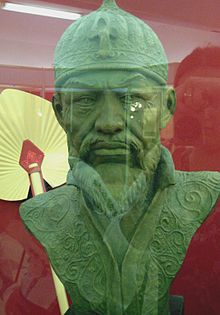
This was the original name of Tamerlane, a 14th-century conqueror of Central Asia, he was the founder of the Timurid Dynasty (1370-1405). His name is derived from a word for iron in the extinct Turkic language, Chagatai.

Tamerlane is viewed as a hero in many former Soviet Central Asian republics and as a result, is a very popular name. The name is even used among European Russians.

Currently, Timur is the 359th most popular male name in Germany, (2011).

Other forms of the name include:

  • Teymur (Azeri)
  • Tymur Тымур (Belarusian)
  • Timur Тимур  تیمور (Chechen/Chuvash/Kyrgyz/Mongolian/Persian/Russian/Tatar/Turkish/Turkmen/Ukrainian/Uzbek)
  • Temur თემურ (Georgian/Uzbek)
  • Temir Темір (Kazakh/Tajik)
  • Tîmûr (Kurdish)
  • Demir (Turkish)

Inga

Gender: Feminine
Origin: Old Norse/Germanic
(IN-ga)

The name is a feminine form of Inge or Ing, which is an Old Germanic name of uncertain meaning. It was the name of an ancient Germanic god of which very little is known.

In addition to Scandinavia, Inga has experienced prevalent usage in other countries, such as Germany, the Netherlands and Russia.

Currently, Inga is the 341st most popular female name in Germany, (2011).

Other forms of the name include:

  • Inga Инга (Belarusian/Bosnian/Croatian/Dutch/Estonian/Faroese/Georgian/German/Icelandic/Latvian/Lithuanian/Polish/Russian/Scandinavian/Serbian/Slovene)
  • Inge (Danish/Dutch)
  • Inia (Danish)
  • Inka (Finnish)
  • Inken (Frisian)
  • Iηgá (Sami)
  • Ingara (Norwegian: archaic)

Inge is rarely ever used as a masculine form and is occasionally used as a female form in Scandinavia, pronounced (IN-ge).

Common male forms are Ingi and Ingo.

In Sweden, Inga’s designated name-day is October 25. In Norway it is December 17 and in the Swedo-Finnish calendar it is June 20.

Inga is also the name of a genus of tropical trees and shrubs.

The name was and is borne by Swedish stage actress and opera singer, Inga Åberg (1773-1837); Swedish actress Inga Tidblad (1901-1975); Swedish actress Inga Landgré (b.1927); American actress Inga Swenson (b. 1932); American femininist author Inga Muscio (b.1966); Russian Olympic Speed-Skater Inga Artamonova (1936-1966); Bosnian-Australian politician Inga  nee Dosen Peulich (b.1964); Australian anthropologist, author and historian Inga Clendinnen (b.1934) and Danish Opera Soprano Singer Inga Nielsen (1946-2008)

Nike

Gender: Feminine
Origin: Greek Νικη
Meaning: “victory.”
Eng (NYE-kee); Grk (NEE-kay); Germ (NEE-keh)

The name comes directly from the Greek word for victory.

It was borne in Greek mythology by the goddess and personification of Victory, her Roman counterpart being Victoria. She was the daughter of Pallas and Styx and the sister of Cratos (Strength), Bia (Force) and Zelus (Zeal). She was believed to fly around battlefields on a chariot awarding glory and fame to victors.

Coincidentally, Nike can also be a Nigerian name meaning, “cherished.”

The name has experienced usage in modern Greece, Russia, Israel and Germany. In Germany, her popularity may be due to Nike Wagner (b.1945) the great-granddaughter of Richard Wagner.

It is currently the 323rd most popular female name in Germany, (2011).

The Russian and Belarusian form is Nika Ника.

It is also the name of the shoe company which was named for the Greek goddess.