
- Gender: Feminine
- Origin: Romanian
- Meaning: “sprig.”
- (kren-GOO-tah).
The name comes directly from the Romanian word for sprig. The name is a fairly common one in Romania.

 Gender: Feminine
Origin: Latin
Meaning: “of Magdala.”
We have the exotic and sophisticated Magdalena, the French classic Madeleine and the English trend setter Madeline. The origins of these names go all the way back to the Bible, the New Testament to be exact. It is derived from a title given to the famous Catholic saint, Mary Magdalen, also known as Mary of Magdala. Magdala, being the town that the former prostitute turned follower of Christ, hailed from, a town on the sea, near Galilee, its meaning being “tower.”
In the Middle Ages, St. Mary Magdalen was a beloved saint, making the name popular in virtually every European country, evolving into myriad different forms. The cult of St. Mary Magdalen was especially popular in France, where she was known as La Madeleine (lah mah-deh-LEN). In fact, tradition holds that, after the death of Christ, Mary Magdalen travelled to France, where she converted many of the early inhabitants to the new faith. She is considered one of France’s patron saints and it is believed that her bones were buried in France. La Madeleine gave her name to several communes in France as well as a river. It is even the name of a famous French pastry.
While you are out rushing to work, standing in line, getting your daily fix of Starbucks, you may notice that at the front counter there are packages of a soft little sponge-like cookie. These are madeleines or petit madeleines. They are a popular snack in France, made from lemon and butter, and are known for their distinctive shell shape. Legend has it that they acquired their name from the lady who invented them, Madeleine Paulmier. They are a delightful little treat, and I recommend that the next time you are at Starbucks, you should try them yourself.
Likewise, Madeleine has been a very popular choice in Great Britain and currently ranks in as the 80th most popular feminine name in Britain and Wales for 2007, while in its home country of France, it comes in rather low. It was the 454th most popular feminine name in France for 2006.
Let us not forget the fun and sweet version of Madeline (MAD-eh-LINE), Madeline seems to be specifically a North American version of the French form. Originally pronounced (MAD-eh-LIN), its preferred pronunciation has switched over to the former in the last decade, no doubt due to the popular children’s series of books of the same name.
Madeline has been quite popular the last few years, she ranked in at a whopping 61 in the 2007 most popular feminine names in the United States. She has also made her mark in other non-British English speaking countries, such as Canada and Australia. In Canada she came in at 85, while in Australia 93.
There is also the trendified corrupted form of Madelyn, which currently comes in at # 104, however, it is advisable to use the French spelling if you prefer the (Mad-eh-lin) pronunciation, which seems to be the goal of the parents of the Madelyns.
Nicknames include Maddie, Leine and Lynn. The name is borne by Princess Madeleine of Sweden, Madeleine Albright, and author Madeleine L’Engle.
Let us now move on to its Eastern European alternative of Magdalena (MAHG-dah-LAY-nah). This form is used in Spain, the Czech Republic, Slovakia, Bulgaria and Poland. It is especially popular in both Poland and the Czech Republic where it is often shortened to Magda, and occasionally Lenka. There are the Czech spin offs of Alenka and Madlenka, used as an independent name.
Magdalena might be appealing to English speaking parents who love the nickname Maggie but really dislike Margaret. On top of that, it can be shortened to appealing and trendy Laney or even Lena.
Other popular offshoots include the English corrupted form of Madelaine (MAD-eh-LANE): given to the daughter of David Duchovny and Téa Leoni. The dated German forms of Marlene (Eng mar-LEEN; Germ mahr-LEH-neh) & Marla and the Polish Marlena.The designated name day for all of these names is July 22.
French diminutives are Mado and Madelon. Polish diminutive forms are: Madzia, Magda, Magdunia, Magdusia and Magdeczka. Hungarian diminutives are, Duci
There are a few Italian masculine forms and that includes, Maddaleno, Magdalo and Maido.

Gender: Feminine
Origin: Latin
Meaning: “star.”
This pretty, vintagy appellation with the stellar meaning was first introduced as a given name way back in the 16th-century. Sir Philip Sidney gave this name star-power when he used it for one of his sonnets Asphodel & Stella. To further boosts the name’s popularity, it has references to the Virgin Mary, derived from one of the many epithets to the mother of Christ, Stella Maris (Star of the Sea), is a sort of poetic reference to Mary as a guiding light for lost souls. Due to these connotations, the name caught on big time in places as far south as Spain and all the way east in Poland. Despite its literary references in England, the name never really caught on, in fact, in Great Britain today, Stella is the name of a ledger, which makes the name somewhat of a turn off for British parents. While in the United States, the name has had somewhat of a history since the turn of the century. Thanks to an influx of Polish immigrants, the name became very popular in the United States, Stella being a very popular Polish given name at that time, either being an anglicization for Stela or Stanislawa. Due to its enormous popularity among the Polish community, the name became a sort of stereotype name for Polish women from the 1920s-30s. Today, the name has lost those stereotypes, but for the granddaughters and great grandaughters of those very same immigrants, the name has held a lot of charm and appeal, holding fuzzy warm memories of old world grandmas for a whole new generation of parents. This might explain its sudden resurgence in popularity. In 1999, Stella sat at a mere # 725 of the Top 1000 names in the United States. Fast forward 9 years and it nows sits at # 186 of the top 1000 female names of 2008, and will probably rise. It has the same feel as other popular vintagy names such as Ava, Grace and Sophia. So don’t be surprised to see little Stellas coming to a school near you very soon. Though the name has Polish roots for many Americans, the name is considered rather old fashioned in Poland these days, meanwhile just further north in Sweden, the name has caught on quite a bit. It came in at # 33 in 2007 among the Top 100 female names of Sweden. Down under, in Australia, the name comes in at # 99. If you are concerned about the possible future over popularity of this name, then you might like the more unusual alternatives of Estelle, Estella and the Spanish Estrella (es-STRAY-yah). There is the Portuguese elaborate form of Stelina, and there is the Romanian Steliana, though that has a completely different etymology from Stella, it is derived from the Greek Styliani which is a feminine form of Stylianos meaning “piller.”
 Gender: Feminine
Origin: Latin
Meaning: “laurel.”
Eng (LORE-uh); It/Span (LOW-rah).
The name first came into usage during the 9th century in Spain, due to the cult of Saint Laura of Cordova, (864).
She was a widow who decided to become a nun, but was put in a vat of molten lead and was boiled to death by her Moorish captors.
Laure de Noves, was the object of the poet, Petrarch’s affection (1308-1348). The Italian poet refers to her as Laura in his writings.
Laura, illustrated by her virtues and well-celebrated in my verse, appeared to me for the first time during my youth in 1327, on April 6, in the Church of Saint Claire in Avignon, in the first hour of the day; and in the same city, in the same month, on the same sixth day at the same first hour in the year of 1348, withdrew from life, while I was at Verona, unconscious of my loss…. Her chaste and lovely body was interred on the evening of the same day in the church of the Minorites: her soul, as I believe, returned to heaven, whence it came. (Petrarch)
Laure de Noves was the wife of Hugh de Sade, (the ancestor of the Marquis de Sade in which the name Laure appears often in the Sade family tree), who ultimately dies from the plague. She was the symbol of unrequited love and was transformed into a Beatrice type character after her death in many of Petrarch’s poems.
The name has always been relatively common in the English speaking world. Laura currently comes in at # 215 of the U.S. top 1000. In other countries her rankings are as follows:
Other forms include:
Diminutive forms of Laura include Laurie, Lori, Lorie and Lauretta (Italian); Laurita (Spanish) and Laurette (French).
Masculine forms are the Italian Lauro and the late Latin Laurus.
The Laura form is used in most Romance speaking countries including Italy, Romania and is used among Portuguese speakers. It is also used throughout Central Europe such as the German speaking countries, Poland, Slovakia, Hungary and the Czech Republic.
The name is borne by former first lady of the United States Laura Bush, children’s author Laura Ingalls Wilder, Laura Esquival author of Like Water for Chocolate. British designer and clothing brand Laura Ashley. Actress Laura Linney.
It is also the name of a river that runs through the Ukraine and Romania and the name of a village in Gliwice County, Poland.
Coincidentally, in Greek Lavra and Laura was a term used in the Eastern Orthodox church to describe a cluster of cells or caves, designed for monastic hermits. In this case, the name is derived from the Greek meaning an “alley” or “passage way.”
(Pictured above: Laure de Noves).
 Gender: Feminine
Origin: Romanian
Meaning “lily”
(KREE-nuh).
Finding Lily’s popularity to be just a tad too much? Then this exotic yet simple name might just be what you are looking for. Crina is derived from Romanian word crin meaning “lily” and is currently very popular in the Eastern European Latin Speaking country.
Gender: Feminine
Origin: Romanian
Meaning: “lily of the valley.”
(lah-kree-MYOH-ruh)
From the Romanian word for the lily of the valley, it literally means “little tear.” The name is currently very popular in Romania. The name is borne by Lăcrimioara Ionescu-Cornea (b.1969) a Romanian textile and fashion designer.
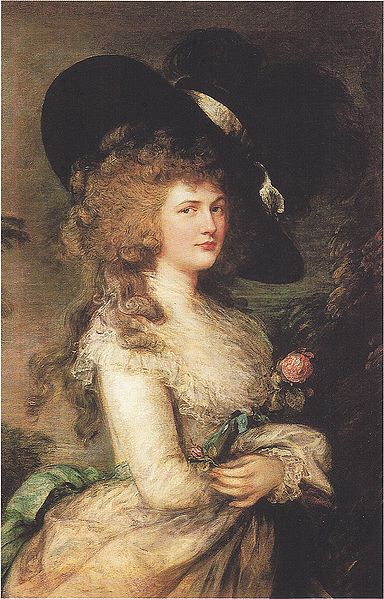 Gender: Feminine
Origin: English
Meaning: feminine form of George, meaning “farmer.”
Pronunciations (jore-JANE-uh); (Jore–jee-AH-nah)
In the Anglo-phone world, the name first came into usage around the 18th-century and was a popular name among British aristocracy, the most famous bearer being Lady Georgiana Spencer Cavendish (1757-1806), Duchess of Devonshire, a popular socialite and a political muse.
The name also appears in Jane Austen literary work Pride & Prejudice.
In Romania, she currently ranks in as the 10th most popular female name (2008).
Possible nicknames include G, Gigi, Gia, Giana, Georgie and Jane.

Gender: Female
Origin: Greek
Meaning: “wisdom.”
(so-FEE-yuh); (so-FYE-uh)
A long time Greek classic, the name suddenly appeared in the U.S top 100 circa 2000, and budged itself into the # 6 spot in 2007.
Sophia comes directly from the Greek, and was often used as a personification for Wisdom in philosophical, Christian, Jewish and Gnostic texts.
In Christian lore, Saint Sophia was the mother of three Christian martyrs, Hope (Elpida), Faith (Pisti) and Charity (Agapi). She supposedly died from grief after the death of her daughters, and is now one of the most revered saints of the Eastern Christian churches, making the name a longstanding classic throughout Eastern Europe and modern Greece.
Sophia is the Greek spelling, which seems to be the most worn form in the Western World. However, Sofia is the variation often used in continental Europe.
Sophia was not introduced into the English-speaking world until the 18-century, when it was introduced into the British Family Tree by the German Hanovers, from whose line the names Sophie and Sophia often appear.
In English, the pronunciation of so-FEE-yah, and so-FYE-uh are interchangeable. The former is more of a modern import, and the most popular. The latter is the older English pronunciation of the name, which is seldom heard in the States but is occasionally heard in Britain.
The designated name-days are: May 15 (Austria/Germany), May 25 (France), September 17 (Greece), September 30 (Lithuania/Spain),
 Gender: Feminine
Origin: Romanian
Meaning: “princess”
(KYAHZH-nah)
Derived from the Old Slavonic word knyez meaning “prince.” Lady Chiajna (c.a. 1525-1588) was the daughter of Petru Rares, a 16th-century Moldavian Prince. In Romanian literature, she is a sort of Lady Macbeth.
A city in Romania was named in her honor.
Upper Left: Statue of Lady Chiajna