Manoah

  • Origin: Biblical Hebrew מָנ֫וֹחַ
  • Meaning: “rest.”
  • Gender: Male

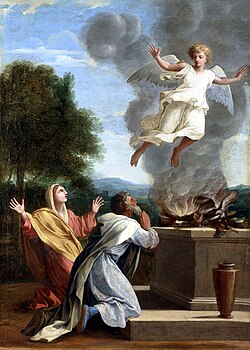
Manoah appears in Judges 13, described as a man from Zorah of the tribe of Dan. His wife is unnamed, but together they become the parents of Samson after an angelic visitation.

The name itself is derived from the Hebrew root נוּחַ (nuach) meaning “to rest, to settle, to repose, to be at ease.”

Between the 18th-century to early 20th-century, Manoah experienced some use in the U.S. and England. Common short forms were Manny, Menno and Noah.

In 2023, it appeared in the Netherlands charts for the most popular male names, though it did not rank in very high, coming in at #422.

International Variations

  • Manué (French)
  • Manoach (German)
  • Manoa (Spanish)

Sources

Ichabod

  • Origin: Biblical Hebrew אִי־כָבוֹד
  • Meaning: “no glory; without glory.”
  • Gender: Male
  • Eng (IK-e-BAHD; IK-e-BAWD)

A name forever haunted by legend and scripture, Ichabod carries an aura of solemnity and old-world eeriness. Though seldom used today, its deep Biblical roots and literary afterlife make it a quintessential Halloween name with legitimate historical pedigree.

The name appears in the Old Testament (Hebrew: אִי־כָבוֹד, ’I-Kavod), meaning “no glory” or “the glory has departed.” It is first recorded in 1 Samuel 4:21, where Phinehas’s wife, upon hearing of the Ark of the Covenant’s capture and her husband’s death, names her newborn son Ichabod to mark Israel’s loss of divine favor.

In the English-speaking world, the name came into use in the 17th-century, mainly among Puritan families.

In colonial America, one of the best-known bearers was Reverend Ichabod Wiswall (1637–1700) of Massachusetts.

The name’s haunting reputation was sealed by Washington Irving’s 1820 short story “The Legend of Sleepy Hollow.” Its lanky, superstitious schoolmaster, Ichabod Crane, pursued by the Headless Horseman, transformed the Biblical lament into a symbol of American Gothic folklore.

Irving is believed to have drawn the name from a real historical figure, Colonel Ichabod Bennett Crane (1787–1857), an officer in the U.S. Marine Corps whom the author reportedly met while stationed at Fort Pike, New York. The coincidence of name and temperament lent the fictional character an extra layer of realism — and ensured that Ichabod would forever echo through ghostly New England legend.

It is borne by several other famous early American personages,

Traditional short forms in the 18th-19th centuries were Cabe, Bud, and Buddy.

A German form though obsolete is Ikabod.

Source

Jediael, Jadiel

Photo by Kaushal Moradiya on Pexels.com
  • Origin: Hebrew ידיעאל
  • Meaning: “to be known by God.”
  • Gender: Masculine
  • Pronunciation: Eng (jeh-DIAL); Port (ZHAH-dee-EL); Sp (YAH-dee-EL)

The name is composed of the Hebrew words ידע (yada’) meaning, “to know,” and אל (‘el) meaning “God.”

It is borne by three minor characters in the Old Testament, mentioned in 1 Chronicles 7:6, 1 Chronicles 11:45 and 1 Chronicles 26:2.

In recent years, its Spanish and Portuguese offshoot of Jadiel and Yadiel have been popular in Latin America. It may have been popularized by Puerto Rican reggaeton singer, Jadiel (born Ramón Alberto González Adams, 1985-2014).

Jadiel has appeared in the Brazilian Top 1000 names between 1980-2000. Jadiel has been in the U.S. Top 1000 since 2008 and currently ranks in at #878 in 2022. Yadiel appeared in the U.S. Top 1000 between 2008-2021, peaking at #850 in 2009.

Other forms include:

  • Jadiel (Brazilian Portuguese, Spanish)
  • Yadiel (Brazilian Portuguese, Spanish)
  • Yadiele (Brazilian Portuguese)

Sources

Erez

  • Origin: Hebrew אֶרֶז
  • Meaning: “cedar.”
  • Gender: masculine
  • Pronunciation: ER-ehz

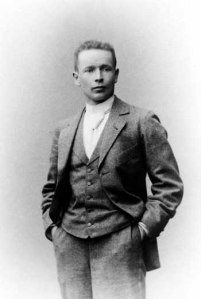
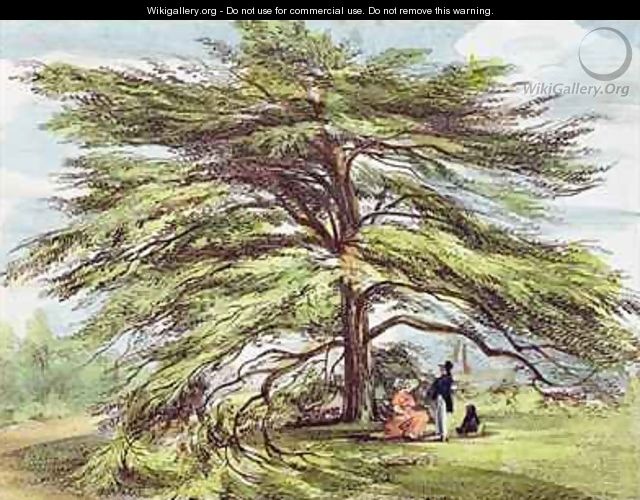
The name comes directly from the Hebrew word for the cedar tree אֶרֶז. This name did not come into use as a masculine given-name among Jews until after the creation of the State of Israel in 1945. It may have been popularized by Aleksander Zederbaum (1816-1893), a Polish-Jewish journalist who founded the Hebrew language newspaper, Ha-Melitz who often used “Erez” as a pseudonym in his writings.

It is also the name of a Kibbutz and of Erez Crossing, the latter being the name of a border crossing on the Israeli-Gaza border.

Sources

Katriel

  • Origin: Hebrew כתריאל
  • Meaning: “God is my crown.”
  • Gender: Masculine

The name is a Medieval Ashkenazi creation, composed of the Hebrew words keter (כֶּתֶר) “crown” and el (אֵל) “god.” It may have been a masculinized form of the popular Yiddish female name Kreindel (crown) or the Hebrew female name Atarah (crown).

  • Kadriel
  • Kasriel
  • Katsriel
  • Katzriel

There are the modern Israeli feminized forms of Katrielle, Katriella & Katriela.

A notable bearer was Israeli ambassador to the Soviet Union, Katriel Katz (1908-1988).

Sources

Cassiel

  • Origin: Hebrew פצִיאֵל
  • Meaning: “God is my cover; cover of God; speed of God.”
  • Gender: masculine
  • Pronunciation: Eng KAS-see-el

The name is derived from the Hebrew פצִיאֵל (Qaftzi’el), which is likely to mean “cover of God” or “God is my cover.” Other sources claim this name means “speed of God.” According to Judeo-Christian apocrypha, Cassiel is one of the 7 archangels. In the Hekhalot Rabbati, he is the one of the guardians of the doors of the 7th Heaven. In the Sefer Raziel, he is described as the Prince of Saturn, while in the Zohar, he is credited as being one of the aides of the Archangel Gabriel. He is also mentioned in the rabbinic literature of the Kabbalah. In Christian literature, he is mentioned in the grimoire known as The Sworn Book of Honorius as well as in Peter Abano’s Heptameron. He is mentioned in a Byzantine text regarding exorcism. He also appears as an archangel in mystic Islamic literature under the name كسفيائيل‎, Kasfiyāʼil.

Cassiel was traditionally believed to not have much input on the things that occur in the world of man, he was also considered the angel who presided over the death of kings as well as the angel of tears and the angel of temperance. His days are sometimes Thursday or Friday.

As a given-name, it has only come into occasional use the last century. It may have become even more widespread after its use in the Wim Wender 1987 film, Wings of Desire.

I could not find any strong evidence that this name has ever been used as a given-name among Jews or Muslims, though I don’t believe it is considered a forbidden name in either religion, more likely, the obscurity of the angel in the general populace of both religions has left the name obsolete.

Other forms include: Cafziel, Kafziel, Caphziel,Captiel, Cassael, Castiel, Qaspiel, Qephetzial, & Quaphsiel.

Forms in other languages include:

  • Kasfiyāʼil كسفيائيل‎, (Arabic)
  • Cassiël (Dutch)
  • Cassiel (English, French, German, Portuguese, Spanish)
  • Qaftzi’el קפציאל‎ (Hebrew)

Feminine forms include: Kasiela, Casiel(l)a, Qaftiziela (modern Hebrew); Cassielle (English, French), Cassiëlle (Dutch), Casiele (Brazilian-Portuguese).

Sources

Nava

  • Origin: Hebrew נָאוָה
  • Meaning: “pretty; pleasant; desirable; enticing.”
  • Gender: feminine
  • NAH-vah

The name comes directly from the Hebrew adjective meaning “pretty; pleasant,” and a Hebrew verb meaning “to want; to desire.”

It may be a direct translation of the traditional Ashkenazi name Shayna or the Mizrahi/Sephardi name, Jamila. However, the word has more of the meaning of someone who is “enticing” or “alluring” vs just “beautiful” as other sites have translated.

The term is found in the Song of Songs 2:14, but was not used as a given-name until after the creation of the modern state of Israel.

Sources

Eliel

  • Origin: Hebrew
  • Meaning: “my God is God.”
  • Gender: Masculine
  • Pronunciation: Eng (EL-ee-yel; ee-LYE-yel)

The name is composed of the same Hebrew word אל (‘el) meaning “God,” hence, some translate it to mean “my God is God.” The name is borne by several minor characters in the Old Testament.

A notable bearer was Finnish Architect, Eliel Saarinen (1873-1950).

Though an obscure Jewish name, it experienced a peak in popularity in Finland and other Scandinavian countries at the end of the 19th-century.

Eliel recently entered the U.S. Top 1000 Most Popular Male Names in 2019, currently ranking in at #664.

The designated name day in Finland is April 9th

A Dutch form is Eliël.

Sources

Ilana

Origin: Hebrew אִילָנָה
Meaning: “tree”.
(ee-LAH-nah).

The name comes directly from the Hebrew word for tree. Another female form is Ilanit (ee-LAH-neet) אִילָנִית. She is borne by Israeli pop-singer, known simply as Ilanit (b.1947) her real name being Hanna Drezner-Tzakh.

As of 2010, Ilana was the 255th most popular female name in France. While in the Netherlands, she comes in as the 321st most popular female name, (2011).

The masculine form is Ilan.

Anna, Anne

Gender: Feminine
Origin: Biblical Hebrew
Meaning: “grace.”
(ANN; AHN). (ANN-uh; AHN-nah). (HANN-uh; HAHN-nah)

Anne is possibly one of the quintessential classic English and French female names. Prior to the 18th-century, it seems that every other girl born in England was either named Anne, Jane or Mary. There were several British and French queens who bore this simplistic moniker, including the ill fated Anne Boleyn, the mother of Elizabeth I. The history of Anne is rather long and complicated.

It was foremost popularized through the cult of St. Anne, a legendary figure who was said to be the mother of the Virgin Mary and the grandmother of Christ.

In Brittany, the name became especially popular because it happened to coincide with the name of an ancient Celtic goddess, her cult being replaced by St. Anne’s. In fact, it was borne by one Breton Princess, Anne of Brittany.

The name was introduced into Britain by the French-Normans after the invasion in 1066. Previously, there had been a minor Saxon king named Anna, but in this case the name is related to the Saxon arn (eagle). Anna and Anne are still occasionally used as male given names in Friesland.

Other than the apocryphal saint, the name Anne can be traced directly back to the Bible. In the New Testament, it is the name of a prophetess who predicts the Crucifixion of Christ.

Anna (Αννα), is the Greek translation of the early Hebrew Channah חַנָּה, usually transliterated as Hannah, meaning “grace.”

Hannah is borne in the Old Testament by the faithful mother of the prophet, Samuel.

Hannah has always been popular among Jewish families, but was virtually unheard of among non-Jews before the Reformation, except in some cases where it may have been used as a diminutive form of Johanna, spelled Hanna.

It was the Byzantines who had introduced the Anna form to the world, making it popular throughout Eastern and Southern Europe. It was a very popular name among the Byzantine royal family and it was borne by the majestic Anna of Byzantium.

Anna may be the more melodic form of the bunch, but Anne’s minimalistic qualities are charming. Short, to the point, no frills. It’s not a bad name, though it does lack some spice, which is why parents are probably more attracted to its more exotic alternatives. In fact, Anne only comes in at # 608 in the top 1000 female names of the United States. It is safe to say, however, that she is very much loved in the middle name spot.

Anna is currently one of the most popular female names in Europe and abroad. Her rankings are as follows:

  • # 1 (Austria, 2010)
  • # 1 (Estonia, 2011)
  • # 2 (Hungary, 2010)
  • # 3 (Ana, Georgia, 2010)
  • # 3 (Iceland, 2010)
  • # 4 (Ana, Croatia, 2010)
  • # 4 (Czech Republic, 2010)
  • # 4 (Germany, 2011)
  • # 4 (Ukraine, 2010)
  • # 5 (Faroe Islands, 2010)
  • # 5 (Ana, Portugal, 2010)
  • # 6 (Armenia, 2010)
  • # 6 (Ane, Greenland, 2002-2003)
  • # 6 (Ana, Romania, 2009)
  • # 6 (Ana, Serbia, 2010)
  • # 7 (Latvia, 2011)
  • # 7 (Russia, 2011)
  • # 8 (German-speaking Switzerland, 2010)
  • # 9 (Denmark, 2011)
  • # 10 (Netherlands, 2010)
  • # 10 (Northern Ireland, 2010)
  • # 10 (Norway, 2010)
  • # 11 (Italy, 2010)
  • # 12 (Ireland, 2010)
  • # 14 (Poland, 2010)
  • # 16 (Catalonia, 2010)
  • # 26 (Canada, B.C., 2010)
  • # 28 (Italian-speaking Switzerland, 2010)
  • # 28 (United States, 2010)
  • # 29 (Scotland, 2010)
  • # 40 (France, 2009)
  • # 46 (French-speaking Switzerland, 2010)
  • # 53 (Belgium, 2009)
  • # 63 (England/Wales, 2010)
  • # 71 (Australia, 2010)
  • # 81 (Sweden, 2010)
  • # 83 (Spain, 2010)
Other forms of the name include:
  • Anneen (Afrikaans/Low German)
  • Anna Анна (Afrikaans/Albanian/Armenian/Breton/Bulgarian/Catalan/Corsican/Czech/Dutch/English/Estonian/Faroese/Finnish/French/Frisian/German/Greek/Hungarian/Icelandic/Italian/Latvian/Limburgish/Maltese/Polish/Russian/Ukrainian/Scandinavian/Slovak)
  • Anne (Basque/Dutch/English/French/Scandinavian)
  • Gánna Га́нна (Belarusian)
  • Annaig (Breton)
  • Annick (Breton)
  • Maina (Breton)
  • Mannaig (Breton)
  • Mannick (Breton)
  • Naig (Breton)
  • Ana Ана ანა (Bulgarian/Croatian/Galician/Georgian/Lombard/Macedonian/Portuguese/Romanian/Samogaitian/Serbian/Slovene/Spanish/Venetian)
  • Jana (Croatian/Ladino)
  • Aneta (Czech/Polish/Samogaitian/Slovak)
  • Aina (Catalan)
  • Anica (Croatian/Serbian/Slovene)
  • Ane (Danish)
  • Anika (Danish)
  • Anneke (Dutch)
  • Anneken (Dutch)
  • Annika (Dutch/Finnish/German/Latvian/Scandinavian)
  • Anka (Dutch/Frisian/German)
  • An(n)ke (Dutch/Frisian)
  • Anouk (Dutch/French)
  • Ans (Dutch)
  • Enneke (Dutch)
  • Enneken (Dutch)
  • Anita (English/German/Polish/Spanish)
  • Annette (English/French/German)
  • Anissa (English)
  • Annelle/Annella (Estonian)
  • Anete (Estonian/Latvian)
  • Anett (Estonian)
  • Anu (Estonian)
  • Anni (Finnish)
  • Annikki (Finnish)
  • Anniina (Finnish)
  • Annukka (Finnish)
  • Niina (Finnish)
  • Anaïs (French/Provençal)
  • Annouche (French)
  • Ninette (French)
  • Ninon (French)
  • Ninouk (French)
  • Anje (Frisian)
  • Ankea (Frisian)
  • Antje (Frisian)
  • Antjen (Frisian)
  • Anute (Fruilian)
  • Anano (Georgian)
  • Annchen (German)
  • Annel (German)
  • Annele (German/Latvian)
  • Anneli(e) (German/Finnish/Swedish)
  • Annet (German)
  • Anina (German)
  • Anja (German/Slovene)
  • Anouschka (German/Italian/Russian)
  • Annaki (Greek)
  • Annoula (Greek)
  • Noula (Greek)
  • Anikó (Hungarian)
  • Annuska (Hungarian)
  • Panni (Hungarian)
  • Áine (Irish)
  • Ánna (Irish)
  • Annarella (Italian)
  • Annella (Italian)
  • Annetta (Italian)
  • Annettina (Italian)
  • Nona (Italian/Romansch)
  • Ance (Latvian)
  • Annija (Latvian)
  • Anninya (Latvian)
  • Ona (Lithuanian)
  • Annamma (Malayalam)
  • Annam (Malayalam)
  • Onnee (Manx)
  • Âone (Norman)
  • Aenna/Aenne (Old High German)
  • Annehe (Old High German)
  • Änna/Änne (Old High German)
  • Neta (Piedmontese)
  • Noto (Piedmontese)
  • Anke (Plattdeutsch)
  • Anneke(n) (Plattdeutsch)
  • Analia (Romansch/Spanish)
  • Annina (Romansch)
  • Annotta (Romansch)
  • Anca (Romanian)
  • Anicuta (Romanian)
  • Anėta (Samogaitian)
  • Anėkė (Samogaitian)
  • Annag (Scottish)
  • Ghianna (Sicilian)
  • Janna (Sicilian)
  • Nanna (Sicilian)
  • Anniken (Swedish)
  • Ann (Welsh)
  • Nan (Welsh)
  • Nanno (Welsh)
  • Nanw (Welsh)
  • Aana (Wolof)
As for the Hannah forms

Hanna without an H is the prefered form on Continental Europe, usually pronounced (HAHN-nah) and in French like Anna. Hanna and Hanne (HAHN-neh) are also used as diminutive forms of Johanna/Johanne in the Netherlands, Sweden, Norway, Denmark and Germany. There is the Hungarian Hajna pronounced (HOY-no). The Czech/Slovak form of Hana nickname Hanka. There are the Yiddish forms of Heyna, Hayna, Hejna (all pronounced like HAY-nah) including the diminutive forms of HenaHende, Hendel and Henye.  The Polish diminutive form of Hania, which might make an interesting alternative to Anya or Hannah. Hannah, Hanna and Henna are all used in the Middle East.

Of course, how could we ever forget the popular diminutive forms of Annie and Nan.