Ambrose

Gender: Masculine
Origin: Greek
Meaning: “immortal.”
Eng (AM-broze); Fre (ahm-BWAHZ)

Ambrose is an English version of the Late Latin, Ambrosius, which is a form of the Greek male name Αμβροσιος (Ambrosios), meaning, “immortal.”

The name was borne by a 4th-century Christian saint, a contemporary of St. Augustine of Hippo. He is considered a Doctor of the Church and the patron saint of Milan.

As of 2010, its French form of Ambroise was the 391st most popular male name in France.

The designated name-day is December 7.

There is a feminine version as well, Ambrosia, and in Greek mythology, it is borne by the daughter of Atlas and Pleione. It was also the name of the food of the gods eaten on Mount Olympos.

Other forms of the name include:

  • Ambrozi (Albanian)
  • Ambrosiu (Asturian)
  • Anbortsi (Basque)
  • Ambroaz (Breton)
  • Amvrosij Амвросий (Bulgarian/Russian/Ukrainian)
  • Ambròs (Catalan)
  • Ambrosgiu (Corsican)
  • Ambrozije (Croatian)
  • Ambrož (Czech/Slovene)
  • Ambroos (Dutch)
  • Broos (Dutch/Limburgish)
  • Ambroise (French)
  • Ambros (German/Romansch)
  • Ambrosios Αμβροσιος (Greek)
  • אמברוזיוס Ambrwzyws (Hebrew)
  • Ambrus (Hungarian)
  • Ambrósíus (Icelandic)
  • Ambróis (Irish)
  • Bosone (Italian: obscure)
  • Ambrogio/Ambrogino (Italian: more common forms)
  • Ambrosino (Italian: obscure)
  • Ambrosi (Kiswahili)
  • Ambrosius (Late Latin/Danish/Dutch/Finnish/German/Estonian/Norwegian/Swedish)
  • Ambrozijs (Latvian)
  • Ambraziejus (Lithuanian)
  • Ambroeus (Lombard)
  • Ambroży (Polish)
  • Ambrósio (Portuguese)
  • Ambrozie (Romanian)
  • Ambrosi(Romansch)
  • Ambròsu (Sardinian)
  • Ambroggiu (Sicilian)
  • Ambróz (Slovakian)
  • Ambrosio (Spanish/Galician/Italian/Venetian)
  • Emrys (Welsh)

Feminine forms include:

  • Ambroisine/Ambrosine (French)
  • Ambrogia/Ambrogina (Italian)
  • Ambrosina (Italian)
  • Ambrosia (Greek/Italian)
  • Ambrozja (Polish)
  • Ambrozija (Slovene)

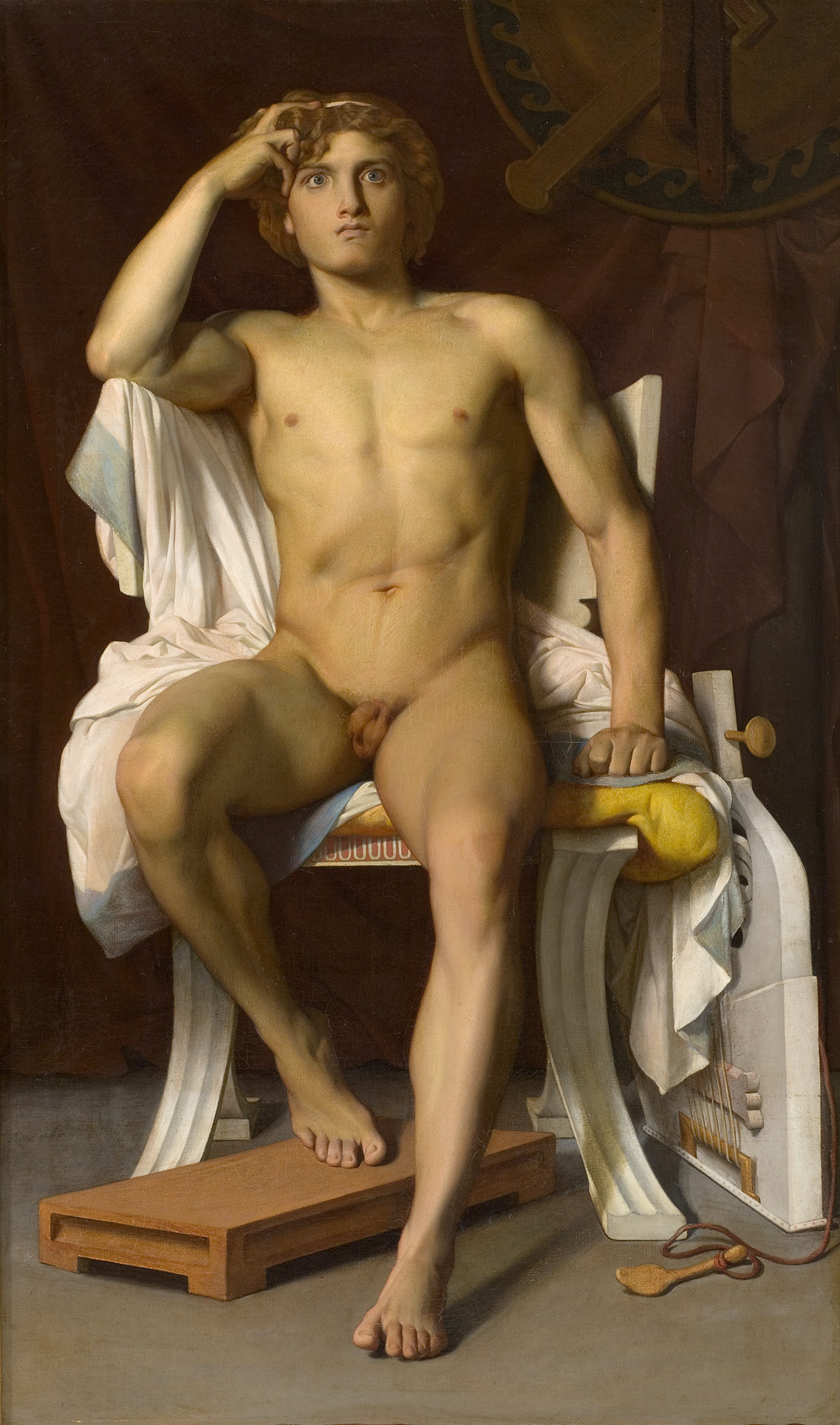
Achilles

Gender: Male
Origin: Greek
Meaning “pain.”
Eng (uh-KEELZ); (ah-KEEL-leez); Fre (ah-SHEEL); It (ah-KIL-le)

The name of the great Pythian hero of the Trojan war, Achilles was invincible save for the one spot on his heel that was vulnerable to killing him. Achilles was timelessly struck down after a poisoned arrow pierced his heel. Some legends state that his mother, Thetis, had dipped him in the river Styx to render her child immortal. However, since she was holding him by one heel, the waters were unable to pass through her hands onto the area to which she held him.

Achilles’ Heels is a term used to describe a person’s weakness. In anatomy, Achilles Tendon is used to describe a tendon of the posterior leg.

As of 2009, Achille was the 204th most popular male name in France.

Other forms of the name include:

  • Akili (Albanian)
  • Akiles (Basque)
  • Ahilej (Bosnian, Serbo-Croatian)
  • Akilles (Breton)
  • Aquil·les (Catalan)
  • Achilles (Czech/English/Polish)
  • Akhilleus (Finnish/Scandinavian: very obscure)
  • Achille (French/Italian)
  • Achilleus Αχιλλευς (Greek)
  • Akhilleusz (Hungarian: obscure)
  • Ahillejs (Latvian)
  • Achilas (Lithuanian)
  • Akille (Maltese)
  • Akilles (Danish/Norwegian/Swedish)
  • Ahile (Romanian)
  • Achilli (Sicilian)
  • Ahil (Slovene)
  • Aquiles (Spanish/Galician/Portuguese)

Ange

Gender: Masculine
Origin: French
Meaning: “angel.”
(AWnzh)

The name comes directly from the French word for angel, and has been used as a given name since at least the 8th-century C.E.

It is techinically an epicène name, that is, one among the several names found within the French lexicon which has always been gender neutral. However, Ange by itself is more often given to males, while for females, it is usually paired with a feminine name, such as Marie-Ange

The name was borne by a few medieval saints. One of the most notable being St. Angelus of Jerusalem (1185-1220), a Christian convert of Jewish ancestry who left his native Palestine to join a friary in Sicily. He was eventually martyred by Berenger, a local knight, who killed him in anger after the saint rebuked him for living in an incestuous relationship.

Ange was a very common name among the early Acadians (Cajuns), of Louisiana and French-Canadians.

As of 2009, Ange was the 264th most popular male name in France.

Other forms of the name include:

  • Àngel (Catalan)
  • Angelus (English/German/Late Latin)
  • Angel (French/Romansch)
  • Angeli(n) (French)
  • Angely (French)
  • Angelo (Italian)
  • Anġlu (Maltese)
  • Àncilu (Sicilian)
  • Ángel (Spanish)
For a more comprehensive list, see Angela.

Joseph, Josephine

Gender: Masculine
Origin: Hebrew יוֹסֵף
Meaning: “He shall add; God shall add.”
Eng (JOH-sef)

The name is derived from the Biblical Hebrew male name, יוֹסֵף (Yosef).

In the Old Testament, the name is borne by the first son of Rachel and the eleventh son of Jacob. After being sold off as a slave by his brothers, Joseph ended up in Egypt, later becoming an important advisor to the pharoah.

In the New Testament, it is borne by the husband of the Virgin Mary. Known as St. Joseph among Catholics, he is a particularly revered saint among Italian Catholics, considered the patron saint of stepfathers and carpenters.

Another important character with this name in the New Testament, is Joseph of Arimathea, a disciple of Christ and also the man who provided a burial spot for Jesus after his death.

The name has always been very prevalent throughout Europe and the Middle East.

In the United States, its popularity can be due to several factors: it was common among both various Christian and Jewish immigrants. The name is even very common among Muslim families.

Currently, Joseph is the 20th most popular male name in the United States, (2010). In fact, Joseph has never ranked outside of the Top 20. Common English nicknames are Joe and Joey. His rankings in other countries are as follows:

  • # 1 (Yusif, Azerbaijan, 2012)
  • # 1 (Yusuf, Turkey, 2010)
  • # 2 (Yusuf, Tajikistan, 2009)
  • # 2 (Youssef, Tunisia)
  • # 3 (Yousef, Arab-World, 2011)
  • # 4 (José, Equitorial Guinea, 2011)
  • # 5 (Joosep, Estonia, 2011)
  • # 5 (Isle of Man, 2009)
  • # 5 (Yousouf, Israel, among Muslim and Christian boys, 2010)
  • # 5 (José, Philippines, 2011)
  • # 5 (Jose, Puerto Rico, 2010)
  • # 7 (Youssef, Morocco)
  • # 8 (Josip, Croatia, 2010)
  • # 8 (Yosef, Israel, among Druze boys, 2004)
  • # 9 (Yosef, Israel, among Jewish boys, 2010)
  • # 14 (Giuseppe, Italy, 2010)
  • # 15 (England/Wales, 2010)
  • # 16 (Joseph/Giuseppe, Malta, 2010)
  • # 29 (Northern Ireland, 2010)
  • # 36 (New Zealand, 2010)
  • # 37 (Ireland, 2010)
  • # 41 (Australia, NSW, 2010)
  • # 41 (József, Hungary, 2010)
  • # 43 (José, Spain, 2010)
  • # 44 (Scotland, 2010)
  • # 51 (José, United States, 2010)
  • # 62 (Josef, Sweden, 2010)
  • # 68 (Josip, Bosnia & Herzegovina, 2010)
  • # 68 (Josep, Catalonia, 2010)
  • # 71 (José, Catalonia, 2010)
  • # 74 (Canada, BC, 2010)
  • # 149 (France, 2009)

Other forms of the name include:

  • Josef (Afrikaans)
  • Isuf (Albanian)
  • Jozef/Jozif (Albanian: Zef is a diminutive form)
  • Sepp (Alsatian)
  • Hovsep Հովսեփ (Armenian)
  • Yūsuf/Youssef/Yussef يوسف, (Arabic)
  • Yusif/Yusuf/Usub (Azeri)
  • Joseba/Josepe (Basque)
  • Joseph ДЖО́ЗЕФ (Belarusian/English/German/French)
  • Josip (Bosnian/Croatian: Joso, Jozo and Joško are diminutive forms)
  • Jusuf (Bosnian)
  • Yosif Йосиф (Bulgarian)
  • Josep (Catalan, Pep is a common diminutive form)
  • Ghjaseppu (Corsican)
  • Jozèf (Creole/Haitian)
  • Josef (Czech)
  • Joep (Dutch: originally a diminutive form, now used as an independent given name)
  • Joop (Dutch: originally a diminutive form, used as an independent given name)
  • Joost (Dutch: originally a diminutive form, now used as an independent given name)
  • Jozef (Dutch)
  • Joseph (English/French/German)
  • Joséphin (French: obscure)
  • Joosep (Estonian)
  • Jósef (Faroese)
  • Jooseppi (Finnish)
  • Juuso (Finnish)
  • Bepùt/Bepi/Bepo (Fruilian)
  • Xosé (Galician)
  • Ioseb იოსებ (Georgian)
  • Ioses/Joses Ιωσης (Greek: Biblical)
  • Iōséph Ἰωσήφ/Iosepos, Iosipos Ιώσηπος (Greek: Modern)
  • Yosef יוסף (Hebrew)
  • Isuppu (Hindi)
  • József (Hungarian: Jóska is the diminutive form)
  • Yusuf/Yusup/Ucup (Indonesian)
  • Giuseppe (Italian: diminutive forms are Beppe, Peppe and Peppino)
  • Giuseppino (Italian)
  • Pino (Italian: diminutive form now used as an independent given name)
  • Seosamh (Irish-Gaelic)
  • Ujöp (Ladino)
  • Iosephus/Josephus (Latin)
  • Jāzeps (Latvian)
  • Gioxeppe (Ligurian)
  • Joep (Limburgish)
  • Juozapas (Lithuanian)
  • Juozas (Lithuanian)
  • Giüsèpp (Lombard: Pèpp and Bèpp are diminutive forms)
  • Ousep/Ousef/Yosef (Malayalam)
  • Ouseppachen/Kochaappu (Malayalam)
  • Ġużeppi (Maltese: Ġużi, Ġuż, Peppi, Pepp, Żeppi and Żepp are diminutives)
  • Hohepa (Maori)
  • Jupp (Moselfrench)
  • Josef (Norwegian)
  • Josèp (Occitanian)
  • Iosifu Іѡсифъ (Old Church Slavonic)
  • Yūsuf/Youssef/Yussef يوسف, (Persian)
  • Joosef (Plattdeutsch)
  • Józef (Polish)
  • Gèseppe (Puglian)
  • Jüppes/Jüppke (Ripoarisch)
  • Iosif (Romanian)
  • Gisep (Romansch)
  • Iosif/Osip Иосиф (Russian)
  • Jisepu (Sardinian)
  • Josif Јосиф (Serbian)
  • Seòsaidh (Scots-Gaelic)
  • Giuseppi (Sicilian)
  • U’Seppi (Sicilian)
  • Zefel/ Zeflik (Silesian)
  • Jozef (Slovakian)
  • Jožef/Jože (Slovene)
  • Sefer (Swabian)
  • José (Spanish/Portuguese: Pepe and Pepito are the diminutive forms)
  • Yusup/Usup/Ucup (Sudanese)
  • Yoseppu (Tamil)
  • Yusuf (Turkish)
  • Yosyp (Ukrainian)
  • Josep (Valencian)
  • Juxepe (Venetian: diminutives are Bepi and Bepin)
  • Joseff (Welsh)
  • Yissl/Jayzl/Yussel (Yiddish)

Bavarian diminutive forms are Pepi, Perperl, SeppSeppiSeppl and Söpp.

Other German diminutives include: Seb, Seffi and Beppal is a Swiss-German diminutive form.

A Rheinish diminutive is Jupp.

Czech diminutives are: Pepík, Pepek, Pepan and Pepin.

Dutch short forms are Jef, Zef and Jos.

A common Hebrew short form is Yosi.

Italian diminutives and its dialectical forms include: Scepp (Calabrian); Pepp’, Pè, Peppiniéllo, Peppì, Peppinié (Campanese); Gioxe, Bepi, Bepin (Ligurian); Gepe and Pinin (Piedmontese); Seppud, Bapèpp, Peppo, Peppin, G’sip, Giusè, Pinucc, Peppon, ‘Mbà Peppe and P’pen (Puglian); Peppe and Pippo (Sicilian); Bepi and Beppe (Tuscan) and  Bepìn and Bepo (Venetian).

Standard Italian diminutives are: Bepi, Beppe, Beppino, Geppetto, Geppino, Peppe, Peppenuzzo, Peppi, Peppino, Peppinello, Peppiniello, Peppinetto, Peppo, Peppuccio, Pino Pinello, Pinuccio, Peppone, Pippo Puccio and Seppe.

Portuguese diminutives include: Zé, Zézinho, Zéca and Zécinha.

Slovakian diminutives are: Jožko, Jojo and Dodo.

Slovene short forms are: Pepe, Pepi and Pepc.

A common Spanish compound name is José Maria

Its more common feminine form of Josephine became prevalent throughout Europe at the end of the 18th-century and at the beginning of the 19th-century, due to the popularity of Josephine Bonaparte, (1763-1814), the wife of Napoleon.

Originally, Joséphine was a French diminutive form of Josèphe. Joséphine became the standard form around the same time Josephine Bonaparte became famous and has remained the more common French feminine form of Joseph, since.

Currently, in the United States, she is the 186th most popular female name, (2010). In the Netherlands, she was the 153rd most popular female name, (2010).

Other feminine forms include:

  • Jozefina (Albanian)
  • Josepa (Catalan: diminutive is Pepa)
  • Josipa (Croatian)
  • Josefa (Czech/Portuguese/Spanish)
  • Josefina (Czech)
  • Jozefien (Dutch)
  • Joetta (English)
  • Josephina/Josephine (English)
  • Josefiina (Finnish)
  • Josée (French)
  • Josèphe (French)
  • Joséphine (French)
  • Josette (French)
  • Josefine (German/Danish)
  • Josepha (German)
  • Iosiphina Ιωσηφίνα (Greek: Modern)
  • Jozefa (Hungarian/Slovene)
  • Jósefína (Icelandic)
  • Seosaimhín (Irish-Gaelic)
  • Giosetta (Italian)
  • Giuseppa/Giuseppina (Italian)
  • Iosephina (Latin)
  • Ġużeppa (Maltese: Ġuża is the diminutive form)
  • Józefa (Polish)
  • Józefina (Polish)
  • Jožefina/Jožefa/Joža (Slovene)
  • Jožica (Slovene: originally a diminutive form, now used as an independent given name)
  • Josefa/Josefina (Spanish)
  • Josefin/Josefine (Swedish)
  • Yosipa/Osipa/Yuzefa (Ukrainian)

Croatian diminutive form is Pepica.

Czech diminutives are: Pepa, Pepca, Pepicka, Pepina, Pepka, Jóža, Jožka and Jóžin.

Common English short forms for Josephine include: Fifi, Jo, Jody, Jojo, Josie and Posey.

Common French diminutive forms are Fifi and Fifette.

German diminutives are Pepa.

Italian diminutives are: Giusy, Pina, Pinuccia, Pinella and Pippa.

Slovene diminutive form is Pepca

Marie-Josée is a common French compound form.

Designated name-days are March 19 and May 1.
Eva, Eve

Gender: Feminine
Origin: Hebrew
Meaning: “life.”
Eng (EEV); (EE-vuh); Germ/Sp/Pol (EV-ah)

The name is borne in the Bible and in the Quran by the first woman created by God. She and her husband were expelled from the Garden of Eden after eating from the Tree of Knowledge.

The name is believed to be derived from the Hebrew roots חַוָּה, Ḥavvāh, from the Hebrew root ḥāyâ meaning “life” and the Semitic element, ḥyw “to live.” Both the Hebrew word chavah meaning “to live” and chayah meaning “to breath” share the same root.

Despite Eve’s fall from Grace in the Bible, the name was always in usage among Jewish, Christian and Muslim communities. In England, its usage can be traced back to the 12th-century. Its Latinate form of Eva, has always been a classic in continental Europe, especially in Germany, Poland, Slovakia and the Czech Republic.

As of 2010, Eva was the most popular female name in the Faroe Islanda and in Slovenia. Eve, Eva and all her various forms’ rankings in other countries are as follows:

  • # 3 (Iceland, 2010)
  • # 4 (French-speaking, Switzerland, 2010)
  • # 5 (Netherlands, 2010)
  • # 7 (Ieva, Lithuania, 2010)
  • # 10 (Armenia, 2010)
  • # 10 (Evie, England/Wales, 2010)
  • # 14 (Northern Ireland, 2010)
  • # 15 (France, 2009)
  • # 17 (Scotland, 2010)
  • # 20 (Belgium, 2009)
  • # 24 (New Zealand, 2010)
  • # 26 (Australia, NSW, 2010)
  • # 29 (Croatia, 2010)
  • # 31 (Evie, Scotland, 2010)
  • # 33 (Evie, Australia, NSW, 2010)
  • # 37 (England/Wales, 2010)
  • # 44 (Eevi, Finland among Finnish-speakers, 2010)
  • # 44 (Ireland, 2010)
  • # 46 (Austria, 2010)
  • # 47 (Canada, BC, 2010)
  • # 48 (Spain, 2010)
  • # 55 (Catalonia, 2010)
  • # 55 (Éabha, Ireland, 2010)
  • # 56 (Eve, Northern Ireland, 2010)
  • # 59 (Eve, Ireland, 2010)
  • # 86 (Norway, 2010)
  • # 91 (United States, 2010)
  • # 92 (Eve, England/Wales, 2010)
  • # 99 (Eve, Australia, NSW, 2010)
  • # 201 (Eve, France, 2009)
  • # 589 (Eve, United States, 2010)
  • # 705 (Evie, United States, 2010)

Other forms of the name include:

  • Eva Ева ევა
    (Afrikaans/Albanian/Armenian/Basque/Belarusian/Bosnian/Catalan/Croatian/Czech/Dutch/Faroese/French/Frisian/Galician/Georgian/German/Icelandic/Italian/Portuguese/Romansch/Spanish/Scandinavian)
  • Evis (Albanian)
  • Mahalet/Mahlet (Amharic)
  • Hawa حواء Хауа (Arabic)
  • Yeva (Armenian)
  • Həvva (Azeri)
  • Yeva Ева Эва (Belarusian/Russian/Ukrainian)
  • Yevga Евга (Belarusian)
  • Hava (Bosnian)
  • Evy (Danish/Norwegian/Swedish: initially a diminutive form, occasionally used as an independent given name)
  • Eveke (Dutch: initially a diminutive form, used as an independent given name, EV-eh-ke)
  • Eve (English/Estonian/Walon)
  • Evie (English)
  • Hawat/Hewa (Egyptian/Coptic)
  • Eeva (Estonian/Finnish)
  • Eevi (Estonian/Finnish)
  • Evi (Estonian)
  • Ivi/Iivi (Estonian)
  • Iivika (Estonian)
  • Ève (French)
  • Eefje, Eefke (Frisian)
  • Hawwa ሕይዋን (Ge-ez)
  • Eua Ευα (Greek)
  • Chava חַוָה (Hebrew: Modern: KHAH-vah, gutteral CH sound)
  • Éva (Hungarian: AY-vaw, diminutive form is Évike)
  • Hawa (Indonesian/Malayalam)
  • Éabha (Irish-Gaelic)
  • Ieva (Latvian/Lithuanian: YEH-vah)
  • Evuzus (Malaysian)
  • Aaue (Manx)
  • Èva (Occitanian)
  • Ewa (Polish: EH-vah, diminutive forms are Ewka, Ewunia and Ewusia)
  • Evá (Sami)
  • Evelia (Spanish)
  • Evita (Spanish)
  • Eba (Tagalog)
  • Havva (Turkish)
  • Efa (Welsh)

Italian masculine form is Evo.

Traditionally, in most European countries, the name-day for Adam and Eve is December 24.

Sabina

Gender: Feminine
Origin: Latin Сабина
Meaning: “Sabine.”
Eng (suh-BEE-nah; suh-BYE-nah).

The name comes from a Roman cognomen, Sabinus, which was usually carried by people of Sabine origins. The Sabines were an ancient Italic people who lived in Central Italy and whose culture was eventually absorbed by the Romans.

The name was borne by an early Christian saint and martyr. It is also the name of a region in Italy which takes its name from the tribe.

It is also the name of a genus of tree, which has probably further popularized the name.

The name could also be from the Arabic, sometimes transliterated as Sabeen, meaning “follower of another religion” and was said to be a name given to the Prophet Mohammed by non-Muslims.

Currently, Sabina is the 13th most popular female name in Kazakhstan, (2010), while Sabine is the 392nd most popular in the Netherlands, (2010).

The name is used throughout Europe and Central Asia.

Other forms include:

  • Sabien (Dutch)
  • Sabine (German/French)
  • Szabina (Hungarian)
  • Sabeena (Indian)
  • Savina (Italian)

Masculine forms include:

  • Sabino (Italian)
  • Savino (Italian)
  • Sabinus (Latin)
  • Sabin (Romanian)

A Czech and Polish diminutive is Sabinka.

Anna, Anne

Gender: Feminine
Origin: Biblical Hebrew
Meaning: “grace.”
(ANN; AHN). (ANN-uh; AHN-nah). (HANN-uh; HAHN-nah)

Anne is possibly one of the quintessential classic English and French female names. Prior to the 18th-century, it seems that every other girl born in England was either named Anne, Jane or Mary. There were several British and French queens who bore this simplistic moniker, including the ill fated Anne Boleyn, the mother of Elizabeth I. The history of Anne is rather long and complicated.

It was foremost popularized through the cult of St. Anne, a legendary figure who was said to be the mother of the Virgin Mary and the grandmother of Christ.

In Brittany, the name became especially popular because it happened to coincide with the name of an ancient Celtic goddess, her cult being replaced by St. Anne’s. In fact, it was borne by one Breton Princess, Anne of Brittany.

The name was introduced into Britain by the French-Normans after the invasion in 1066. Previously, there had been a minor Saxon king named Anna, but in this case the name is related to the Saxon arn (eagle). Anna and Anne are still occasionally used as male given names in Friesland.

Other than the apocryphal saint, the name Anne can be traced directly back to the Bible. In the New Testament, it is the name of a prophetess who predicts the Crucifixion of Christ.

Anna (Αννα), is the Greek translation of the early Hebrew Channah חַנָּה, usually transliterated as Hannah, meaning “grace.”

Hannah is borne in the Old Testament by the faithful mother of the prophet, Samuel.

Hannah has always been popular among Jewish families, but was virtually unheard of among non-Jews before the Reformation, except in some cases where it may have been used as a diminutive form of Johanna, spelled Hanna.

It was the Byzantines who had introduced the Anna form to the world, making it popular throughout Eastern and Southern Europe. It was a very popular name among the Byzantine royal family and it was borne by the majestic Anna of Byzantium.

Anna may be the more melodic form of the bunch, but Anne’s minimalistic qualities are charming. Short, to the point, no frills. It’s not a bad name, though it does lack some spice, which is why parents are probably more attracted to its more exotic alternatives. In fact, Anne only comes in at # 608 in the top 1000 female names of the United States. It is safe to say, however, that she is very much loved in the middle name spot.

Anna is currently one of the most popular female names in Europe and abroad. Her rankings are as follows:

  • # 1 (Austria, 2010)
  • # 1 (Estonia, 2011)
  • # 2 (Hungary, 2010)
  • # 3 (Ana, Georgia, 2010)
  • # 3 (Iceland, 2010)
  • # 4 (Ana, Croatia, 2010)
  • # 4 (Czech Republic, 2010)
  • # 4 (Germany, 2011)
  • # 4 (Ukraine, 2010)
  • # 5 (Faroe Islands, 2010)
  • # 5 (Ana, Portugal, 2010)
  • # 6 (Armenia, 2010)
  • # 6 (Ane, Greenland, 2002-2003)
  • # 6 (Ana, Romania, 2009)
  • # 6 (Ana, Serbia, 2010)
  • # 7 (Latvia, 2011)
  • # 7 (Russia, 2011)
  • # 8 (German-speaking Switzerland, 2010)
  • # 9 (Denmark, 2011)
  • # 10 (Netherlands, 2010)
  • # 10 (Northern Ireland, 2010)
  • # 10 (Norway, 2010)
  • # 11 (Italy, 2010)
  • # 12 (Ireland, 2010)
  • # 14 (Poland, 2010)
  • # 16 (Catalonia, 2010)
  • # 26 (Canada, B.C., 2010)
  • # 28 (Italian-speaking Switzerland, 2010)
  • # 28 (United States, 2010)
  • # 29 (Scotland, 2010)
  • # 40 (France, 2009)
  • # 46 (French-speaking Switzerland, 2010)
  • # 53 (Belgium, 2009)
  • # 63 (England/Wales, 2010)
  • # 71 (Australia, 2010)
  • # 81 (Sweden, 2010)
  • # 83 (Spain, 2010)
Other forms of the name include:
  • Anneen (Afrikaans/Low German)
  • Anna Анна (Afrikaans/Albanian/Armenian/Breton/Bulgarian/Catalan/Corsican/Czech/Dutch/English/Estonian/Faroese/Finnish/French/Frisian/German/Greek/Hungarian/Icelandic/Italian/Latvian/Limburgish/Maltese/Polish/Russian/Ukrainian/Scandinavian/Slovak)
  • Anne (Basque/Dutch/English/French/Scandinavian)
  • Gánna Га́нна (Belarusian)
  • Annaig (Breton)
  • Annick (Breton)
  • Maina (Breton)
  • Mannaig (Breton)
  • Mannick (Breton)
  • Naig (Breton)
  • Ana Ана ანა (Bulgarian/Croatian/Galician/Georgian/Lombard/Macedonian/Portuguese/Romanian/Samogaitian/Serbian/Slovene/Spanish/Venetian)
  • Jana (Croatian/Ladino)
  • Aneta (Czech/Polish/Samogaitian/Slovak)
  • Aina (Catalan)
  • Anica (Croatian/Serbian/Slovene)
  • Ane (Danish)
  • Anika (Danish)
  • Anneke (Dutch)
  • Anneken (Dutch)
  • Annika (Dutch/Finnish/German/Latvian/Scandinavian)
  • Anka (Dutch/Frisian/German)
  • An(n)ke (Dutch/Frisian)
  • Anouk (Dutch/French)
  • Ans (Dutch)
  • Enneke (Dutch)
  • Enneken (Dutch)
  • Anita (English/German/Polish/Spanish)
  • Annette (English/French/German)
  • Anissa (English)
  • Annelle/Annella (Estonian)
  • Anete (Estonian/Latvian)
  • Anett (Estonian)
  • Anu (Estonian)
  • Anni (Finnish)
  • Annikki (Finnish)
  • Anniina (Finnish)
  • Annukka (Finnish)
  • Niina (Finnish)
  • Anaïs (French/Provençal)
  • Annouche (French)
  • Ninette (French)
  • Ninon (French)
  • Ninouk (French)
  • Anje (Frisian)
  • Ankea (Frisian)
  • Antje (Frisian)
  • Antjen (Frisian)
  • Anute (Fruilian)
  • Anano (Georgian)
  • Annchen (German)
  • Annel (German)
  • Annele (German/Latvian)
  • Anneli(e) (German/Finnish/Swedish)
  • Annet (German)
  • Anina (German)
  • Anja (German/Slovene)
  • Anouschka (German/Italian/Russian)
  • Annaki (Greek)
  • Annoula (Greek)
  • Noula (Greek)
  • Anikó (Hungarian)
  • Annuska (Hungarian)
  • Panni (Hungarian)
  • Áine (Irish)
  • Ánna (Irish)
  • Annarella (Italian)
  • Annella (Italian)
  • Annetta (Italian)
  • Annettina (Italian)
  • Nona (Italian/Romansch)
  • Ance (Latvian)
  • Annija (Latvian)
  • Anninya (Latvian)
  • Ona (Lithuanian)
  • Annamma (Malayalam)
  • Annam (Malayalam)
  • Onnee (Manx)
  • Âone (Norman)
  • Aenna/Aenne (Old High German)
  • Annehe (Old High German)
  • Änna/Änne (Old High German)
  • Neta (Piedmontese)
  • Noto (Piedmontese)
  • Anke (Plattdeutsch)
  • Anneke(n) (Plattdeutsch)
  • Analia (Romansch/Spanish)
  • Annina (Romansch)
  • Annotta (Romansch)
  • Anca (Romanian)
  • Anicuta (Romanian)
  • Anėta (Samogaitian)
  • Anėkė (Samogaitian)
  • Annag (Scottish)
  • Ghianna (Sicilian)
  • Janna (Sicilian)
  • Nanna (Sicilian)
  • Anniken (Swedish)
  • Ann (Welsh)
  • Nan (Welsh)
  • Nanno (Welsh)
  • Nanw (Welsh)
  • Aana (Wolof)
As for the Hannah forms

Hanna without an H is the prefered form on Continental Europe, usually pronounced (HAHN-nah) and in French like Anna. Hanna and Hanne (HAHN-neh) are also used as diminutive forms of Johanna/Johanne in the Netherlands, Sweden, Norway, Denmark and Germany. There is the Hungarian Hajna pronounced (HOY-no). The Czech/Slovak form of Hana nickname Hanka. There are the Yiddish forms of Heyna, Hayna, Hejna (all pronounced like HAY-nah) including the diminutive forms of HenaHende, Hendel and Henye.  The Polish diminutive form of Hania, which might make an interesting alternative to Anya or Hannah. Hannah, Hanna and Henna are all used in the Middle East.

Of course, how could we ever forget the popular diminutive forms of Annie and Nan.

Paul

Gender: Masculine
Origin: Latin
Meaning: “short; small; humble; few.”
Eng (PAWL)

The name is derived from the Latin Roman family name, Paulus, which could translate as meaning, “small, short; humble; few.”

Paul and his various forms has to be one of the most common male names used throughout the Christian world. It has been used equally among Orthodox Christians, Roman Catholics and Protestants.

Its most famous bearer was Paul of Tarsus, whose real name was Saul. St. Paul, as referred to by the Roman Catholic and Eastern Orthodox Churches, is attributed as being the author of much of the New Testament.

The name was borne by several popes, royals and saints thereafter.

Currently, its Germanic form of Paul is the 8th most popular male name in Germany, (2011). His rankings in other countries are as follows:

  • # 13 (Austria, 2010)
  • # 22 (France, 2009)
  • # 41 (Romania, 2009)
  • # 90 (Ireland, 2010)
  • # 130 (Scotland, 2010)
  • # 178 (United States, 2010)
  • # 485 (Netherlands, 2010)
His foreign equivalents rankings are as follows:
  • # 3 (Pablo, Spain, 2010)
  • # 4 (Páll, Faroe Island, 2010)
  • # 4 (Pau, Catalonia, 2010)
  • # 17 (Paweł, Poland, 2010)
  • # 26 (Pablo, Chile, 2010)
  • # 29 (Pavel, Czech Republic, 2010)
  • # 31 (Pablo, Catalonia, 2010)
  • # 44 (Pau, Spain, 2010)
  • # 91 (Pál, Hungary, 2010)
  • # 144 (Pablo, France, 2009)
  • # 202 (Paolo, France, 2009)
  • # 361 (Pablo, United States, 2010)

Other forms of the name include:

  • Pali (Albanian)
  • Paulë (Albanian)
  • Boulos/Bulos بولس (Arabic)
  • Faulus (Aramaic)
  • Boghos Պողոս (Armenian)
  • Poghos Պողոս (Armenian)
  • Paul (Basque/Dutch/English/Estonian/German/French/Romanian/Scandinavian/Silesian)
  • Paweł Павeл (Belarusian/Polish)
  • Polus (Berber)
  • Paol (Breton)
  • Pavel Павел (Bulgarian/Czech/Russian/Slovene)
  • Pavolo (Calabrian)
  • Pavulu (Calabrian)
  • Pau (Catalan/Occitanian)
  • Pawl (Cornish/Welsh)
  • Paulu (Corsican/Sardinian/Sicilian)
  • Pavao (Croatian)
  • Pavle პავლე Павле (Croatian/Georgian/Macedonian/Serbian)
  • Pavo (Croatian)
  • Palle (Danish)
  • Poul (Danish)
  • Pauwel (Dutch)
  • Paavel (Estonian)
  • Paavo (Estonian/Finnish)
  • Páll (Faroese/Icelandic)
  • Paavali (Finnish)
  • Pauli (Finnish)
  • Pol (Flemmish/Romansch)
  • Paale (Frisian)
  • Pals (Frisian)
  • Paulus पौलुस (Frisian/Hindi/Latin)
  • Pay (Frisian)
  • Powles (Frisian)
  • Pouw (Frisian)
  • Pauli (Fruilian)
  • Pódhl (Gaelic)
  • Pól (Gaelic)
  • Paulo (Galician)
  • Pavlos Παυλος (Greek)
  • Pāl पॉल (Hindi)
  • Pál (Hungarian)
  • Pósa (Hungarian)
  • Paolo (Italian/Portuguese)
  • Paolino (Italian/Portuguese)
  • Paulinus (Latin)
  • Pāvils (Latvian)
  • Paulius (Lithuanian)
  • Povilas (Lithuanian)
  • Paol (Lombard)
  • Paulose (Malayalam)
  • Pawl (Maltese)
  • Pawlu (Maltese)
  • Payl (Manx)
  • Paora (Maori)
  • Pål (Norwegian/Swedish)
  • Pavel (Romanian)
  • Paulin (Romansch)
  • Polet (Romansch)
  • Polin (Romansch)
  • Pulegn (Romansch)
  • Pàl (Scots-Gaelic)
  • Pawůł (Silesian)
  • Pavol (Slovak)
  • Pawoł (Sorbian)
  • Pablo (Spanish)
  • Paoro (Tahitian)
  • Pàul (Tuscan)
  • Pavlo Павло (Ukrainian)

For a Reference a Female forms See Paula and Paulina (soon to come)

Jerome

Gender: Masculine
Origin: Greek ‘Ιερωνυμος
Meaning: “sacred name.”
Eng (jə-ROM), Fre (zheh-HROME)

The name is derived from the Greek male name, Hieronymus (‘Ιερωνυμος).

It was borne by a 5th-century saint who is responsible for creating the Vulgate Bible. He is revered as a Doctor of the Church.

The name was common in England during the 12th-century, but fell out of usage after the Protestant Reformation, only to be reintroduced again in 19th-century America via Catholic immigrants from Germany, Ireland and Italy.

Currently, Jerome is the 208th most popular male name in Germany, (2011).

Other forms of the name include:

  • Jeronimi (Albanian)
  • Hieronimos Հիերոնիմոս (Armenian)
  • Jerolin (Basque)
  • Gerasim Герасім (Belarusian)
  • Jeronim Йероним (Bulgarian)
  • Jeroni (Catalan)
  • Jeronim Јероним (Croatian/Serbian)
  • Jeroným (Czech)
  • Hero (Dutch)
  • Hiëronymus (Dutch)
  • Jeroen (Dutch)
  • Jero(o)m (Dutch)
  • Jerome (English/German)
  • Jérôme (French)
  • Iaróm (Gaelic)
  • Ieróim (Gaelic)
  • Xerome (Galician)
  • Jeromos (Hungarian)
  • Geronimo (Italian)
  • Girolamo (Italian)
  • Jeronimas (Lithuanian)
  • Ġlormu (Maltese)
  • Jiròni (Occitanian)
  • Hieronim (Polish/Slovene)
  • Jerônimo (Portuguese: Brazilian)
  • Jerónimo (Portuguese/Spanish)
  • Ieronim Иерони́м Ієронім (Romanian/Russian/Ukrainian)
  • Jaronas (Romansch)
  • Jerun (Romansch)
  • Giron(n)as (Romansch)
  • Jerone (Sardinian)
  • Zirominu (Sardinian)
  • Giròlamu (Sicilian)
  • Hieronym (Slovak)
  • Jarolím (Slovak)
  • Hierónimo (Spanish)
  • Sierôm (Welsh)


Florian

Gender: Masculine
Origin: Latin
Meaning: “flower.”

The name is derived from the Latin Florianus, which is derived from the Roman gens name Florus, meaning “flower.”

The name is borne by an early Christian saint and martyr who is considered the patron saint of Upper Austria, Poland and firefighters. In German slang, fighfighters are sometimes generically referred to as Florian, and there is a German folk saying called the Florian Principle which refers to a prayer to the saint, which goes:

O holy Saint Florian, spare my house, kindle others

This saying is the equivalent of the English saying, “not in my backyard.”

Florian has always been a popular name in German-speaking countries. It is currently the 10th most popular male name in Austria, (2010). His rankings in other countries are as follows:

  • # 35 (Germany, 2011)
  • # 79 (France, 2009)
  • # 84 (Belgium, 2009)
  • # 100 (Hungary, 2010)
  • # 155 (the Netherlands, 2010)

Other forms of the name include:

  • Florian Флориан (Albanian/Bulgarian/Dutch/English/French/German/Hungarian/Polish/Romanian/Russian/Spanish/Ukrainian)
  • Florià (Catalan)
  • Florijan (Croatian/Slovene)
  • Florián (Czech/Slovak)
  • Floriaan (Dutch)
  • Florianus (Dutch/Latin)
  • Flórián (Hungarian)
  • Flóris (Hungarian)
  • Fóris (Hungarian)
  • Fiorino (Italian)
  • Floreano (Italian)
  • Floriano (Italian/Portuguese)
  • Florians (Latvian)
  • Florijonas (Lithuanian)
  • Tworzyjan (Polish: sometimes used as a vernacular form)
  • Florin (Romanian)
  • Flurin (Romansch)
  • Florianu (Sicilian)
  • Florjan (Slovene)

Feminine forms include:

  • Floriana (Albanian/Italian/Romanian)
  • Florijana (Croatian/Slovene)
  • Floriane (French/German)
  • Fiorina (Italian)
  • Floreana (Italian)
  • Florianna (Polish)
  • Floryjana (Polish: archaic form)
  • Florina (Romanian)
  • Flurina (Romansch)
  • Florika (Slovene)
  • Florjana (Slovene)
Polish diminutives are Floszka and Tworka.