Tigran

Gender: Masculine
Origin: Armenian Տիգրան
Meaning: uncertain
(TEE-grahn)

The name is an ancient Armenian name of uncertain etymology, but is possibly of Persian origins.

It was borne by several Armenian kings, the most famous being Tigran the Great (140-55 BCE).

Currently, Tigran is the 8th most popular male name in Armenian, (2010).

Another form is Dikran.

Arman

Gender: Masculine
Origin: Persian Арман Արման
(AHR-mahn)

The name is most likely derived from an Old Persian male name meaning “ideal, wish; aspiration” or “destination.”

It has entered several Central Asian languages and in Kazakh it refers to “dream; hope” and is used as a male given name.

In Armenia, it is the 5th most popular male name and it is often argued to be derived from the ancient Armenian root ar (sun) or (Armenian man), however, it is most likely a borrowing from the Persian.

It is currently the 29th most popular male name in Bosnia & Herzegovina.

Evan

Gender: Masculine
Origin: Welsh
(EV-en)

The name is an anglicized form of the Welsh male name Iefan, which is the Welsh form of John.

Evan can also be a Breton form of John.

It is one of the most popular male names in the Anglophone world and elsewhere as well. It is currently the 14th most popular male name in French-speaking, Switzerland (2010). His rankings in other countries are as follows:

  • # 22 (Canada, BC, 2010)
  • # 25 (France, 2009)
  • # 27 (Ireland, 2010)
  • # 34 (Italian-speaking, Switzerland, 2010)
  • # 36 (United States, 2010)
  • # 73 (Scotland, 2010)
  • # 76 (England/Wales, 2010)
  • # 79 (Northern Ireland, 2010)
  • # 276 (Netherlands, 2010)

Loïc

Gender: Masculine
Origin: Breton
(loh-EEK)

The name is of somewhat debated origin. One is that it is a Breton form of Louis, however, in the Breton language, ïc usually denotes a diminutive form and thus it would not make sense that it is a form of Louis, and there is no other full Breton name which would fit the mold of Loïc. It has been suggested that it is instead an old Provençal form of Louis which was later borrowed by the Bretons.

Others have listed it as a franconized form of Laoig, a Breton diminutive form of William and it has also been connected with Lucas, being a Provençal form of such.

Currently, Loïc is the 34th most popular male name in French-speaking, Switzerland, (2010). His rankings in other countries are as follows:

  • # 62 (Belgium, 2009)
  • # 113 (France, 2009)

Fidan

Gender: Feminine
Origin: Turkish
Meaning: “sapling.”
(fee-DAHN)

The name comes directly from the Turkic meaning “sapling; young tree.”

The name is currently the 4th most popular female name in Azerbaijan.

The name is exclusively feminine in both Azerbaijan and Turkey and always seems to have been used as a female given name, but in Albania it is a common male name. It is from the ancient Illyrian meaning “young tree” and does share the same etymology and roots as the Turkish as Illyrian was distantly related to Turkish.

Milena

Gender: Feminine
Origin: Slavic Милена
Meaning: “dear; gracious.”
(mee-LEH-nah)

The name is derived from the Slavonic element mil meaning “gracious; dear.”

The name is used in virtually every Slavic speaking country, and is currently the most popular female name in Armenia. It is also used in Brazil, Spanish-speaking countries, German-speaking countries, Italy and Hungary.

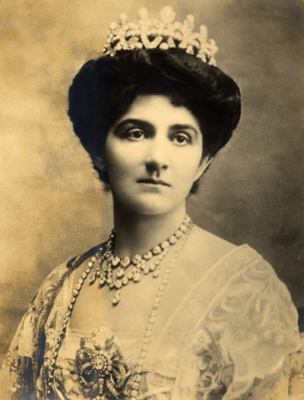
The name was introduced into Italy when King Emmanuel III of Italy married Milena Vukotić (1847-1923).

Her rankings in other countries are as follows:

  • # 2 (Romansch-speaking Switzerland, 2010)
  • # 25 (Poland, 2010)
  • # 32 (Poland, Warsaw, 2010)
  • # 50 (Brazil, 2010)
  • # 54 (Argentina, 2009)
  • # 73 (Germany, 2011)
  • # 353 (Netherlands, 2010)

The Bulgarian masculine form is Milen Милен.

Other forms of the name include:

  • Miléna (Hungarian)
  • Milica (Croatian/Serbian)
  • Mileva (Serbian)
  • Mylyca (Ukrainian)

Anna, Anne

Gender: Feminine
Origin: Biblical Hebrew
Meaning: “grace.”
(ANN; AHN). (ANN-uh; AHN-nah). (HANN-uh; HAHN-nah)

Anne is possibly one of the quintessential classic English and French female names. Prior to the 18th-century, it seems that every other girl born in England was either named Anne, Jane or Mary. There were several British and French queens who bore this simplistic moniker, including the ill fated Anne Boleyn, the mother of Elizabeth I. The history of Anne is rather long and complicated.

It was foremost popularized through the cult of St. Anne, a legendary figure who was said to be the mother of the Virgin Mary and the grandmother of Christ.

In Brittany, the name became especially popular because it happened to coincide with the name of an ancient Celtic goddess, her cult being replaced by St. Anne’s. In fact, it was borne by one Breton Princess, Anne of Brittany.

The name was introduced into Britain by the French-Normans after the invasion in 1066. Previously, there had been a minor Saxon king named Anna, but in this case the name is related to the Saxon arn (eagle). Anna and Anne are still occasionally used as male given names in Friesland.

Other than the apocryphal saint, the name Anne can be traced directly back to the Bible. In the New Testament, it is the name of a prophetess who predicts the Crucifixion of Christ.

Anna (Αννα), is the Greek translation of the early Hebrew Channah חַנָּה, usually transliterated as Hannah, meaning “grace.”

Hannah is borne in the Old Testament by the faithful mother of the prophet, Samuel.

Hannah has always been popular among Jewish families, but was virtually unheard of among non-Jews before the Reformation, except in some cases where it may have been used as a diminutive form of Johanna, spelled Hanna.

It was the Byzantines who had introduced the Anna form to the world, making it popular throughout Eastern and Southern Europe. It was a very popular name among the Byzantine royal family and it was borne by the majestic Anna of Byzantium.

Anna may be the more melodic form of the bunch, but Anne’s minimalistic qualities are charming. Short, to the point, no frills. It’s not a bad name, though it does lack some spice, which is why parents are probably more attracted to its more exotic alternatives. In fact, Anne only comes in at # 608 in the top 1000 female names of the United States. It is safe to say, however, that she is very much loved in the middle name spot.

Anna is currently one of the most popular female names in Europe and abroad. Her rankings are as follows:

  • # 1 (Austria, 2010)
  • # 1 (Estonia, 2011)
  • # 2 (Hungary, 2010)
  • # 3 (Ana, Georgia, 2010)
  • # 3 (Iceland, 2010)
  • # 4 (Ana, Croatia, 2010)
  • # 4 (Czech Republic, 2010)
  • # 4 (Germany, 2011)
  • # 4 (Ukraine, 2010)
  • # 5 (Faroe Islands, 2010)
  • # 5 (Ana, Portugal, 2010)
  • # 6 (Armenia, 2010)
  • # 6 (Ane, Greenland, 2002-2003)
  • # 6 (Ana, Romania, 2009)
  • # 6 (Ana, Serbia, 2010)
  • # 7 (Latvia, 2011)
  • # 7 (Russia, 2011)
  • # 8 (German-speaking Switzerland, 2010)
  • # 9 (Denmark, 2011)
  • # 10 (Netherlands, 2010)
  • # 10 (Northern Ireland, 2010)
  • # 10 (Norway, 2010)
  • # 11 (Italy, 2010)
  • # 12 (Ireland, 2010)
  • # 14 (Poland, 2010)
  • # 16 (Catalonia, 2010)
  • # 26 (Canada, B.C., 2010)
  • # 28 (Italian-speaking Switzerland, 2010)
  • # 28 (United States, 2010)
  • # 29 (Scotland, 2010)
  • # 40 (France, 2009)
  • # 46 (French-speaking Switzerland, 2010)
  • # 53 (Belgium, 2009)
  • # 63 (England/Wales, 2010)
  • # 71 (Australia, 2010)
  • # 81 (Sweden, 2010)
  • # 83 (Spain, 2010)
Other forms of the name include:
  • Anneen (Afrikaans/Low German)
  • Anna Анна (Afrikaans/Albanian/Armenian/Breton/Bulgarian/Catalan/Corsican/Czech/Dutch/English/Estonian/Faroese/Finnish/French/Frisian/German/Greek/Hungarian/Icelandic/Italian/Latvian/Limburgish/Maltese/Polish/Russian/Ukrainian/Scandinavian/Slovak)
  • Anne (Basque/Dutch/English/French/Scandinavian)
  • Gánna Га́нна (Belarusian)
  • Annaig (Breton)
  • Annick (Breton)
  • Maina (Breton)
  • Mannaig (Breton)
  • Mannick (Breton)
  • Naig (Breton)
  • Ana Ана ანა (Bulgarian/Croatian/Galician/Georgian/Lombard/Macedonian/Portuguese/Romanian/Samogaitian/Serbian/Slovene/Spanish/Venetian)
  • Jana (Croatian/Ladino)
  • Aneta (Czech/Polish/Samogaitian/Slovak)
  • Aina (Catalan)
  • Anica (Croatian/Serbian/Slovene)
  • Ane (Danish)
  • Anika (Danish)
  • Anneke (Dutch)
  • Anneken (Dutch)
  • Annika (Dutch/Finnish/German/Latvian/Scandinavian)
  • Anka (Dutch/Frisian/German)
  • An(n)ke (Dutch/Frisian)
  • Anouk (Dutch/French)
  • Ans (Dutch)
  • Enneke (Dutch)
  • Enneken (Dutch)
  • Anita (English/German/Polish/Spanish)
  • Annette (English/French/German)
  • Anissa (English)
  • Annelle/Annella (Estonian)
  • Anete (Estonian/Latvian)
  • Anett (Estonian)
  • Anu (Estonian)
  • Anni (Finnish)
  • Annikki (Finnish)
  • Anniina (Finnish)
  • Annukka (Finnish)
  • Niina (Finnish)
  • Anaïs (French/Provençal)
  • Annouche (French)
  • Ninette (French)
  • Ninon (French)
  • Ninouk (French)
  • Anje (Frisian)
  • Ankea (Frisian)
  • Antje (Frisian)
  • Antjen (Frisian)
  • Anute (Fruilian)
  • Anano (Georgian)
  • Annchen (German)
  • Annel (German)
  • Annele (German/Latvian)
  • Anneli(e) (German/Finnish/Swedish)
  • Annet (German)
  • Anina (German)
  • Anja (German/Slovene)
  • Anouschka (German/Italian/Russian)
  • Annaki (Greek)
  • Annoula (Greek)
  • Noula (Greek)
  • Anikó (Hungarian)
  • Annuska (Hungarian)
  • Panni (Hungarian)
  • Áine (Irish)
  • Ánna (Irish)
  • Annarella (Italian)
  • Annella (Italian)
  • Annetta (Italian)
  • Annettina (Italian)
  • Nona (Italian/Romansch)
  • Ance (Latvian)
  • Annija (Latvian)
  • Anninya (Latvian)
  • Ona (Lithuanian)
  • Annamma (Malayalam)
  • Annam (Malayalam)
  • Onnee (Manx)
  • Âone (Norman)
  • Aenna/Aenne (Old High German)
  • Annehe (Old High German)
  • Änna/Änne (Old High German)
  • Neta (Piedmontese)
  • Noto (Piedmontese)
  • Anke (Plattdeutsch)
  • Anneke(n) (Plattdeutsch)
  • Analia (Romansch/Spanish)
  • Annina (Romansch)
  • Annotta (Romansch)
  • Anca (Romanian)
  • Anicuta (Romanian)
  • Anėta (Samogaitian)
  • Anėkė (Samogaitian)
  • Annag (Scottish)
  • Ghianna (Sicilian)
  • Janna (Sicilian)
  • Nanna (Sicilian)
  • Anniken (Swedish)
  • Ann (Welsh)
  • Nan (Welsh)
  • Nanno (Welsh)
  • Nanw (Welsh)
  • Aana (Wolof)
As for the Hannah forms

Hanna without an H is the prefered form on Continental Europe, usually pronounced (HAHN-nah) and in French like Anna. Hanna and Hanne (HAHN-neh) are also used as diminutive forms of Johanna/Johanne in the Netherlands, Sweden, Norway, Denmark and Germany. There is the Hungarian Hajna pronounced (HOY-no). The Czech/Slovak form of Hana nickname Hanka. There are the Yiddish forms of Heyna, Hayna, Hejna (all pronounced like HAY-nah) including the diminutive forms of HenaHende, Hendel and Henye.  The Polish diminutive form of Hania, which might make an interesting alternative to Anya or Hannah. Hannah, Hanna and Henna are all used in the Middle East.

Of course, how could we ever forget the popular diminutive forms of Annie and Nan.

Joel

Gender: Masculine
Origin: Biblical Hebrew יוֹאֵל 
Meaning: “Yahweh is God.”
Eng (JOLE); Fre (zhoh-EL); Germ (YOH-el)

The name is derived from the Hebrew male name, Yo’el  (יוֹאֵל), meaning, “Yahweh is God.” The name is borne in the Old Testament by a minor prophet.

Currently, Joel is the 14th most popular male name in German-speaking, Switzerland, (2010). And his rankings in other countries are as follows:

  • # 20 (Catalonia, 2010)
  • # 33 (Finland, 2010)
  • # 39 (Gioele, Italian-speaking, Switzerland, 2010)
  • # 46 (Germany, 2011)
  • # 50 (Northern Ireland, 2010)
  • # 58 (Spain, 2010)
  • # 59 (Sweden, 2010)
  • # 79 (New Zealand, 2010)
  • # 81 (England/Wales, 2010)
  • # 99 (Australia, 2010)
  • # 132 (United States, 2010)
  • # 152 (Netherlands, 2010)
  • # 161 (Scotland, 2010)

Other forms of the name include:

  • Joel (Catalan/English/Finnish/Polish/Portuguese/Romansch/Scandinavian/Spanish)
  • Joël (Dutch/German/French)
  • Yo’el יוֹאֵל (Hebrew)
  • Gioele (Italian)
A French feminine form is Joëlle.