Joel

Gender: Masculine
Origin: Biblical Hebrew יוֹאֵל 
Meaning: “Yahweh is God.”
Eng (JOLE); Fre (zhoh-EL); Germ (YOH-el)

The name is derived from the Hebrew male name, Yo’el  (יוֹאֵל), meaning, “Yahweh is God.” The name is borne in the Old Testament by a minor prophet.

Currently, Joel is the 14th most popular male name in German-speaking, Switzerland, (2010). And his rankings in other countries are as follows:

  • # 20 (Catalonia, 2010)
  • # 33 (Finland, 2010)
  • # 39 (Gioele, Italian-speaking, Switzerland, 2010)
  • # 46 (Germany, 2011)
  • # 50 (Northern Ireland, 2010)
  • # 58 (Spain, 2010)
  • # 59 (Sweden, 2010)
  • # 79 (New Zealand, 2010)
  • # 81 (England/Wales, 2010)
  • # 99 (Australia, 2010)
  • # 132 (United States, 2010)
  • # 152 (Netherlands, 2010)
  • # 161 (Scotland, 2010)

Other forms of the name include:

  • Joel (Catalan/English/Finnish/Polish/Portuguese/Romansch/Scandinavian/Spanish)
  • Joël (Dutch/German/French)
  • Yo’el יוֹאֵל (Hebrew)
  • Gioele (Italian)
A French feminine form is Joëlle.

Levin

Gender: Masculine
Origin: Frisian
Meaning: “dear friend.”
(LEV-een)

The name is a Frisian form of the Old High German, Liobwin, which is composed of the elements, liob (love; dear) and win (friend).

The name was extremely common in 19th-century Germany and was used by German-Jews as a cognate of Levi.

It has recently come into vogue again. It is currently the 8th most popular male name in German-speaking Switzerland, (2010). His rankings in other countries are as follows:

  • # 87 (Germany, 2011)

Liam

Gender: Masculine
Origin: Irish
(LEE-em)

The name was originally an Irish short form of William, now used exclusively as an independent given name, it is currently one of the most popular male names in the Western World, most likely due to the fame of Northern Irish actor, Liam Neeson (b.1952).

Currently, Liam is the most popular male name in Canada, B.C., (2010). His rankings in other countries are as follows:

  • # 1 (New Zealand, 2010)
  • # 9 (Scotland, 2010)
  • # 9 (Sweden, 2010)
  • # 14 (Australia, 2010)
  • # 15 (Ireland, 2010)
  • # 17 (Malta, 2010)
  • # 20 (Belgium, 2009)
  • # 24 (Netherlands, 2010)
  • # 26 (French-speaking Switzerland, 2010)
  • # 30 (United States, 2010)
  • # 33 (England/Wales, 2010)
  • # 33 (Norway, 2010)
  • # 41 (German-speaking, Switzerland 2010)
  • # 43 (Northern Ireland, 2010)
  • # 61 (Slovenia, 2010)
  • # 64 (Germany, 2011)
  • # 73 (France, 2009)

Janis, Jānis

Gender: Masculine
Origin: Latvian
Meaning: “returner; walker.”

The name is most likely derived from the Latvian male name Jānis, which is used a the official Latvian cognate of John, but is actually of pre-Christian origins, being derived from the Latvian element jāt (to ride). The meaning of the name is in reference to the cosmic movement.

In Latvian mythology, it was borne by a major Latvian god, who was later syncrenized with St. John the Baptist. The major holiday of Jāņi (the Latvian Midsummer festival) usually takes place on June 24.

Currently, Janis is rather trendy in German-speaking countries. It is a mystery as to its recent popularity outside of Latvia. Its Franconized variant, Yanis, is currently the most popular male name in Luxembourg, (2010). Janis’ rankings in other countries are as follows:

  • # 32 (German-speaking, Switzerland 2010)
  • # 59 (Germany, 2011)

Noah

Gender: Masculine
Origin: Biblical Hebrew נוֹחַ 
Meaning: “rest; comfort.”
Eng (NOH-ah)

The name is derived from the Hebrew male name נוֹחַ (Noach) which can either be from the Hebrew (nāḥam) meaning “comfort” or (nûaḥ) meaning, “rest.”

It borne in the Old Testament (Genesis) by the builder of the Ark that allowed him, his family and the animal species to survive the Great Flood. The same story also appears in the Qu’ran. In Islam, Nuh (Noah) is revered as a prophet.

The story of Noah’s Ark was extremely popular in Medieval Europe and he was even revered as a saint by the Catholic Church, but Noah itself never caught on as a given name until after the Protestant Reformation, when it became extremely popular among the Puritans. It fell out of usage between the 19th-century up until recently, where it is now one of the most popular male names in the Western World.

Its recent boom in popularity is a mystery. It is currently the most popular male name in German-speaking Switzerland (2010) and Belgium (2009), and his rankings in other countries are as follows:

  • # 2 (Nojus, Lithuanian, 2010)
  • # 3 (Denmark, 2011)
  • # 3 (French-speaking Switzerland, 2010)
  • # 5 (Nóa Faroe Islands, 2010)
  • # 7 (United States, 2010)
  • # 8 (Australia, 2010)
  • # 9 (Canada, B.C., 2010)
  • # 11 (Germany, 2011)
  • # 11 (Northern Ireland, 2010)
  • # 11 (Norway, 2010)
  • # 12 (New Zealand, 2010)
  • # 14 (France, 2009)
  • # 18 (England/Wales, 2010)
  • # 21 (Netherlands, 2010)
  • # 23 (Italian-speaking Switzerland, 2010)
  • # 25 (Sweden, 2010)
  • # 26 (Ireland, 2010)
  • # 27 (Austria, 2010)
  • # 32 (Noé, French-speaking Switzerland, 2010)
  • # 32 (Noé France, 2009)
  • # 41 (Scotland, 2010)
  • # 99 (Noé, Belgium, 2009)
  • # 534 (Noé, United States, 2010)

Other forms of the name include:

  • Noah (Albanian/Czech/Dutch/English/French/German/Italian/Scandinavian)
  • Nuh  نوح (Arabic/Azeri/Bosnian/Chechen/Chuvash/Coptic/Ethiopian/Indonesian/Javanese/Kazakh/ Kyrgyz/Tatar/Turkmen/Turkish/Uzbek)
  • Noy Նոյ (Armenian)
  • Noj Ной (Belarusian/Bulgarian/Russian/Ukrainian)
  • Noe ნოე Ное (Bosnian/Czech/Georgian/Macedonian/Polish/Romanian/RomanschSerbian/Slovak/Slovene)
  • Noè (Catalan/Italian)
  • Noa (Croatian/Estonian)
  • Noach (Dutch)
  • Nóa (Faroese)
  • Nooa (Finnish)
  • Noé Νωέ (French/Galician/Greek/Hungarian/Portuguese/Romansch/Spanish)
  • Noach נוֹחַ (Hebrew)
  • Nói (Icelandic)
  • Nûh (Kurdish)
  • Noë (Latin)
  • Noahas (Lithuanian)
  • Nojus (Lithuanian)
  • Noje Ноје (Serbian)
  • Nuux (Somali)
  • Noak (Swedish)
The name Noah also appears in the Book of Mormon as the name of an evil Nephite king who burned the prophet Abinadi at the stake.
An obscure French feminine form is Noée.

Esteban

Gender: Masculine
Origin: Spanish
Sp (ES-tey-BAHN); Fre (EST-teh-BAHN)

The name is a Spanish form of Stephen.

It was borne by the first person of African descent to enter the New World, also known as Estevanico (1500-1539).

This form is currently extremely popular in French-speaking countries, perhaps popularized by French poet, Claude Esteban (b.1935) and in the Swiss case, it is the surname of Swiss-Romande soccor player, Julian Esteban. It is also the stage name of famous French disk jockey and singer, DJ Esteban.

The name is currently the 49th most popular male name in French-speaking Switzerland, (2010). His rankings in other countries are as follows:

  • # 42 (France, 2009)
  • # 378 (United States, 2010)

Ben

Gender: Masculine
Origin: Dutch/English/German
(BEN)

The name could either be from a short form of the Biblical male name Benjamin or it could be a Dutch diminutive form of Bernhard.

Currently, Ben is the most popular male name in Germany, (2011). His rankings in other countries are as follows:

  • # 19 (Northern Ireland, 2010)
  • # 20 (German-speaking, Switzerland, 2010)
  • # 28 (Ireland, 2010)
  • # 34 (Scotland, 2010)
  • # 60 (Austria, 2010)
  • # 73 (England/Wales, 2010)
  • # 198 (Netherlands, 2010)
  • # 692 (United States, 2010)

Paul

Gender: Masculine
Origin: Latin
Meaning: “short; small; humble; few.”
Eng (PAWL)

The name is derived from the Latin Roman family name, Paulus, which could translate as meaning, “small, short; humble; few.”

Paul and his various forms has to be one of the most common male names used throughout the Christian world. It has been used equally among Orthodox Christians, Roman Catholics and Protestants.

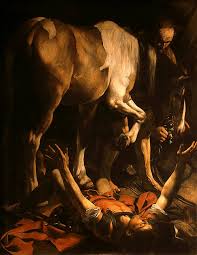
Its most famous bearer was Paul of Tarsus, whose real name was Saul. St. Paul, as referred to by the Roman Catholic and Eastern Orthodox Churches, is attributed as being the author of much of the New Testament.

The name was borne by several popes, royals and saints thereafter.

Currently, its Germanic form of Paul is the 8th most popular male name in Germany, (2011). His rankings in other countries are as follows:

  • # 13 (Austria, 2010)
  • # 22 (France, 2009)
  • # 41 (Romania, 2009)
  • # 90 (Ireland, 2010)
  • # 130 (Scotland, 2010)
  • # 178 (United States, 2010)
  • # 485 (Netherlands, 2010)
His foreign equivalents rankings are as follows:
  • # 3 (Pablo, Spain, 2010)
  • # 4 (Páll, Faroe Island, 2010)
  • # 4 (Pau, Catalonia, 2010)
  • # 17 (Paweł, Poland, 2010)
  • # 26 (Pablo, Chile, 2010)
  • # 29 (Pavel, Czech Republic, 2010)
  • # 31 (Pablo, Catalonia, 2010)
  • # 44 (Pau, Spain, 2010)
  • # 91 (Pál, Hungary, 2010)
  • # 144 (Pablo, France, 2009)
  • # 202 (Paolo, France, 2009)
  • # 361 (Pablo, United States, 2010)

Other forms of the name include:

  • Pali (Albanian)
  • Paulë (Albanian)
  • Boulos/Bulos بولس (Arabic)
  • Faulus (Aramaic)
  • Boghos Պողոս (Armenian)
  • Poghos Պողոս (Armenian)
  • Paul (Basque/Dutch/English/Estonian/German/French/Romanian/Scandinavian/Silesian)
  • Paweł Павeл (Belarusian/Polish)
  • Polus (Berber)
  • Paol (Breton)
  • Pavel Павел (Bulgarian/Czech/Russian/Slovene)
  • Pavolo (Calabrian)
  • Pavulu (Calabrian)
  • Pau (Catalan/Occitanian)
  • Pawl (Cornish/Welsh)
  • Paulu (Corsican/Sardinian/Sicilian)
  • Pavao (Croatian)
  • Pavle პავლე Павле (Croatian/Georgian/Macedonian/Serbian)
  • Pavo (Croatian)
  • Palle (Danish)
  • Poul (Danish)
  • Pauwel (Dutch)
  • Paavel (Estonian)
  • Paavo (Estonian/Finnish)
  • Páll (Faroese/Icelandic)
  • Paavali (Finnish)
  • Pauli (Finnish)
  • Pol (Flemmish/Romansch)
  • Paale (Frisian)
  • Pals (Frisian)
  • Paulus पौलुस (Frisian/Hindi/Latin)
  • Pay (Frisian)
  • Powles (Frisian)
  • Pouw (Frisian)
  • Pauli (Fruilian)
  • Pódhl (Gaelic)
  • Pól (Gaelic)
  • Paulo (Galician)
  • Pavlos Παυλος (Greek)
  • Pāl पॉल (Hindi)
  • Pál (Hungarian)
  • Pósa (Hungarian)
  • Paolo (Italian/Portuguese)
  • Paolino (Italian/Portuguese)
  • Paulinus (Latin)
  • Pāvils (Latvian)
  • Paulius (Lithuanian)
  • Povilas (Lithuanian)
  • Paol (Lombard)
  • Paulose (Malayalam)
  • Pawl (Maltese)
  • Pawlu (Maltese)
  • Payl (Manx)
  • Paora (Maori)
  • Pål (Norwegian/Swedish)
  • Pavel (Romanian)
  • Paulin (Romansch)
  • Polet (Romansch)
  • Polin (Romansch)
  • Pulegn (Romansch)
  • Pàl (Scots-Gaelic)
  • Pawůł (Silesian)
  • Pavol (Slovak)
  • Pawoł (Sorbian)
  • Pablo (Spanish)
  • Paoro (Tahitian)
  • Pàul (Tuscan)
  • Pavlo Павло (Ukrainian)

For a Reference a Female forms See Paula and Paulina (soon to come)

Niels, Nils

Gender: Masculine
Origin: Scandinavian

The name has traditionally been attributed as being a Scandinavian form of Nicholas but has also been connected with the Celtic, Niall.

He was a very popular name in Medieval Scandinavia, being the progenitor of the surnames Nilsson, Neilson and Nilson. It was fairly common among Scandinavian royalty and nobility, being worn by King Niels of Denmark (1064-1135).

Currently, Nils and Niels are the 32nd most popular male names in Germany, (2011). Niels rankings in other countries are as follows:

  • # 37 (Netherlands, 2010)
  • # 38 (Nils, Sweden, 2010)
  • # 63 (Belgium, 2009)
  • # 276 (Nils, Netherlands, 2010)
  • # 244 (Nils, France, 2009)
  • # 489 (France, 2009)

Other forms of the name include:

  • Niels (Faroese/Danish/Dutch/German)
  • Niilo (Finnish)
  • Nils (German/Icelandic/Norwegian/Swedish)
A Danish feminine form is Nielsine.