Eivind

Gender: Masculine
Origin: Old Norse
Meaning: “happy victor; gift victor.”
Nor (I-vind)

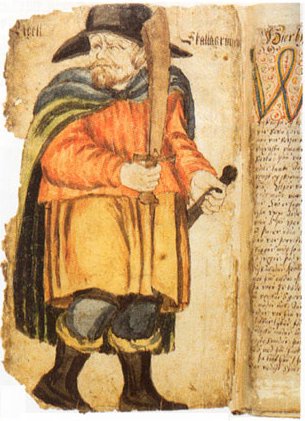
A few weeks ago I was browsing through some Norwegian birth announcements and noted several unusual names that appeared over and over again. Eivind was one of them. Apparently, Eivind is the Norwegian form of the proto Norse auja “happy, lucky or gift” and windur meaning “victor, winner.” In Norwegian and Scandinavian history, the name was borne by a 9th-century viking by the name of Eyvind Lambi, he figures in the famous Egil’s Saga. Another popular form in Norway is Øyvind and in Sweden it appears as Ejvind.

Currently, the name is the seventy fouth most popular male name in Norway, while its slashed counterpart (see above) comes in much higher at # 27. The name is not as popular in Sweden as it is in Norway.

Its designated name-day was exactly one week ago, August 26th.

Update: Eivind and Øyvind no longer appear in the Norwegian top 100, but as of 2010, its Faroese form of Eivindur was the 8th most popular male name in the Faroe Islands.

Other forms of the name include:

  • Eivin (Danish/Norwegian)
  • Ejvin/Eyvin (Danish)
  • Ejvind (Danish/Faroese/Swedish)
  • Even (Danish/Faroese/Swedish)
  • Oyvind (Danish)
  • Øivind/Øjvind (Danish/Norwegian)
  • Evind (Faroese/Scandinavian)
  • Eivindur (Faroese)
  • Oyvindur (Faroese)
  • Öjvind (Faroese/Swedish)
  • Eyvindur (Icelandic)
  • Eivinn (Norwegian)
  • Ovind (Norwegian)
  • Øivin(n) (Norwegian)
  • Øven (Norwegian)
  • Eyvindr (Old Norse)
  • Eiven (Sami)
  • Eivind/Eyvind (Scandinavian)
  • Evin (Scandinavian)
  • Önder (Swedish)
  • Önnert (Swedish)
  • Öyvind (Swedish)
Feminine forms include:
  • Evena (Norwegian)
  • Evina/Evine (Norwegian)
  • Evinda (Norwegian)
  • Øivine/Øyvine (Norwegian)

Malte

Gender: Masculine
Origin: German/Scandinavian
(MAHL-teh)

The name is derived from the Germanic name, Helmold, which is composed of the elements helm (helmut) and wald (ruler).

Malte‘s appearance was first recorded during the 1400s in Eastern Denmark and its popularity reached Sweden and Norway.

As of 2010, its Danish form of Malthe was the 15th most popular male name in Denmark, while Malte was the 56th most popular male name in Sweden, (2010).

Other forms of the name include:

  • Malte (German/Scandinavian)
  • Malti (Danish)
  • Molte (Danish)
  • Molti (Danish)

Anna, Anne

Gender: Feminine
Origin: Biblical Hebrew
Meaning: “grace.”
(ANN; AHN). (ANN-uh; AHN-nah). (HANN-uh; HAHN-nah)

Anne is possibly one of the quintessential classic English and French female names. Prior to the 18th-century, it seems that every other girl born in England was either named Anne, Jane or Mary. There were several British and French queens who bore this simplistic moniker, including the ill fated Anne Boleyn, the mother of Elizabeth I. The history of Anne is rather long and complicated.

It was foremost popularized through the cult of St. Anne, a legendary figure who was said to be the mother of the Virgin Mary and the grandmother of Christ.

In Brittany, the name became especially popular because it happened to coincide with the name of an ancient Celtic goddess, her cult being replaced by St. Anne’s. In fact, it was borne by one Breton Princess, Anne of Brittany.

The name was introduced into Britain by the French-Normans after the invasion in 1066. Previously, there had been a minor Saxon king named Anna, but in this case the name is related to the Saxon arn (eagle). Anna and Anne are still occasionally used as male given names in Friesland.

Other than the apocryphal saint, the name Anne can be traced directly back to the Bible. In the New Testament, it is the name of a prophetess who predicts the Crucifixion of Christ.

Anna (Αννα), is the Greek translation of the early Hebrew Channah חַנָּה, usually transliterated as Hannah, meaning “grace.”

Hannah is borne in the Old Testament by the faithful mother of the prophet, Samuel.

Hannah has always been popular among Jewish families, but was virtually unheard of among non-Jews before the Reformation, except in some cases where it may have been used as a diminutive form of Johanna, spelled Hanna.

It was the Byzantines who had introduced the Anna form to the world, making it popular throughout Eastern and Southern Europe. It was a very popular name among the Byzantine royal family and it was borne by the majestic Anna of Byzantium.

Anna may be the more melodic form of the bunch, but Anne’s minimalistic qualities are charming. Short, to the point, no frills. It’s not a bad name, though it does lack some spice, which is why parents are probably more attracted to its more exotic alternatives. In fact, Anne only comes in at # 608 in the top 1000 female names of the United States. It is safe to say, however, that she is very much loved in the middle name spot.

Anna is currently one of the most popular female names in Europe and abroad. Her rankings are as follows:

  • # 1 (Austria, 2010)
  • # 1 (Estonia, 2011)
  • # 2 (Hungary, 2010)
  • # 3 (Ana, Georgia, 2010)
  • # 3 (Iceland, 2010)
  • # 4 (Ana, Croatia, 2010)
  • # 4 (Czech Republic, 2010)
  • # 4 (Germany, 2011)
  • # 4 (Ukraine, 2010)
  • # 5 (Faroe Islands, 2010)
  • # 5 (Ana, Portugal, 2010)
  • # 6 (Armenia, 2010)
  • # 6 (Ane, Greenland, 2002-2003)
  • # 6 (Ana, Romania, 2009)
  • # 6 (Ana, Serbia, 2010)
  • # 7 (Latvia, 2011)
  • # 7 (Russia, 2011)
  • # 8 (German-speaking Switzerland, 2010)
  • # 9 (Denmark, 2011)
  • # 10 (Netherlands, 2010)
  • # 10 (Northern Ireland, 2010)
  • # 10 (Norway, 2010)
  • # 11 (Italy, 2010)
  • # 12 (Ireland, 2010)
  • # 14 (Poland, 2010)
  • # 16 (Catalonia, 2010)
  • # 26 (Canada, B.C., 2010)
  • # 28 (Italian-speaking Switzerland, 2010)
  • # 28 (United States, 2010)
  • # 29 (Scotland, 2010)
  • # 40 (France, 2009)
  • # 46 (French-speaking Switzerland, 2010)
  • # 53 (Belgium, 2009)
  • # 63 (England/Wales, 2010)
  • # 71 (Australia, 2010)
  • # 81 (Sweden, 2010)
  • # 83 (Spain, 2010)
Other forms of the name include:
  • Anneen (Afrikaans/Low German)
  • Anna Анна (Afrikaans/Albanian/Armenian/Breton/Bulgarian/Catalan/Corsican/Czech/Dutch/English/Estonian/Faroese/Finnish/French/Frisian/German/Greek/Hungarian/Icelandic/Italian/Latvian/Limburgish/Maltese/Polish/Russian/Ukrainian/Scandinavian/Slovak)
  • Anne (Basque/Dutch/English/French/Scandinavian)
  • Gánna Га́нна (Belarusian)
  • Annaig (Breton)
  • Annick (Breton)
  • Maina (Breton)
  • Mannaig (Breton)
  • Mannick (Breton)
  • Naig (Breton)
  • Ana Ана ანა (Bulgarian/Croatian/Galician/Georgian/Lombard/Macedonian/Portuguese/Romanian/Samogaitian/Serbian/Slovene/Spanish/Venetian)
  • Jana (Croatian/Ladino)
  • Aneta (Czech/Polish/Samogaitian/Slovak)
  • Aina (Catalan)
  • Anica (Croatian/Serbian/Slovene)
  • Ane (Danish)
  • Anika (Danish)
  • Anneke (Dutch)
  • Anneken (Dutch)
  • Annika (Dutch/Finnish/German/Latvian/Scandinavian)
  • Anka (Dutch/Frisian/German)
  • An(n)ke (Dutch/Frisian)
  • Anouk (Dutch/French)
  • Ans (Dutch)
  • Enneke (Dutch)
  • Enneken (Dutch)
  • Anita (English/German/Polish/Spanish)
  • Annette (English/French/German)
  • Anissa (English)
  • Annelle/Annella (Estonian)
  • Anete (Estonian/Latvian)
  • Anett (Estonian)
  • Anu (Estonian)
  • Anni (Finnish)
  • Annikki (Finnish)
  • Anniina (Finnish)
  • Annukka (Finnish)
  • Niina (Finnish)
  • Anaïs (French/Provençal)
  • Annouche (French)
  • Ninette (French)
  • Ninon (French)
  • Ninouk (French)
  • Anje (Frisian)
  • Ankea (Frisian)
  • Antje (Frisian)
  • Antjen (Frisian)
  • Anute (Fruilian)
  • Anano (Georgian)
  • Annchen (German)
  • Annel (German)
  • Annele (German/Latvian)
  • Anneli(e) (German/Finnish/Swedish)
  • Annet (German)
  • Anina (German)
  • Anja (German/Slovene)
  • Anouschka (German/Italian/Russian)
  • Annaki (Greek)
  • Annoula (Greek)
  • Noula (Greek)
  • Anikó (Hungarian)
  • Annuska (Hungarian)
  • Panni (Hungarian)
  • Áine (Irish)
  • Ánna (Irish)
  • Annarella (Italian)
  • Annella (Italian)
  • Annetta (Italian)
  • Annettina (Italian)
  • Nona (Italian/Romansch)
  • Ance (Latvian)
  • Annija (Latvian)
  • Anninya (Latvian)
  • Ona (Lithuanian)
  • Annamma (Malayalam)
  • Annam (Malayalam)
  • Onnee (Manx)
  • Âone (Norman)
  • Aenna/Aenne (Old High German)
  • Annehe (Old High German)
  • Änna/Änne (Old High German)
  • Neta (Piedmontese)
  • Noto (Piedmontese)
  • Anke (Plattdeutsch)
  • Anneke(n) (Plattdeutsch)
  • Analia (Romansch/Spanish)
  • Annina (Romansch)
  • Annotta (Romansch)
  • Anca (Romanian)
  • Anicuta (Romanian)
  • Anėta (Samogaitian)
  • Anėkė (Samogaitian)
  • Annag (Scottish)
  • Ghianna (Sicilian)
  • Janna (Sicilian)
  • Nanna (Sicilian)
  • Anniken (Swedish)
  • Ann (Welsh)
  • Nan (Welsh)
  • Nanno (Welsh)
  • Nanw (Welsh)
  • Aana (Wolof)
As for the Hannah forms

Hanna without an H is the prefered form on Continental Europe, usually pronounced (HAHN-nah) and in French like Anna. Hanna and Hanne (HAHN-neh) are also used as diminutive forms of Johanna/Johanne in the Netherlands, Sweden, Norway, Denmark and Germany. There is the Hungarian Hajna pronounced (HOY-no). The Czech/Slovak form of Hana nickname Hanka. There are the Yiddish forms of Heyna, Hayna, Hejna (all pronounced like HAY-nah) including the diminutive forms of HenaHende, Hendel and Henye.  The Polish diminutive form of Hania, which might make an interesting alternative to Anya or Hannah. Hannah, Hanna and Henna are all used in the Middle East.

Of course, how could we ever forget the popular diminutive forms of Annie and Nan.

Swedish Names

Sort of an offshoot of the Viking Baby Names, I have decided to further explore another group of Scandinavian names: Swedish Names.

Sweden is a country that lies on the Baltic and is the third physically largest country in the EU, although only boasting a population of 9.5 million people.

In the 17th-century, Sweden was one of the most powerful empires in the Western world, encompassing nations such as Finland, Estonia and Latvia, thus influencing the culture of the surrounding regions and also borrowing from the surrounding cultures.

During the 18th-19th centuries, approximately 1.3 million Swedes immigrated to the United States, with this incredibly large influx of Swedish immigrants came certain contributions to American culture that are often taken for granted, influences such as the red barn which speckles the country side of the Midwest, the distinct accents of Minnesota and North Dakota, Swedish meatballs and….. baby names.

It was during the first peak of Swedish immigration that we see such names as Erik, Greta and Kristin appear in the U.S. top 1000. In fact, in areas of the United States where there are still substantial Scandinavian-American communities, it is still not unusual to see hard-core Norse names bestowed upon children.

Look at the top 100 most popular given names in Minnesota for example. Classic Swedish monikers such as Ella, Emma, Anna, Annika, Ellie, Eva, Josephine, Greta and Christian abound.

In fact, if one compares the top 100 names of the top 4  states with the highest percentage of Swedish Americans, one will notice a definite trend of Scandinavian names in these particular areas.

Minnesota

  • Emma # 3
  • Ella # 6
  • Anna # 20
  • Oliver # 42
  • Eva # 52
  • Ellie # 63
  • Annika # 69
  • Josephine # 72
  • Christian # 77
  • Greta # 92

California

  • Emma # 7
  • Ella # 41
  • Eva # 97
  • Christian # 24
  • Oscar # 72
  • Eric # 75

Illinois

  • Emma # 4
  • Ella # 10
  • Anna # 21
  • Christian # 27
  • Eric # 87
  • Oliver # 89

Washington

  • Emma # 4
  • Anna # 23
  • Christian  # 48
  • Eva # 52
  • Oliver # 53
  • Ellie # 82
  • Clara # 99

Michigan

  • Emma # 4
  • Ella # 10
  • Anna # 17
  • Christian # 37
  • Oliver # 84

Though many online resources and name books will pretty much clump all Scandinavian names into one group, Swedish, Norwegian, Danish, Icelandic and even Frisian names are all rather slightly different. For instance, it is more likely that a Laerke is Danish, a Moa Swedish, Svanhildur Icelandic and Ingeborg Norwegian. All Northern Germanic languages are closely tied, but their naming trends are slightly different.

However, there are quite a few names that are interchangeably used among the Scandinavians, these include: Linnea (though originally Swedish it is now a popular female name in Norway), Ingrid, Hans and Erik, just to name a few.

Names that are specifically Swedish and rarely found in other Scandinavian countries are: Hampus, Ingela, Madicken, Tindra and Vendela.

Like Anglophone parents, many Swedes are turning to word names to bestow upon their children. Tindra and Linnea both appear in the Swedish top 100, and as of 2009, approximately 71 girls were given the name Månstråle (moonbeam). Björn (bear) has been used on males for centuries, while Varg (wolf) may be a bit newer.

Similar to American and British trends, many old Swedish classics appear in their top 10, names like Ella, Emma, Elsa, Alva, Wilma and Ebba.

The current trend in female names is overwhelmingly in favor of two-syllable antique Nordic names. The types of names that perhaps a Swedish-American parent from Minnesota might see in their family tree, Mormor Elsa and Morfar Oscar.

Not only are two-syllable antiques popular, but there seems to be a gravitational pull toward female names that end in the suffix of –ma and male names that end in the suffix of-mer or –win. Names like Alma, Irma, Wilma and Elmer, Vilmer, Melvin, Alvin etc.

Top 10 Female Names in Sweden (2009)

Alice

Maja

Ella

Emma

Elsa

Alva

Julia

Linnea

Wilma

Ebba

Top 10 Male Names in Sweden, (2009)

Lucas

Elias

Oscar

William

Hugo

Alexander

Oliver

Viktor

Erik

Axel

Cool Swedish Alternatives for Common English Names

Instead of Alexander==============Axel

Instead of Ava==============Alva

Instead of Brittany===========Britt/Britta

Instead of Brody==================Brodde

Instead of Carson============Karsten

Instead of Christopher/Christian========Christer/Krister

Instead of Ella==============Elsa

Instead of Emma============Ebba

Instead of Evan=============Evert

Instead of Grace============Greta

Instead of Hannah===========Hedda/Johanna

Instead of Henry=================Henrik

Instead of Jordan=================Joar

Instead of Lily=============Lillemor

Instead of Logan===============Loke

Instead of Matthew===========Mattias

Instead of Matilda==========Hilda

Instead of Nevaeh==========Nea

Instead of Sidney==========Signe

Like many Anglophone parents, Swedes have turned to words from their own vocabulary to bestow upon their children, either floral, names of months or pretty words, the list below might make an interesting reference point for someone looking for a nature-y name without being too obvious, or perhaps you are just one with Swedish heritage looking to bestow a cool Swedish name on your child.

Swedish Nature/Word Names

Female

  • Blomma (flower)
  • Gull (gold)
  • Himla (heaven; sky. Derived from himmel, very rare)
  • Juni (June)
  • Linnéa (twinflower)
  • Lin (flax)
  • Liv (life)
  • Lo (lynx)
  • Malva (mallow)
  • Månstråle (moonbeam)
  • Maj (May)
  • Saga (story)
  • Sanna (truth, possibly derived from sann)
  • Svea (Sweden; an archaic word for the Kingdom of Sweden, originally used for patriotic reasons)
  • Tindra (twinkle)
  • Vilja (wish)

Male

  • Bror (brother)
  • Björn (bear)
  • Dag (day)
  • Djur (animal)
  • Folke (people)
  • Sten (stone)
  • Varg (wolf)
  • Vide (willow, sallow)
  • Viking

Smushes & Doubles

Swedes have often used double names or smush names throughout the centuries. Below is a list of common Swedish smush and compound names that would be easy to carry in an English-speaking society. Note, some of these, such as Solbritt and Majbritt are considered rather dated in their home country, but it does not mean it won’t sound cool and fresh in the Suburbs of Minneapolis or St. Paul!

Female

  • Anneli
  • Ann-Christin
  • Britt-Marie
  • Emma-Karin
  • Emmalisa/Emma-Lisa
  • Eva-Karin
  • Ingalill
  • Inga-Lisa
  • Irmelie
  • Novalie
  • Solbritt
  • Tuvali

Male

  • Hans-Erik
  • Jon-Erik
  • Per-Ole
  • Sven-Ola/Sven-Olaf

Perhaps you are a the ancestor of one of the many Swedes who immigrated throughout the world in the late 19th early 20th centuries, rather you live in Queensland, Minnesota or Ontario, these Swedish names would be perfectly compatible in any English-speaking areas

Names Compatible in English

Female

  • Annika
  • Clara
  • Disa
  • Edda
  • Engla
  • Frida
  • Ingrid
  • Jannike
  • Kajsa
  • Li
  • Lisen
  • Lova
  • Malin
  • Moa
  • Naemi
  • Nea
  • Ronja
  • Sissela
  • Siv
  • Stina
  • Tilda
  • Tova/Tuva
  • Tyra
  • Vendela
  • Vilda

Male

  • Arvid
  • Astor
  • Bo
  • Erland
  • Erling
  • Frej
  • Gert
  • Gunnar
  • Halvard
  • Hakon
  • Hemming/Henning
  • Hilding
  • Hugo
  • Jesper
  • Kaj
  • Leif
  • Magnus
  • Melker
  • Mio
  • Nils
  • Rasmus
  • Stellan
  • Stian
  • Stig
  • Torsten
  • Uno
  • Victor
  • Viggo

Swedish Equivalents to common English Names

  • Anders/Andreas=Andrew
  • Anna=Anne
  • Clara/Klara=Claire
  • Katherina/Karin=Catherine
  • Carl/Karl=Charles
  • Kristen/Kirsten=Christina
  • Jarl=Earl
  • Febe-Phoebe
  • Jörgen=George
  • Henrik=Henry
  • Ellinor=Eleanor
  • Elisabeth=Elizabeth
  • Elin=Helen
  • Johanna=Jane/Joanna
  • Johannes/Johan=John
  • Lars=Lawrence
  • Lovisa=Louisa
  • Maria=Mary
  • Martin=Mårten
  • Matthew=Måds
  • Nataniel=Nathaniel
  • Per=Peter
  • Rakel=Rachel
  • Sara=Sarah
  • Sakarias=Zachary
  • Sofia=Sophia

And finally, if you are one of those that does not give a hoot to popularity and originalit but are looking for a Swedish name that is easily compatible in English, then here is a list for you:

Common Swedish/English Names

  • Alice
  • Anna
  • Ella
  • Emma
  • Hanna
  • Isabella
  • Jenny
  • Julia
  • Lilly
  • Molly
  • Nathalie
  • Nora
  • Olivia
  • Rebecca
  • Sara
  • Victoria

Male

  • Adam
  • Alexander
  • Benjamin
  • Charlie
  • Christian
  • Daniel
  • David
  • Elias
  • Erik
  • Felix
  • Finn
  • Gunnar
  • Harry
  • Isak
  • Jacob
  • James
  • Kevin
  • Liam
  • Luke
  • Max
  • Noah
  • Oliver
  • Oscar
  • Paul
  • Peter
  • Ruben
  • Samuel
  • Simon
  • Tim
  • Vincent
  • William

Sources

Eira, Eirwen, Gwyneira

Gender: Feminine
Origins: Welsh/Old Norse
Meaning: “snow; snow white; white as snow; or “protection; mercy; help.”
(Ay-rah South Wales; I-rah North Wales; AYR-wen South Wales; IRE-wen North Wales. Swedish/Finnish I-rah)

Eira can be of two different etymologies and origins, in Welsh, it is related to the word eir, meaning “snow”, the offshoot of Eirwen is composed of the elements eir and gwen, (which either means fair, blessed or white), in which case, Eirwen would roughly translate as “white as snow”, “snow white” or “white snow.” A reverse of Eirwen, is Gwyneira, which virtually means the same thing, pronounced (gwyn-AY-rah) South Wales, and (gwyn-EYE-rah) North Wales.

Eira can also be connected to an Old Norse element. It is believed to be a variation of the Old Norse female name, Eir, which was the name of the Norse goddess of healing. Eir means, “protection; mercy; help.”

It is also the name of a neighborhood in Helsinki which its name from a hospital. Its designated name-day in all Scandinavian countries, including Finland, is August 9. Other forms of this version include

  • Eiri (Faroese)
  • Eira (Finnish/Norwegian/Swedish)
  • Eir (Old Norse: used in Iceland and on the Faroe Islands)
  • Eirin (Norwegian: possibly also a Norwegian phonetic spelling of the English pronunciation for Irene).

Dagmar

Gender: Feminine
Origin: Old Norse
Meaning: “day maiden; bright day.”

Dagmar is from the Old Norse elements dag meaning “day” and maer meaning “maid.” Some modern Danish folk etymology link the name to dag meaning day and meri meaning “bright.” It has also been linked to the old Slavonic name, Dragomir meaning “dear peace, beloved peace.”

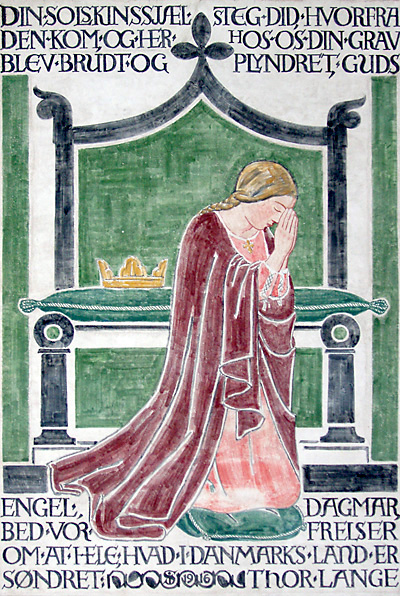
The name was borne by Dagmar of Denmark (1186-1212), also known as Markéta of Bohemia, Princess Dagmar of Denmark (1890-1961), Maria Federovna, also known as Dagmar of Denmark (1847-1928), Empress Consort of Russia.

Dagmar is also used in Iceland, Finland, Estonia, the Netherlands, Sweden, Norway, Germany and the Czech Republic.

Other forms of the name include:

  • Dagmara (Czech/Lithuanian/Polish/Slovak/Slovene)
  • Dakmari/Dakmar (Finnish)
  • Takmar/Takmari (Finnish)
  • Dagmár (Old Norse)
  • Dagmey (Old Norse)
  • Dagmor (Old Norse)
  • Dammei (Norwegian: dialectical form from Austlandt)
  • Dargmara (Vendish)

Diminutive forms are Dagmaruška, Dáša, Daška, Dašenka, Dašička (Czech), Dagmarka (Czech/Polish), Didi (Scandinavian), Dada and Dadka (Slovakian).

Designated name-days are:

May 24 (Germany), September 27 (Denmark, Norway and Sweden), November 26 (Estonia), December 12 (Poland), December 20 (Czech Republic),

Lillemor

Gender: Feminine
Origin: Norwegian/Swedish
Meaning: “little mother.”
(LIL-leh-MORE)

With the recent surge of popularity in Lily names, I thought this unusual gem might be worth posting, though considered an “old lady” name in Scandinavia, it might make a fresh and interesting option for an Anglophone parent.

Lillemor is relatively recent in history, she first appeared in Norway as a nickname and was first recorded as a full-fledged given name in Sweden in 1901. The name comes from the Norwegian and Swedish words lille meaning “little; small” and mor meaning “mother.” Ask most Swedes or Norwegians how they feel about this name and they will likely frown, she is somewhat the equivalent of a Mildred to an American. She was quite fashionable during the 1930s and 40s, and is hence, usually considered a name of its time. She has, however, spawned off a fashionable nickname name: Moa, which is currently very trendy in Sweden as an independent given name.

Her name-day is November 18. As of December 31, 2008, there were approximately 11, 198 women who bore the name Lillemor in Sweden.

Nicknames are Lily and Moa.

Sverker

Sverker I of Sweden

Gender: Masculine
Origin: Old Norse
Meaning: “black spear.”

The name is a modern form of the Old Norse Svartgeirr, which is composed of the elements svart meaning “black; dark” and geirr meaning “spear.” The name appears on a rune stone which dates back to the last millenium, in Fröberg, Södermanland, Sweden, which translates as follows: “Vighjälm and Ödmund erected this stone in honour of their dear brother, Sverker.”

As of December 31, 2008, there were approximately 1,872 registered persons in Sweden with the name Sverker. Its designated name-day is November 4.

The name was borne by two Swedish kings, Sverker I (1130-1156) and Sverker II, (1196-1208).

Another form is Sverkir.

Svante, Svätopluk, Svatopluk, Świętopełk

Gender: Masculine
Origin: Old Slavonic
Meaning: “mighty army; mighty regiment.”

An old Slavonic name most notably borne by a 9th-century Moravian prince, Svätopluk, (the Slovakian rendition), appears on the Slovakian name-day calender for November 15. Though today it is a very rare name in Slovakia, it did rank in as the 95th most popular male name, (in the form of Svatopluk), in it neighbor country, the Czech Republic, for 2006. In the Czech Republic, its designated name-day is February 23rd. Its Polish form of Świętopełk, is also extremely unusual today, though it does boast two name days, June 1 and September 25.Slovakian diminutives are, Sväto, Svaťo, Svätoš, Sväťo.

There is a popular folklore attributed to Svatopluk I of Moravia. When the king knew he was about to die, he gave each of his three sons a twig and had them break it, which was easy for all of them to do, but then Svatopluk asked his sons to break the twigs a second time, and this proved to be even more difficult. The king was trying to prove to his sons that it is difficult, yet necessary to keep a kingdom united.

Other forms of the name include:

  • Svend (Danish)
  • Vante (Finnish)
  • Sventopolcus/Sventopelcus (Late Latin)
  • Światopełek/Świętopałk/Świętopełek/Wszetopełk (Polish)
  • Svjatopolk/Svyatopólk (Russian/Ukrainian)
  • Svante/Svantepolk (Swedish/Norwegian/Danish: name-day in Sweden is December 5. Svante was the 97th most popular male name in Sweden for 2007)
  • Swante (Swedish)

Notable Czech bearers are:

  • Svatopluk I, Great Prince of Moravia (c. 894)
  • Svatopluk II, Prince of Nitra (c. 9-10 centuries)
  • Svatopluk of Bohemia (1107-1109)
  • Svatopluk Inneman, Czech director (1896-1945)
  • Svatopluk Benes, Czech actor (1918-2007)
  • Svatopluk Havelka, Czech composer (1925-2009)
  • Svatopluk Skopal, Czech actor (b.1952)

Famous Polish bearers include:

  • Prince Świętopełk of Poznań (979-992)
  • Świętopełk II the Great, Duke of Gdańsk Pomerania (1220-1266)
  • Świętopełk Karpiński, Polish poet and satirist (1909-1940)

It was also borne by one Kievan duke, Svyatopolk I of Kiev.