Lydia

Gender: Feminine
Origin: Latin/Greek
(LID-dee-uh)

Lydia has a sweet feminine vibe. Its classic without sounding too stuffy. Lydia could work just as well on a five month old as it would on a 55 five year old. It has the same feel as the popular Olivia and it wouldn’t be surprising if Lydia soon took Olivia’s place. Lydia currently stands as the 120th most popular female name in the United States.

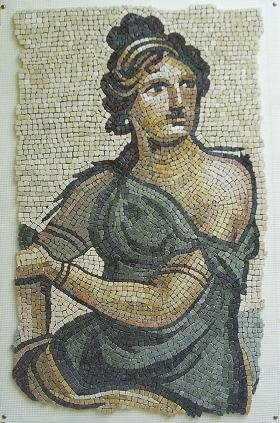
As for Lydia’s history, it first appears as a given name in the New Testament. It was the name of a woman who had converted to Christianity after befriending St. Paul. Some scholars believe that Lydia was not her actual name, rather, it was a nickname to denote her place of origins, (Lydia in Asia Minor).

Lydia is a Greek word for an ancient country, known in Assyrian as Luddu, this particular’s country’s culture and language has been lost to history and speculation. The Greeks talked quite a bit about it, and in the Bible it is often refered to as Lud.

Lydia has multiple forms, including:

  • Lidiya Лидия (Bulgarian/Russian: Lidochka is a Bulgarian diminutive form)
  • Lídia (Catalan/Hungarian/Portuguese/Spanish)
  • Lýdie (Czech: LEED-yeh)
  • Lydia Λυδια (English/Estonian/Greek)
  • Lii/Ly (Estonian)
  • Liidia/Liidi (Estonian)
  • Lyydia/Lyyti (Finnish)
  • Lydie (French: LEE-DEE)
  • Lida (Hungarian)
  • Licia (Italian: lee-CHEE-ah).
  • Lidia (Polish/Italian/Romansch: a Polish diminutive form is Lidka.)
  • Livli (Sami)
  • Lýdia (Slovakian)
  • Lidija (Slovene/Croatian: diminutive forms are, Lidonka, Lidunka and Liduška)

In other Continental European countries, the name is usually rendered the same as it is in English. In German speaking countries its pronounced (LUY-dee-ah). Its designated name day is August 3rd.

Dobrina

Gender: Feminine
Origin: Bulgarian
Meaning: “good.”
(doh-BREE-nah).

Do you like Sabrina, but find it just a tad bit too dated? Or perhaps the Sabrina the Teenage Witch associations nag at you. Then you might want to consider this Balkan beauty.

Dobrina is a common Bulgarian female name derived from the word dobra meaning “good.”

It is also the name of a tiny village, made up of 200 something inhabitants, in northeastern Bulgaria.

In Bulgaria, Dobrina’s name day is celebrated on the 27th of July.

Its diminutive forms are Dobrinka, Dobra and Dobri.

Szabolcs

Gender: Masculine
Origin: Hungarian
Meaning: unknown
(soh-BALLCH)

This ancient, Hungarian male name, is of uncertain meaning and origin but is believed to be derived from a Turkic source that has been lost to history.

It is considered a classic male name in Hungary and its designated name day is July 27.

In history, it was borne by the nephew of Arpad, and he was one of the leaders of the Magyars. He established his seat in Szabolcs County, (named after him).

Magdalena, Madeleine, Madeline

Gender: Feminine
Origin: Latin
Meaning: “of Magdala.”

We have the exotic and sophisticated Magdalena, the French classic Madeleine and the English trend setter Madeline.  The origins of these names go all the way back to the Bible, the New Testament to be exact. It is derived from a title given to the famous Catholic saint, Mary Magdalen, also known as Mary of Magdala. Magdala, being the town that the former prostitute turned follower of Christ, hailed from, a town on the sea, near Galilee, its meaning being “tower.”

In the Middle Ages, St. Mary Magdalen was a beloved saint, making the name popular in virtually every European country, evolving into myriad different forms. The cult of St. Mary Magdalen was especially popular in France, where she was known as La Madeleine (lah mah-deh-LEN). In fact, tradition holds that, after the death of Christ, Mary Magdalen travelled to France, where she converted many of the early inhabitants to the new faith. She is considered one of France’s patron saints and it is believed that her bones were buried in France. La Madeleine gave her name to several communes in France as well as a river. It is even the name of a famous French pastry.

While you are out rushing to work, standing in line, getting your daily fix of Starbucks, you may notice that at the front counter there are packages of a soft little sponge-like cookie. These are madeleines or petit madeleines. They are a popular snack in France, made from lemon and butter, and are known for their distinctive shell shape. Legend has it that they acquired their name from the lady who invented them, Madeleine Paulmier. They are a delightful little treat, and I recommend that the next time you are at Starbucks, you should try them yourself.

Likewise, Madeleine has been a very popular choice in Great Britain and currently ranks in as the 80th most popular feminine name in Britain and Wales for 2007, while in its home country of France, it comes in rather low. It was the 454th most popular feminine name in France for 2006.

Let us not forget the fun and sweet version of Madeline (MAD-eh-LINE), Madeline seems to be specifically a North American version of the French form. Originally pronounced (MAD-eh-LIN), its preferred pronunciation has switched over to the former in the last decade, no doubt due to the popular children’s series of books of the same name.

Madeline has been quite popular the last few years, she ranked in at a whopping 61 in the 2007 most popular feminine names in the United States. She has also made her mark in other non-British English speaking countries, such as Canada and Australia. In Canada she came in at 85, while in Australia 93.

There is also the trendified corrupted form of Madelyn, which currently comes in at # 104, however, it is advisable to use the French spelling if you prefer the (Mad-eh-lin) pronunciation, which seems to be the goal of the parents of the Madelyns.

Nicknames include Maddie, Leine and Lynn. The name is borne by Princess Madeleine of Sweden, Madeleine Albright, and author Madeleine L’Engle.

Let us now move on to its Eastern European alternative of Magdalena (MAHG-dah-LAY-nah). This form is used in Spain, the Czech Republic, Slovakia, Bulgaria and Poland. It is especially popular in both Poland and the Czech Republic where it is often shortened to Magda, and occasionally Lenka. There are the Czech spin offs of Alenka and Madlenka, used as an independent name.

Magdalena might be appealing to English speaking parents who love the nickname Maggie but really dislike Margaret. On top of that, it can be shortened to appealing and trendy Laney or even Lena.

Other forms of the trio include:
  • Magdalawit (Amharic/Eritrean)
  • Maialen (Basque: MY-ah-LEN)
  • Madenn (Breton)
  • Miglena (Bulgarian)
  • Alena (Czech-Slovak and occasionally used in Germany. Diminutive form is Alenka)
  • Magdaléna (Czech)
  • Mahulena (Czech: a form created by Czech author, Julius Zeyer, for his his Ráduz and Mahulena-1898)
  • Magdalene (Danish)
  • Magdalone/Malene/Lone (Danish)
  • Malle/Madli (Estonian pronounced MAHL-leh and MAHD-lee) other forms include Mall, Leen (LANE), Leena and Made (MAH-deh)
  • Matleena (Finnish pronounced maht-LAY-nah) diminutive forms now commonly used as independent names include: Leen, Leena and Lenita)
  • Magdeleine (French: archaic form)
  • Leni (German: originally a diminutive form, it has recently become trendy in German speaking countries as an independent name)
  • Madelene (German: mah-deh-LEH-neh: other forms include, Madlene and Madlen)
  • Magdalini (Greek Modern-pronounced mahg-dah-LEE-nee)
  • Magdolna (Hungarian, pronounced mog-DOH-noh) diminutive forms now popularly used as independent name in Hungary are Lenke (LEHN-keh) and Duci (DOOT-see).
  • Madalein (Irish-Gaelic)
  • Mailin (Irish-Gaelic)
  • Maddalena (Italian pronounced mahd-dah-LAY-nah. Other forms include Maida, Madina and Magdala)
  • Madala (Latvian) another form is Magone
  • Talena (Latvian/Scottish)
  • Maguelone (Occitanian)
  • Madalena (Portuguese pronounced mah-dah-LAY-nah)
  • Maclaina (Romansch pronounced mugg-LIE-nah) other Romansch forms include Madina, Madlaina (mudd-LIE-nah) and Madlena (mudd-LEH-nah).
  • Madalina (Romanian pronounced mah-dah-LEE-nah)
  • Magdalina Магдалина (Russian)
  • Manda (Serbo-Croatian/Macedonian/Slovene)
  • Madlena (Sorbian)
  • Malin/Målin (Swedish/Norwegian pronounced MAW-lin, other forms include Malena and Madicken (MAH-dee-KEN)
  • Mädi (Swiss-German: dialectical form from Bern MAD-dee)
  • Magdalyna (Ukrainian)
  • Madałena (Venetian)

Other popular offshoots include the English corrupted form of Madelaine (MAD-eh-LANE): given to the daughter of David Duchovny and Téa Leoni. The dated German forms of Marlene (Eng mar-LEEN; Germ mahr-LEH-neh) & Marla and the Polish Marlena.The designated name day for all of these names is July 22.

French diminutives are Mado and Madelon. Polish diminutive forms are: Madzia, Magda, Magdunia, Magdusia and Magdeczka. Hungarian diminutives are, Duci

There are a few Italian masculine forms and that includes, Maddaleno, Magdalo and Maido.


Svea

Origin: Swedish
Gender: feminine
Meaning “Swedes”
(SVEH-ah)

The name is derived from the old name for Sweden, Svea rike, literally meaning “kingdom of the Swedes.” Svea meaning “swede” and rike meaning “kingdom.”

The name became especially popular in Sweden during the first half of the 20th-century. It was used as a patriotic name.

The name is still relatively common in Sweden, in 2007, it was the 97th most popular female name in Sweden.

Its designated name-day is January 2nd

. The name is also in usage in Estonia, the designated name-day being August 14.

Palatine, Palatyne, Palestine, Kestenn

Gender: Female
Origin: French/Celtic
Meaning: debated
Pronunciation French (pah-lah-TEEN); English (pal-uh-TINE)

The name is found in French folklore as the name of the daughter of Pressyne and Elynas, and the sister of Mélusine.

Palatine was cursed by her mother to be locked in the Aragonese mountains with her father’s treasures, accompanied by a bear and serpent. Only a knight could free her and save her, on the condition that he be of the same bloodline as her father’s.

Throughout the years, many knights did just that, but had failed. However, a knight of King Arthur’s court, and the relative of Tristan, decided to climb the mountain and free the princess. He had to scale a mountain covered in venemous snakes, and then face the bear that guarded the entrance to the cave, all of which he killed. Finally he was able to enter the cave, but within the first chamber was a large serpent with one eye. The snake swallowed him up, and the knight was defeated in his quest, because, as it turned out, he was not of the right lineage.

Years later, Geoffrey-with-the-great-tooth, the nephew of Palatyne, had spent his life saving time, money and energy to rescue his aunt. However, he grew old, and died before he was able to commence his quest, and it is said that till this day, Palatyne still awaits within her mountain top for the right knight of the right lineage to free her. http://www.encylopediamythica.com

This is also the name of one of the 7 hills of Rome, a location which has its own legends.

In Ancient Roman folklore, the Palatine is where the Lupercal cave is to be found, the cave where Romulus and Remus were rescued and milked by a wolf. Another legend holds that Hercules defeated the monster Cacus, on the same hill.

The etymology of the name is debated, whether the fairy Palatyne and the name of the hill are related is not proven, but very possible. The fact that both legends contain a mountain top or hill top as their focal point makes it plausible.

According to the Roman historian Livy (59 BC-Ad 17), the hill got its name from the Arcadian settlement of pallatium, which is derived from the Latin palatum meaning “palate.” According to another ancient source, Ennius, the name is derived from an Etruscan word meaning “sky” or “heavens.” The term palace gets its name from the Palatine hill.

Other sources point its etymology to a Breton source, it is suggested that Palatine, (or Palestine in some instances), is a medieval French corruption of the Breton Bac’h C’hesten, bac’h means “cell; unit” and c’hesten means “hive; beehive.” Hence “hive pupa.” This is supported by the fact that in the legend, Palatine is an enclosed in a cell in the mountains like a bee in a beehive.

The name was borne by an early Christian martyr, Saint Palatino, and its masculine form is still in usage in Italy today. There is also a more obscure feminine version of Palatina.

Another French form is Palestine (pah-le-STEEN), and a possible Breton form is Kestenn.

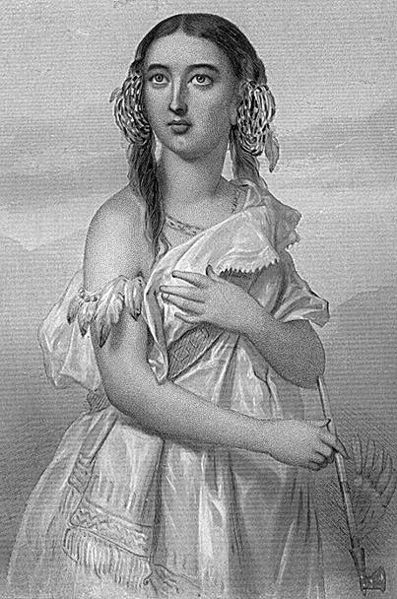
Pocahantas

Gender: Feminine
Origin: Native American Algonquin
Meaning: “frolicsom; wanton; she is playful.”
Pronunciation: (po-kuh-HAHN-tus)

    Pocahantas was a woman of many names, contrary to popular belief, Pocahantas was her childhood name, as an adult, her tribe gave her the names of Matoaka/Matoika and Amonute. When she converted to Christianity and married the Englishman John Rolfe, she chose the name Rebecca as her “English” Christian name.

    Pocahantas was born around 1595, and was the daughter of the famous Indian chieftan, Powhatan. She is known for her legendary encounter with John Smith.

    There is a county in her homeland of West Virginia, named for her.

    Though a sort of legendary heroine in American history, there has been no further records indicating usage of Pocahantas as a first name. With the sudden surge of popularity as such names as, Americus, Dakota, Daytona, Tacoma and Cheyenne, this name might make a far more substantial and legitimate alternative.

    However, you might be wondering how to get a good nickname out of this one, possible cute nicknames are Po, Pokey Tuss or Hanti (HAHN-tee).

    Chiajna

    Gender: Feminine
    Origin: Romanian
    Meaning: “princess”
    (KYAHZH-nah)

    Derived from the Old Slavonic word knyez meaning “prince.” Lady Chiajna (c.a. 1525-1588) was the daughter of Petru Rares, a 16th-century Moldavian Prince. In Romanian literature, she is a sort of Lady Macbeth.

    A city in Romania was named in her honor.

    Upper Left: Statue of Lady Chiajna

    Parthenope

    Gender: Feminine
    Origin: Greek
    Meaning: “maiden voice”
    Pronunciation (par-THEN-uh-PEE)
    Παρθενόπη

    In Greek mythology, it is the name of a nymph who seduced Odysseus, as well as the daughter of King Ancaeus of Samos. It is also the name of an Ancient Greek settlement in Naples

    It was borne by Frances Parthenope Verney (1819-1890), writer, journalist and elder sister of Florence Nightengale.

    Other unusual forms include:

    • Parthénope/Parthénopé (French)
    • Partenope (Serbo-Croatian/Italian)
    • Parténope (Portuguese: very obscure)