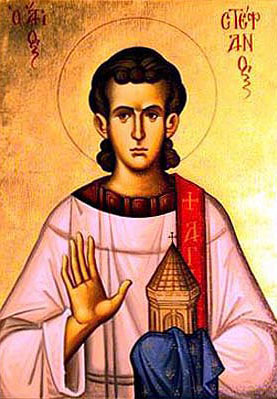
Stephen

Gender: Masculine
Origin: Greek
Meaning: ” wreath; garland.”
Eng (STEE-ven); (STEF-en)

The name is derived from the Greek, Στεφανος, (Stephanos), which refers to a wreath or garland worn upon the head, hence, the name is sometimes interpreted to mean “crown.”

As written in the New Testament, it was the name of a deacon who was stoned to death for his beliefs and is regarded as the first Christian martyr.

The designated name-day is December 26.

In the United States, Stephen currently comes in as the 192nd most popular male name, while Steven is the 104th most popular, (2008).

Other forms of the name include:

  • Stefan/Stefaan/Stëven/Stephan (Afrikaans)
  • Shtjefën/Stefan (Albanian)
  • Istfan, إصتفان, ستيف, ستيفن (Arabic)
  • Stepanos/Stepan Ստեփանոս, Ստեփան (Armenian)
  • Tcheunne (Arpetan)
  • İstfan/Stepan (Azeri)
  • Estebe/Eztebe (Basque)
  • Esteve (Bearnais/Catalan/Occitanian/Provençal)
  • Steven (Breton)
  • Stefan Стефан (Bulgarian: Stefcho Стефчо is a diminutive form)
  • Stjepan (Croatian/Serbian: diminutive forms are Stipe and Stipo).
  • Štěpán/Štefan (Czech)
  • Stephen/Stefan/Stephan (Danish)
  • Steven/Stefaan/Stefanus/Stefan/Stephan (Dutch: Stef is a common Dutch diminutive form)
  • Tehvan (Estonian)
  • Sitiveni (Fijian)
  • Tahvo/Teppo (Finnish)
  • Tapani (Finnish)
  • Étienne (French: classic form)
  • Éstienne (French: medieval form)
  • Stéphane (French: more modern form)
  • Steffen (Frisian: used in Germany, Holland, Norway and Denmark)
  • Estevo (Galician)
  • Stefan/Stephan (German)
  • Stephanos Στέφανος (Greek)
  • Kepano/Kiwini (Hawaiian)
  • István (Hungarian: Pisti, Pisto and Isti. 30th most popular male in Hungary, 2008)
  • Stefán (Icelandic)
  • Steephan (Indian)
  • Steafán/Stiofán (Irish: Gaelic)
  • Stefano (Italian)
  • Stefanino/Stefanio/Stenio/Steno (Italian: obscure forms)
  • Stefanus/Stephanus (Latin)
  • Stefans/Stepans/Stepons (Latvian)
  • Steponas/Stepas (Lithuanian)
  • Stefan/Stevan Стефан, Стеван (Macedonian)
  • Stiefnu (Maltese)
  • Tipene (Maori)
  • Šćepan Шћепан (Montenegrin)
  • Stefanu Стефанъ (Old Church Slavonic)
  • Stefan/Szczepan (Polish)
  • Estêvão (Portuguese)
  • Ştefan (Romanian: Fane is a diminutive form)
  • Steivan/Stiafan (Romansch)
  • Stefan/Stiven/Stepan Стефан, Стивен, Степан (Russian)
  • Istevene (Sardinian)
  • Stìobhan/Stìophan/Stèaphan (Scottish: Steenie is a Scotch diminutive form)
  • Stevan Стеван (Serbian)
  • Štefan (Slovak/Slovene)
  • Esteban (Spanish)
  • Stefan/Staffan/Stephan (Swedish: Steffo is a diminutive form)
  • Êtiên (Vietnamese)
  • Stepan ஸ்டீபன் (Tamil)
  • İstefanos (Turkish)
  • Stefan/Stepan Степан, Стефан (Ukrainian)
  • Steffan (Welsh)

Stephanie is a common feminine form, in the United States, she was one of the most popular feminine names between 1972 and 1994. She ranked in at # 6, four years in a row, between the years 1984 and 1987.

As of 2008, she ranked in as the 105th most popular female name. In other countries, her rankings are as follows:

  • # 84 (Australia, 2007)
  • # 488 (the Netherlands, 2008)

Estefanía was the 77th most popular female name in Chile in 2006.

Other feminine forms include:

  • Esteveneta (Bearnais/Occitanian)
  • Štěpánka (Czech)
  • Stefana (Dutch)
  • Etiennette (French: archaic)
  • Stéphanie (French)
  • Stefanie (German/Danish/Dutch: was a very popular name in Germany during the 1980s and 90s. Germ: SHTEH-fah-nee; Dutch (STAY-fah-nee. Steffi is a common German diminutive form.)
  • Kekepania (Hawaiian)
  • Stefánia (Hungarian)
  • Stefania (Italian/Polish/Romanian: Polish diminutive forms are Stefcia and Stefa)
  • Stefanina (Italian: obscure)
  • Stefanella (Italian: obscure)
  • Stenia/Stena (Italian: obscure)
  • Szczepana (Polish)
  • Estèva (Occitanian/Provençal)
  • Štefánia (Slovak)
  • Estefanía (Spanish)

Stevie, Steff, and Steffie are the preferred English diminutives.

Adam

Gender: Masculine
Origin: Hebrew
Meaning: “man”

The name is found in the Old Testament as the name of the first man created by God. Whether Adam is used as a personal name or in a generic sense is up to debate, many Biblical scholars agree that the authors of Genesis were not using Adam as a personal name, but more of a generic term.

Though in modern Semitic languages, the modern word for man is many times Adam, or Ben-Adam (son of Adam), its actual etymology is also debated. Some believe it is ultimately derived from the Hebrew אדם (‘adam) meaning “red” referring either to human skin tone, or to the colour of earth, which in the Bible, is what God created Adam from. Other sources suggest that it may be related to an Akkadian source, Adamu, meaning “to make.”

The name is a popular choice among Christians, Jews and Muslims alike. In Europe, it has been in use since the early Middle Ages. Among Christians, Christ is often given the title of the “New Adam.”

Its designated name-day, along with Eve, is usually December 24.

Currently, Adam is the # 78th most popular male name in the United States. In other countries, his rankings are as follows:

  • # 35 (Australia, 2007)
  • # 28 (Belgium, 2006)
  • # 47 (Canada, BC, 2008)
  • # 8 (Czech Republic, 2008)
  • #32 (England/Wales, 2008)
  • # 34 (France, 2006)
  • # 7 (Hungary, 2008)
  • # 7 (Ireland, 2008)
  • # 10 (Israel, among Muslim boys, 2004)
  • # 1 (Israel, among Druze boys, 2004)
  • # 76 (the Netherlands, 2008)
  • # 6 (Northern Ireland, 2009)
  • # 19 (Scotland, 2008)
  • # 75 (Spain, 2006)
  • # 28 (Sweden, 2007)

In addition, the Adam form is also used in Armenian, Bulgarian, Catalan, Croatian/Serbian, Czech, Danish, Dutch, German, Icelandic, Polish, Romanian, Slovakian and Slovenian.

Other forms of the name include:

  • Adami (Albanian)
  • Ādam آدم (Arabic)
  • Adəm (Azeri)
  • Adame (Basque)
  • Adem (Bosnian/Kurdish)
  • Aadam (Estonian)
  • Ádam (Faroese)
  • Aadam/Aatami (Finnish)
  • Adám Αδάμ (Greek)
  • Akamu (Hawaiian)
  • ʼĀḏām אָדָם (Hebrew: Modern)
  • Ádám (Hungarian)
  • Ádhamh/Ádam (Irish)
  • Adamo (Italian)
  • Adamus (Latin)
  • Ādams (Latvian)
  • Adomas (Lithuanian)
  • Adamu (Old Church Slavonic)
  • Adão (Portuguese)
  • Aden/Adom (Romansch)
  • Adam Адам (Russian/Ukrainian)
  • Adàmu (Sardinian)
  • Addamu (Sicilian)
  • Aadam (Somalian)
  • Adán (Spanish, ah-DAHN)
  • Adan (Tagalog)
  • Âdem (Turkish)
  • Odam (Uzbek)
  • Adda (Welsh)

A feminine version is the Spanish and Scotch, Adamina.

A Polish diminutive form is Adaš

Tisa

Gender: Feminine
Origin: Slovenian
Meaning: “Yew tree”
(TEE-sah)

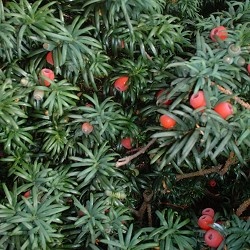
The name comes directly from the Slovenian word for Yew Tree and is also the name of a river in Slovenia. In 2005, Tisa was the 91st most popular female name in Slovenia.

Javier, Xavier

Gender: Masculine
Origin: Basque
Meaning: “the new house.”

The name is derived from a Basque surname Extaberri meaning “the new house” and has been in use as a given name for centuries. It was popularized by St. Francis Xavier (1506-1552), and was also the family name of the Lords of Javier. After the popularity of the saint, the name spread throughout the Spanish speaking world as a popular male given name, its usage was followed in due course by other Catholic countries.

The name has experienced a sudden surge of popularity in the United States, ranking in as the  71st most popular male name for 2008.

In Australia he ranks in at # 56 (2007), and # 90 in Spain for 2005. Its designated name-day is December 3rd.

Other forms of the name include:

  • Chabier (Aragonese)
  • Xabel (Asturian)
  • Xabier/Xabi (Basque)
  • Xavier (Catalan/French/Galician/Portuguese/Valencian: Catalan diminutives are Xavi and Xevi)
  • Saveriu (Corsican)
  • Xaver (German/Czech)
  • Savy (Irish)
  • Saverio/Zaverio (Italian)
  • Xaverius (Latin)
  • Xabiere (Leonese)
  • Xavêio (Piedmontese)
  • Ksawery/Xawery (Polish: latter form is archaic, diminutive form is Ksawerek)
  • Ksaber Ксавьер (Russian)
  • Xavér (Slovakian/Hungarian)
  • Javier (Spanish)

Feminine forms

  • Xavière (French)
  • Saveria/Saverina/Zaveria (Italian)
  • Ksawera/Ksaweryna (Polish: diminutive forms are Ksawerka or Ksawerynka)
  • Xavéria (Slovakian)
  • Javiera/Xaviera (Spanish)

A popular compound name, used among Catholics, is Francis Xavier (English: common in Ireland); Franz Xaver (German: used in the Catholic areas of German speaking countries); Francisco Xavier (Portuguese) Francisco Javier; (Spanish) and Francois-Xavier (French).

In Portugal, Xavier is sometimes used in conjunction with Maria or Francisca as a feminine name, but is never used on females as a stand alone name. Its conjunction with names like Maria or Francisca are usually used in a religious context, in reference to the saint.

Virág

Gender: Feminine
Origin: Hungarian
Meaning: “flower.”
(vee-RAHG)

The name comes directly from the Hungarian word for flower, in 2005, it was the 17th most popular female name in Hungary. Its designated name days are November 26, February 10 and July 29.

Sanja

Gender: Feminine
Origin: Bosnian, Macedonian, Serbo-Croatian, Slovene
Meaning: “dream”
(SAHN-yah)

The name is derived from the South Slavic word sanjati meaning “to dream.” Thanks to Capucine for suggesting this name.

The name also has a history of being used as a diminutive form of Alexandra, in recent years, however, the name has exclusively been used as an independent given name due to the fact that it means dream. It currently ranks as the 86th most popular female name in Slovenia. The name is borne by Croatian singer and television host, Sanja Doležal (b.1963), Montengrin Serb singer, Sanja Djordjevic, Croatian-American actress and star of Holes Sanya Mateyash (nee Sanja Matejaš) and Serbian singer, Sanja Maletić (b. 1973).

A masculine form is Sanjin.

Martin, Martina

Origin: Latin
Meaning: “belonging to the god Mars.”

This popular pan-European name is derived from Latin name Martinus, a derivative of the Latin genitive Martis, used in reference to the Roman god Mars. The usage of the genitive case would reflect possession, therefore the name would roughly translate as meaning “belonging to Mars” or “possessed by Mars.”

The name was popularized by a 4th-century bishop and saint, (the patron saint of France), known as Martin of Tours. According to legend, he came upon a beggar in the middle of a harsh and cold winter, Martin cut his only cloak in half and gave it to the beggar, later that night, he had a dream of Christ appearing before him, wearing the other half of his cloak. Saint Martin of Tours was not only a popular devotional saint in France, but in the rest of Europe as well. Today, the surname of Martin is the most common in France, originally the surname was taken in honour of the saint.

Another popular saint who bears the name is St. Martin de Porres, attributed as the first African-American saint, he was born in Peru in the 1500s. He was the son of a Spanish nobleman and an African slave woman. He later became a Dominican and was known for his charity and mystical powers. In Spanish-speaking countries, the name Martin is mostly given in commemoration of him.

The name became popular among protestants, particularly adherents of the Lutheran faith, due to its associations with the German Reformer Martin Luther (1483-1546). It was also borne by Civil Rights Activist Martin Luther King Jr. 1929-1968).

In Europe today, Martin is still a fairly common choice. Its rankings are as follows:

  • #55 (Belgium 2006)
  • #56 (France 2006)
  • #20 (Hungary 2005)
  • #73 (Ireland 2007)
  • # 72 (Northern Ireland 2007)
  • # 8 (Norway 2007)
  • #32 (Slovenia 2005)
  • #59 (Spain 2006)
  • # 79 (Sweden 2007)

In Chile, he was the 4th most popular male name in 2006, while in the United States he comes in at a meagre # 221. The perfect classic male name for someone looking for something not too odd yet not too popular.

Other forms of the name include (divided alphabetically by origin)

  • Mardig (Armenian)
  • Mattin (Basque: diminutive form is Matxin)
  • Marzhin/Marzin (Breton)
  • Martí (Catalan: 77th most popular male name in Spain in 2006)
  • Martinu (Corsican)
  • Morten (Danish/Norwegian)
  • Maarten/Marten/Martijn (Dutch Pronunciation for the latter: http://www.forvo.com/search/Martijn/)
  • Ties (Dutch: originally a diminutive form, used as an independent given name)
  • Tinus (Dutch: originally a diminutive form of Martinus, now used as an independent given name)
  • Tijn (Dutch: originally a diminutive, now used as an independent given name. It was the 28th most popular male name in the Netherlands in 2008)
  • Madro/Mardi/Mardu/Mart/Märten/Märtin/Märt (Estonian)
  • Martti (Finnish)
  • Merten (Frisian)
  • Marti/Martinni (Greenlandic)
  • Márton (Hungarian: Pronunciation: http://www.forvo.com/search/Marton/ 31st most popular male name in Hungary 2005. Diminutive is Mártos)
  • Marteinn/Martin (Icelandic)
  • Mairtín (Irish Gaelic)
  • Martiniano (Italian: obscure)
  • Martino (Italian)
  • Martianus (Latin/Dutch)
  • Martinus (Latin/Dutch)
  • Marcis/Martins/Martiņš/Mārtiņš/Marts/Mārts (Latvian)
  • Martynas (Lithuanian)
  • Marcin (Polish. Pronunciation:http://www.forvo.com/search/Marcin/pl/. Diminutive is Marcinek)
  • Martim/Martinho (Portuguese)
  • Martinián (Slovakian)
  • Tinek (Slovenian: initially a diminutive form, now used as an independent given name)
  • Tine (Slovenian: originally a diminutive form, now a popular independent given name ranking in as the 59th most popular male name in Slovenia as of 2008. The final e is pronounced)
  • Martín (Spanish)
  • Mårten (Swedish)
  • Martyn (Welsh/Ukrainian)

Martin is not only used in English, but is also used in Croatian, Estonian, French, German, Maltese, Scandinavian, Romanian, Russian, Czech, Slovenian, Hungarian and Bulgarian languages as well. German nicknames include Marte, Mart,  Marti or Marty. Maroš is the Czech and Slovakian pet form and Marty is the common English nickname.

The name-days are:

  • March 1 (Bulgaria)
  • November 11 (Czech Republic/France/Germany/Poland/Lithuania/Slovakia)
  • November 10 (Sweden/Estonia/Latvia)

    Dutch children celebrating St. Martin's Day

    In some parts of Holland,  Belgium, Germany, Austria and Switzerland, children celebrate St. Maarten’s Day (November 11) by carrying lanterns from door-to-door and getting sweets in exchange for song. The same holiday is observed under the name of Mardispäev in Estonia, Jum San Martin in Malta and to a lesser extent, the holiday is celebrated in the greater region of Poland, particularly in Poznan. Only on this day, instead of it being a children’s holiday, it is more of a day to get a traditional poppy-filled croissant sold by bakers just on that one day of the year, occasionally there are concerts held in the city.

    The most common feminine form is usually Martina, which has experienced wide usage in Bulgaria, Croatia, Czech Republic, Dutch-speaking countries, Estonia, Faroe Islands, German-speaking countries, Italy, Portuguese-speaking countries, Romania, Scandinavia, Serbia, Slovakia and Spanish-speaking countries. It was borne by a 3rd-century Roman saint and martyr as well as a 6th-century Byzantine empress.

    Martinitsa

    It is interesting to note that in Bulgaria, the designated name-day is March 1, and Martin, as well as Martina, have historically been connected to the Bulgarian word mart (meaning March). In this case, the names are sometimes bestowed upon a March baby or children born on March 1. The Holiday of Baba Marta (meaning “grandmother March.”) is a traditional Bulgarian festival that celebrates the arrival of spring and the end of winter, Baba Marta is the harbinger of good weather and if she is displeased, she will continue to bring stormy weather. Baba Marta is considered a moody and fickle old woman, so one must always be careful not to displease her, one way of doing this is the exchange of martenitsi, (white and red tassles which are pinned to clothing), this is used as a way to ask Baba Marta for mercy. A martinitsa is worn either till the end of March or until the wearer spots a stork or a blooming tree, with this, the bearer knows that Baba Marta is pleased, afterwards, they are hung on trees in order to transfer luck onto the tree. The martenitsa symbolizes new life, fertility and spring.

    The rankings of Martinas popularity from country to country are as follows:

    • # 1 (Chile, 2006)
    • # 2 (Malta, 2007)
    • # 76 (Slovenia, 2005)
    • # 34 (Spain, 2006)

    Other feminine forms are:

    • Marzhina (Breton)
    • Maatje/Maartje/Martien/Martijntje (Dutch)
    • Tieneke/Tineke/Tine/Tini (Dutch diminutive forms, used as an independent given names)
    • Martine (French/Estonian/Norwegian/Danish: an obscure French feminine diminutive form is Martinette, the name is very popular in Norway coming in as the 28th most popular female name in 2007, in the Danish/Norwegian case, the final e is pronounced).
    • Martinka (Hungarian: initially used as a diminutive, occassionally used as an independent given name)
    • Martína (Icelandic)
    • Martana (Italian: obscure)
    • Martinella (Italian: obscure)
    • Marcina (Polish: the original Polish feminine form, this form has always been unusual and its latinized counterpart of Martyna has recently enjoyed popularity)
    • Martyna (Polish: popularized by a popular French children series known as Martine in French and Martynka in Polish written by Belgian authors Marcel Marlier and Gilbert Delahaye, published (1954). In Polish Martyna is pronounced (mahr-TIH-nah) the Y is akin to the i sound in pig, but not exactly so. Martyna is also the Ukrainian and Lithuanian version, but in those cases, it is pronounced with the long i sound (mahr-TEE-nah).\
    • Martinha (Portuguese)

    Other famous bearers of the name include: Martina von Trapp (1921-1951) is immortalized in the Sound of Music as Gretl von Trapp, she was named for the manor house she was born in, Martinschlössel (Martin’s Castle in English). Czech-American tennis player, Martina Návratilová (b.1956). American country-Western singer Martina McBride (b.1966). Italian actress, Martina Stella (b.1984).

    The name-days are:

    • March 1 (Bulgaria)
    • July 17 (Czech Republic)
    • January 30 (Germany/Hungary)
    • September 9 (Slovakia)
    • November 10 (Sweden)

    Réka

    Gender: Feminine
    Origin: Hungarian
    Meaning: debated
    (RAY-kaw)

    The name is of debated origin and meaning, sometimes believed to be derived from a Slavonic source meaning “water” or  “river” or perhaps derived from the Turkic Arikan, which has been suggested to mean “pure lady.” It was borne by the first wife of Attila the Hun, daughter of the Hun Prince Keve. The name has also appeared in Hungarian sources as Arika, Kreka, Rekam and Rika. The name is currently very popular in Hungary, coming in as the 3rd most popular female name in 2005. Diminutive forms include: Réci, Récike, Rékácska, Réki, Rékuci and Rékus.

    Renata, Renatus, René, Renée

    Origin: Latin
    Meaning: “rebirth.”

    The origins of René and Renée can be traced back to the Late Latin male name Renatus, meaning “rebirth; born again.” The name is borne by several saints in both its Latin masculine form and feminine Latin form. The French forms have experienced usage in the Netherlands, Slovenia, Slovakia, the Czech Republic as well as Anglo-phone countries.

    Renée enjoyed a short spout of popularity in the United States during the late 60s and early 70s, the highest it peaked was in 1967 coming in at # 62. As of 2008, she came in at # 734. Surprisingly, its masculine version ranked in higher in the top 1000, coming in as the 561st most popular male name in 2008. René is still somewhat prevalent among the Cajun and Creole communities of Louisiana.

    In 2005, he was the 57th most popular male name in Slovenia.

    Renata has experienced usage from South America to Eastern Europe, she is a common choice in Poland, Germany, Italy and Brazil. In 2006, she was the 34th most popular female name in Chile and the 68th most popular female name in Hungary.

    Other forms of the name include:

    • Renata (Czech, Croatian, German, Italian, Lithuanian, Polish, Portuguese, Spanish. Polish diminutive forms are: Rena, Renatka and Renia. Spanish diminutive form is Renita, often used as an independent given name)
    • Renate (Dutch/German)
    • Renáta (Hungarian/Czech/Slovak)

    Masculine forms include:

    • René (French, Czech, Dutch, German, Hungarian, Slovakian, Slovenian)
    • Renát (Hungarian/Slovakian)
    • Röné (Hungarian)
    • Renato (Italian/Spanish)
    • Renatus (Late Latin)
    • Renáto (Slovakian)
    • Renátus (Slovakian)

    The designated name-day is November 6 in Slovakia, October 19 in France, November 12 in Poland and Lithuania, November 28 in the Czech Republic (Renata is October 13); October 6 in Hungary and January 23 in Estonia.

    The name is borne by French mathematician and philosopher René Descartes and French painter René Magritte and American actress Renée Zellweger.

    Michaela

    Dr-Quinn-Medicine-Woman-dr-quinn-medicine-woman-7360888-1024-768Gender: Feminine
    Origin: German
    Meaning: feminine form of Michael
    Germ/Czech (mee-kah-EH-lah); Eng (mih-KAY-lah)

    This name is basically just a feminine form of Michael a Biblical male name that I will go further into in a future post. The reason why I have chosen to list her as separate is due to her explosive popularity and her tryndification over the last eleven years. Before I go any further, a “tryndification” is a word I have coined referring to name that has been respelled all sorts of weird ways to make it look “cuter.” This has been a common trend ever since the early 90s, though there are some instances of them going even further back to the late 60s. Such name that this have occurred to are names like Miles: Myles, Brice: Bryce. The most drastic that I have ever seen in the naming world has to be Michaela. Hence is why I felt she deserved a post all of her own. Plus, in the Czech Republic and Slovakia, September 30 is the name-day for Michaela.

    In the United States, poor Michaela has been butchered mercilessly ever since her inception in 1993 via the popular TV series Dr. Quinn Medicine Woman. She has appeared as Mikayla, Makayla, Mckayla and the list goes on and on ever since the series ended. In fact, I sadly report that the traditional spelling currently appears in the top 1000 at # 357, while the tryndified form of Makayla comes in at # 37 and is rising, she jumped 70 places since 1997, when Michaela first seems to have made an impression on the American public. Between 1998 and 1999, the Mikayla spelling reached # 86 and # 82. Back in 97, Michaela had made it to the top 100, coming in at exactly # 100. Since then, she has dropped 257 places, while her tryndier alternatives seem to be rising. I personally believe that many parents thought that this was just a more elaborate form of Kayla, so they spelled the name phonetically to easily shorten it to Kayla. I think a nickname does not have to correspond with the spelling of a given name. Look at Bill from William and Bob from Robert. So why change the spelling of Michaela? She can still go by Kayla or Kaylie. There is a legitimate trendier looking spelling and that is the Swedish Mikaela.

    The name is quite popular in other countries as well. In Germany, she was hit in the 1960s and 1970s. In Argentina, spelled Micaela, she comes in as the 6th most popular girls name in 2008, while in Uruguay she comes in at # 10.

    There is the Italian form of Michela, pronounced the same as Michaela, which recently came in as the 6th most popular female name on the Island of Malta.

    Other forms of the name include the Romanian Mihaela and the Spanish Miguela. Look for Michelle and Michalina in a future installment.