Elvira

  • Origin: Visigothic
  • Meaning: Uncertain
  • Usage: Albanian, Bashkir, Bosnian, Catalan, Croatian, Dutch, Estonian, Finnish, Galician, German, Hungarian, Italian, Latvian, Portuguese, Provençal, Romanian, Romansch, Russian, Scandinavian, Slovene, Tatar
  • Transcription: Эльвира (Russian)
  • Gender: Female
  • Eng (el-VY-rah); Sp (el-VEE-rah; el-BEE-rah)

A 19th-century gem and late 20th-century vampiric monikor, the name is of uncertain meaning but has its origins in Medieval Spain. It is likely of Visigothic origins, possibly derived from Gailawera or Geloyra, which stem from gails (happy) or (spear); and wers (friendly, agreeable, true).

It should be noted that Elvira (Latin: Iliberri or Iliberis) was an ancient Iberian and later Roman city located near present-day Granada, in Andalusia, southern Spain. However, in this case, it is likely derived from an Iberian source, meaning “new town.”

It was a popular female name among the royal family of Castille & León, producing two queens who bore this name, Elvira of Castile, Queen of León (965–1017) and Elvira of Castile, Queen of Sicily (c. 1100–1135).

It was later used in Mozart’s 1787 opera Don Giovanni (libretto by Lorenzo Da Ponte), in which Donna Elvira is one of Don Giovanni’s former lovers. This likely popularized the name outside of the Iberian peninsula.

By the turn of the 20th-century, Elvira was not unknown in the United States, though never overly popular, it peaked at #254 in 1914, but fell out the Top 1000 by 1981, the same year Elvira, Mistress of the Dark came on the scene.

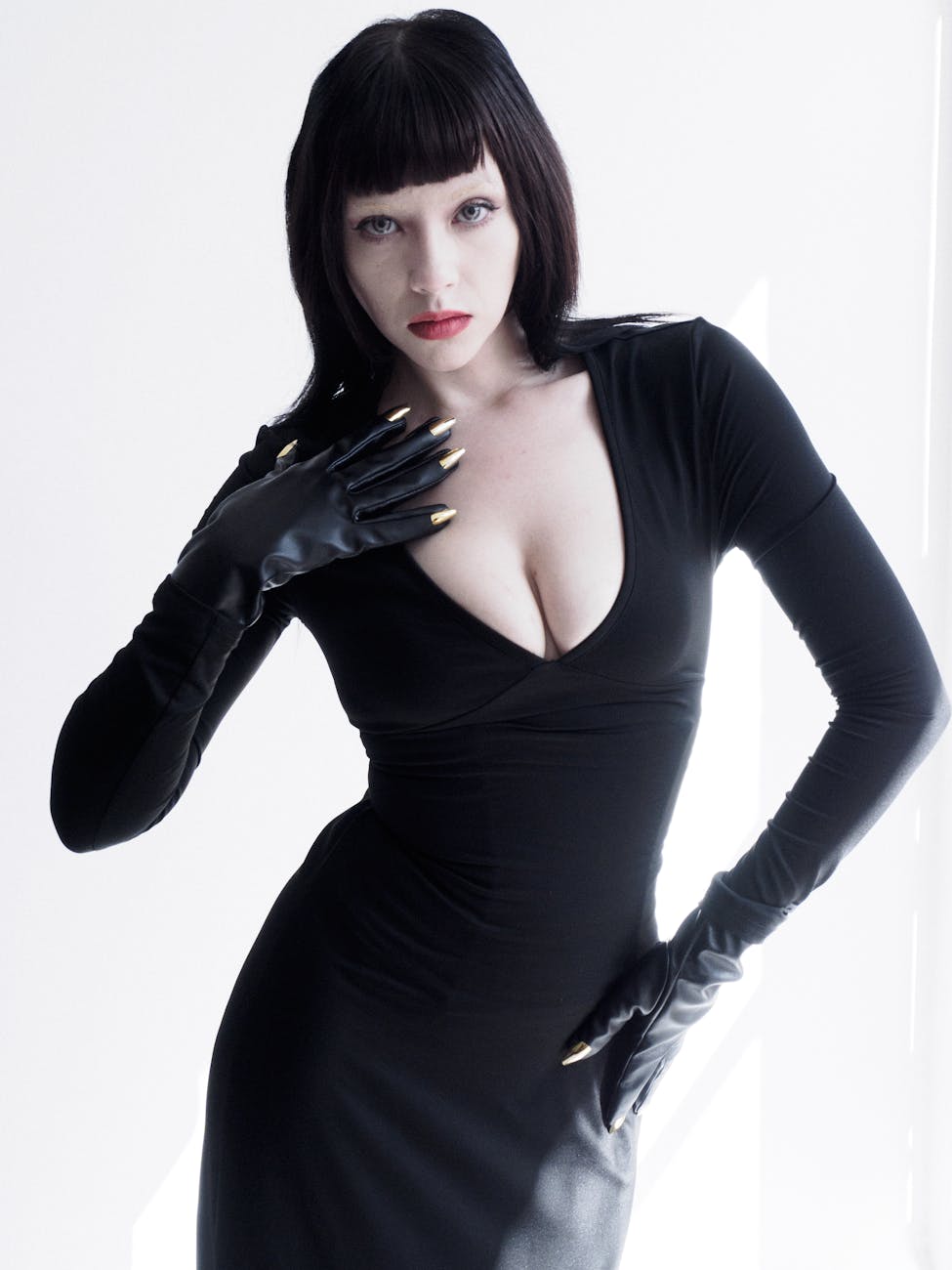
The real Halloween link began in 1981, when actress Cassandra Peterson created the camp-horror TV hostess Elvira, Mistress of the Dark for a Los Angeles late-night show (Movie Macabre).

Dressed in a plunging black gown with a beehive of jet hair, Elvira presented old horror movies with sardonic humor — blending Gothic sex appeal, irony, and B-movie kitsch.

The character became a pop-culture icon: Halloween TV specials, films, pinball machines, comic books, and even perfume lines immortalized her as the Queen of Halloween.

Outside the United States, this name does not have such associations. In Sweden, it has been among the top 100 girls’ since 1998 and peaked at #25 in 2014. As of 2024, it came in at #40.

It’s a popular name in the Balkans, even spinning off a male form of Elvir (Bosnian and Albanian).

Other forms include:

  • Elbire (Basque)
  • Elvíra (Czech/Slovakian)
  • Elviira (Estonian, Finnish)
  • Elvire (French)
  • Elwira (Polish, also an alternate Swedish spelling, Sorbian)
  • Elvīra (Latvian)
  • Elvyra (Lithuanian)

Obscure Lithuanian male forms are the Lithuanian, Elvyras; the Polish, Elwir(o), and the Italian Elviro.

Name days: August 25 (Austria), July 16 (Croatia), February 10 (Hungary), January 25 (Spain), March 1 (Sweden), November 21 (Slovakia), August 13 (Latvia).

Sources

Botond

Photo by Fernando Cortu00e9s on Pexels.com
  • Origin: Hungarian
  • Meaning: “mace; stick.”
  • Gender: masculine
  • Pron: BO-tond

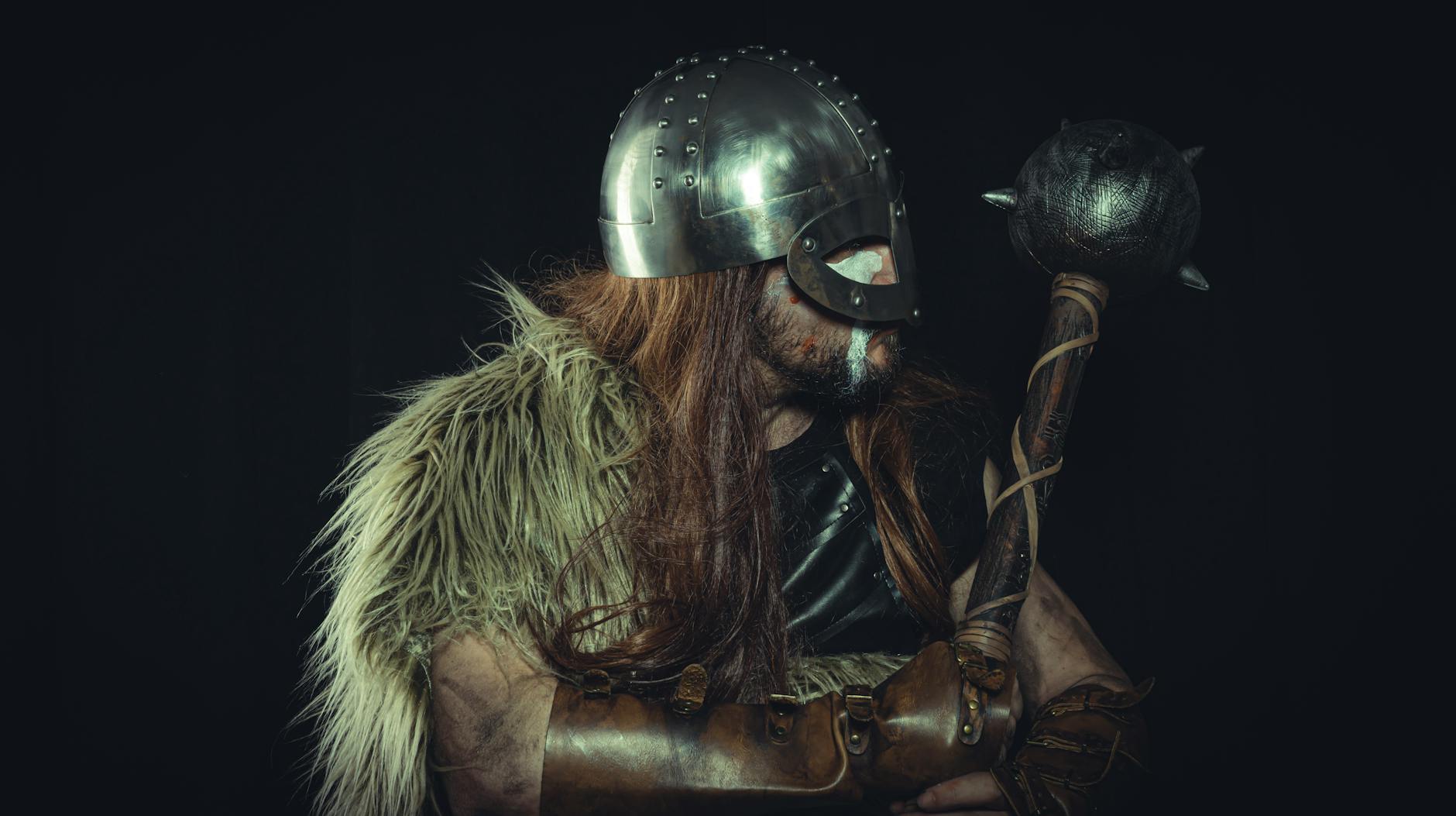
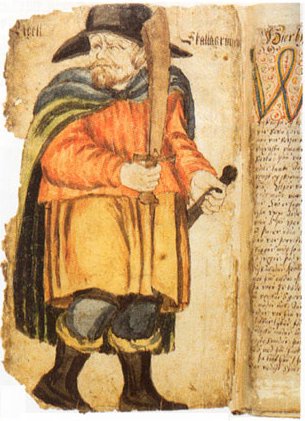
The name is an old traditional Hungarian name, derived from the word bot meaning “mace; or stick.” It was a relatively rare name until recently, as of 2022, it was the 11th most popular male name in Hungary.

Its designated name-days in Hungary are March 28, May 16 and July 28.

Common Hungarian diminutive forms are: Boti, Botika, Botus, Tondi.

Sources

Andrew

Gender: Masculine
Origin: Greek
Meaning: “of man, belonging to man.”

The name is derived from the Greek Ανδρεασ (Andreas), which is derived from the Greek word, ανδροσ (andros), a genitive form of the word, ανηρ (aner), meaning, “man.” Hence, it would rougly translate to mean “belonging to man” or “of man.”

It was popularized by one of the twelve Apostles, who is now considered a popular Christian saint. It is suggested that Andreas was a nickname given to him, or possibly just a direct Greek translation of a Hebrew name that had a similar meaning, now lost to history.

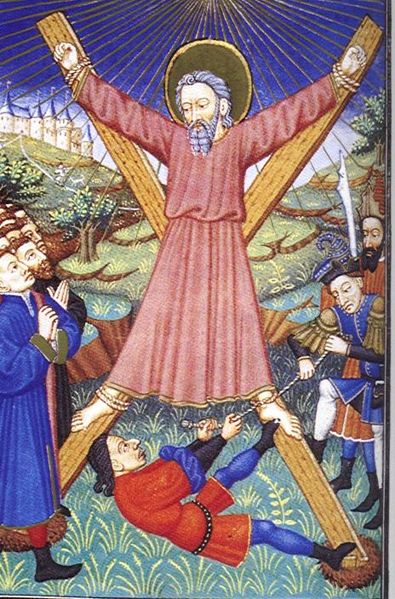
Saint Andrew is considered the patron saint of Scotland, Russia, Greece and Romania. According to legend, he was martyred around the Black sea on an X shaped cross. His designated name-day is November 30.

The name has remained a staple in the U.S. top 100. As of 2011, he was the 16th most popular male name. His rankings and his various incarnations in other countries are as follows:

  • # 1 (Andrei, Romania, 2009)
  • # 3 (Andrea, Italy, 2010)
  • # 3 (Andrea, Italian-speaking, Switzerland, 2010)
  • # 6 (Andreas, Estonia, 2011)
  • # 8 (Andria, Georgia, 2011)
  • # 8 (Andrej, Serbia, 2011)
  • # 9 (Andrey, Russia BabyCenter, 2011)
  • # 10 (Ondřej, Czech Republic, 2011)
  • # 10 (Andre/Andrew/Andrea/Andrei, Malta, 2011)
  • # 12 (Andreas, Norway, 2011)
  • # 25 (András, Hungary, 2011)
  • # 28 (Andreas, Denmark, 2011)
  • # 35 (Scotland, 2010)
  • # 38 (Canada, BC, 2010)
  • # 39 (Andrej, Croatia, 2009)
  • # 41 (Andraž, Slovenia, 2010)
  • # 46 (Andreas, Austria, 2010)
  • # 57 (Andrija, Croatia, 2009)
  • # 58 (Ireland, 2010)
  • # 61 (Andres, Spain, 2010)
  • # 68 (Australia, NSW, 2011)
  • # 70 (Northern Ireland, 2010)
  • # 92 (Andrej, Slovenia, 2010)
  • # 98 (Andro, Croatia, 2009)
  • # 98 (Anders, Norway, 2011)
  • # 176 (Andres, United States, 2011)
  • # 241 (André, United States, 2011)
  • # 244 (Andrea, France, 2010)
  • # 388 (Andreas, France, 2010)
  • # 950 (Anders, United States, 2011)

Other forms are as follows (listed alphabetically by linguistic origin).

  • Andrees/Andries (Afrikaans/Old Dutch)
  • Andrea (Albanian/Italian)
  • Ndreu (Albanian)
  • Andreyas (Amharic)
  • Andraws/Andraous اندراوس (Arabic/Coptic/Lebanese/Syriac)
  • Andreas (Armenian/Czech/Estonian/German/Greek/Hungarian/Slovak/Scandinavian)
  • Andresu (Asturian)
  • Ander (Basque)
  • Anderl (Baverian)
  • Andrièu (Bearnais/Occitanian/Provencal)
  • Andrivet (Bearnais)
  • Andrej Андрэй (Belarusian)
  • Andreo/Andrev (Breton)
  • Andrei/Andrey Андрей (Bulgarian/Old Church Slavonic/Romanian/Russian/)
  • Andrejko (Bulgarian)
  • Andreu (Catalan/Aragonese)
  • Andria ანდრია (Corsican/Georgian/Sardinian)
  • Andrej (Croatian/Czech/Slovak/Slovene)
  • Andrija (Croatian/Serbian)
  • Andro/Jandre (Croatian)
  • Ondřej (Czech)
  • Anders (Danish/Norwegian/Swedish)
  • Dres/Dreves/Drevs (Danish)
  • Andries/Adrees (Dutch)
  • Andres (Estonian)
  • Ando/Andre/Andro/Andrus/Andu/Andi/Anti (Estonian)
  • Andras/Andrias (Faroese)
  • Andriou (Fijian)
  • Antero/Tero (Finnish)
  • Antti (Finnish)
  • Andris/Driess (Frisian)
  • André (French/Galician/Ladino/Portuguese)
  • Dria (Genevoese: Dialectical Italian form)
  • Anda (German: dialectical form, Northern Austria)
  • Anekelea (Hawaiian)
  • Andor/András/Endre (Hungarian)
  • Andris (Hungarian/Latvian)
  • Andrés (Icelandic/Spanish)
  • Aindréas/Aindriú (Irish)
  • Andrejs (Latvian)
  • Andriejus/Andrius (Lithuanian)
  • Andrija/Indri (Maltese)
  • Anaru (Maori)
  • Dreesi (Old Swiss German: Basel dialect)
  • Andrzej/Jędrzej (Polish: latter is a very old form)
  • Drewes (Plattdeutsch)
  • Andrea/Andreia/Andri/Andrin/Andriu (Romansch)
  • Ándá/Ándaras/Ándde/Ánde (Saami)
  • Aindrea/Aindreas/Anndra (Scottish)
  • Ondrej (Slovak)
  • Andraž (Slovene)
  • Handrij (Sorbian)
  • Andalea (Swahili)
  • Andriy Андрiй (Ukrainian)
  • Andras (Welsh)

Belorusian diminutives are: Andros, Andruk and Andrus. Czech masculine diminutive forms are Andy, Ondra, Ondrášek, Ondrejko, Ondrík, Ondřejek and Ondříček. French diminutive forms are: Dédé, Ti-Dré, Andi, DéaAndy. A German diminutive form is Andy/Andi and English are Andi, Andie, Andy, Dre and Drew. A Hungarian diminutive is Bandi and Polish diminutive forms are Andrzejek, Jędrek and Jędruś. Scotch diminutive form is Dand.

Note: Andrea is a common feminine form in most European countries outside of Italy and Albania, particularly in Germany and the Anglo-phone world. Whether this is a borrowing from the Italian and was changed, or a coincidental evolution, is unknown. What is known is that Andrea has been used in England as a feminine form since the 17th-century.

Feminine forms are (listed alphabetically by linguistic origin)

  • Andere (Basque)
  • Andrea (Basque/Breton/English/German/Spanish)
  • Andriva/Andriveta (Bearnais/Occitanian)
  • Andersine (Danish)
  • Andrine (Danish/Norwegian)
  • Drine (Danish)
  • Dreesje (Dutch)
  • Andrée (French)
  • Aanasi/Aanarsi/Aanta/Aantariarsi (Greenlandic)
  • Andreina (Italian)
  • Andzeja/Ondzeja (Polish: obscure)
  • Andréia (Portuguese: Brazilian)
  • Andreia (Portuguese: European)
  • Andriano (Provencal)
  • Andreea (Romanian)
  • Andrina (Romansch)
  • Andrijana (Serbo-Croatian)
  • Andreja (Slovene)
  • Andrietta/Andriette (Swedish/Danish: very rare)

Czech diminutive forms are: Adrejka, Andruška, Andra, Rea. English diminutive forms are Andi, Andy, Annie and Drea.

Nicholas

Origin: Greek
Meaning: “victory of the people.”

Today is St. Nicholas Day! So, I thought, what a perfect opportunity to blog about the name Nicholas and all his myriad variations.

This is an update of a post I wrote three years ago in December. I thought I would rerun it with some updates.

The name is derived from the Greek, Νικόλαος, (Nikolaos), which is composed of the Greek words νικη (níkē), meaning, “victory” and λαὸς (laos), meaning, “people.” λαὸς (laos) could also derive from the Greek root word, λας (-las) as in “λα-τομεῑο“, which means, “stone” “rock”, as in Greek mythology it was believed that all humans were formed from the stones that Deucalion and Pyrrah threw over their shoulders as they were running.

In the post-Christian world, the name Nicholas was popularized through the cult of St. Nicholas, Bishop of Myra in Lycia, (the inspiration for the modern-day Santa Claus). He was known for his acts of charity toward the poor, the most popular story being that he saved a local poor man’s daughters from lives of prostitution by dropping gold nuggets down the man’s chimney so that the man could pay for his debts instead of selling his daughters.

St. Nicholas is a very popular saint in both the Eastern and Western Churches.

The name was introduced into England in the form of Nicholas, though the sans H version has also its share of usage in the Anglophone world. Nicholas first came into usage in England around the 12th-century and remained common even through the period of the Reformation. Currently, Nicholas is the 42nd most popular male name for boys in the United States, (2011). His rankings in all his various forms in other countries are as follows:

  • # 1 (Nika/Nikoloz(i), Georgia, 2011)
  • # 3 (Nikola, Macedonia, 2006)
  • # 3 (Nikola, Serbia, 2011)
  • # 5 (Nikolay, Bulgaria, 2009)
  • # 5 (Nikolaos, Greece, 2010)
  • # 6 (Nicolás, Argentina, 2009)
  • # 9 (Nicolás, Columbia, 2011)
  • # 9 (Nicolás, Mexico, 2011)
  • # 15 (Nicholas/Nick/Nicholai/Nicoló, Malta, 2011)
  • # 16 (Mikołaj, Poland, 2009)
  • # 22 (Nicolò, Italy, 2010)
  • # 22 (Nicolas, Spain, 2010)
  • # 24 (Niklas, Austria, 2010)
  • # 27 (Nikola, Croatia, 2009)
  • # 29 (Nicolas, Belgium, 2008)
  • # 31 (Nikolaj, Denmark, 2011)
  • # 36 (Australia, NSW, 2011)
  • # 36 (Canada, BC, 2010)
  • # 45 (Nikolai, Norway, 2011)
  • # 51 (Nicolas, Catalonia, 2010)
  • # 56 (Nicolas, Austria, 2010)
  • # 69 (Nicolas, France, 2010)
  • # 72 (Miklós, Hungary, 2011)
  • # 75 (New Zealand, 2010)
  • # 82 (Nikola, Slovenia, 2010)
  • # 93 (Niklas, Norway, 2011)
  • # 94 (Nikola, Bosnia & Herzegovina, 2010)
  • # 168 (Nicolas, United States, 2011)
  • # 181 (Scotland, 2010)
  • # 332 (Nicolaas, Netherlands, 2011)
  • # 451 (Nicolas, Netherlands, 2011)
  • # 473 (Nikolas, United States, 2011)
  • # 550 (Nickolas, United States, 2011)
  • # 639 (Nikolai, United States, 2011)

Other forms of the name include the following, (divided alphabetically by linguistic origin):

Latinate Forms
Variations used in Latin languages

  • Micolau (Catalan)
  • Nicolau (Catalan/Galician/Occitanian/Portuguese)
  • Niculaiu (Corsican)
  • Nicoty (Brusseler: a French dialect)
  • Colin (French: originally a diminutive form, now used exclusively as an independent given name, not to be confused with the Celtic Colin/Collin which has a completely different etymology and pronunciation)
  • Nicolas/Nico (French: diminutive forms are Colas, Coliche, Colineau, Coya, Koni, Nic, Nico and Nikko)
  • Coletto/Colino (Italian: obscure)
  • Niccola/Nicola (Italian: Cola is a diminutive form)
  • Nicolai (Italian)
  • Nicolao (Italian)
  • Niccolò/Niccolo/Nicolò (Italian)
  • Nicoletto (Italian: obscure)
  • Niccolino/Nicolino (Italian: obscure)
  • Nico (Italian/Romanian/Spanish: originally a diminutive form, now used exclusively as an independent given name)
  • Nicolás/Colás (Leonese)
  • Nicu (Leonese/Romanian: originally diminutive forms, used as independent given names)
  • Nicolaus (Late Latin)
  • Nicolinus (Late Latin)
  • Neculai/Nicolae/Niculae (Romanian: diminutive form is Nicoară)
  • Nicușor (Romanian: originally a diminutive form, used as an independent given name)
  • Clà/Clau (Romansch)
  • Niclà/Nicolà/Niculin (Romansch)
  • Nigola (Sardinian)
  • Nicolao/Nicolás (Spanish)

Feminine forms ares

  • Nicolaua (Catalan)
  • Colette (French: originally a diminutive form, now used exclusively as an independent given name)
  • Coline (French: originally a diminutive form, now used exclusively as an independent given name. The name also coincides with the French word for hill. Diminutive form is Colinette)
  • Nicole (French)
  • Nicolette (French: originally a diminutive form of Nicole, now exclusively used as an independent given name)
  • Nicoline (French)
  • Nicolasa (Galician/Spanish)
  • Nicoletta (Italian)
  • Nicolina (Italian)
  • Nicoleta (Romanian)
  • Nicolina/Niculina (Romanian)
  • Nicoleta/Nicolá (Spanish)

Germanic Forms
Variations used in Germanic based languages

  • Nikolaus (Afrikaans/Old Dutch)
  • Claus/Klaus/Niels (Danish: originally diminutive forms but used as independent given names for centuries)
  • Nicolai/Nikolaus/Nikolaj (Danish)
  • Nilaus/Nis (Danish)
  • Nicolaas/Nikolaas (Dutch)
  • Klaas/Nico/Niek/Niels (Dutch: Originally diminutive forms but have been used as independent given names for centuries)
  • Nicholas/Nicolas (English: diminutive forms include: Cole, Nat, Nick and Nicky)
  • Niklas/Niklái (Faroese)
  • Niklaas (Flemmish)
  • Klaas/Klaes (Frisian)
  • Nickel/Nickels (Frisian)
  • Claus/Claas/Klaas/Klaus/Klas (German: originally diminutive forms but have been used as independent given names for centuries)
  • Nickolaus/Nicolas/Nicolaus/ Niklaus/Nikolaus/Niklas (German)
  • Nico/Niko (German)
  • Neikaulaus (Gothic)
  • Néckel/Kleeschen/Klos (Lexumburgish)
  • Klaos (Limburgish)
  • Nikolaas/Nicolaas (Low Saxon)
  • Nicolai/Nikolai (Norwegian)
  • Niels (Norwegian)
  • Nickel (Plattdeutsch)
  • Michlaus (Swabian)
  • Niclas/Nicklas/Niklas (Swedish)
  • Nels/Nils (Swedish)
  • Klas/Claes (Swedish)
  • Chlaus/Glaus (Swiss-German)

Germanic feminine forms are:

  • Nikoline (Danish)
  • Klasina/Klazina (Dutch)
  • Nicole (Dutch/English/German: a borrowing from the French, very popular in the 1980s in German-speaking countries, English-speaking countries, as well as in the Netherlands and Scandinavia. In 1980, Nicole was the 7th most popular female name in the United States)
  • Nicolet (Dutch: a bastardization of the French, Nicolette)
  • Nicolien/Nicoline (Dutch)
  • Nicola/Nichola (English: a name that was particularly popular in Great Britain in the 70s and 80s, not to be confused with the masculine versions which are separate evolutions. This is pronounced NIK-uh-lah, and is most likely a feminization of the Scottish Nichol)
  • Nikolina (Faroese)
  • Nikólína (Icelandic)

Slavic Forms
Forms used in Slavonic languages

  • Mikalai Мікалай (Belarusian)
  • Nikola(y)/Niklen Никола/Николай/Никлен (Bulgarian: diminutive forms are: Kole, Kolyo, Kolyu and Nikùlitza).
  • Nikola/Niko (Croatian: Nikša and Nikica are diminutive forms)
  • Mikoláš/Mikuláš (Czech: short form is Mikula )
  • Nikola (Macedonian: diminutive forms are Kole and Nikolče nee-KOL-che)
  • Mikołaj (Polish: diminutive forms are Kola, Mikcio, Mik, Mikołajek, Miki, Miko, Mikoś, Mikuś, Misza, Nicz, Niki and Niko)
  • Nikolai Николай (Russian: Kolya and Nikita are diminutive forms)
  • Nikola Никола (Serbian)
  • Mikoláš/Mikuláš (Slovakian)
  • Nikolas (Slovakian)
  • Nikita (Slovakian: a borrowing from the Russian, sometimes used as an independent given name in Slovakia)
  • Miklavž/Niko/Nikolaj (Slovene)
  • Mikławš/Klaws (Sorbian)
  • Mykola Микола/Mykolai Миколай (Ukrainian)

Feminine forms are:

  • Nikoleta/Nikolina Николина/Николета (Bulgarian)
  • Nikolina/Nika/Nina (Croatian)
  • Nikoleta (Czech/Polish/Slovakian)
  • Nikola (Czech/Polish/Slovakian: currently very popular in all three countries)
  • Nikol (Czech/Polish: a corruption of the French, Nicole, and is a relatively recent form in the Czech Republic and Poland and is also rapidly increasing in popularity)
  • Nikolina (Czech/Polish)
  • Mikuláška (Slovakian: obscure)
  • Nika/Nikolaja (Slovene)

Celtic Forms
Forms used in Celtic Countries

  • Nikolaz/Nikolazig (Breton)
  • Nikolas (Cornish)
  • Cóilín (Irish)
  • Nicolás/Nioclás (Irish)
  • Neacel/Nichol/Nicol (Scottish)
  • Niclas (Welsh)

Baltic Forms
Forms used in the Baltic

  • Klaus/Laas/Laus (Estonian)
  • Nigol/Nigulas/Nigul (Estonian)
  • Niilas/Niilo/Niilu (Estonian)
  • Niklas/Nikolai/Niko (Estonian)
  • Nikita (Estonian: a borrowing from the Russian, occasionally used as an independent given name)
  • Nil/Nillo/Nilo/Nils/Nilus (Estonian)
  • Launo/Niilo/Niklas/Niko (Finnish)
  • Nikolajs/Niks/Nils (Latvian)
  • Klavs/Niklavs (Latvian)
  • Mikalojus/Mikas/Nikalojus (Lithuanian)
  • Miklay Миклай (Mari)
  • Mikuk Микук (Mari)
  • Mikus Микуш (Mari)
  • Nibá (Saami)
  • Nigá/Nigo (Saami)
  • Nihkke/Nihkko (Saami)
  • Niillas/Nilá/Nillá/Nilsa (Saami)

Feminine forms are:

  • Nikolė (Lithuanian)
  • Nikoleta/Nikoletė (Lithuanian)

Other Forms
Forms used in other languages

  • Nikolla/Nikollë/Koll/Kol (Albanian)
  • Nikolas ኒኮላስ (Amharic/Ethiopian)
  • Nikoghayos Նիկողայոս/Nikoghos o Նիկողոս (Armenian)
  • Nikola (Basque)
  • Mikulay/Mikuҫ Микулай, Микуҫ (Chuvash)
  • Nikolaus/Niqwela/Niqewlawes نيقولاوس (Coptic/Lebanese/Syriac)
  • Niko (Fijian)
  • Nikoloz ნიკოლოზ (Georgian)
  • Nikolaos Νικόλαος/Nikolas Νικόλας/Nikos Νίκος /Nikolis Νικολής (Greek Modern)
  • Niilsi/Niisi (Greenlandic)
  • Nikku/Nikkulaat (Greenlandic)
  • Miklós/Nikola (Hungarian)
  • Nikku/ Nikkii/Nikorasu (Japanese)
  • Nikola (Maltese)

Feminine forms are as follows:

  • Níkē Νίκη/Nikoléta Νικολέτα/Νikolína Νικολίνα (Greek: modern)
  • Nikkuliina/Nikkuliit (Greenlandic)
  • Nikolett (Hungarian)

Poppy

Gender: Feminine
Origin: English

Are you loving Lily? Maybe the popularity has gotten to you. There is this spunky floral moniker that has already reached outrageous popularity in Great Britain. Poppy is a sweet little floral that has been in usage since at least the 19th century. The name may seem a bit too insubstantial for some, hence is why it is sometimes listed as a nickname for such names as Parthenope, Penelope, Persephone, Pippilotta, Philippa, Pomeline and Perpetua.

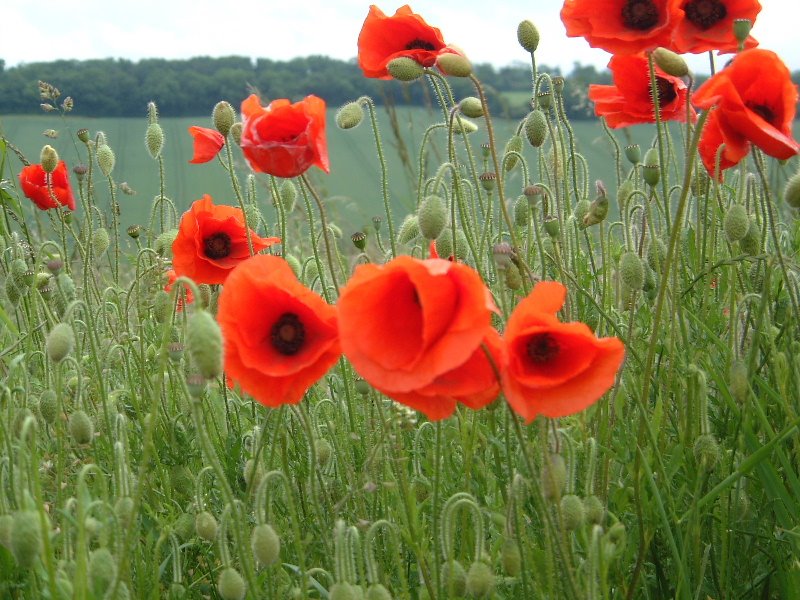
The associations with the flower are beautiful! Who wouldn’t want to be named for a deep red, eye popping flower (no pun intended). Then again, its symbolisms with death and sleep can be a bit of a turn off for others.

In Ancient Rome and Greece, the poppy was a funerary flower, they were usually placed on graves. The poppy got the association of death and sleep, since opium, (which is extracted from poppy seeds), was such a strong barbiturate. In fact, it was so strong, that the ancients used it as an anesthetic while conducting surgeries. However, Poppy does have the redeeming qualities of being associated with resurrection, since after being put under a death like sleep from opium during an operation, the patients always seemed to awaken as if they had come back to life. Its symbolism for dead soldiers comes from a poem written by John McCrae, entitled in Flanders Fields (1915). McCrae writes how he witnessed his friend perish amidst a field of poppies during WWI, and he compares the field of poppies to all the fallen dead soldiers. The name could be a nice way to honour a relative that has perished in a war.

As of 2010, Poppy was the 16th most popular female name in England/Wales. Her rankings in other countries are as follows:
  • # 47 (Scotland, 2010)
  • # 52 (Northern Ireland, 2010)
  • # 66 (Australia, NSW, 2010)
In the United States, it doesn’t even rank in the top 1000. However, with its growing popularity in Britain along with its similar appeal to other red hot climbers such as Scarlett and Ruby, she just might be making her way into the top 1000 by next year.
Another interesting side note is that Poppy is the flower of the month of August. Not a bad choice for an August baby.
A famous American bearer is CNN news anchor and reporter, Poppy Harlow (née Katharine) b.1982

Freya

Gender: Feminine
Origin: Old Norse
Meaning “lady; mistress”
(FRAY-yah)

The name is derived from the proto-Germanic word, *frawjōn, which designates a woman of noble birth. The modern German word of Frau is a modern cognate. Many scholars argue whether Freya was originally the name of the goddess or a title used in reference to her; it has even been suggested that the goddess had an actual given that has been lost to history.

In Norse mythology, Freya was believed to be the most beautiful goddesses ever created. Scholars believe that Freya was essentially a fertility goddess who assisted in the growth of wildlife, agriculture and human reproduction; along with birth and life, she was also associated with death. In Norse legend, it was Freya who received half the slain warriors into her heavenly hall.

She is often times the subject of the poetic eddas along with her numerous epithets, which are as follows:

  • Vanadis (beautiful goddess)
  • Mardoll (sea bright)
  • Horn (flaxen)
  • Gefn (the giver)
  • Syr (sow) which illustrates Freya’s association with pigs and fertility.

Today the name has survived in modern Germanic lexicons; the English word Friday means “Freya’s day” likewise the same in German with Freitag; the Danish/Swedish/Norwegian Fredag and the Dutch Vrijdag.

There are a few plants named for the goddess, such as Freyja‘ Hair and Freyja’s Tears, and the chemical Vanadium is derived from her epithet, Vanadis.

Today, Freya, and its alternate forms are still very common throughout Scandinavia and she even appears in the British top 100. Her rankings are as follows:

  • # 8 (Freja, Denmark, 2010)
  • # 19 (England/Wales, 2010)
  • # 19 (Scotland, 2010)
  • # 41 (Freja, Sweden, 2010)
  • # 53 (Northern Ireland, 2010)
  • # 61 (Ireland, 2010)

Other forms include:

  • Frea (Anglo-Saxon/Lombard)
  • Fröe (Danish: obscure form)
  • Freya (English/Modern German/Dutch)
  • Froya (Faroese)
  • Freija (Finnish)
  • Frya/Frija (Frisian)
  • Freja (German/Scandinavian)
  • Fráujo (Gothic)
  • Frėja (Lithuanian)
  • Frieja (Low Saxon)
  • Frøya (Norwegian)
  • Freyja (Old Norse/Icelandic)
  • Frīa/Frija (Old High German)
  • Frowa (Old High German)
  • Fröa (Swedish: very obscure form)
  • Fröja (Swedish: very obscure form)
The designated name-day in Sweden is January 23rd.

Otto

Gender: Masculine
Origin: German
Meaning: “wealth; riches.”
(OT-to)

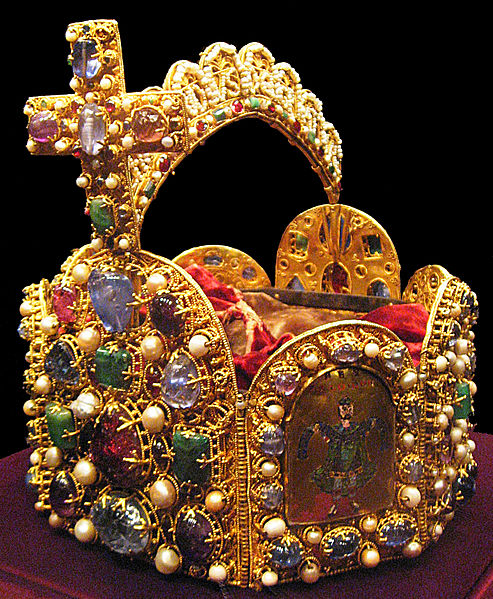
The name is derived from the early Germanic Audo. It seems like the quintessential German name, but has been out of favor in German speaking countries until recently, where it seems to be experiencing a revival. The name was borne by four Germanic kings. The first being Otto I, (also known as Otto the Great), the first Holy Roman Emperor. It was also borne by German Chancellor Otto von Bismarck (1815-1898).

To American ears, it might sound a bit quirky, but to hipsters, he might just make the perfect brother to little Gunnar or Atticus. Otto exhibits a certain quality of strength. It wouldn’t be bad to give him a chance, at least as a middle name. Otto has not ranked in the US top 1000 since 1974, when he came in at a measly #969. The highest he has seemed to rank in American history was in 1909, when he came in at a decently high #144. No doubt due to a large influx of German and Swedish immigrants at the time.

In Germany, he hasn’t made it to the top 500 as of yet, but I am happily able to report that, recently, while browing through some German birth announcement from Berlin, I was happy to see a few newborn Ottos, either as their first name or middle name.

Update: As of 2011, Otto was the 30th most popular male name in Finland and in 2010, he was the 92nd most popular male name in Sweden.

In Germany and Austria, his designated name day is September 7th. Similar variations include Otmar which means “possesing of fame” and Ottokar meaning “wealthy and vigilant.” If Otto feels too short for you, then you might want to consider Otmar or Ottokar as a formal version.

Other forms of the name include:

  • Ot (Catalan)
  • Ota (Czech)
  • Oto (Czech/Slovak)
  • Otto (Dutch/Estonian/Faroese/Finnish/Frisian/German/Polish/Romansch/Sami/Scandinavian)
  • Ode (English)
  • Eudes (French)
  • Odilon (French/Portuguese)
  • Odon (French/German)
  • Odo (German)
  • Udo (German)
  • Ortu (Greenlandic)
  • Ottó (Hungarian/Icelandic)
  • Oddo (Italian)
  • Ottone (Italian)
  • Ottorino (Italian)
  • Rino (Italian)
  • Audo (Old High German)
  • Odo (Old High German)
  • Otton (Polish)
  • Otte (Scandinavian)
  • Oton (Slovene/Spanish)

A common Czech diminutive form is Otik.

Feminine forms are so numerous that I shall save those for a separate entry, stay tuned 🙂

Helmi

Gender: Feminine
Origin: Finnish/Estonian
Meaning: “pearl”
(HEL-mee)

The name was originally a diminutive form of the name Vilhelmiina, but later became an independent name in Finland due to its coincidental meaning of “pearl,” in Finnish. The pronunciation could be heard here: http://www.forvo.com/word/helmi/

As of 2011, Helmi was the 11th most popular female name among Finnish speakers in Finland.

The designated name-day in Finland and Estonia is May 7th. In Sweden, it is April 6th.

Eivind

Gender: Masculine
Origin: Old Norse
Meaning: “happy victor; gift victor.”
Nor (I-vind)

A few weeks ago I was browsing through some Norwegian birth announcements and noted several unusual names that appeared over and over again. Eivind was one of them. Apparently, Eivind is the Norwegian form of the proto Norse auja “happy, lucky or gift” and windur meaning “victor, winner.” In Norwegian and Scandinavian history, the name was borne by a 9th-century viking by the name of Eyvind Lambi, he figures in the famous Egil’s Saga. Another popular form in Norway is Øyvind and in Sweden it appears as Ejvind.

Currently, the name is the seventy fouth most popular male name in Norway, while its slashed counterpart (see above) comes in much higher at # 27. The name is not as popular in Sweden as it is in Norway.

Its designated name-day was exactly one week ago, August 26th.

Update: Eivind and Øyvind no longer appear in the Norwegian top 100, but as of 2010, its Faroese form of Eivindur was the 8th most popular male name in the Faroe Islands.

Other forms of the name include:

  • Eivin (Danish/Norwegian)
  • Ejvin/Eyvin (Danish)
  • Ejvind (Danish/Faroese/Swedish)
  • Even (Danish/Faroese/Swedish)
  • Oyvind (Danish)
  • Øivind/Øjvind (Danish/Norwegian)
  • Evind (Faroese/Scandinavian)
  • Eivindur (Faroese)
  • Oyvindur (Faroese)
  • Öjvind (Faroese/Swedish)
  • Eyvindur (Icelandic)
  • Eivinn (Norwegian)
  • Ovind (Norwegian)
  • Øivin(n) (Norwegian)
  • Øven (Norwegian)
  • Eyvindr (Old Norse)
  • Eiven (Sami)
  • Eivind/Eyvind (Scandinavian)
  • Evin (Scandinavian)
  • Önder (Swedish)
  • Önnert (Swedish)
  • Öyvind (Swedish)
Feminine forms include:
  • Evena (Norwegian)
  • Evina/Evine (Norwegian)
  • Evinda (Norwegian)
  • Øivine/Øyvine (Norwegian)

Malte

Gender: Masculine
Origin: German/Scandinavian
(MAHL-teh)

The name is derived from the Germanic name, Helmold, which is composed of the elements helm (helmut) and wald (ruler).

Malte‘s appearance was first recorded during the 1400s in Eastern Denmark and its popularity reached Sweden and Norway.

As of 2010, its Danish form of Malthe was the 15th most popular male name in Denmark, while Malte was the 56th most popular male name in Sweden, (2010).

Other forms of the name include:

  • Malte (German/Scandinavian)
  • Malti (Danish)
  • Molte (Danish)
  • Molti (Danish)