 Gender: Masculine
Origin: German
Meaning: “wealth; riches.”
(OT-to)
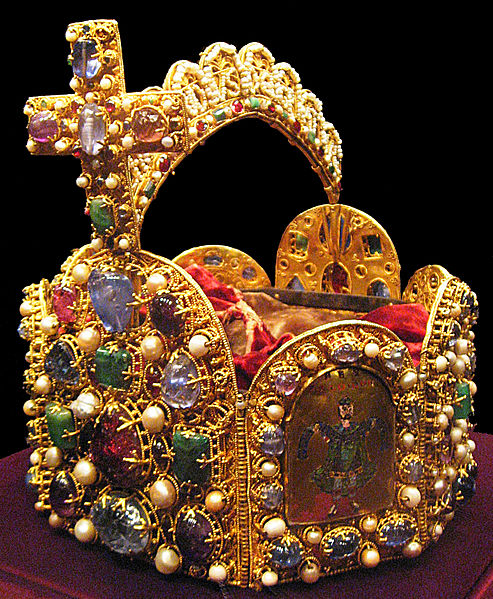
The name is derived from the early Germanic Audo. It seems like the quintessential German name, but has been out of favor in German speaking countries until recently, where it seems to be experiencing a revival. The name was borne by four Germanic kings. The first being Otto I, (also known as Otto the Great), the first Holy Roman Emperor. It was also borne by German Chancellor Otto von Bismarck (1815-1898).
To American ears, it might sound a bit quirky, but to hipsters, he might just make the perfect brother to little Gunnar or Atticus. Otto exhibits a certain quality of strength. It wouldn’t be bad to give him a chance, at least as a middle name. Otto has not ranked in the US top 1000 since 1974, when he came in at a measly #969. The highest he has seemed to rank in American history was in 1909, when he came in at a decently high #144. No doubt due to a large influx of German and Swedish immigrants at the time.
In Germany, he hasn’t made it to the top 500 as of yet, but I am happily able to report that, recently, while browing through some German birth announcement from Berlin, I was happy to see a few newborn Ottos, either as their first name or middle name.
Update: As of 2011, Otto was the 30th most popular male name in Finland and in 2010, he was the 92nd most popular male name in Sweden.
In Germany and Austria, his designated name day is September 7th. Similar variations include Otmar which means “possesing of fame” and Ottokar meaning “wealthy and vigilant.” If Otto feels too short for you, then you might want to consider Otmar or Ottokar as a formal version.
Other forms of the name include:
- Ot (Catalan)
- Ota (Czech)
- Oto (Czech/Slovak)
- Otto (Dutch/Estonian/Faroese/Finnish/Frisian/German/Polish/Romansch/Sami/Scandinavian)
- Ode (English)
- Eudes (French)
- Odilon (French/Portuguese)
- Odon (French/German)
- Odo (German)
- Udo (German)
- Ortu (Greenlandic)
- Ottó (Hungarian/Icelandic)
- Oddo (Italian)
- Ottone (Italian)
- Ottorino (Italian)
- Rino (Italian)
- Audo (Old High German)
- Odo (Old High German)
- Otton (Polish)
- Otte (Scandinavian)
- Oton (Slovene/Spanish)
A common Czech diminutive form is Otik.
Feminine forms are so numerous that I shall save those for a separate entry, stay tuned 🙂
