Ptolomy

  • Origin: Greek Πτολεμαῖος
  • Meaning: “aggressive, warlike.”
  • Gender: Male
  • Eng (PTAHL-e-mee, TAHL-e-mee)

Derived from the ancient Greek male name Πτολεμαῖος (Ptolemaios), which in turn comes from πτόλεμος (ptólemos), meaning “war” or “battle.”

The word ptólemos is an older Aeolic dialectal form of πόλεμος (pólemos), the standard Classical Greek word for “war,” sharing the same root with the English word, “polemic.”

Ptolemy I Soter (367–283 BCE) was a general of Alexander the Great and later became Pharaoh of Egypt, founding the Ptolemaic Dynasty (323–30 BCE). This dynasty ruled Egypt for nearly three centuries and ended with Cleopatra VII, the most famous bearer of the family’s legacy.

Claudius Ptolemaeus (Ptolemy) (2nd century CE) was the famed Greek astronomer, mathematician, and geographer of Alexandria, whose Almagest shaped Western astronomy for over a millennium.

According to the Book of 1 Maccabees (135/4 BC), Ptolemy of Jericho betrayed his father-in-law, Simon the High Priest, by murdering him and his two sons while they slept as guests under his roof. This act of treachery is used in Dante Alighieri’s The Inferno, in which the ninth circle of Hell is called Ptolomea after him, a frozen realm reserved for those who betray their guests.

Ptolomy is also the name of an early Christian saint.

In the English-speaking world, Ptolomy has been used on and off since the 18th-century. It appeared in the U.K’s top 500 boys’ names in 2004, ranking in at #906.

A modern bearer is American author, Ptolemy Tompkins. Celebrity couple Gretchen Mol and Tod Williams bestowed this on their son in 2007.

Common English short forms include: Tollie, Tolly, and Tal.

International Variations

  • Butlimus بطليموس (Arabic)
  • Ptghomeos Պտղոմեոս (Armenian)
  • Ptaljemej Пталемей (Belarusian)
  • Ptolemej Птолемей (Bulgarian, Croatian, Serbian, Ukrainian)
  • Ptolemeu, Tolomeu (Catalan)
  • Ptolomeos ⲡⲧⲟⲗⲉⲙⲉⲟⲥ (Coptic)
  • Ptolemy (Another English form)
  • Ptolémée (French)
  • Tolomaes (Gaelic)
  • Ptolomeu (Galician, Occitanian, Romanian)
  • Ptolemäus (German)
  • Ptolemaiosz (Hungarian)
  • Ptólmæos (Icelandic)
  • Tolomeo (Italian, Spanish)
  • Tolommeo (Italian)
  • Ptolomaeus (Latin)
  • Ptolemajs (Latvian)
  • Ptolemėjus (Lithuanian)
  • Ptolomey, Ptolomej Птолемей (Macedonian, Russian)
  • Tolomé (Piedmontese)
  • Ptolomeusz (Polish)
  • Ptolomeu (Portuguese)
  • Ptolemæus (Scandinavian)
  • Ptolomaidh (Scottish-Gaelic)
  • Tulumeu (Sicilian)
  • Ptolomaj (Slovenian)
  • Ptolemeo, Ptolomeo (Spanish)
  • Batlamyus (Turkish)

Female forms include the sensual Ptolemaïs (Πτολεμαΐς) and the Italian, Tolomea.

Sources

Nefertari

  • Origin: Ancient Egyptian
  • Meaning: “the most beautiful one; the beautiful one has come.”
  • Gender: Female
  • Eng pron: (NEF-er-TAH-ree)

The name comes from the Ancient Egyptian elements, nfrt-jrj. The first element nfrt means “beautiful,” the second element jry means, “the one who is near.”

Nefertari was most famously borne by Queen Nefertari Meritmut, the beloved Great Royal Wife of Pharaoh Ramses II (19th Dynasty, 13th century BCE). Her elaborate tomb in the Valley of the Queens is among the best-preserved monuments of the New Kingdom.

After the Ptolemaic and Roman periods, Egyptian high culture became heavily Hellenized. Names like Cleopatra, Arsinoe, and Berenike (Greek) dominated the elite. With the rise of Christianity and later Islam, names shifted almost entirely to Biblical (Greek, Hebrew, Latin) Arabic. As a result, “Nefertari” remained locked in the Pharaonic past, only rediscovered in the 19th century by archaeologists.

In the 1980s, the name started to be used sporadically by African Americans. In 2024, at least 3 baby girls in the U.K were bestowed this ancient gem as a given-name.

In Coptic, this name would be rendered as ⲛⲉⲫⲣⲧⲁⲣⲓ (Nephrtari). In modern Egyptian Arabic, it is نفرتاري (Nifirtārī).

This may be due for a comeback, especially if you are of Egyptian descent.

Sources

Ziri, Taziri

  • Origin: Berber
  • Transcription: ⵣⵉⵔⵉ, زيري
  • Meaning: “moonlight.”

Ziri is an ancient masculine Berber name derived from the Tamazigt tziri, taziri, meaning, “moonlight.” Taziri or Thiziri (ⵜⵉⵣⵉⵔⵉ) is used as its female counterpart.

In history, Ziri was borne by Ziri ibn Manad, a 10th-century Berber king who founded the Zirid dynasty.

Sources

Swyn

  • Origin: Welsh
  • Meaning: “magic, spell, enchantment.”
  • Gender: Feminine
  • Pron: (sʊɨn /swiːn)

From the Welsh vocabulary word, swyn (magic, spell, enchantment). In the 20th-century, it has been adopted by Welsh parents as a female given name, usually 5 girls per year have been given this name in Wales. since 2001.

The perfect name for a Halloween baby.

Sources

Early Modern English Versions of Names

The early 20th century brought Janet back from the dead, and the 1980s revived Tiffany and Allison—two names that had once flourished in medieval England before fading into obscurity. Many other forgotten names share a similar story. Countless early English forms were gradually displaced by their Latinized versions, leaving behind a treasure trove of names that feel surprisingly fresh today. With their short, crisp sounds and understated elegance, many of these medieval forms fit seamlessly into modern naming trends.

  • Agace (AG-es) – Early English form of Agatha.
  • Anastace, Anstice (AN-stis) – Medieval English forms of Anastasia.
  • Annis – Vernacular form of Agnes.
  • Appelin, Apolyn, Applyn – Early modern English forms of Apollonia.
  • Avelyn – Old English form of Aveline.
  • Barbery (BAR-beh-ree; BAR-bree) – Middle English vernacular of Barbara.
  • Basily (BAZ-e-lee) – Feminine form of Basil, from Basilia.
  • Beaton (BEE-tun) – Diminutive form of Beata
  • Bennet – early English form of Benedicta, it was a unisex name in Medieval times.
  • Blandin (BLAN-din) – early English form of Blandina
  • Christian – Early English form of Christiana.
  • Collys, Collis (KAHL-lis) – this was used as the English form of Coline, a diminutive form of Nicholin.
  • Clemence – English vernacular form of Clementia.
  • Dowse (DOWS) – English vernacular form of Dulcie.
  • Effemy (EFF-eh-me)– Middle English for Euphemia.
  • Emblem – Early form of Emeline; once written as Emblen or Emelyn.
  • Ibbot, Ebotte (IB-bet; EB-bet)– Pet forms of Isabella or Elizabeth.
  • Jacket – Diminutive form of Jacquetta.
  • Jackman; Jacquemine (would have been pronounced JACK-e-men; JACK-men) – Vernacular English rendering of Jacquemina (French).
  • Josian (JOZE-ee-an)– English forms of Josiana.
  • Julian – Used for Juliana in medieval England; Julian was once unisex.
  • Lavin (LAY-vin) – Middle English form of Lavinia.
  • Lette (LET) – Vernacular form of Leta.
  • Lettice (LET-iss) – Earlier form of Letitia. (Later mocked because of its similarity to “lettuce.”)
  • Marin (MARE-en) – Medieval English for Marina.
  • Nicholin (NICK-o-lin) – Vernacular feminine of Nicholas (Nicholina).
  • Parnell, Parnel (PAR-nel) – English forms of Petronella. (Parnell later fell out of favor when it became slang for a prostitute in the Middle Ages.)
  • Perrin (PARE-in) – Feminine diminutive of Perina (from Petronilla).
  • Pleasance – From Plescencia or Placentia (“pleasant, agreeable”).
  • Rain – Vernacular of Regina.
  • Sabine, Sabin (SAY-bin / SAB-in) – English vernaculars of Sabina.
  • Scolace (SKAL-es) – Early English form of Scolastica (Scholastica).
  • Senobie (SEN-o-bee) – Medieval English version of Zenobia.
  • Sence – Early form of Sancia or Sancha.
  • Swanel – From Swanhild (“battle swan”), found in Middle English records.
  • Thomesin, Thomeson – Feminine diminutives of Thomas (Thomasina).

Phyllis, Phillyda

  • Origin: Greek Φυλλίς
  • Meaning: “leaves; foliage.”
  • Gender: Female

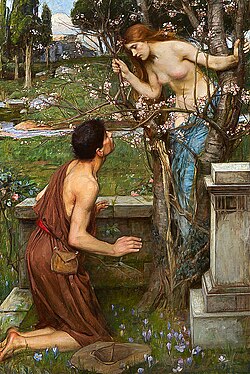
The name appears in Greek mythology. It is connected to a woman who killed herself when her love for Demophon was not returned. She was transformed into an almond or hazelnut tree, depending on the legend. It comes directly from the Greek word, Φυλλίς, meaning, “leaves, foliage,” which shares a root with the words chlorophyll and phyllotaxis. Its Turkish form of Filiz comes from the same root but the meaning slightly changes to “sprout; root.”

It also appears as the name of a minor river god of Bithynia.

It came into widespread use in England in the 16th-century and later spread to the rest of the Anglosphere.

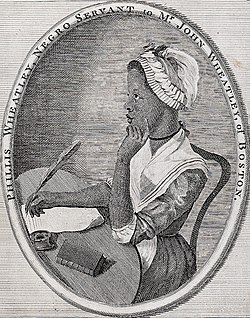
Early Puritan records occasionally include Phyllis/Phillis, reflecting classical learning even among settlers. Phillis Wheatley (1753-1784), the first published African-American female poet, is a striking historical bearer.

An 18th-century English short form was Lissie or Lissy.

It frequently appears in Elizabethan and Restoration poetry and drama. Poets such as Ben Jonson and Andrew Marvell used “Phyllis” as a stock name for a beloved in pastoral verse. Later modernists like Ezra Pound continued this tradition. This usage helped keep it familiar to English speakers for centuries.

It marked its presence in baroque operas (e.g., Handel’s Acis and Galatea includes a character named Phyllis) and in folk songs of the British Isles.

Victorian painters of the Pre-Raphaelite school sometimes chose the Phyllis and Demophon story for mythological canvases.

In the United States, it appeared in the Top 100 Female Names between 1915-1958, peaking at #24 in 1929. In the U.K., it came in at #14 in 1914, #4 in New Zealand in 1911, and #29 in 1922 in Canada.

Its Turkish offshoot of Filiz appeared in the Turkish Top 100 between 1980-1996, peaking at #11 between 1980-1982.

Today, the name is considered dated in the English-speaking world.

Phillyda, pronounced /ˈfɪl.ɪ.də/ in English is an alternate form.

Other forms include:

  • Filida Филлида (Bulgarian, Russian, Serbo-Croatian)
  • Fílide, Fil·lis (Catalan)
  • Fyl(l)is (Czech, Polish, Slovak)
  • Phyllis (Dutch, English, German, Classical Greek, Scandinavian)
  • Phillida (English)
  • Phillis (English)
  • Phyllis, Phyllide (French)
  • Fýllis (Greek – Modern)
  • Fillide, Filide (Italian)
  • Phillidis (Latin)
  • Filis, Filija (Latvian, Lithuanian)
  • Fílide, Fílis (Portuguese)
    • Fílide, Filis (Spanish)
    • Filiz (Turkish)
    • Fillida Філліда (Ukrainian)

Sources

Rawiya

  • Origin: Arabic راوية
  • Meaning: “narrator; storyteller.”
  • Gender: Female

The name comes directly from the Arabic word راوية (rawiya), meaning “storyteller; narrator.” Another transliteration is Rawia, Rawiyah and Rawya.

It was borne by Rawya Ateya (1926-1997), the first female parliamentarian in the Arab world in 1957.

Sources

Rubab

  • Origin: Arabic رباب
  • Gender: Female

The name comes directly from the Arabic word رباب for a type of stringed instrument.

It was also the name of Rubāb bint Imraʾ al-Qays (b. 7th-century C.E). The wife of Husayn ibn Ali.

It is borne by Pakistani Olympic Swimmer, Rubab Raza (b. 1991).

Another transciption is Rabab.

Other forms include:

  • Rübabə (Azeri)
  • Robabeh ربابه (Persian)
  • Robab رباب (Persian)
  • Rübab (Turkish)

The name is used throughout the Islamic World.

Sources

Rudraksha, Rudrakshi

Rudraksha beads
  • Origin: Sanskrit
  • Meaning: “Rudra’s eye’s; also the name of a plant

Rudraksha रुद्राक्ष is a male Sanskrit name. It is the name of a genus of Eleocarpus plant. The seeds are considered sacred to Lord Shiva. They are harvested and dried to be used to create prayer beads in both Hinduism and Buddhism. The etymology is composed of the Sanskrit Rudra and अक्ष (akṣa), meaning “eyes.”

Another masculine for is Rudraksh.

Rudrakshi रुद्राक्षी is the feminine form.

Sources

Sabih, Sabiha

Sabiha Sultan
  • Origin: Arabic
  • Meaning: “comely; beautiful; handsome; graceful.”

Sabih صبيح is a masculine Arabic name which comes directly from the Arabic word, صَبيح (ṣabīḥ), meaning, “comely; beautiful; handsome; graceful.” It is ultimately derived from the Arabic root word, صبح (ṣabuḥa) “to be beautiful; to be radiant; to beam.”

Sabiha صبيحة is its feminine form. It’s feminine form was borne by Sabiha Sultan (1894-1971) an Ottoman princess, the third and last daughter of Sultan Mehmed VI; the first Turkish female sculptor, Sabiha Bengütaş (1904-1992); and Turkish combat pilot, Sabiha Gökçen (1913-2001).


Sources