Eva, Eve

Gender: Feminine
Origin: Hebrew
Meaning: “life.”
Eng (EEV); (EE-vuh); Germ/Sp/Pol (EV-ah)

The name is borne in the Bible and in the Quran by the first woman created by God. She and her husband were expelled from the Garden of Eden after eating from the Tree of Knowledge.

The name is believed to be derived from the Hebrew roots חַוָּה, Ḥavvāh, from the Hebrew root ḥāyâ meaning “life” and the Semitic element, ḥyw “to live.” Both the Hebrew word chavah meaning “to live” and chayah meaning “to breath” share the same root.

Despite Eve’s fall from Grace in the Bible, the name was always in usage among Jewish, Christian and Muslim communities. In England, its usage can be traced back to the 12th-century. Its Latinate form of Eva, has always been a classic in continental Europe, especially in Germany, Poland, Slovakia and the Czech Republic.

As of 2010, Eva was the most popular female name in the Faroe Islanda and in Slovenia. Eve, Eva and all her various forms’ rankings in other countries are as follows:

  • # 3 (Iceland, 2010)
  • # 4 (French-speaking, Switzerland, 2010)
  • # 5 (Netherlands, 2010)
  • # 7 (Ieva, Lithuania, 2010)
  • # 10 (Armenia, 2010)
  • # 10 (Evie, England/Wales, 2010)
  • # 14 (Northern Ireland, 2010)
  • # 15 (France, 2009)
  • # 17 (Scotland, 2010)
  • # 20 (Belgium, 2009)
  • # 24 (New Zealand, 2010)
  • # 26 (Australia, NSW, 2010)
  • # 29 (Croatia, 2010)
  • # 31 (Evie, Scotland, 2010)
  • # 33 (Evie, Australia, NSW, 2010)
  • # 37 (England/Wales, 2010)
  • # 44 (Eevi, Finland among Finnish-speakers, 2010)
  • # 44 (Ireland, 2010)
  • # 46 (Austria, 2010)
  • # 47 (Canada, BC, 2010)
  • # 48 (Spain, 2010)
  • # 55 (Catalonia, 2010)
  • # 55 (Éabha, Ireland, 2010)
  • # 56 (Eve, Northern Ireland, 2010)
  • # 59 (Eve, Ireland, 2010)
  • # 86 (Norway, 2010)
  • # 91 (United States, 2010)
  • # 92 (Eve, England/Wales, 2010)
  • # 99 (Eve, Australia, NSW, 2010)
  • # 201 (Eve, France, 2009)
  • # 589 (Eve, United States, 2010)
  • # 705 (Evie, United States, 2010)

Other forms of the name include:

  • Eva Ева ევა
    (Afrikaans/Albanian/Armenian/Basque/Belarusian/Bosnian/Catalan/Croatian/Czech/Dutch/Faroese/French/Frisian/Galician/Georgian/German/Icelandic/Italian/Portuguese/Romansch/Spanish/Scandinavian)
  • Evis (Albanian)
  • Mahalet/Mahlet (Amharic)
  • Hawa حواء Хауа (Arabic)
  • Yeva (Armenian)
  • Həvva (Azeri)
  • Yeva Ева Эва (Belarusian/Russian/Ukrainian)
  • Yevga Евга (Belarusian)
  • Hava (Bosnian)
  • Evy (Danish/Norwegian/Swedish: initially a diminutive form, occasionally used as an independent given name)
  • Eveke (Dutch: initially a diminutive form, used as an independent given name, EV-eh-ke)
  • Eve (English/Estonian/Walon)
  • Evie (English)
  • Hawat/Hewa (Egyptian/Coptic)
  • Eeva (Estonian/Finnish)
  • Eevi (Estonian/Finnish)
  • Evi (Estonian)
  • Ivi/Iivi (Estonian)
  • Iivika (Estonian)
  • Ève (French)
  • Eefje, Eefke (Frisian)
  • Hawwa ሕይዋን (Ge-ez)
  • Eua Ευα (Greek)
  • Chava חַוָה (Hebrew: Modern: KHAH-vah, gutteral CH sound)
  • Éva (Hungarian: AY-vaw, diminutive form is Évike)
  • Hawa (Indonesian/Malayalam)
  • Éabha (Irish-Gaelic)
  • Ieva (Latvian/Lithuanian: YEH-vah)
  • Evuzus (Malaysian)
  • Aaue (Manx)
  • Èva (Occitanian)
  • Ewa (Polish: EH-vah, diminutive forms are Ewka, Ewunia and Ewusia)
  • Evá (Sami)
  • Evelia (Spanish)
  • Evita (Spanish)
  • Eba (Tagalog)
  • Havva (Turkish)
  • Efa (Welsh)

Italian masculine form is Evo.

Traditionally, in most European countries, the name-day for Adam and Eve is December 24.

Ida

Gender: Feminine
Origin: German
Meaning: “labour; work.”
Eng (I-dah); Germ/Swe (EE-da)

The name is derived from the Germanic element, id, meaning “work; labour.”

The name was introduced into England by the Normans and fell out of usage by the late Middle Ages. It experienced a revival during the 19th-century, possibly due to the heroin of the Lord Tennyson poem, The Princess (1847); which was later adapted into a play entitled Princess Ida.

The name could also, likewise, be related to the Greek female name, which is found in Greek Mythology as the name of a nymph who nursed Zeus. Mount Ida on Crete is supposedly named after her.

In Hinduism it is the name of an earth goddess.

The name does not appear in the U.S. top 1000, the highest she has ranked in U.S. naming history was between 1880-1882, where she consecutively came in as the 7th most popular female name. She is, however, the 2nd most popular female name in Denmark, (2010). Her rankings in other countries are as follows:

  • # 7 (Norway, 2010)
  • # 8 (Iida, Finland, 2010)
  • # 17 (Sweden, 2010)

The name was borne by St. Ida of Lorraine (1040-1115); Russian ballerina, Ida Rubenstein (1885-1960); First Lady Ida Saxton McKinley (1847-1907); African-American Journalist and Early Civil Rights Activist, Ida B. Wells (1862-1931).

Ida is used across Europe, and rarely deviates from the original form. In Finnish she is rendered as Iida, and there is a very archaic Polish form of Hida, no longer in usage.

The designated name-days are: February 16 (Slovakia); March 14 (Czech Republic); September 4 (Germany, Norway, Poland); September 14 (Finland/Sweden).

Source

  1. http://www.behindthename.com/name/ida

Nanna

Gender: Feminine
Origin: Old Norse
Meaning: uncertain
(NAHN-nah)

Nanna is an extremely ancient name, possibly tracing itself all the way back to Indo-European, yet scholars have not come to a conclusion as to what it means and from which root it originates.

In Norse Mythology, Nanna was the name of the wife of the beautiful god Baldr. When Baldr was killed, Nanna was so overcome with grief that she threw herself on Baldr’s funeral pyre and burned herself with him. She is mentioned in the Prose Edda, the Poetic Edda and even by Saxo Grammaticus. Her name also appears etched into a 6th-century comb, known as the Setre Comb, which has been the subject of scholarly debate for decades.

As to the names derivation, some scholars suggest that it may come from an ancient babble word for “mother” being related to the modern word for grandmother. Scholar John de Vries proposed that it is related to the Indo-European root word *-nanp meaning “the daring one; brave.” Another scholar, by the name of John Lindow has suggested that the name may be related to an Indo-European noun for woman, and scholar John McKinnell has backed this theory by suggesting that the terms for woman and mother were at one time interchangeable.

As of 2010, Nanna was the 28th most popular female name.

A Danish and Norwegians form is Nanne (NAHN-ne).

Sources

  1. http://www.behindthename.com/php/find.php?name=nanna
  2. http://en.wikipedia.org/wiki/Nanna_(Norse_deity)
  3. http://www.nordicnames.de/wiki/Nanna
  4. Lindow, John  Norse Mythology: A Guide to the Gods, Heroes, Rituals, and Beliefs. Oxford University Press. (2001).
  5. McKinnell, John Meeting the Other in Norse Myth and Legend. D. S. Brewer. (2005).

Cecilia, Cecily

Gender: Feminine
Origin: Latin
Meaning “blind”
Eng (seh-SEE-lee-yuh); Lat (kay-KEE-lyah); Italian (chay-CHEEL-yah).

This four syllable, melodic name has been in usage throughout the Western World since the early Middle Ages. Thanks to the cult of Saint Cecilia, an early Christian martyr, considered to be the patron saint of music and musicians.

Geoffrey Chaucer made the saint a subject of his writings and refers to the name as meaning “lily of heaven”; “the way for the blind”; “contemplation of heaven and an active life”; “as if lacking in blindness”; “a heaven for people to gaze upon.”

However, these were only epithets used by the early English writer describing the wondrous attributes and virtues of the saint, and should not be confused for its real meaning.

The name is a feminine form of the Latin Caecilius which comes from the word caecus meaning blind.

The name was introduced into England after the Norman conquest in the form of Cecily (SES-ih-LEE). The name was very popular in England until the Protestant Reformation where it fell out of usage.

Its Latin counterpart of Cecilia was not introduced into the English speaking world until the 18th-century, afterwards, its early English form of Cecily became quite popular during Victorian England.

As of 2010, its Danish form of Cecilie was the 30th most popular female name in Denmark. Her rankings in other countries are as follows:

  • # 39 (Silje, Denmark, 2010)
  • # 65 (Silje, Norway, 2010)
  • # 277 (Cecilia, United States, 2010)
  • # 385 (Cécile, France, 2009)
  • # 486 (Cecilia, France, 2009)
  • # 741 (Cecelia, United States, 2010)

There is the masculine English form of Cecil. Other forms of the name include:

  • Aziliz (Breton)
  • Cicilia (Corsican)
  • Cecilija (Croatian)
  • Cila (Croatian)
  • Cecílie (Czech: tset-TSEEL-yeh)
  • Cecilie (Danish/Norwegian)
  • Cille (Danish)
  • Sille (Danish)
  • Cecile/Ceciel (Dutch)
  • Cecilia (Dutch/Finnish/German/Italian/Romanian/Spanish/Swedish)
  • Cilla (Dutch/Swedish)
  • Cecelia (English)
  • Säsil (Estonian)
  • Sesilia (Faroese)
  • Selja/Silja (Finnish)
  • Cécile (French)
  • Silke (Frisian/German: ZIL-kə)
  • Síle (Gaelic)
  • Kek’ik’ilia კიკილია (Georgia)
  • Cäcilia/Caecilia (German: tsay-TSEEL-yah or tsay-TSEE-lee-yah)
  • Cäcilie (German: tsay-TSEEL-yə or tsay-TSEE-lee-yə)
  • Zilla (German: originally a diminutive form sometimes used as an independent given name, another diminutive is Zilly)
  • Kekilia (Greek Modern)
  • Sissiilia/Sissii (Greenlandic)
  • Kikilia (Hawaiian)
  • Cecília (Hungarian/Portuguese/Slovak)
  • Cili (Hungarian/Slovene)
  • Szöszill (Hungarian)
  • Seselía, Sesilía, Sesselía, Sessilía (Icelandic)
  • Sisilia (Indonesian)
  • Sheila (Irish)
  • Caecilia (Latin)
  • Cecilė/Cilė(Lithuanian)
  • Cissolt (Manx: SIS-solt)
  • Sidsel (Norwegian/Danish)
  • Silje (Norwegian/Danish)
  • Sissel (Norwegian/Danish)
  • Cilgia (Romansch)
  • Tsetsiliya (Russian)
  • Sìleas (Scottish)
  • Cecília (Slovakian)
  • Šejla (Slovakian)
  • Cecilija (Slovenian)
  • Cilika (Slovenian)
  • Cilka (Slovenian)
  • Sisel (Yiddish)
  • Zisel (Yiddish)

Male forms include

  • Cecil (English)
  • Cecilio (Italian/Spanish)
  • Caecilius (Latin)
  • Cecilijus (Lithuanian)
  • Cecilián (Slovakian)

Czech diminutive forms are: Cecilka, Celia, Cilia, Cilka and Cilinka.

English diminutive forms are: Cece, Celia and Sissy.

The designated name-day is November 22nd.

Signe

Gender: Feminine
Origin: Old Norse
Meaning: “new victory.”
Dan (SEE-neh); Swe (SEEG-neh)

The name is a Danish form of the Old Norse, Signý, which is composed of the elements, sig (victory) and (new).

The name appears several times in Old Norse literature, the most notable is probably Signy who appears in the Völsunga saga, which recounts the tragic tale of Signy and Sigmund, a brother and sister who seek the revenge of their father from Siggeir, Signy’s husband and father’s murderer. Signy rescues her brother from her evil husband, takes the form of a sorceress, and sleeps with her brother for three days, in which time she becomes pregnant with Sinfjötli. She eventually kills herself by throwing herself onto Siggeir’s funeral pyre.

The second Signy appears in a Medieval Germanic romantic legend, according to the Gesta Danorum, this tale is also rather tragic. It recounts the love of Hagbard towards his brothers’ enemy’s daughter, Signy. When Hagbard is sentenced to hang by her father, she  decides to burn herself in the castle while watching her lover hang.

As of 2010, its Danish form was the 32nd most popular female name in Denmark. Her rankings in other countries are as follows:

  • # 45 (Sweden, 2010)
  • # 69 (Norway, 2010)

Other forms of the name include:

  • Signý (Icelandic/Old Norse)
  • Sivnne (Sami)
  • Signa (Scandinavian)
  • Signy (Scandinavian)
  • Signea (Swedish)


Marin

Gender: Masculine
Origin: French/South Slavic Марин
(MAH-rin)

The name is a South Slavic and French form of the Latin male name, Marinus.

In French, the name also coincides with the French word for sailor and is the name of a a warm, moist wind in the Gulf of Lion of France, blowing from the southeast or south-southeast onto the coast of Languedoc and Roussillon.

The name also has a long history of usage in South Eastern Europe. It was borne by Marin Barleti, a 15th-century Albanian historian and priest. Another illustrious bearer is Marin Držić, considered the Shakespeare of Croatia, Držić was a Renaissance playwright and prose-writer.

Other important bearers include:

  • Marin Getaldić (1568-1626), a Ragusan mathematician and physicist.
  • Marin Marais (1656-1728) a French composer.
  • Marin Goleminov (1908-2000) a famous Bulgarian composer and musician.

Famous American bearers include, Chief Marin (1781-1831), a Native American chief of the Licatiut Tribe. He was born Huicmuse, but took the Christian name of Marino or sometimes Marin, depending on the record. Marin County California and the Marin Islands were named in his honour.

It was also borne by Marin Boucher, (1587-1671), an early French settler and pioneer to New France, who many French-Canadians can trace their lineage to.

As of 2009, Marin was the 29th most popular male name in Croatia and the 278th most popular in France.

In addition to Croatia and France, the name is also used in Albania, Bulgaria, Macedonia and Romania.

Its Italian and Spanish form of Marino is also very popular in Croatia, coming in as the 55th most popular male name, (2009).

Dorian

Gender: Masculine
Origin: English
Meaning: “Dorian.”
(DORE-ee-an)

The name seems to be derived from the name of a Greek tribe, the Dorians. In Classical Greece, many ancient authors attributed all Greeks as being descendants of the Dorian.

It is believed that the Irish author, Oscar Wilde, first used the name, for his character in the semi-eponymous novel, The Picture of Dorian Gray (1891).

As of 2009, Dorian was the 48th most popular male name in Croatia, while his more slavicized form of Dorijan was the 68th most popular male name in Croatia. His rankings in other countries are as follows:

  • # 85 (Hungary, 2010)
  • # 89 (France, 2009)
  • # 500 (United States, 2010)

Other forms of the name include:

  • Dorijan (Croatian)
  • Dorian (Croatian/English/French/German/Hungarian/Polish/Romanian/Slovene)
  • Dorián (Hungarian)
  • Doriano (Italian)
  • Dorin (Romanian)

Feminine forms include:

  • Doria (English)
  • Doriane (French)
  • Dorina (Hungarian/Romanian)
  • Doriana (Italian/Romanian)

Tara

Gender: Feminine
Origin: Various
Eng (TAH-rah; TARE-uh)

The name can be of several different origins and meanings depending on the bearer of the name. It could be from the Sanskrit and Hindi तारा meaning, “star.”

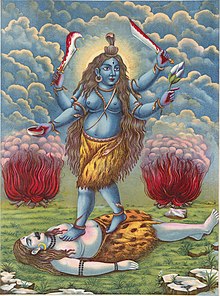
In Hinduisim, Tara (Devi), a Mahavidya of Mahadevi, Kali or Parvati is a star goddess, she is considered one of the Great Wisdom goddesses.

In Buddhism, Tara is the name of a tantric meditation goddess.

In the Hindu epic, the Ramayana, it is the name of the wife of the monkey king, Vali, who married the king’s brother, Sugriva, after Vali’s death.

Among the Irish Diaspora, the name was usually used in reference to the sacred hill, Tara, where the high kings were usually coronated. In this case, the name is an anglicized form of the Gaelic, Teamhair, meaning, “elevated place.”

It may have been further popularized in the English-speaking world by the 1936 Margaret Mitchell novel, Gone with the Wind, in which the plantation is called Tara, in honour of the hill in Ireland.

In South Slavic languages, it could either be a contracted form of Tamara, or it could be taken from the name of the river which runs through Montenegro and Bosnia and Herzegovina. It is also the name of a river in Russia.

As of 2009, Tara was the 30th most popular female name in Croatia. Her popularity in other countries are as follows:

  • # 50 (Slovenia, 2010)
  • # 62 (Ireland, 2010)
  • # 77 (Northern Ireland, 2010)
  • # 126 (Netherlands, 2010)
  • # 774 (United States, 2010)

It is also the name of a sea goddess in Polynesian Mythology.

Corinna

Gender: Feminine
Origin: Greek
Meaning: “little maiden.”
Germ/Eng (koh-RIN-nah); Grk (koh-REEN-nah)

The name is from the ancient Greek Κοριννα (Korinna) which is derived from the Greek, κορη (kore), meaning “maiden.” There is the diminutive sufix of -inna attached, so it more likely means “little maiden” “little girl.” The name is related to Cora, a name which I will go further into in a seperate entry.

The name was borne by a 5th-century BCE Greek poetess and it is the name of the title character in Ovid’s Amores. It is also the name of the title character in Robert Herrick’s 17th-century poem Corinna’s going a-Maying.

Its French form of Corinne was popularized via the eponymous novel by Madame de Staël (1807)

As of 2009, Korina was the 73rd most popular female name in Croatia. While its French form of Corinne ranked in as the 728th most popular female name in the United States, (2010).

The designated name-day in Germany is October 22. The Corinna form is also used in Italy.

Other forms of the name include:

  • Korilla (Boetian)
  • Corinna (Catalan/English/Italian)
  • Korina Корина (Croatian/Czech/Latvian/Greek/Serbian/Slovakian/Slovene)
  • Corine (Dutch/French: koh-REEN)
  • Korinna Коринна  (German/Greek/Hungarian/Russian)
  • Corinne (French:  koh-RIN)
  • Corina (German/Italian/Portuguese/Romanian/Romansch/Spanish)
  • Coranna (Italian)
  • Corilla (Italian)
  • Korynna (Polish)
  • Koryna (Polish/Lithuanian)

There is a modern Greek masculine form: Korinos and an Italian masculine version of Corinno.

Leila, Layla

Gender: Feminine
Origin: Arabic לילה‎ ليلى
Meaning: “night.”
(LAY-la)

The name is derived from the Arabic and has a variety of different meanings depending on its spelling, the most popular etymology is that it is from a Semitic root, l-y-l, meaning, “night” and shares the same etymology as the name Lilith.

The name has always been popular in the Middle East and is found in the 7th-century romantic poem, Qays & Layla also known as Layla & Majnun (written by Persian poet, Nizami Ganjavi). The legend trickled down to throughout the Middle East, Near East, Central Asia and South Eastern Europe, making the name a long time classic in all those regions.

It was introduced into the English-speaking world via Lord Byron in which the name appears in two of his works, The Gaiour (1813) and Don Juan (1819). It was further popularized in the 1970s when the name was the subject of two songs, one being the famous Eric Clapton song and the other being “Layla” by Derek and the Dominos.

Her Bosnian form of Lejla is the 7th most popular female name in Bosnia & Herzegovina, (2010). Her rankings in other countries are as follows:

  • # 3 (Leyla, Azerbaijan, 2010)
  • # 36 (Layla, Australia, 2010)
  • # 37 (Layla, United States, 2010)
  • # 44 (Layla, England/Wales, 2010)
  • # 50 (Layla, Ireland, 2010)
  • # 50 (Layla, Scotland, 2010)
  • # 71 (Leila, Hungary, 2010)
  • # 76 (Layla, Canada, BC, 2010)
  • # 95 (Laila, England/Wales, 2010)
  • # 138 (Laila, United States, 2010)
  • # 143 (Leila, France, 2009)
  • # 204 (Leila, United States, 2010)
  • # 304 (Layla, Netherlands, 2010)
  • # 478 (Laila, Netherlands, 2010)
  • # 747 (Leyla, United States, 2010)

The name is also common in Iran, Israel, the Balkans and in the Turkic world.

In the Middle East, the name was popularized by a 7th-century poet by the name of Qays, whose lady love was named Layla. His story became a popular Medieval Arabic romance.

Other forms of the name include:

  • Lejla Лейла (Albanian/Bosnian/Dagestani/Kazakh/Maltese/Tatar)
  • Laïla (Algerian/Moroccan/Tunisian)
  • Leïla (Algerian/Moroccan/Tunisian)
  • Leyli Լեյլի (Armenian)
  • Leyla (Azeri/English/Kurdish/Turkish)
  • Lajla Лайла (Chechen)
  • Leila ლეილა (Circassian/English/Ethiopian/French/Georgian/Hungarian)
  • Laila (Dutch/English/Estonian/Finnish/Hindi/German/Latvian/Scandinavian/Urdu)
  • Layla (English/Italian/Uzbek)
  • Lejli Лейли (Kazakh)
  • Ljajlim Ляйлим (Kazakh)
Laila can also be a Sami form of Helga.