Aïda

Gender: Feminine
Origin: Arabic عائدة
Meaning: “the return; the visitor.”
It (ah-EE-dah); Al/Bos (I-dah)

The name has a two different possible etymologies. One is that it is from the Arabic, meaning, “returning; visitor.”

In the case of Verdi’s Opera, Auguste Mariette was inspired by a possible Greco-Egyptian male name which was recorded on the Rosetta Stone, AitusThe name was initially feminized to Aita, but was later changed to Aïda. Mariette attests to the origin of the name himself in a letter he wrote:  “Don’t be alarmed by the title. Aida is an Egyptian name. Normally it would be Aita. But that name would be too harsh, and the singers would irresistibly soften it to Aida.”

The opera is about an Ethiopian princess who is captured and enslaved in Egypt. An Egyptian military commander by the name of Radamnes must chose between his love for Aida or his loyalty to the pharoah.

As of 2010, Aida was the 52nd most popular female name in Bosnia & Herzegovina, (2010).

Its Arabic form is sometimes transliterated as Ayda.

The name is used throughout the Islamic world in addition to Anglophone countries, Spanish speaking countries, Italy and in Hungary and Latvia.

Its designated name-days are: February 2 (Hungary) and February 3 (Latvia).

Sources

  1. Dizionario dei Nomi (Selene, Armenia, 2002)
  2. http://www.behindthename.com/name/aida
  3. Simon, Henry W. (1946). A Treasury of Grand Opera. Simon and Schuster, New York, New York.
  4. http://archive.operainfo.org/broadcast/operaBackground.cgi?id=33&language=1
Omar

Gender: Masculine
Origin: Arabic عمر
Meaning: “populous; flourishing; life.”

or

Gender: Masculine
Origin: Biblical Hebrew
Meaning: “speaker.”

The name can be of multiple origins and meanings, in Arabic, the name is derived from the word, عمر (umr) meaning, “life.”

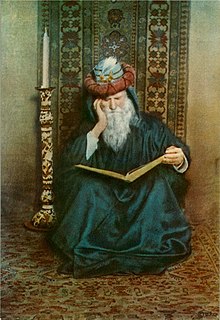
The name was borne by the second caliphe of the Muslims as well as by a 12th-century Persian poet, Umar Khayyam.

In Hebrew, the name means “speaker” and is found Genesis 36:11 as the name of the son of Eliphaz.

The name may also be possibly related to the Hebrew, Omer, which means “sheaf of wheat” but was also the name of a unit of measuring in ancient times.

Omar is a popular name in Spanish-speaking countries, whether this is a leftover from Moorish occupied Spain or in reference to the Biblical Hebrew character is unknown.

As of 2010, Omar was the 54th most popular male name in Bosnia & Herzegovina. His rankings in other countries are as follows:

  • # 4 (Arab world (2011) (BabyCenter Arabia members)
  • # 4 (Pakistan)
  • # 6 (Iraq, 2007)
  • # 7 (Israel, Muslim boys, 2009)
  • # 7 (Umar, Malaysia, 2011)
  • # 8 (United Arab Emirates)
  • # 9 (Omer, Israel, Jewish intersex names (given to both boys and girls) 2008)
  • # 77 (Catalonia, 2010)
  • # 87 (Spain, 2010)
  • # 175 (United States, 2010)
  • # 252 (Netherlands, 2010)
  • # 289 (France, 2009)

Other forms include:

  • Omeri (Albanian)
  • Omer (Amharic/Kurdish)
  • Umar عمر (Arabic)
  • Omar Ома́р (Albanian/Arabic/Bosnian/Chechen/Dagestani/Kazakh/Kyrgyz/Persian/Russian/Spanish/Tajik/Tatar/Turkmen/Uzbek)
  • Ömər (Azeri)
  • Amar (Berber)
  • Úmar (Catalan)
  • Oumar/Oumarou (Sub-Saharan African)
  • Ömer (Turkish)

In France, the designated name-day for Omer is September 9.

Other notable bearers include: Egyptian born actor Omar Sharif (b.1932); Omar al-Bashir (b.1944) the president of Sudan; and American actor, Omar Epps (b. 1973).

Source

  1. http://www.behindthename.com/php/search.php?nmd=n&terms=Omar
  2. http://www.askoxford.com/firstnames/omar

Maida

Bos/Eng/Sp (MY-dah) or Eng (MAY-dah)

The name could be of a few different origins. It could be from the Arabic, سورة المائدة al-ma’idah (the table), the name name of a sura and 5th Chapter of the Qu’ran.

It could also be taken from the name of a place in Italy, which was popularized after a Battle took place there in 1807, a huge victory for Britain. Sir Walter Scott named his dog in honour of the victory.

It was also occassionally used as a short form of Magdalena or Madeleine in the 18th-century, eventually spinning off into an independent given name.

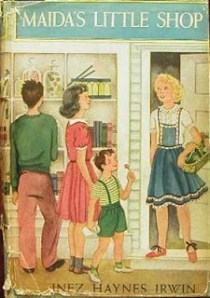
It was also the name of the eponymous heroine in the early 20th-century children series, by Inez Haynes Irwin (1873-1970), Maida.

It has also been connected with the Arabic word ma’id which means “angry; disgusted.”

As of 2010, Maida was the 72nd most popular female name in Bosnia & Herzegovina.

Another Bosnian form is Majida.

A Bosnian masculine form is Maid.


Arthur

Gender: Masculine
Origin: Debated
Meaning: Debated
Eng (ARE-ther)

The name is of debated origin and meaning. Several theories have been attributed to the name’s origins, one is that it is derived from an obscure Roman cognomen, Artorius, which is believed to be of Etruscan origins of unknown meaning. Another theory is that it is derived from an ancient Brittonic name, *Arto-rīg-ios , meaning “bear-king.” An even less likely alternative is that it is connected with Welsh Artgwr (bear-man). A newer and yet unlikely suggestion is that it is related to the Greek Arcturus,  that is, the name of the brightest star in the Constellation Boötes, meaning “bear guardian.”

The name was borne by a mythical British king who is the topic of several medieval romances. His existence has never been proven, yet his legacy has left an indelible mark in Western Europe, especially in England and France. The name’s usage among the general populous can be traced all the way Medieval England. It surged in popularity in the 19th-century when English Romanticism had become popular.

As of 2008, Arthur was the 6th most popular male name in Belgium. His rankings in other countries are as follows:

  • # 4 (Brazil, 2010)
  • # 10 (Arturs, Latvia, 2010)
  • # 15 (France, 2009)
  • # 23 (Arttu, Finland, 2010)
  • # 82 (England/Wales, 2010)
  • # 99 (Arturo, Spain, 2010)
  • # 288 (Netherlands, 2010)
  • # 389 (United States, 2010)
  • # 420 (Arturo, United States, 2010)

Other forms of the name include:

  • Artur Артур Արթուր (Albanian/Armenian/Basque/Belarusian/Bosnian/Bulgarian/Catalan/Croatian/Czech/Estonian/Galician/German/Kazakh/Picard/Polish/Portuguese/Romanian/Romansch/Russian/Serbian/Slovak/Slovene/Ukrainian)
  • Dury (Alsatian)
  • Arturu (Asturian/Maltese)
  • Artús (Asturian/Catalan)
  • Artza (Basque)
  • Arzhur (Breton)
  • Artuš (Czech/Slovak)
  • Arthur (Dutch/English/Flemish/French/German/Scandinavian/Welsh)
  • Arto (Finnish)
  • Arttu (Finnish)
  • Artturi (Finnish)
  • Atte (Frisian)
  • Arturo (Galician/Italian/Spanish)
  • Arthoúros Αρθούρος (Greek)
  • Artúr (Hungarian/Icelandic/Irish)
  • Artù (Italian)
  • Arturi ართური (Georgian)
  • Arturs (Latvian)
  • Artūras (Lithuanian)
  • Turu (Maltese)
  • Èrthu (Norman)
  • Artús (Occitanian)
  • Artair (Scottish)
Diminutives include:
  • Arturek (Czech/Polish)
  • Tuur (Dutch)
  • Art (English)
  • Artie (English)

Feminine forms include the Italian: Artura and Arturina

Ruslan

Gender: Masculine
Origin: Russian Руслан
Meaning: uncertain
(ROOS-lahn)

The name is of uncertain origin or meaning but is believed to be of Turkic origins. It has sometimes been connected with the Turkish male name, Arslan (lion).

It was first used by Alexander Pushkin for his 1820 epic fairytale romance and poem, Ruslan & Ludmila.

The name has been used throughout Russia and Central Asia since.

It is currently the 18th most popular male name in Kazakhstan, (2010).

The feminine form is Ruslana.

Diana

Gender: Feminine
Origin: Latin Диана
Meaning: “sky.”
Eng (di-AHN-nah)

The name is derived from the Latin word, dius which refers to “divinity” but may also be traced to an earlier Indo-European root word deyew* meaning “sky.” It is believed to share the same etymology with the Greek Zeus, the Latin Deus (god), the Vedic Dyaus and the Latin dies (day, day light).

In Roman mythology the name was borne by the virgin goddess of the hunt and of the moon. She was most often associated with wild animals and the woodlands. She was considered the patroness of virgins and women and was one of the triad of maiden goddesses, Diana, Minerva & Vesta.

The name was borne by several early Greek saints and as a result, was always a common name in Southeastern Europe and frequently used among the Christians of the Middle East. It was possibly introduced into the English-speaking world via Sir Walter Scott’s 1817 novel Rob Roy, it may have been further popularized by George Meredith’s Diana of the Crossways (1885).

In modern history, the name was borne by the late Princess of Wales, Diana Spencer (1961-1997).

The name is currently the 190th most popular female name in the United States, (2010). The highest she ranked in the U.S. name charts was in 1946 when she ranked in as the # 42. Its French counterpart of Diane became exceedingly popular in the English-speaking world during the mid-20th-century. She currently does not rank in the U.S. top 1000, but at one time (1951) she was the 15th most popular female name.

Diana’s rankings in other countries are as follows:

  • # 4 (Kazakhstan, 2010)
  • # 83 (Hungary, 2010)
  • # 84 (Spain, 2010)

Other forms of the name include:

  • Dijana Дијана (Bosnian/Croatian/Macedonian/Serbian/Slovene)
  • Diana Диана დიანა (Assyrian/Bulgarian/Coptic/Czech/Dutch/English/Estonian/German/Georgian/Greek/Hungarian/Italian/Kazakh/Latin/Latvian/Lebanese/Lithuanian/Polish/Portuguese/Romanian/Russian/Scandinavian/Spanish/Syrian/Ukrainian)
  • Diane (French/English)
  • Diána (Hungarian)

The designated name-days are: Janury 4 (Czech Republic), January 29 (Sweden), February 23, (Latvia), June 9 (France), July 1 (Slovakia), August 13 (Lithuanian/Poland) September 23 (Estonia).

Sources

  1. http://www.behindthename.com/php/find.php?name=diane
  2. http://www.askoxford.com/firstnames/diana?view=uk

Viola

Gender: Feminine
Origin: English/Italian/Latin/Scandinavian
Meaning: “violet.”
Eng (VIE-ə-lə; vee-OH-luh); It (VYOLE-lah)

The name is derived from the Latin word for violet and has been used throughout Europe since Medieval times. In the English-speaking world, it was introduced via the Shakespeare play Twelfth Night (1602). It was extremely popular in both Britain and the United States during the turn of the 20th-century, coming in as the 42nd most popular female name in 1908, (United States).

Currently, Viola is the 31st most popular name in Italian-speaking, Switzerland, (2010).

Other forms of the name include:

  • Viola (Czech/English/Finnish/German/Hungarian/Italian/Latin/Portuguese/Russian/Scandinavian/Spanish)
  • Viole (French)
  • Wiola (Polish)

Ginevra

Gender: Feminine
Origin: Italian
Meaning: debated
(jee-NAVE-rah)

The name has often been used as an Italian cognate for the Celtic, Guinevere, but it has also long been believed to be related to the Italian word ginepro (juniper). In the latter case, the city of Geneva, Switzerland, would share the same etymology.

Ginevra was a popular female name in Medieval Italy.

Currently, Ginevra is the 37th most popular female name in Italian-speaking Switzerland, (2010).

In the English-speaking world, the name was recently brought to attention via the J.K. Rowling books, Harry Potter, in which it is the name of Ron Weasley’s sister, Ginny.

Other forms include:

  • Ginewra (Polish)
  • Żinewra (Polish)
  • Genebra (Portuguese/Spanish)

Linus

Gender: Masculine
Origin: Greek
Meaning: debated
Eng (LIE-nus); Germ (LEE-nuws); Swe (LEE-nus)

The name is either derived from the Greek verb ailinon meaning “to whine; complain” or it could be from the Greek Λινος (linos) meaning “flax.” In the latter case, the Lithuanian male name, Linas, would share the same etymology. It was also a Roman cognomen, which may have been derived from the Greek.

In Greek mythology, the name was borne by a son of Apollo, who in some legends was accidentally killed by his own father and in other legends was the music teacher of Hercules.

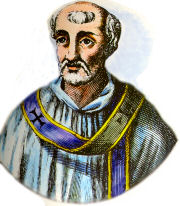
The name was also borne by the 2nd pope and saint who succeeded St. Peter.

In the English-speaking world, the name is often associated with the Charles Schulz character who appears in the Peanuts Comic strips.

The name was fairly common in 19th-century America and Britain, being borne by Linus Bacon Comins (1817-1892), a Massachusetts politician, Linus Yale, Jr. (1821-1868) a mechanical engineer, Linus Pauling (1901-1994) a famous American chemist and British actor, Linus Roache (b.1964)

Currently, Linus is the 30th most popular male name in Germany, (2011). His rankings in other countries are as follows:

  • # 44 (Sweden, 2010)
  • # 53 (Norway, 2010)

Other forms of the name include:

  • Llinu (Asturian)
  • Lin Лін Лин (Belarusian/Breton/Bulgarian/French/Piedmontese/Russian/Serbian/Slovene/Ukrainian)
  • Lli (Catalan)
  • Lino (Croatian/Galician/Italian/Portuguese/Spanish)
  • Linus (Danish/Dutch/English/Estonian/Finnish/French/German/Hungarian/Norwegian/Polish/Romanian/Swedish)
  • Líneas (Gaelic)
  • Linusi ლინუსი (Georgian)
  • Linos Λινος (Greek)
  • Línus (Icelandic)
  • Lins (Latvian)
  • Linas (Lithuanian)

Ronja

Gender: Feminine
Origin: Swedish
Swe/Germ (RONE-yah); Eng (RAHN-yah)

The name can either be a transliteration of the Russian diminutive form of Veronica or it could be from the Hebrew רוֹן (ron) meaning “happiness; joy.”

The name was recently popularized in Northern Europe via the the 1981 Astrid Lindgren childrens’ novel Ronja Rövardotter, known in English as Ronia the Robber’s Daughter. The novel recounts the adventures of a Sami-like Medieval heroine who lives in the forest. Lindgren based the novel on Sami folktales and got many of the names by looking at a map of Lapland. For the name Ronja, she was supposedly inspired by Lake Jaronjaraure.

Currently, its Faroese form of Ranja is the 4th most popular female name on the Faroe Islands, (2010). Her rankings in other countries are as follows:

  • # 25 (Finland, 2010)
  • # 44 (German-speaking, Switzerland, 2010)
  • # 62 (Norway, 2010)
  • # 77 (Germany, 2011)
  • # 78 (Sweden, 2010)
  • # 246 (Netherlands, 2010)

Other forms include the English Ronia and the Faroese, Ranja.