Elina

Gender: Feminine
Origin: Belarussian/Finnish
Finn (EH-lee-nah); Germ/Swe/Nor (eh-LEE-nah)

The name is possibly a Finnish and Belorussian form of Helen. It is also a common name in Central Asia, particularly in Chechnya and Uzbekistan, but in this case, the name is of uncertain meaning.

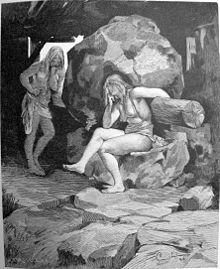
The name may have been popularized in Finland via the 15th-century ballad The Death of Elina (Elina Surma), published by Elias Lönnrot in the Kanteletar (1840). The ballad recounts the murder of Elina by her husband after he finds her with a lover.

It is also the name of a genus of butterfly.

Currently, it is the 35th most popular female name in German-speaking Switerland, (2010). Her rankings in other countries are as follows:

  • # 87 (Sweden, 2010)
  • # 114 (France, 2009)
  • # 115 (Germany, 2011)
  • # 317 (Netherlands, 2010)
Other forms of the name include:
  • Elina (Belarussian/Chechen/Danish/Dutch/Estonian/Finnish/French/German/Icelandic/Kazakh/Kyrgyz/Norwegian/Romanian/Swedish/Tatar/Turkmen/Uzbek)
  • Eliina (Finnish)
  • Elīna (Latvian)

Fiona

Gender: Feminine
Origin: Gaelic
Meaning: “white; fair.”
(fee-OH-nah)

The name is believed to have been coined by Scots poet James Macpherson (1736-96) for a character in the Ossian poems. It is believed that he based the name off the Gaelic male name Fionn which comes directly from the Gaelic word meaning, “white; fair.”

The name was subsequently used as a pen name for William Sharpe: Fiona Macleod (1855-1905). It has since been considered a traditional name in both Ireland and Scotland.

The name has recently become popular in German-speaking countries, the inspiration of its popularity may be due to the Shrek movies. It is currently the 2nd most popular female name among Romansch-speakers in Switzerland, (2010). Her rankings in other countries are as follows:

  • # 57 (Germany, 2011)
  • # 257 (United States, 2010)
  • # 396 (France, 2009)

The name is also borne by American singer, Fiona Apple (b.1977)

A Dutch and German form is Viona.

Alina

The name could be of several different origins and meaning depending on the bearer of the name.

In Romanian, it is derived from the verb meaning “to sooth”. It even boasts its own masculine version: Alin.

It could also be a German and Dutch contraction of Adelina.

Other sources have popularly attributed it to be a form of the Arabic, Alia (lofty; sublime). In this case, the name appears in One Thousand and One Nights as the name of a beautiful princess.

In Belarusian, it is a name of pre-Christian origins, being derived from the old Slavic word алы (aly) meaning “scarlet.” In Russian, it has been linked with the names Albina, Aleksandra and Akulina, considered contracted forms. While in Bulgarian, it is considered a contracted form of Angelina.

In Italy, it is viewed as a contracted form of Rosalina or Pasqualina, the name can be typically found in Northern and Central Italy.

In Polish and Lithuanian, it has been suggested that the name may be derived from Alna, the Lithuanian name of a river which runs through northern Poland and Kaliningrad, (known in Polish as Łyna). Alna is from a medieval Baltic word meaning, “doe; female deer”, (compare modern Lithuanian elnias). Famed Polish playwright, Juliusz Słowacki seems to have popularized the name via his 1839 play, Balladyna.  Alina is murdered by her jealous sister Balladyna as they are picking raspberries.

It has also been suggested to be related to Halina, a Polish form of Galina.

Currently, Alina is the 4th most popular female name in German-speaking Switzerland, (2010). Her rankings in other countries are as follows:

  • # 4 (Liechtenstein, 2010)
  • # 17 (Russia, 2011)
  • # 28 (Germany, 2011)
  • # 30 (Austria, 2010)
  • # 38 (Slovenia, 2010)
  • # 39 (Romania, 2009)
  • # 78 (Bosnia & Herzegovina, 2010)
  • # 264 (United States, 2010)
  • # 323 (Netherlands, 2010)

Other forms of the name include:

  • Alina Аліна الينا (Arabic/Belarusian/Bosnian/Bulgarian/Czech/Dutch/Finnish/German/Hungarian/Italian/Latvian/Lithuanian/Polish/Romanian/Russian/Scandinavian/Serbian/Slovak/Slovene/Ukrainian)
  • Aliina (Finnish)
  • Aline (French)

Maurice

Gender: Masculine
Origin: Latin
Meaning: “dark; black”
Fr. (moh-REESE) Eng (MOR-ris).

He may seem a bit dated to some, but parents looking to vintage names like Leo and Brice/Bryce might see the appeal in this. Traditionally nicknamed Maury, parents who opt for the French pronunciation have the advantage of using Reese. Look past Maury Povich and the cartoon character in Madgascar, and you will find that the name has a long and rich history.

He is a derivative of the Roman name Mauritius, which is derived from the Latin Maurus meaning, “dark-skinned; dark complexion.”

The name was borne by Emperor Maurice of Byzantium (539-602). Known in Greek as Maurikios and in his native Armenian as Morik, he was one of the most influential and decisive rulers of the Byzantine Empire, so much so that he is a national hero in his native Armenia till this day.

StMaurice2 (1)The name is also borne by a very popular 3rd century saint. St. Maurice was an Egyptian by birth and a Roman citizen. He served in the Roman army and was apart of the Theban legions, which had been stationed in Switzerland at the time of the saint’s martyrdom. According to legend, Emperor Maximian ordered Maurice and his legions to destroy a local Christian community, when Maurice and his followers refused to harass fellow Christians, the emperor ordered them to be executed. The area of martyrdom is now known as Saint Maurice-en-Valais and the Abbey of Saint Maurice-en-Valais supposedly houses the saint’s relics.

800px-St._Moritz_by_nightThe saint also gave his name to another town in Switzerland: St. Moritz, (Top of the World), is a beautiful little resort town that sits in the Valley of Engadine and the canton of Graubünden. Their coat of arms actually features the legendary saint. St. Maurice is also venerated among Coptic Christians. In fact, the names Maurice and Maurikios are fairly common among Egyptian Christians.

The German form of Moritz is found in the popular German children’s series Max and Moritz written by Wilhelm Busch in 1865. The humorous duo is still a common pop icon in German speaking countries. Other notable appearances include a novel by E.M. Forster, (Maurice) written in 1913, a tale of same sex love in early 20th-century England.

The Island of Mauritius or L’île Maurice in French, is a former French colony off the coast of Africa. It was named in honor of Prince Maurice of Nassau, the Stadtholder of the Netherlands.

The designated name-day is September 22

Currently, Maurice is the 150th most popular male name in Germany, (2011), and he still lurks within the U.S top 1000 coming in as the 445th most popular male name, (2010).

Other forms of the name include:

  • Morik Մորիկ (Armenian)
  • Moïc (Breton)
  • Maurici (Catalan)
  • Maurikios (Coptic/Greek)
  • Maric Мариц (Croatian/Serbian)
  • Maurits (Dutch/Scandinavian)
  • Mauri (Finnish)
  • Maur (French)
  • Maurice (French/English)
  • Moriz (German: archaic)
  • Moritz (German/Scandinavian)
  • Móric (Hungarian/Slovakian)
  • Mór (Hungarian)
  • Muiris (Irish)
  • Maurizio (Italian)
  • Mauro (Italian/Portuguese/Romansch)
  • Mauritius (Late Latin)
  • Maurus (Latin/Romansch)
  • Morics (Latvian)
  • Maurycy (Polish)
  • Maurício (Portuguese)
  • Maurin (Romansch)
  • Murezi (Romansch)
  • Murezzan (Romansch)
  • Mauricio (Spanish)
  • Meuric/Meurig (Welsh)

Its feminine counterparts are Maura, Mauricia and Maurizia.

Common English short forms are  Maury, Moe and Morry.

Elli

Gender: Feminine
Origin: Old Norse
Meaning: “old age.”
(EL-lee)

I love this, while it is not a name I’d ever use myself, it is one of those names that you would never suspect had such a long and symbolic history.

The name is often listed as a Germanic diminutive form of Elisabeth, which may be in part, true, but its usage as a given name actually pre-dates Elisabeth’s introduction to the Germanic world.

In Old Norse, elli is the word for old age, and she is personified in the Prose Edda. Her story is recounted in the Book of Gylfaginning, in which she defeats Thor in a wrestling match.

In pre-Christian Norse culture, old age often symbolized wisdom.

Elli has been a popular name throughout Scandinavia and Germany. It experienced a vogue in the 19th-century and seems to be experiencing a revival. It is currently the 172nd most popular female name in Germany, (2011). Another German spelling is Elly.

Elli is also used in Estonia and Finland.

Titus

Titus (Roman Emperor)Gender: Masculine
Origin: Latin
Meaning: “title of honour.”
Eng (TY-tus)

The name comes from the Roman praenomen which is derived from the Latin, titulus, meaning “title of honour.”

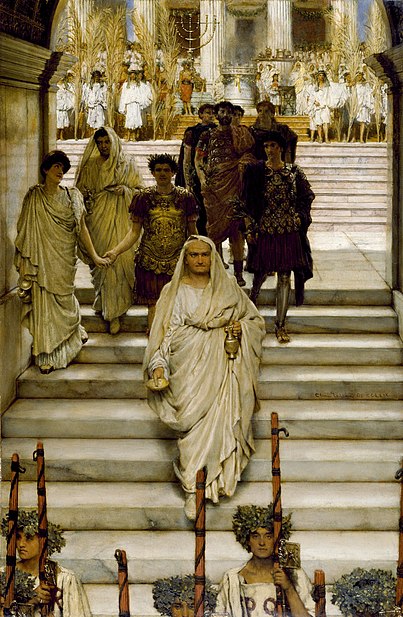
In Ancient History, the name is borne by Titus Flavius Vespasianus, the tenth Roman emperor in the Roman Empire and the second of the Flavian Dynasty.

In the New Testament, the name is borne by a companion of St. Paul who later became the first bishop of Crete and was a recipient of one of Paul’s epistles.

The name was also used by Shakespeare for his tragedy Titus Andronicus (1593).

Currently, Titus is the 253rd most popular male name in Germany, (2011) and the 397th most popular in the United States, (2010).

Other forms of the name include:

  • Tito (Aragonese/Basque/Galician/Italian/Portuguese/Spanish)
  • Titus (Czech/Danish/Dutch/English/French/German/Latin/Norwegian/Swedish)
  • Tiitus (Finnish)
  • Tite (French)
  • Titos Τιτος (Greek Biblical)
  • Titou τιτου (Greek Modern)
  • Titusz (Hungarian)
  • Títus (Icelandic/Slovak)
  • Titas (Lithuanian)
  • Titu Тітъ (Old Church Slavonic)
  • Tytus (Polish)
  • Tit Тит (Romanian/Russian/Croatian/Slovene)

An Italian, Portuguese and Spanish feminine form is Tita.

The designated name-day is January 4th.

Fenja

Gender: Feminine
Origin: Old Norse
Meaning: unknown
(FEN-yah)

The name is found in the Old Norse poem, the Song of Grótti (Grottasöngr) and in Snorri Sturlesson’s Prose Edda as the name of one of two sister giantesses, Fenja and Menja.

According to the Song of Grótti, both sisters are enslaved to the Danish king Frodi, forced to grind out wealth from a magical stone and to sing for the king. They sing of the king’s benevolence and wealth, but as they become overworked, the king refuses to hear their pleas until they start to sing a warning that the king shall soon be destroyed by an army, which they eventually create from the magical grindstone.

Fenja is of Old Norse origins, but its etymology has been lost. Both sisters supposedly inspired the names of the Danish Islands, Fanø and Mandø.

Currently, Fenja is the 181st most popular female name in Germany, (2011).

It is also borne by German actress, Fenja Rühl (b.1963)

Madita

Gender: Feminine
Origin: German
(mah-DEE-tah)

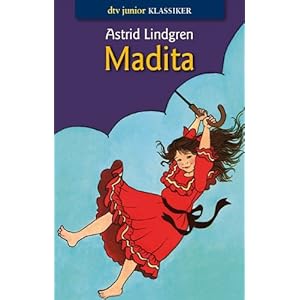
The name is from an obscure German diminutive form of Margarete, and was popularized in Germany as an independent given name via the German translation title of the Astrid Lindgren novel, Madicken.

Madicken is an archaic Swedish diminutive form of Margaret, now occasionally used as an independent given name.

It is also the stage name of Austrian singer known simply as Madita born Edita Malovčić (b.1978).

Currently, Madita is the 200th most popular female name in Germany, (2011).


Ava

Gender: Feminine
Origin: German/Persian
Eng (AY-vah); Germ/Per (AH-vah)

This vintagy, two syllable name has risen way up to the US top 10, coming in at # 5 most popular female name in the United States, (2010).

The name was relatively rare before 2000, and came out of nowhere, thanks, no doubt, to such Hollywood trendsetters as Heather Locklear and Reese Witherspoon, both of whom used the name for their daughters in the late 1990s. Both actresses named their daughters in honour of actress, Ava Gardner (1922-1990), whose full name was Ava Lavinia Gardner.

The name has several different origins and meanings, the beloved English counterpart is probably derived from a medieval Frankish name, which was borne in the 9th-century by a saint and the daughter of King Pepin II. In this case, it might be derived from the Germanic element avi meaning “desired.” Other sources have related it to the Frisian awa (water) or from the old Saxon, aval (power).

Another notable bearer is Ava of Melk (1060-1127), a Medieval poetess credited as being the first German language writer. Its recent popularity in German-speaking countries may in part be in tribute to her millennial anniversary and in part to Hollywood.

The name is also a popular Persian female name and is commonly used in Iran and throughout Central Asia. It can either be related to the Persian meaning, “sound, voice” or it may be connected with the Avestan word meaning “first.”

In Ireland and Scotland, it is sometimes used as an anglicized form of Aoife.

Its rankings in other countries are as follows:

  • # 3 (Scotland, 2010)
  • # 6 (Canada, B.C., 2010)
  • # 6 (Ireland, 2010)
  • # 11 (England/Wales, 2010)
  • # 14 (Australia, 2010)
  • # 20 (Northern Ireland, 2010)
  • # 188 (Germany, 2011)
  • # 246 (France, 2009)
  • # 444 (the Netherlands, 2010)

Leonidas

Gender: Masculine
Origin: Greek Λεωνιδας
Meaning: “lion.”
Eng (lee-o-NYE-dus)

The name is derived from the Greek λεων (leon) meaning “lion.”

The name was borne by several famous leaders in Classical Greek history, one being King Leonidas I of Sparta, known for his heroic defense of the Thermopylae Pass from the Persians in the 5th-century B.C.E. His life has been the inspiration of Frank Miller’s 1988 comic 300, later adapted into a movie of the same name. He came to be deified in Sparta as a hero god. A Belgian Chocolate company is also named in his honour and he is the inspiration for their logo.

The name was also borne a teacher of Alexander the Great and by the father of Origen, St. Leonidas (3rd-century CE).

Leonidas seems to have enjoyed some popularity in 18th and 19th-century America and England. This may have been due to the epic eponymous poem based on the Spartan hero, written by Richard Glover (1737).

In more recent history, it was borne by Confederate general, Leonidas Polk (1806-1864) and the first modern Greek Olympic gold medalist, Leonidas Pyrgos (*1871).

Currently, Leonidas is the 282nd most popular male name in Germany, (2011) and the 922nd most popular in the United States, (2010).

Other forms of the name include:

  • Leonit (Albanian)
  • Ljeanid Леанід (Belarusian)
  • Leònides (Catalan)
  • Leonida (Croatian/Italian/Serbian)
  • Leónidás (Czech)
  • Leonidas Λεωνιδας (English/German/Greek/Lithuanian/Romanian)
  • Léonide (French)
  • Leonidasi ლეონიდასი (Georgian)
  • Leoneidas (German)
  • Leonides (German)
  • Leónidasz (Hungarian)
  • Leonīds (Latvian)
  • Leonid Леонид (Macedonian/Polish/Russian/Ukrainian)
  • Leónidas (Portuguese-European)
  • Leônidas (Portuguese-Brazilian)
  • Leónidas (Spanish)
A feminine form is Leonida, occassionally used in Spanish-speaking countries, Greece and Poland.