Lore

The name could either be from a German diminutive form of Eleonore or it could be from the Basque meaning, “flower.”

As of 2008, Lore was the 11th most popular female name in Belgium.

Its Italian and Spanish form of Lora was the 98th most popular female name in Croatia, (2009).

In either case the name is pronounced (LOH-reh).

Another Basque form is Lorea.

Luna

Gender: Female
Origin: Latin
Meaning; “moon”
(LOO-nah).

The name comes directly from the Latin word for moon, and it was the name of a Roman goddess, the counterpart to the Greek goddess, Selene.

Luna had a temple dedicated to her on the Aventine Hill in Rome in the 6th-century BCE. Including another temple dedicated to her on the Palatine Hill, Luna Noctiluca, (luna that shines by night).

Luna, as a word, has transferred over into other languages, it is the Spanish, Romanian, Italian, Bulgarian and Russian word for moon.

The name has become increasingly popular across Europe, in recent years. In 2009, she was the 43rd most popular female name in France, add the trendier phonetic French spelling of Louna, and she would probably rank even higher. Her rankings in other countries are as follows:

  • # 12 (Belgium, 2006)
  • # 31 (Netherlands, 2010)
  • # 45 (Denmark, 2010)
  • # 65 (Croatia, 2010)
  • # 86 (Slovenia, 2010)
  • # 86 (Spain, 2010)
  • # 343 (United States, 2010)

She is rising occasionally used in Bosnia, Germany, Poland and in Italy.

There is also the French, Lune (literally, the French word for moon), which is also becoming more prevalent in France, and the Dutch corruption is Loena, (a phonetic Dutch spelling to reflect the true Latin pronunciation).

In France, its designated name-day is August 4th.

Mauro

Gender: Masculine
Origin: Latin
Meaning: “dark-skinned.”

The name is a Spanish and Italian form of the Latin male name, Maurus, which may have been originally used as a nickname for someone with dark hair or a dark complexion.

The name was borne by numerous saints.

Currently, Mauro is the 58th most popular male name in Belgium, (2008). His rankings in other countries are as follows:

  • # 83 (Croatia, 2010)
  • # 336 (Netherlands, 2010)

Other forms of the name include:

  • Mawr Маўр (Belarusian)
  • Maur (Catalan/Czech/French/Polish/Slovak)
  • Mauro (Croatian/Dutch/German/Italian/Portuguese/Spanish)
  • Mór (Hungarian)
  • Maurus (Latin)
  • Mavr Мавр (Russian/Ukrainian)
  • Mauru (Sardinian)

A feminine form is Maura.

Quentin

Gender: Masculine
Origin: Latin
Meaning: “fifth.”
Eng (KWEN-tin)

The name is an English form of the Latin cognomen, Quintinus meaning “the fifth.”

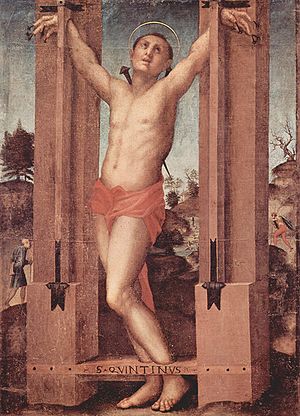
The name was popularized by a 3rd-century Gaulic saint, missionary and martyr who was beheaded by the Romans in what is now Picardy. He is considered the patron saint of Picardy and as a result, the name has always been common in that particular region of France.

It was introduced into England after the Norman Conquest.

In the United States, the name was brought to spotlight by Theodore Roosevelt’s son, Quentin Roosevelt (1897-1918) who was killed in World War I.

Currently, Quentin is the 35th most popular male name in France, (2009), while its Dutch form of Quinten is the 60th most popular male name in Belgium, (2008) and the 67th most popular in the Netherlands, (2010).

Quentin is the 396th most popular male in the United States, while Quinten is the 884th most popular, (2010).

Other forms of the name include:

  • Kindin (Basque)
  • Kentin (Breton)
  • Quintí (Catalan)
  • Quintinu (Corsican)
  • Kvintin Квинтин (Croatian/Russian/Serbian/Slovene/Ukrainian)
  • Quinten (Dutch/English)
  • Quentijn (Dutch)
  • Quintijn (Dutch)
  • Kwinten (Flemish)
  • Quentin (French/English/Picard)
  • Quintin (German/Slovak)
  • Koïntínos Κοϊντίνος (Greek)
  • Quintino (Italian/Portuguese/Spanish)
  • Quintinus (Latin)
  • Kventinas (Lithuanian)
  • Kintin (Picard)
  • Kwintyn (Polish)
  • Caointean (Scottish)
  • Quintín (Spanish)
  • Qvintin (Swedish)
  • Qvintinus (Swedish)

Common diminutive forms include:

  • Quentinek (Czech)
  • Quenty (English/German)
  • Quinn (English/German)
  • Quint (English/German)
  • Quinty (English/German)

Feminine forms include:

  • Quintina (Catalan/Italian/Latin/Portuguese/Spanish)
  • Quentine (French)
  • Quintine (French)
  • Kintine (Picard)
  • Kwintyna (Polish)

Anastasia

Gender: Feminine
Origin: Greek
Meaning: “resurrection.”
Eng (an-ne-STAY-zha); (ah-na-STAH-zee-a)

The name is derived from the Greek masculine name, Anastasios (Αναστασιος), which is from the Greek (anastasis) αναστασις the word for resurrection.

The name was popularized in the Orthodox Christian world by an early Christian marytr of Dalmatia, revered as the patron saint of weavers. It is borne by several other saints as well.

Usually, the name is bestowed upon children born around the Easter season, currently, Anastasia is one of the most popular female names in Russia and in other former Soviet countries. Its rankings are as follows:

  • # 1 (Belarus, 2011)
  • # 1 (Moldova, 2008)
  • # 1 (Ukraine, 2010)
  • # 2 (Russia, 2011)
  • # 3 (Estonia, 2011)
  • # 3 (Latvia, 2011)
  • # 5 (Georgia, 2011)
  • # 12 (Kazakhstan, 2010)
  • # 364 (United States, 2010)
  • # 461 (France, 2009)

In the English-speaking world, the name was occasionally used in the Middle Ages in its archaic English forms of Anastice or Anstice (AN-ne-stis); (AN-stis). It was never very common and was only re-introduced into the English-speaking world via Eastern European immigrants in the United States starting in the late 19th-century.

In the Western World, the name is most famously associated with the youngest daughter of the Tsar Nicholas II of Russia, who was rumored to have survived the massacre of her family.

The designated name-days are: December 25 (Germany/Poland), December 22 (Greece), January 4 (Russia), February 4 (Russia), February 27 (Poland), April 15 (Czech Republic/Hungary/Poland), April 30 (Slovakia), August 17 (Poland) and November 11 (Lithuania/Poland/Russia).

Other forms of the name include:

  • Anastasiya Анастасия (Bulgarian/Russian/Ukrainian: a-nah-stas-SEE-ya)
  • Anastàsia (Catalan)
  • Anastasija Анастаија Анастасія (Belorusian/Croatian/Latvian/Lithuanian/Macedonian/Serbian/Slovene)
  • Asja (Croatian/Bosnian)
  • Anastazie (Czech)
  • Anastázie (Czech: ah-nah-STAHZ-ye)
  • Anastasia ანასთასია (Dutch/English/Estonian/Galician/Georgian/German/Greek/Italian/Romanian/Scandinavian/Spanish)
  • Anastasie (French: a-na-stah-ZEE)
  • Anastace/Anstice (English: archaic)
  • Nastassja (German/Rusyn)
  • Anasztázia (Hungarian)
  • Nasztázia (Hungarian)
  • Neszta (Hungarian)
  • Anastasía (Icelandic)
  • Nastachu Настачи (Mari)
  • Nastasu Настаси (Mari)
  • Anastazja (Polish: a-na-STAHZ-yah)
  • Nastazja (Polish)
  • Anastásia (Portuguese)
  • Anna Staschia (Romansch)
  • Staschia (Romansch)
  • Stasia (Romansch)
  • Anastázia (Slovak)

Czech/Slovak diminutives are: Anaska, Anastazka, Anastázička, Anuška, Nasťa, Nastička, Nastík, Staci, Stasa, Staska, Stáza, Stázi, Stazinka, Tazia.
English short forms are: Ana, Annie, Stacey and Tacey.
Greek diminutives are: Natasa, Sia, Tasia , Tasoula.
Polish diminutives are: Ania, Anka, Nastka, Nastusia, Stasia, Staska, Tusia.
Russian diminutives are: Anya, Asya, Nastasya, Nasten’ka, Nastya, Nastyona, Nastyuha, Stasya

Masculine forms include:

  • Anastas Анастас (Bulgarian/Russian)
  • Anastazije (Croatian)
  • Anastáz/Anastásius (Czech)
  • Anastasius (Dutch/Latin)
  • Staas (Dutch: originally a diminutive form, used as an independent given name)
  • Anastasio (Galician/Italian/Spanish)
  • AnastasiosΑναστάσιος (Greek: Modern)
  • Anasztáz (Hungarian)
  • Anastazy (Polish)
  • Anastasi (Romansch)
  • AnastasiyАнастасий (Russian/Ukrainian)

Sources

  1. http://www.behindthename.com/name/anastasia
  2. http://www.askoxford.com/firstnames/anastasia?view=uk

Arsenius

Gender: Masculine
Origin: Greek
Meaning: “virile.”
(are-SEE-nee-us)

The name is a Latinized form of the Greek male name, Arsenios Αρσενιος. The name was borne by a 5th-century Greek saint.

Its Central Asian form of Arsen Арсен is currently the 21st most popular male name in Kazakhstan, (2010).

Other forms of the name include:

  • Arsen Արսեն Арсен (Albanian/Armenian/Azeri/Bashkir/Bosnian/Chechen/Chuvash/Circassian/Croatian/Czecg/Georgian/Kazakh/Kyrgyz/Ossetian/Slovak/Slovene/Tatar/Tajik/Turkmen/Uzbek)
  • Arseniu (Asturian)
  • Arseni Арсений არსენი (Bulgarian/Catalan/Georgian/Russian/Ukrainian)
  • Arsène (French)
  • Arsenios (Greek)
  • Arzén (Hungarian)
  • Arsenio (Italian/Portuguese/Spanish)
  • Arsenijs (Latvian)
  • Arsenijus (Lithuanian)
  • Arsenije Арсеније (Macedonian/Serbian)
  • Arseniusz (Polish)
  • Arsenie (Romanian)

Russian diminutives include:

  • Arsenyushka
  • Arsya
  • Ars
  • Arsyuta
  • Arsyusha
  • Asya
  • Senya
  • Syusha

Sabina

Gender: Feminine
Origin: Latin Сабина
Meaning: “Sabine.”
Eng (suh-BEE-nah; suh-BYE-nah).

The name comes from a Roman cognomen, Sabinus, which was usually carried by people of Sabine origins. The Sabines were an ancient Italic people who lived in Central Italy and whose culture was eventually absorbed by the Romans.

The name was borne by an early Christian saint and martyr. It is also the name of a region in Italy which takes its name from the tribe.

It is also the name of a genus of tree, which has probably further popularized the name.

The name could also be from the Arabic, sometimes transliterated as Sabeen, meaning “follower of another religion” and was said to be a name given to the Prophet Mohammed by non-Muslims.

Currently, Sabina is the 13th most popular female name in Kazakhstan, (2010), while Sabine is the 392nd most popular in the Netherlands, (2010).

The name is used throughout Europe and Central Asia.

Other forms include:

  • Sabien (Dutch)
  • Sabine (German/French)
  • Szabina (Hungarian)
  • Sabeena (Indian)
  • Savina (Italian)

Masculine forms include:

  • Sabino (Italian)
  • Savino (Italian)
  • Sabinus (Latin)
  • Sabin (Romanian)

A Czech and Polish diminutive is Sabinka.

Diana

Gender: Feminine
Origin: Latin Диана
Meaning: “sky.”
Eng (di-AHN-nah)

The name is derived from the Latin word, dius which refers to “divinity” but may also be traced to an earlier Indo-European root word deyew* meaning “sky.” It is believed to share the same etymology with the Greek Zeus, the Latin Deus (god), the Vedic Dyaus and the Latin dies (day, day light).

In Roman mythology the name was borne by the virgin goddess of the hunt and of the moon. She was most often associated with wild animals and the woodlands. She was considered the patroness of virgins and women and was one of the triad of maiden goddesses, Diana, Minerva & Vesta.

The name was borne by several early Greek saints and as a result, was always a common name in Southeastern Europe and frequently used among the Christians of the Middle East. It was possibly introduced into the English-speaking world via Sir Walter Scott’s 1817 novel Rob Roy, it may have been further popularized by George Meredith’s Diana of the Crossways (1885).

In modern history, the name was borne by the late Princess of Wales, Diana Spencer (1961-1997).

The name is currently the 190th most popular female name in the United States, (2010). The highest she ranked in the U.S. name charts was in 1946 when she ranked in as the # 42. Its French counterpart of Diane became exceedingly popular in the English-speaking world during the mid-20th-century. She currently does not rank in the U.S. top 1000, but at one time (1951) she was the 15th most popular female name.

Diana’s rankings in other countries are as follows:

  • # 4 (Kazakhstan, 2010)
  • # 83 (Hungary, 2010)
  • # 84 (Spain, 2010)

Other forms of the name include:

  • Dijana Дијана (Bosnian/Croatian/Macedonian/Serbian/Slovene)
  • Diana Диана დიანა (Assyrian/Bulgarian/Coptic/Czech/Dutch/English/Estonian/German/Georgian/Greek/Hungarian/Italian/Kazakh/Latin/Latvian/Lebanese/Lithuanian/Polish/Portuguese/Romanian/Russian/Scandinavian/Spanish/Syrian/Ukrainian)
  • Diane (French/English)
  • Diána (Hungarian)

The designated name-days are: Janury 4 (Czech Republic), January 29 (Sweden), February 23, (Latvia), June 9 (France), July 1 (Slovakia), August 13 (Lithuanian/Poland) September 23 (Estonia).

Sources

  1. http://www.behindthename.com/php/find.php?name=diane
  2. http://www.askoxford.com/firstnames/diana?view=uk

Milena

Gender: Feminine
Origin: Slavic Милена
Meaning: “dear; gracious.”
(mee-LEH-nah)

The name is derived from the Slavonic element mil meaning “gracious; dear.”

The name is used in virtually every Slavic speaking country, and is currently the most popular female name in Armenia. It is also used in Brazil, Spanish-speaking countries, German-speaking countries, Italy and Hungary.

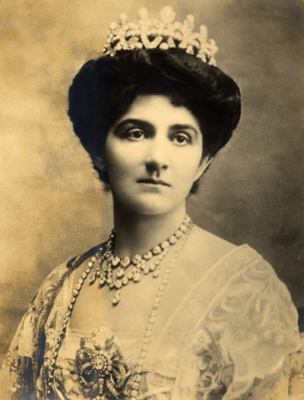
The name was introduced into Italy when King Emmanuel III of Italy married Milena Vukotić (1847-1923).

Her rankings in other countries are as follows:

  • # 2 (Romansch-speaking Switzerland, 2010)
  • # 25 (Poland, 2010)
  • # 32 (Poland, Warsaw, 2010)
  • # 50 (Brazil, 2010)
  • # 54 (Argentina, 2009)
  • # 73 (Germany, 2011)
  • # 353 (Netherlands, 2010)

The Bulgarian masculine form is Milen Милен.

Other forms of the name include:

  • Miléna (Hungarian)
  • Milica (Croatian/Serbian)
  • Mileva (Serbian)
  • Mylyca (Ukrainian)

Anna, Anne

Gender: Feminine
Origin: Biblical Hebrew
Meaning: “grace.”
(ANN; AHN). (ANN-uh; AHN-nah). (HANN-uh; HAHN-nah)

Anne is possibly one of the quintessential classic English and French female names. Prior to the 18th-century, it seems that every other girl born in England was either named Anne, Jane or Mary. There were several British and French queens who bore this simplistic moniker, including the ill fated Anne Boleyn, the mother of Elizabeth I. The history of Anne is rather long and complicated.

It was foremost popularized through the cult of St. Anne, a legendary figure who was said to be the mother of the Virgin Mary and the grandmother of Christ.

In Brittany, the name became especially popular because it happened to coincide with the name of an ancient Celtic goddess, her cult being replaced by St. Anne’s. In fact, it was borne by one Breton Princess, Anne of Brittany.

The name was introduced into Britain by the French-Normans after the invasion in 1066. Previously, there had been a minor Saxon king named Anna, but in this case the name is related to the Saxon arn (eagle). Anna and Anne are still occasionally used as male given names in Friesland.

Other than the apocryphal saint, the name Anne can be traced directly back to the Bible. In the New Testament, it is the name of a prophetess who predicts the Crucifixion of Christ.

Anna (Αννα), is the Greek translation of the early Hebrew Channah חַנָּה, usually transliterated as Hannah, meaning “grace.”

Hannah is borne in the Old Testament by the faithful mother of the prophet, Samuel.

Hannah has always been popular among Jewish families, but was virtually unheard of among non-Jews before the Reformation, except in some cases where it may have been used as a diminutive form of Johanna, spelled Hanna.

It was the Byzantines who had introduced the Anna form to the world, making it popular throughout Eastern and Southern Europe. It was a very popular name among the Byzantine royal family and it was borne by the majestic Anna of Byzantium.

Anna may be the more melodic form of the bunch, but Anne’s minimalistic qualities are charming. Short, to the point, no frills. It’s not a bad name, though it does lack some spice, which is why parents are probably more attracted to its more exotic alternatives. In fact, Anne only comes in at # 608 in the top 1000 female names of the United States. It is safe to say, however, that she is very much loved in the middle name spot.

Anna is currently one of the most popular female names in Europe and abroad. Her rankings are as follows:

  • # 1 (Austria, 2010)
  • # 1 (Estonia, 2011)
  • # 2 (Hungary, 2010)
  • # 3 (Ana, Georgia, 2010)
  • # 3 (Iceland, 2010)
  • # 4 (Ana, Croatia, 2010)
  • # 4 (Czech Republic, 2010)
  • # 4 (Germany, 2011)
  • # 4 (Ukraine, 2010)
  • # 5 (Faroe Islands, 2010)
  • # 5 (Ana, Portugal, 2010)
  • # 6 (Armenia, 2010)
  • # 6 (Ane, Greenland, 2002-2003)
  • # 6 (Ana, Romania, 2009)
  • # 6 (Ana, Serbia, 2010)
  • # 7 (Latvia, 2011)
  • # 7 (Russia, 2011)
  • # 8 (German-speaking Switzerland, 2010)
  • # 9 (Denmark, 2011)
  • # 10 (Netherlands, 2010)
  • # 10 (Northern Ireland, 2010)
  • # 10 (Norway, 2010)
  • # 11 (Italy, 2010)
  • # 12 (Ireland, 2010)
  • # 14 (Poland, 2010)
  • # 16 (Catalonia, 2010)
  • # 26 (Canada, B.C., 2010)
  • # 28 (Italian-speaking Switzerland, 2010)
  • # 28 (United States, 2010)
  • # 29 (Scotland, 2010)
  • # 40 (France, 2009)
  • # 46 (French-speaking Switzerland, 2010)
  • # 53 (Belgium, 2009)
  • # 63 (England/Wales, 2010)
  • # 71 (Australia, 2010)
  • # 81 (Sweden, 2010)
  • # 83 (Spain, 2010)
Other forms of the name include:
  • Anneen (Afrikaans/Low German)
  • Anna Анна (Afrikaans/Albanian/Armenian/Breton/Bulgarian/Catalan/Corsican/Czech/Dutch/English/Estonian/Faroese/Finnish/French/Frisian/German/Greek/Hungarian/Icelandic/Italian/Latvian/Limburgish/Maltese/Polish/Russian/Ukrainian/Scandinavian/Slovak)
  • Anne (Basque/Dutch/English/French/Scandinavian)
  • Gánna Га́нна (Belarusian)
  • Annaig (Breton)
  • Annick (Breton)
  • Maina (Breton)
  • Mannaig (Breton)
  • Mannick (Breton)
  • Naig (Breton)
  • Ana Ана ანა (Bulgarian/Croatian/Galician/Georgian/Lombard/Macedonian/Portuguese/Romanian/Samogaitian/Serbian/Slovene/Spanish/Venetian)
  • Jana (Croatian/Ladino)
  • Aneta (Czech/Polish/Samogaitian/Slovak)
  • Aina (Catalan)
  • Anica (Croatian/Serbian/Slovene)
  • Ane (Danish)
  • Anika (Danish)
  • Anneke (Dutch)
  • Anneken (Dutch)
  • Annika (Dutch/Finnish/German/Latvian/Scandinavian)
  • Anka (Dutch/Frisian/German)
  • An(n)ke (Dutch/Frisian)
  • Anouk (Dutch/French)
  • Ans (Dutch)
  • Enneke (Dutch)
  • Enneken (Dutch)
  • Anita (English/German/Polish/Spanish)
  • Annette (English/French/German)
  • Anissa (English)
  • Annelle/Annella (Estonian)
  • Anete (Estonian/Latvian)
  • Anett (Estonian)
  • Anu (Estonian)
  • Anni (Finnish)
  • Annikki (Finnish)
  • Anniina (Finnish)
  • Annukka (Finnish)
  • Niina (Finnish)
  • Anaïs (French/Provençal)
  • Annouche (French)
  • Ninette (French)
  • Ninon (French)
  • Ninouk (French)
  • Anje (Frisian)
  • Ankea (Frisian)
  • Antje (Frisian)
  • Antjen (Frisian)
  • Anute (Fruilian)
  • Anano (Georgian)
  • Annchen (German)
  • Annel (German)
  • Annele (German/Latvian)
  • Anneli(e) (German/Finnish/Swedish)
  • Annet (German)
  • Anina (German)
  • Anja (German/Slovene)
  • Anouschka (German/Italian/Russian)
  • Annaki (Greek)
  • Annoula (Greek)
  • Noula (Greek)
  • Anikó (Hungarian)
  • Annuska (Hungarian)
  • Panni (Hungarian)
  • Áine (Irish)
  • Ánna (Irish)
  • Annarella (Italian)
  • Annella (Italian)
  • Annetta (Italian)
  • Annettina (Italian)
  • Nona (Italian/Romansch)
  • Ance (Latvian)
  • Annija (Latvian)
  • Anninya (Latvian)
  • Ona (Lithuanian)
  • Annamma (Malayalam)
  • Annam (Malayalam)
  • Onnee (Manx)
  • Âone (Norman)
  • Aenna/Aenne (Old High German)
  • Annehe (Old High German)
  • Änna/Änne (Old High German)
  • Neta (Piedmontese)
  • Noto (Piedmontese)
  • Anke (Plattdeutsch)
  • Anneke(n) (Plattdeutsch)
  • Analia (Romansch/Spanish)
  • Annina (Romansch)
  • Annotta (Romansch)
  • Anca (Romanian)
  • Anicuta (Romanian)
  • Anėta (Samogaitian)
  • Anėkė (Samogaitian)
  • Annag (Scottish)
  • Ghianna (Sicilian)
  • Janna (Sicilian)
  • Nanna (Sicilian)
  • Anniken (Swedish)
  • Ann (Welsh)
  • Nan (Welsh)
  • Nanno (Welsh)
  • Nanw (Welsh)
  • Aana (Wolof)
As for the Hannah forms

Hanna without an H is the prefered form on Continental Europe, usually pronounced (HAHN-nah) and in French like Anna. Hanna and Hanne (HAHN-neh) are also used as diminutive forms of Johanna/Johanne in the Netherlands, Sweden, Norway, Denmark and Germany. There is the Hungarian Hajna pronounced (HOY-no). The Czech/Slovak form of Hana nickname Hanka. There are the Yiddish forms of Heyna, Hayna, Hejna (all pronounced like HAY-nah) including the diminutive forms of HenaHende, Hendel and Henye.  The Polish diminutive form of Hania, which might make an interesting alternative to Anya or Hannah. Hannah, Hanna and Henna are all used in the Middle East.

Of course, how could we ever forget the popular diminutive forms of Annie and Nan.