Pakhom, Pacôme

Gender: Masculine
Origin: Ancient Egyptian
Meaning: “he-falcon.”
Fre (PAH-kome)

The name is composed of the ancient Egyptian elements, pa (he) and akhom (falcon).

The name was later hellenized to Pachomius and franconized to Pacôme.

The name is borne by a major Coptic Christian saint (circ.3rd-century C.E), who is also revered in the Roman Catholic and Eastern Orthodox Churches. Pakhom is credited for being the founder of Coptic Monasticism.

As of 2009, its French form of Pacôme was the 412th most popular male name in France.

Other forms of the name include:

  • Bakhoum باخوم (Arabic/Assyrian/Lebanese/Syrian)
  • Pacomi (Catalan)
  • Pacumi (Catalan)
  • Pakhom (Coptic)
  • Pacôme (French)
  • Pachôme (French)
  • Pakhomios Παχώμιος (Greek)
  • Pacomio (Italian/Spanish)
  • Pachomiusz (Polish)
  • Pacômio (Portuguese-Brazilian)
  • Pacómio (Portuguese-European)
  • Pahomie (Romanian)
  • Pahomij Пахомий (Russian/Slovene)
  • Pahomije (Serbian)
  • Paho (Slovene)
  • Paxomij Пахомій (Ukrainian)
The name was also borne by a 15th-century Serbian hagiographer and two patriarchs of Constantinople.
Pachomius is also the name of a genus of spider.

Phoebe

Gender: Feminine
Origin: Greek
Meaning: bright; light
(FEE-bee).

To many Americans, Phoebe brings to mind the wacky yet lovable character of Phoebe Buffay on the popular SitCom, Friends. To the British, she is of an upper crust trendy sort, to Christians, she is an admirable woman in the New Testament, and to the Greeks, she is a classic, featured in both the Greek Orthodox calendar of saints as well as in Greek myth.

The name is derived from the Greek, Phoibus, which means “bright, light.”

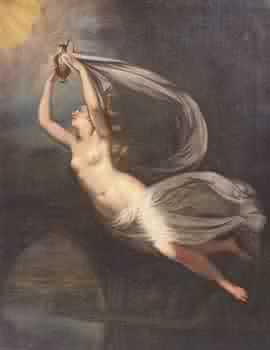
In Greek Mythology, Phoebe was a pre-Olympic goddess, a Titan. She was the goddess of the moon and the consort of her own brother Coeus, from him, she mothered Asteria and Leto and was believed to be the grandmother of Artemis and Apollo.

The Greeks later associated her with the goddess Artemis. Phoebe was often used as an epithet for Artemis, while the masculine form, Phoebus, was used for Apollo.

Phoebe was also associated with the Oracle of Delphi.

There are a few other Phoebes mentioned in ancient Greek religion, one was a Heliade nymph, another was the daughter of Leucippus and Philodice.

Phoebe, daughter of Leucippus, and her sister Hilaeira, were priestesses to Artemis and Athena. They were both betrothed to Idras and Lynceus. Castor and Pollux, the divine twins, were so impressed by their beauty, that they fell in love with the two maidens and carried them off for themselves. Idras and Lynceus, outraged, sought the two immortals but were both slain. Nevertheless, Phoebe married Pollux. It was also the name of a sister to Leda.

In the New Testament, the name is borne by a woman of Cenchrae, many scholars argue that she was a deaconess, the Catholic Church especially seems to support this stance. She is also believed to have brought Paul’s Epistle of the Romans to Rome. She is a canonized saint in both the Catholic and Greek Orthodox Churches, both rites hold her feast on September 3rd.

Fast forward to the 1500s and you will find the name Phebe, (an older English spelling), as the name of one of Shakespeare’s characters in his play, As You Like It. In the modern American Classic, she is the younger sister of Holden Caulfied in J.D. Salinger’s Catcher in the Rye. Polish Science Fiction writer, Jacek Duraj, uses the name as an acronym for post-human beings in his novel Perfekcyjna niedoskonałość.

Phoebe is also the name of a genus of evergreen tree, a species of bird and a moon of the planet, Saturn.

As of 2010, Phoebe was the 29th most popular female name in England/Wales. Her rankings in other countries are as follows:

  • # 56 (Australia, NSW, 2010)
  • # 90 (Northern Ireland, 2010)
  • # 93 (Scotland, 2010)
  • # 309 (United States, 2010)

Other forms of the name include:

  • Febe (Asturian/Danish/German/Italian/Norwegian/Polish/Portuguese/Spanish/Swedish)
  • Foibe (Danish)
  • Phoebe (Dutch/English/German)
  • Phœbé/Phébé (French)
  • Phoibe (German)
  • Phoebi/Phoibi (Greek)
  • Feba (Serbo-Croatian)
  • Foibe (Swedish)

Vianney

Gender: Masculine
Origin: French
Fre (VEE-ahn-NAY); Sp (vee-AH-nee)

Like Chantal and Xavier, Vianney is taken from the surname of a renowned Catholic saint, Jean-Marie Vianney (1786-1859). In France, the name has been used as a masculine given name since his death in the 1800s. It is still used, mainly among practicing Catholics in France and has even come to be used in South America.

As of 2009, Vianney was the 480th most popular male name in France.

Bethany

Gender: Feminine
Origin: Hebrew/Aramaic
Meaning: debated
Eng (BETH-e-NEE)

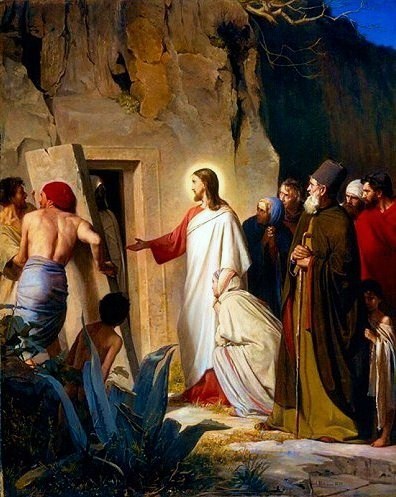
Bethany is found in the New Testament as the name of a town where Lazarus, Mary and Martha, lived. It was also here where Christ raised Lazarus from the dead.

Its origin and meaning are strongly contested, some scholars have argued it to mean “house of figs” being derived from the Hebrew elements, בֵּית־תְּאֵנָה (beit-te’enah). Others suggest that it from a Syriac source meaning, “house of misery; house of the afflicted” or “house of the poor” as in Biblical times the town was the site of a huge almshouse.

Its usage as a female given name most likely started off as a religious name taken by nuns. It was usually used in honour of Mary of Bethany. In recent years, the name has become particularly common among Evangelical Christians, especially within the United States.

Currently, Bethany is the 59th most popular female name in the United Kingdom, (2010), and she ranked as high as # 11 back in 1999. Her rankings in other countries are as follows:

  • # 65 (Northern Ireland, 2010)
  • # 79 (Scotland, 2010)
  • # 369 (United States, 2010)

Another form is the Spanish Bethania, sometimes used in conjunction with Maria.

Sources

  1. Capper, Brian J., “Essene Community Houses and Jesus’ Early Community” (2006)
  2. http://198.62.75.1/www1/ofm/mad/articles/DiSegniOnomasticon.html
  3. http://www.askoxford.com/firstnames/bethany?view=uk
  4. http://www.behindthename.com/php/find.php?name=bethany
  5. http://www.newadvent.org/cathen/02531a.htm
  6. http://bibref.hebtools.com/?book=%20John&verse=11:18&src=!

George

Gender: Masculine
Origin: Greek Γεωργιος
Meaning: “farmer.”
Eng (JORJ)

The name is an English and Romanian form of the Greek, Georgios Γεωργιος, which is derived from the Greek γεωργος (georgos) meaning, “farmer; earth worker.”

The name was borne by a 4th-century Christian saint and martyr, a Roman soldier of Greek ancestry who refused to sacrifice to pagan gods as demanded by the Roman Emperor at the time. He was popularized in the Western Christian Church after the Crusades, when soldiers brought the story back to Western Europe. The saints’ story was embellished and his story appears in the Golden Legend.

The most famous legend was that during the saint’s life, he managed to rescue a maiden who was about to be sacrificed to a dragon by slaying it with his lance. This legend has been the subject of art for centuries.

Though revered as the patron saint of England, the name itself did not catch on in until the 18th-century, following the accession of George I of England. The name has been borne by several kings throughout Europe. It was also borne by the first president of the United States, George Washington.

In Medieval times, English troops would chant “by George“, as a invocation to the saint to protect them in battle.

Between 1880 and 1937, George remained in the U.S. top 10. As of 2010, he only ranked in as the 164th most popular male name. His rankings in other countries are as follows:

  • # 1 (Georgi, Bulgaria, 2007)
  • # 1 (Georgios, Greece, 2010)
  • # 2 (Giorgi, Georgia, 2011)
  • # 5 (Yegor, Belarus, 2011)
  • # 9 (England/Wales, 2010)
  • # 12 (Yegor, Russia, 2011)
  • # 16 (Jorge, Spain, 2010)
  • # 19 (Jiří, Czech Republic, 2010)
  • # 20 (Romania, 2009)
  • # 22 (Jordi, Catalonia, 2010)
  • # 27 (Jure, Slovenia, 2010)
  • # 42 (Jorge, Chile, 2010)
  • # 53 (Juraj, Croatia, 2010)
  • # 69 (Jure, Croatia, 2010)
  • # 73 (Australia, NSW, 2010)
  • # 75 (Jurij, Slovenia, 2010)
  • # 76 (Jørgen, Norway, 2010)
  • # 78 (Jorge, Mexico, 2010)
  • # 80 (Joris, Netherlands, 2010)
  • # 82 (Jordi, Spain, 2010)
  • # 84 (Jurica, Croatia, 2010)
  • # 100 (Scotland, 2010)
  • # 168 (Jorge, United States, 2010)
  • # 233 (Joris, France, 2009)
  • # 420 (Jordi, Netherlands, 2010)

Other forms of the name include:

  • Gjergj (Albanian)
  • Jorgo (Albanian)
  • Giorgis ጊዮርጊስ (Amharic)
  • Jurj(us)  جرج  جرجس (Arabic)
  • George  جورج (Arabic/English/Romanian)
  • Khodor  خضر (Arabic)
  • Chorche (Aragonese)
  • Gev(or) Գեվ Գեվոր (Armenian)
  • Gevorg Գեվորգ (Armenian)
  • Kevork Գեւորգ (Armenian)
  • Xurde (Asturian)
  • Gorka (Basque)
  • Jury Юры (Belarusian)
  • Yegor Егор (Belarusian/Russian)
  • Jord (Breton)
  • Jorj (Breton)
  • Georgi Георги (Bulgarian)
  • Jordi (Catalan)
  • Juraj (Croatian/Slovak/Slovene)
  • Jurica (Croatian)
  • Jure (Croatian/Slovene)
  • Jiří (Czech)
  • Jørgen (Danish/Norwegian)
  • Joris (Dutch/Frisian)
  • Sjors (Dutch)
  • Georg (Faroese/Estonian/German/Icelandic/Romansch/Scandinavian)
  • Jurjen (Frisian)
  • Jüri (Estonian/Volapuk)
  • Jørundur (Faroese)
  • Jokora (Finnish)
  • Jori (Finnish)
  • Jyr(k)i (Finnish)
  • Yrjänä (Finnish)
  • Yrjö (Finnish)
  • Georges (French)
  • Xurxo (Galician)
  • Giorgi გიორგი (Georgian/Monegasque)
  • Jörgen (German/Swedish)
  • Jörg (German/Swedish)
  • Jürgen (German)
  • Jürg (German)
  • Georgios Γεώργιος (Greek)
  • Joorut (Greenlandic)
  • Juulut (Greenlandic)
  • Keoki (Hawaiian)
  • György (Hungarian)
  • Seoirse (Irish-Gaelic)
  • Giorgio (Italian/Venetian)
  • Georgius (Latin)
  • Jur(g)is (Latvian)
  • Jurgis (Lithuanian)
  • Gjoko  Ѓок (Macedonian)
  • Gjorgje Ѓорѓе (Macedonian)
  • Gjorgji  Ѓорѓи (Macedonian)
  • Gheevargees ഗീവര്‍ഗീസ് (  (Malayalam)
  • Gheevarugees ഗീവറുഗീസ് ( (Malayalam)
  • Varghees വര്‍ഗീസ്‌ (Malayalam)
  • Verghese വെര്‍ഗീസ് (Malayalam)
  • Varughese വറുഗീസ് (Malayalam)
  • Ġorġ (Maltese)
  • Jore (Norman)
  • Jørn (Norwegian)
  • Ørjan (Norwegian)
  • Jordi (Occitanian/Provençal)
  • Jerzy (Polish)
  • Jorge (Portuguese/Spanish)
  • Gheorghe (Romanian)
  • Georgy Георгий (Russian/Ukrainian)
  • Yuri Юрий (Russian)
  • Deòrsa (Scottish)
  • Seòrsa (Scottish)
  • Đorđe Ђорђе (Serbian)
  • Đorđo Ђорђо (Serbian)
  • Đurađ Ђурађ(Serbian)
  • Jurij (Slovene)
  • Göran (Swedish)
  • Örjan (Swedish)
  • Gewarges ܓܝܘܪܓܣ(Syriac)
  • Gorges ܓܪܓܣ (Syriac)
  • Yorgo (Turkish)
  • Heorhiy Георгій (Ukrainian)
  • Yur Юр (Ukrainian)
  • Sior (Welsh)
In ancient Greece, Georgos may have also been used as an epithet for Zeus.
As for its feminine forms, I shall save that for a separate post 🙂

Joseph, Josephine

Gender: Masculine
Origin: Hebrew יוֹסֵף
Meaning: “He shall add; God shall add.”
Eng (JOH-sef)

The name is derived from the Biblical Hebrew male name, יוֹסֵף (Yosef).

In the Old Testament, the name is borne by the first son of Rachel and the eleventh son of Jacob. After being sold off as a slave by his brothers, Joseph ended up in Egypt, later becoming an important advisor to the pharoah.

In the New Testament, it is borne by the husband of the Virgin Mary. Known as St. Joseph among Catholics, he is a particularly revered saint among Italian Catholics, considered the patron saint of stepfathers and carpenters.

Another important character with this name in the New Testament, is Joseph of Arimathea, a disciple of Christ and also the man who provided a burial spot for Jesus after his death.

The name has always been very prevalent throughout Europe and the Middle East.

In the United States, its popularity can be due to several factors: it was common among both various Christian and Jewish immigrants. The name is even very common among Muslim families.

Currently, Joseph is the 20th most popular male name in the United States, (2010). In fact, Joseph has never ranked outside of the Top 20. Common English nicknames are Joe and Joey. His rankings in other countries are as follows:

  • # 1 (Yusif, Azerbaijan, 2012)
  • # 1 (Yusuf, Turkey, 2010)
  • # 2 (Yusuf, Tajikistan, 2009)
  • # 2 (Youssef, Tunisia)
  • # 3 (Yousef, Arab-World, 2011)
  • # 4 (José, Equitorial Guinea, 2011)
  • # 5 (Joosep, Estonia, 2011)
  • # 5 (Isle of Man, 2009)
  • # 5 (Yousouf, Israel, among Muslim and Christian boys, 2010)
  • # 5 (José, Philippines, 2011)
  • # 5 (Jose, Puerto Rico, 2010)
  • # 7 (Youssef, Morocco)
  • # 8 (Josip, Croatia, 2010)
  • # 8 (Yosef, Israel, among Druze boys, 2004)
  • # 9 (Yosef, Israel, among Jewish boys, 2010)
  • # 14 (Giuseppe, Italy, 2010)
  • # 15 (England/Wales, 2010)
  • # 16 (Joseph/Giuseppe, Malta, 2010)
  • # 29 (Northern Ireland, 2010)
  • # 36 (New Zealand, 2010)
  • # 37 (Ireland, 2010)
  • # 41 (Australia, NSW, 2010)
  • # 41 (József, Hungary, 2010)
  • # 43 (José, Spain, 2010)
  • # 44 (Scotland, 2010)
  • # 51 (José, United States, 2010)
  • # 62 (Josef, Sweden, 2010)
  • # 68 (Josip, Bosnia & Herzegovina, 2010)
  • # 68 (Josep, Catalonia, 2010)
  • # 71 (José, Catalonia, 2010)
  • # 74 (Canada, BC, 2010)
  • # 149 (France, 2009)

Other forms of the name include:

  • Josef (Afrikaans)
  • Isuf (Albanian)
  • Jozef/Jozif (Albanian: Zef is a diminutive form)
  • Sepp (Alsatian)
  • Hovsep Հովսեփ (Armenian)
  • Yūsuf/Youssef/Yussef يوسف, (Arabic)
  • Yusif/Yusuf/Usub (Azeri)
  • Joseba/Josepe (Basque)
  • Joseph ДЖО́ЗЕФ (Belarusian/English/German/French)
  • Josip (Bosnian/Croatian: Joso, Jozo and Joško are diminutive forms)
  • Jusuf (Bosnian)
  • Yosif Йосиф (Bulgarian)
  • Josep (Catalan, Pep is a common diminutive form)
  • Ghjaseppu (Corsican)
  • Jozèf (Creole/Haitian)
  • Josef (Czech)
  • Joep (Dutch: originally a diminutive form, now used as an independent given name)
  • Joop (Dutch: originally a diminutive form, used as an independent given name)
  • Joost (Dutch: originally a diminutive form, now used as an independent given name)
  • Jozef (Dutch)
  • Joseph (English/French/German)
  • Joséphin (French: obscure)
  • Joosep (Estonian)
  • Jósef (Faroese)
  • Jooseppi (Finnish)
  • Juuso (Finnish)
  • Bepùt/Bepi/Bepo (Fruilian)
  • Xosé (Galician)
  • Ioseb იოსებ (Georgian)
  • Ioses/Joses Ιωσης (Greek: Biblical)
  • Iōséph Ἰωσήφ/Iosepos, Iosipos Ιώσηπος (Greek: Modern)
  • Yosef יוסף (Hebrew)
  • Isuppu (Hindi)
  • József (Hungarian: Jóska is the diminutive form)
  • Yusuf/Yusup/Ucup (Indonesian)
  • Giuseppe (Italian: diminutive forms are Beppe, Peppe and Peppino)
  • Giuseppino (Italian)
  • Pino (Italian: diminutive form now used as an independent given name)
  • Seosamh (Irish-Gaelic)
  • Ujöp (Ladino)
  • Iosephus/Josephus (Latin)
  • Jāzeps (Latvian)
  • Gioxeppe (Ligurian)
  • Joep (Limburgish)
  • Juozapas (Lithuanian)
  • Juozas (Lithuanian)
  • Giüsèpp (Lombard: Pèpp and Bèpp are diminutive forms)
  • Ousep/Ousef/Yosef (Malayalam)
  • Ouseppachen/Kochaappu (Malayalam)
  • Ġużeppi (Maltese: Ġużi, Ġuż, Peppi, Pepp, Żeppi and Żepp are diminutives)
  • Hohepa (Maori)
  • Jupp (Moselfrench)
  • Josef (Norwegian)
  • Josèp (Occitanian)
  • Iosifu Іѡсифъ (Old Church Slavonic)
  • Yūsuf/Youssef/Yussef يوسف, (Persian)
  • Joosef (Plattdeutsch)
  • Józef (Polish)
  • Gèseppe (Puglian)
  • Jüppes/Jüppke (Ripoarisch)
  • Iosif (Romanian)
  • Gisep (Romansch)
  • Iosif/Osip Иосиф (Russian)
  • Jisepu (Sardinian)
  • Josif Јосиф (Serbian)
  • Seòsaidh (Scots-Gaelic)
  • Giuseppi (Sicilian)
  • U’Seppi (Sicilian)
  • Zefel/ Zeflik (Silesian)
  • Jozef (Slovakian)
  • Jožef/Jože (Slovene)
  • Sefer (Swabian)
  • José (Spanish/Portuguese: Pepe and Pepito are the diminutive forms)
  • Yusup/Usup/Ucup (Sudanese)
  • Yoseppu (Tamil)
  • Yusuf (Turkish)
  • Yosyp (Ukrainian)
  • Josep (Valencian)
  • Juxepe (Venetian: diminutives are Bepi and Bepin)
  • Joseff (Welsh)
  • Yissl/Jayzl/Yussel (Yiddish)

Bavarian diminutive forms are Pepi, Perperl, SeppSeppiSeppl and Söpp.

Other German diminutives include: Seb, Seffi and Beppal is a Swiss-German diminutive form.

A Rheinish diminutive is Jupp.

Czech diminutives are: Pepík, Pepek, Pepan and Pepin.

Dutch short forms are Jef, Zef and Jos.

A common Hebrew short form is Yosi.

Italian diminutives and its dialectical forms include: Scepp (Calabrian); Pepp’, Pè, Peppiniéllo, Peppì, Peppinié (Campanese); Gioxe, Bepi, Bepin (Ligurian); Gepe and Pinin (Piedmontese); Seppud, Bapèpp, Peppo, Peppin, G’sip, Giusè, Pinucc, Peppon, ‘Mbà Peppe and P’pen (Puglian); Peppe and Pippo (Sicilian); Bepi and Beppe (Tuscan) and  Bepìn and Bepo (Venetian).

Standard Italian diminutives are: Bepi, Beppe, Beppino, Geppetto, Geppino, Peppe, Peppenuzzo, Peppi, Peppino, Peppinello, Peppiniello, Peppinetto, Peppo, Peppuccio, Pino Pinello, Pinuccio, Peppone, Pippo Puccio and Seppe.

Portuguese diminutives include: Zé, Zézinho, Zéca and Zécinha.

Slovakian diminutives are: Jožko, Jojo and Dodo.

Slovene short forms are: Pepe, Pepi and Pepc.

A common Spanish compound name is José Maria

Its more common feminine form of Josephine became prevalent throughout Europe at the end of the 18th-century and at the beginning of the 19th-century, due to the popularity of Josephine Bonaparte, (1763-1814), the wife of Napoleon.

Originally, Joséphine was a French diminutive form of Josèphe. Joséphine became the standard form around the same time Josephine Bonaparte became famous and has remained the more common French feminine form of Joseph, since.

Currently, in the United States, she is the 186th most popular female name, (2010). In the Netherlands, she was the 153rd most popular female name, (2010).

Other feminine forms include:

  • Jozefina (Albanian)
  • Josepa (Catalan: diminutive is Pepa)
  • Josipa (Croatian)
  • Josefa (Czech/Portuguese/Spanish)
  • Josefina (Czech)
  • Jozefien (Dutch)
  • Joetta (English)
  • Josephina/Josephine (English)
  • Josefiina (Finnish)
  • Josée (French)
  • Josèphe (French)
  • Joséphine (French)
  • Josette (French)
  • Josefine (German/Danish)
  • Josepha (German)
  • Iosiphina Ιωσηφίνα (Greek: Modern)
  • Jozefa (Hungarian/Slovene)
  • Jósefína (Icelandic)
  • Seosaimhín (Irish-Gaelic)
  • Giosetta (Italian)
  • Giuseppa/Giuseppina (Italian)
  • Iosephina (Latin)
  • Ġużeppa (Maltese: Ġuża is the diminutive form)
  • Józefa (Polish)
  • Józefina (Polish)
  • Jožefina/Jožefa/Joža (Slovene)
  • Jožica (Slovene: originally a diminutive form, now used as an independent given name)
  • Josefa/Josefina (Spanish)
  • Josefin/Josefine (Swedish)
  • Yosipa/Osipa/Yuzefa (Ukrainian)

Croatian diminutive form is Pepica.

Czech diminutives are: Pepa, Pepca, Pepicka, Pepina, Pepka, Jóža, Jožka and Jóžin.

Common English short forms for Josephine include: Fifi, Jo, Jody, Jojo, Josie and Posey.

Common French diminutive forms are Fifi and Fifette.

German diminutives are Pepa.

Italian diminutives are: Giusy, Pina, Pinuccia, Pinella and Pippa.

Slovene diminutive form is Pepca

Marie-Josée is a common French compound form.

Designated name-days are March 19 and May 1.

Zechariah, Zachary

St. Zachary Gender: Masculine
Origin: Hebrew  זְכַרְיָה
Meaning: “God remembers.”
Eng (zek-e-RIE-ah); (ZACK-e-REE)

Zachary is an English form of the Hebrew Zechariah, a theophoric name that means “God remembers; Yahweh remembers.”

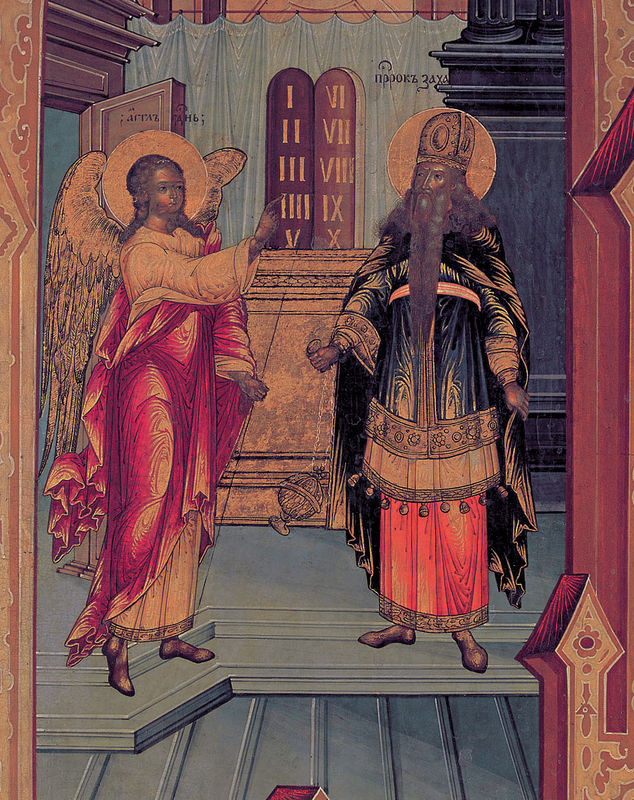
The name is borne by several characters in both the Old and New Testament. In the Old Testament, it was borne by a prophet who authored the Book of Zechariah and in the New Testament, it was borne by the father of John the Baptist.

In the Qu’ran, the father of John the Baptist is viewed as a prophet and also as the protector of Mary, the mother of Jesus.

The name also appears as Zacharias, a Greek rendition, in some versions of the New Testament.

In the English speaking world, the name has been in usage since Medieval times. In Eastern Europe, especially in Orthodox dominated countries, it has always been a common name.

Currently, Zachary is the 61st most popular male name in the United States, (2010). In 1994, he ranked as high as # 12.

In other countries, his popularity is as follows:

  • # 51 (Australia, NSW, 2010)
  • # 51 (England/Wales, 2010)
  • # 55 (Canada, BC, 2010)
  • # 331 (Zacharie, France, 2009)
  • # 446 (France, 2009)

Other forms of the name include:

  • Sagarias (Afrikaans)
  • Zakariyya زكرياء (Arabic/Assyrian/Circassian/Coptic/Ethiopian/Lebanese/Syrian)
  • Zacharij/Zachari Захари (Bulgarian)
  • Zacaries (Catalan)
  • Zekarija Закария (Chechen/Kazakh)
  • Zakaria ზაქარია (Coptic/Ethiopian/Georgian/Kurdish)
  • Zaharije Зaxapиje (Croatian/Serbian)
  • Zachariáš (Czech/Slovak)
  • Zachary (Czech/English/French/Polish)
  • Zacharias (German/Scandinavian)
  • Sakarias (Faroese/Norwegian/Swedish)
  • Sakari (Finnish: Sakke is a diminutive form)
  • Saku (Finnish)
  • Zacharie (French)
  • Sagaire/Sagairi (Gaelic)
  • Zacharias Zαχαριας (Greek)
  • Zakariás (Hungarian)
  • Zakeus (Hungarian)
  • Zekarja (Hungarian)
  • Zaccaria (Italian)
  • Zaccheo (Italian)
  • Cherian (Malayalam)
  • Sakaria (Malayalam)
  • Scaria (Malayalam)
  • Zaxaria Захарїа (Old Church Slavonic)
  • Zachariasz (Polish)
  • Zacarias (Portuguese)
  • Zaharia (Romanian)
  • Zaccaria(s) (Romansch)
  • Zachar Захар (Russian)
  • Sachairi (Scottish-Gaelic)
  • Zacarías (Spanish)
  • Zakarya (Swahili)
  • Zekeriya (Turkish)

The name is also borne by several saints as well as by one Roman Catholic pope and a Coptic pope.

Zaharina Захарина is a Bulgarian feminine form and Zara is its pet form.

Other notable bearers include an 8th-century Nubian king, a 9th-century Khazar king, and American president, Zachary Taylor (1784-1850)

Sources

  1. http://www.askoxford.com/firstnames/zachary?view=uk
  2. http://www.behindthename.com/php/find.php?name=zachary
  3. http://www.svenskanamn.se/
  4. http://bibref.hebtools.com/?book=%20Matthew&verse=23:35&src=!

Otto

Gender: Masculine
Origin: German
Meaning: “wealth; riches.”
(OT-to)

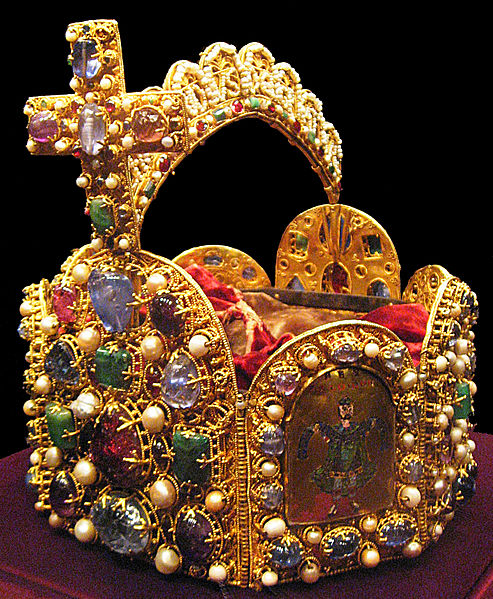
The name is derived from the early Germanic Audo. It seems like the quintessential German name, but has been out of favor in German speaking countries until recently, where it seems to be experiencing a revival. The name was borne by four Germanic kings. The first being Otto I, (also known as Otto the Great), the first Holy Roman Emperor. It was also borne by German Chancellor Otto von Bismarck (1815-1898).

To American ears, it might sound a bit quirky, but to hipsters, he might just make the perfect brother to little Gunnar or Atticus. Otto exhibits a certain quality of strength. It wouldn’t be bad to give him a chance, at least as a middle name. Otto has not ranked in the US top 1000 since 1974, when he came in at a measly #969. The highest he has seemed to rank in American history was in 1909, when he came in at a decently high #144. No doubt due to a large influx of German and Swedish immigrants at the time.

In Germany, he hasn’t made it to the top 500 as of yet, but I am happily able to report that, recently, while browing through some German birth announcement from Berlin, I was happy to see a few newborn Ottos, either as their first name or middle name.

Update: As of 2011, Otto was the 30th most popular male name in Finland and in 2010, he was the 92nd most popular male name in Sweden.

In Germany and Austria, his designated name day is September 7th. Similar variations include Otmar which means “possesing of fame” and Ottokar meaning “wealthy and vigilant.” If Otto feels too short for you, then you might want to consider Otmar or Ottokar as a formal version.

Other forms of the name include:

  • Ot (Catalan)
  • Ota (Czech)
  • Oto (Czech/Slovak)
  • Otto (Dutch/Estonian/Faroese/Finnish/Frisian/German/Polish/Romansch/Sami/Scandinavian)
  • Ode (English)
  • Eudes (French)
  • Odilon (French/Portuguese)
  • Odon (French/German)
  • Odo (German)
  • Udo (German)
  • Ortu (Greenlandic)
  • Ottó (Hungarian/Icelandic)
  • Oddo (Italian)
  • Ottone (Italian)
  • Ottorino (Italian)
  • Rino (Italian)
  • Audo (Old High German)
  • Odo (Old High German)
  • Otton (Polish)
  • Otte (Scandinavian)
  • Oton (Slovene/Spanish)

A common Czech diminutive form is Otik.

Feminine forms are so numerous that I shall save those for a separate entry, stay tuned 🙂

Vera

Gender: Feminine
Origin: Slavic Вера
Meaning: “faith.”
Eng (VARE-uh; VEER-uh); Rus (VYEH-rah)

The name is most likely a borrowing from the Russian female name, Vera, which comes directly from the Slavic meaning, “faith.” Initially, it was a Russian-Orthodox cognate of the Greek female name, Pistis (Faith), the name of an early Christian saint and martyr.

The name has been used outside of Eastern Europe since at least the 19th-century. It is unclear how the name caught on in the English-speaking world, but by the time of its popularity the name was usually associated with the Latin, verus, (true), verses, the Slavic, (hope).

Its usage in Albania may also be connected with the Albanian word, verë, (Summer).

The name is borne by several famous Russian women, including silent film actress, Vera Kholodnaya (1893-1919) and theatre actress, Vera Komissarzhevskaya (1864-1910); Chemist, Vera Popova (1867-1896).

Other notable bearers include: English writer and feminist, Vera Brittain (1893-1970); Ukrainian-American actress, Vera Farmiga (b.1973); American actress, Vera Miles (b.1929); American fashion designer, Vera Neumann (b.1907) and American fashion designer, Vera Wang (b.1949).

The highest the name ranked in the United States was in 1919 when she came in as the 65th most popular female name; its popularity may have had something to do with Vera Kholodnaya who died the same year, but this is only my personal conjecture.

As of 2010, Vera is the 675th most popular female name in the United States. Her rankings in other countries are as follows:

  • # 13 (Veera, Finland, 2011)
  • # 39 (Sweden, 2010)
  • # 45 (the Netherlands)

Other forms of the name include:

  • Vera Вера (Albanian/Bulgarian/Croatian/Dutch/English/Faroese/German/Hungarian/Icelandic/Italian/Latvian/Lithuanian/Macedonian/Portuguese/Russian/Scandinavian/Serbian/Slovene)
  • Věra (Czech)
  • Veera (Estonian/Finnish)
  • Véra (French)
  • Verina (Italian)
  • Verutė (Lithuanian)
  • Wiara (Polish)
  • Wiera (Polish)
  • Verá (Sami)
  • Viera (Slovak)
  • Wera (Swedish)
  • Vira Віра (Ukrainian)

Diminutive forms include:

  • Verica (Czech/Serbian)
  • Verika (Czech)
  • Verochka (Russian)
  • Verunka (Czech)
  • Verusha (Russian)
  • Vierunka (Czech)
  • Vieruška (Czech)
  • Věrka (Czech)
  • Věruna (Czech)
An obscure Latin masculine form is Verus.

Enoch

Gender: Masculine
Origin: Biblical Hebrew חֲנוֹך 
Meaning: “dedicated.”
Eng (EE-nock)

The name is derived from the Hebrew,  חֲנוֹך Chanokh, meaning, “dedicated.”

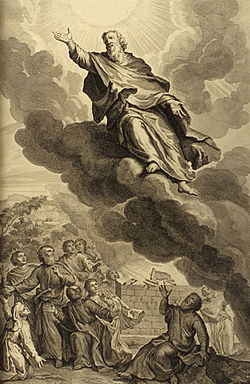
The name appears several times in the Old Testament, the most notable bearers being a son of Cain and a father of Methuselah. The latter is one of the seven pre-Deluge Patriarchs and is considered a major figure in Islam, (in Islam he is referred to as Idris), Judaism and various Christian branches. He is attributed as being the author of the apocryphal Book of Enoch,  which recounts the rise and fall of the Nephilim.

In the English-speaking world, the name came into usage after the Protestant Reformation. It was borne by American Revolutionary soldier and spy, Enoch Crosby (1750-1835), American entrepreneur and philanthropist, Enoch Pratt (1808-1896) and British politician, Enoch Powell (1912-1998).

As of 2010, its Scandinavian form of Enok was the 8th most popular male name in the Faroe Islands.

Other forms of the name include:

  • Enok (Albanian)
  • Henock (Amharic)
  • Enoch Енох (Bulgarian/English/German/Italian/Polish/Russian/Ukrainian)
  • Henoc (Catalan)
  • Henok (Croatian)
  • Eenok (Estonian)
  • Enok (Faroese/Icelandic/Scandinavian)
  • Enokur (Faroese)
  • Hanok (Faroese)
  • Henoch (Faroese)
  • Eeno (Finnish)
  • Eenokki (Finnish)
  • Eenukki (Finnish)
  • Einokki (Finnish)
  • Einukki (Finnish)
  • Ienokki (Finnish)
  • Enoki ენოქი (Georgian)
  • Énokh (Hungarian)
  • Enoque (Portuguese)
  • Enoh (Romanian)
  • Henoh (Slovene)
  • Enoc (Spanish)
  • Enock (Swedish)