Celestine

Gender: Masculine (English); Feminine (French)
Origin: Latin
Meaning: ” of the sky; of the heavens.”
Eng (sel-es-TINE; SEL-es-tin); Fre Masc (say-les-TEN); Fre Fem (say-les-TEEN)

The name is derived from the Late Latin male name, Caelestinus, meaning, “of the sky; of the heavens.”

In English, the name was anglicized to Celestine while in French, Célestine was always strictly the feminine form, the French masculine form being, Célestin.

The name was borne by five popes.

In the English-speaking world, Celestine was seldom used, if it was ever used it was usually used for females being a borrowing from the French, though Celestine is a common male name among Nigerian Catholics.

As of 2010, Célestin was the 415th most popular male name in France, while its feminine form of Célestine was the 419th most popular female name in France.

Other forms of the name include:

  • Celestin Целестин Целестин (Asturian/Bulgarian/Romanian/Romansch/Russian/Scandinavian/Serbian/Ukrainian)
  • Celestí (Catalan)
  • Celestýn (Czech)
  • Celestijn (Dutch)
  • Celestinus (Dutch)
  • Celestine (English)
  • Célestin (French)
  • Celestino (Galician/Italian/Portuguese/Spanish)
  • Coelestin (German)
  • Cölestin (German)
  • Zölestin (German)
  • Kelestínos Κελεστίνος (Greek)
  • Celesztin (Hungarian)
  • Caelestinus (Late Latin)
  • Celestinas (Lithuanian)
  • Celestyn (Polish)
  • Celestìnu (Sardinian)
  • Celestín (Slovene)
A famous female bearer was Célestine Galli-Marié (1840–1905), a French mezzo-soprano who created the title role in the opera Carmen
La Celestina, a 15th-century literary piece written by Fernando de Rojas, is considered one of Spain’s greatest pieces of literature.
Celestina is also the name of an 18th-century literary piece written by poet, Charlotte Turner Smith.
Other feminine forms include:
  • Celestina Целестина (Czech/English/Italian/Lithuanian/Portuguese/Romanian/Romansch/Russian/Slovak/Spanish)
  • Célestine (French)
  • Cölestina (German)
  • Zölestina (German)
  • Celesztina (Hungarian)
  • Celestyna (Polish)
  • Kolestina Колестина (Russian)

Celestine is also the name of an order of Benedictine monks and it is also the name of a type of mineral.

Anatole

Gender: Masculine
Origin: Greek Ανατολιος
Meaning: “sunrise.”

The name is derived from the Greek, Anatolios Ανατολιος, which is derived from the word anatole ανατολη (sunrise). The name was borne by a 3rd-century Christian saint, philosopher and martyr.

The name was borne by several other saints.

An anatole is also a musical term employed in jazz.

The name was one of the most popular male names throughout the Soviet Union, before the October Revolution, the name was only used among monks and priests. The name no longer appears in Russia’s top 10.

Its French form of Anatole is 234th most popular male name in France, (2009).

Other forms of the name include:

  • Anatol Анатоль (Belarusian/Czech/German/Hungarian/Polish/Romanian)
  • Anatolij Анатолиј Анато́лий (Bulgarian/Croatian/Macedonian/Russian/Ukrainian)
  • Anatoli ანატოლი (Catalan/Georgian/Russian)
  • Anatole (French)
  • Anatolios (Greek)
  • Anatolio (Italian/Spanish)
  • Anatolijs (Latvian)
  • Anatolijus (Lithuanian)
  • Anatoliusz (Polish)
  • Anatólio (Portuguese)
  • Anatolie (Romanian)
  • Anatoliy (Russian: variant transcription)
  • Anatolije Анатолије (Serbian)
  • Anadolu (Turkish)
Common Russian diminutives are: Anatolka, Natoli, Natoha, Natosha, Tolia, Tolyunya; Tolyusya; Tolyan; Tolyaha; Tolyasha; Tosha; Tosya; Totya; Tusya 
A feminine form is Anatolia, which was also borne by an early Christian martyr. It shares its name with a region in Turkey.
Other feminine forms include:
  • Anatolija Анатолия (Bulgarian/Russian/Serbian)
  • Anatolia (Italian/Latin/Polish/Spanish)
  • Anatola (Polish)

Tiffany, Theophania

Gender: Feminine
Origin: Greek
Meaning: “God appears; manifestation of God; epiphany.”
Eng (TIFF-uh-NEE); (thee-o-FAH-nee-ah)

Tiffany, now considered a name of the 80s, is actually an early English Medieval form of the Greek female name Theophania, which means “God appears”, being composed of the Greek elements, θεος (theos), meaning, “God” and φανης (phanes), meaning “appears.”

The name was usually bestowed upon girls born on the feast of the Epiphany (January 6), which celebrates when the Three Wise Men visited the Christ Child.

The name was popular in Medieval England and fell out of usage, being introduced into England via the Normans in the form of Tiphaine.

A few English matronymic surnames developed from it, Tiffany being the most notable, becoming one of very few female given names to appear in an English surname. A few other female names being: Alice, Isemay and Maude.

At of the turn of the last century, the name came to be associated with Tiffany & Co, which was founded by Charles Lewis Tiffany in 1837.

The name may have caught the public attention via the company, but most likely, its popularity was sparked after the publication of the Truman Capote novella, Breakfast at Tiffany’s (1958), which was later made into a film, starring Audrey Hepburn, in 1961.

Tiffany appeared in the U.S. top 1000 the following year. In 1962, she was the 783rd most popular female name. The highest she peaked was in 1982, coming in as the 13th most popular female name. She peaked again in 1988, coming in at # 13.

As of 2010, she ranks in as 311th most popular female name in the United States, while in France she ranked in as the 432nd most popular (2009).

Other forms of the name include:

  • Tiffany (French/English)
  • Tiphaine (French)
  • Theophania Θεοφανια (Greek)
  • Teofánia (Hungarian)
  • Tifani (Hungarian)
  • Teofania (Italian/Polish)
  • Feofania (Russian)
  • Epifanía (Spanish)

Males forms are:

  • Theophanes/Theophanis Θεοφανης (Greek)
  • Teofan (Polish)
  • Feofan Феофан (Russian)
  • Epifanío (Spanish)

Sidony; Sidonie

Gender: Feminine
Origin: Latin
Meaning: “from Sidon.”
Eng (SIDE-e-NEE; sih-DOH-nee); Fre (SEE-doh-NEE); Germ (Pronunciation)

The name is derived from the Late Latin male name, Sidonius, which means, “from Sidon.” Sidon is the Latin name for what is now Saida, in Lebanon.

Sidony was quite common in Medieval England, its popularity was inspired by the Shroud of Turin, when the meaning of the name was misunderstood to be from the Greek word, sindon (linen). The name fell out of usage by the Renaissance. Sidonie was revived in 18th-century England, and has occasionally been in out of usage in both the UK and the United States.

In fact, the name was fairly prevalent throughout Medieval Europe, being found among royalty and the nobility alike.

The name is found in the French Medieval Prose, Pontus & Sidonie.

In French, Sidonie is technically a prenom épicène (a gender neutral name), however, it is rarely given to males and has been far more common on females since Medieval times. As of 2009, Sidonie was the 438th most popular female name in France.

Sidonie is also used in German-speaking countries (strictly feminine).

The male form of Sidonius was borne by a 5th-century bishop and saint.

The name was also borne by the legendary Sidonia von Borcke (1548–1620), a Pomeranian noblewoman who was tried and executed for witchcraft, she became the much the subject in English literature and art during the 19th-century.

Other forms of the name include:

  • Sidonija (Croatian/Slovene)
  • Sidonie (Czech/French/German)
  • Zdeňka (Czech)
  • Sidonia (Dutch/Czech/German/Latin/Polish)
  • Sidony (English)
  • Szidónia (Hungarian)
  • Sydonia (Polish/Sorbian)
  • Sidónia (Slovak)

Honorine

Gender: Feminine
Origin: French/Latin
Meaning: “honour.”
(Pronunciation)

The name is derived from the Roman family name, Honorinus, which is derived from the Latin, Honorius, meaning, “honour.”

The name was borne by a legendary Norman saint who is revered as the patron saint of boatmen. Not much else is know about her, just that she is one of Normandy’s oldest saints. She is believed to have been martyred under Diocletian.

Honorine is also the eponymous heroine of Honoré de Balzac’s 1843 novel.

As of 2009, Honorine was the 455th most popular female name in France.

The designated name-day is February 27.

Other forms include:

  • Onorina (Italian)
  • Honorina (Latin)
  • Honoryna (Polish)

Cyprian

Gender: Masculine
Origin: Latin
Meaning: “from Cyprus.”
Eng (SIP-ree-ən)

The name is derived from the Roman family name, Cyprianus, which means, “from Cyprus.”

The name was borne by a 3rd-century Christian theologian, writer, martyr and saint.

As of 2009, its French form of Cyprien was the 272nd most popular male name in France.

Other forms of the name include:

  • Çipriani (Albanian)
  • Cyprian (Albanian/English/German/Polish/Romansch)
  • Sybryan سيبريان (Arabic)
  • Kiprianos Կիպրիանոս (Armenian)
  • Zipriano (Basque)
  • Kiprijan Киприян (Bulgarian)
  • Cebrià (Catalan)
  • Ciprijan (Croatian/Macedonian/Serbian/Slovene)
  • Cyprián (Czech)
  • Cyprianus (Dutch/Latin)
  • Cyprien (French)
  • Ciprian (Fruilian/Romanian)
  • Cibrán (Galician)
  • Kvipriane კვიპრიანე (Georgian)
  • Kyprianόs Κυπριανός (Greek)
  • Cipriano (Italian/Portuguese/Spanish)
  • Kiprijonas (Lithuanian)
  • Kiprián Киприа́н (Russian)
  • Cebrián (Spanish)
  • Kypryan Кипріян (Ukrainian)
Feminine forms include:
  • Cyprienne (French)
  • Cipriana (Italian/Portuguese/Spanish)
  • Cypriana (Latin/Polish)
The name was borne by several other saints, another notable bearer is Polish romantic poet, Cyprian Kamil Norwid (1821-1883).

Jean-Baptiste

Gender: Masculine
Origin: French

One of the most common French male composition names, it was originally bestowed in honour of St. John the Baptiste.

As of 2009, Jean-Baptiste was the 335th most popular male name in France.

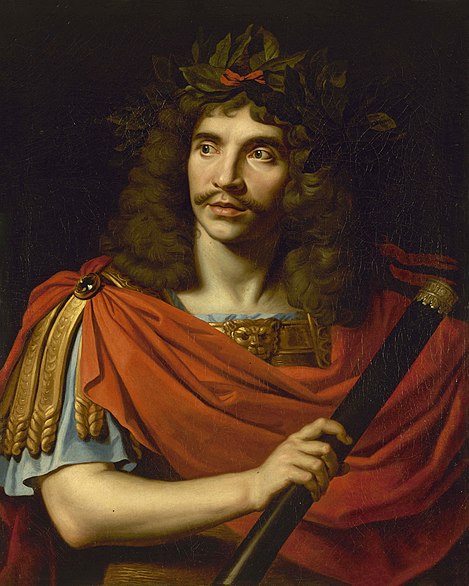
Notable bearers include: American French-born Explorer, Jean-Baptiste Charbonneau (1805-1866); this was also the given name of Molière, born Jean-Baptiste Poquelin (1622-1673).

Other forms of the name include:

  • Johann Baptist (German)
  • Giambattista (Italian)
  • Gianbattista (Italian)
  • Giovanbattista (Italian)

Eulalia, Eulalie

Gender: Feminine
Origin: Greek Ευλαλια
Meaning: “to talk well.”
Eng (yoo-LAY-lee-uh; yoo-LAY-lee); Fre (eu-lah-LEE); Cat (oo-LOW-lee-ah); Sp (oo-LAH-lee-ah)

The name is composed of the Greek elements, eu ευ (good) and laleo λαλεω (talk).

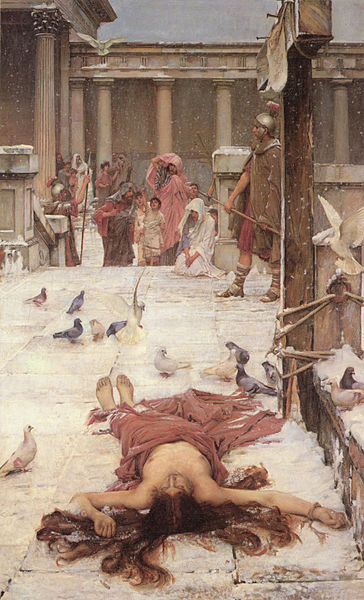
The name was borne by two different early Spanish saints, both of whom are believed to be one and the same person. St. Eulalia of Mérida was a 3rd-century teenage Roman girl who refused to give up her faith, she was subsequently tortured and crucified, legend has it that when she was cut down from her cross, a layer of snow fell to cover her nakedness. The story was the subject of the famous painting by John William Waterhouse, (above).

In the English-speaking world, especially in the United States, Eulalia and her other forms appeared in the U.S. top 1000 from the 19th-century till the 1930s. She never ranked high, the highest only being # 365 in 1893. Her French form of Eulalie also experienced some usage but fell out of the top 1000 by 1900. The highest Eulalie ever ranked in the United States was at # 687 in 1893. Eulalie’s introduction into the United States may have had something to do with Edgar Allan Poe’s 1845 poem, Eulalie.

Eulalie is one of Poe’s less Gothic works, it recounts how a widower once again finds happiness in a girl named Eulalie.

Two famous American bearers were Silent film actress, Eulalie Jensen (1884-1952), and  Eulalie Spence (1894-1981) an African-American play-write of West Indian extraction.

Further up in North America, the name was borne by French-Canadian Blessed and religious foundress, Eulalie Durocher, aka, Soeur Marie Rose Durocher, who is credited for finding the Order of the Holy Name of Jesus and Mary (1811-1849).

In French naming history, Eulalie appears in a famous folktale, Jean, the Soldier, and Eulalie, the Devil’s Daughter.

Notable French bearers are numerous, but one of the most famous has to be an early female journalist by the name of Eulalie de Senancour (1791-1896).

In the United States, Eula was probably the most common form. She consistently remained within  the U.S. top 1000 between 1880 and 1960. The highest she ever ranked was at # 122 in 1908.

As of 2009, its French form of Eulalie was the 472nd most popular female name in France.

Other forms of the name include:

  • Olaria (Aragonese)
  • Olarieta (Aragonese)
  • Olalia (Asturian)
  • Olaya (Asturian)
  • Santolaya (Asturian: literally means, Saint Eulalia, used in reference to St. Eulalia very much in the same way Santiago and Santana)
  • Eulàlia (Catalan)
  • Eulalia (Dutch/English/German/Italian/Latin/Polish/Spanish)
  • Eula (English)
  • Eulalie (English/French)
  • Lalia (English)
  • Aulaire (French: archaic)
  • Evlalia (Greek)
  • Eulália (Hungarian/Portuguese/Slovak)
  • Aulazia (Occitanian/Provençal)
  • Olalla (Spanish)
Eulalia is also the name of a type of grass.
A common French and English short form is Lalie.

Colombe

Gender: Feminine
Origin: French
Meaning: “dove.”
Pronunciation

The name comes directly from the French word for dove and despite it being a modern word, it is an ancient French female name.

It was borne by a 3rd-century Christian martyr and saint who had been killed in Sens.

Traditionally, the name was always more common in Corsica, but has recently risen in popularity in other parts of France. As of 2009, she was the 495th most popular female name in France.

Sainte-Colombe is a term in French used to describe the Holy Spirit.

An obscure masculine form is Colomb.

Theophilus

Gender: Masculine
Origin: Greek Θεοφιλος
Meaning: “love of God.”
Eng (thee-AHF-ə-ləs); Fre (TAY-o-FEEL); Grk (THAY-oh-FEE-lose)

The name is derived from a theophoric Greek name composed of the elements, theos θεος (god) and philos φιλος (love), hence: “love of God.” It is the Greek cognate to the Latin, Amadeus.

It was a common name in pre-Christian Greece and appears in the New Testament as the name of a person that the Gospel of Luke and the Acts of the Apostles address. It is argued that this was actually a title used to refer to Christian followers in general, others argue that it was indeed the name of one actual person. As to who exactly Theophilus was is shrouded in mystery. Many different Biblical scholars have their own ideas and common theories include that he was either a Roman official, or Theophilus ben Ananus, who was the High Priest at the Temple of Jerusalem during that time, or even the lawyer of St. Paul.

The name was borne by several Byzantine personages, including an Emperor, a famous astrologer and a scientist.

In the English-speaking world, the name was used in Medieval England, it was borne by Theophilus Presbyter (1072-1125), a Benedictine monk a wrote a medieval guide to several medias of art. Theophilus also experienced a vogue among the Puritans of the 17th-century.

As of 2009, its French form of Théophile was the 343rd most popular male name.

Other forms of the name include:

  • Teofil Теофил (Bulgarian/Hungarian/Polish/Russian)
  • Theophilus (Dutch/English/Latin)
  • Théophile (French)
  • Theofil (German)
  • Theophilos (Greek)
  • Teofilo (Italian)
  • Teófilo (Portuguese)
  • Teofilus (Scandinavian)
  • Teófilo (Spanish)
  • Feófil Фео́філ (Russian/Ukrainian)
Feminine forms are Theophila and Teofila.