Perpetua

  • Origin: Late Latin
  • Gender: Female
  • Meaning: “perpetual.”
  • Eng pron (per-PET-choo-ah)

The name is derived from the Latin perpetuus, meaning “continous; perpetual.” It was borne by a 3rd-century Christian matyr and saint, the companion of St. Felicity and it was also the name of the sister of St. Augustine of Hippo.

Perpetua and its various forms have been in sporadic use throughout the Catholic world. In Italy, it became synonymous with a priest’s housekeeper. This is due to the eponymous character in Alessandro Manzoni’s 19th-century novel, “The Betrothed.

It experienced sporadic use in England in the 1920s after the release of the now lost 1922 film, Perpetua also known as Love’s Boomerang.

It has recently appeared in English literature as the name of minor characters in Bridget Jones’s Diary (Helen Fielding), and in the Harry Potter series (J.K. Rowling).

It was borne by Scottish landscape painter, Perpetua Pope (1916-2013).

It is the name of Cape Perpetua Oregon which was named for St. Perpetua as well as a typeface.

It’s designated name-day is February 1, March 6th and March 7th.

Forms & Usages

  • Perpetua (Basque, Croatian, Dutch, Galician, German, Italian, Latvian, Lithuanian, Polish, Provençal, Romanian, Spanish)
  • Perpètua (Catalan)
  • Perpétue, Perpétué, Perpetue (French)
  • Perpétua (Hungarian, Portuguese)
  • Perpetuya Перпетуя (Russian)

English short forms include: Perp, Perpie, Perpy, and Petty.

Masculine forms include

  • Perpeta (Basque)
  • Perpetu (Catalan)
  • Perpet (French, Polish)
  • Perpetuo (Italian, Spanish)
  • Perpète (French)
  • Perpetuus (Late Latin)
  • Perpetuüs (German)

Sources

Magdiel

800px-Hod_Hasjaron-a011

Magdiel Garden Hod Hasharon, Israel


  • Origin: Hebrew
  • Meaning: uncertain
  • Gender: Masculine
  • Eng (MAG-dee-el); SP (MAHG-dee-EL)

The name is mentioned 2 times in the Old Testament as the name of one of the Dukes of Edom in Genesis 36:43 and the name of a descendant of Esau in Chronicles 1:54.

According to Hitchcock’s Name Dictionary it means “declaring God; chosen fruit of God,” in Hebrew. It may also derive from the Hebrew Meged El (oil of God).

In modern Jewish history, it is the name of one of the four original communities, established by Holocaust survivors in the 1940s that formed the city of Hod Hasharon.

In recent years, the name has come into common use in Latin American countries.


Other forms include:

  • Mägdiheel (Bavarian)
  • Magadiil Магедиил (Bulgarian)
  • Magdiél (Hungarian)
  • Magdielis (Lithuanian)
  • Makatiere (Maori)
  • Magdiil Магдиил (Russian)

Sources

Zadoc, Zadok

Cornelis_de_Vos_-_The_Anointing_of_Solomon

  • Origin: Hebrew צָדוֹק
  • Meaning: “righteous; just.”
  • Gender: masculine
  • Eng (ZAD-uk)

The name is from the Hebrew meaning “just; righteous.” It is borne by 5 characters in the Old Testament, most notably Zadok the High Priest during the reign of King David & King Solomon.

The name has always been used among Jews but came into use among Protestant Christians mainly in the 18th-century.

Zadok the Priest is a hymn written by Handel which was first played at King George II’s coronation and has been played at every coronation in the British monarchy since.


Other forms include:

  • Zädock (Bavarian German)
  • Sadok Садок (Bulgarian, Croatian, Polish, Russian, Scandinavian)
  • Sádoch, Sádok (Czech)
  • Zadok (Dutch, Finnish, German, English, Scandinavian)
  • Sadoq (French)
  • Sádók (Hungarian)
  • Sadoc (Italian, Latin, Spanish)
  • Haroko (Maori)
  • Tzadok (Modern Hebrew)
  • Zadoque (Portuguese)
  • Ţadoc (Romanian)
  • Cadok Цадок (Ukrainian)

Sources

Uziel, Uzziel

Uzziel


  • Origin: Hebrew
  • Meaning: “God is my strength; God is my power.”
  • Gender: masculine
  • (uh-ZYE-el; OOZ-ee-el)

The name is composed of the Hebrew עֹז (‘oz) meaning “strength, power” and אֵל (‘el) meaning “God.”

It is borne by a few minor characters in the Bible, including the grandson of Levi and the father of Mishael, Elzaphan, and Zithri, the uncle of Aaron, Moses & Miriam.

In the apocryphal Enoch 3, Uziel is the name of a fallen archangel, more often referred to as Uzza. The same archangel is referenced as such in some versions of the kabbalistic text, Sefer Raziel HaMalakh, Johannes Trithemius’ Steganographia; and in John Milton’s Paradise Lost.

In Talmudic Jewish tradition, it was the name of the father of Jonathan Ben Uzziel, one of the 80 tannaim who studied under Hillel the Elder.

Among Medieval Jews, the name was rare among Ashkenazi Jews but very common among Sephardis & Middle Eastern Jews.

In the English-speaking world, the name is seldom used but has recently become common in Spanish-speaking countries.

A recent notable bearer was Uziel “Uzi” Gal (born Gotthard Glas) (1923-2002), a German-born Israeli gun designer best known for his invention of the “uzi.”


Other forms include:

  • Uciel (Albanian)
  • Usiheel (Bavarian German)
  • Oziil Озиил (Bulgarian)
  • Oziel Οζιηλ (Biblical Greek)
  • Ozihel (Biblical Latin)
  • Uziel (Croatian, Czech, French, Italian, Modern Hebrew, Portuguese, Romanian, Spanish)
  • Uzziël (Dutch)
  • Usiel (Finnish, French, German)
  • Huziel, Ouzziel (French)
  • Huzziél (Hungarian)
  • Uzielis (Lithuanian)
  • Utiere (Maori)
  • Ussiel (Norwegian, Swedish)
  • Uziil Узиил (Russian)
  • Ziel (Yiddish)

Sources

Rufus, Rufina

220px-William_II_of_England

King William II


The name comes directly from the Latin word meaning “red-headed.” It was a common Roman cognomen and was borne by a man who is referenced in Romans 16:13 and another who is referenced in Mark 15:21. According to Eastern Orthodox tradition, the aforementioned are one and the same person and is venerated as one of the Seventy Disciples mentioned in the Gospel of Luke. He is also popularly believed to be the son of Simon of Cyrene.

The name is borne by several other saints.

It was the nickname of King William II of England, known as William Rufus III on account of his red-hair.

The name appeared in the U.S. Top 100 2 times, in 1880 & 1882, peaking at #88 in 1880. It remained in the Top 1000 1988.

In England & Wales, the name was the 264th Most Popular Male Name in 2018.

Rufus is used in Dutch, Czech, English, Finnish, German, Latvian, Polish & the Scandinavian languages.

Other forms include:

  • Rufit (Albanian)
  • R’owp’osy Ռուփոսյ (Armenian)
  • Rufess (Bavarian)
  • Ruf Руф (Bulgarian, Catalan, French, Romanian, Russian, Serbian, Ukrainian)
  • Roufaous (Coptic)
  • Rufinus (Dutch, German, Latin, Scandinavian)
  • Ruffe (Finnish)
  • Ruuhva, Ruuhvus (Finnish)
  • Ryffe, Ryyfys (Finnish)
  • Rufin (French, German, Polish)
  • Rhouphon Ροῦφον (Greek)
  • Rúfusz (Hungarian)
  • Ruffo (Italian)
  • Rufillo, Ruffillo (Italian)
  • Rufino (Italian, Portuguese, Spanish)
  • Rufo (Italian, Portuguese, Spanish)
  • Rufinus (Latin)
  • Rufas (Lithuanian)
  • Rupuha (Maori)
  • Rúfus (Slovak)

150px-Santa_RufinaIts feminine form of Rufina was borne by a couple of early saints, one of whom was from Seville, she was a pottery maker who refused to sell her wares for a pagan festival.

Feminine forms include

  • Roufina (Coptic)
  • Rufe (French)
  • Rufine (French)
  • Rufina Руфина (Dutch, English, German, Hungarian, Italian, Polish, Portuguese, Romanian, Russian, Ukrainian, Scandinavian, Spanish)
  • Rufa (Italian)
  • Rufilla (Italian)

Sources

Siena, Sienna

Sienna, SienaThis name has somewhat of a complicated history, though it seems like a modern place-name, it has actually had a long history of use.

Sienna is an alternate spelling for an Italian city in Tuscany. The name itself is believed to be from Saina, which was the name of an Etruscan tribe that inhabited the area prior to the Romans. There is also a legend that it was named for a son of Romulus who was named Senius. The name has also been linked with the Latin senex (old) and the Latin verb, seneo (to be old).

As the name of a colour, it takes its name from the city, where the popular pigment used among artist was first produced. Its use as a colour name in the English language first appears in 1760.

Now as a given-name, this is where things get complicated. Its earliest use appears in the 18th-century, in Spain, Quebec and England. In the case of Spain and Quebec, it was most likely used in honour of St. Catherine of Sienna. In the English examples, it may have been used in reference to the colour. The British have a long history of using names of places and words since the 16th-century.

By the early 1800s, Sienna was a very popular middle name used in Bavaria and Ireland, attached to the name Catherine, so in these cases it was no doubt used in reference to St. Catherine of Sienna in devoutly Catholic pockets of Europe.

Sienna is also the name of several places throughout Poland and occasionally occurs as a surname. In this case, the name is derived from the Polish word, siano (hay).

Sienna currently ranks in the Top 100 of several countries. Its rankings are as follows:

  • #27 (Australia, NSW, 2017)
  • #28 (England/Wales, 2016)
  • #32 (New Zealand, 2016)
  • #68 (Scotland, 2016)
  • #71 (Ireland, 2016)
  • #236 (United States, 2016)
  • #354 (Netherlands, 2016)
  • #625 (Siena, United States, 2016)

A Dutch offshoot is Siënna.

A notable bearer is actress, Sienna Miller (b.1981).

Sources

January Names

JanuaryI thought at the beginning of each month, I would post a list of names associated with the that particular month. Below is a list of names I have previously written about associated with January


Agnes: January 21st is the feast of St. Agnes and according to folklore, on January 20th, which John Keats’ was inspired to write a poem about, unmarried girls are supposed to see a future glimpse of their husband in their dreams the night before, provided they do not eat that day.

Frost: January is often associated with cold temperatures and frosty weather. Here are some name associated with frost

Sarma, Sarmite: These 2 Latvian lovelies come directly from the Latvian word for hoarfrost. The latter is pronounced sar-MEE-teh.

Kirsi: This Finnish female name is associated with the cherry fruit but also means “frost” in Finnish.

Other names that mean “frost” or words for frost from other languages include:

Male

  • Antizgar (Basque)
  • Dér (Hungarian)
  • Hall (Estonian)
  • Reif (German)
  • Rijp (Dutch)
  • Rio (Manx)
  • Šerkšnas (Lithuanian)
  • Sioc (Gaelic)
  • Szron (Polish, SHRONE)
  • Barrug (Welsh)

Female

  • Blancada (Occitanian)
  • Brina (Italian)
  • Bryma (Albanian)
  • Chelata (Aragonese)
  • Geada (Portuguese)
  • Gelada (Catalan)
  • Eláda (Guarani)
  • Escarcha (Spanish)
  • Jinovatka (Czech)
  • Pruina (Latin)
  • Salna (Latvian)
  • Slana (Slovenian)

Snow: Also one of the snowiest months of the year, some names that mean “snow.”

Other names meaning snow that I have yet to write about include

Male

  • Erc’h (Breton)
  • Jur (Chuvash)
  • Kar (Turkish)
  • Lov (Erzya)
  • Nix (Latin)
  • Yas (Navajo)

Female

  • Dëbora (Albanian)
  • Fiòca (Piedmontese)
  • Kavi (Faroese)
  • Neige (French)
  • Neva (Neapolitan)
  • Neve (Galician/Italian)
  • Parsla (Latvian)

Ice, the following are names that mean “ice”

Male

  • Buz (Turkish)
  • Izotz (Basque)
  • Jég (Hungarian)
  • Led (Czech, Serbo-Croatian)
  • Păr (Chuvash)
  • Siku (Inupiak)
  • Ledas (Lithuanian)
  • Ledus (Latvian)
  • Tin (Navajo)
  • Xeo (Galician)
  • Ysbran

Female

  • Cetl (Nahuatl)
  • (Welsh)
  • Ma’ome (Cheyenne)

Epiphany: January 6th officially marks the end of the Christmas season, when the Magi finally were able to locate the Christ child and bestow gifts upon him.

Garnet is the birthstone of January. Below is a list of words from other languages that mean “garnet” and would make awesome names

  • Gernete (Anglo-Norman)
  • Granate (Asturian/Basque/Spanish)
  • Grenat (French)
  • Gairnéad (Gaelic)
  • Granato (Italian)
  • Granatas (Lithuanian)
  • Granada (Portuguese)

Likewise, Carnation is the birthflower, its Latin name is Dianthus, which was a name before it was a flower. Below is a list of words from other languages that mean “carnation” and would make awesome names. Also mixed in are some names with the meaning of “carnation” or just have carnation associations

  • Diantha
  • Clavel (Asturian/Spanish)
  • Krabelin (Basque)
  • Clavellina (Catalan)
  • Havenellike (Danish)
  • Caraveleira (Galician)
  • Landnelke (German)
  • Nellika (Icelandic)
  • Caxtillān (Nahuatl)
  • Penigan (Welsh)

And for boys, other than Dianthus, there is the Italian Garafano

The Chinese plum is the flower emblam for Spring, in Chinese it is called Meihua and its Japanese name is Ume. In Korean it is called Maesil and Vietnamese it is called Mai.

In Japan, the flower emblem for January is the Camellia

Another January birthflower is the snowdrop

  1. Çeçpĕl (Chuvash)
  2. Sněženka (Czech)
  3. Perce-Neige (French)
  4. Endzela (Georgian)
  5. Bucaneve (Italian)
  6. Snieguole (Lithuanian)
  7. Śnieżyczka (Polish)
  8. Sněgulka (Sorbian)
  9. Kardelen (Turkish)
  10. Eirlys (Welsh)

The Zodiac signs associated with January are Capricorn and Aquarius. Capricorn means goat and Aquarius waterbearer. Some names that mean both

The ruling planet of Capricorn and Aquarius is Saturn, so Saturnina or Saturnin/Saturnino are also names to consider.

Finally, here are names that mean “January,” some come directly from words, others are a translation of the Latin male name Januarius.

Male

  • Chinero (Aragonese)
  • Xineru (Asturian)
  • Urtarril (Basque)
  • Genver (Breton/Cornish)
  • Gener (Catalan)
  • Kărlach (Chuvash)
  • Ghjennaghju (Corsican)
  • Leden (Czech)
  • Znêr (Emiliano-Romagnolo)
  • Janvier (French)
  • Zenâr (Friulian)
  • Xaneiro (Galician)
  • Gennaro (Italian)
  • Jenero (Ladino)
  • Januarius (Latin)
  • Sausis (Latvian)
  • Jannar (Maltese)
  • Genièr (Occitanian)
  • Yenner (Pennsylviana German)
  • Janeiro (Portuguese)
  • Bennàlzu (Sardinian)
  • Enero (Spanish)
  • Ocak (Turkish)
  • Lonawr (Welsh)

Female

  • Jenna (Bavarian)
  • January (English)
  • Tammikuu (Finnish)
  • Janvière (French)
  • Gennara (Italian)
  • Januaria (Latin)
  • Zennâ (Ligurian)

Andrew

Gender: Masculine
Origin: Greek
Meaning: “of man, belonging to man.”

The name is derived from the Greek Ανδρεασ (Andreas), which is derived from the Greek word, ανδροσ (andros), a genitive form of the word, ανηρ (aner), meaning, “man.” Hence, it would rougly translate to mean “belonging to man” or “of man.”

It was popularized by one of the twelve Apostles, who is now considered a popular Christian saint. It is suggested that Andreas was a nickname given to him, or possibly just a direct Greek translation of a Hebrew name that had a similar meaning, now lost to history.

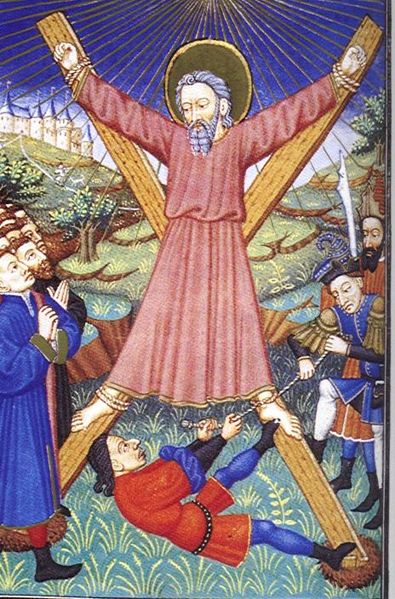
Saint Andrew is considered the patron saint of Scotland, Russia, Greece and Romania. According to legend, he was martyred around the Black sea on an X shaped cross. His designated name-day is November 30.

The name has remained a staple in the U.S. top 100. As of 2011, he was the 16th most popular male name. His rankings and his various incarnations in other countries are as follows:

  • # 1 (Andrei, Romania, 2009)
  • # 3 (Andrea, Italy, 2010)
  • # 3 (Andrea, Italian-speaking, Switzerland, 2010)
  • # 6 (Andreas, Estonia, 2011)
  • # 8 (Andria, Georgia, 2011)
  • # 8 (Andrej, Serbia, 2011)
  • # 9 (Andrey, Russia BabyCenter, 2011)
  • # 10 (Ondřej, Czech Republic, 2011)
  • # 10 (Andre/Andrew/Andrea/Andrei, Malta, 2011)
  • # 12 (Andreas, Norway, 2011)
  • # 25 (András, Hungary, 2011)
  • # 28 (Andreas, Denmark, 2011)
  • # 35 (Scotland, 2010)
  • # 38 (Canada, BC, 2010)
  • # 39 (Andrej, Croatia, 2009)
  • # 41 (Andraž, Slovenia, 2010)
  • # 46 (Andreas, Austria, 2010)
  • # 57 (Andrija, Croatia, 2009)
  • # 58 (Ireland, 2010)
  • # 61 (Andres, Spain, 2010)
  • # 68 (Australia, NSW, 2011)
  • # 70 (Northern Ireland, 2010)
  • # 92 (Andrej, Slovenia, 2010)
  • # 98 (Andro, Croatia, 2009)
  • # 98 (Anders, Norway, 2011)
  • # 176 (Andres, United States, 2011)
  • # 241 (André, United States, 2011)
  • # 244 (Andrea, France, 2010)
  • # 388 (Andreas, France, 2010)
  • # 950 (Anders, United States, 2011)

Other forms are as follows (listed alphabetically by linguistic origin).

  • Andrees/Andries (Afrikaans/Old Dutch)
  • Andrea (Albanian/Italian)
  • Ndreu (Albanian)
  • Andreyas (Amharic)
  • Andraws/Andraous اندراوس (Arabic/Coptic/Lebanese/Syriac)
  • Andreas (Armenian/Czech/Estonian/German/Greek/Hungarian/Slovak/Scandinavian)
  • Andresu (Asturian)
  • Ander (Basque)
  • Anderl (Baverian)
  • Andrièu (Bearnais/Occitanian/Provencal)
  • Andrivet (Bearnais)
  • Andrej Андрэй (Belarusian)
  • Andreo/Andrev (Breton)
  • Andrei/Andrey Андрей (Bulgarian/Old Church Slavonic/Romanian/Russian/)
  • Andrejko (Bulgarian)
  • Andreu (Catalan/Aragonese)
  • Andria ანდრია (Corsican/Georgian/Sardinian)
  • Andrej (Croatian/Czech/Slovak/Slovene)
  • Andrija (Croatian/Serbian)
  • Andro/Jandre (Croatian)
  • Ondřej (Czech)
  • Anders (Danish/Norwegian/Swedish)
  • Dres/Dreves/Drevs (Danish)
  • Andries/Adrees (Dutch)
  • Andres (Estonian)
  • Ando/Andre/Andro/Andrus/Andu/Andi/Anti (Estonian)
  • Andras/Andrias (Faroese)
  • Andriou (Fijian)
  • Antero/Tero (Finnish)
  • Antti (Finnish)
  • Andris/Driess (Frisian)
  • André (French/Galician/Ladino/Portuguese)
  • Dria (Genevoese: Dialectical Italian form)
  • Anda (German: dialectical form, Northern Austria)
  • Anekelea (Hawaiian)
  • Andor/András/Endre (Hungarian)
  • Andris (Hungarian/Latvian)
  • Andrés (Icelandic/Spanish)
  • Aindréas/Aindriú (Irish)
  • Andrejs (Latvian)
  • Andriejus/Andrius (Lithuanian)
  • Andrija/Indri (Maltese)
  • Anaru (Maori)
  • Dreesi (Old Swiss German: Basel dialect)
  • Andrzej/Jędrzej (Polish: latter is a very old form)
  • Drewes (Plattdeutsch)
  • Andrea/Andreia/Andri/Andrin/Andriu (Romansch)
  • Ándá/Ándaras/Ándde/Ánde (Saami)
  • Aindrea/Aindreas/Anndra (Scottish)
  • Ondrej (Slovak)
  • Andraž (Slovene)
  • Handrij (Sorbian)
  • Andalea (Swahili)
  • Andriy Андрiй (Ukrainian)
  • Andras (Welsh)

Belorusian diminutives are: Andros, Andruk and Andrus. Czech masculine diminutive forms are Andy, Ondra, Ondrášek, Ondrejko, Ondrík, Ondřejek and Ondříček. French diminutive forms are: Dédé, Ti-Dré, Andi, DéaAndy. A German diminutive form is Andy/Andi and English are Andi, Andie, Andy, Dre and Drew. A Hungarian diminutive is Bandi and Polish diminutive forms are Andrzejek, Jędrek and Jędruś. Scotch diminutive form is Dand.

Note: Andrea is a common feminine form in most European countries outside of Italy and Albania, particularly in Germany and the Anglo-phone world. Whether this is a borrowing from the Italian and was changed, or a coincidental evolution, is unknown. What is known is that Andrea has been used in England as a feminine form since the 17th-century.

Feminine forms are (listed alphabetically by linguistic origin)

  • Andere (Basque)
  • Andrea (Basque/Breton/English/German/Spanish)
  • Andriva/Andriveta (Bearnais/Occitanian)
  • Andersine (Danish)
  • Andrine (Danish/Norwegian)
  • Drine (Danish)
  • Dreesje (Dutch)
  • Andrée (French)
  • Aanasi/Aanarsi/Aanta/Aantariarsi (Greenlandic)
  • Andreina (Italian)
  • Andzeja/Ondzeja (Polish: obscure)
  • Andréia (Portuguese: Brazilian)
  • Andreia (Portuguese: European)
  • Andriano (Provencal)
  • Andreea (Romanian)
  • Andrina (Romansch)
  • Andrijana (Serbo-Croatian)
  • Andreja (Slovene)
  • Andrietta/Andriette (Swedish/Danish: very rare)

Czech diminutive forms are: Adrejka, Andruška, Andra, Rea. English diminutive forms are Andi, Andy, Annie and Drea.

Joseph, Josephine

Gender: Masculine
Origin: Hebrew יוֹסֵף
Meaning: “He shall add; God shall add.”
Eng (JOH-sef)

The name is derived from the Biblical Hebrew male name, יוֹסֵף (Yosef).

In the Old Testament, the name is borne by the first son of Rachel and the eleventh son of Jacob. After being sold off as a slave by his brothers, Joseph ended up in Egypt, later becoming an important advisor to the pharoah.

In the New Testament, it is borne by the husband of the Virgin Mary. Known as St. Joseph among Catholics, he is a particularly revered saint among Italian Catholics, considered the patron saint of stepfathers and carpenters.

Another important character with this name in the New Testament, is Joseph of Arimathea, a disciple of Christ and also the man who provided a burial spot for Jesus after his death.

The name has always been very prevalent throughout Europe and the Middle East.

In the United States, its popularity can be due to several factors: it was common among both various Christian and Jewish immigrants. The name is even very common among Muslim families.

Currently, Joseph is the 20th most popular male name in the United States, (2010). In fact, Joseph has never ranked outside of the Top 20. Common English nicknames are Joe and Joey. His rankings in other countries are as follows:

  • # 1 (Yusif, Azerbaijan, 2012)
  • # 1 (Yusuf, Turkey, 2010)
  • # 2 (Yusuf, Tajikistan, 2009)
  • # 2 (Youssef, Tunisia)
  • # 3 (Yousef, Arab-World, 2011)
  • # 4 (José, Equitorial Guinea, 2011)
  • # 5 (Joosep, Estonia, 2011)
  • # 5 (Isle of Man, 2009)
  • # 5 (Yousouf, Israel, among Muslim and Christian boys, 2010)
  • # 5 (José, Philippines, 2011)
  • # 5 (Jose, Puerto Rico, 2010)
  • # 7 (Youssef, Morocco)
  • # 8 (Josip, Croatia, 2010)
  • # 8 (Yosef, Israel, among Druze boys, 2004)
  • # 9 (Yosef, Israel, among Jewish boys, 2010)
  • # 14 (Giuseppe, Italy, 2010)
  • # 15 (England/Wales, 2010)
  • # 16 (Joseph/Giuseppe, Malta, 2010)
  • # 29 (Northern Ireland, 2010)
  • # 36 (New Zealand, 2010)
  • # 37 (Ireland, 2010)
  • # 41 (Australia, NSW, 2010)
  • # 41 (József, Hungary, 2010)
  • # 43 (José, Spain, 2010)
  • # 44 (Scotland, 2010)
  • # 51 (José, United States, 2010)
  • # 62 (Josef, Sweden, 2010)
  • # 68 (Josip, Bosnia & Herzegovina, 2010)
  • # 68 (Josep, Catalonia, 2010)
  • # 71 (José, Catalonia, 2010)
  • # 74 (Canada, BC, 2010)
  • # 149 (France, 2009)

Other forms of the name include:

  • Josef (Afrikaans)
  • Isuf (Albanian)
  • Jozef/Jozif (Albanian: Zef is a diminutive form)
  • Sepp (Alsatian)
  • Hovsep Հովսեփ (Armenian)
  • Yūsuf/Youssef/Yussef يوسف, (Arabic)
  • Yusif/Yusuf/Usub (Azeri)
  • Joseba/Josepe (Basque)
  • Joseph ДЖО́ЗЕФ (Belarusian/English/German/French)
  • Josip (Bosnian/Croatian: Joso, Jozo and Joško are diminutive forms)
  • Jusuf (Bosnian)
  • Yosif Йосиф (Bulgarian)
  • Josep (Catalan, Pep is a common diminutive form)
  • Ghjaseppu (Corsican)
  • Jozèf (Creole/Haitian)
  • Josef (Czech)
  • Joep (Dutch: originally a diminutive form, now used as an independent given name)
  • Joop (Dutch: originally a diminutive form, used as an independent given name)
  • Joost (Dutch: originally a diminutive form, now used as an independent given name)
  • Jozef (Dutch)
  • Joseph (English/French/German)
  • Joséphin (French: obscure)
  • Joosep (Estonian)
  • Jósef (Faroese)
  • Jooseppi (Finnish)
  • Juuso (Finnish)
  • Bepùt/Bepi/Bepo (Fruilian)
  • Xosé (Galician)
  • Ioseb იოსებ (Georgian)
  • Ioses/Joses Ιωσης (Greek: Biblical)
  • Iōséph Ἰωσήφ/Iosepos, Iosipos Ιώσηπος (Greek: Modern)
  • Yosef יוסף (Hebrew)
  • Isuppu (Hindi)
  • József (Hungarian: Jóska is the diminutive form)
  • Yusuf/Yusup/Ucup (Indonesian)
  • Giuseppe (Italian: diminutive forms are Beppe, Peppe and Peppino)
  • Giuseppino (Italian)
  • Pino (Italian: diminutive form now used as an independent given name)
  • Seosamh (Irish-Gaelic)
  • Ujöp (Ladino)
  • Iosephus/Josephus (Latin)
  • Jāzeps (Latvian)
  • Gioxeppe (Ligurian)
  • Joep (Limburgish)
  • Juozapas (Lithuanian)
  • Juozas (Lithuanian)
  • Giüsèpp (Lombard: Pèpp and Bèpp are diminutive forms)
  • Ousep/Ousef/Yosef (Malayalam)
  • Ouseppachen/Kochaappu (Malayalam)
  • Ġużeppi (Maltese: Ġużi, Ġuż, Peppi, Pepp, Żeppi and Żepp are diminutives)
  • Hohepa (Maori)
  • Jupp (Moselfrench)
  • Josef (Norwegian)
  • Josèp (Occitanian)
  • Iosifu Іѡсифъ (Old Church Slavonic)
  • Yūsuf/Youssef/Yussef يوسف, (Persian)
  • Joosef (Plattdeutsch)
  • Józef (Polish)
  • Gèseppe (Puglian)
  • Jüppes/Jüppke (Ripoarisch)
  • Iosif (Romanian)
  • Gisep (Romansch)
  • Iosif/Osip Иосиф (Russian)
  • Jisepu (Sardinian)
  • Josif Јосиф (Serbian)
  • Seòsaidh (Scots-Gaelic)
  • Giuseppi (Sicilian)
  • U’Seppi (Sicilian)
  • Zefel/ Zeflik (Silesian)
  • Jozef (Slovakian)
  • Jožef/Jože (Slovene)
  • Sefer (Swabian)
  • José (Spanish/Portuguese: Pepe and Pepito are the diminutive forms)
  • Yusup/Usup/Ucup (Sudanese)
  • Yoseppu (Tamil)
  • Yusuf (Turkish)
  • Yosyp (Ukrainian)
  • Josep (Valencian)
  • Juxepe (Venetian: diminutives are Bepi and Bepin)
  • Joseff (Welsh)
  • Yissl/Jayzl/Yussel (Yiddish)

Bavarian diminutive forms are Pepi, Perperl, SeppSeppiSeppl and Söpp.

Other German diminutives include: Seb, Seffi and Beppal is a Swiss-German diminutive form.

A Rheinish diminutive is Jupp.

Czech diminutives are: Pepík, Pepek, Pepan and Pepin.

Dutch short forms are Jef, Zef and Jos.

A common Hebrew short form is Yosi.

Italian diminutives and its dialectical forms include: Scepp (Calabrian); Pepp’, Pè, Peppiniéllo, Peppì, Peppinié (Campanese); Gioxe, Bepi, Bepin (Ligurian); Gepe and Pinin (Piedmontese); Seppud, Bapèpp, Peppo, Peppin, G’sip, Giusè, Pinucc, Peppon, ‘Mbà Peppe and P’pen (Puglian); Peppe and Pippo (Sicilian); Bepi and Beppe (Tuscan) and  Bepìn and Bepo (Venetian).

Standard Italian diminutives are: Bepi, Beppe, Beppino, Geppetto, Geppino, Peppe, Peppenuzzo, Peppi, Peppino, Peppinello, Peppiniello, Peppinetto, Peppo, Peppuccio, Pino Pinello, Pinuccio, Peppone, Pippo Puccio and Seppe.

Portuguese diminutives include: Zé, Zézinho, Zéca and Zécinha.

Slovakian diminutives are: Jožko, Jojo and Dodo.

Slovene short forms are: Pepe, Pepi and Pepc.

A common Spanish compound name is José Maria

Its more common feminine form of Josephine became prevalent throughout Europe at the end of the 18th-century and at the beginning of the 19th-century, due to the popularity of Josephine Bonaparte, (1763-1814), the wife of Napoleon.

Originally, Joséphine was a French diminutive form of Josèphe. Joséphine became the standard form around the same time Josephine Bonaparte became famous and has remained the more common French feminine form of Joseph, since.

Currently, in the United States, she is the 186th most popular female name, (2010). In the Netherlands, she was the 153rd most popular female name, (2010).

Other feminine forms include:

  • Jozefina (Albanian)
  • Josepa (Catalan: diminutive is Pepa)
  • Josipa (Croatian)
  • Josefa (Czech/Portuguese/Spanish)
  • Josefina (Czech)
  • Jozefien (Dutch)
  • Joetta (English)
  • Josephina/Josephine (English)
  • Josefiina (Finnish)
  • Josée (French)
  • Josèphe (French)
  • Joséphine (French)
  • Josette (French)
  • Josefine (German/Danish)
  • Josepha (German)
  • Iosiphina Ιωσηφίνα (Greek: Modern)
  • Jozefa (Hungarian/Slovene)
  • Jósefína (Icelandic)
  • Seosaimhín (Irish-Gaelic)
  • Giosetta (Italian)
  • Giuseppa/Giuseppina (Italian)
  • Iosephina (Latin)
  • Ġużeppa (Maltese: Ġuża is the diminutive form)
  • Józefa (Polish)
  • Józefina (Polish)
  • Jožefina/Jožefa/Joža (Slovene)
  • Jožica (Slovene: originally a diminutive form, now used as an independent given name)
  • Josefa/Josefina (Spanish)
  • Josefin/Josefine (Swedish)
  • Yosipa/Osipa/Yuzefa (Ukrainian)

Croatian diminutive form is Pepica.

Czech diminutives are: Pepa, Pepca, Pepicka, Pepina, Pepka, Jóža, Jožka and Jóžin.

Common English short forms for Josephine include: Fifi, Jo, Jody, Jojo, Josie and Posey.

Common French diminutive forms are Fifi and Fifette.

German diminutives are Pepa.

Italian diminutives are: Giusy, Pina, Pinuccia, Pinella and Pippa.

Slovene diminutive form is Pepca

Marie-Josée is a common French compound form.

Designated name-days are March 19 and May 1.

Sabina

Gender: Feminine
Origin: Latin Сабина
Meaning: “Sabine.”
Eng (suh-BEE-nah; suh-BYE-nah).

The name comes from a Roman cognomen, Sabinus, which was usually carried by people of Sabine origins. The Sabines were an ancient Italic people who lived in Central Italy and whose culture was eventually absorbed by the Romans.

The name was borne by an early Christian saint and martyr. It is also the name of a region in Italy which takes its name from the tribe.

It is also the name of a genus of tree, which has probably further popularized the name.

The name could also be from the Arabic, sometimes transliterated as Sabeen, meaning “follower of another religion” and was said to be a name given to the Prophet Mohammed by non-Muslims.

Currently, Sabina is the 13th most popular female name in Kazakhstan, (2010), while Sabine is the 392nd most popular in the Netherlands, (2010).

The name is used throughout Europe and Central Asia.

Other forms include:

  • Sabien (Dutch)
  • Sabine (German/French)
  • Szabina (Hungarian)
  • Sabeena (Indian)
  • Savina (Italian)

Masculine forms include:

  • Sabino (Italian)
  • Savino (Italian)
  • Sabinus (Latin)
  • Sabin (Romanian)

A Czech and Polish diminutive is Sabinka.