Anna, Anne

Gender: Feminine
Origin: Biblical Hebrew
Meaning: “grace.”
(ANN; AHN). (ANN-uh; AHN-nah). (HANN-uh; HAHN-nah)

Anne is possibly one of the quintessential classic English and French female names. Prior to the 18th-century, it seems that every other girl born in England was either named Anne, Jane or Mary. There were several British and French queens who bore this simplistic moniker, including the ill fated Anne Boleyn, the mother of Elizabeth I. The history of Anne is rather long and complicated.

It was foremost popularized through the cult of St. Anne, a legendary figure who was said to be the mother of the Virgin Mary and the grandmother of Christ.

In Brittany, the name became especially popular because it happened to coincide with the name of an ancient Celtic goddess, her cult being replaced by St. Anne’s. In fact, it was borne by one Breton Princess, Anne of Brittany.

The name was introduced into Britain by the French-Normans after the invasion in 1066. Previously, there had been a minor Saxon king named Anna, but in this case the name is related to the Saxon arn (eagle). Anna and Anne are still occasionally used as male given names in Friesland.

Other than the apocryphal saint, the name Anne can be traced directly back to the Bible. In the New Testament, it is the name of a prophetess who predicts the Crucifixion of Christ.

Anna (Αννα), is the Greek translation of the early Hebrew Channah חַנָּה, usually transliterated as Hannah, meaning “grace.”

Hannah is borne in the Old Testament by the faithful mother of the prophet, Samuel.

Hannah has always been popular among Jewish families, but was virtually unheard of among non-Jews before the Reformation, except in some cases where it may have been used as a diminutive form of Johanna, spelled Hanna.

It was the Byzantines who had introduced the Anna form to the world, making it popular throughout Eastern and Southern Europe. It was a very popular name among the Byzantine royal family and it was borne by the majestic Anna of Byzantium.

Anna may be the more melodic form of the bunch, but Anne’s minimalistic qualities are charming. Short, to the point, no frills. It’s not a bad name, though it does lack some spice, which is why parents are probably more attracted to its more exotic alternatives. In fact, Anne only comes in at # 608 in the top 1000 female names of the United States. It is safe to say, however, that she is very much loved in the middle name spot.

Anna is currently one of the most popular female names in Europe and abroad. Her rankings are as follows:

  • # 1 (Austria, 2010)
  • # 1 (Estonia, 2011)
  • # 2 (Hungary, 2010)
  • # 3 (Ana, Georgia, 2010)
  • # 3 (Iceland, 2010)
  • # 4 (Ana, Croatia, 2010)
  • # 4 (Czech Republic, 2010)
  • # 4 (Germany, 2011)
  • # 4 (Ukraine, 2010)
  • # 5 (Faroe Islands, 2010)
  • # 5 (Ana, Portugal, 2010)
  • # 6 (Armenia, 2010)
  • # 6 (Ane, Greenland, 2002-2003)
  • # 6 (Ana, Romania, 2009)
  • # 6 (Ana, Serbia, 2010)
  • # 7 (Latvia, 2011)
  • # 7 (Russia, 2011)
  • # 8 (German-speaking Switzerland, 2010)
  • # 9 (Denmark, 2011)
  • # 10 (Netherlands, 2010)
  • # 10 (Northern Ireland, 2010)
  • # 10 (Norway, 2010)
  • # 11 (Italy, 2010)
  • # 12 (Ireland, 2010)
  • # 14 (Poland, 2010)
  • # 16 (Catalonia, 2010)
  • # 26 (Canada, B.C., 2010)
  • # 28 (Italian-speaking Switzerland, 2010)
  • # 28 (United States, 2010)
  • # 29 (Scotland, 2010)
  • # 40 (France, 2009)
  • # 46 (French-speaking Switzerland, 2010)
  • # 53 (Belgium, 2009)
  • # 63 (England/Wales, 2010)
  • # 71 (Australia, 2010)
  • # 81 (Sweden, 2010)
  • # 83 (Spain, 2010)
Other forms of the name include:
  • Anneen (Afrikaans/Low German)
  • Anna Анна (Afrikaans/Albanian/Armenian/Breton/Bulgarian/Catalan/Corsican/Czech/Dutch/English/Estonian/Faroese/Finnish/French/Frisian/German/Greek/Hungarian/Icelandic/Italian/Latvian/Limburgish/Maltese/Polish/Russian/Ukrainian/Scandinavian/Slovak)
  • Anne (Basque/Dutch/English/French/Scandinavian)
  • Gánna Га́нна (Belarusian)
  • Annaig (Breton)
  • Annick (Breton)
  • Maina (Breton)
  • Mannaig (Breton)
  • Mannick (Breton)
  • Naig (Breton)
  • Ana Ана ანა (Bulgarian/Croatian/Galician/Georgian/Lombard/Macedonian/Portuguese/Romanian/Samogaitian/Serbian/Slovene/Spanish/Venetian)
  • Jana (Croatian/Ladino)
  • Aneta (Czech/Polish/Samogaitian/Slovak)
  • Aina (Catalan)
  • Anica (Croatian/Serbian/Slovene)
  • Ane (Danish)
  • Anika (Danish)
  • Anneke (Dutch)
  • Anneken (Dutch)
  • Annika (Dutch/Finnish/German/Latvian/Scandinavian)
  • Anka (Dutch/Frisian/German)
  • An(n)ke (Dutch/Frisian)
  • Anouk (Dutch/French)
  • Ans (Dutch)
  • Enneke (Dutch)
  • Enneken (Dutch)
  • Anita (English/German/Polish/Spanish)
  • Annette (English/French/German)
  • Anissa (English)
  • Annelle/Annella (Estonian)
  • Anete (Estonian/Latvian)
  • Anett (Estonian)
  • Anu (Estonian)
  • Anni (Finnish)
  • Annikki (Finnish)
  • Anniina (Finnish)
  • Annukka (Finnish)
  • Niina (Finnish)
  • Anaïs (French/Provençal)
  • Annouche (French)
  • Ninette (French)
  • Ninon (French)
  • Ninouk (French)
  • Anje (Frisian)
  • Ankea (Frisian)
  • Antje (Frisian)
  • Antjen (Frisian)
  • Anute (Fruilian)
  • Anano (Georgian)
  • Annchen (German)
  • Annel (German)
  • Annele (German/Latvian)
  • Anneli(e) (German/Finnish/Swedish)
  • Annet (German)
  • Anina (German)
  • Anja (German/Slovene)
  • Anouschka (German/Italian/Russian)
  • Annaki (Greek)
  • Annoula (Greek)
  • Noula (Greek)
  • Anikó (Hungarian)
  • Annuska (Hungarian)
  • Panni (Hungarian)
  • Áine (Irish)
  • Ánna (Irish)
  • Annarella (Italian)
  • Annella (Italian)
  • Annetta (Italian)
  • Annettina (Italian)
  • Nona (Italian/Romansch)
  • Ance (Latvian)
  • Annija (Latvian)
  • Anninya (Latvian)
  • Ona (Lithuanian)
  • Annamma (Malayalam)
  • Annam (Malayalam)
  • Onnee (Manx)
  • Âone (Norman)
  • Aenna/Aenne (Old High German)
  • Annehe (Old High German)
  • Änna/Änne (Old High German)
  • Neta (Piedmontese)
  • Noto (Piedmontese)
  • Anke (Plattdeutsch)
  • Anneke(n) (Plattdeutsch)
  • Analia (Romansch/Spanish)
  • Annina (Romansch)
  • Annotta (Romansch)
  • Anca (Romanian)
  • Anicuta (Romanian)
  • Anėta (Samogaitian)
  • Anėkė (Samogaitian)
  • Annag (Scottish)
  • Ghianna (Sicilian)
  • Janna (Sicilian)
  • Nanna (Sicilian)
  • Anniken (Swedish)
  • Ann (Welsh)
  • Nan (Welsh)
  • Nanno (Welsh)
  • Nanw (Welsh)
  • Aana (Wolof)
As for the Hannah forms

Hanna without an H is the prefered form on Continental Europe, usually pronounced (HAHN-nah) and in French like Anna. Hanna and Hanne (HAHN-neh) are also used as diminutive forms of Johanna/Johanne in the Netherlands, Sweden, Norway, Denmark and Germany. There is the Hungarian Hajna pronounced (HOY-no). The Czech/Slovak form of Hana nickname Hanka. There are the Yiddish forms of Heyna, Hayna, Hejna (all pronounced like HAY-nah) including the diminutive forms of HenaHende, Hendel and Henye.  The Polish diminutive form of Hania, which might make an interesting alternative to Anya or Hannah. Hannah, Hanna and Henna are all used in the Middle East.

Of course, how could we ever forget the popular diminutive forms of Annie and Nan.

Benedict, Benedikt

Gender: Masculine
Origin: Latin
Meaning: “blessed.”

The name comes directly from the Late Latin name Benedictus meaning “blessed.” The name was borne by a 6th-centuy Italian monk and saint who credited for being the founder of the Order of the Benedictines.

The name was very common throughout Medieval Europe, being borne by 16 popes, it was fairly popular in England, in the form of Bennett.

The name was also commonly used among German-Jews, being used as a cognate of the Hebrew male name Baruch בָּרוּךְ (blessed).

In the United States, the name became taboo to use due to its associations with Benedict Arnold (1741-1801) a famous American deserter and traitor to the British.

The name recently skyrocketed in Germany after the succession of the German born Pope Benedict XVI. It is currently the 93rd most popular male name in Germany, (2011). It is especially popular in Bavaria.

His rankings in other countries are as follows:

  • # 1 (Bence, Hungary, 2010)
  • # 32 (Benedek, Hungary, 2010)
  • # 294 (Benoît, France, 2009)

Other forms of the name include:

  • Benedikti (Albanian)
  • Benedet (Aragonese)
  • Benedictu (Asturian)
  • Benedita (Basque)
  • Beñat (Basque)
  • Benead (Breton)
  • Benet (Catalan)
  • Benedettu (Corsican/Maltese/Sardinian)
  • Benedikt Венедикт (Croatian/Czech/German/Icelandic/Norwegian/Russian/Serbian/Scandinavian/Ukrainian)
  • Ben(d)t (Danish/Norwegian)
  • Benedictus (Dutch/Late Latin)
  • Benedict (English/German/Romanian/Scandinavian)
  • Bennett (English)
  • Pentti (Finnish)
  • Bénédict (French)
  • Benoît (French)
  • Beinidict (Gaelic)
  • Bieito (Galician)
  • Benedikhti ბენედიქტე (Georgian)
  • Bendix (German/Norwegian)
  • Bennet (German)
  • Benz (German)
  • Venediktos Βενέδικτος (Greek)
  • Bence (Hungarian)
  • Benedek (Hungarian)
  • Benett (Hungarian)
  • Benedetto (Italian)
  • Benito (Italian/Spanish)
  • Bettino (Italian)
  • Bendiks (Latvian)
  • Benediktas (Lithuanian)
  • Bendik (Norwegian)
  • Benedix (Plattdeutsch)
  • Benedykt (Polish)
  • Benedito (Portuguese)
  • Bento (Portuguese)
  • Benezet (Provençal)
  • Banadet (Romansch)
  • Banadegt (Romansch)
  • Bandet (Romansch)
  • Benedegt (Romansch)
  • Binidittu (Sicilian)
  • Beňadik (Slovak)
  • Bengt (Swedish)
  • Bened (Welsh)
  • Benesh (Yiddish)

Feminine forms include:

  • Benedetta (Corsican/Maltese/Italian/Sardinian)
  • Benedikta (Czech/German)
  • Benedikte (Danish/Norwegian)
  • Bénédicte (French)
  • Benoîte (French)
  • Benita (Italian/Spanish)
  • Bettina (Italian)
  • Benedicta (Latin/Romansch)
  • Benedykta (Polish)
  • Benedita (Portuguese)
  • Bengta (Swedish)

Theresa

Gender: Feminine
Origin: Uncertain
Eng (teh-REE-sah; teh-REESE); Spanish (teh-REY-sah); German/Polish (teh-REH-zah); French (teh-HREZ).

The name was first recorded in the 4th century as Therasia. It was borne by the wife of the ex-Roman senator turned Christian Bishop, St. Paulinus of Nola. Therasia had hailed from the Northern Region of Spain, and the name took off as Teresa in both Spain and Portugal.

Its origins are most popularly attributed to the Greek, therizo, meaning, “to harvest” or “to reap.” However, some sources believe that it might be from the Greek word theros meaning “summer” or that it is derived from the name of one of the Santorini islands. It could also very well be an old Iberian name of uncertain etymology. What is certain is that the name’s usage was confined to the Iberian Peninsula up until the 16th-century when it was made famous throughout Europe by St. Teresa of Avila, a Roman Catholic nun and mystic. She is revered as a Doctor of the Church.

In the German-speaking world, it was popularized by Habsburg, Maria Theresa (1717-1780), Empress of the Austro-Hungarian Empire.

It is also borne by a 19th-century French nun, St. Thérèse de Lisieux. She is also revered as a great theologian and Doctor of the Church.

Currently, Teresa/Theresa is the 31st most popular female name in Austria, (2010), the 65th most popular in Germany (2011) and the 100th most popular in Spain, (2010). While in the United States, she comes in at a lowly # 936 (2010).

Popular English nicknames include:  Trace, Tracy, Terry, Tess, Tessa, Tressie (also used as a nickname in Malta), Tress & Reese.
Other forms of the name:
  • Teresa تيريزا (Albanian/Arabic/Catalan/Finnish/German/Italian/Latvian/Polish/Portuguese/Spanish)
  • Terese (Basque/Norwegian/Swedish)
  • Terezija (Croatian/Slovenian)
  • Rezika (Croatian/Slovenian)
  • Resa (Bavarian)
  • Reserl (Bavarian)
  • Resi (Bavarian)
  • Tessa (Bavarian/English/German/Italian)
  • Tereza (Bulgarian/Czech/Maltese/Portuguese-Brazilian/Romanian/Slovak)
  • Teresia (Corsican/Swedish)
  • Terezie (Czech)
  • Thera (Dutch)
  • Theresa (Dutch/German/English)
  • Theresia (Dutch/German/Swedish: common Dutch nicknames are Thera and Trees)
  • Tereesa/Tereese (Estonian)
  • Thérèse (French)
  • Tereixa (Galician)
  • Terisa (German)
  • Therese (German/Scandinavian)
  • Theres (German/Scandinavian)
  • Terézia (Hungarian/Czech/Slovak. Hungarian diminutive form is Teca)
  • Teréz (Hungarian)
  • Teresía (Icelandic)
  • Toiréasa (Irish)
  • Treasa (Irish)
  • Teresiana (Italian)
  • Teresina (Italian)
  • Terina (Italian)
  • Teresija (Latvian)
  • Terēze (Latvian)
  • Tèrìz (Lebanese)
  • Teresė (Lithuanian:Teresijus)
  • Threissya (Malayalam)
  • Trezza (Maltese)
  • Teresita (Spanish)
  • Tessan (Swedish: traditionally a diminutive form, occasionally bestowed as an independent given name)
The designated name-day is often October 15.

Korbinian

Gender: Masculine
Origin: German
Meaning: “raven”
(kor-BIN-nee-ahn)

Before I get into the history, I just want to say that I quite like this name. He has the same trendy vibe as Corbin and the sophisticated feel of Sebastian all wrapped into one. With the popularity of other trendy male K names, I could see this picking up in the United States. If only more Anglophones were aware of its existence..
Korbinian does share a common ancestor with Corbin. Both names are derived from the Latin corvus meaning “raven.”  It may have actually been a Latin translation of the German male name, Hraban (raven).
Korbinian’s roots are Latin, but its usage seems to be isolated to Bavaria and Austria. The reason being is that the name is connected to a 7th-century Frankish saint who was known for converting the region of Bavaria to Christianity. Interestingly enough, he was not borne as Korbinian, his real name was Waldegiso, being named after his father. For reasons unknown, his mother who was named Corbiniana, decided to rename her son upon her husband’s death, making him a junior of herself.
St. Corbinian had lived as a hermit in France, he was very popular among the locals, who would often visit him and listen to his sermons. One day, he decided to make a pilgrimage to Rome, where he met with the Pope, who convinced Corbinian to quit the life of a hermit and instead evangelize the Germanic tribes on the French border. He was delegated by the Pope to administer to the Duke of Bavaria. Corbinian was made the first bishop of Freising.
According to legend, while on his way to Rome, Corbinian was attacked by a wild bear. He managed to tame it and made the animal carry his belongings all the way to Rome. Upon his arrival to Rome, Corbinian set the bear free.
It is often believed that the story was apocryphal, a way to symbolize the saint’s conversion of the ferocious German tribes to docile Christians. His motifs and symbols are often the bear. The bear, (which is in reference to St. Corbinian), is found in Freising and Bavarian heraldry. In fact, the current pope, Benedict XVI, was previously the bishop of Freising-Munich when he assumed the Papacy, he integrated the bear into his papal coat-of-arms, in honour of St. Corbinian. The source of Corbinian’s life can be found in the Vita Corbiniani written by Bishop Arbeo of Freising.
Possible nickname options are Korby and Binny. The Latin spelling is Corbinian. This form is also used in Germany.
It feminine form of Corbiniana  is not a bad choice either. With the recent interest in such names as Cordelia and Georgiana across the pond in Britain, this might make an appealing alternative.
Currently, Korbinian is the 227th most popular male name in Germany, (2011).

Annelie

Gender: Feminine
Origin: German
(AHN-neh-lee)

The name could either be from a Bavarian diminutive form of Anne or be a Swedish compound of Anne and Louise.

Currently, Annelie is the 270th most popular female name in Germany, (2011).

Other spellings include: Anelie (German); Anneli (Finnish/Scandinavian).

Annemarie

Gender: Feminine
Origin: French

The name is a compound of Anne and Marie. Originally, the name was used by Catholic families, usually in honour of the Virgin Mary and her legendary mother St. Anne. Its usage spread to German-speaking countries and became especially common in Bavaria.

Currently, Annemarie is the 361st most popular female name in Germany, (2011). Its South Slavic form of Anamarija is currently the 48th most popular female name in Croatia (2010) and the 79th most popular in Slovenia, (2010).

  • Anamarija Анамарија (Croatian/Macedonian)
  • Annemarie (Dutch/English/French/German/Limburgish/Scandinavian)
  • Amrei (Bavarian/Swiss-German)
  • Annamirl (Bavarian)
  • Annamaria (Italian)
  • Anna Maria (Polish/Romansch)
  • Ana María (Spanish)

Ansgar

Gender: Masculine
Origin: German
Meaning: “God’s spear.”
(AHNS-gahr)

The name is composed of the Germanic elements, ans (god) and gari (spear). Ansgar is believed to be the progenitor of the name Oscar.

The name was borne by St. Ansgar of Bremen (801-864), an early German saint who is most famous for trying to convert the Danes and Swedes.

Currently the the name is the 408th most popular male name in Germany, (2011).

Other forms of the name include:

  • Anschar (Bavarian)
  • Anscari (Catalan)
  • Anschaire (French)
  • Anskar (Frisian/German)
  • Ansgar (Icelandic/German/Scandinavian)
  • Anscario/Ansgario (Italian)

Cillian, Killian

Gender: Masculine
Origin: Gaelic
Meaning: debated
(KILL-yen); (KIL-lee-en)

The name is either derived from the Gaelic, keallach, meaning, “strife,” or the word, ceall meaning, “church; monastery.”

Killian is usually the anglicized version and its one of the few Irish names used outside the English speaking world. It has been in usage in Germany, Poland and France, no doubt, due to the associations with the saint.

It was borne by Saint Killian, the author of the Life of St. Bridget, he was also a missionary to Artois and Franconia and is considered the patron saint of Franconia.

In modern day Bavaria, the name is still quite popular, often rendered as Kilian.

The name is also borne by actor Cillian Murphy.

Kelly is occasionally used as a nickname.

The feast day of St. Killian is July 8.

Currently, Cillian is the 21st most popular male name in Ireland, (2010). His rankings in other countries are as follows:

  • # 43 (Austria, Kilian, 2010)
  • # 62 (Northern Ireland, Cillian, 2010)
  • # 62 (Ireland, Killian, 2010)
  • # 88 (Germany, Kilian, 2011)
  • # 110 (France, Killian, 2009)
  • # 173 (France, Kilian, 2009)
  • # 763 (United States, Killian, 2010)

Other forms include:

  • Quilià (Catalan)
  • Killianus (Dutch/Latin)
  • Killian (English)
  • Kelian (French)
  • Kilien (French)
  • Kilian (German/French/Polish/Romanian)
  • Cillín (Irish-Gaelic)
  • Chiliano (Italian)

Obscure feminine forms include:

  • Kiliane (French)
  • Kiliana (Polish)

Walter

Gender: Masculine
Origin: German
Meaning: “ruler of an army.”

The name is composed of the Old High German elements, wald (ruler) and hari (army). The name was used in England pre-Norman invasion in the Anglo-Saxon form of Wealdhere but was soon replaced with the Normanized Walter. It was borne by a legendary Visigothic king who appears in several Medieval poems and epics.

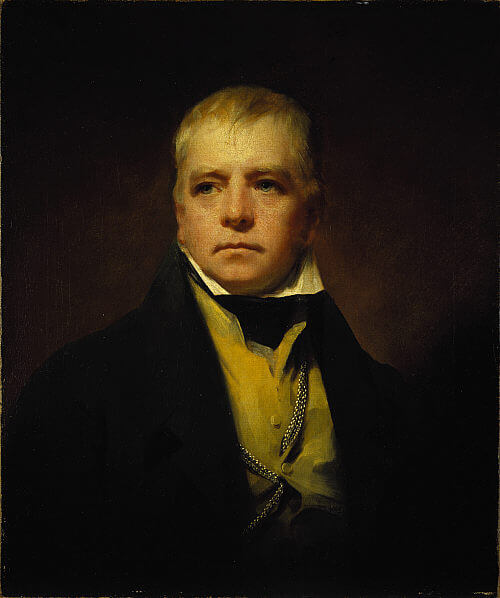
There have been several other notable bearers throughout history, one of the most famous being Sir Walter Scott (1771-1832).

Currently it is the 332nd most popular male name in the United States, (2010).

Other forms include:

  • Wealdhere (Anglo-Saxon)
  • Valter (Czech/Finnish/Italian/Hungarian/Norwegian/Russian/Slovak/Slovene/Swedish)
  • Valder (Danish/Norwegian)
  • Wouter (Dutch)
  • Walter (English/German/Italian/Polish/Scandinavian)
  • Valterri (Finnish)
  • Gauthier/Gautier (French)
  • Wolter (Frisian)
  • Waldhar (German: archaic)
  • Walther (German)
  • Valtier (Hungarian)
  • Gaulterio (Italian)
  • Gaultero (Italian)
  • Gaultiero (Italian)
  • Gaulterius (Late Latin)
  • Valters (Latvian)
  • Valtare (Norwegian)
  • Walthari (Old High German)
  • Wöltje (Plattdeutsch)
  • Guálter (Portuguese)
  • Gualtério (Portuguese)
  • Bhaltair (Scottish)
  • Bhàtair (Scottish)
  • Volter (Swedish)
  • Gwallter (Welsh)

Diminutives include:

  • Woidda (Bavarian)
  • Valte (Danish)
  • Wout (Dutch)
  • Wally (English/German)
  • Walt (English)
  • Wat (English)
  • Wate (Frisian)
  • Watse (Frisian)
  • Valkó (Hungarian)
  • Valtika (Hungarian)
  • Valle (Swedish)
  • Wale/Wali/Walo (Swiss-German)
  • Walti (Swiss-German)
  • Wädi/Wädu (Swiss-German)

Feminine forms include:

  • Woutera (Dutch)
  • Wouterina (Dutch)
  • Waltera (German)
  • Gaultiera (Italian)
  • Gaultierina (Italian)
  • Valterina (Italian)

Source

  1. http://www.behindthename.com/name/walter

Conrad, Cord, Kurt & Koen

It sounds like it could be the name of a law firm, but all of the above are derivatives of the Germanic name Conrad.

Conrad is composed of the Germanic elements, kuoni (brave) and rad (counsel). It was borne by a 10th-century Bavarian saint, and his name has left its mark on Catholic Germany since. In fact, it was a very popular name in Medieval Germany and Konrad has seemed to have been so common that the proverb Hinz und Kunz (the equivalent of the English, Every Tom, Dick & Harry) was created.

It was also borne by several illustrious German kings and dukes.

Conrad is still a fairly common name  modern Germany and is currently rising in popularity in the United States. As of 2010, it was the 772nd most popular male name. Its Dutch diminutive form of Koen has recently appeared in the U.S. top 1000, coming in as the 940th most popular male name (2010). In the Netherlands, Koen ranks significantly higher, he is the 39th most popular male name (2010). In English, it is pronounced (KOH-en) like the common Jewish surname, while in Dutch it is pronounced (KOON).

In 2009, Konrad was the 44th most popular male name in Poland.

The once popular Kurt and the newly introduced Cord are also Germanic contractions.

Other forms of the name include the following:

Conráu (Asturian)
Korrada (Basque)
Konrad Конрад (Belarusian/Bulgarian/Estonian/Finnish/Polish/Scandinavian/Slovene/Ukrainian/Russian)
Conradí (Catalan)
Conradu (Corsican)
Konrád (Czech/Hungarian/Slovak)
Coenraad (Dutch)
Kiefer (Dutch)
Koenraad (Dutch)
Konradijn/Conradijn (Dutch)
Kuber (Dutch)
Conrad (English/French/German/Swedish)
Konradin (German: archaic)
Kunó (Hungarian)
Konráður (Icelandic)
Corrado (Italian)
Corradino (Italian: archaic)
Konrads (Latvian)
Konradas (Lithuanian)
Kondrat (Polish: archaic)
Conrado (Portuguese/Spanish)
Corràdu (Sardinian)
Currado (Sicilian)
Curradino (Sicilian)

In German, Conrad/Konrad has a plethora of diminutives such as: Cohen, Conni, Conz, Curd, Keno, Koni, Konni, Konz, Kord, Kuno and Kuntz.

Feminine forms include:

Conradine/Konradine (German/Norwegian)
Corrada (Italian)
Corradina (Italian)
Konradyna (Polish)

The designated name-days are: February 14 (Poland), February 19 (Poland), April 21 (Hungary & Poland), June 1 (Poland), August 1 (Poland), October 4 (Poland), November 12 (Estonia & Poland), November 21 (Poland) and November 26 (Poland & Germany).

Source

  1. http://www.behindthename.com/name/conrad