Anna, Anne

Gender: Feminine
Origin: Biblical Hebrew
Meaning: “grace.”
(ANN; AHN). (ANN-uh; AHN-nah). (HANN-uh; HAHN-nah)

Anne is possibly one of the quintessential classic English and French female names. Prior to the 18th-century, it seems that every other girl born in England was either named Anne, Jane or Mary. There were several British and French queens who bore this simplistic moniker, including the ill fated Anne Boleyn, the mother of Elizabeth I. The history of Anne is rather long and complicated.

It was foremost popularized through the cult of St. Anne, a legendary figure who was said to be the mother of the Virgin Mary and the grandmother of Christ.

In Brittany, the name became especially popular because it happened to coincide with the name of an ancient Celtic goddess, her cult being replaced by St. Anne’s. In fact, it was borne by one Breton Princess, Anne of Brittany.

The name was introduced into Britain by the French-Normans after the invasion in 1066. Previously, there had been a minor Saxon king named Anna, but in this case the name is related to the Saxon arn (eagle). Anna and Anne are still occasionally used as male given names in Friesland.

Other than the apocryphal saint, the name Anne can be traced directly back to the Bible. In the New Testament, it is the name of a prophetess who predicts the Crucifixion of Christ.

Anna (Αννα), is the Greek translation of the early Hebrew Channah חַנָּה, usually transliterated as Hannah, meaning “grace.”

Hannah is borne in the Old Testament by the faithful mother of the prophet, Samuel.

Hannah has always been popular among Jewish families, but was virtually unheard of among non-Jews before the Reformation, except in some cases where it may have been used as a diminutive form of Johanna, spelled Hanna.

It was the Byzantines who had introduced the Anna form to the world, making it popular throughout Eastern and Southern Europe. It was a very popular name among the Byzantine royal family and it was borne by the majestic Anna of Byzantium.

Anna may be the more melodic form of the bunch, but Anne’s minimalistic qualities are charming. Short, to the point, no frills. It’s not a bad name, though it does lack some spice, which is why parents are probably more attracted to its more exotic alternatives. In fact, Anne only comes in at # 608 in the top 1000 female names of the United States. It is safe to say, however, that she is very much loved in the middle name spot.

Anna is currently one of the most popular female names in Europe and abroad. Her rankings are as follows:

  • # 1 (Austria, 2010)
  • # 1 (Estonia, 2011)
  • # 2 (Hungary, 2010)
  • # 3 (Ana, Georgia, 2010)
  • # 3 (Iceland, 2010)
  • # 4 (Ana, Croatia, 2010)
  • # 4 (Czech Republic, 2010)
  • # 4 (Germany, 2011)
  • # 4 (Ukraine, 2010)
  • # 5 (Faroe Islands, 2010)
  • # 5 (Ana, Portugal, 2010)
  • # 6 (Armenia, 2010)
  • # 6 (Ane, Greenland, 2002-2003)
  • # 6 (Ana, Romania, 2009)
  • # 6 (Ana, Serbia, 2010)
  • # 7 (Latvia, 2011)
  • # 7 (Russia, 2011)
  • # 8 (German-speaking Switzerland, 2010)
  • # 9 (Denmark, 2011)
  • # 10 (Netherlands, 2010)
  • # 10 (Northern Ireland, 2010)
  • # 10 (Norway, 2010)
  • # 11 (Italy, 2010)
  • # 12 (Ireland, 2010)
  • # 14 (Poland, 2010)
  • # 16 (Catalonia, 2010)
  • # 26 (Canada, B.C., 2010)
  • # 28 (Italian-speaking Switzerland, 2010)
  • # 28 (United States, 2010)
  • # 29 (Scotland, 2010)
  • # 40 (France, 2009)
  • # 46 (French-speaking Switzerland, 2010)
  • # 53 (Belgium, 2009)
  • # 63 (England/Wales, 2010)
  • # 71 (Australia, 2010)
  • # 81 (Sweden, 2010)
  • # 83 (Spain, 2010)
Other forms of the name include:
  • Anneen (Afrikaans/Low German)
  • Anna Анна (Afrikaans/Albanian/Armenian/Breton/Bulgarian/Catalan/Corsican/Czech/Dutch/English/Estonian/Faroese/Finnish/French/Frisian/German/Greek/Hungarian/Icelandic/Italian/Latvian/Limburgish/Maltese/Polish/Russian/Ukrainian/Scandinavian/Slovak)
  • Anne (Basque/Dutch/English/French/Scandinavian)
  • Gánna Га́нна (Belarusian)
  • Annaig (Breton)
  • Annick (Breton)
  • Maina (Breton)
  • Mannaig (Breton)
  • Mannick (Breton)
  • Naig (Breton)
  • Ana Ана ანა (Bulgarian/Croatian/Galician/Georgian/Lombard/Macedonian/Portuguese/Romanian/Samogaitian/Serbian/Slovene/Spanish/Venetian)
  • Jana (Croatian/Ladino)
  • Aneta (Czech/Polish/Samogaitian/Slovak)
  • Aina (Catalan)
  • Anica (Croatian/Serbian/Slovene)
  • Ane (Danish)
  • Anika (Danish)
  • Anneke (Dutch)
  • Anneken (Dutch)
  • Annika (Dutch/Finnish/German/Latvian/Scandinavian)
  • Anka (Dutch/Frisian/German)
  • An(n)ke (Dutch/Frisian)
  • Anouk (Dutch/French)
  • Ans (Dutch)
  • Enneke (Dutch)
  • Enneken (Dutch)
  • Anita (English/German/Polish/Spanish)
  • Annette (English/French/German)
  • Anissa (English)
  • Annelle/Annella (Estonian)
  • Anete (Estonian/Latvian)
  • Anett (Estonian)
  • Anu (Estonian)
  • Anni (Finnish)
  • Annikki (Finnish)
  • Anniina (Finnish)
  • Annukka (Finnish)
  • Niina (Finnish)
  • Anaïs (French/Provençal)
  • Annouche (French)
  • Ninette (French)
  • Ninon (French)
  • Ninouk (French)
  • Anje (Frisian)
  • Ankea (Frisian)
  • Antje (Frisian)
  • Antjen (Frisian)
  • Anute (Fruilian)
  • Anano (Georgian)
  • Annchen (German)
  • Annel (German)
  • Annele (German/Latvian)
  • Anneli(e) (German/Finnish/Swedish)
  • Annet (German)
  • Anina (German)
  • Anja (German/Slovene)
  • Anouschka (German/Italian/Russian)
  • Annaki (Greek)
  • Annoula (Greek)
  • Noula (Greek)
  • Anikó (Hungarian)
  • Annuska (Hungarian)
  • Panni (Hungarian)
  • Áine (Irish)
  • Ánna (Irish)
  • Annarella (Italian)
  • Annella (Italian)
  • Annetta (Italian)
  • Annettina (Italian)
  • Nona (Italian/Romansch)
  • Ance (Latvian)
  • Annija (Latvian)
  • Anninya (Latvian)
  • Ona (Lithuanian)
  • Annamma (Malayalam)
  • Annam (Malayalam)
  • Onnee (Manx)
  • Âone (Norman)
  • Aenna/Aenne (Old High German)
  • Annehe (Old High German)
  • Änna/Änne (Old High German)
  • Neta (Piedmontese)
  • Noto (Piedmontese)
  • Anke (Plattdeutsch)
  • Anneke(n) (Plattdeutsch)
  • Analia (Romansch/Spanish)
  • Annina (Romansch)
  • Annotta (Romansch)
  • Anca (Romanian)
  • Anicuta (Romanian)
  • Anėta (Samogaitian)
  • Anėkė (Samogaitian)
  • Annag (Scottish)
  • Ghianna (Sicilian)
  • Janna (Sicilian)
  • Nanna (Sicilian)
  • Anniken (Swedish)
  • Ann (Welsh)
  • Nan (Welsh)
  • Nanno (Welsh)
  • Nanw (Welsh)
  • Aana (Wolof)
As for the Hannah forms

Hanna without an H is the prefered form on Continental Europe, usually pronounced (HAHN-nah) and in French like Anna. Hanna and Hanne (HAHN-neh) are also used as diminutive forms of Johanna/Johanne in the Netherlands, Sweden, Norway, Denmark and Germany. There is the Hungarian Hajna pronounced (HOY-no). The Czech/Slovak form of Hana nickname Hanka. There are the Yiddish forms of Heyna, Hayna, Hejna (all pronounced like HAY-nah) including the diminutive forms of HenaHende, Hendel and Henye.  The Polish diminutive form of Hania, which might make an interesting alternative to Anya or Hannah. Hannah, Hanna and Henna are all used in the Middle East.

Of course, how could we ever forget the popular diminutive forms of Annie and Nan.

Benedict, Benedikt

Gender: Masculine
Origin: Latin
Meaning: “blessed.”

The name comes directly from the Late Latin name Benedictus meaning “blessed.” The name was borne by a 6th-centuy Italian monk and saint who credited for being the founder of the Order of the Benedictines.

The name was very common throughout Medieval Europe, being borne by 16 popes, it was fairly popular in England, in the form of Bennett.

The name was also commonly used among German-Jews, being used as a cognate of the Hebrew male name Baruch בָּרוּךְ (blessed).

In the United States, the name became taboo to use due to its associations with Benedict Arnold (1741-1801) a famous American deserter and traitor to the British.

The name recently skyrocketed in Germany after the succession of the German born Pope Benedict XVI. It is currently the 93rd most popular male name in Germany, (2011). It is especially popular in Bavaria.

His rankings in other countries are as follows:

  • # 1 (Bence, Hungary, 2010)
  • # 32 (Benedek, Hungary, 2010)
  • # 294 (Benoît, France, 2009)

Other forms of the name include:

  • Benedikti (Albanian)
  • Benedet (Aragonese)
  • Benedictu (Asturian)
  • Benedita (Basque)
  • Beñat (Basque)
  • Benead (Breton)
  • Benet (Catalan)
  • Benedettu (Corsican/Maltese/Sardinian)
  • Benedikt Венедикт (Croatian/Czech/German/Icelandic/Norwegian/Russian/Serbian/Scandinavian/Ukrainian)
  • Ben(d)t (Danish/Norwegian)
  • Benedictus (Dutch/Late Latin)
  • Benedict (English/German/Romanian/Scandinavian)
  • Bennett (English)
  • Pentti (Finnish)
  • Bénédict (French)
  • Benoît (French)
  • Beinidict (Gaelic)
  • Bieito (Galician)
  • Benedikhti ბენედიქტე (Georgian)
  • Bendix (German/Norwegian)
  • Bennet (German)
  • Benz (German)
  • Venediktos Βενέδικτος (Greek)
  • Bence (Hungarian)
  • Benedek (Hungarian)
  • Benett (Hungarian)
  • Benedetto (Italian)
  • Benito (Italian/Spanish)
  • Bettino (Italian)
  • Bendiks (Latvian)
  • Benediktas (Lithuanian)
  • Bendik (Norwegian)
  • Benedix (Plattdeutsch)
  • Benedykt (Polish)
  • Benedito (Portuguese)
  • Bento (Portuguese)
  • Benezet (Provençal)
  • Banadet (Romansch)
  • Banadegt (Romansch)
  • Bandet (Romansch)
  • Benedegt (Romansch)
  • Binidittu (Sicilian)
  • Beňadik (Slovak)
  • Bengt (Swedish)
  • Bened (Welsh)
  • Benesh (Yiddish)

Feminine forms include:

  • Benedetta (Corsican/Maltese/Italian/Sardinian)
  • Benedikta (Czech/German)
  • Benedikte (Danish/Norwegian)
  • Bénédicte (French)
  • Benoîte (French)
  • Benita (Italian/Spanish)
  • Bettina (Italian)
  • Benedicta (Latin/Romansch)
  • Benedykta (Polish)
  • Benedita (Portuguese)
  • Bengta (Swedish)

Titus

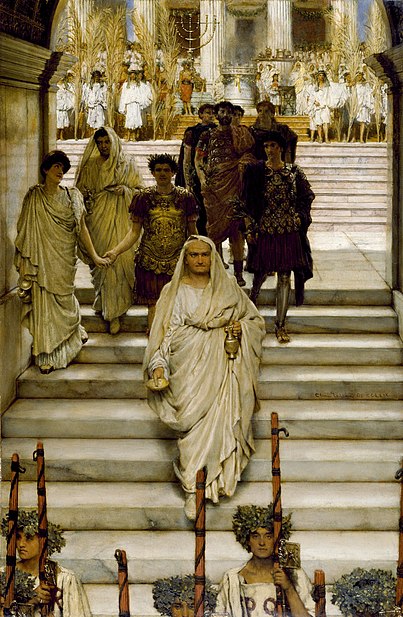
Titus (Roman Emperor)Gender: Masculine
Origin: Latin
Meaning: “title of honour.”
Eng (TY-tus)

The name comes from the Roman praenomen which is derived from the Latin, titulus, meaning “title of honour.”

In Ancient History, the name is borne by Titus Flavius Vespasianus, the tenth Roman emperor in the Roman Empire and the second of the Flavian Dynasty.

In the New Testament, the name is borne by a companion of St. Paul who later became the first bishop of Crete and was a recipient of one of Paul’s epistles.

The name was also used by Shakespeare for his tragedy Titus Andronicus (1593).

Currently, Titus is the 253rd most popular male name in Germany, (2011) and the 397th most popular in the United States, (2010).

Other forms of the name include:

  • Tito (Aragonese/Basque/Galician/Italian/Portuguese/Spanish)
  • Titus (Czech/Danish/Dutch/English/French/German/Latin/Norwegian/Swedish)
  • Tiitus (Finnish)
  • Tite (French)
  • Titos Τιτος (Greek Biblical)
  • Titou τιτου (Greek Modern)
  • Titusz (Hungarian)
  • Títus (Icelandic/Slovak)
  • Titas (Lithuanian)
  • Titu Тітъ (Old Church Slavonic)
  • Tytus (Polish)
  • Tit Тит (Romanian/Russian/Croatian/Slovene)

An Italian, Portuguese and Spanish feminine form is Tita.

The designated name-day is January 4th.

Alphonse, Alonso

Gender: Masculine
Origin: German
Meaning: “noble and ready.”

The name is believed to be derived from a Visigothic male name Adalfuns which is composed of the elements adal (noble) and funs (ready). It has also been associated with another Visigothic name Hildefuns meaning (battle ready). The name has always been popular in its various forms throughout Southern Europe, especially in the Iberian Peninsula where it was borne by several kings.

In its French form of Alphonse, it is the name the title character in Alexander Dumas’ 1873 book Monsieur Alphonse, which recounts the exploits of a pimp. Due to this literary association the name has come to mean “pimp” in several languages, most notably in Danish and in Polish.

Its Spanish form of Alonso, however, remains a very common name throughout the Spanish-speaking world. It is currently the 16th most popular male name in Chile (2010). It is also the 84th most popular in Spain (2010) and the 637th most popular in the United States (2010).

The more archaic Italian and Spanish form of Alfonso appears in the U.S. top 1000, coming in as the 742nd most popular male name (2010).

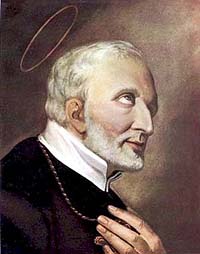
The name was most famously borne by St. Alphonsus Liguori, an Italian saint who founded the order of the Redemptorists and is considered a Doctor of the Church by the Catholic Church.

Other forms of the name include:

  • Adalfuns (German: archaic)
  • Alifonso (Aragonese)
  • Alfonsu (Asturian/Sardinian/Sicilian)
  • Fonsu (Cantabrian)
  • Alfontso (Basque)
  • Alfoñs (Breton)
  • Alfons (Catalan/Czech/Dutch/Finnish/German/Maltese/Polish/Romanian/Scandinavian: also the word for pimp in Polish and Danish)
  • Fons (Dutch)
  • Funs (Dutch)
  • Alfo (Finnish)
  • Alhvo (Finnish)
  • Altto (Finnish)
  • Alphonse (French)
  • Afonso (Galician/Portuguese)
  • Alphons (German)
  • Alfonz (Hungarian)
  • Alfonzino (Italian)
  • Alfonso (Italian/Portuguese/Spanish)
  • Alfonzo (Italian)
  • Alonzo (Italian)
  • Alphonsus (Late Latin)
  • Alfonss (Latvian)
  • Funske (Limbergish)
  • Alfonsas (Lithuanian)
  • Alonso (Portuguese/Spanish)
  • Affonzu (Sicilian)
  • Arfansu/Arfanzu (Sicilian)
  • Alfonz (Slovak/Slovene)

Feminine forms include:

  • Alphonsine (French)
  • Alfonza (Hungarian)
  • Alfonzin (Hungarian) 
  • Alfonzina (Hungarian)
  • Alfonsa (Italian/Portuguese/Spanish)
  • Alfonsina (Italian/Portuguese/Spanish)
  • Alfonza (Italian)
  • Alfonzina (Italian)

Joachim, Joaquin

Gender: Masculine
Origin: Hebrew
Meaning: “Yahweh has established.”
Eng (JOKE-im); Sp (wah-KEEN)

The name is possibly derived from the Biblical Hebrew male name, Jehoiachin, which is found in the Old Testament as the name of king of Judah imprisoned during the Babylonian exile.

Joachim appears in the apocryphal Gospel of James as the name of the husband of St. Anne and the father of the Virgin Mary. In the Qu’ran the father of Mary is named Imran, though Joachim and Imran are not etymological related. The Catholic Church, Eastern Orthodox Churches and the Anglican Church has traditionally revered this legendary character as a saint and as a result, the name became extremely popular across Europe, especially in Catholic countries.

The name was never very common in the English-speaking world but was occasionally used by Irish-Catholics and American-Catholics.

Currently Joachim is the 319th most popular male name in France, (2009) and the 496th most popular in the Netherlands (2010). Its Spanish form of Joaquin, however, ranks even higher in a couple of countries. His rankings are as follows:

  • # 5 (Chile, 2010)
  • # 99 (Spain, 2010)
  • # 306 (United States, 2010).

Other forms of the name include:

  • Iyakem (Amharic/Ethiopian)
  • Chuaquín (Aragonese)
  • Xuaco/Xuacu (Aragonese)
  • Jokin (Basque)
  • Chaosum (Breton)
  • Joasim (Breton)
  • Jechim (Breton)
  • Joasin (Breton)
  • Jaouas (Breton)
  • Yoakim Йоаким (Bulgarian)
  • Yakim Яким (Bulgarian)
  • Yokim Йоким (Bulgarian)
  • Joaquim (Catalan/Portuguese)
  • Quim (Catalan/Portuguese)
  • Ximo (Catalan/Valencian)
  • Youakim (Coptic/Syrian)
  • Jáchym (Czech)
  • Jokum (Danish)
  • Jochem (Dutch/German)
  • Aki (Finnish)
  • Jaakkima (Finnish)
  • Joachim (English/French/German/Hungarian/Polish)
  • Kim (Finnish/Scandinavian)
  • Kimi (Finnish)
  • Xaquín (Galician)
  • Xoaquin (Galician)
  • Xocas (Galician)
  • Ioa’kime იოაკიმე (Georgian)
  • Achim (German)
  • Jochen (German)
  • Jochim (German)
  • Jóakim (Icelandic)
  • Gioacchino/Gioachino (Italian)
  • Giovacchino (Italian)
  • Yoakima (Lingala)
  • Joakim Јоаким (Macedonian/Serbian/Scandinavian) 
  • Akimka (Maldovan)
  • Iacin (Murcian)
  • Juaqui (Murcian)
  • Quino (Murcian)
  • Ioachim (Romanian)
  • Giuachin (Romansch)
  • Akim АкимЯким (Russian)
  • Yakim (Russian)
  • Joaquín (Spanish)
  • Joakym Йоаким (Ukrainian)

Feminine forms include:

  • Gioacchina (Italian)
  • Gioachina (Italian)
  • Giovacchina (Italian)
  • Joachima (Polish)


Jimena, Ximena

Gender: Feminine
Origin: Spanish
Meaning: debated
Ximena Sp/Cat (shee-MEH-nah); South Am. Sp (hee-MEH-nah)
Jimena (hee-MEH-nah)

There are two general theories as to the origins of this name, one is that it is a feminine form of Simon another is that it is derived from the Basque word seme meaning “son.” In either case, it seems to have been a very popular female name in Medieval Spain.

It was borne by Ximena Díaz (1054-1115) the wife of El Cid and who also eventually became his successor to the Valencian throne. It was also borne by an even earlier Spanish noblewoman, Jimena of Asturias (b.900).

Currently Jimena and Ximena both appear in the Mexican top 100. Its Catalan form of Ximena is the 2nd most popular female name in Mexico while its Spanish derivative of Jimena ranked in at # 13.

Her rankings in other countries are as follows:

  • # 42 (Spain, 2010 Jimena)
  • # 272 (United States, 2010 Ximena)
  • # 400 (United States, 2010 Jimena)

Other forms of the name include:

  • Ximena (Catalan/Ladino/Portuguese)
  • Chimène (French. shee-MEN)
  • Ximene (French. zee-MEN)
  • Jimena (Galician/Spanish)
  • Gimena (Medieval Spanish)
Obscure masculine forms are Jimeno and Ximeno.
Sources

Raymond

Gender: Masculine
Origin: German
Meaning: “advice protector.”
(RAY-mund)

The name is composed of the Germanic elements ragin (advice) and mund (protector). It was introduced to England via the Normans. It was borne by several saints.

Currently, Raymond is the 225th most popular male name in the United States, (2010).

Other forms of the name include:

  • Remund (Aragonese)
  • Erramun (Basque)
  • Raimon (Catalan)
  • Raimondu (Corsican)
  • Rejmond Рејмонд (Croatian/Serbian)
  • Rajmund (Czech/Hungarian)
  • Raimund (Danish/Finnish/Norwegian/Romanian/Swedish)
  • Ramund (Danish)
  • Raymundus (Dutch/Latin)
  • Raymond (Dutch/English/French)
  • Raimo (Finnish)
  • Reima (Finnish)
  • Reemt (Frisian)
  • Réamann (Gaelic)
  • Redmund/Redmond (Irish)
  • Raimund (German)
  • Reimund (German)
  • Raimundur (Icelandic)
  • Raimondo (Italian)
  • Raimonds (Latvian)
  • Remao (Limburgish)
  • Mao (Limburgish)
  • Raimondas (Lithuanian)
  • Reimund (Norman)
  • Raginmund (Old German)
  • Rajmund (Polish/Slovene)
  • Ramun (Romansch)
  • Arrammundu (Sardinian)
  • Ramundu (Sardinian)
  • Rámon (Spanish)
  • Raimundo (Spanish/Portuguese)
  • Raymundo (Spanish/Brazilian Portuguese)
A common English short form is Ray.

Feminine forms include:

  • Ramona (English/Hungarian/Portuguese/Romanian/Spanish)
  • Raymonde (French)
  • Raimunde (German)
  • Raimonda (Italian)
  • Raimondina (Italian)
  • Rajmunda (Polish)
  • Ramuna (Romansch)
Source

Lawrence

Gender: Masculine
Origin: Latin
Meaning: “from Laurentum.”
Eng (LAW-rents)

The name is derived from the Latin cognomen Laurentius meaning “from Laurentum.” It was popularized by an early Roman deacon, martyr and saint who was roasted alive when he refused to turn over church property to the Roman authorities. According to legend, he is the patron saint of comedians because when he was being roasted he told his torturers “turn me over, I am done on this side.”

It was borne by several other saints.

Lawrence has been a popular given name since Medieval times and it consistently appeared in the U.S. top 100 from 1880-1971. By 1972 it mysteriously and suddenly fell completely out of popularity and it has been so since. It is currently only the 457th most popular male name, (2010).

Other forms include:

  • Nadja/Nadjeh (Arabic: used among Arab Christians)
  • Toufiq  لورنس (Arabic: used among Arab Christians)
  • Loren (Aragonese)
  • Lorient (Aragonese)
  • Lari (Basque)
  • Lawrencij Лаўрэнцій (Belarusian)
  • Laorañs (Breton)
  • Llorenç (Catalan)
  • Larenzu (Corsican)
  • Lovrenco (Croatian)
  • Lovre (Croatian. Currently the 58th most popular name in Croatia, 2010)
  • Lovro (Croatian)
  • Vavřinec (Czech/Slovak: literally from the Czech word for laurel, it has been used as the proper cognate for Lawrence since Christianity was introduced to the area)
  • Laurits/Lauritz (Danish/Estonian/Icelandic/Norwegian)
  • Lasse (Dutch/Norwegian/Swedish. LAHS-se)
  • Laurens (Dutch)
  • Loris (Dutch/French/German/Italian. Currently the 100th most popular male name in France, 2009)
  • Rens (Dutch. Currently the 79th most popular male name in the Netherlands)
  • Larkin (English: a Medieval diminutive form of Lawrence)
  • Lauri (Estonian/Finnish)
  • Lars (Finnish/Norwegian/Swedish. Currently the 14th most popular male name in the Netherlands, the 23rd most popular in Belgium and the 57th most popular in Norway)
  • Lassi (Finnish)
  • Laurent (French)
  • Laurentin (French)
  • Lourens (Frisian)
  • Labhrás (Gaelic) 
  • Loenso (Genovese)
  • Laurenzius (German: archaic)
  • Lenz (German)
  • Lorenz (German)
  • Lavrentios Λαυρεντιος (Greek)
  • Lőrinc (Hungarian)
  • Lárus (Icelandic)
  • Lorenzo (Italian/Spanish. Currently the 5th most popular male name in Italy and 52nd most popular in France (2009). It is also the 187th most popular in the Netherlands and the 322nd most popular in the United States, 2010)
  • Laurentius (Latin)
  • Lau (Limburgish)
  • Lor (Limburgish)
  • Laurynas (Lithuanian)
  • Lawrenz (Maltese)
  • Laurys (Manx)
  • Louothains (Norman)
  • Lavrans (Norwegian)
  • Laurenç (Occitanian)
  • Lleurant (Occitanian)
  • Laurencjusz (Polish)
  • Laurenty (Polish)
  • Wawrzyniec (Polish: literally from the Polish word for laurel, it has been used as the proper cognate for Lawrence since Christianity was introduced to the area)
  • Lourenço (Portuguese)
  • Laurențiu (Romanian)
  • Lavrentie (Romanian)
  • Lurintg (Romansch)
  • Lavrenti Лаврентий ლავრენტი (Russian/Georgian)
  • Larentu (Sardinian)
  • Labhrainn (Scottish)
  • Lovrenc (Slovene)
  • Laurisch (Sorbian)
  • Lorencio (Spanish: Medieval)
  • Lorens (Swedish)
  • Lavrentij Лаврентій (Ukrainian)
  • Lorenso (Venetian)
A common English diminutive is Larry a less common one Laurie
  • Toufiqia (Arabic)
  • Laurendia (Basque)
  • Laurenza (Corsican)
  • Laurenzia (Corsican)
  • Laurentien (Dutch)
  • Renske (Dutch)
  • Laurence (French)
  • Laurentine (French)
  • Lavrentia Λαυρεντία (Greek)
  • Lorentina (Italian)
  • Lorenza (Italian/Spanish)
  • Lorenzina (Italian)
  • Larentia (Latin)
  • Laurentina (Latin)
  • Laurencja (Polish)
  • Laurentyna (Polish)
Source

Dulce

Gender: Feminine
Origin: Spanish/Portuguese
Meaning: “sweet; candy.”
DOOL-the (Spanish), DOOL-se (Latin American Spanish)

The name comes directly from the Spanish and Portuguese word for “sweet; candy” and has been used in the Iberian peninsula since the early Middle Ages. It was borne by Douce I of Provence (1090-1129), Douce II of Provenece (b.1166) Dulce of Barcelona (1160-1198) and Dulce I of Léon (b.1195).

Currently it is the 409th most popular female name in the United States, (2010).

It was commonly bestowed among Jews and Christians. Other forms of the name include:

  • Dulcía (Aragonese)
  • Dulze (Basque)
  • Esti (Basque)
  • Estinñe (Basque)
  • Dolça (Catalan/Ladino/Occitanian/Provençal)
  • Dowse (English: archaic)
  • Duce (English: archaic)
  • Dulcie (English)
  • Dulcinea (English/Spanish)
  • Douce (French: archaic)
  • Aldonza/Aldonça (Galician)
  • Dolce (Italian: archaic. DOLE-chay)
  • Zusa (Yiddish. A direct translation of Dolça, this was used among Spanish-Jews who had been expelled from Spain and had settled in Germany and Poland introducing it to Yiddish-speakers, thus creating a Yiddish cognate. A masculine cognate is Zusman)
Source

Moses

Gender: Masculine
Origin: Debated
Meaning: debated

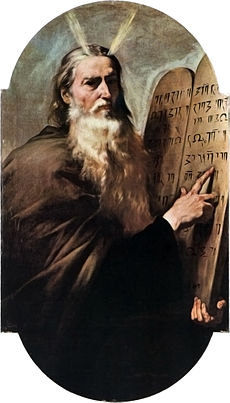
The name is borne in the Old Testament and in the Qu’ran by the a renowned prophet and law giver, who according to tradition was placed in a basket by his Hebrew mother and found by the daughter of Pharaoh (in Judeo-Christian religion) or the wife of Pharaoh (in Islamic tradition) and raised as an Egyptian prince. It is from this tradition that the name is believed to be derived from the Hebrew element משה (mšh) as stated in  Exodus 2:10:

“[…] she called his name Moses (משה): and she said, Because I drew him (משיתהו) out of the water.” (KJV).


It has been suggested that the name is in fact of Egyptian origins, being related to the Coptic elements, mo (water) and uses (saved; delivered) hence: “saved from the water.” Another suggestion is the Egyptian element, ms (child; born) as found in such ancient Egyptian male names as Tuth-Mose and Ram-messes.

The name has always been common among Jews, Muslims and Orthodox Christians, but did not catch on in the English-speaking world until after the Protestant Reformation. Medieval Jews of England used the Middle English form of Moss.

It is currently the 509th most popular male name in the United States, (2010).

Other forms of the name include:

  • Moses (Afrikaans/English/German/Scandinavian/Welsh)
  • Moisiu (Albanian)
  • Musa موسى Муса (Amharic/Arabic/Azeri/Bosnian/Kabyle/Swahili/Tatar/Turkish)
  • Moisen (Aragonese)
  • Movses Մովսես (Armenian)
  • Moises (Basque)
  • Majsjej Майсей (Belarusian)
  • Moizez (Breton)
  • Moisej Моисей (Bulgarian)
  • Moisès (Catalan)
  • Moisije Мојсије (Croatian/Serbian)
  • Moše (Croatian)
  • Mojžíš (Czech/Slovak)
  • Mozes (Dutch)
  • Mooses (Estonian/Finnish)
  • Móses (Faroese/Icelandic)
  • Moïse (French)
  • Maois (Gaelic)
  • Mose მოსე (Georgian/German/Romansch/Swedish)
  • Mouses Μωυσης (Greek)
  • Moshe מֹשֶׁה (Hebrew/Ladino)
  • Mózes (Hungarian)
  • Mosè (Italian)
  • Müsa Мұса (Kazakh)
  • Mosa (Kurdish)
  • Mûsa (Kurdish)
  • Moyses (Latin)
  • Mozus (Latvian)
  • Mozė (Lithuanian)
  • Мојсеј (Macedonian)
  • Moss (Middle English)
  • Moïses (Occitanian/Provençal)
  • Mojżesz (Polish)
  • Moisés (Portuguese/Spanish)
  • Moise (Romanian)
  • Moisej Моісей (Rusyn/Ruthenian)
  • Moiséj Моисе́й (Russian)
  • Muozė (Saimogaitian)
  • Mojzes (Slovene)
  • Muuse (Somalian)
  • Mojsej Мойсей (Ukrainian)
  • Moosõs (Voro)
  • Moishe (Yiddish)
Recently, actress Gwyneth Paltrow bestowed this name on her second child, Moses Bruce Anthony Martin (b. 2006)
Sources