Bernard, Bernadette

Gender: Masculine
Origin: Old German
Meaning: “brave as a bear; hardy as a bear.”
(Am. Eng) (ber-NARD); (Brit. Eng) (BER-nerd)

The name is composed of the Old High Germanic elements, bern (bear) and hard (brave; hardy).

The name was introduced into England by the conquering Normans in the 10th-century, replacing the more Anglo-Saxon version of Beornheard.

It became quite prevalent throughout Western Europe during the middle ages due to the associations with St. Bernard of Menthon, a Swiss monastic credited to building hospices in the Alps, (it is from him that the breed of dog, the St. Bernard, takes its name) and St. Bernard of Clairvaux, an influential 12th-century French theologian who is revered as both a saint and Doctor of the Church by the Catholic Church.

As of 2009, the name fell out of the U.S. top 1000 most popular male names. The highest he ever ranked in U.S. naming history was at # 45 in 1919 and again in 1921.

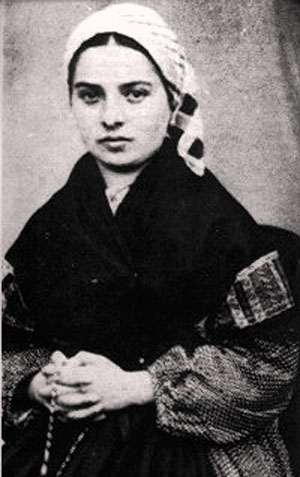
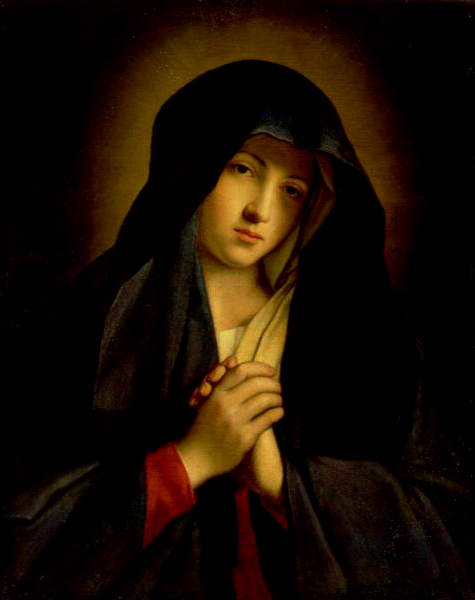
Its more popular feminine version of Bernadette became prevalent, especially among Catholics throughout the Western World, after the Canonization of St. Bernadette Soubirous (née Marie-Bernarde Soubirous). St. Bernadette was a 19th-century French peasant girl credited to seeing visions of the Virgin Mary in Lourdes, France.

Before her recognition throughout the world, Bernadette was primarily a diminutive, used as an affectionate form of the French feminine name, Bernarde.

The last time Bernadette ranked in the U.S. top 1000 was in 1993, coming in at # 891. The highest she ever ranked in U.S. naming history was in 1946, coming in as the 188th most popular female name. Its Hungarian cognate of Bernadett currently ranks in as the 76th most popular female name in Hungary (2009).

Variations

Bernard

Bernardi (Albanian)
Bernal (Aragonese/Galician)
Beñat (Basque)
Bernarta (Basque)
Bernez (Breton)
Bernat (Catalan)
Bernardu (Corsican/Sardinian)
Bernard (Croatian/Czech/English/French/German/Polish/Romanian/Romansch/Slovenian/Swedish)
Bernhardt/Bernhart (Danish/Finnish/German/Norwegian/Swedish)
Berend (Dutch)
Bernaard (Dutch)
Bernhard (Dutch/Estonian/German)
Päärn/Pärn/Pärno (Estonian)
Pääro (Estonian)
Pearn/Pearu (Estonian)
Bernardin (French/Romansch)
Bent (Frisian)
Bernaldo (Galician)
Bernaldino (Galician)
Berendt (German)
Berinhard (German: archaic)
Bernd/Berndt (German/Swedish)
Bernárd (Hungarian)
Bernát (Hungarian)
Bennardo/Bennardino (Italian)
Berardo (Italian)
Bernadetto (Italian)
Bernardino (Italian)
Bernardo (Italian/Portuguese/Spanish)
Bernoardo (Italian)
Bearnárd (Irish-Gaelic)
Bernardus (Late Latin)
Bernards (Latvian)
Bierants (Latvian)
Biernis (Latvian)
Bernardas (Lithuanian)
Beurnard (Poitevin)

Bernadette

Bernardete (Albanian/Portuguese)
Bernada (Catalan/Occitanian)
Bernadeta (Catalan/Occitanian/Polish)
Bernarda (Croatian/German/Italian/Slovene/Spanish/Polish/Portuguese)
Bernadette (English/French)
Bernarde (French)
Bernardine (French)
Bernadett (Hungarian)
Bernadetta/Bernardetta (Italian)
Bernardina (Italian)
Bernadetė (Lithuanian)
Bernardka (Slovenian)
Bernardita (Spanish)

Common English diminutives for both names are Bernie & Benny.

In French it is Bébère, Nanard and Bernie for males.

A Polish female diminutive is Bernardetka.

The designated name-day is August 20.

Source

  1. http://www.behindthename.com/name/bernard

Peter

Gender: Masculine
Origin: Greek
Meaning: “rock.”
Eng (PEE-ter)

The name is derived from the Greek Πετρος (Petros) meaning, “rock.”

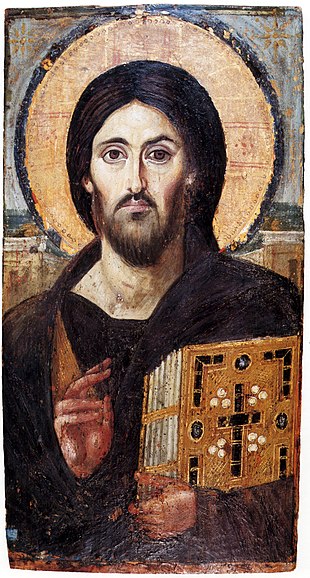
The name is found in the New Testament as a vernacular translation for the Aramaic Cephas (rock) a nickname designated to the Apostle Simon Bar-Jonah by Jesus. He is known as St. Peter, and Catholics traditionally attribute him as being the first Pope.  Among other denominations, he is considered to be one of Christ’s most prominent apostles.

Due to the associations with the apostle, Peter became an extremely prevalent male name throughout the Christian world.

The name seems to have been in usage in England since early times, but became especially popular after the Norman invasion. During this period, the form of Piers was preferred, being gradually replaced in popularity by Peter over the centuries.

Currently, Peter is 191st most popular male name in the United States, (2009). He has been steadily declining in the United States for the past 10 years, in 2000 he ranked in at # 125. His rankings in other countries, however, has not faltered. His rankings including his vernacular forms are as follows:

  • # 7 Pedro (Brazil, 2009)
  • # 9 Petar (Bulgaria, 2008)
  • # 15 Petr (Czech Republic, 2009)
  • #38 Pierre (France, 2006)
  • # 3 (Greenland, 2003-2004)
  • # 8 (Hungary, 2008)
  • # 33 Petur (Iceland, 2008)
  • # 70 (Ireland, 2008)
  • # 25 Pietro (Italy, 2007)
  • # 8 Pēteris (Latvia, 2005)
  • # 9 Petar (Macedonia, 2006)
  • # 10 Piotr (Poland, 2008)
  • # 3 (Slovakia, 2004)
  • # 59 (Slovenia, 2005)
  • # 50 Pedro (Spain, 2008)

Other forms of the name include:

  • Petrus (Afrikaans/Dutch/German/Indonesian/Latin/Limburgish/Plattdeutsch/Swedish)
  • Pieter (Afrikaans)
  • Pjetër/Pjetri (Albanian)
  • Ṗeṭros ጴጥሮስ (Amharic/Ethiopian)
  • Pero (Aragonese)
  • Bedros/Pedros Պետրոս (Armenian)
  • Botros/Boutros/Butros بطرس (Arabic/Coptic)
  • Pedru (Asturian/Konkoni)
  • Pyotr (Azeri)
  • Betiri (Basque)
  • Kepa (Basque)
  • Peio (Basque)
  • Peru (Basque)
  • Petri (Basque)
  • Piatro Пятро (Belarusian)
  • Piotr Пётр (Belarusian/Polish)
  • Pêr (Breton)
  • Pierrick (Breton)
  • Penko Пенко (Bulgarian)
  • Petar Петар (Bulgarian/Croatian/Macedonian/Serbian)
  • Pere (Catalan)
  • Peder (Cornish/Danish/Lombard/Norwegian)
  • Petru (Corsican/Romanian/Sicilian)
  • Pyè (Creole)
  • Pero (Croatian/Serbian)
  • Petar Петар (Croatian/Macedonian/Serbian/Slovene)
  • Petr (Czech)
  • Pelle (Danish/Norwegian/Swedish: originally a diminutive, now occasionally used as an independent given name. PEL-le)
  • Peer (Danish/Dutch/German)
  • Per (Danish/Faroese/Norwegian/Swedish)
  • Peter (Danish/Dutch/English/German/Luxembourgish/Norwegian/Slovak/Swedish)
  • Peeter (Estonian)
  • Peiru (Extramadura)
  • Pætur/Petur (Faroese)
  • Patras پطرس (Farsi)
  • Pekka (Finnish)
  • Petteri (Finnish)
  • Petri (Finnish)
  • Pietari (Finnish)
  • Pierre (French)
  • Piter/Pier/Pit (Frisian)
  • P’et’re პეტრე (Georgian)
  • Petros Πέτρος (Greek)
  • Pathros (Hindi)
  • Péter (Hungarian)
  • Petres (Hungarian)
  • Peto (Hungarian)
  • Pétur (Icelandic)
  • Peadar (Irish-Gaelic)
  • Pietro (Italian/Albanian)
  • Petronius (Latin)
  • Pēteris (Latvian)
  • Petras (Lithuanian)
  • Pir (Luxembourgish)
  • Petre Петре (Macedonian/Romanian)
  • Pathrose (Malayalam)
  • Pietru (Maltese)
  • Peddyr (Manx)
  • Petera (Maori)
  • Petter (Norwegian/Swedish)
  • Pèir/Pèire/Pèr (Occitanian)
  • Pedro (Portuguese/Spanish)
  • Pêro (Portuguese: archaic)
  • Pidru (Quecha)
  • Peadar/Peader/Peder/Peidar/Peider (Romansch)
  • Pyotr Пётр (Russian)
  • Pedru/Perdu/Pretu (Sardinian)
  • Peadar/Peadair (Scottish-Gaelic)
  • Pyjter/Piter (Silesian)
  • Pětr (Sorbian)
  • Petero (Swahili)
  • Pär (Swedish)
  • Pethuru (Tamil)
  • Raayappar (Tamil)
  • Petro Петро (Ukrainian)
  • Piter (Uzbek)
  • Piero (Venetian)
  • Piitre (Vöro: an Eastern Estonian dialect)
  • Pedr (Welsh)

In French, Pierre is used in a number of compound names. Some of the most common include:

Some common Italian compound names include: Piergiuseppe, Pietropaolo, Pierpaolo, Pietrantonio, Pierantonio, Pierluigi , Piergiorgio , Pietrangelo, Pierangelo, Pierce, Pierfrancesco, Piermaria and Piersilvio

Its feminine form of Petra was once a very popular name in German-speaking countries, but is now considered rather dated. Throughout Central Europe, however, she is experiencing a strong trend. Her current rankings are as follows:

  • # 46 (Czech Republic, 2009)
  • # 9 (Hungary, 2008)
  • # 46(Slovenia, 2005)

Feminine forms include:

  • Peta (Afrikaans/English)
  • Penka Пенка (Bulgarian)
  • Petra(Bulgarian/Croatian/Czech/Dutch/Finnish/German/Greek/Hungarian/Scandinavian/Serbian/Slovak/Slovene/Spanish)
  • Petrina (Croatian/German)
  • Pernille (Danish/Norwegian)
  • Petrea (Danish)
  • Petrine (Danish/German/Norwegian)
  • Petronella (Danish/Norwegian/Swedish)
  • Pietronella (Dutch)
  • Parnel/Pernel (English: archaic)
  • Peronel (English: archaic)
  • Petronel (English: archaic)
  • Petriina (Finnish)
  • Pernelle (French)
  • Pernette (French)
  • Péroline (French)
  • Péronelle (French)
  • Perrenotte (French)
  • Perrette (French)
  • Perrine (French)
  • Pétronelle (French)
  • Peyronne (French)
  • Pierrine/Pierrette (French)
  • Pétronille (French)
  • Peekje (Frisian)
  • Peterke (Frisian)
  • Petje (Frisian)
  • Petke (Frisian)
  • Pierke/Pierkje (Frisian)
  • Pieterke (Frisian)
  • Pietje/Piertje (Frisian)
  • Petrónia (Hungarian)
  • Petronia (Italian/Latin/Polish)
  • Petronilla (Italian/Latin)
  • Piera/Pierina (Italian)
  • Pieretta (Italian)
  • Pieruccia (Italian)
  • Pietra/Pietrina (Italian)
  • Pietruccia (Italian)
  • Petronela (Polish/Romanian)
  • Petrona (Spanish)
  • Pernilla (Swedish)

Italian female compound forms include: Pierangela and Pieranna.

Common German pet forms are: Pedi, Petzi and Pezi

The designated name-days are: April 29 (Hungary) and June 29 (Hungary, Germany, Slovakia, Sweden).

Sources

Galen, Galina

Origin: Greek
Meaning: “calm”
Eng Masc (GAY-len); Russ fem (gah-LEE-nah)

Galen is a latinized form of the Greek masculine name, Γαληνος (Galenos), which means “calm.”

The name was borne by a 2nd-century B.C.E. Graeco-Roman physician who contributed to the study of anatomy and medicine.

The feminine form of Galina is an extremely popular name in Russia.

Other forms of the masculine include:

  • Galén (Aragonese)
  • Galen Гален (Belarusian/Croatian/Danish/English/Norwegian/Occitanian/Polish/Slovene/Swedish/Russian/Ukrainian)
  • Galè (Catalan)
  • Galén (Czech)
  • Galenus (Dutch/German/Latin/Romanian)
  • Galien (French)
  • Galeno (Galician/Italian/Portuguese/Spanish)
  • Galénosz (Hungarian)
  • Galenas (Lithuanian)
  • Galénos (Slovak)

Feminine forms include:

  • Galene Γαληνη (Greek)
  • Halina (Polish)
  • Halyna Галина (Ukrainian)

The designated name-day for Galina is March 10 (Bulgaria.)

A common Russian diminutive is Gala or Galya.

Zoe, Zoë

Gender: Feminine
Origin: Greek
Meaning: “life.”
Ζωη
(ZO-wee)

The name comes directly from the Greek word for life. It has always been a common name among Greeks and among Greek Jews, it was often used as vernacular form of Eve.

In the Greek Orthodox Church, (and in the Catholic) it is borne by two early Christian martyrs. It was also borne by an 11th-century Byzantine Empress.

In Western Europe, the name did not come into usage till the 18th-century, when there was a widespread revival of the classics.

In modern Catholic Church history, it was borne by a 19th-century French nun, mystic and saint Catherine Labouré (née Zoé Labouré), who introduced the usage of the Miraculous Medal.

Currently, the name is the 58th most popular female name in the United States, (2008), her rankings in other countries are as follows:

  • # 17 (Australia, 2008)
  • # 25 (Belgium, 2006)
  • # 50 (Canada, B.C., 2008)
  • # 83 (England/Wales, 2008)
  • # 44 (Hungary, 2008)
  • # 25 (the Netherlands, 2009)
  • # 36 (Scotland, 2009)

Other forms of the name include:

  • Zoya Зоя (Aragonese/Macedonian/Russian/Serbian/Ukrainian)
  • Zoë (Dutch/English/German/Scandinavian)
  • Zoe (Catalan/Croatian/Czech/English/Italian/Polish/Spanish)
  • Zoi Ζωη (Greek: Modern)
  • Zoé (French/Hungarian/Portuguese)
  • Zója (Hungarian)
  • Zoja (Polish/Slovak/Slovene)

The designated name-days are: Feburary 26 (Russia), April 13 (Greece), May 2 (France) and October 27 (Czech Republic).

The name is borne by Zoe Saldana (b. 1978) and Zooey Deschanel (b.1980)/

Christian

Gender: Masculine
Origin: Latin
Meaning: “anointed one; Christian.”

Christian is derived from the Latin, Christianus, which literally means, “anointed one” but in actuality was used to describe one of the Christian faith.

In the English speaking world, the name has been in usage since the Middle Ages, but has been consistently popular in the Germanic countries, most probably due to a few Danish kings who bore the name.

It was also the second name of Danish children’s author, Hans Christian Anderson (1805-1875).

Originally, in English, Christian was occasionally used as an anglicized feminine form of the Latin name, Christiana. Christian fell out of usage as a female name and resurged as a masculine English name around the 17th-century.

As of 2008, Christian stood as the 23rd most popular male name in the United States. His rankings in other countries are as follows:

  • # 45 (Australia, 2008)
  • # 5 (Bulgaria, 2008)
  • # 100 (Canada, B.C., 2008)
  • # 93 (Chile, 2006)
  • # 44 (Czech Republic, 2009)
  • # 15 (Denmark, 2009)
  • # 4 (Faroe Islands, 2008)
  • # 5 (Estonia, 2007)
  • # 89 (Germany, 2009)
  • # 29 (Hungary, 2008)
  • # 9 (Iceland, 2004-2007)
  • # 88 (Ireland, 2008)
  • # 196 (the Netherlands, 2008)
  • # 49 (Norway, 2009)

Other forms of the name include:

  • Christiaan (Afrikaans/Dutch)
  • Kristian (Albanian/Danish/Estonian/Norwegian/Swedish)
  • Kristo (Albanian)
  • Christo (Bulgarian)
  • Kristijan Кристијан (Croatian/Serbian)
  • Kristián (Czech/Slovak)
  • Carsten/Karsten/Kerstan/Kersten (Danish/Dutch/Frisian/Norwegian)
  • Christian (Danish/Dutch/English/French/German/Norwegian/Swedish)
  • Kresten (Danish)
  • Kristen (Danish/Norwegian/Swedish)
  • Kristjan (Danish)
  • Chrétien (French: archaic form)
  • Coerst (Frisian)
  • Críosdaidh (Gaelic)
  • Chrístos Χρίστος (Greek: modern)
  • Keresztély (Hungarian)
  • Keresztes (Hungarian)
  • Krisztián (Hungarian)
  • Kristján (Icelandic)
  • Cristiano (Italian/Portuguese)
  • Christianus (Latin)
  • Krišjānis (Latvian)
  • Chriet (Limburgish)
  • Kristijonas/Krizas/Krišcius (Lithuanian)
  • Creestee (Manx)
  • Crestian (Occitanian)
  • Krystian/Chrystian (Polish)
  • Krystyn (Polish: obscure)
  • Crétin (Provençal)
  • Cristian (Romanian/Italian/Galician)
  • Kristjan (Slovene)
  • Cristián (Spanish)
  • Christer/Krister (Swedish)

Swiss German diminutive forms are: Chrigel, Hitsch, Chrigi and Chrigu.

Bavarian diminutives are: Chris, Chrissi and Chrischan.

A Romanian diminutive is Cristi.

Christina and Christine are usually the default feminine forms.

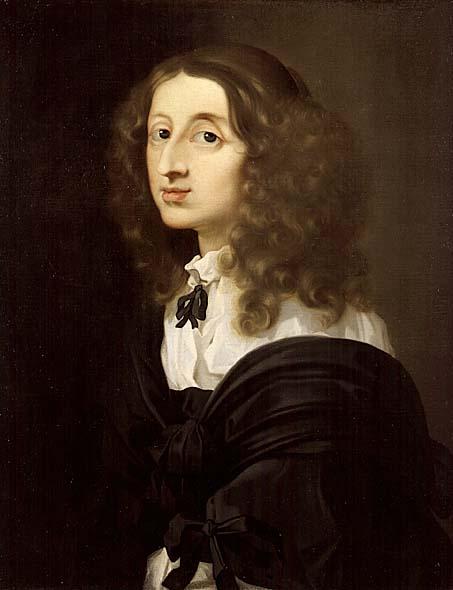
Christina and Christine have been in usage on the continent since at least the Middle Ages. Their popularity may be due to an early Christian saint and martyr of Syria. However, one of its most notable bearers was Queen Christina of Sweden.

Currently, Christina stands as the 20oth most popular female name in the United States, (2008). The highest she has ranked was in 1985, coming in as the 12th most popular female name. Its French counterpart of Christine, currently comes in as the 589th most popular female name, (2008), but at one time stood as the 14th most popular female name between 1967 and 1970.

Her popularity in other countries are as follows:

  • 9 (Czech Republic, 2009)
  • # 127 (Germany, 2009)
  • # 50 (Hungary, 2008)

Her Scandinavian forms of Kristin and Kirsten have been prevalent in the United States since the 1980s. Currently, Kirsten stood as the 567th most popular female name, (2008), while Kristin came in as the 883rd most popular female name, (2008), but once came in as the 31st most popular female name, back in 1981.

Other feminine forms include:

  • Kristina Кристина (Arabic/Bulgarian/Croatian/Czech/German/Lithuanian/Russian/Scandinavian/Serbian/Slovene
  • Crestina (Aragonese)
  • Kistiñe (Basque)
  • Christel (Bavarian: initially a diminutive form, but now used as an independent given name)
  • Hristina Христина (Bulgarian)
  • Cristina (Catalan/Corsican/Galician/Italian/Portuguese/Romanian/Spanish)
  • Kristýna (Czech)
  • Christa (Danish/English/German)
  • Kirstine (Danish)
  • Stina (Danish/Norwegian/Swedish)
  • Stine (Danish/Norwegian)
  • Tine (Danish/Norwegian)
  • Tineke (Dutch)
  • Stien (Dutch/Limburgish)
  • Christiana (English/Latin)
  • Tina (English/German/Italian/Scandinavian)
  • Kristiina (Estonian/Finnish)
  • Kirsi (Finnish)
  • Kirsti (Finnish)
  • Stiina (Finnish)
  • Tiina (Finnish)
  • Christelle (French)
  • Chrétienne (French: archaic)
  • Christiane (French/German)
  • Christine (French)
  • Christin/Kristin (German/Scandinavian)
  • Krista (German/Swedish)
  • Christína Χριστίνα (Greek)
  • Kilikina (Hawaiian)
  • Kriszta (Hungarian)
  • Krisztiána (Hungarian)
  • Krisztina (Hungarian)
  • Kristín (Icelandic)
  • Kristjana (Icelandic)
  • Cristiana (Italian/Portuguese)
  • Kristiana (Latvian)
  • Krystiana (Polish)
  • Krystyna (Polish)
  • Kjerstin (Norwegian)
  • Kjersti (Norwegian)
  • Cristìna (Sardinian)
  • Cairistìona (Scottish)
  • Kirsteen (Scottish)
  • Kirstie (Scottish)
  • Kirstin (Scottish)
  • Kristína (Slovak)
  • Kerstin (Swedish)
  • Crystin (Welsh)

English and German diminutives are: Chris, Christy, Chrissy and Tina.

French diminutives are: Chris, Chrisette and Titine.

A common Italian and Spanish compound form is Maria Cristina.

Designated name-days are: July 24 (Greece), November 12 (France), December 25 (Greece).

Alice, Allison

Gender: Feminine
Origin: debated
Meaning: debated
Eng (AL-is)

The name is of debated origin and meaning, and is usually narrowed down to two possible origins and meanings, one, the most popular theory, is that it is a French Norman form of Alaïs, which is an old French form of the Germanic, Adalheid, meaning, “noble; high.” Other sources like to link the name with a Greek source, meaning, “truth”, however, though this is a popular etymology, I was never able to confirm it.

Alice was quite popular in Medieval Europe, as were her offshoots: Alicia, Alix and Alison.

In 1880, Alice was the 8th most popular female name in the United States, today, Alice stands at a meagre # 326, being replaced by her more modern sounding counterparts: Alicia and Allison.

Allison is the 32nd most popular female name in the United States, (2008).

Contrary to popular belief, Allison/Alison is a very old feminine given name, which can be traced all the way back to the Normans. Its was originally a diminutive form of Aalis, (the Norman form of Alice), and was introduced into England during the 11th-century. Allison/Alison disappeared at the end of the Middle Ages, and was revived in the 20th-century. She first appeared in the U.S. top 1000 in 1946, coming in as the 903rd most popular female name.

Another very current version is Alicia, which is actually fading in popularity. As of 2008, she was the # 178th most popular female name in the United States, but back in 1983, she was the 41st most popular female name.

The Alice is form is not just relegated to English-speaking countries. Her usage is found in France, pronounced, (ah-LEES), in Italy as (ah-LEE-che), in the Czech Republic as (ah-LEET-seh). She is also used in German-speaking countries, Portuguese-speaking countries and in Scandinavia. Her current rankings are as follows:

  • # 99 (Australia, 2008)
  • # 58 (Belgium, 2006)
  • # 46 (England/Wales, 2008)
  • # 358 (Germany, 2009)
  • # 85 (Ireland, 2008)
  • # 10 (Italy, 2006)
  • # 488 (the Netherlands, 2008)
  • # 1 (Sweden, 2009)

Her Latinate counterpart of Alicia is also very transcultural, her rankings are as follows:

  • # 97 (Australia, 2008)
  • # 62 (Belgium, 2006)
  • # 95 (England/Wales, 2008)
  • # 94 (Germany, 2009)
  • # 110 (the Netherlands, 2008)
  • # 17 Alicja (Poland, 2008)
  • # 90 (Scotland, 2008)
  • # 43 (Spain, 2008)
  • # 29 (Sweden, 2009)

Other forms of the name include:

  • Alizia (Aragonese)
  • Licia (Asturian)
  • Alike (Basque)
  • Alícia (Catalan/Spanish: ah-LEE-thee-ah Spanish European. ah-LEE-see-ah Latin American Spanish)
  • Alice (Czech/Danish/Dutch/English/French/German/Icelandic/Italian/Norwegian/Swedish)
  • Alicia (English/Galician/German/Italian: ah-LEE-shuh in English and ah-LEE-chah in Italian)
  • Aila/Aile (Estonian)
  • Aili (Estonian/Scottish)
  • Aliise (Estonian)
  • Aliisa (Finnish)
  • Alison (French)
  • Alix (French: ah-LEEKS)
  • Aliki/Alíkē Aλίκη (Greek: Modern)
  • Aliz (Hungarian)
  • Ailís (Irish-Gaelic: AY-leesh)
  • Alise (Latvian)
  • Alicija (Lithuanian)
  • Ealee (Manx)
  • Ealish (Manx)
  • Aalis (Norman)
  • Alicja (Polish: ah-LEET-syah)
  • Alisa Алиса (Russian)
  • Aileas (Scots-Gaelic)
  • Alica (Slovakian: ah-LEET-sah)
  • Allis (Swedish)
  • Alis (Welsh)

An obscure Italian masculine form is  Alicio.

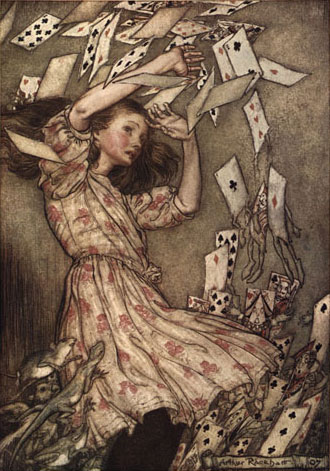
In popular fiction, it is borne by the protagonist of Lewis Carroll’s Alice’s Adventures in Wonderland (1865).

Designated name-days are Janury 15 (Czech Republic), June 23rd (Sweden), September 16 (Estonia) and December 16 (France).

Mary, Maria, Miriam

Mary and its various forms has to be one of the quintessential, classic female names of all time, she has been used in Protestant England in the form of Mary, in the Islamic world as Maryam, in Jewish communities in the form of Miriam and in the Catholic world as Maria, Marie or Mary.

In the United States, she has never quite detracted from the top 100, if Mary is not in fashion then it is usually one of her other forms that may take her place, such as Molly, Mariah, Maria or Mia, all depending on the flavor of the day.

Currently, Mary is the 97th most popular female name in the United States, (2008). Mary’s rankings in other countries are as follows:

  • # 7 (Armenia, 2008)
  • # 57 (Ireland, 2007)

Its French form of Marie is popular outside the Hexagon, she currently ranks in as the 546th most popular female name in the United States, but in other countries, she appears in the top 10. Her rankings are as follows:

  • # 9 (Armenian, 2008)
  • # 4 (Belgium, 2008)
  • # 17 (Czech Republic, 2008)
  • # 24 (Denmark, 2008)
  • # 20 (France, 2009)
  • # 9 (Germany, 2009)
  • # 270 (the Netherlands, 2008)

The continental form of Maria is extremely popular across Europe and Latin America, her rankings in other countries are as follows:

  • # 4 (Argentina, 2009)
  • # 8 (Basque Country, Spain, 2008)
  • # 3 (Belarus, 2005)
  • # 3 (Bulgaria, 2008)
  • # 89 (Canada, B.C., 2008)
  • # 6 (Catalonia, Spain, 2008)
  • # 8 (Chile, 2008)
  • # 91 (England/Wales, 2008)
  • # 6 (Estonia, 2007)
  • # 4 (Faroe Islands, 2008)
  • # 59 (Germany, 2009)
  • # 1 (Greece, 2004)
  • # 90 (Hungary, 2008)
  • # 5 (Iceland, 2004-2007)
  • # 49 (Ireland, 2008)
  • # 1 (Israel, among Christian girls, 2004)
  • # 9 Marija (Latvia, 2005)
  • # 1 Marija (Macedonia, 2006)
  • # 1 (Malta, 2008)
  • # 39 (the Netherlands, 2008)
  • # 14 (Norway, 2008)
  • # 17 (Poland, 2009)
  • # 1 (Portugal, 2008)
  • # 2 (Romania, 2008)
  • # 2 (Russia, 2007)
  • # 99 (Scotland, 2008)
  • # 1 (Slovakia, 2004)
  • # 2 (Spain, 2008)
  • # 96 (Sweden, 2008)
  • # 7 (Ukraine, 2009)
  • # 64 (United States, 2008)

Her diminutive offshoot of Mia, has also been quite trendy the last 10 years, as of 2008, she was the 14th most popular female name in the United States. In other countries, her rankings are as follows:

  • # 1 (Australia, 2008)
  • # 25 (Canada, B.C., 2008)
  • # 44 (Chile, 2006)
  • # 11 (England/Wales, 2008)
  • # 1 (Germany, 2009)
  • # 23 (Ireland, 2008)
  • # 5 (Isle of Man, 2009)
  • # 350 (the Netherlands, 2008)
  • # 24 (New Zealand, 2009)
  • # 12 (Norway, 2008)
  • # 26 (Scotland, 2008)
  • # 46 (Slovenia, 2005)
  • # 3 (Switzerland, among Romansch-speakers, 2008)

Another common diminutive offshoot, is Molly, which is mostly used in the English speaking world, but has also shifted over to some of the Scandinavian countries. Her rankings in other countries are as follows:

  • # 57 (Australia, 2007)
  • # 84 (Canada, B.C., 2008)
  • # 32 (England/Wales, 2008)
  • # 25 (Ireland, 2008)
  • # 33 (New Zealand, 2009)
  • # 39 (Scotland, 2008)
  • # 11 (Sweden, 2008)
  • # 104 (United States, 2008)

Miriam is another common choice which is popular throughout Europe and the Middle East. Her rankings are as follows:

  • # 1 Mariam (Georgia, 2008)
  • # 6 Maryam (Iran, 2007)
  • # 4 Maryam (Israel, among Muslim girls, 2004)
  • # 6 Maryam (Pakistan)
  • # 48 Miriam (Spain, 2008)
  • # 1 Mariam (Tunisia, 2005)
  • # 309 Miriam (United States, 2008)

As for its meaning and derivation, though the its origins can be traced back to the Bible, its lingustic and etymological meaning has long been debated. Many hypothesis include that the name could be a derivative of the Hebrew meri, ‘rebel’ related to the Hebrew verb MRH, mara or Marah which means’ to be “rebellious.” Or that it is related to the Hebrew word מרא (MRA, mara) which means ‘well-fed’, something which would have been considered a comely attribute in Biblical times.

One of the most popular etymological theories is its association with the Hebrew מר (MR, mar), meaning. “bitter” or “bitterness, and another very well established hypothesis suggests that it is from an Egyptian source, mry “beloved” or mr meaning “love.”

Other possible theories include:

That is it a combination of the Hebrew words מר (MR, mar), meaning “bitter” or the Hebrew (mar) meaning, “drop”; or (mor) meaning, “myrrh” or ” (mari ) meaning “mistress’.

The name is borne by several female characters in both the Old and New Testament.

Among Jews, the name was originally used in honour of the sister of Aaron, Miriam the Prophetess.

Among Muslims and Christians, (particularly Catholics and Eastern Orthodox), the name is usually used in honour of the Virgin Mary, the mother of Jesus.

However, in certain eras and cultures, Mary or Maria was considered too sacred of a name to use on a child, and in other cultures, the name Maria is so honorable to have, that it is even bestowed upon males, usually in conjunction with a male name or as a middle name. This is especially so in Spanish-speaking countries, French speaking countries and occasionally done in other predominate Catholic countries such as Ireland, Poland and in Bavaria, Germany.

The name has made is presence known in British royalty as well as in the continental ruling houses. Other forms are as follows:

Latinate Forms
Forms used in Latin-based languages

  • Marieta (Catalan: originally a diminutive form, used as an independent given name in Spanish-speaking countries)
  • Miryam (Catalan: archaic form from the 13th-century)
  • Maria (Corsican/Italian/Occitanian/Portuguese/Romanian/Romansch/Latin)
  • Manon (French: originally a diminutive form of Marie, the name has been used as an independent given name for centuries. In fact, it currently ranks in as the 7th most popular female name in Belgium (2006), the 4th most popular female name in France (2006), and the 184th most popular female name in the Netherlands (2008). Pronunciation can be heard here: http://www.forvo.com/search/Manon/)
  • Marie (French: she is one of the most popular middle names in the English speaking world. In French, this form is bestowed on males in conjunction with other male names or as a middle name. There are several common French female names used in conjunction with Marie, as well. Those of which, I will save for future postings).
  • Marielle (French: originally a diminutive form of Marie, now used exclusively as an independent given name)
  • Mariette (French: a diminutive form of Marie, occasionally used as an independent given name, now considered dated in French-speaking countries).
  • Mariolle(French: obscure, very old diminutive form of Marie, the inspiration of the Polish offshoot, Mariola).
  • Marion (French: a medieval French diminutive form of Marie, now exclusively used as an independent given name, the name was borne in legend by the love interest of Robin Hood, Maid Marion, and is borne by French actress, Marion Cotillard. In France, it is the 59th most popular female name (2006)
  • Myriam (French: form of the Biblical, Miriam, she ranks in as the 95th most popular female name in France (2006)
  • Mariella (Italian: originally a diminutive form of Maria, now exclusively used as an independent given name)
  • Marietta (Italian: a diminutive form of Maria, occasionally used as an independent given name).
  • Marigia (Italian: obscure)
  • Mariuzza/Maruzziella (Italian: obscure)
  • Mariana (Portuguese: Mariana is usually considered a name of a seperate etymology, but is used in Portuguese and Spanish as a form of Miriam. She is the 73rd most popular female name in Chile, 2006).
  • María (Spanish/Galician).
  • Marita (Spanish: a diminutive form of Maria, now often used as an independent given name)
  • Maritza (Spanish: a Latin American spin-off of Maria, originally a diminutive form, now a trendy given name, especially among Mexican-Americans, she is currently the 560th most popular female name in the United States).
  • Mareye (Walon)

An Italian diminutive form is Mimi. A Portuguese diminutive form is Mariazinha.

Masculine forms are:

  • Mari (Catalan)
  • Mariu (Corsican)
  • Mario (Italian/Galician)
  • Marius (Latin/French/Romanian)
  • Mário (Portuguese)

Germanic Forms
Forms used in Germanic-speaking countries

  • Maiken/Majken (Danish/Norwegian/Swedish: originally a diminutive form of Maria, now used exclusively as an independent given name).
  • Maria (Danish/Dutch/English/Faroese/Frisian/German/Norwegian/Swedish)
  • Marie (Danish/German/Norwegian/Swedish: a borrowing from the French)
  • Mari (Danish)
  • Maaike/Maike (Dutch/Frisian/German: originally a diminutive form, used exclusively as an independent given name. In 2008, it was the 98th most popular female name in the Netherlands)
  • Marieke(Dutch: originally a diminutive form, now exclusively used as an independent given name. In 2008, it was the 188th most popular female name in the Netherlands)
  • Marijke (Dutch: mah-RYE-keh)
  • Marike (Dutch: originally a diminutive form of Maria, now used exclusively as an independent given name, pronounced mah-REE-keh)
  • Marja (Dutch/Faroese/Gothic/Limburgish: MAHR-yah).
  • Meike (Dutch/German: originally a diminutive form, now used as an independent given name, it was the 53rd most popular female name in the Netherlands of 2008.)
  • Mia (Dutch/German/English/Scandinavian: originally a diminutive form, now used as an independent given name)
  • Mieke (Dutch/Limburgish: originally a diminutive form, used exclusively as an independent given name MEE-keh)
  • Miep(Dutch: a diminutive form, but occasionally used as an independent given name MEEP).
  • Miet (Dutch: originally a diminutive form, occasionally used as an independent given name MEET).
  • Mirjam (Dutch/German/Swedish: form of the Biblical Miriam).
  • Mariel (English: just an anglicized form of the French, Marielle).
  • Mariota (English: archaic, form used in the 13th-century)
  • Mary (English)
  • Molly/Mollie (English: originally a diminutive form, now used more often as an independent given name)
  • Polly (English: originally a diminutive form, now used more often as an independent given name)
  • Marý(Faroese)
  • Mareike (Frisian/German: originally a diminutive form of Maria, now used exclusively as an independent given name)
  • Maja (German/Scandinavian: originally a diminutive form of Maria, used exclusively as an independent given name. It is the 2nd most popular female name in Sweden, (2008)
  • Mariele(German: originally diminutive form of Maria, used exclusively as an independent given name, pronounced mah-REE-leh).
  • Miriam(German/English: Biblical form, often used in German and English speaking countries)
  • Mitzi (German/English: not really used as an independent given name in German speaking countries, but experienced a short usage of popularity as an independent given name in the United States).
  • Ria(German/Dutch: originally diminutive forms, occasionally used as independent given names)
  • Mæja (Icelandic: originally a diminutive form of Maria, used exclusively as an independent given name)
  • María(Icelandic)
  • Mies (Limburgish: diminutive form of Maria, used as an independent given name in the Netherlands. MEES)
  • Mathie (Normand: mah-TEE)
  • My(Swedish: originally a diminutive form of Maria, now used as an independent given name MEE. In 2007, it was the 79th most popular female name in Sweden).
  • Mirele מִירֶעל(Yiddish: a form of Miriam. MEER-eh-leh)

Common English diminutives include May, Mayme, Mare, Mia, Molle, Molly, Moll and Polly, German diminutive forms are Mariechen and Mitzi.

Masculine forms include:

  • Marius (Dutch/German/English/Norwegian/Swedish)
  • Marjus (Faroese)
  • Maríus (Icelandic)

Baltic Forms
Variations used in Baltic countries.

  • Maaja (Estonian)
  • Maare/Maari (Estonian)
  • Maarika (Estonian/Finnish)
  • Maaria/Maarja (Estonian)
  • Maie/Maiu (Estonian: initially diminutive forms, now used as independent given names, MY-eh, MY-oo)
  • Maila/Maili/Mailu (Estonian: Maili is pronounced somewhat like Miley)
  • Mari (Estonian/Finnish)
  • Marjam (Estonian)
  • Marje/Marjen (Estonian)
  • Marjette (Estonian)
  • Mary (Estonian)
  • Maija/Maiju (Finnish)
  • Maikki (Finnish: a Finnicized form of the Sweden and Danish Majken, pronounced somewhat like Mikey)
  • Maaria/Maria (Finnish)
  • Marika (Finnish)
  • Maritta (Finnish)
  • Marjatta (Finnish: can also mean “without a berry” in Finnish, and is the name of a character in the Kalevala, but is often used as a variation of Maria; also used in Estonia)
  • Marjo (Finnish)
  • Marjukka (Finnish)
  • Marjut (Finnish)
  • Miia (Finnish)
  • Mirja (Finnish: translation of Miriam)
  • Mirjam/Mirjami (Finnish)
  • Maija (Latvian)
  • Maila (Latvian: MY-lah)
  • Mairita/Mairīta/Mairīte (Latvian)
  • Mairuta (Latvian)
  • Mare (Latvian: final E is pronounced)
  • Mareka (Latvian)
  • Mareta/Māreta (Latvian)
  • Marī (Latvian)
  • Mārica (Latvian)
  • Mariela (Latvian)
  • Mārieta (Latvian)
  • Marija (Latvian/Lithuanian)
  • Mārika (Latvian)
  • Marite/Mārita/Mārīte/Marīte (Latvian)
  • Marjama (Latvian)
  • Maruta/Māruta/Marute (Latvian)
  • Mare (Lithuanian)
  • Maryte (Lithuanian)

Masculine forms are:

  • Maarius/Mairo/Mario (Estonian)
  • Marijus/Marius (Lithuanian)

Slavic Forms
Forms used in Slavic countries

  • Merjem (Bosnian)
  • Mirjana (Bosnian/Croatian/Serbian/Slovene: translation of Miriam)
  • Mariya (Bulgarian/Russian/Ukrainian)
  • Marija (Croatian/Macedonian/Serbian/Slovene)
  • Marie (Czech: MAHR-yeh)
  • Maria (Polish)
  • Marieta (Polish)
  • Mariola (Polish: mahr-YOLE-ah)
  • Marita (Polish)
  • Maryla (Polish: mah-RIH-lah)
  • Marzena (Polish: not really etymologically related, but has had a historical usage as a variation of Maria in Poland. The name is actually the name of an ancient Polish goddess and it may be linked with the either Polish word for “hope; dream” or with the Old Slavonic word for “death.” mahr-ZHEH-nah, diminutive form is Marzenka).
  • Mária (Slovakian)
  • Marika (Slovakian)
  • Marica (Slovene: initially a diminutive form, used as an independent given name in Slovenia, but is also used as a diminutive form in Bosnian, Croatian, Serbian, Czech and Slovakian, mah-REET-sah).
  • Mojca (Slovene: initially a diminutive form, now used exclusively as an independent given name in Slovenia. MOY-tsah)
  • Marya Марья (Russian)

Czech and Slovak diminutive forms are: Mája, MáňaMaruška and Maryška. Serbian and Slovene diminutives are Maša. Russian diminutives are Manya, Masha, Mashenka and Mashka. Polish diminutives are MasiaMarysia (mah-RISH-ah) and Maryska.

Masculine forms are:

  • Marian (Polish)
  • Mariusz (Polish)
  • Marij/Mario (Slovene)

Celtic Forms
Forms used in Celtic Languages

  • Mari (Breton)
  • Mallaidh (Irish-Gaelic: translation of Molly)
  • Maira/Máire (Irish-Gaelic)
  • Mairenn/Máirín (Irish-Gaelic)
  • Muire (Irish-Gaelic)
  • Mariod/Mariot (Manx)
  • Moirrey/Voirrey (Manx)
  • Màiri (Scotch-Gaelic)
  • Mhari (Scotch-Gaelic)
  • Mhairi/Mhairie (Scotch-Gaelic)
  • Moire (Scotch-Gaelic)
  • Mair (Welsh)

Other Forms
Forms used in other languages not listed in the above

  • Maria (Albanian/Kiswahili)
  • Maryam مريم (Arabic)
  • Mariam (Armenian)
  • Məryəm (Azeri)
  • Maia (Basque)
  • Miren (Basque)
  • Mariam (Coptic/Egyptian)
  • Mariami (Georgian)
  • Maria Μαρία (Greek: Modern)
  • Maroula/Roula (Greek: Modern: initially diminutive forms)
  • Malia (Hawaiian/Zuni)
  • Mária (Hungarian)
  • Maria (Indonesian)
  • Meryem (Kurdish/Turkish)
  • Mariam/Mariamma/Mariamme (Malayalam)
  • Marija (Maltese)
  • Mere (Maori)
  • Miriama (Maori)

The name has several name-days.

William, Liam

Gender: Masculine
Origin: German
Meaning: “desire; helmet protection.”
(WIL-yem)

The name is of Norman origins and is derived from the Old Germanic elements wil meaning “desire” and helm, meaning “helmet; protection.”

In the early Middle Ages, the name was especially popular among Norman nobility and royalty. It was borne by an 8th-century saint, William of Gellone, a monk and cousin of Charlemagne.

The name was introduced into England in the 11th-century by William the Conqueror, and remained an extremely common name in England from thereon.

In the United States, William stands as the 8th most popular male name (2008), the lowest he has ever ranked in U.S. history was in 1992 and then again in 1995 when it came in as the 20th most popular male name.

At the turn of the last century, for 30 years in a row, William remained the 2nd most popular male name in the United States, (1880-1909).

His rankings in other countries is as follows:

# 2 (Australia, 2008)
# 16 (Canada, B.C., 2008)
# 10 (England/Wales, 2008)
# 83 (France, 2006)
# 44 (Ireland, 2007)
# 402 (the Netherlands, 2008)
# 5 (New Zealand, 2009)
# 19 (Norway, 2007)
# 46 (Scotland, 2008)
# 4 (Sweden, 2008)

Another popular up-and-coming form is Liam, which is an Irish contracted form of William. Currently, he stands as the 75th most popular male name in the United States (2008). His rankings in other countries are as follows:

# 17 (Australia, 2007)
# 48 (Belgium, 2006)
# 10 (Canada, B.C., 2008)
# 22 (England/Wales, 2008)
# 26 (Ireland, 2008)
# 82 (the Netherlands, 2008)
# 7 (New Zealand, 2009)
# 4 (Scotland, 2009)
# 13 (Sweden, 2007)

The name is borne by Irish actor, Liam Neeson.

Other cognates of William include:

  • Guildhelm (Afrikaans/Old Dutch)
  • Uilliam (Albanian)
  • Willelm (Anglo-Saxon)
  • Guillén (Aragonese)
  • Gwilherm (Breton)
  • Uiliam Уилиам (Bulgarian)
  • Guillem (Catalan)
  • Vilém (Czech)
  • Vilhelm (Danish)
  • Willem (Dutch)
  • Wim (Dutch)
  • William (English/Scandinavian)
  • Villem/Villu (Estonian)
  • Vilhelmi (Finnish)
  • Vilho (Finnish: contracted form)
  • Viljami (Finnish)
  • Ville (Finnish: contracted form)
  • Guillaume (French)
  • Jelle (Frisian: originally a diminutive form, used as an independent given name)
  • Pim (Frisian: originally a diminutive form, used as an independent given name)
  • Wilke/Wilko (Frisian)
  • Guillerme (Galician)
  • Wilhelm (German/Polish)
  • Gouliélmos Γουλιέλμος (Greek: Modern)
  • Vilmos (Hungarian)
  • Vilhjálmur (Icelandic)
  • Uilleag (Irish-Gaelic)
  • Uilliam (Irish-Gaelic)
  • Ulick (Irish: anglicization of Uilleag)
  • Guglielmo (Italian: most common offshoot)
  • Lemo (Italian: contracted form)
  • Velmo/Velmino (Italian: obscure)
  • Villelmo (Italian: obscure)
  • Villermo (Italian: obscure)
  • Vilio (Italian: obscure)
  • Guilielmus (Latin)
  • Viljams (Latvian)
  • Vilis (Latvian)
  • Wöllem/Wullem/Wum (Limburgish)
  • Vilhelmas (Lithuanian)
  • Vilius/Viliumas (Lithuanian)
  • Wellëm (Luxembourgish)
  • Illiam (Manx)
  • Wiremu (Maori)
  • Gllâome (Norman)
  • Guilhem (Occitanian)
  • Willahelm (Old German)
  • Vilhjálmr (Old Norse)
  • Willken/Wilm/Willm (Plattdeutsch)
  • Guilherme (Portuguese)
  • Zelmino/Zelmo (Romanesque)
  • Vilhelm (Romanian/Scandinavian)
  • Wellem (Ripoarisch)
  • Vilgelm Вильгельм (Russian/Ukrainian)
  • Vėljams (Samogaitian)
  • Uilleam (Scottish-Gaelic)
  • Gugghiermu (Sicilian)
  • Vilim Вилим (Serbian)
  • Viliam (Slovak)
  • Viljem (Slovene)
  • Guillermo (Spanish)
  • Gelmo/Gilmo (Venetian)
  • Gwil (Welsh)
  • Gwilim/Gwilym (Welsh)
  • Velvel װֶעלװֶעל (Yiddish: also the Yiddish word for wolf but commonly used as a diminutive form of Wilhelm)

Notable bearers include: Swiss national folk hero, William Tell (14th-century), Scottish national hero, William Wallace (13th-century).

It was also borne dramatist, William Shakespeare (1564-1616), poet William Blake (1757-1827), dramatist, William Butler Yeats (1865-1939), author William Faulkner (1897-1962), including the current Crown Prince of England, Prince William of Wales (b.1982), and it has also been borne by several U.S. presidents.

Common English diminutives England: Bill, Billy, Will, Willy and Wills/Wils.

Italian diminutives include: Gelmino, Ielmo, Memmo (Tuscan dialectical form), Memo and Lemmo.

Feminine offshoots include Willa, Wilhelmina, Wilma, Mina and Minnie.

Wilhelmina is a German/Dutch form that was briefly used in the United States in the early part of the 20th-century but is in rare use today, in fact, she does not appear in the U.S. top 1000. It is, however, currently the 297th most popular female name in the Netherlands (2008)

Wilhelmina was borne by several Danish princesses, and was extremely common in German and Dutch royalty.

Its contracted English form of Willa, seems like it should be an up-and-comer, but currently does not rank in the U.S. top 1000.

The name was borne by famous American author, Willa Cather (1873-1947) née Wilella, another feminine form of William which should be noted.

Minnie was quite fashionable as a stand alone name at the turn of the 20th-century. In 1880, she was the 5th most popular female name in the United States. She was out of the top 1000 by 1971.

The name is usually associated with the Disney Character and girlfriend of Mickey Mouse, Minnie Mouse, hence is probably why she fell out of usage.

Wilma is another form that has not been in the U.S. top 1000 for quite some time, introduced into the 19th-century by German and Scandinavian immigrants, Wilma is currently very trendy in both Norway and Sweden. More so in Sweden, it is currently the 9th most popular female name (2008).

An early English feminine form that might be appealing to the surname lovers was Wilmot, which appears as early as the 16th-century. It may have been an anglicization of an early French feminine name, Wilmette.

Other feminine forms are:

  • Wilma/Vilma (Czech/English/German/Portuguese/Scandinavian/Slovak/Spanish)
  • Elma (Dutch/German/Slovene: contracted form)
  • Willemina (Dutch)
  • Willemijn (Dutch)
  • Mina (English/German: contraction of Wilhelmina)
  • Minnie (English/German)
  • Velma (English/German)
  • Wilella (English)
  • Willa (English)
  • Willia (English)
  • Wilmot (English)
  • Wilhelmina (English/German/Dutch/Polish)
  • Helmi (Finnish: also means “pearl” see Helmi)
  • Miina (Finnish: contraction of Wilhelmina)
  • Minna (Finnish/German)
  • Vilhelmiina (Finnish)
  • Guillaumette/Guillaumine (French)
  • Guilette (French)
  • Minette (French)
  • Wilhelmine (French/German/Dutch)
  • Wilmette (French)
  • Jeltje/Jeltsje (Frisian: contractions of Wilhelmina)
  • Helma (German: contraction of Wilhelmina)
  • Helmine (German: contraction of Wilhelmina)
  • Vilhelma (Hungarian)
  • Vilhelmina (Hungarian/Scandinavian)
  • Azelma (Italian)
  • Gilma (Italian)
  • Guglielma/Guglielmina (Italian: diminutive forms are Mema and Memma)
  • Velma/Velmina (Italian)
  • Villelma/Vilelma/Villelmina/Villermina (Italian)
  • Vilia/Villa (Italian)
  • Zelma/Zelmina (Italian)
  • Mien (Limburgish: originally a short form of Wilhelmina, now used as an independent given name)
  • Guilhermina (Portuguese)
  • Wilja (Scandinavian)
  • Willamina (Scottish)
  • Guilla/Guillerma/Guillermina (Spanish)
  • Ilma (Spanish: contraction of Guillierma)
  • Gelma/Gelmina (Ventian)
  • Velvela (Yiddish)

A Finnish/Scandinavian diminutive is Mimmi.

A Czech and Polish diminutive is Minka and a popular English diminutive was Billie.

Designated name-days are: January 10 (France/Lithuania/Poland), April 6 (Finland/Hungary/Poland), May 26 (Finland/Lithuania/Poland/Sweden), May 28 (Germany/Latvia/Poland/Slovakia), June 8-24-25 (Hungary/Lithuania/Poland), July 5 (Poland), September 2 (Poland), September 19 (Hungary/Lithuania), October 25 (Poland).
Anthony, Antonia

Origin: Latin
Meaning: unknown

The masculine English name, Anthony, is currently the 7th most popular male name in the United States.

The name is derived from a Roman family name, Antonius, which is of speculated origins, it is suspected to be of Etruscan heritage and it was borne by Marcus Antonius, (Marc Antony), who ruled the Roman Empire jointly with Caesar Augustus during the 1st-century B.C.E. His romance with Cleopatra is retold in Shakespeare’s tragedy, Antony and Cleopatra (1606).

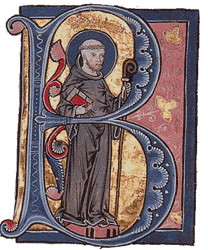
The name was popularized in the Christian world due to the cult of St. Anthony the Great, an Egyptian hermit from the 3rd-century C.E. He is mostly noted for his establishment of Christian monasticism, another famous saint is Anthony of Padua, a 13th-century saint, who is known as the patron saint of Portugal and of lost items.

Originally, Antony was the more common form used in the English speaking world, and still is, to a certain extent, in the United Kingdom. The original English pronunciation was AN-tuh-nee, but AN-thuh-nee can also be heard in certain areas of the United States, particularly in the Midwest.

The lowest that Anthony has ranked in United States naming history was in 1885 when he came in as the 105th most popular male name.

His ranking in other countries is as follows:

  • # 48 (Australia, 2007)
  • # 33 Antoine (Belgium, 2006)
  • # 55 (Canada, B.C., 2008)
  • # 16 Antoine (France, 2006)
  • # 70 (France, 2006)
  • # 74 Antonin (France, 2006)
  • # 71 (Ireland, 2007)
  • # 312 (the Netherlands, 2008)
  • # 22 (Spain, 2006)

Its continental form of Anton, has always been a popular choice throughout Northern and Central Europe, in the United States, he is currently the 832nd most popular male name-2008, the highest he ever ranked in U.S. naming history was in 1885 coming in as the 175th most popular male name.

In other countries, his rankings are as follows:

  • # 4 (Finland, among Swedish-speakers, 2007)
  • # 11 (Sweden, 2007)

The feminine form of Antonia, currently does not rank in the U.S. top 1000, she is currently the 5th most popular female name in Chile-2008.

In the Netherlands, its diminutive form of Teun is currently the 36th most popular male name (2008).

Other forms of Anthony include:

  • Antón (Aragonese)
  • Antoniu (Asturian/Romanian/Sicilian)
  • Andoni (Basque)
  • Antolin (Basque)
  • Antton (Basque)
  • Anteng (Bavarian)
  • Dane (Bavarian: not to be confused with the English name Dane, this is pronounced: DAH-neh)
  • Anton Антон ანტონ(Breton/Bulgarian/Dutch/Estonian/Georgian/German/Maltese/Romanian/Russian/Scandinavian/Slovene/Ukrainian)
  • Antoun (Breton)
  • Andon Андон (Bulgarian/Albanian)
  • Antonij Антоний (Bulgarian)
  • Antoni (Catalan/Polish/Romansch: in Catalan, Tonet is the diminutive form. In Polish, the pet form is Antek)
  • Antone (Corsican: Antó is the diminutive form)
  • Ante/Anto (Croatian)
  • Antun (Croatian)
  • Antonín (Czech)
  • Anthonie/Antonie (Dutch)
  • Antheunis/Anthonis (Dutch)
  • Antonius (Dutch/Latin)
  • Antoon (Dutch)
  • Teun (Dutch: originally a diminutive form, now used as an independent given name).
  • Teunis/Theunis (Dutch: originally a diminutive form, now used exclusively as an independent given name)
  • Ton (Dutch/Limburgish)
  • Anteneh (Est0nian)
  • Tõnis (Estonian: originally a diminutive form, also used as an independent given name)
  • Anttoni (Finnish)
  • Antoine (French)
  • Antonin (French/Romansch)
  • Tinus (Frisian)
  • Antain/Antaine/Antoin/Antóin (Gaelic-Irish)
  • Antônios Αντώνιος/Antónis Αντώνης (Greek: modern)
  • Akoni/Anakoni (Hawaiian)
  • Antal (Hungarian)
  • Antoníus (Icelandic)
  • Totono (Indonesian)
  • Antonello (Italian)
  • Antonetto/Antonietto (Italian: obscure archaic diminutive form that was used as an independent given name)
  • Antoniano (Italian)
  • Antonico (Italian)
  • Antonillo (Italian)
  • Antonino (Italian: Nino is the common diminutive form)
  • Antoniuccio/Antonuccio (Italian: archaic form)
  • Antoniusso (Italian: archaic form)
  • Antuono (Italian: archaic, possibly a corruption of the French Antoine)
  • Antoninus (Latin)
  • Antons (Latvian)
  • Tun/Tunnes (Lexumburgish)
  • Antanas (Lithuanian: more common form)
  • Antonijus (Lithuanian)
  • Tonìn (Neopolitan)
  • Tonik (Norwegian: obscure form)
  • Titoan/Titouan (Occitanian/Provençal)
  • Tönnies, Tüns (Plattdeutsch)
  • Antoniusz (Polish: obscure form)
  • António (Portuguese: European)
  • Antônio (Portuguese: Brazilian)
  • Tonnies/Tünnes (Ripoarisch)
  • Antieni (Romansch)
  • Antòni (Sardinian/Occitanian: diminutive form is Tottoi)
  • Antonije Антоније (Serbian)
  • ‘Ntonio (Sicilian)
  • Antonio (Spanish/Italian: Toño and Tonito are the Spanish diminutive forms)
  • Done (Swabian)
  • Antümi (Turkish)
  • Antonij Антоній (Ukrainian)

Various feminine forms include:

  • Antònia (Catalan)
  • Antonieta (Catalan)
  • Antonija Антонија (Croatian/Serbian/Slovene)
  • Antonína (Czech/Slovak)
  • Antonie (Czech: ahn-TONE-yeh)
  • Antonia (Dutch/Italian/Polish/Romansch/Slovene/Spanish)
  • Tonneke (Dutch)
  • Antonie (French)
  • Antonine/Tonine (French: Tonine was originally a diminutive form and is now occasionally used as an independent given name)
  • Antoinette (French/Dutch)
  • Toinette (French: originally a diminutive form, now used as an independent given name)
  • Toinon (French: originally a diminutive form, occasionally used as a diminutive form)
  • Antía (Galician)
  • Antonella (Italian)
  • Antonetta/Antonietta (Italian)
  • Antonica (Italian)
  • Antonilla (Italian)
  • Antonina Антонина (Italian/Polish/Russian: Tosia is the Polish diminutive form and Nina is the Italian diminutive form)
  • Antonita (Italian/Spanish: originally a pet form, now used as an independent given name)
  • Titoana/Titouane (Occitanian/Gascon/Provençal)
  • Antónia (Portuguese/Bearnais/Hungarian/Slovak)
  • Tonia (Romansch)
  • Tonka (Slovene: originally a diminutive form, used as an independent given name)

A common English diminutive form for both the masculine and the feminine is Tony, in French, common diminutive forms are Toine, Toinou and Togne, for males.

Italian feminine diminutive forms are: Tonia, Tonina, Tona, NinaNinetta and Ninuccia. Italian masculine diminutives are: Tonio, Tonello, Tonino, Tonuccio, Nino, Ninuccio, Totò, Toni and Tony.

Italian combined forms are Antonmaria, Antoniomaria and Antonangelo.

Alexander, Alexandra

Origin: Greek
Meaning: “defender of man.”

The name is composed of the Greek elements, ἀλέξω (alexos), meaning “to defend; to help” and the genitive Greek noun, ἀνδρός (andros) “belonging to man.” Hence, the name would roughly translate as “defender of man” or “helper of man.”

The name is extremely ancient, and possibly, even pre-Hellenistic, the oldest record of the name dates back to the Mycenean period, where the feminine form of Alexandra, is found written in Linear B.

In Greek mythology, Alexander was another name used for the hero, Paris and Alexandra was used as an epithet for the goddess, Hera.

The name is also found several times in the Bible and the most famous bearer in history has to possibly be attributed to Alexander the Great, a 4th-century Greek emperor who expanded his empire as far away as Asia, spreading his fame and his name.

Later the name was borne by several saints and kings throughout Europe, including Tsar Alexander I of Russia.

Currently, Alexander is the 6th most popular male name for boys in the United States, (2008), the lowest that Alexander ever ranked in U.S. naming history was in 1959, coming in at # 233.

In other countries, his rankings are as follows:

  • # 19 (Australia, 2008)
  • # 8 (Austria, 2008)
  • # 37 (Belgium, 2006)
  • # 3 (Bulgaria, 2008)
  • # 14 (Canada, B.C., 2008)
  • # 44 (Chile, 2006)
  • # 19 (England/Wales, 2008)
  • # 1 (Estonia, 2007)
  • # 9 (Finland, among Finnish-speakers)
  • # 99 (Hungary, 2008)
  • # 5 (Iceland, 2004-2007)
  • # 5 (Isle of Man, 2008)
  • # 2  Alessandro (Italy, 2007)
  • # 4 Alecsander/Alessandro (Liechtenstein, 2008)
  • # 1 Aleksander (Macedonia, 2006)
  • # 5  Alejandro (Mexico, 2008)
  • # 97 (the Netherlands, 2008)
  • # 10 (Norway, 2008)
  • # 14 Aleksander (Poland, Warsaw, 2009)
  • # 2 Alexandru (Romania, 2008)
  • # 1  (Russia, Moscow, 2007)
  • # 11 (Scotland, 2008)
  • # 2 Alejandro (Spain, 2008)
  • # 2 Àlex (Spain, Catalonia, 2008)
  • # 6 (Sweden, 2008)
  • # 1 Alessandro (Switzerland, among Italian-speakers, 2008)

Other forms of Alexander include:

  • Aleksandër/Sandër/Skënder (Albanian: Aleko, Aleks, Leka, Lekë, Leksi and Leks are diminutive forms)
  • Eskender (Amharic/Ethiopian)
  • Iskander الاسكندر / اسكندر (Arabic)
  • Alixandre (Aragonese)
  • Aleksandr/Alexandr Ալեքսանդր (Armenian)
  • Aleksan/Alexan Ալեքսան (Armenian)
  • Aleq/Alik Ալեք/ Ալիկ (Armenian: originally diminutive forms, now used as independent given names)
  • Alexandru (Asturian/Romanian)
  • İsgəndər (Azeri)
  • Alakshendra/Alekzandar (Bangali)
  • Iskandar/Skandar (Bangali)
  • Iskәndәr Искәндәр (Bashkir)
  • Alesander (Basque)
  • Aliaksandr Аляксандp (Belarusian: Aleś Алeсь is usually the diminutive form)
  • Alaksander Аляксандаp (Belarusian: Tarashkevitsa spelling)
  • Aleksandar (Bosnian/Croatian: Saša is the diminutive form)
  • Aleksandar Александър (Bulgarian: Sasho Сашо and Aleks Aлекс are the diminutives)
  • Alexandre/Àlex/Xandre (Catalan/Galician)
  • Lisandru (Corsican/Lombard)
  • Alexandr (Czech)
  • Alexander (Czech/Dutch/English/Estonian/German/Icelandic/Norwegian/Swedish)
  • Alexander/Aleksander (Danish)
  • Xander (English)
  • Sander (Dutch/Estonian/Norwegian: contracted form)
  • Aleksander (Estonian)
  • Alejandru (Extrumaduran: a dialect of Spanish)
  • Aleksandur (Faroese)
  • Aleksanteri (Finnish)
  • Santeri/Santtu (Finnish: contracted forms)
  • Alexandre (French)
  • Aleksander (Frisian)
  • Alexandré/Aleksandre ალექსანდრე (Georgian)
  • Aleko ალეკო/Lexo ლექსო (Georgian: contracted forms)
  • Aléxandros Αλέξανδρος (Greek: Modern)
  • Alakshendra अलक्षेन्द्र (Hindi)
  • Sándor (Hungarian)
  • Iskandar (Indonesian/Malay)
  • Alasandar/Alastar/Alsander (Irish-Gaelic)
  • Alessandro (Italian: Ale is a diminutive form)
  • Alessandrino (Italian: obscure)
  • Sandro (Italian: a diminutive form now used exclusively as an independent given name)
  • Sandrino (Italian: originally a diminutive form, used as an independent given name, obscure)
  • Askander/Eskander/Îskenderê (Kurdish)
  • İskender Искендер (Kyrgyz)
  • Aleksandrs (Latvian)
  • Alexandrus (Latin)
  • Aleksandras (Lithuanian)
  • Lisandor (Lombard)
  • Aleksandar Александар (Macedonian: Alek Алек, Atse Аце, Atso Ацо and Sasho Сашо are diminutive forms)
  • Chandy ചാണ്ടി (Malayalam)
  • Lixandru (Maltese)
  • Alxandre (Mirandese: a dialect of Portuguese)
  • Aleksandr/Alexandr Алєѯандръ (Old Church Slavonic)
  • Sikandar سکندر (Persian)
  • Aleksander (Polish: more common form, diminutives include, Alek, Aleks and Olek.)
  • Oleksander (Polish: archaic form)
  • Alexandre (Portuguese)
  • Alexandro (Portuguese: obscure)
  • Alesch (Romansch)
  • Alexi (Romansch)
  • Aleksandr Александр (Russian: diminutive forms include: Alik Алик, Sasha Саша, Sashka Сашка, Sashok Сашок, Sashkin Сашкин, Shura Шура, Shurik Шурик and Sanyok Санёк )
  • Alasdair/Alastair/Alistair/Alisdair/Aldair (Scotch-Gaelic)
  • Aleksandar Александар (Serbian: Aca Аца, Aleks Алекс, Sale Сале, and Saša Саша are diminutives)
  • Alessandru (Sardinian)
  • Alissandru (Sicilian)
  • Lisciànniru/Lisciànnuru/Lisciànnaru (Sicilian)
  • Aleksander (Slovene: Aleks, Sandi and Sašo are the diminutives)
  • Alejandro (Spanish: Alejo, Alex, Jano and Jandro are the diminutive forms)
  • Aleksandar (Tamil)
  • İskender (Turkish)
  • Olexandr/Oleksandr Олександр (Ukrainian: Oles Олесь and Sashko Сашко are the diminutives)
  • Iskandar (Uzbek)
  • Alecsander (Welsh)
  • Sender/Senderl סענדער (Yiddish)

As for its feminine form, it has also been borne by several monarchs and saints throughout history. Currently, she is the 61st most popular female name in the United States, the highest she ranked was at # 26 in 1995-1996, the lowest she ever ranked was in 1936 coming in as the 991st most popular female name. Her rankings in other countries is as follows:

  • # 74 (Australia, 2007)
  • # 5 (Bulgaria, 2008)
  • # 53 (Canada, B.C., 2008)
  • # 45 (Chile, 2006)
  • # 90 (England/Wales, 2008)
  • # 21 (Hungary, 2008)
  • # 67 (Ireland, 2007)
  • # 7 (Macedonia, 2006)
  • # 397 (the Netherlands, 2008)
  • # 99 (Norway, 2007)
  • # 8 Aleksandra (Poland, 2oo8)
  • # 4 (Romania, 2008)
  • # 77 (Sweden, 2007)

Alexandra has also spun off Sandra, which is currently the 7th most popular female name in Estonia, and ranks in as the # 441st most popular female name in the United States.

In the United States, the highest she peaked was in 1947, coming in as the 5th most popular female name. Sandy is the preferred pet form.

In other countries, her rankings are as follows:

  • # 58 (Norway, 2008)
  • # 30 (Spain, 2006)

Its more elaborated version of Alexandria, currently ranks in as the 189th most popular female name in the United States (2008).

Other forms of Alexandra include:

  • Aleksandra Александра (Bulgarian/Croatian/Estonian/Polish/Russian/Serbian/Slovene)
  • Aleksandrina Александрина (Bulgarian/Russian)
  • Alexandra (Catalan/Czech/Dutch/English/French/German/Greek/Hungarian/Portuguese/Romanian/Scandinavian/Slovak)
  • Alexandrine (Danish/French/German)
  • Sandra (Dutch/English/Finnish/German/Italian/Latvian/Lithuanian/Portuguese/Scandinavian/Slovene)
  • Xandra (Dutch)
  • Alexandria (English/German)
  • Alexandrina (English: the first name of Queen Victoria)
  • Sandrine (French)
  • Szandra (Hungarian)
  • Alessandra (Italian)
  • Alessandrina (Italian)
  • Sandrina (Italian/Spanish)
  • Lisandra (Maltese)
  • Alexandreina (Romanian)
  • Sanda (Romanian/Croatian)
  • Alastríona/Alastrina (Scotch-Gaelic)
  • Alissandra (Sicilian)
  • Alejandra (Spanish)
  • Oleksandra Олександра (Romanian)

Common English diminutive forms for both genders are Alex, Lex, and Sandy. For males, Ander, Andy and Xander, for females, Alexa, Lexa, Lexie, Sandra and Xandra.

The designated name-days for Alexander are: February 27 (Slovakia), November 19 (Russia) and December 12 (Sweden).

The designated name-days for Alexandra are: April 21st (Czech Republic), May 6/31 (Russia), May 18 (Hungary), June 23 (Russia), August 30 (Greece), Janury 2nd (Slovakia) and February 17 (Sweden)

A Hungarian male diminutive is Sanyi.

Polish diminutives are: Ola, Olka and Olusia.

In Russian, common unisexual diminutives, are Sasha and Shura. Popular feminine diminutives are: Lesya Леся,

A Romanian male diminutive form is Sandu.

An obscure Scottish male diminutive is Sawney.