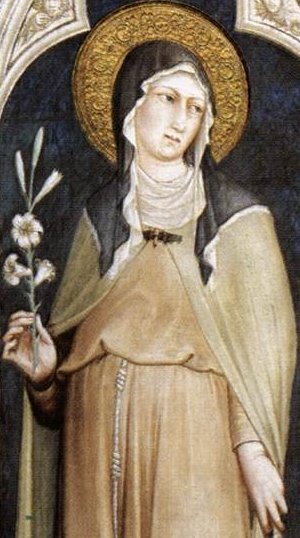
Magdalena, Madeleine, Madeline

Gender: Feminine
Origin: Latin
Meaning: “of Magdala.”

We have the exotic and sophisticated Magdalena, the French classic Madeleine and the English trend setter Madeline.  The origins of these names go all the way back to the Bible, the New Testament to be exact. It is derived from a title given to the famous Catholic saint, Mary Magdalen, also known as Mary of Magdala. Magdala, being the town that the former prostitute turned follower of Christ, hailed from, a town on the sea, near Galilee, its meaning being “tower.”

In the Middle Ages, St. Mary Magdalen was a beloved saint, making the name popular in virtually every European country, evolving into myriad different forms. The cult of St. Mary Magdalen was especially popular in France, where she was known as La Madeleine (lah mah-deh-LEN). In fact, tradition holds that, after the death of Christ, Mary Magdalen travelled to France, where she converted many of the early inhabitants to the new faith. She is considered one of France’s patron saints and it is believed that her bones were buried in France. La Madeleine gave her name to several communes in France as well as a river. It is even the name of a famous French pastry.

While you are out rushing to work, standing in line, getting your daily fix of Starbucks, you may notice that at the front counter there are packages of a soft little sponge-like cookie. These are madeleines or petit madeleines. They are a popular snack in France, made from lemon and butter, and are known for their distinctive shell shape. Legend has it that they acquired their name from the lady who invented them, Madeleine Paulmier. They are a delightful little treat, and I recommend that the next time you are at Starbucks, you should try them yourself.

Likewise, Madeleine has been a very popular choice in Great Britain and currently ranks in as the 80th most popular feminine name in Britain and Wales for 2007, while in its home country of France, it comes in rather low. It was the 454th most popular feminine name in France for 2006.

Let us not forget the fun and sweet version of Madeline (MAD-eh-LINE), Madeline seems to be specifically a North American version of the French form. Originally pronounced (MAD-eh-LIN), its preferred pronunciation has switched over to the former in the last decade, no doubt due to the popular children’s series of books of the same name.

Madeline has been quite popular the last few years, she ranked in at a whopping 61 in the 2007 most popular feminine names in the United States. She has also made her mark in other non-British English speaking countries, such as Canada and Australia. In Canada she came in at 85, while in Australia 93.

There is also the trendified corrupted form of Madelyn, which currently comes in at # 104, however, it is advisable to use the French spelling if you prefer the (Mad-eh-lin) pronunciation, which seems to be the goal of the parents of the Madelyns.

Nicknames include Maddie, Leine and Lynn. The name is borne by Princess Madeleine of Sweden, Madeleine Albright, and author Madeleine L’Engle.

Let us now move on to its Eastern European alternative of Magdalena (MAHG-dah-LAY-nah). This form is used in Spain, the Czech Republic, Slovakia, Bulgaria and Poland. It is especially popular in both Poland and the Czech Republic where it is often shortened to Magda, and occasionally Lenka. There are the Czech spin offs of Alenka and Madlenka, used as an independent name.

Magdalena might be appealing to English speaking parents who love the nickname Maggie but really dislike Margaret. On top of that, it can be shortened to appealing and trendy Laney or even Lena.

Other forms of the trio include:
  • Magdalawit (Amharic/Eritrean)
  • Maialen (Basque: MY-ah-LEN)
  • Madenn (Breton)
  • Miglena (Bulgarian)
  • Alena (Czech-Slovak and occasionally used in Germany. Diminutive form is Alenka)
  • Magdaléna (Czech)
  • Mahulena (Czech: a form created by Czech author, Julius Zeyer, for his his Ráduz and Mahulena-1898)
  • Magdalene (Danish)
  • Magdalone/Malene/Lone (Danish)
  • Malle/Madli (Estonian pronounced MAHL-leh and MAHD-lee) other forms include Mall, Leen (LANE), Leena and Made (MAH-deh)
  • Matleena (Finnish pronounced maht-LAY-nah) diminutive forms now commonly used as independent names include: Leen, Leena and Lenita)
  • Magdeleine (French: archaic form)
  • Leni (German: originally a diminutive form, it has recently become trendy in German speaking countries as an independent name)
  • Madelene (German: mah-deh-LEH-neh: other forms include, Madlene and Madlen)
  • Magdalini (Greek Modern-pronounced mahg-dah-LEE-nee)
  • Magdolna (Hungarian, pronounced mog-DOH-noh) diminutive forms now popularly used as independent name in Hungary are Lenke (LEHN-keh) and Duci (DOOT-see).
  • Madalein (Irish-Gaelic)
  • Mailin (Irish-Gaelic)
  • Maddalena (Italian pronounced mahd-dah-LAY-nah. Other forms include Maida, Madina and Magdala)
  • Madala (Latvian) another form is Magone
  • Talena (Latvian/Scottish)
  • Maguelone (Occitanian)
  • Madalena (Portuguese pronounced mah-dah-LAY-nah)
  • Maclaina (Romansch pronounced mugg-LIE-nah) other Romansch forms include Madina, Madlaina (mudd-LIE-nah) and Madlena (mudd-LEH-nah).
  • Madalina (Romanian pronounced mah-dah-LEE-nah)
  • Magdalina Магдалина (Russian)
  • Manda (Serbo-Croatian/Macedonian/Slovene)
  • Madlena (Sorbian)
  • Malin/Målin (Swedish/Norwegian pronounced MAW-lin, other forms include Malena and Madicken (MAH-dee-KEN)
  • Mädi (Swiss-German: dialectical form from Bern MAD-dee)
  • Magdalyna (Ukrainian)
  • Madałena (Venetian)

Other popular offshoots include the English corrupted form of Madelaine (MAD-eh-LANE): given to the daughter of David Duchovny and Téa Leoni. The dated German forms of Marlene (Eng mar-LEEN; Germ mahr-LEH-neh) & Marla and the Polish Marlena.The designated name day for all of these names is July 22.

French diminutives are Mado and Madelon. Polish diminutive forms are: Madzia, Magda, Magdunia, Magdusia and Magdeczka. Hungarian diminutives are, Duci

There are a few Italian masculine forms and that includes, Maddaleno, Magdalo and Maido.


Henry, Harry, Harriet, Henrietta

Origin: English/Germanic
Meaning: home ruler

Henry, an age old classic male name, is an anglicized version of the Germanic Heimric, which is composed of the elements heim meaning “home” and ric meaning “ruler.” The name evolved into the modern German Heinrich, the Scandinavian Henrik, the Polish Henryk, the French Henri, the Spanish Enrique and the Italian Enzo.

Henry has a lot of staying power in virtually most European countries. Like many of the other classic English names, this name came to England not through any Anglo-Saxon Germanic connections but through the conquering French Normans. It is has been a very popular choice among British and German royalty alike. It has been borne by the infamous Henry VIII all the way to our very present, Prince Henry, (aka Prince Harry), of England.

Henry has given to the world its diminutive form of Harry, which in many respects, is seen as an independent name in its own right. In Medieval England, Harry was considered the vulgar or everyday form of the name, most of England’s King Henrys were known affectionately as Harry. At one time, the name Henry was so common in the English speaking world, that the phrase, “Every Tom, Dick and Harry,” arose.

Harry is the title character of J.K. Rowling’s wizardry series, Harry Potter and again most the world knows the charming prince by his nickname versus his full name, given it a new appeal to young parents. Once seen as a stodgy and stuffy old man name, it is now seen as a classy and chic choice. Harry has recently enjoyed a surge in popularity in both the United Kingdom and the United States. Currently, Harry sits at # 644 in the 2008 most popular male names of the United States, while Henry comes in at # 76, and seems to be rising. Meanwhile, in Great Britain, Harry came in at a whopping # 5, while Henry at # 34. In France’s top male names of 2006, Henri came in at # 330, while its Italian version of Enzo, seems to be the more preferred version in recent years, Enzo came in as the # 1 most popular male name of France!

Other popular nicknames are Hal and Hank.

It also has feminine forms of Harriet and Henrietta, from both female versions the nicknames Hattie, Hettie and Etta came about. There is also the French form of Henriette, and the Italian feminine form of Enza.

Likes its male counterpart, Harriet seems to be enjoying a recent surge in popularity. In Britain and Wales’ top 100 female names of 2008, she came in at # 73, while in the United States, she still has some ways to go, in fact, she has not been in the top 1000 for at least 9 years. The name was borne by Harriet Beacher Stowe.

The designated name day for all forms of this name is July 13.

Other forms include:

  • Hanrí هنري (Arabic: primarily used among Arab Christians)
  • Endika (Basque)
  • Enric (Catalan)
  • Henrik (Croatian/German/Hungarian/Scandinavian/Slovene)
  • Jindřich (Czech)
  • Hynek (Czech: originally a diminutive form, now used as an independent given name)
  • Henderik (Danish)
  • Henning (Danish/German/Norwegian/Swedish)
  • Driek/Dricus (Dutch: originally a diminutive form, used as an independent given name)
  • Dries (Dutch: originally a diminutive form, used as an independent given name)
  • Hein (Dutch: originally a diminutive form, now used as an independent given name)
  • Heino (Dutch/Estonian)
  • Hendrik (Dutch/Estonian/German)
  • Henk (Dutch/Limburgish: originally a diminutive form, now used as an independent given name)
  • Hal (English: originally a diminutive form, now used as an independent given name)
  • Hank (English: originally a diminutive form, now used exclusively as an independent given name)
  • Enrico (Estonian)
  • Harri (Finnish/Welsh)
  • Heikki (Finnish)
  • Henrikki (Finnish)
  • Henri (French)
  • Haio (Frisian)
  • Aiko/Eiko/Haiko/Heiko (Frisian)
  • Heink (Frisian)
  • Henner (Frisian)
  • Hinrich (Frisian)
  • Hainrixi ჰაინრიხი (Georgian)
  • Heimo (German)
  • Heiner (German: originally a diminutive form, now used as an independent given name)
  • Heinrich (German)
  • Heinz (German: diminutive form occasionally used as an independent given name)
  • Errikos (Greek)
  • Hinrik (Icelandic)
  • Anraí/Einrí (Irish-Gaelic)
  • Anrico (Italian)
  • Arrigo/Errigo (Italian)
  • Enrichetto (Italian)
  • Enrico (Italian)
  • Enzo/Enzio (Italian)
  • Richetto (Italian)
  • Rico (Italian: contracted form)
  • Rigo (Italian)
  • Henricus (Latin)
  • Indriķis (Latvian)
  • Herkus (Latvian)
  • Endrikis (Lithuanian)
  • Henrikas (Lithuanian)
  • Heng/Hari (Lexumbourgish)
  • Henno (Low German)
  • Hinderk/Hinnerk (Low German)
  • Jendrik (Low German)
  • Heimrich (Old German)
  • Hinnerk (Plattdeutsch)
  • Henryk (Polish)
  • Henrique (Portuguese/Galician)
  • Henric (Romanian)
  • Andri/Andrin (Romansch)
  • Gendrich/Genrich (Russian)
  • Eanraig (Scottish-Gaelic)
  • Hendry (Scottish)
  • Heinri/Heiri (Swiss-German: dialectical form)
  • Henrich (Slovak)
  • Hendrich (Sorbian)
  • Enrique (Spanish)
  • Hersh (Yiddish)

Female forms include:

  • Drika (Dutch)
  • Heintje (Dutch)
  • Hendrika/Hendrikje (Dutch)
  • Henriëtte (Dutch)
  • Jetta/Jette (Dutch/German: Originally diminutive forms, now used exclusively as independent given names)
  • Etta (English: contracted form)
  • Harriet (English)
  • Hattie (English: originally a diminutive form, used as an independent given name)
  • Henrietta (English)
  • Hettie (English: originally a diminutive form, used as an independent given name)
  • Henna (Finnish)
  • Henriikka (Finnish)
  • Henriette (French)
  • Hinriette (Frisian)
  • Heinriette (German: obscure)
  • Heinrike (German)
  • Henrike (German/Danish/Norwegian)
  • Enrica (Italian)
  • Enrichetta (Italian)
  • Enza (Italian)
  • Errichetta (Italian)
  • Rica (Italian)
  • Henryka (Polish)
  • Andrina (Romansch)
  • Henrika (Swedish)

Chiara, Clara, Clare, Claire

Gender: Feminine
Origin: Latin
Meaning: “clear; see through”

    Chiara (kee-AH-rah), (KYAH-rah), has been in usage in Italy since the early Middle Ages. Chiara is also the Italian feminine adjective for the word, chiaro meaning, “clear” or “bright.”

    It was borne by Saint Chiara d’Assisi. (1194-1253). She was a companion of St. Francis of Assisi, both of whom believed in self-mortification and helping the poor. Chiara decided to start an order, known as the Poor Clares, while Francis went off to start his own order known as the Franciscans.

    Chiara is still a very popular first name in Italy. In 2006, she was the 5th most popular female name.

    The French form of Claire, also came into usage during the early Middle Ages. No doubt due to the cult of the male St. Clair of Dauphine, the patron saint of tailors.

    The name came to England via the Normans in the form of Clare, and the male Latin form of Clarus was borne by a British saint of Rochester, a Benedictine monk. Both forms of Clare and Clara were very popular prior to the Reformation in England and both names were revived during the 19th century.

    In recent years, for whatever reason, the French spelling of Claire has often times been the preferred choice among American parents. In 2008, Claire came in at # 62 in the U.S  Top 1,00o Female Names, while its elder English counterpart of Clare came in at # 679. In fact, even the Latinate version of Clara is far more prevalent than Clare, coming in at # 206.

    Clara/Klara is a popular choice throughout Northern and Central Europe.

    Other forms of the name include:

    • Clarice (English/French/Italian)
    • Clarissa (English)
    • Klára (Hungarian/Czech)
    • Claritia (Latin)
    • Claritta (Romansch)
    • Bistra/Jasna (Serbo-Croatian/Slovene: both literally mean “light; clear” and are used as indigenous cognates)
    • Clarisa (Spanish)
    • Clarita (Spanish: initially a diminutive form, commonly used as an independent given name)

    Diminutive forms are the French, Clairette, the Italian, Chiaretta, Chiarina and Claretta.

    There is the masculine Latin form of Clarus and the French masculine form of Clair.

    Boel

    Gender: Female
    Origin: Swedish/Danish/Norwegian
    Meaning: “battle recovery; battle improvement”
    (BOO-ul)

    The name is derived from the Norse Bothild, which is made up of the elements bot which means “recovery; improvement” and hild, which means “battle.” Hence the name could either mean “battle recovery” or “battle improvement.”

    In Sweden, the usage of the name first came to light in the region of Skåne, (on the Danish border), around the 14th century, listed as Boeld. It suddenly became incredibly popular in the middle of the 18th century.

    Today the name is still in usage in Sweden, but is considered rather old fashioned and dated.

    Other forms of the name include:

    • Bodil (Danish/Faroese/Norwegian)
    • Boeld (Danish)
    • Boel (Danish/Swedish)
    • Bolette (Danish)
    • Bodhild (Norwegian)
    • Bol (Norwegian: dialectical form)
    • Bóthildr (Old Norse)

    Its designated name-days are June 17 (Norway) and January 26 (Sweden).