Kwasi and Kwesi are masculine Akan names meaning “born on Sunday,” its feminine equivalent is Akosua, which has the same meaning. They are ultimately derived from the Akan word Kwasiada, meaning “Sunday.”
The name comes directly from the Sanskrit word अरण्य (forest), but is also used in some classical Indian literature to describe a wilderness or dessert. It is the name of the 3rd episode in the 16th-century (CE) epic poem, Rāmcaritmānas by Tulsidas.
The name is exclusively feminine in Thailand but is considered unisex in India.
The name is an old Hungarian name of uncertain meaning, but likely derives from the Hungarian word, magocska, meaning, “seed, kernal.”
It is borne in Hungarian legend by Magor, the twin brother of Hunor. According to the tale, Hunor and Magor were the progenitors of the Hungarian people. They were the sons of Nimrod and were born and raised in Scythia. One day, while they were out hunting, the two boys spotted a white stag, they followed the stag across the sea of Azov. They ended up in what is now modern day Hungary. There they were welcomed by the local King Dula and were given his daughters in marriage. It is said that Attila the Hun, King Almos and Arpad were their descendants. In Hungary, Magor’s designated name day is September 10 & October 8.
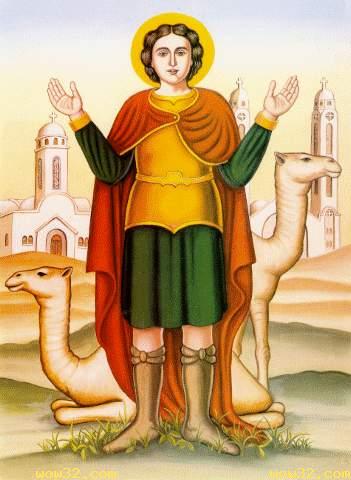
Menas is a popular male name among Eastern Christians, it is of uncertain meaning, it may derive from the Greek μήνη (mene) meaning, “moon,” or the ancient Egyptian Menes, which is the name of a 3rd-century BCE Egyptian pharaoh, in which case, the name derives from the ancient Egyptian, mnj (he who endures). It may also be related to the ancient Egyptian divinity name, Min, which is of uncertain meaning. However, according to Coptic tradition, the name means “amen.”
It is the name of a popular 2nd-century Coptic saint and martyr, known as Ⲁⲃⲃⲁ Ⲙⲏⲛⲁ (Abba Mina). According to legend, St. Menas’ parents were devout Christians who were having a hard time having children. His mother prayed to the Virgin Mary for a child, and she heard a response saying “amen,” this is where the name Menas supposedly derives from. It is speculated by some that the Western St. Christopher and the Eastern St. Menas are one and the same person. It is also borne by an Ethiopian saint of the 6th-century (CE) and a 16th-century CE Ethiopian emperor.
It was the name of 1st-century CE Roman admiral who features in Shakespeares, Antony & Cleopatra.
Gender: unisex, but more often used on females within Sikh diaspora in English-speaking countries
Pronunciation: JAZ-leen
The name is composed of the Punjabi elements, ਜੱਸ (jasa) meaning fame and the verb ਲੀਨ (lina) “to be absorsed.” It is a Sikh Name based on the Sikh scriptures Guru Granth Sahib.
All Sikh names are gender neutral, but in the Sikh Community outside India, the name is exclusively used on females due to its identical sound to other Western names such as Jazlene, which is exclusively feminine.
Other forms include Jazleen & Jesleen.
The Latin American, Jaslene, is a modern invention, popularized specifically in Puerto Rico by American supermodel, Jaslene Gonzalez (b.1985); this name has since spread in occasional use to other non Spanish-speaking communities outside Puerto Rico. Other popular spellings include Jazlene & Jazline & the offshoots of Jaslyn/Jazlyn/Jazlynn. It is possible that the name is a borrowing from the aforementioned Sikh name; but perhaps is based off of names such as Jasmineand Jolene.
Jazlyn is currently the 504th most popular female name in the United States.
Jazlene & Jaslene appeared in the U.S. Top 1000 between 2008-2010.